Hunting Standing Cover Left After Harvest
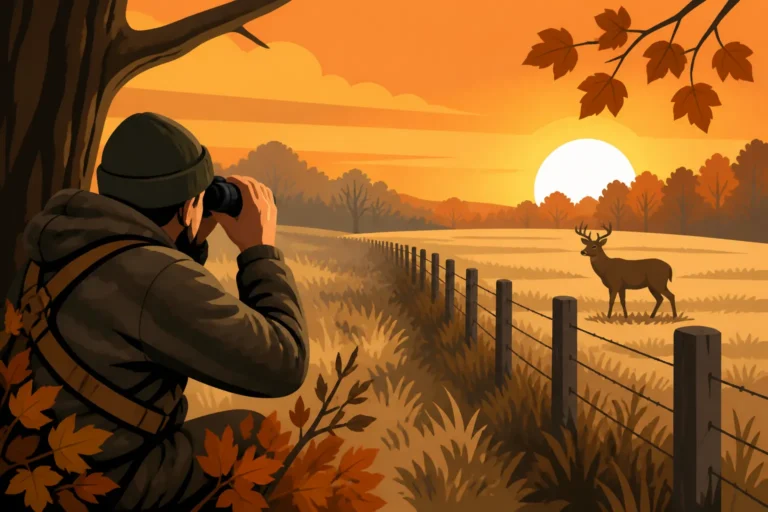
The sight of combines tearing through vast Kentucky fields can feel like a punch to the gut for deer hunters. One day, deer seem to be everywhere, tucked into thick crops; the next, they've vanished into thin air, leaving you wondering where they possibly went. This guide is dedicated to unlocking the secrets of hunting standing cover left after harvest, helping you understand why these overlooked pockets become absolute magnets for whitetails and how you can effectively target them to punch your tag.
Why Standing Cover Becomes a Deer Magnet Post-Harvest
When the golden cornfields and endless soybean acreage disappear, the landscape fundamentally changes. Deer, particularly mature bucks, crave security and thermal cover above almost everything else. What might seem like an insignificant patch of uncut soybeans or a forgotten corner of standing corn instantly transforms into a high-value sanctuary. Understanding this behavioral shift is crucial for late-season success.
The Loss of Wide-Open Fields and Increased Exposure
For much of the fall, especially in Western Kentucky's agricultural strongholds, deer live in a world of tall crops. They bed in it, they move through it, and they often feed within its protective embrace. Once those fields are mowed down, the immediate effect is a massive reduction in available hiding spots. Suddenly, deer that were accustomed to moving freely under cover are exposed to predators, including human hunters. This drastic change forces them to seek out the densest, most secure cover remaining, and often, that's found in the unharvested patches. It's a survival instinct kicking in, making those overlooked areas incredibly attractive.
Increased Security and Thermal Protection
Beyond mere concealment, standing cover offers significant thermal benefits, which become increasingly important as Kentucky's temperatures drop in late fall and early winter. A thick patch of standing corn or tall weeds can act as a natural windbreak, holding heat much better than an open, cut field. This thermal advantage means deer expend less energy trying to stay warm, especially during bitter cold fronts. For a deer looking to conserve energy and remain hidden, these islands of cover provide an ideal refuge. Imagine a mature buck tucked deep into a few acres of uncut corn, feeling safe from prying eyes and shielded from biting winds – that's a deer that's incredibly difficult to dislodge.
Residual Food Sources Still Available
While the primary harvest strips most of the grain, standing cover often holds residual food sources that deer will readily exploit. In a standing cornfield, for instance, ears that were missed by the combine or fallen stalks still offer valuable calories. Similarly, uncut soybeans or even dense patches of weeds might contain remaining pods or seeds. This combination of top-tier security and a readily accessible, albeit limited, food source makes these areas irresistible. Deer can bed down deep in the cover, feel safe, and then simply stand up to grab a mouthful of food without exposing themselves. This low-risk feeding behavior is a major draw. For hunters struggling to find deer after the main food sources are gone, focusing on these areas is a game-changer. It's important to remember that Late-Season Food Sources for Kentucky Whitetails are often about quality and security over quantity, making these small pockets vital.
Identifying Prime Standing Cover Types in Kentucky
Not all standing cover is created equal. Successful hunting means knowing which types of cover deer prefer and why. Kentucky offers a variety of habitats, and understanding these specific cover types will help you narrow down your search and focus your efforts on the most productive areas.
Standing Corn and Soybeans: The Ultimate Late-Season Hideout
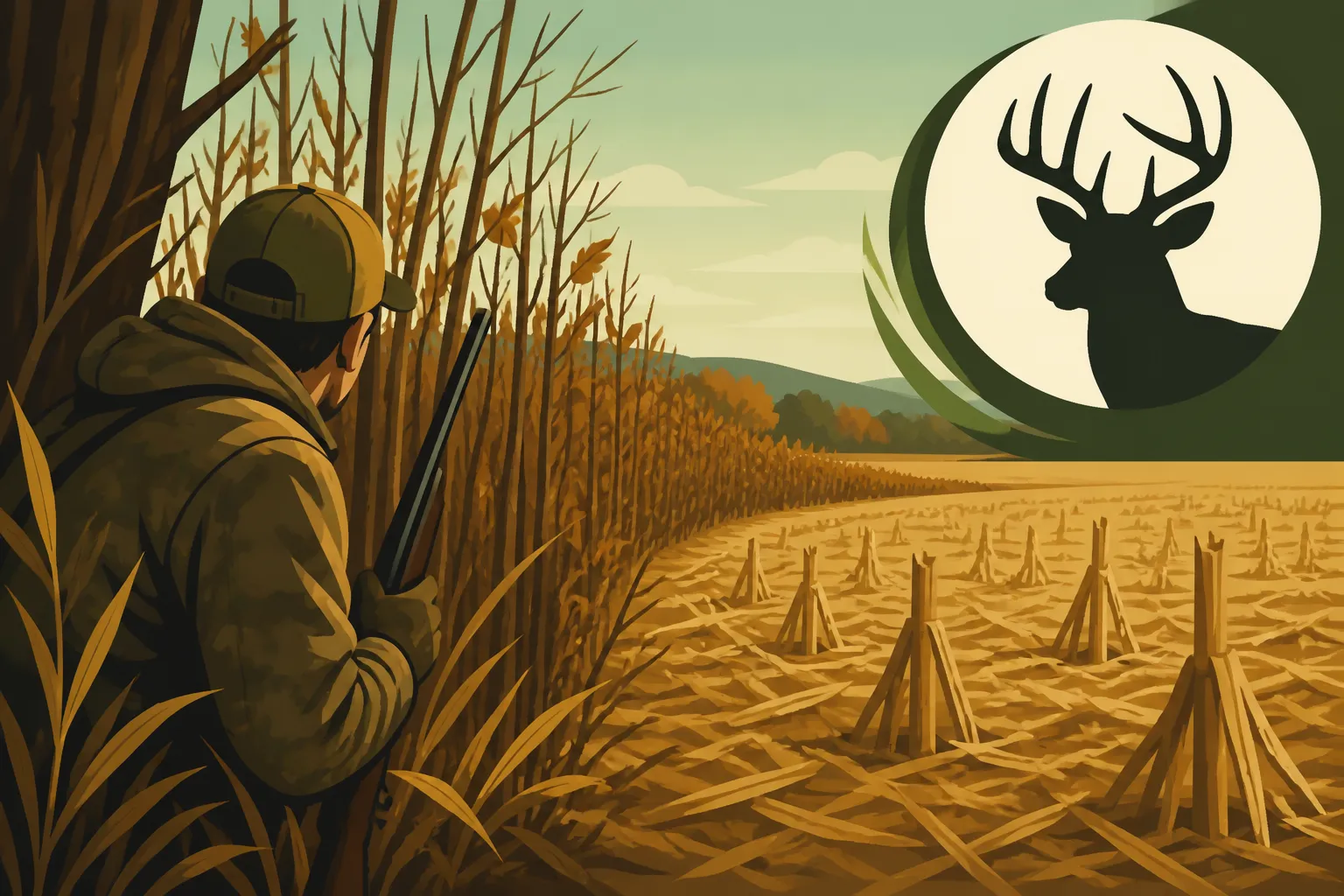
There's no doubt about it: a patch of standing corn or an uncut soybean field is the holy grail of late-season deer hunting in agricultural regions. These areas offer unparalleled security and often a consistent food source. Deer will sometimes yard up in these fields, especially during harsh weather. The challenge for hunters lies in how to approach them without blowing out every deer in the county. It's not uncommon to find several deer bedded deep inside a single patch of standing corn, sometimes not leaving until well after dark. For hunters, this means meticulously Hunting a Standing Cornfield in Farm Country requires a stealthy approach and an understanding of deer movement patterns within such dense cover. Look for the small, irregular patches that farmers couldn't easily access with equipment, or areas near wood lines that offer a quick escape.
Thick Brush and Fencerows Adjacent to Fields
Beyond the obvious crop fields, don't overlook the thick, gnarly brush lines, overgrown fencerows, and creek bottoms that often border agricultural land. These linear features, though seemingly less substantial than a cornfield, provide excellent travel corridors and bedding cover, especially once larger fields are cut. Deer will use these dense strips to move between feeding areas and more secure timber, often feeling safe as long as they have thick vegetation on both sides. A fencerow choked with multiflora rose, honey locust, or sumac creates an impenetrable barrier that deer rely on. These areas also often serve as natural funnels, directing deer movement. Learning to identify and target these "linear covers" can be highly effective, particularly if you can find a subtle pinch point or intersection. Using mapping applications like GoHunt can be invaluable here, allowing you to zoom in and identify these overlooked features and potential Hunting a Funnel Between Two Hollows or fields.
Cut-Overs and Young Timber Regrowth: Natural Security Blankets
Away from agricultural fields, particularly in Eastern Kentucky's more rugged terrain or on public lands like the Daniel Boone National Forest, recently logged areas or patches of young timber regrowth provide similar, crucial standing cover. A cut-over, just a few years old, can be incredibly thick with briars, saplings, and dense undergrowth – essentially an impenetrable fortress for deer. These areas offer both fantastic bedding cover and browse food, making them prime habitat. While not "standing cover left after harvest" in the same agricultural sense, they serve the same function: providing dense, secure areas where deer can escape pressure. Learning to identify these habitat types and how deer use them is key. Often, the edges of these cut-overs, where they meet mature timber, are hot spots for deer movement at dawn and dusk.
Tactics for Hunting Standing Cover Effectively
Successfully hunting these tight, security-focused areas requires a different approach than open-woods hunting. It's about precision, patience, and minimizing your intrusion. Blowing out deer from standing cover can make them nearly impossible to hunt for days, so your first move often needs to be your best move.
Scouting Smart for Entry and Exit Points
Before you ever set foot with your bow or gun, extensive scouting is paramount. This isn't just about finding deer sign; it's about understanding how deer enter and exit these patches of cover. Using aerial maps, whether it's Google Earth or the detailed layers available on apps like GoHunt, is your best friend. Look for subtle terrain features, faint trails, or changes in vegetation density that might indicate a travel route. Pay close attention to wind direction, as deer will almost always approach and depart their bedding areas into the wind, or with a crosswind.
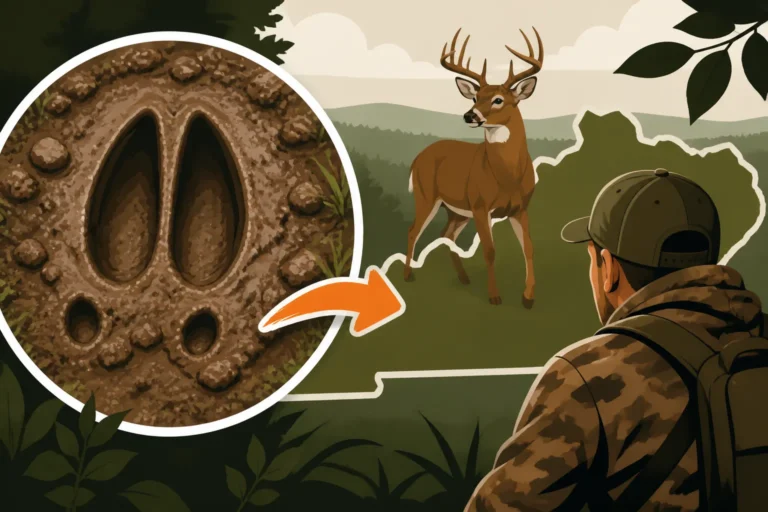
Ground scouting should be done during the middle of the day, when deer are likely bedded deep inside, minimizing your disturbance. Look for well-used trails leading into and out of the cover. These entry and exit points are your primary focus. When scouting, also consider how you will approach and leave your stand without being detected. This includes identifying Entry Routes Through Standing Beans or other crop fields that provide cover for your walk-in. Look for muddy tracks or fresh droppings on these trails to confirm recent activity.
Strategic Stand Placement and Wind Considerations
Once you've identified key entry/exit points, your stand placement is critical. You'll want to position yourself to intercept deer as they move to or from the standing cover, without being directly over their bedding area. Think about the dominant wind direction for your chosen spot. Deer will use the wind to their advantage, so you need to do the same. A common mistake is setting up too close to the bedding area with a swirling wind, alerting deer before they ever become visible. Instead, aim for downwind or crosswind setups on trails leading away from the core cover.
For areas with standing corn or thick brush, consider setting up on a subtle rise or even a slight hill overlooking the edge. This provides a better vantage point without necessarily being directly in the deer's face. In thick, dense cover, shooting lanes can be extremely limited, so trimming a few key branches (where permitted on public land) might be necessary to ensure you have a clear shot at the primary travel routes. Always prioritize safety with your stand, ensuring it's stable and you're using a full-body harness. For those hunting with a bow or crossbow, Bowhunting Kentucky's Long Archery Season in these tight spots often means shorter shot distances, so practice those close-range, steep-angle shots.
Small-Scale Drives and Push-Throughs
While often debated, a well-planned, small-scale deer drive can be highly effective in standing cover, especially when dealing with stubborn deer that refuse to leave their sanctuary. This isn't about running through a large timber block with a dozen people; it's about a highly coordinated effort with just 2-4 hunters. One or two "pushers" slowly and quietly walk through the standing cover, while one or two "posters" are strategically positioned downwind or downwind-and-forward, covering escape routes.
The key to success is slow and deliberate movement by the pushers. Don't rush. Pause often. A deer will often let a pusher walk past if they don't feel directly threatened. The goal isn't to blast deer out of the cover at full speed, but to gently nudge them towards the waiting posters. Communication is vital, often using two-way radios or pre-determined signals. This tactic is especially effective in smaller, isolated patches of cover where deer have limited escape options. For this to be safe and effective, everyone involved must understand the plan and their role, particularly when executing Deer Drives With Three or Four Hunters. Always wear your Kentucky Blaze Orange Requirements for safety.
Safety and Ethical Considerations in Standing Cover
Hunting in dense standing cover presents unique challenges and responsibilities. Your visibility is often reduced, tracking can be harder, and you're frequently operating near private land boundaries. Maintaining a high standard of safety and ethics is paramount for a successful and responsible hunt.
Visibility and Blaze Orange Requirements
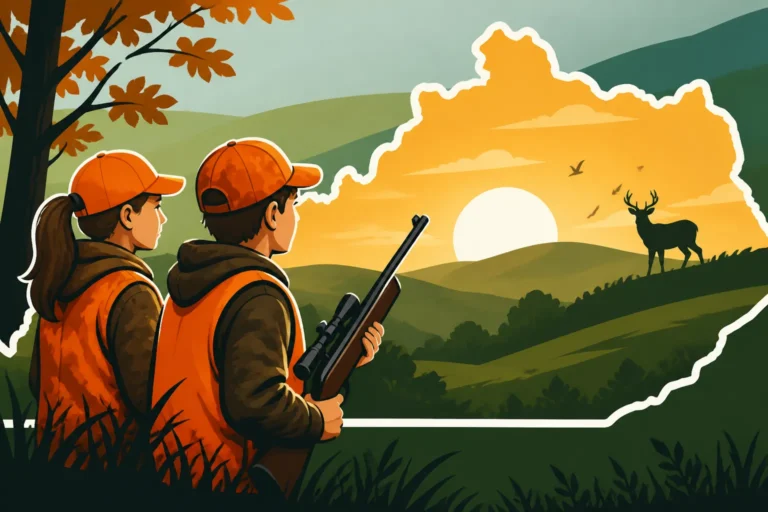
When hunting during any firearms season in Kentucky, and often during archery/crossbow seasons on public lands or when a firearm hunter is present, blaze orange is a non-negotiable safety measure. In standing cover, where visibility is inherently limited, this becomes even more critical. You might be walking through tall corn, and the person 50 yards away won't see you. Ensure you're wearing enough blaze orange to meet or exceed Kentucky's requirements, typically a solid outer garment above the waist visible from all sides, or a hat/cap of the same color. Blaze pink is also an option.
Beyond regulations, exercise extreme caution. Positively identify your target and know what's beyond it before taking any shot. The dense vegetation can obscure not just deer but also fellow hunters or even homes and roads in agricultural areas. Always assume another hunter might be present, even if you haven't seen them. This vigilance is crucial for avoiding accidents.
Respecting Private Land Boundaries
Many patches of standing cover, especially unharvested corners of fields, are on private land. Even if they appear to be adjacent to public access, property lines can be confusing, particularly with the winding fencerows and irregular field shapes common in Kentucky. Always verify property boundaries before hunting. This is where tools like GoHunt really shine, overlaying property lines onto aerial maps, giving you a clear visual of where you can and cannot hunt.
If you are on private land, ensure you have explicit permission from the landowner. Trespassing, even accidentally, can jeopardize future hunting opportunities for everyone. If a deer you've shot crosses onto private land, Kentucky law requires you to have permission from the landowner to retrieve it. Do not pursue a wounded animal onto private property without first obtaining permission. A quick knock on the door, explaining the situation calmly and respectfully, often yields positive results.
Tracking Deer in Dense Vegetation
Hitting a deer in thick standing cover can make tracking an absolute nightmare. The dense vegetation absorbs blood, obscures trails, and makes it incredibly difficult to follow even a well-hit animal. This is why shot placement becomes even more critical in these environments. Aim for high-percentage shots, and if you have any doubt about the shot, give the animal ample time before pursuing.
When you do begin tracking, move slowly and deliberately. Mark the last known blood or sign. Look for disturbed vegetation, broken twigs, or even the subtle gleam of a hair on a stalk of corn. If you lose the trail, spread out and grid-search the area. Bringing a friend to help track can make a huge difference. In situations where the blood trail is scarce or the cover is exceptionally thick, like a gnarly Reading a Ridge for Cumberland Deer, a good tracking dog (where legal and available) can be invaluable. Don't give up too easily; every effort should be made to recover a game animal ethically.
Remember, patience and preparation are your greatest allies when hunting standing cover after the harvest. It’s a challenge, no doubt, but one that can yield incredible late-season rewards for those willing to adapt their strategy.
Table: Kentucky Standing Cover Hunting Considerations
| Cover Type | Primary Benefit | Food Availability | Hunting Difficulty | Key Considerations |
|---|---|---|---|---|
| Standing Corn/Soybeans | Maximum Security/Thermal | High (residual) | High | Very stealthy entry/exit, wind critical, limited visibility. |
| Thick Brush/Fencerows | Travel/Bedding/Security | Medium (browse/seeds) | Medium | Funneling deer, good for ambush, can be noisy walking. |
| Young Timber/Cut-Overs | Bedding/Browse/Thermal | Medium (browse) | Medium-High | Scout edges, often requires deep penetration, steep terrain. |
| Green Fields (unharvested) | Primary Food Source | High (purpose-planted) | Low-Medium | Attracts deer from surrounding cover, hunt edges or blinds. |
| Tall Weeds/Grass | Secondary Bedding/Travel | Low (limited seeds) | Low-Medium | Overlooked, good for quick hides, less thermal protection. |
Disclaimer
Always consult the latest Kentucky hunting regulations from the Kentucky Department of Fish and Wildlife Resources (KDFWR) before heading into the field, as rules and seasons can change annually.