Working a Creek Bottom for Late-Season Deer
Man, that late season in Kentucky can really test your resolve, can't it? The leaves are down, the woods feel bare, and those big bucks that were cruising during the rut seem to have vanished into thin air. It’s easy to get discouraged when you’re freezing on a ridgetop, seeing nothing but empty timber. But what if I told you that some of the most overlooked, yet consistently productive, spots for tagging a late-season deer are right there in the creek bottoms? This guide is all about diving deep into how to work those low-lying areas effectively when the temperatures drop and the pressure mounts.
Why Creek Bottoms Are Late-Season Magnets for Deer
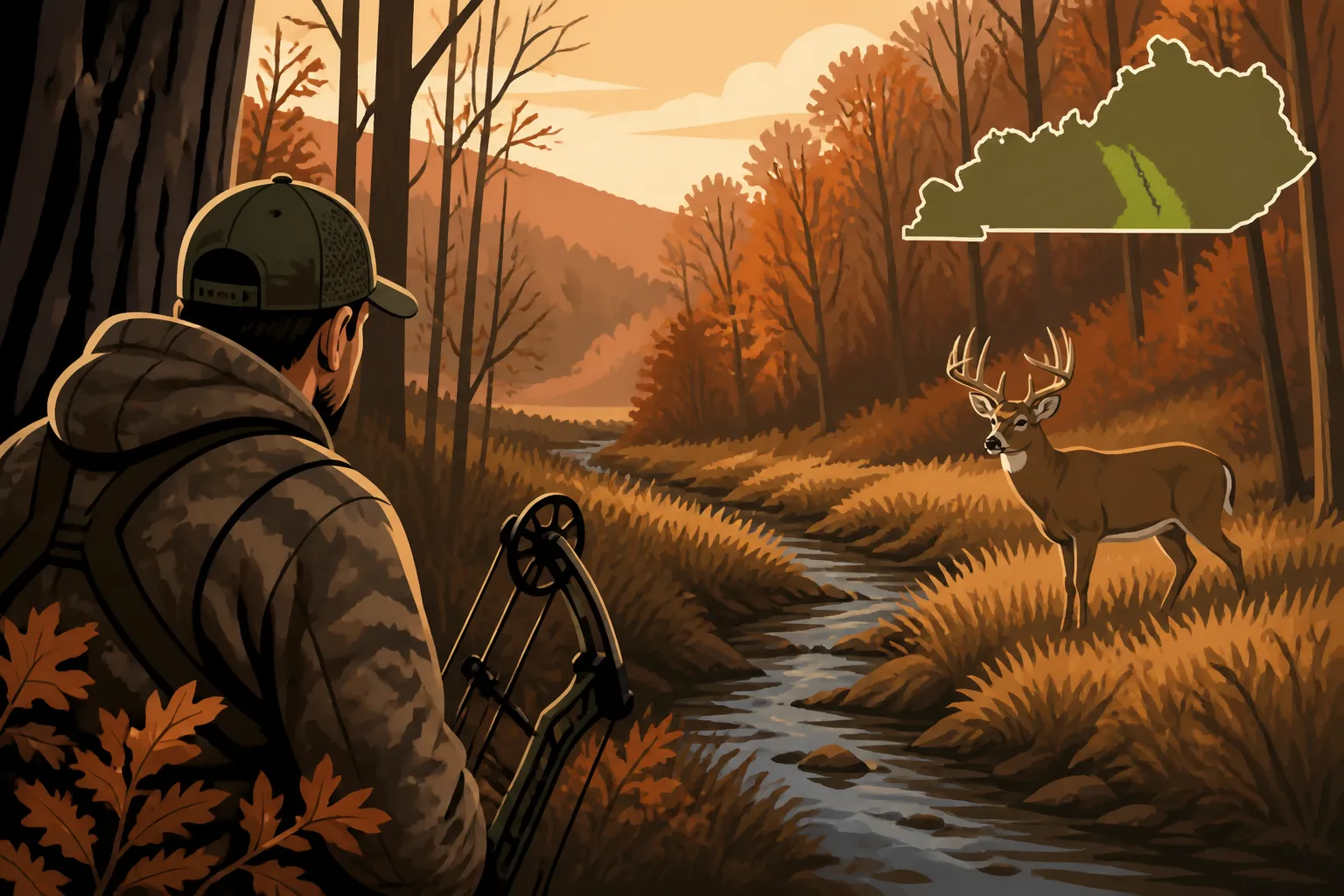
When December rolls into January here in Kentucky, the world can seem pretty bleak from a deer's perspective. Their primary goal shifts from breeding to pure survival: finding food, water, and shelter with the least amount of energy expenditure. Creek bottoms, often dismissed or seen as just wet, swampy areas by some hunters, are actually critical hubs for deer activity during this tough stretch.
Reliable Food and Water Sources
Think about it: in the dead of winter, what's often the last place to completely dry up or become utterly barren? A creek bottom. These areas, particularly in places like Western Kentucky River Bottoms, naturally retain more moisture, which means they can sustain various types of browse longer than higher, drier ground. You might find pockets of green browse still clinging on, offering those precious calories deer desperately need. While the prime acorn crop might be long gone, those isolated red oaks or pin oaks along the creek banks sometimes hold onto their nuts longer, or the deer might be returning to scour for remnants they missed earlier.
Then there's the water itself. Even if the creek is mostly frozen over, deer are incredibly adept at finding small openings, seeps, or trickles to get the hydration they need. A constant water source, even in the coldest weather, makes a creek bottom an essential daily stop for any deer in the area. This is especially true for does and fawns, who prioritize these basics. Don't underestimate the draw of easy access to water when everything else is brittle and dry.
Thermal Cover and Travel Corridors
Beyond sustenance, creek bottoms offer something equally vital in the late season: protection from the elements and a low-energy travel route. The dense, often neglected tangles of honeysuckle, briar thickets, and stands of young cedars that thrive along creek beds provide incredible thermal cover. These areas act like natural insulated blankets, shielding deer from bitter winds, snow, and driving rain. When the wind howls on the ridges, deer will often drop into these sheltered pockets, bedding down in the thickest cover they can find.
What's more, creek bottoms are natural travel corridors. Deer, like us, prefer the path of least resistance. Walking through a relatively flat, albeit sometimes brushy, creek bottom takes less energy than constantly climbing and descending steep ridges. These bottoms often connect different bedding areas to remnant food sources or lead to more expansive agricultural fields. They essentially act as highways for deer movement, especially under the cloak of darkness or during low-light hours. Understanding how these routes function is crucial for your Cold-Weather Sitting Strategy in Kentucky. If you're using a mapping tool like GoHunt, you can really pick out how these creek lines connect different features, helping you predict movement patterns.
Reading the Sign in a Frozen or Wet Creek Bottom
Hunting creek bottoms successfully in the late season isn't just about showing up; it's about being a detective. The signs deer leave behind are often more subtle than during the rut, but they are absolutely present and can tell you exactly where to focus your efforts.
Interpreting Tracks and Trails
In the late season, with cold temperatures often leaving the ground either frozen hard or muddy from thaw cycles, tracks become your best friend. Fresh tracks in mud, or even better, in a light dusting of snow, are like flashing neon signs. Look for heavily used trails that parallel the creek bank or cross the creek at specific, well-worn points. These aren't always super-obvious highways; sometimes they're just subtle depressions through tall grass or matted leaves. Pay attention to the size of the tracks – bigger, wider tracks often indicate a mature buck, especially if accompanied by a heavier drag mark.
While active scrape lines are much less common in the deep late season, don't completely discount finding old ones or even a freshened-up rub on a small sapling along the edge of the bottom. A buck might still hit a rub out of habit or as a mild territorial marker, even if his breeding drive has waned. The presence of even minor buck sign, combined with heavy doe and fawn traffic, indicates a high-value area that could hold a late-season shooter. You'll need sharp eyes to spot these details when Tracking a Deer Through Kentucky Leaf Litter.
Identifying Key Food and Bedding Areas
Once you've found the trails, follow them. Where are the deer browsing? Look for ragged-edged leaves or twigs on saplings and bushes that indicate recent feeding. Are they hitting honeysuckle? Briers? Young cedar shoots? Knowing what they're currently eating helps you identify other areas where those same food sources might be present. In areas near agriculture, you might find trails leading directly from the creek bottom to a nearby cut cornfield or a Standing Cover Left After Harvest, where deer are gleaning leftover grains.
Bedding areas in creek bottoms are usually in the thickest, densest cover available, often on slightly elevated humps or benches within the bottom itself, or just above it on a gentle slope. Look for flattened grass or leaves, fresh droppings, and maybe even a shed antler from an early dropper if you're really late in the season. These bedding locations are chosen for warmth, concealment, and proximity to both water and remaining food. If you can locate these areas, you're halfway to understanding deer movement patterns. Even during the toughest parts of the Hunting the Late-Season January Lull , these spots can hold animals.
Strategic Stand Placement and Entry/Exit
Getting into the right spot in a creek bottom without spooking deer is critical. These areas, by their very nature, often funnel deer, making stand placement a high-stakes decision. You want to be close enough to intercept them, but not so close that your entry and exit give you away.
Selecting the Right Tree or Blind Location
When choosing where to set up, think about bottlenecks and funnels. Does the creek narrow at a certain point, forcing deer into a tighter path? Is there a low-lying saddle or a pinch point between the creek and a steep hill? These are prime locations. Look for areas where thick cover transitions to a more open feeding area, or where multiple deer trails converge. Setting up on the downwind edge of dense bedding cover, where deer are likely to exit to feed, can be incredibly effective.
Sometimes, finding a suitable tree for a treestand in a creek bottom can be a challenge due to the specific species or density of trees. In these situations, a ground blind can be your best friend. Many creek bottoms offer ample natural brush to help brush in a blind on a field edge, making it virtually invisible. If you're considering Using a Ground Blind on Kentucky Public Land, creek bottoms are often the perfect environment, providing excellent concealment and allowing you to remain mobile if needed. Always, always, always factor in the wind. Deer in the late season are incredibly wary. They will almost certainly circle downwind of any perceived threat. Set up so your scent blows away from their anticipated travel route.
Minimizing Pressure with Smart Entry and Exit
This is where many hunters make mistakes in the late season. Deer are highly educated at this point, and any disturbance, no matter how small, can send them nocturnal or out of the area entirely. Your entry and exit routes must be as stealthy and unobtrusive as possible. If the creek itself is shallow and running, using it as your entry path, walking in the water, can effectively mask your scent and sound. Just be careful about footing and getting wet!
Otherwise, try to walk in and out against the wind, or perpendicular to where you expect deer to be moving. Avoid crossing fresh deer trails if at all possible. If you must cross a trail, do it quickly and quietly. It's often better to take a longer, more circuitous route that keeps you out of the deer's primary travel paths than to cut through directly. Using topo maps and satellite imagery (many hunters use features on GoHunt for this) to plan your approach and departure well in advance is crucial. This planning helps ensure you don't inadvertently bump deer out of their prime late-season sanctuary or alert them to your presence. Remember, the goal is to be a ghost in their living room.
Tactics for a Successful Creek Bottom Hunt
Alright, you've scouted, you've set up, now what? Hunting a creek bottom effectively in the late season often requires a blend of patience, subtle strategies, and an ability to adapt to Kentucky's notoriously fickle winter weather.
Still-Hunting and Ground Tactics
Given the often dense cover and winding nature of creek bottoms, still-hunting can be incredibly effective. This involves moving extremely slowly, taking just a few steps, then stopping to scan, listen, and glass every shadow and thicket. You're not trying to cover ground quickly; you're easing through the deer's living room, hoping to spot one before it spots you. Always move into the wind, or at least with a crosswind, so your scent is blowing away from where you expect deer to be.
Utilize every piece of cover available – creek banks, fallen logs, the thick trunks of mature hardwoods, and those impenetrable briar patches. Use them to break up your silhouette and provide concealment. Patience is absolutely paramount. Deer in these late-season sanctuaries are often bedded tight, conserving energy, and may not move until you are almost on top of them. A good pair of binoculars, like a quality 8×42, is essential for picking apart the cover. This can be a very productive strategy, especially when Still-Hunting Eastern Kentucky Ridges that drain into these very creek bottoms.
Calling and Decoying Strategies
Let's be realistic: the full-on rattling and grunting fest you might have done during Hunting the Rut in Early November probably won't be as effective in the late season. However, subtle calling can sometimes still work, especially if you suspect a buck is bedded nearby. A soft, single doe bleat or a quiet grunt can pique a deer's curiosity without alarming it. Think "whisper" rather than "shout" when it comes to Rattling Volume in Thick Cover or using Grunt Calls in Mature Kentucky Timber.
Decoys are generally less useful in the dense, broken terrain of most creek bottoms. There usually isn't enough open line of sight for a deer to even see a decoy, and you don't want to add unnecessary bulk to your pack when navigating tough terrain. Focus instead on blending into your surroundings and using the natural environment to your advantage. Your best "decoy" is often simply being completely still and camouflaged in a strategic location.
Adapting to Weather Changes
Kentucky weather in late season can be a rollercoaster, and successful creek bottom hunting often hinges on your ability to adapt.
- Cold Fronts: These are your golden tickets. When a sharp cold front pushes through, especially after a period of mild weather, deer often hit food sources harder to load up on calories. This can mean increased daytime movement in those creek bottoms. Bundle up with good base layers and insulated outerwear, especially if you're planning an all-day sit.
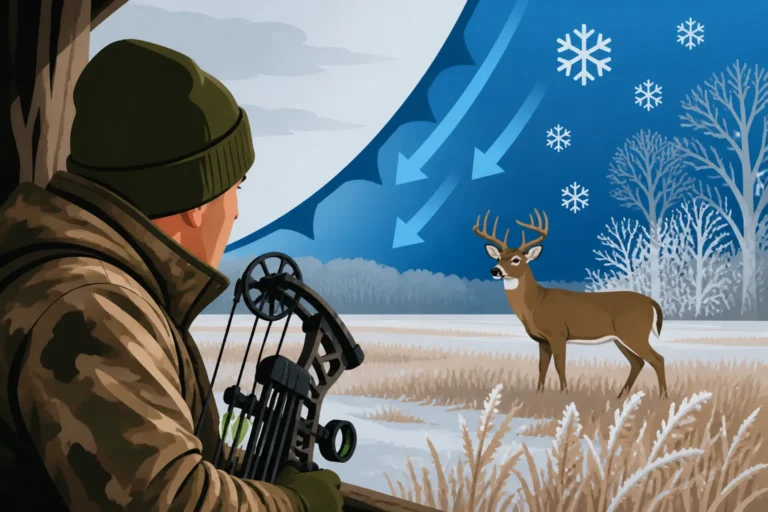
- Snow: Snowfall is a gift to the late-season hunter. It provides excellent tracking opportunities, allowing you to quickly identify fresh deer movement. Even better, a blanket of snow against the dark timber can make deer stand out like a sore thumb, improving your visibility significantly. Just make sure your gear is waterproof, and your boots have good traction.
- Rain: A light, steady rain can be a blessing. It dampens sounds, allowing you to move through the woods much more quietly. The reduced visibility can also make deer feel more secure, leading to daytime movement. However, heavy rain can make for miserable hunting and wash out scent, so gauge your comfort and the intensity.
- Wind: Wind is a double-edged sword. A steady wind makes it easier to manage your scent, but it also makes it harder to hear deer approaching. Choose stand locations that offer some protection from direct wind to stay warm and still, but always keep that wind direction in mind for scent control.
Remember, the late season requires a different mindset. It’s less about chasing the rut and more about understanding survival. By focusing on these often-overlooked creek bottoms, paying attention to the details, and adapting to the challenges, you significantly increase your odds of punching that tag before the Kentucky Archery Season Runs Into January finally closes. Using a tool like the Kentucky Hunt Fish App can help immensely with scouting and understanding public land boundaries to maximize your efforts.
| Weather Condition | Deer Behavior (Creek Bottoms) | Recommended Tactic |
|---|---|---|
| Bitter Cold/Wind | Seek densest thermal cover, move less, hit food hard | Focus on thick bedding areas, short feeding windows. |
| Light Snow | Increased daytime movement, visible tracks, better visibility | Focus on tracking, still-hunting, glassing open timber. |
| Light Rain | May move more confidently, noise mask, reduced visibility | Still-hunt quietly, use natural cover, scent control. |
| Heavy Rain | Movement limited, may hunker down or travel quickly | Generally tough hunting, focus on post-rain recovery. |
| Post-Front Cold | Active feeding, strong movement, especially afternoon | Hit prime food sources, focus on travel corridors. |
Disclaimer
The information provided in this guide is for informational purposes only and is not intended to be a substitute for professional advice. Always consult the current Kentucky Department of Fish and Wildlife Resources regulations before engaging in any hunting activities. Hunting involves inherent risks, and safety should always be your top priority. Ensure you have proper training, equipment, and follow all applicable laws and regulations.