Working a Fencerow for Late-Season Deer
As the late season grinds on in Kentucky, deer hunting can feel like a real uphill battle. The leaves are down, the woods are open, and those once-predictable deer seem to have vanished, or at least become masters of evasion. Food sources are dwindling, pressure has made deer nocturnal, and finding a consistent pattern feels impossible. This guide is all about shining a light on a fantastic, often overlooked late-season hotspot: the humble fencerow. We're going to dive deep into how to scout, set up, and hunt these crucial corridors to tag a Kentucky whitetail when others are packing it in.
Understanding Fencerow Dynamics in Late Season
Fencerows, those often-tangled lines of trees, brush, and old wire that crisscross Kentucky's agricultural and rural landscapes, are far more than just property markers. In the late season, when cold winds blow and natural cover thins, they transform into vital lifelines for deer. Neglecting these areas is a common mistake that can cost you opportunities when every deer sighting feels like gold.
Why Fencerows Become Crucial Food and Cover Corridors
Think about it: after weeks or even months of hunting pressure, deer are looking for security. Fencerows offer just that. They often consist of dense, thorny thickets, small mature trees, and overgrown vines that provide excellent thermal cover from the biting winter winds. More importantly, these linear features act as natural travel corridors, connecting different resources that deer rely on. Imagine a fencerow that runs between a vast, cut soybean field and a small, isolated woodlot. The deer can browse on lingering soybeans or other remnants in the field, then quickly slip back into the relative safety of the fencerow for concealment as they move to and from bedding areas.
These corridors are essentially deer superhighways, albeit often hidden ones. They're used for safe travel between bedding and feeding, offering concealment from human eyes and a sense of security that wide-open woods or fields simply can't provide during daylight hours. A good fencerow also often holds a surprising amount of residual food. There might be persistent acorns under scattered oaks, brambles offering a last burst of berries, or leftover browse that deer are desperate for. On a cold December morning, I once watched a doe and two yearlings move along a fencerow connecting a cut bean field to a small, brushy creek bottom. They picked their way slowly, nipping at every green thing they could find, perfectly illustrating how these seemingly minor features can be major players in a deer's late-season survival.
Reading the Sign: Locating Prime Fencerow Real Estate
Just like hunting any other area, scouting is paramount when you're targeting fencerows, especially in the late season. Deer sign might not be as overt as during the rut, but it's there if you know what to look for. Start by identifying well-worn trails running parallel to or crossing the fencerow. Look for fresh tracks, especially after a light snow or rain. Tracks will tell you not only that deer are using the fencerow but also the direction and frequency of their travel.
Don't dismiss old rubs and scrapes entirely. While fresh scrapes are rare in late season, a line of old rubs along a fencerow indicates it's a historical travel route for bucks, and they're likely still using it. More crucial are fresh droppings and browsing. Fresh droppings, especially those that are still soft and dark, tell you deer have been there recently. Look at the tips of woody plants and bushes within the fencerow – are they clipped off cleanly? This is a sign of recent browsing, indicating a food source. For example, finding a well-worn trail with fresh droppings along a fencerow bordering a standing cornfield is a goldmine. The deer are undoubtedly hitting that corn, and the fencerow is their path of least resistance to get there and back to cover. I often use mapping apps like GoHunt to pinpoint potential fencerows that connect different habitat types, then hit the ground to confirm the sign. This visual aid is invaluable when trying to decipher deer movement.
Strategic Approach to Hunting Kentucky Fencerows
Successfully hunting fencerows in the late season requires a deliberate, strategic approach. You can't just stumble into one and expect success. It involves careful scouting, calculated stand placement, and a deep understanding of deer behavior in these linear environments.
Scouting the Fencerow: What to Look For Pre-Hunt
Your pre-hunt scouting mission should be as quiet and unintrusive as possible. Deer are hyper-aware this time of year, and one noisy walk through their sanctuary can blow them out of the area. Focus on the nuances: where does the fencerow thicken? Are there sections with cedars or honeysuckle that offer more cover? Does it cross a creek or ditch, creating a natural pinch point? These are all spots where deer are likely to hesitate or funnel, giving you a better shot opportunity.
Look for subtle elevation changes, even a slight rise can offer a deer a better vantage point, making it a natural stopping spot. I also key in on any remnants of agricultural crops nearby – standing corn, unharvested beans, or even a subtle green patch of winter wheat. These are magnetic food sources that will draw deer along the fencerow. Using tools like the Kentucky Hunt Fish App is excellent for this. You can zoom in on aerial photos to identify these linear features and the habitat they connect. I once used GoHunt to identify a fencerow acting as a funnel between two isolated woodlots on a sprawling farm property. Walking that fencerow after the harvest revealed exactly where deer were crossing and feeding, and it paid off a few days later. Pay attention to how deer might enter or exit the fencerow from adjacent fields or woods. Identifying these subtle transition points is key.
Optimal Stand or Blind Placement
Once you've identified key fencerow travel routes and pinch points, it's time to consider your setup. For a fencerow, you have two primary options: a treestand or a ground blind. The choice often depends on the available cover and the height of the fencerow itself. If the fencerow has mature trees, a treestand can give you an excellent vantage point, allowing you to see deer approaching from a distance and shoot over any brush. Just be sure you have a safe, sturdy tree that offers enough concealment. Remember to consider your entry and exit routes for a treestand, as these are critical in not alerting deer.
However, many fencerows are too brushy or lack suitable trees for a treestand. This is where a ground blind shines. A well-brushed-in ground blind, placed slightly off the main travel corridor but with a clear shooting lane, can be incredibly effective. Make sure the blind is set up well in advance to allow deer to get used to it. The beauty of a ground blind is that it utilizes the natural cover of the fencerow, making you practically invisible. I've had great success setting up a ground blind at a natural bend in a fencerow where it crossed a small drainage ditch. The ditch itself offered some cover for my approach, and the blind was tucked right into the thickest part of the fencerow, facing a well-used trail. Learn more about Using a Ground Blind on Kentucky Public Land for specific tips. Position your stand or blind to take advantage of the prevailing wind, keeping your scent from blowing directly into the deer's approach path.
Tactics for Success in Late-Season Fencerow Hunting
Hunting late-season fencerows requires patience, precision, and an understanding of how deer behave when temperatures plummet and natural food becomes scarce. It's about adapting your strategy to the conditions and making the most of every opportunity.
Timing Your Hunt: Cold Fronts and Food Sources
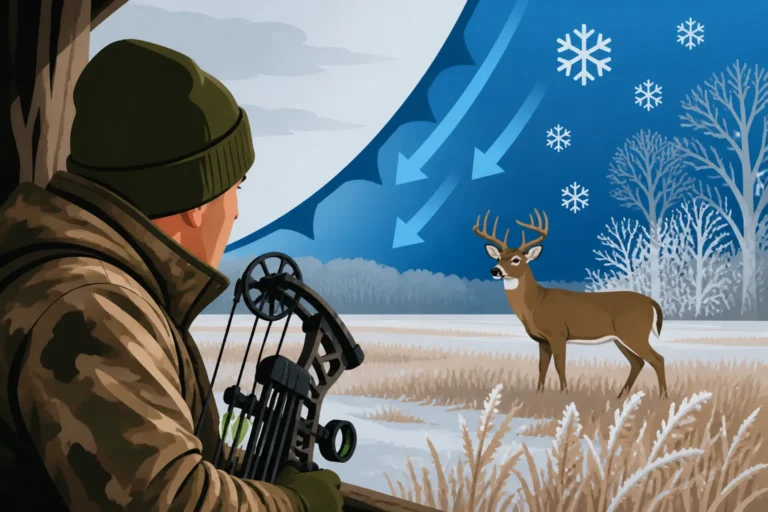
One of the most critical factors for late-season fencerow hunting is timing. Deer are generally more active during daylight hours immediately following a significant cold front. When temperatures drop, and especially after a warm spell, deer need to feed heavily to maintain their body heat and energy levels. This makes them more likely to move along fencerows in search of those precious calories. Look for those bitter, windy days when most hunters are staying home – those are often the best days to be out.
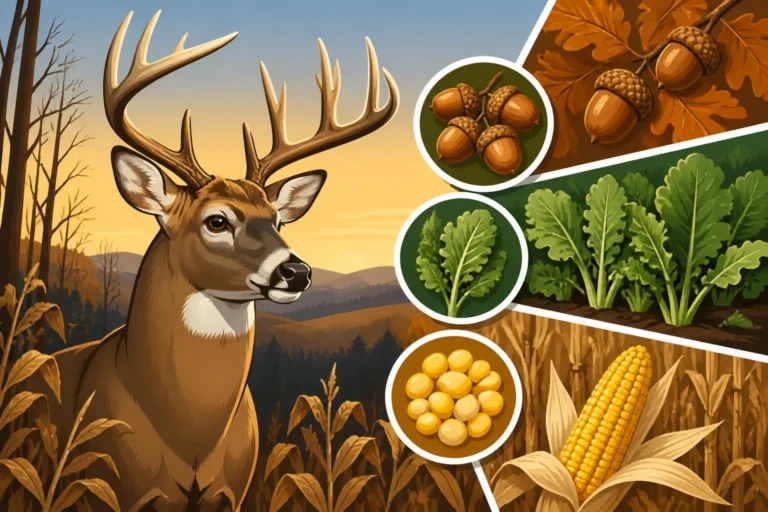
Focus on the period right after a cold snap hits and for a day or two following. This is when deer will be most willing to leave their bedding areas and hit available food sources. These food sources might be lingering acorns, patches of honeysuckle, green briar, or even the remnants of agricultural crops. For example, knowing that deer will be hitting available food hard, moving along fencerows is crucial on a particularly frigid day. If there's a standing cornfield or a field with gleanings nearby, those fencerows connecting to it will be hot. Understanding Late-Season Food Sources for Kentucky Whitetails is key to identifying which fencerows will be most productive. The coldest part of the day, often mid-morning to early afternoon, can also be productive as deer stretch their legs or shift bedding locations along the fencerow.
The Silent Approach: Minimizing Your Impact
In late season, deer have been pressured for months, making them incredibly wary. Your approach to and from your fencerow stand is just as important as the stand placement itself. Every rustle, every scent trail, can alert deer to your presence and ruin your hunt. Practice extreme scent control, showering with scent-eliminating soap, wearing clean hunting clothes, and spraying down with a scent killer. Put on your outer layers only when you're close to your stand.
Plan your entry and exit routes meticulously. Try to use natural terrain features like creek bottoms, drainage ditches, or deep gullies to conceal your movement. If you're hunting a fencerow bordering a field, try to walk well into the field (if permitted and legal) before cutting into the fencerow to minimize your disturbance. Avoid walking directly down the fencerow itself if possible, as this will leave a strong scent trail. Parking far away and walking a creek bottom or drainage ditch to approach a fencerow stand unseen has saved countless hunts for me. The idea is to be a ghost, appearing and disappearing without a trace. Consider Entry Routes Through Standing Beans if you're hunting along agricultural fields.
Employing Calls and Decoys in Tight Fencerow Cover
While the rut might be long over, subtle calling can still be effective in late-season fencerows, especially for bucks looking for does or does calling to their fawns. Forget the aggressive rattling and loud bugles; think subtle. Soft grunt calls can pique a deer's curiosity, making them stop or alter their path to investigate. A few soft bleats can sometimes draw in does.
If you decide to use calls, keep the volume low. The tight, often thick cover of a fencerow means deer are likely to be closer when they hear you, and loud calls can spook them. Think about it: when you're in heavy timber, you don't shout across the woods. Just a few soft grunts after a deer moves out of sight down the fencerow might be enough to bring it back into view. Learn more about effective calling with Grunt Calls in Mature Kentucky Timber. Decoys can be a bit trickier in fencerow hunting due to the limited space and sightlines. However, a small, collapsible doe decoy, placed at a subtle angle to appear curious, might occasionally work. Ensure it’s positioned to maximize visibility without being in the way of your shot, and be mindful of other hunters, especially on public land.
Overcoming Challenges and Maximizing Your Chances
Fencerow hunting in the late season presents unique challenges, from dealing with educated deer to navigating tricky wind patterns. But with a few strategic adjustments, you can turn these obstacles into opportunities.
Dealing with Pressure: Finding Overlooked Fencerows
By late season, many prime hunting spots have been pounded by hunters, and deer have learned to avoid easy-to-access areas. Fencerows, however, can sometimes offer pockets of less-pressured ground. To find these, you'll need to think outside the box. Look for fencerows that are a bit harder to get to – perhaps those that require a longer walk, cross challenging terrain like steep ravines, or are tucked away behind a lesser-used field.
Don't be afraid to put in the miles. Deer will often gravitate to areas with less human disturbance, even if the food sources aren't quite as abundant. A fencerow that parallels a main road but has incredibly thick brush might deter other hunters who prefer to stick to interior woods, making it a hidden gem. Similarly, fencerows on the back side of large properties, away from common access points, can be gold. Utilizing tools like GoHunt's public land maps can help identify these hard-to-reach areas where deer might feel safer. For more insight on this, check out Finding Ground Others Walk Past.
Managing Wind and Thermals Along Linear Features
Wind and thermals are always crucial in deer hunting, but they behave uniquely along linear features like fencerows. Wind can swirl unpredictably, especially if the fencerow is nestled between fields or cuts through varied terrain. Always check your wind direction frequently with a powder bottle or milkweed seeds. The general rule of thumb is to set up downwind of where you expect deer to come from.
Thermals, the rising and falling air currents, also play a significant role. In the mornings, as the sun rises and warms the ground, thermals tend to rise uphill. In the evenings, as the air cools, thermals drop downhill. If your fencerow runs along a contour or connects higher and lower ground, this becomes vital. Try setting up on the downwind side of a fencerow in the morning as thermals rise, or on the upwind side in the evening as they fall. This might mean adjusting your stand location depending on the time of day. For a deeper dive into this, read up on Wind and Thermals on a Kentucky Ridge. Being vigilant about these air currents can make or break your hunt, as a deer's nose is its most powerful defense.
Gear Considerations for Cold, Exposed Fencerows
Hunting fencerows in late season often means sitting in exposed, chilly conditions. Proper gear isn't just about comfort; it's about staying focused and effective. Layering is paramount. Start with a good moisture-wicking base layer, add an insulating mid-layer (fleece or down), and top it off with a windproof and waterproof outer shell. Wool is an excellent choice for its warmth even when wet.
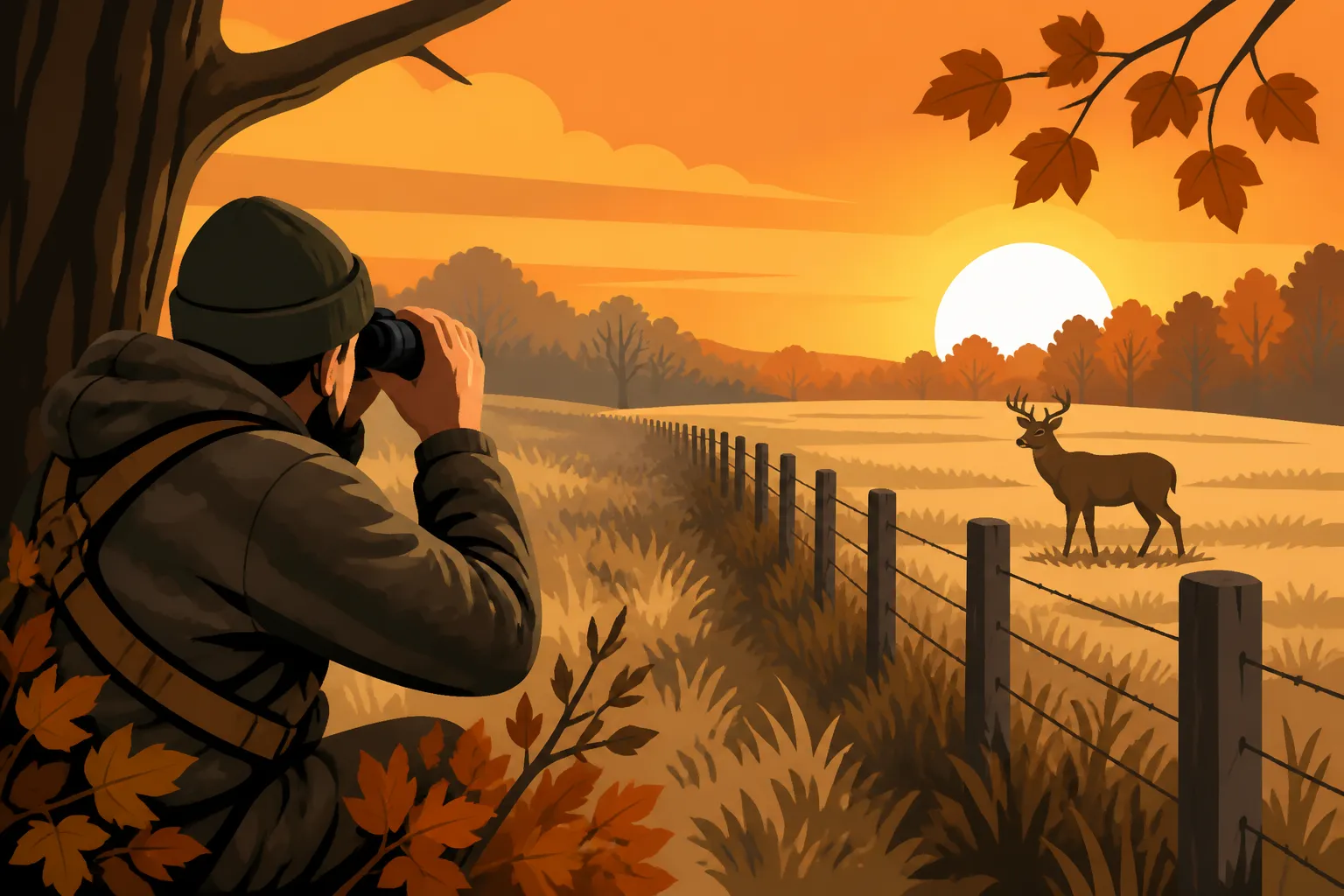
Insulated, waterproof boots are non-negotiable. Your feet will get cold quickly if you're sitting still for hours. Consider bringing hand warmers or a muff to keep your fingers nimble, especially if you're using a bow. Good optics – binoculars and a rangefinder – are also essential. With the sparse cover, you might be glassing deer from a distance as they approach, and in the low light of early morning or late evening, quality glass makes a huge difference. On a particularly bitter December morning, I was incredibly grateful for every layer and a good insulated pair of boots while trying to glass a distant buck along a fencerow. That kind of warmth lets you focus on the hunt, not the cold. For advice on staying warm, check out Cold-Weather Sitting Strategy in Kentucky. Don't forget a sturdy deer sled or cart if you're successful, as dragging a deer out of a thick fencerow can be challenging. For tips on extraction, refer to Dragging a Deer Out of a Steep Hollow.
| Fencerow Type | Late-Season Potential (Food) | Late-Season Potential (Cover) | Best Hunting Strategy | Common Challenges |
|---|---|---|---|---|
| Agricultural Edge | High (crop remnants) | Moderate (brushy) | Early morning/late evening ambush | High visibility, wind exposure |
| Woodlot Connector | Moderate (browse, old mast) | High (dense trees/brush) | Mid-day travel corridor ambush | Limited shooting lanes, unpredictable deer flow |
| Creek/Ditch Fencerow | Low (limited food) | High (natural depression) | Pinch point ambush, water source travel | Swirling thermals, wet conditions |
| Old Field/Overgrown | Moderate (native browse) | High (thick tangles) | Still-hunting, ground blind placement | Very dense cover, difficult visibility |
| Property Line (Thick) | Moderate (varied) | High (undisturbed refuge) | Longer walk, low-pressure ambush | Identifying true low-pressure zones |
When you're out there, remember the tradition and camaraderie of Kentucky Deer Camp Traditions. Even if you're hunting solo on public land, you're part of a larger community of hunters who respect the challenge and the rewards of the late season.
Disclaimer
Hunting is an inherently dangerous activity. Always prioritize safety, follow all Kentucky Department of Fish and Wildlife Resources regulations, and ensure you have the proper licenses and permits before heading afield. This guide provides general information and recommendations, but individual hunting situations can vary. Always scout your specific hunting location thoroughly and make decisions based on current conditions and personal experience.