Hunting Small Woodlots Near Suburban Louisville
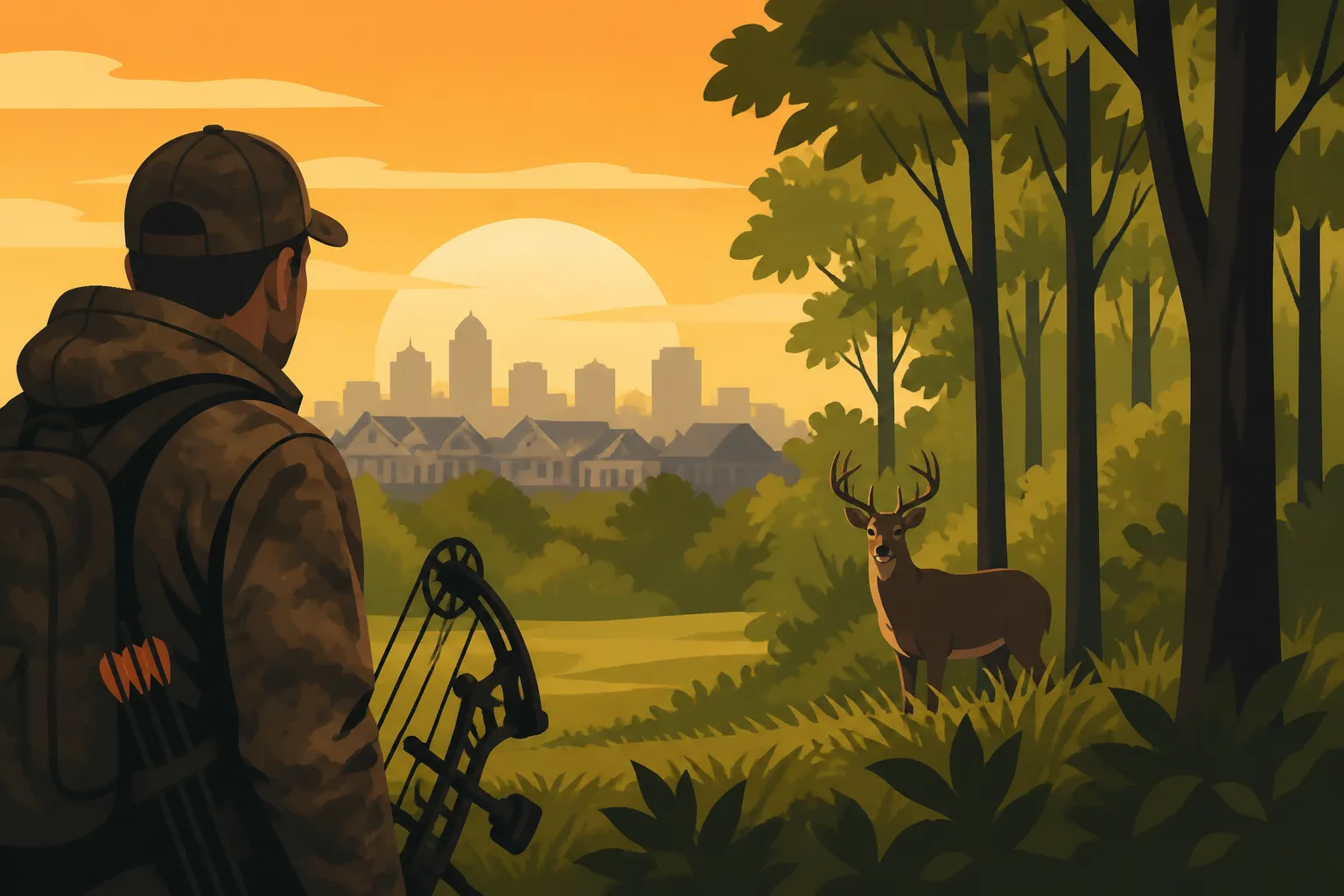
Hunting in the pockets of green space that pepper the landscape near bustling cities like Louisville can feel like an entirely different ballgame than heading deep into the state's expansive public lands. You're constantly weighing the thrill of the hunt against the proximity of homes, dog walkers, and the general hum of urban life. This guide is designed to help you navigate those specific challenges, providing practical strategies for successfully hunting whitetails in the small, often overlooked woodlots bordering suburban Louisville.
Understanding the Unique Challenges of Suburban Woodlots
Let's be honest, hunting small woodlots near a metro area isn't for the faint of heart or the easily frustrated. It requires a different mindset, a higher degree of planning, and an unwavering commitment to responsible hunting. These aren't your sprawling tracts of Daniel Boone National Forest, but they hold deer, often big ones, that have learned to thrive right under our noses.
The Tight Squeeze: Navigating Limited Space and Property Lines
One of the most immediate headaches you'll face is the sheer lack of elbow room. You might be looking at a five-acre chunk of woods, or maybe a ten-acre sliver tucked behind a housing development. Every step, every setup, every potential shot needs to be meticulously calculated. The frustration of spotting a beautiful buck only to realize it's a mere twenty yards across a clearly marked property line is a feeling many of us know all too well. It means your shooting lanes are often tighter, your effective range dramatically reduced, and your need for pinpoint accuracy paramount.
This limited space also demands an intimate knowledge of boundaries. You can't just wander, hoping for the best. You need to know exactly where you are, where the property you have permission for ends, and where your neighbor's manicured lawn begins. This is where tools become invaluable, allowing you to clearly visualize the boundaries. Imagine finding a perfect pinch point between two dense thickets, only to discover on your mapping app that half of it is off-limits. It's a constant negotiation with geography and legal lines.
Furthermore, the smaller the parcel, the more sensitive the deer become to your intrusion. They don't have vast tracts to escape into; their sanctuary is often a dense, overlooked corner of the woodlot or a thick fencerow. Your entry and exit routes become critically important, as disturbing a small area once can push deer out of it for days, even weeks. It forces you to think like a military strategist, planning every approach and retreat with precision.
The Human Factor: Dealing with Increased Activity and Pressure
Unlike the deep woods where you might only encounter another hunter or a random hiker, suburban woodlots are often adjacent to walking trails, dog parks, backyards, and even bustling streets. You might be sitting in your stand only to hear the distant chatter of kids playing, the rumble of a lawnmower, or the distinctive bark of a dog out for its morning stroll. These aren't the sounds of nature, and they can certainly throw a wrench in your hunting rhythm.
The deer in these areas are accustomed to human presence, but that doesn't mean they're easy to hunt. On the contrary, they've adapted by becoming incredibly wary and often highly nocturnal. They learn to move during the quieter hours, often under the cover of darkness, making daylight encounters a precious commodity. This increased pressure also means that a deer that might tolerate a little human noise in a vast wilderness will quickly vacate a small woodlot if it feels truly threatened.
Consider a typical Saturday morning near Louisville. You've got joggers, bird watchers, and families out for a walk. This means your hunting schedule might need to shift dramatically. You might find that the best opportunities are actually mid-week, during odd hours, or immediately following a significant weather event when most casual outdoor enthusiasts are staying home. It's about finding those brief windows of relative calm that the deer have learned to exploit.
Being a Good Neighbor: Ethical Considerations and Public Perception
Hunting in a suburban setting isn't just about bagging a deer; it's about being an impeccable ambassador for the sport. Every action you take, every deer you harvest, and every interaction you have with non-hunters is under a microscope. The anti-hunting sentiment is often strongest in urbanized areas, and one misstep can easily fuel negative perceptions and lead to increased restrictions.
This means you must prioritize ethical considerations above all else. Shot selection is paramount. You need to be absolutely certain of your target, your backstop, and the animal's vitals before you ever release an arrow or squeeze a trigger. There's no room for speculation or marginal shots when a residential area is just beyond the tree line. A wounded deer running onto someone's property, or worse, a projectile leaving your hunting area, is an absolute disaster waiting to happen.
Furthermore, the recovery of an animal needs to be swift and discreet. Dragging a deer through a suburban neighborhood in broad daylight might not be the best look. This often means planning your recovery routes, having appropriate gear like a deer cart or sled, and potentially waiting until after dark to retrieve your harvest. It's an added layer of complexity, but one that is crucial for maintaining a positive image for hunters and securing future hunting opportunities in these unique areas. It boils down to respecting both the wildlife and your human neighbors.
Mastering Scouting in Urban-Adjacent Environments
Scouting is always important, but when you're dealing with small, pressured woodlots near Louisville, it becomes absolutely mission-critical. You can't afford to waste a single sit, and a deep understanding of the deer's patterns and habits in these micro-habitats will be your greatest asset.
Digital Reconnaissance: Leveraging Aerial Imagery and Mapping Tools
Before you even set foot in a small woodlot, spend significant time poring over aerial imagery and mapping tools. Platforms like GoHunt, along with the Kentucky Department of Fish and Wildlife Resources (KDFWR) online map viewer, are absolute game-changers for this kind of hunting. You'll be able to overlay property lines, topo maps, and satellite imagery to identify key features without disturbing the area.
Look for subtle funnels that might not be obvious from the ground. These could be narrow strips of cover between two houses, a fenceline that directs deer movement, or a small creek bottom. Identify potential bedding areas – often the densest, nastiest thickets that most people wouldn't bother to walk through. Pay close attention to transition zones where different types of cover meet, or where a woodlot gives way to a residential lawn or a small field. These are often high-traffic areas for deer traveling between bedding and feeding. You can also use these tools to plan your entry and exit routes, aiming for paths that offer maximum concealment and minimal disturbance.
Remember, deer in these areas learn to utilize every shred of available cover. A small clump of evergreens, a drainage ditch choked with briars, or even a row of overgrown bushes along a property line can be enough to hold a deer during daylight hours. Your digital scouting should be focused on finding these overlooked pockets that provide security in a fragmented landscape. It's about finding ground others walk past.
Ground Truthing: Boots-on-the-Ground Verification and Sign Reading
Once you've done your digital homework, it's time for some boots-on-the-ground reconnaissance. But be warned: this isn't the same as scouting a vast timber block. You need to be incredibly discreet and low-impact. Try to scout during off-peak hours, perhaps mid-day during the week when human activity is at a minimum, or immediately after a rain when your scent will be washed away.
Walk quietly, moving slowly and observing every detail. Look for fresh deer sign, even if it's sparse. Small scrapes along a logging road, rubs on saplings, and fresh droppings can tell you where deer are active. Don't overlook subtle trails that might blend into the undergrowth; these are often the "secret highways" deer use in pressured areas. Pay attention to how deer are entering and exiting the woodlot, especially in relation to neighboring properties or residential areas. They'll almost always choose the path of least resistance and greatest cover.
When you're out there, try to think like a suburban deer. Where would you feel safe bedding down during the day? What path would you take to get from that bed to a food source without being seen? Where would you cross a small ditch or navigate a dense thicket? Understanding these patterns is key to predicting their movements and setting up effectively. The more time you spend silently observing, the more pieces of the puzzle will fall into place.
Identifying Uncommon Food and Cover Sources
Deer are incredibly adaptable, and suburban whitetails are masters of finding sustenance where you might least expect it. While they'll still munch on acorns and natural browse, don't underestimate their willingness to sample the "finer dining" opportunities presented by human development. This includes things like ornamental shrubs in backyards, garden vegetables, discarded fruit from apple trees, and even landscape plantings like hostas or azaleas.
During your scouting, look for evidence of browsing on these non-traditional food sources. If you notice nibbled leaves on bushes along a property line, that's a clue. These deer might not be relying on massive agricultural fields, but rather a patchwork of small, high-value food sources scattered across the suburban mosaic. Pinpointing these can give you a significant advantage, especially during the late season when natural food sources dwindle.
For cover, remember that these deer value security above all else. They'll often bed down in incredibly dense, almost impenetrable thickets – places you might barely be able to crawl through. Consider areas with dense multiflora rose, honeysuckle, or stands of young cedar. Even a small patch of standing cornfield or a brush pile left by a homeowner can offer temporary refuge. Understanding these specialized food and cover preferences is crucial for Hunting the Late-Season January Lull in a suburban setting.
| Feature | Rural Hunting Land | Suburban Woodlot Hunting |
|---|---|---|
| Space | Large, contiguous tracts; ample room to maneuver. | Small, fragmented parcels; tight quarters, frequent property lines. |
| Pressure | Lower human presence, deer patterns more predictable. | High human presence (walkers, dogs, traffic), deer often nocturnal. |
| Food Sources | Primarily natural browse, mast, large agricultural fields. | Natural foods plus ornamental plants, gardens, discarded fruits. |
| Cover | Expansive forests, large swamps, vast thickets. | Dense, small thickets, fencerows, overlooked brush piles. |
| Ethics | Standard ethical considerations, less immediate public scrutiny. | Heightened ethical responsibility, constant public perception. |
| Recovery | Can be lengthy, less concern about public view. | Needs to be swift, discreet, planned for minimal public exposure. |
| Noise | Natural sounds, distant human activity. | Frequent sounds of human activity, residential noise. |
Adapting Hunting Tactics for Pressured Deer
Successfully hunting deer in small, suburban woodlots requires a tactical shift. What works in the deep woods might not cut it here. You need to be smart, patient, and incredibly disciplined.
The Art of Stealth: Low-Impact Entry, Exit, and Movement
When every acre counts and every deer is on high alert, your ability to enter and exit your hunting area undetected is paramount. Think like a ghost. This means no unnecessary noise, minimal scent distribution, and utilizing every scrap of available cover. You can't just crash through the woods to your stand. You need to have pre-planned routes, often along property lines, ditches, or dense fencelines, that shield your movement and minimize sound.
Scent control is absolutely critical. These deer are accustomed to human scent, but they know the difference between a distant whiff of perfume and the concentrated odor of a hunter directly in their travel corridor. Use scent-eliminating sprays, wash your clothes in scent-free detergent, and store them in sealed containers. Even your vehicle can carry scent, so consider parking strategically downwind or further away if possible. When you're making your way in, try to stay downwind of any potential bedding areas or travel routes. Remember that Wind and Thermals on a Kentucky Ridge are just as important in a small woodlot as they are on a mountain.
Consider your timing for entry and exit. Often, the best approach is to get into your stand well before daylight, allowing the woods to settle around you. Similarly, try to stay in your stand until well after dark, letting deer move past before you make your exit. This minimizes the chances of bumping deer, which in a small woodlot, can ruin your hunt for days. Every time you alert a deer, you're teaching it to be even more cautious, making your next encounter even harder.
Strategic Stand Placement for Small Parcels
With limited space, every stand placement decision carries immense weight. You're not just looking for a good view; you're looking for a setup that capitalizes on subtle deer movements while offering safety and concealment. Focus on pinch points, funnels, and transition zones you identified during your scouting. A small saddle between two hills, a narrow strip of timber connecting two larger woodlots, or even a dense fencerow that deer use to avoid open yards can be a goldmine.
When considering a stand, think about the prevailing wind patterns. In a small woodlot, winds can swirl more, so finding a consistent thermal or wind direction is crucial. You might need multiple stand locations to cover different wind scenarios effectively. Tree selection is also important. Choose a tree that offers good cover from all angles, breaking up your silhouette. Often, a tree with dense branches or vines can provide superior concealment compared to a bare hardwood.
Don't overlook the power of ground blinds. For close-quarters hunting, especially where large, mature trees are scarce or public perception is a concern, a well-brushed-in ground blind can be incredibly effective. They offer maximum concealment and allow for more movement, which can be a godsend during long sits. Learning how to effectively brush in a blind on a field edge can be directly applied to small woodlots where you're often hunting the edge of cover.
Capitalizing on Peak Activity Windows
Given the increased pressure and potential for nocturnal activity, timing your hunts to coincide with peak deer movement windows is critical. The first and last hours of daylight are always important, but in suburban woodlots, they become even more so. Deer are most likely to move in and out of their secure bedding areas under the cloak of low light, moving quickly and efficiently.
The Kentucky rut, typically peaking in early November, is an exceptional time to hunt these areas. Even nocturnal bucks will become more active during daylight hours as they search for does. This is when those subtle travel corridors and funnels become high-traffic highways. Don't be afraid to try rattling and grunting in Kentucky, even in smaller woodlots; the urgency of the rut can sometimes override a buck's natural caution.
Beyond the rut, pay close attention to significant weather changes. A sudden cold front after a warm spell, or the calm period just before or after a major storm, can trigger increased deer movement. These are the windows when deer might be more likely to feed aggressively or move to new bedding areas. Hunting after a January cold front can also be productive, as deer need to feed more frequently to maintain energy. Flexibility and patience are key; you might only get one good opportunity per week, but if you're in the right spot at the right time, it can be all you need.
Essential Gear and Safety Protocols for Suburban Hunting
Your gear choices and safety practices take on added significance when hunting in close proximity to residential areas. Every piece of equipment should be considered for its efficiency, discretion, and ability to contribute to a safe, successful hunt.
Choosing the Right Weaponry for Confined Spaces
When hunting small woodlots, shot distances are often much shorter, and your margin for error is razor-thin. This naturally steers many hunters toward archery equipment. Bowhunting Kentucky's Long Archery Season offers an extended opportunity, and the shorter effective range of a bow (vertical or crossbow) reduces the risk of a projectile traveling too far. If you're weighing a crossbow versus vertical bow in Kentucky, either can be a great choice depending on your comfort level and local regulations. Crossbows, in particular, can offer greater accuracy with less practice, which is valuable for those precise shots needed in tight quarters.
For firearm hunters, state regulations regarding legal firearms for deer hunting are crucial. Many hunters opt for straight-wall cartridge rifles (e.g., .350 Legend, .450 Bushmaster) or shotguns with slugs. These calibers offer excellent knockdown power at the shorter distances common in small woodlots while typically having a shorter maximum projectile range compared to high-powered centerfire rifles, enhancing safety in populated areas. Always double-check county-specific ordinances, as some suburban areas may have additional restrictions on firearms discharge.
Regardless of your weapon choice, absolute proficiency is non-negotiable. You need to be able to place your shots with surgical precision at various distances within your effective range. Practice often, from different positions, and under varying conditions, simulating real hunting scenarios. This confidence in your equipment and your ability is your best defense against an unethical shot.
Critical Navigational Tools and Communication Strategies
In a small, fragmented landscape, knowing your exact location is more important than ever. GPS devices or robust smartphone apps like GoHunt or the Kentucky Hunt Fish App become indispensable. Use them to clearly delineate property lines, mark your stand locations, plan silent entry and exit routes, and pinpoint deer sign. These tools can prevent accidental trespassing and ensure you stay within your permitted hunting area.
Always download offline maps before heading out, as cell service can be spotty even in suburban fringes. A dead phone battery is not an option when you need to confirm a property line or navigate back to your vehicle in the dark. Carry a portable charger or even a backup dedicated GPS unit.
Communication is also vital, especially if you're hunting with a partner or have someone waiting to help with recovery. While two-way radios might seem excessive for a small woodlot, they can be invaluable for coordinating a quiet retrieve or signaling if you need assistance. Always inform someone of your hunting plans – where you'll be, when you expect to return, and who to contact if you don't check in.
Prioritizing Safety and Responsible Shot Selection
This cannot be stressed enough: safety is paramount when hunting near populated areas. Before every shot, you must confirm your target, identify your backstop, and be absolutely certain of what lies beyond. This means having a clear understanding of your surroundings, including homes, roads, and trails. Never take a shot if there's any doubt about your backdrop.
Only take ethical shots that offer a high probability of a clean, quick kill. This means waiting for the deer to be broadside or quartering away, ensuring a clear path to the vitals. Avoid quartering-to shots or frontal shots unless you are highly experienced and certain of your ability. A wounded deer that runs onto private property or into a residential area creates a massive headache and reflects poorly on all hunters.
Have a recovery plan in place before you even climb into your stand. Know how you'll approach a downed animal, how you'll field dress it (if necessary), and how you'll transport it discreetly. Carrying a good quality headlamp for after-dark tracking and a durable deer sled or cart for easy, quiet transport are smart investments. Being prepared for every eventuality, especially the successful harvest, demonstrates respect for the animal, the landowner, and your community.
Disclaimer
Please remember that hunting regulations and laws can change. Always consult the most current Kentucky Department of Fish and Wildlife Resources (KDFWR) regulations and any local ordinances before heading afield. This guide is for informational purposes only and does not supersede official regulations.