Posting a Drive Around a Hollow
There's nothing quite like the collective effort and strategic thrill of a deer drive, especially when you're trying to move whitetails out of those deep, winding hollows that Kentucky is famous for. It's frustrating when you know the deer are in there, hunkered down, and seemingly invisible, but your solo efforts just aren't cutting it. This guide is all about mastering the art of "posting a drive around a hollow," ensuring you and your hunting party work together effectively, safely, and with the highest chance of success in getting those wily whitetails to move where you want them.
Understanding the Hollow's Dynamics in Deer Drives
Hollows in Kentucky aren't just depressions in the landscape; they are intricate ecosystems and crucial deer sanctuaries. To successfully drive deer out of them, you first need to understand why deer use them, and how they navigate them when pressured. It's more than just pushing; it's about predicting.
The Lure of the Hollow: Why Deer Seek Refuge
Imagine a cold, blustery November day in the hills of Eastern Kentucky. Where do you think a smart old buck is going to be? Not on an exposed ridge top, I can tell you that much. He'll be tucked deep inside a hollow, taking advantage of the thermal cover provided by the terrain itself. These natural depressions offer significant protection from the wind and harsh weather, creating microclimates that are noticeably warmer or less exposed than the surrounding hillsides.
Beyond just weather protection, hollows provide unparalleled security cover. They often feature dense thickets of young timber, brushy undergrowth, and sometimes even remnants of old clear-cuts or logging operations, all contributing to a maze of cover where deer feel safe and can easily disappear. Plus, many hollows are home to seasonal springs or seepages, offering a reliable water source, and are frequently dotted with oak trees, providing acorns – a critical food source. Deer will bed down in these areas, knowing they have multiple escape routes and plenty of places to melt away undetected. It’s their safe zone, their fortress, especially when hunting pressure starts to ramp up in areas like Daniel Boone National Forest.
Deciphering Escape Routes and Natural Bottlenecks
Once you understand why deer are in the hollow, the next step is figuring out how they're likely to leave when a drive is initiated. Deer, like us, are creatures of habit and efficiency. When pressured, they will almost always opt for the path of least resistance or the most familiar escape route. This is where your scouting and understanding of topography become paramount.
Start by looking for natural funnels. These could be subtle saddles connecting two ridge lines, narrow benches running along the side of a hollow, creek beds that offer a relatively clear travel corridor, or even old logging roads that have long since grown over but still present an easier path through dense woods. You can use mapping tools like GoHunt to meticulously analyze the terrain before you even step foot on it. Look for contours that indicate gentler slopes, breaks in thick cover, or areas where two hollows converge, creating a natural pinch point. Pay close attention to these natural bottlenecks; they are often where your "posters" will need to be positioned. Deer instinctively know these routes, and when a driver starts to push, their first instinct is to try and sneak out through one of these familiar escape corridors. Understanding these routes is key to making your drive effective rather than just a noisy stroll through the woods.
Positioning Your Team: Posters and Drivers for Success
A successful deer drive around a hollow is a carefully choreographed dance between the "posters" (the stationary hunters) and the "drivers" (the hunters pushing the deer). Misplacement of even one person can result in deer slipping through untouched.
Strategic Stand Placement for Posters
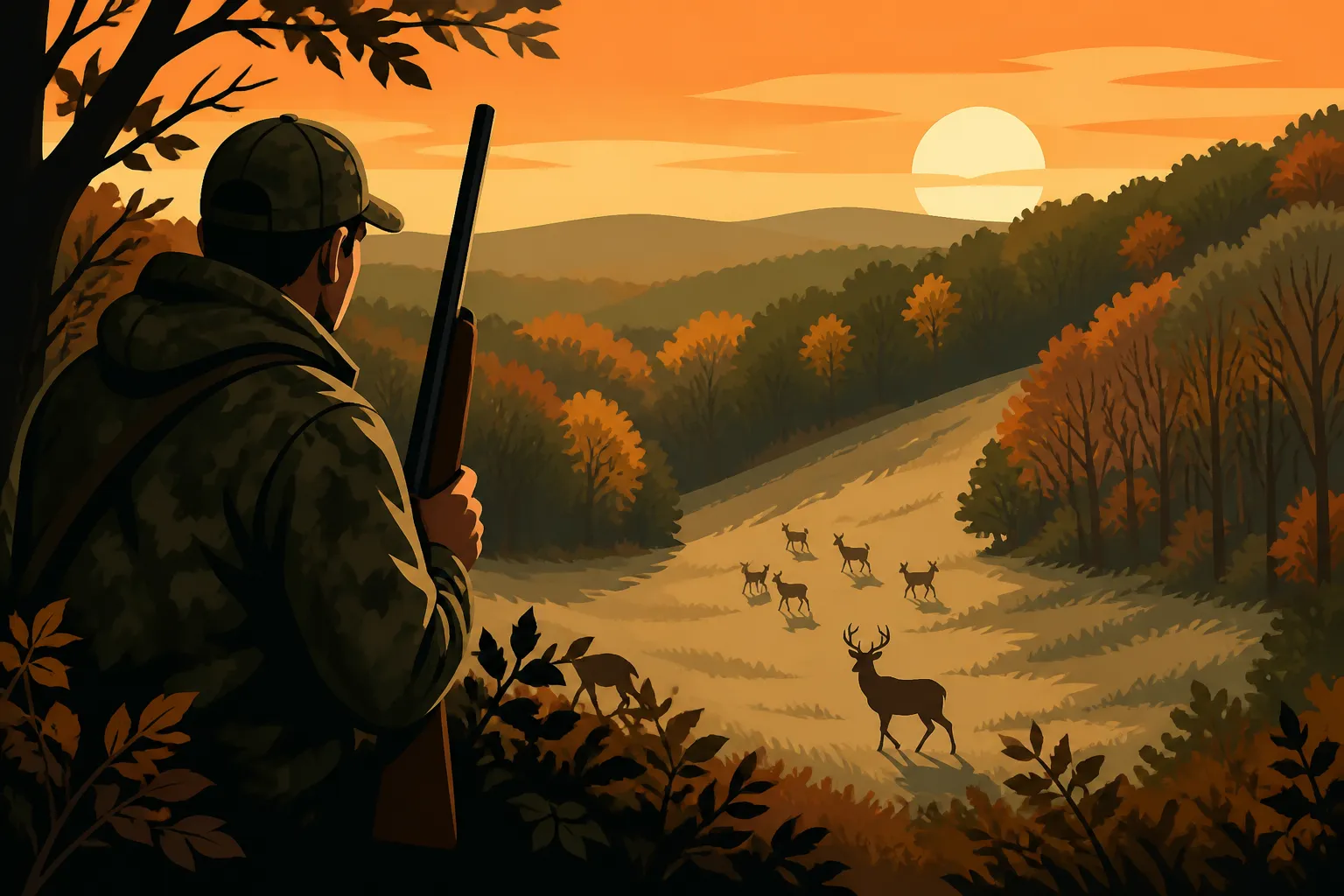
The posters are the linchpin of the drive. Their job is to cover the anticipated escape routes and remain still and silent. When identifying key stand locations, think like a deer that's just been startled. Where would it go? Typically, deer pushed from a hollow will try to slip up the sides, out through a saddle, or circle around the drivers and head back down the hollow.
Therefore, posters should ideally be positioned on benches or subtle ridge lines above the hollow, looking down into it or covering obvious travel corridors that lead out of it. Saddles that connect the hollow to an adjacent ridge are absolute prime locations. You want to be elevated enough for a good field of view, but not so high that you silhouette yourself. Pay keen attention to the wind direction. Deer often try to circle downwind of the drivers, using their nose to detect danger. A poster positioned to intercept this downwind movement can be incredibly effective. Get your posters in place well before the drive begins, ideally 30-45 minutes ahead of time, ensuring they have settled in and any ground disturbance has quieted. This "silent stander" approach gives the deer a chance to forget about any human scent or noise before the drive even kicks off. For more on reading terrain, check out Reading a Ridge for Cumberland Deer.
The Art of the Drive: Moving Deer Deliberately
The drivers' role isn't just to make noise; it's to strategically and deliberately move deer towards the posters. Think of yourselves as a slow, expanding net. If you move too fast, deer will burst out haphazardly, often right through your line or past unprepared posters. Move too slow, and they might just lie tight and let you walk right past them.
The key is to move at a slow, consistent pace, making enough noise to encourage deer to move, but not so much that they panic and become unpredictable. This could be consistent clapping, occasional soft calls, or just steadily walking and talking amongst yourselves. Drivers should maintain an even line, spaced appropriately to cover the width of the hollow. The spacing will depend on the density of the cover; in very thick areas, you might need to be closer together to prevent deer from breaking through the line. Using a mapping application, perhaps even with a pre-marked route on GoHunt, can help drivers maintain their line and ensure they are pushing deer effectively in the desired direction. Remember, you're not trying to push them off a cliff; you're trying to guide them gently towards your waiting teammates. A well-executed drive should feel more like a controlled flow than a frantic scramble.
Essential Elements: Communication, Safety, and Post-Harvest
Any group hunt, especially a deer drive, hinges on two non-negotiable elements: clear communication and unwavering commitment to safety. Without these, you're not just risking a missed opportunity, you're risking something far more serious.
Pre-Drive Briefing and In-Field Communication
Before anyone steps into position, gather your group for a thorough pre-drive briefing. This isn't just a formality; it's critical for success and safety. Clearly assign roles: who are the drivers, who are the posters, and where is each person going? Define the boundaries of the drive, explaining where the drivers will start, where they will end, and the exact lines the posters are covering. This is a perfect time to consult your GoHunt maps to point out specific terrain features, escape routes, and stand locations.
Establish communication protocols. Handheld radios are often invaluable for maintaining contact, especially in rugged terrain where cell service is spotty. Agree on specific codes or signals. For instance, a quick "deer left!" on the radio can alert a poster to impending movement. If a shot is taken, the shooter should immediately call out "Shot taken!" to alert everyone, and then describe the deer (e.g., "Doe down!" or "Buck running!"). The goal is seamless information flow so everyone knows what's happening. Without clear instructions and open lines of communication, the effort can quickly devolve into chaos, wasting your time and potentially endangering your group.
Prioritizing Safety and Ethical Shots
Safety is, and always will be, the number one priority. In Kentucky, blaze orange is a mandatory requirement during certain firearm seasons, and even when it's not strictly required by law for bowhunting, it's always a smart choice for group hunts. Ensure every single member of your party is wearing sufficient blaze orange, visible from all angles. Review the specific requirements for How Much Blaze Orange Kentucky Requires before heading out.
During the briefing, reiterate the cardinal rules of firearm safety: treat every gun as if it's loaded, never point a gun at anything you're not willing to destroy, keep your finger off the trigger until you're ready to shoot, and always be sure of your target and what is beyond it. This last point is especially crucial in a drive scenario where deer might be moving and other hunters are present. Posters must have clear shooting lanes and an absolute certainty of their backstop. Never take a running shot at a deer if you're unsure of your surroundings. Ethical shot placement, even on a moving animal, is paramount. If you don't have a clean, confident shot, don't take it. After a shot is taken, don't immediately jump up. Remain still, observe where the deer runs, and wait for the all-clear from the driver line. This also ties into how you’ll approach Tracking a Deer Through Kentucky Leaf Litter later on.
Navigating Challenges and Refining Your Drive Strategy
Deer drives are rarely textbook perfect. Wildlife is unpredictable, and terrain offers its own set of challenges. Learning to adapt and troubleshoot on the fly is part of what makes experienced hunters successful.
When Deer Slip Through the Cracks
It happens to the best of us: you set up what seems like a perfect drive, the drivers push hard, and yet, no deer emerge. Or worse, a giant buck slips out the backside, completely unnoticed. This is incredibly frustrating, especially after all the planning that goes into Deer Drives With Three or Four Hunters. One common reason deer slip through is that they "circle back" on the drivers. Instead of running forward, they cut behind the driving line, using thick cover or a subtle terrain feature to their advantage. This is why a consistently spaced and steady line of drivers is so important; gaps create opportunities for deer to exploit.
Another scenario is deer simply lying tight. A big old doe or a mature buck might just hunker down in a thicket, letting the drivers walk right past them. In these cases, a slightly noisier, more erratic push from the drivers might be needed, or even a second pass through a particularly dense section. Sometimes, the terrain itself presents unexpected challenges. A hidden ravine, a dense stand of pines, or an unexpected change in elevation can create blind spots for both posters and drivers, allowing deer to escape unnoticed. Analyzing what went wrong after each drive is a valuable learning experience.
Adapting to Conditions and Local Deer Behavior
Deer behavior isn't static; it changes with the season, weather, and hunting pressure. A drive that works perfectly in early season might be completely ineffective during Hunting the Rut in Early November. During the rut, bucks are more prone to chasing does and might be less predictable in their escape patterns. Later in the season, deer are often much warier and will bust out earlier or be more inclined to lay low.
High hunting pressure on public land, such as some of Kentucky's Wildlife Management Areas (WMAs), will make deer incredibly educated. They've been driven before and know the drill, so you might need to try more subtle, quieter pushes, or adjust your poster locations to cover less obvious escape routes. Cold weather can make deer more reluctant to move far, leading them to hold tight. Conversely, a mild, breezy day might see them more relaxed and willing to move with less pressure. Using mapping tools like GoHunt for scouting specific areas of Kentucky Public Land Hunting Hours can reveal patterns in how deer use the terrain under different conditions, allowing you to fine-tune your strategy. Learning to read these nuances and adapting your drive strategy accordingly is what separates a good deer hunter from a truly great one.
Here's a quick look at the typical roles in a hollow drive:
| Role | Objective | Typical Position | Key Actions |
|---|---|---|---|
| Drivers | Move deer out of the hollow towards posters | Start at the bottom/back of the hollow, moving forward | Walk slowly, make consistent noise, maintain line |
| Posters | Intercept deer as they exit the hollow | Positioned on benches, saddles, or escape routes | Remain still and quiet, cover assigned lanes, identify targets |
| Spotters | (Optional) Oversee drive, guide drivers/posters | Elevated vantage point with good overview of the drive | Communicate deer movement, adjust lines if needed |
Disclaimer
Hunting is an inherently dangerous activity. Always prioritize safety, follow all local and state regulations, and ensure you have proper training and equipment. The information provided here is for educational purposes and should not replace professional guidance or personal judgment. Be aware of your surroundings and hunt responsibly.