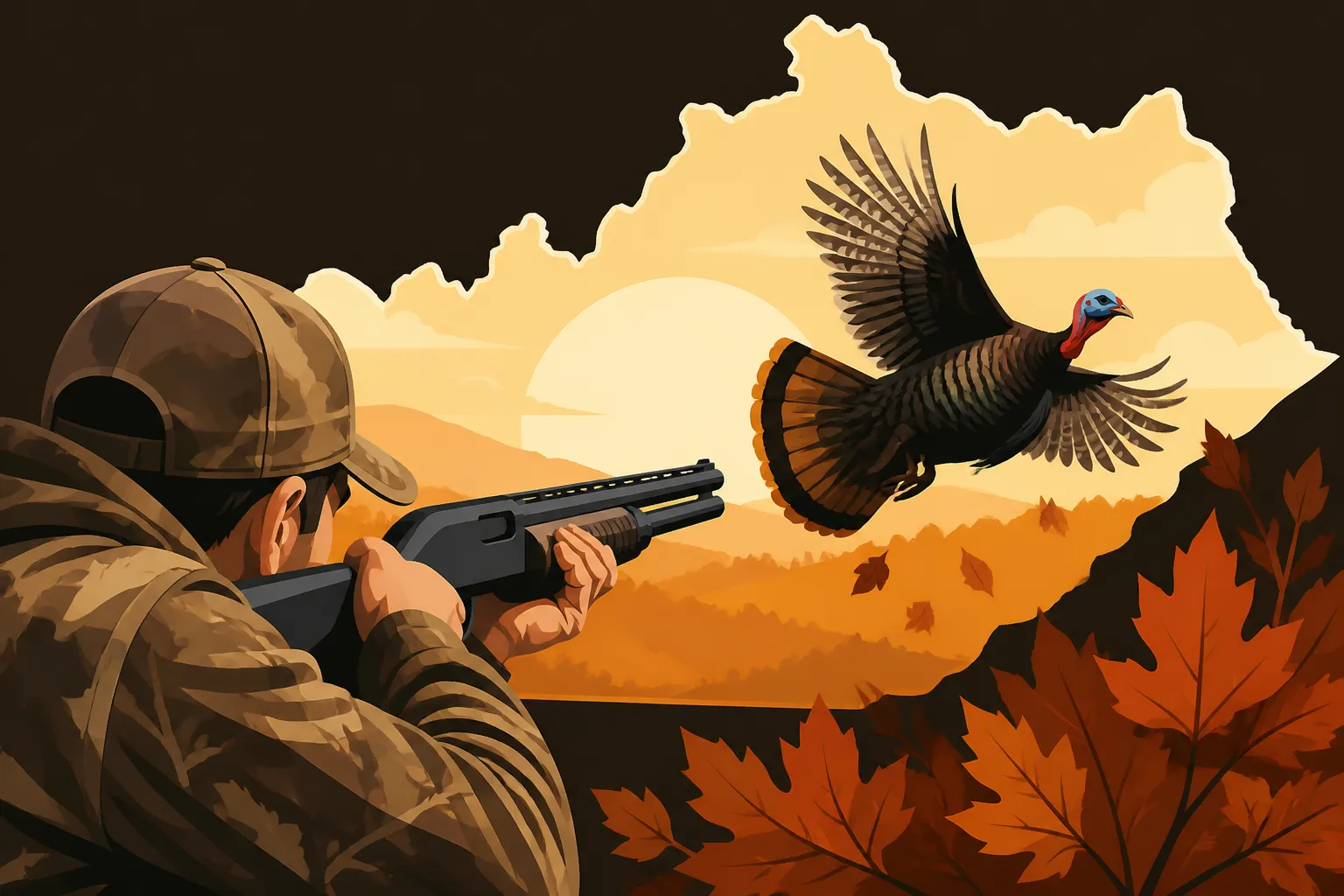
Fall Turkey Tactics With a Shotgun
Fall turkey hunting in Kentucky presents a unique set of challenges compared to the high-energy, gobbles-and-struts excitement of spring season. Many hunters, accustomed to aggressive gobblers responding readily, find themselves frustrated by the quiet, flock-focused behavior of fall birds. This guide aims to demystify fall turkey tactics, specifically leveraging your shotgun effectively, to help you understand and successfully harvest these elusive autumn birds.
Understanding Fall Turkey Behavior in Kentucky
The change from summer to fall brings a dramatic shift in how wild turkeys operate across the Bluegrass State. Forget what you think you know about chasing loudmouth gobblers in April; fall turkeys are an entirely different beast, and your strategy needs to adapt accordingly.
Flock Dynamics and Seasonal Changes
As the summer poults mature, they integrate more fully into larger, often family-based flocks. These flocks typically consist of a dominant hen, her brood from the spring, and sometimes other hens and their poults. These groups become the core social structure you'll encounter in the fall. Mature gobblers, on the other hand, often form their own "bachelor groups," sometimes numbering a dozen or more birds. These all-male flocks tend to be less vocal and stick to more secluded areas, though they will occasionally intermingle with hen and poult groups. The key difference from spring is the lack of breeding urgency; fall turkeys are primarily concerned with feeding, safety, and maintaining their social structure, not responding to a lovesick gobbler call.
Food sources play a massive role in where these flocks will be. Early fall sees birds hitting soft mast like wild grapes, dogwood berries, and blackgum. As the season progresses, acorns become king, especially white oak acorns, which are less tannic and preferred by many wildlife species. You'll find turkeys relentlessly working oak ridges and bottoms, scratching through leaf litter for these crucial calories. In agricultural areas, they might key into spilled grain in cornfields or gleaned soybeans. Understanding these shifts, much like understanding Kentucky Fall Turkey Season Structure, is paramount to locating birds.
Roosting and Feeding Patterns
Fall turkeys, much like their spring counterparts, will fly up to roost in tall trees at dusk and fly down at dawn. However, finding these roosts can be tougher in the fall because the birds are far less vocal. You won't hear those thunderous morning gobbles betraying their position. Instead, you'll need to rely on scouting for sign, listening intently for soft clucks or wing beats at first light and last light, or even catching a glimpse of them silhouetted against the evening sky. Common roost trees include large oaks, sycamores along creek bottoms, or pines on ridge tops, often in areas offering good visibility or protection from predators.
Their feeding patterns are often highly predictable once you locate a flock. They'll spend the majority of their day scratching for food, moving slowly through the woods, or dusting in dry soil. If you find heavy scratch marks, fresh droppings, and dusting bowls in a specific area, especially near a prime food source like a productive oak flat, you're likely in a turkey hotspot. Their daily routine often involves flying down from the roost, heading to a water source, then feeding for several hours before loafing in a secure area midday, and finally feeding again before heading back to the roost. This consistent behavior, once deciphered, offers excellent ambush opportunities.
Scouting and Locating Fall Flocks
Successful fall turkey hunting isn't about calling a lonesome gobbler in; it's about finding the flock, breaking it up, and then calling the scattered birds back. This starts with diligent scouting, long before your boots hit the woods with your shotgun.
Pre-Season Reconnaissance
Before you ever step foot into the woods with your shotgun, spend time studying maps. Modern mapping applications, like those offered by GoHunt, can be invaluable for identifying potential turkey habitat. Look for large tracts of mature hardwoods, especially those with oak concentrations, along with creek bottoms, powerline cuts, and the edges of agricultural fields. These areas often provide the food and cover turkeys need. Pay close attention to changes in elevation, saddles, and benches, as turkeys will use these natural travel corridors. Even checking out Finding Which Deer Zone Your County Sits In can give you a broader understanding of the land and its potential.
Once you have a few promising locations marked on your map, it's time for boots-on-the-ground scouting. Look for actual turkey sign:
- Droppings: Round, segmented droppings for gobblers; smaller, more coiled droppings for hens and poults.
- Feathers: Found near roosts, dusting bowls, or feeding areas.
- Tracks: Distinctive three-toed tracks in soft soil or mud.
- Scratch Marks: V-shaped patterns in leaf litter where birds have been digging for acorns or insects.
- Dusting Bowls: Shallow depressions in dry soil where turkeys dust themselves to remove parasites.
Focus your scouting efforts on areas that offer diverse food sources and thick cover nearby. If you're hunting public land, be prepared to walk. Turkeys often avoid areas with heavy human pressure, so getting off the beaten path is crucial. You can also utilize tools like the Kentucky Hunt Fish App to pinpoint WMAs and public access points.
In-Season Scouting and Listening
Even once the season is open, your scouting doesn't stop. Early morning and late evening are prime times to locate birds. Drive quiet backroads, stopping frequently to listen for subtle turkey sounds. Fall turkeys are typically not as loud as spring birds, but you might hear soft clucks, yelps, or even the distinctive cackle of a flock flying down from the roost. Use binoculars or a spotting scope to glass open fields, powerline cuts, or timber edges from a distance. Often, you can spot an entire flock feeding or loafing without ever disturbing them.
Once you pinpoint a general area where birds are active, approach cautiously. Move slowly, stopping often to listen and look. Avoid making unnecessary noise. If you stumble upon a flock, don't just stand there; be ready to execute the "flush and scatter" tactic, which we'll cover next. Remember, the goal in fall is to break up the flock, so disturbing them is actually part of the plan, but you need to do it deliberately and effectively.
Shotgun Tactics for Breaking Up Fall Flocks
The true magic of fall turkey hunting with a shotgun often lies in intentionally breaking up a flock. This strategy capitalizes on the turkeys' natural instinct to regroup after being scattered. It’s a complete reversal of spring tactics, where avoiding detection is usually the primary goal.
The "Flush and Scatter" Method
This is the cornerstone of fall turkey hunting. The idea is simple: locate a flock, then rush them aggressively to make them fly and run in every direction. It sounds counterintuitive, especially if you're used to being stealthy, but it works.
Here’s how to execute it:
- Locate the Flock: As discussed in scouting, find where the birds are feeding or loafing.
- Approach Stealthily (Initially): Get as close as you can without being detected. Use terrain features and dense cover to your advantage.
- Execute the Flush: Once you're within 50-100 yards (or closer if possible), yell, wave your arms, and run towards the flock. Make as much noise and commotion as possible. The goal is to send them flying and running in every conceivable direction, preferably across a ridge or into a hollow. Observe where the individual birds fly and land. This information will be crucial for your setup.
- Safety First: If hunting with others, communicate clearly about the plan. Ensure everyone knows where others are and maintains safe shooting lanes. Always know what's beyond your target.
Why does this work? Turkeys are highly social creatures. When they are scattered, especially young birds, their instinct is to immediately try and regroup with the flock. This panic and desire to reassemble is what you exploit with your calling. This method is particularly effective for hunting Kentucky's Fall Turkey Season.
Setting Up for the Regroup
Immediately after scattering a flock, you need to quickly and quietly move to a strategic position for the regroup. This is where your shotgun comes into play.
- Find a Central Location: Move to a spot that's relatively central to where the birds scattered. Often, the spot where they were originally flushed is a good place to start, as birds will naturally try to return to familiar ground.
- Choose Good Cover: Select a setup with good back cover (a large tree, a thick brush pile, a ground blind if you brought one, which can also be effective for Using a Ground Blind on Kentucky Public Land) and a clear view in the directions you expect the turkeys to return. Think about your shooting lanes.
- Be Patient and Silent: Turkeys can take anywhere from 15 minutes to several hours to start regrouping, especially older birds. Once you're set up, remain absolutely still and quiet. Don't fidget. Don't check your phone. Just be ready.
- Start Calling (Eventually): Wait at least 15-30 minutes after the flush before making your first call. Start with soft, plaintive assembly yelps, clucks, and purrs. The goal is to sound like a lonesome bird trying to find its buddies. Gradually increase the volume and frequency if you don't get a response. Consistency is key.
Decoy Usage in the Fall
While decoys are almost mandatory for many spring gobbler hunts, their role in fall can be more nuanced. They are not always necessary, especially if you're relying on the flush-and-scatter method, but they can certainly add an edge.
- Less Critical, Still Useful: In the fall, turkeys are less driven by breeding, so the visual attraction of a decoy is often secondary to the auditory signal of another bird trying to regroup. However, a realistic decoy can help divert attention from your position, giving you a bit more leeway as a bird approaches.
- Types of Decoys: A simple hen decoy or two, perhaps even a jake decoy, can work well. Avoid aggressive gobbler poses. The goal is to create a calm, inviting scene.
- Placement for Realism: Place your decoys in an open spot where they can be easily seen, 20-30 yards from your position, mimicking a bird that has come back to the original flush site. Face them slightly away from you, so incoming birds present a broadside or quartering-away shot. Remember to consider your effective shotgun range when placing them, typically within 40 yards for most turkey loads. For deeper insights into shotgun performance, check out Patterning a Turkey Gun at 40 Yards.
Calling Strategies for Fall Turkeys with a Shotgun
Calling in fall turkeys after a successful scatter is an art form that prioritizes empathy and patience over aggressive, challenging calls. You're trying to sound like a lost family member, not a rival.
Mastering the Assembly Yelp
The assembly yelp is your bread and butter for fall turkey hunting. It's the call that a scattered hen or lost poult would make to gather the flock back together.
- When to Use It: Begin with assembly yelps about 15-30 minutes after you've scattered the flock and settled into your setup. This gives the birds time to calm down and wonder where their companions went.
- How to Make It: The assembly yelp is typically a series of 10-20 yelps, starting soft and gradually increasing in volume and urgency, then tapering off. It's a longer, more drawn-out yelp than the shorter, sharper yelps often used in spring. You want to convey a sense of a lost bird looking for its family. A slate call or box call can produce excellent assembly yelps. Sometimes, a diaphragm call offers the versatility needed for subtle notes. For more on call types, explore Box Calls Versus Mouth Calls.
- Volume and Cadence: Start with soft yelps, especially if you think birds might have landed close. If you get no response after a few series, increase the volume and urgency slightly. Don't overcall; let the woods "breathe" between your calling sequences. Listen intently for even the softest replies.
Soft Calling and Purring
As turkeys get closer, or if you're trying to entice wary birds, soft calling and purring become incredibly effective. Aggressive calling can sometimes spook fall birds, who are already on edge from being scattered.
- Clucks and Purrs: These are reassuring, contented calls. Once you see birds approaching or hear them responding consistently, switch to soft clucks and purrs. This can make them feel safe and encourage them to close the distance the final few yards. A lost poult or hen won't be cackling loudly when it's just about to rejoin its family; it'll be making soft, reassuring sounds.
- The Power of Silence: Never underestimate the power of silence. Often, a turkey will gobble or cluck once in response to your call and then go silent as it cautiously approaches. If you call back immediately, you might give away your exact position. Let them come to you. If you haven't heard or seen anything for 15-20 minutes, then you can try another soft calling sequence.
- The "Gobbler" Question: While it's rarer, sometimes a fall gobbler will respond. If you suspect you've scattered a bachelor group of gobblers, you might try a gobbler yelp or even a jake gobble after your initial assembly yelps. However, this is less common than calling in hens and poults in the fall.
Shotgun and Ammunition Selection for Fall
Having the right shotgun and ammunition is just as important in the fall as it is in the spring. You'll want a reliable setup that can deliver a dense pattern at typical turkey ranges.
| Feature | Recommendation for Fall Turkey Hunting (Shotgun) | Why it Matters |
|---|---|---|
| Gauge | 12-gauge, 20-gauge | The most popular and versatile, offering a good balance of pellet count and recoil. 20-gauge is excellent for lighter recoil and still highly effective with modern loads. |
| Action | Pump-action, Semi-automatic | Both are reliable. Pump-actions are robust; semi-automatics offer faster follow-up shots if needed. |
| Barrel Length | 20-24 inches | Shorter barrels are easier to maneuver in dense cover, especially when setting up quickly after a flush. |
| Choke | Extra Full or Turkey Specific | Essential for a tight pattern to ensure enough energy and pellets for clean head/neck shots. |
| Ammunition | Heavier-than-lead (Tungsten Super Shot – TSS), | TSS offers superior density, allowing smaller shot sizes (#7, #9) to carry more energy and deliver higher pellet counts. Standard lead loads (#4, #5, #6) are still effective. |
| Shot Size | #4, #5, #6 (Lead); #7, #9 (TSS) | Matches the choke to create a dense pattern for quick kills. Smaller TSS pellets have the energy of larger lead. |
| Patterning | Crucial at 20, 30, and 40 yards | Know your gun's effective range and pattern density. This is non-negotiable for ethical turkey hunting. |
Modern turkey loads, particularly those using Tungsten Super Shot (TSS), have revolutionized turkey hunting. These denser-than-lead pellets deliver incredible energy and pattern density, extending the effective range of even a 20-gauge shotgun. While they are more expensive, the confidence they instill and the increased effectiveness are often well worth the investment. Many hunters attest to Tungsten Turkey Loads Worth the Price for their performance. Before you hit the woods, take your chosen shotgun and ammunition to the range and pattern it thoroughly at various distances. Knowing your gun's limitations is vital for making ethical shots and ensuring a clean harvest.
Hunting fall turkeys with a shotgun is a rewarding experience that demands a different mindset and skillset than spring hunting. By understanding flock dynamics, diligent scouting, effectively using the flush-and-scatter method, and mastering nuanced fall calling strategies, you can greatly increase your odds of success. Remember, patience, stealth, and adapting to the birds' behavior are your greatest allies in the autumn woods of Kentucky.
Disclaimer
Hunting is an inherently dangerous activity. Always prioritize safety, adhere to all local and state regulations, and ensure you have the necessary licenses and permits. The information provided here is for educational purposes and should not replace proper hunter education or professional guidance. Always verify current regulations with the Kentucky Department of Fish and Wildlife Resources (KDFWR) before heading afield.