Setting Up on a Western Kentucky Field Edge
Hunting a field edge in Western Kentucky might seem straightforward at first glance, but without a strategic setup, you could be educating every deer in the county without ever getting a shot. Many hunters struggle with consistent success because they fail to account for the nuances of wind, deer movement, and access when placing their stands. This comprehensive guide will walk you through everything you need to know to effectively set up on those crucial field edges, turning frustrating busts into rewarding hunts.
Understanding the Western Kentucky Field Edge Advantage
Western Kentucky, with its expansive agricultural fields, meandering creek bottoms, and rolling fencerows, presents a unique set of opportunities for deer hunters. Unlike the steep, timbered ridges of Eastern Kentucky, the landscape here often funnels deer movement along distinct lines, making field edges prime locations for intercepting whitetails.
Why Field Edges are Deer Magnets
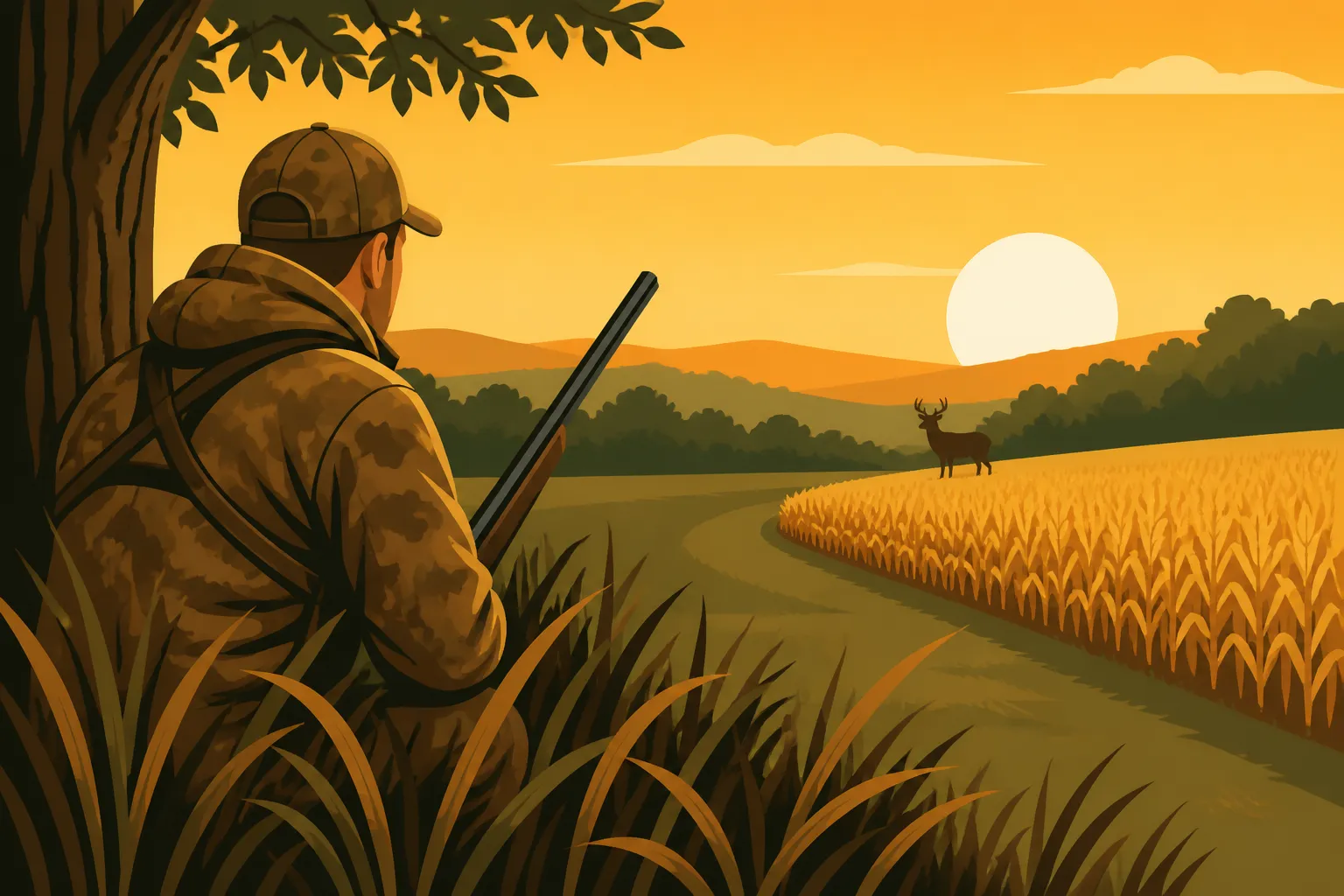
Field edges are more than just a line between two different habitats; they are dynamic zones that serve multiple critical functions for deer, making them incredibly attractive. Primarily, they offer immediate access to food sources, whether it's lush alfalfa in the spring, a standing soybean field in early archery season, or a picked cornfield in the late season. Deer will stage in the timber or brush along these edges, often just out of sight, before venturing into the open to feed.
Beyond food, these edges act as natural travel corridors. Deer often prefer to skirt the safety of cover rather than crossing wide-open spaces, especially mature bucks. These perimeters become superhighways for deer moving between bedding areas, water sources, and feeding grounds. You'll often find parallel trails just inside the timber, offering deer a sense of security while still allowing them to monitor the field.
The seasonal changes heavily influence how deer use these edges. In early fall, a green agricultural field like soybeans or alfalfa can pull deer out consistently in the evenings. As crops are harvested and temperatures drop, a standing cornfield or a field of leftover beans might become the most sought-after food source. Understanding this ebb and flow is key to predicting when and where deer will appear.
It's also important to consider hunting pressure. While field edges are attractive to deer, they're also attractive to hunters. On public land or heavily hunted private tracts, deer can become conditioned to avoid daylight activity along exposed edges. This means you might need to push a little further into the timber, or focus on very specific, less obvious features of the edge to catch a wary buck.
Identifying Key Field Edge Features
Not all field edges are created equal. To truly maximize your chances, you need to be able to identify the specific features along a perimeter that naturally draw and hold deer. These subtle landscape elements can concentrate deer activity and create predictable movement patterns.
One of the most potent features is a corner or point where the field juts into the timber, or where two types of cover meet. These spots act as natural pinch points, funnels, or staging areas. Deer often feel more secure entering or exiting a field from a corner, as it provides multiple escape routes and better cover than a straight, open line. Likewise, a narrow strip of timber connecting two larger woodlots along a field is a prime location.
Look for undulations, ditches, or even small depressions along the field edge. These low spots offer a degree of concealment for deer as they transition into the open, making them feel safer. A deep ditch filled with briars or small saplings can be a hidden travel route, providing cover that deer will readily utilize, even if it's only a few yards wide. These micro-features might not look like much on a map, but they can be game-changers on the ground.
Pay close attention to the adjacent timber types and potential bedding areas. Is there a thick stand of pines or a dense thicket of briars just inside the tree line? Deer often bed surprisingly close to food sources, especially if adequate cover is available. A field edge that borders an old growth timber stand, particularly one with good mast crops like oaks, will be used differently than one bordering a regenerating clear-cut. Tools like GoHunt can be invaluable for pinpointing these crucial spots from an aerial perspective.
Finally, don't overlook nearby water sources. While Western Kentucky has plenty of creeks and rivers, a small pond or even a seep spring just off a field edge can be an added draw, especially during dry spells or in the early season when deer need more hydration. Deer will often hit water before or after feeding, creating another predictable movement pattern you can capitalize on.
Reading the Sign Along the Perimeter
Once you've identified potential hot spots on your map or from a distance, it's time to get boots on the ground and read the natural signs deer leave behind. This forensic work will confirm your suspicions and help you fine-tune your stand location to the exact travel patterns of the local herd.
One of the clearest indicators of buck activity is the presence of scrapes and rubs along the tree line bordering a field. Scrapes are often found on well-used trails or at the edge of openings, serving as communication hubs. Rubs, on the other hand, indicate a buck marking his territory. If you find a line of fresh rubs leading down an edge, you know bucks are traveling that route with purpose.
Look for tracks and distinct trails entering and exiting the field. Are they well-worn paths, suggesting consistent use, or just sporadic tracks? Pay attention to the size and freshness of the tracks. Large, deep tracks indicate heavier, mature deer. Multiple fresh tracks, especially at an obvious entry/exit point, are a strong sign of frequent activity. Remember, deer will often follow the path of least resistance.
Beyond tracks, look for droppings, evidence of feeding activity, and browse lines. Piles of deer droppings, particularly fresh ones, will tell you that deer are spending time in the immediate vicinity. If you see broken stems on agricultural crops or browse lines on woody vegetation, you know deer are actively feeding there. This information, combined with fresh tracks, can help you determine if deer are simply passing through or actually using the field as a primary food source.
Before you even step foot in the woods, a thorough digital scouting session using platforms like GoHunt can save you hours and reduce disturbance. You can mark potential bedding areas, identify funnels, and plan your approach routes. Then, use those insights to guide your physical scouting. When you're in the field, always be mindful of wind and thermals, even when scouting, to avoid leaving too much scent in areas you plan to hunt. For a deeper dive into how to effectively analyze terrain, you might find valuable insights in Reading Aerial Photos for Eastern Kentucky Deer, as many of the same principles apply regardless of the specific region.
Strategic Stand Placement for Field Edge Success
Once you've done your homework and identified a promising field edge, the next crucial step is placing your stand or blind in a way that maximizes your chances while minimizing your impact. This isn't just about finding any tree, but finding the right tree or location.
Wind Direction is Paramount
Ignoring wind direction is perhaps the single biggest mistake a hunter can make, especially when hunting wary deer along an open field edge. Deer have an incredible sense of smell, and even the slightest whiff of human scent can send them scattering. You absolutely must ensure your scent cone is blowing away from where you expect deer to approach or travel.
This means you need a thorough understanding of the prevailing winds for your specific hunting area and how they interact with terrain. In Western Kentucky, while you might have a dominant westerly wind, local topography like creek bottoms, ditches, or even tree lines can create swirling eddies. Always check the actual wind direction on-site with a wind checker or a simple piece of string before heading to your stand.
Thermals play a huge role, particularly at dawn and dusk. In the morning, as the sun heats the ground, air currents typically rise, carrying your scent upwards. In the evening, as the air cools, thermals drop, carrying your scent down into the low spots. If you're hunting a field edge that sits higher than a nearby creek bottom, your morning hunt might be compromised by falling thermals if deer are below you. For more detailed information on this topic, refer to Wind and Thermals on a Kentucky Ridge.
Because wind can be fickle, it's always wise to have multiple stand options for a single field edge. One stand might be perfect for a northerly wind, while another caters to a southerly breeze. This prevents you from "burning out" a spot by hunting it with an unfavorable wind, which will undoubtedly educate deer to your presence. Having flexibility is key to consistent success.
Optimizing Entry and Exit Routes
Even the perfect stand location is worthless if your approach and departure spook deer. Your entry and exit routes must be meticulously planned to keep you undetected, quiet, and out of sight of the deer you're trying to hunt. This often means taking a longer, more circuitous path.
Always strive to use natural cover to your advantage. Walk in ditches, along fencerows, or through dense timber to keep your silhouette broken. Avoid walking along the open edge of a field, especially in daylight. If you must cross an open area, do it quickly and efficiently, preferably during low light when deer are less likely to be in the open.
Minimize noise and disturbance at all costs. This means wearing quiet clothing, taking slow and deliberate steps, and avoiding unnecessary chatter. If you're breaking twigs or rustling loudly through leaves, deer in the vicinity will know something is up. The quieter you are, the more likely deer are to remain undisturbed by your approach.
Consider the time of day for your routes. For an evening hunt, you might approach from downwind, staying deep in the timber. For a morning hunt, you might need to come in from a different direction entirely, perhaps using a topographical feature to mask your movement as you climb into your stand before dawn. Your goal is to be in your stand well before deer start moving.
Finally, think about game recovery. If you harvest a deer, how will you get it out? A field edge often offers easier access than deep timber, but if your exit route takes you directly through a bedding area, you risk spooking every other deer in the area for days to come. Planning for the retrieve is just as important as planning the hunt.
Choosing the Right Tree or Blind Location
Selecting the precise spot for your treestand or ground blind along a Western Kentucky field edge is critical. It involves balancing concealment, shot opportunity, and the flow of deer traffic. Your goal is to be invisible while having a clear, ethical shot.
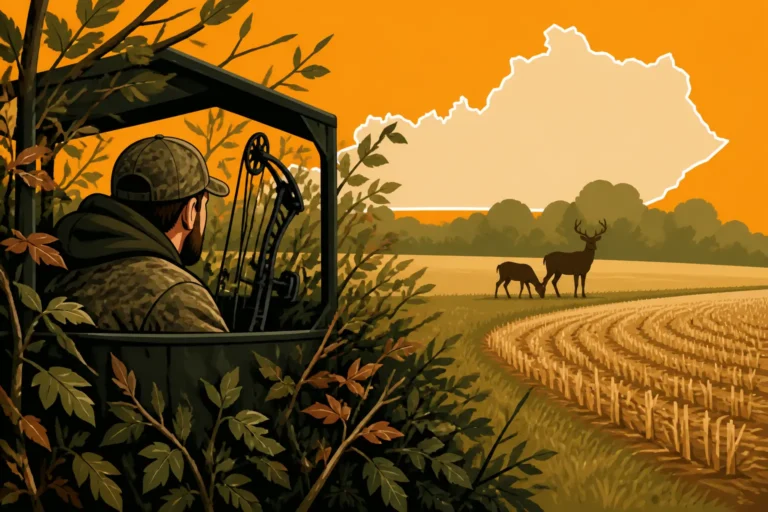
For a treestand, aim for adequate height, generally 20-25 feet, to get above a deer's primary line of sight and help disperse your scent. Crucially, choose a tree that offers good background cover, like a cluster of evergreens or a dense canopy. Being silhouetted against the open sky is a surefire way to get busted. Look for trees along a trail or pinch point, giving you an ideal shot angle as deer pass.
If you opt for a ground blind, camouflage is king. Set it up well in advance to allow deer to get used to its presence, and brush it in meticulously with natural vegetation from the area. Using a Ground Blind on Kentucky Public Land covers many essential tips for effective blind placement. Position the blind so that you have clear shooting lanes but remain completely concealed from all directions deer might approach. Ensure you're not facing the prevailing wind directly, as scent can easily blow out of the blind's openings.
Consider your shot angles and lanes carefully. Can you ethically shoot a deer walking down the edge, or crossing a specific lane? Clear any small branches or obstructions that might deflect an arrow or bullet. Ensure your stand location provides good visibility of the field itself, but also the key entry and exit points in the timber.
Finally, pay attention to the sun's position. For an evening hunt, you don't want the setting sun directly in your eyes, blinding you at the critical moment. Position your stand so the sun is at your back, illuminating the deer while you remain in shadow. This also helps minimize glare on your optics.
Tactics for Hunting Western Kentucky Field Edges Throughout the Season
Western Kentucky field edges change dramatically as the hunting season progresses, from the lush greens of early fall to the stark, picked fields of winter. Adapting your tactics to these seasonal shifts is essential for consistent success.
Early Season Strategies
When Kentucky's archery season opens, those field edges are green and vibrant, often bordering crops like soybeans, alfalfa, or lush food plots. Deer, especially does and young bucks, will be on a consistent pattern of bedding nearby and moving to these fields in the late afternoon and evening to feed. Your early season strategy should revolve around intercepting these predictable evening movements.
Focus on identifying the exact entry points deer use to access the fields. Look for well-worn trails in the dirt or grass leading from the timber. These can be pinpointed through careful scouting, perhaps with the help of trail cameras placed discreetly inside the timber edge. You'll want to be in your stand hours before sunset, allowing the woods to settle down around you. For more insights on this period, check out Bowhunting Kentucky's Long Archery Season.
Scent control is absolutely critical during the early season. Warmer temperatures mean your scent will linger longer and spread further. Shower with scent-eliminating soap, wear clean clothes, and use a scent-eliminating spray on all your gear. Approach your stand carefully, always paying attention to the wind, to avoid contaminating the area.
Another smart tactic is to scout out which particular fields deer are keying in on. Just because one field has soybeans doesn't mean it's the deer's favorite. Some fields might have higher protein content, better access to water, or simply less pressure. The Kentucky Deer Population Estimate often shows robust numbers across Western Kentucky, meaning deer have choices, and you need to find the specific fields they prefer. Using the Scouting with the Kentucky Hunt Fish App can help you identify public land field edges or even get a jump on private land permission by understanding property boundaries.
Rut and Mid-Season Approaches
As October gives way to November, and the rut begins to kick in, field edges become high-traffic areas for a different reason. Bucks are no longer just focused on food; they're actively cruising for does. This means deer movement can become less predictable but often more intense. A well-placed stand on a field edge can be an absolute goldmine.
During the rut, bucks will often patrol the perimeter of fields, scent-checking for receptive does that might be feeding or staging. Focus your efforts on pinch points, corners, and areas where cover bottlenecks deer movement along the edge. These are the places where a cruising buck is most likely to encounter a doe or to be visible from your stand.
This is also an excellent time to incorporate calling into your strategy. A few soft grunts or rattling sequences can pique the interest of a buck passing by, drawing him closer to investigate. Knowing when and how to deploy these sounds effectively can be the difference-maker. More information on these techniques can be found in Rattling and Grunting in Kentucky.
All-day sits can be incredibly productive during the peak of the rut, especially if you're positioned on a critical travel corridor or pinch point. While deer might feed in the evenings, bucks will be moving throughout the day, following scent trails and checking bedding areas near the fields. If you are hunting during this crucial time, understanding Hunting the Kentucky Rut in Early November will give you an edge. Pack enough food, water, and warm layers to stay in your stand from dawn till dusk.
Late Season and Post-Harvest Considerations
Once the leaves have fallen, temperatures have plummeted, and most crops have been harvested, Western Kentucky field edges undergo a dramatic transformation. Deer are now solely focused on finding high-calorie food sources to sustain them through the winter. This often means leftover corn, soybean stubble, or winter food plots.
Your late-season strategy should pivot to finding those remaining food sources. A picked cornfield, even with only a few ears left, can be a major draw. Standing cornfields, if present, offer both food and crucial thermal cover from the harsh winter winds. Deer will concentrate their activity around these dwindling resources.
Thermal cover becomes paramount. Deer will seek out dense thickets, cedar stands, or sheltered creek bottoms that offer protection from the cold winds and provide warmth. Look for field edges that are adjacent to these types of cover. Deer will bed in the thickets during the day and move directly to the nearby fields in the late afternoon.
The late season can be tough, with deer often becoming more nocturnal due to hunting pressure. However, severe cold fronts or heavy snow can trigger increased daylight movement as deer are forced to feed more frequently. Understanding how to adapt to these challenging conditions is key to Hunting the Late-Season January Lull.
As hunting pressure mounts throughout the season, deer often learn to avoid the most obvious field entry points. They may start to use more subtle, less exposed routes, or only venture into the fields well after dark. This is when patience and persistence truly pay off, along with meticulous scouting to find those hidden access points and less pressured areas along the edges.
Common Mistakes and How to Avoid Them
Even with the best intentions, hunters often fall into common traps when setting up on field edges. Recognizing these pitfalls and actively working to avoid them can dramatically improve your success rate in Western Kentucky.
Overhunting and Poor Stand Access
One of the quickest ways to ruin a good field edge spot is to overhunt it or use poor access routes. Deer are incredibly intelligent and quickly learn patterns of human intrusion. If they consistently smell or see you entering and exiting a stand, they will simply shift their patterns or go nocturnal.
Many hunters make the mistake of having only one or two stand locations for an entire area. This forces them to hunt a spot even when conditions aren't ideal, like a bad wind, or when deer patterns have temporarily shifted. The solution? Have multiple stand locations along a promising field edge, allowing you to rotate stands and let spots "rest." This reduces pressure and keeps deer from becoming educated to your presence.
Educating deer with sloppy entry and exit is a cardinal sin. If you're walking across open ground at midday, slamming your truck door, or leaving a trail of scent, you're essentially putting a warning sign up for every deer in the vicinity. Always prioritize stealth, quiet, and scent control during your approach and departure. Consider using an electric bike or ATV for outer access points if legal, but always walk the final hundred yards or more to your stand.
Before the season even begins, use tools like the Kentucky Hunt Fish App or a mapping application like GoHunt to identify potential travel corridors, bedding areas, and alternative access points that might see less pressure. This strategic pre-season scouting can reveal overlooked areas or approaches that others ignore, giving you an advantage.
Misjudging Wind and Thermals
As mentioned earlier, getting busted by the wind is a primary frustration for field edge hunters. However, many hunters misjudge the nuances of wind and thermals, leading to repeated failures. It's not enough to simply check a weather app.
One common mistake is underestimating subtle wind shifts. Wind rarely blows in a perfectly straight line, especially around topography, even gentle Western Kentucky hills, or dense timber. A wind that seems to be blowing perfectly can swirl or eddy for a few seconds, carrying your scent directly into the path of an approaching deer. Using a powdered wind checker frequently while on stand is crucial for detecting these momentary changes.
Ignoring thermals, particularly at morning and evening, is another major oversight. Many hunters forget that air movement is heavily influenced by temperature changes. As the sun rises, warm air (and your scent) lifts. As it sets, cool air (and your scent) sinks. If your stand is positioned on a slight rise near a field edge, and deer are approaching from a lower creek bottom in the evening, dropping thermals will carry your scent right to them.
Don't rely solely on a general weather app for wind direction. While it provides a good overview, micro-climates and local terrain features can drastically alter the actual wind experienced at your stand. Always confirm the real-time wind with an on-site check. If the wind is consistently doing something unexpected, it might be time to move.
A good practice is to have a "wind plan" for each stand site. Know exactly what wind directions are favorable, and which are absolute no-gos. If the wind isn't right, don't hunt that stand. It's better to stay home or choose an alternative location than to educate a mature buck with your scent.
Neglecting Background and Camouflage
Being seen by deer is just as detrimental as being smelled. Many hunters, especially when using treestands, fail to consider their background and adequate camouflage, making them stick out like a sore thumb to wary whitetails.
Silhouetting yourself against the sky is a common mistake. If your stand is placed in an isolated tree with no other trees or branches behind you, your outline will be starkly visible against the open sky, especially during low light. Always choose a tree that has other trees, thick branches, or dense foliage directly behind it to break up your outline.
For ground blinds, simply deploying the blind isn't enough; you must brush it in. An un-brushed ground blind is a black box in the middle of nature, an obvious anomaly that deer will quickly avoid. Use natural materials like branches, leaves, and tall grasses to blend your blind seamlessly into its surroundings. The goal is for the blind to look like a natural part of the landscape.
Remember, deer are constantly on alert for predators. Anything that looks out of place, or a sudden movement against a uniform background, will draw their attention. This means wearing appropriate camouflage that matches the season and local vegetation, minimizing movement, and ensuring your equipment (bow, rifle, pack) is also well-camouflaged.
Utilizing natural cover effectively also extends to your approach. As you walk to your stand, use every dip, fold, and patch of brush to conceal your movement. The less deer see of you from a distance, the more confident they'll be when they approach your field edge. Even small details, like having a dark background behind you in a treestand, can make a significant difference in getting away with subtle movements.
Field Edge Stand Placement Considerations
| Consideration | Treestand | Ground Blind |
|---|---|---|
| Visibility | Excellent elevated view, can see long distances. | Eye-level view, mimics natural ground cover. |
| Concealment | Relies on tree background, height, and minimal movement. | Excellent, if well-brushed and set early. |
| Wind Impact | Scent disperses from height, but still critical. | Scent can be trapped or blow out of openings. |
| Setup Time | Can be quicker to hang, or set permanently. | Requires earlier setup, brushing in. |
| Shot Angle | Downward angle, less likely to hit far-side leg. | Level shot, requires careful target acquisition. |
| Mobility | Easily moved if using climber/saddle; fixed stands less so. | Can be moved, but re-brushing is required. |
| Comfort | Can be less comfortable for long sits; harness needed. | More comfortable, protected from elements. |
| Terrain Suitability | Versatile, but needs suitable trees. | Best for open edges, fence rows, flat ground. |
Disclaimer
Hunting is an inherently dangerous activity. Always prioritize safety, follow all applicable hunting regulations set forth by the Kentucky Department of Fish and Wildlife Resources, and ensure you have the proper licenses and permits before heading into the field. This guide provides general information and recommendations, but individual hunting situations can vary. It is your responsibility to understand and comply with all local, state, and federal laws.