Kentucky Migratory Bird Certification
Hunting migratory birds in Kentucky can feel like navigating a maze of permits, stamps, and certifications, especially if you're new to the game or just haven't chased ducks and doves in a while. It's easy to get confused about what's truly required beyond your basic hunting license. This guide is here to untangle the specifics of Kentucky's Migratory Bird Certification, helping you understand why it's necessary, how to get it, and what else you'll need to hit the fields and flooded timber with confidence.
Understanding the Kentucky Migratory Bird Harvest Information Program (HIP)
When you're preparing for a season of dove shoots, chasing woodcock, or hunkering down in a blind for ducks, you'll inevitably encounter the term "HIP certification." It's one of those things that hunters often just click through without fully grasping its importance, but it plays a crucial role in wildlife management.
What HIP Actually Is
At its core, the Harvest Information Program (HIP) isn't a license you purchase; rather, it's a federal requirement that acts as a survey and registration system for migratory bird hunters. Think of it less like buying a tag and more like signing up for a specialized tracking program. Every single person, regardless of age, who plans to hunt any migratory game birds in Kentucky (or any other state) must be HIP certified. This isn't just a Kentucky thing; it's a nationwide program managed by the U.S. Fish and Wildlife Service (USFWS) in cooperation with state wildlife agencies like the Kentucky Department of Fish and Wildlife Resources (KDFWR). The certification process involves answering a few simple questions about your previous year's migratory bird hunting activity. For instance, you might be asked if you hunted doves last year, how many you harvested, or if you pursued ducks and geese. The answers to these questions are anonymous and aggregate, meaning they're combined with data from thousands of other hunters to provide a broad picture of harvest trends. Without this certification, even if you have all your other licenses and stamps, you're not legally permitted to hunt migratory birds.
The Scope of "Migratory Birds" in Kentucky
It’s important to understand that "migratory birds" aren't just waterfowl. While ducks and geese are certainly included, the category is much broader, encompassing a variety of species that undertake seasonal migrations. In Kentucky, this specifically means species like doves, woodcock, snipe, rails, gallinules, and coots, in addition to ducks and geese. Many hunters assume HIP is only for duck hunters because of the federal duck stamp requirement, but that's a common misconception. If you're planning on participating in a dove opener, arguably one of Kentucky's most popular hunting traditions, you must have your HIP certification. Similarly, if you enjoy the challenging pursuit of Kentucky Woodcock Season Dates in the thick cover or trying to hit the darting How Long Kentucky's Snipe Season Runs, HIP is non-negotiable. Knowing which species fall under this umbrella is the first step to ensuring you're fully compliant with all state and federal regulations before heading afield.
Why Every Hunter Needs HIP Certification in Kentucky
You might wonder why a simple survey is so critical it's a federal mandate. The truth is, the data collected through HIP is an indispensable tool for wildlife management, ensuring the long-term health and sustainability of migratory bird populations that traverse state and international borders.
The Vital Role in Conservation and Management
Migratory birds don't recognize state lines or property boundaries. A duck hatched in Canada might winter on Kentucky Lake, while a dove raised in Kentucky could spend its colder months in Central America. This international movement means managing these species requires a coordinated effort, and that effort is heavily reliant on accurate, up-to-date information on hunter activity and harvest rates. The data collected through HIP provides wildlife biologists with crucial insights into population dynamics. For example, if harvest numbers for a particular species increase or decrease significantly, it prompts further investigation. This data helps state and federal agencies make informed decisions about hunting seasons, bag limits, and conservation efforts. Without this comprehensive data, it would be much harder for agencies to detect declines in populations, identify key habitats, or understand the impact of hunting pressure, which could jeopardize the future of these shared resources. This information is vital for setting everything from Kentucky Duck Zone Boundaries to bag limits on specific species, all with the goal of sustainable hunting.
Federal Mandate and Kentucky's Participation
The requirement for HIP certification stems from the Migratory Bird Treaty Act, an international agreement between the U.S. and several other countries (Canada, Mexico, Japan, and Russia) to protect migratory bird populations. To fulfill its obligations under this treaty, the USFWS established the HIP program. Every state, including Kentucky, participates in this program by requiring all migratory bird hunters to complete the certification. Kentucky, specifically through the KDFWR, integrates the HIP certification process into its existing licensing system. This means that when you purchase your annual hunting license or a specific migratory bird permit, you'll typically be prompted to complete the HIP survey as part of that transaction. It's a seamless way to ensure broad compliance and collect the necessary data without creating an entirely separate bureaucratic hurdle. Failure to complete the HIP certification can result in fines and penalties, just like hunting without any other required license or stamp. It's not just a suggestion; it's a legal obligation that supports the very wildlife you pursue.
How to Easily Get Your Kentucky HIP Certification
Getting your Kentucky Migratory Bird Certification is usually a straightforward process, designed to be integrated into your regular license purchases. There are several convenient ways to ensure you're properly certified before you head out.
Online, Phone, or In-Person: Your Options
The most common and often easiest way to get your HIP certification in Kentucky is online through the KDFWR website. Most hunters are already familiar with this portal for buying their annual hunting and fishing licenses. When you go to purchase your license, or if you already have one and just need to add the migratory bird certification, the system will guide you through the process. It's usually a quick series of checkboxes and numerical entries regarding your hunting activity from the previous season.
Alternatively, you can call the KDFWR licensing hotline. A friendly representative can walk you through the process over the phone, taking your information and ensuring your certification is linked to your existing license. This is a great option if you're not comfortable with online transactions or run into any technical snags. Finally, for those who prefer face-to-face interaction or need to pick up other gear, you can get certified in person at any authorized license vendor across Kentucky. These include many sporting goods stores, bait shops, and some general merchandise retailers. Just let the clerk know you need to add your HIP certification, and they'll help you complete the brief survey right there at the counter. Whichever method you choose, make sure you receive confirmation that your certification has been successfully added to your hunter profile. Some hunters use tools like the GoHunt app or other digital license management systems to keep all their permits and certifications organized on their phone, which can be incredibly helpful in the field.
The Simple Questions and What They Mean for You
When you go through the HIP certification process, you'll be asked a few basic questions about your migratory bird hunting activity during the previous season. These questions are usually along the lines of:
- Did you hunt doves last year?
- If so, how many did you harvest?
- Did you hunt ducks last year?
- If so, how many did you harvest?
- Did you hunt geese last year?
- If so, how many did you harvest?
- Did you hunt woodcock, snipe, rails, gallinules, or coots last year?
- If so, how many did you harvest of each?
Don't fret if you didn't hunt a particular species or if you can't remember the exact number you harvested. The system is designed to collect estimates, and simply stating "0" or your best approximation is perfectly acceptable. The goal isn't to catch you in a lie, but to gather broad statistical data. For hunters who are brand new to migratory bird hunting and didn't hunt any species the previous year, you would simply answer "no" or "0" for all questions. This still fulfills the certification requirement. The important thing is to complete the process honestly and accurately to the best of your recollection. This simple step contributes directly to the KDFWR's ability to manage healthy populations and ensures that future generations will have opportunities for Waterfowl Hunting Kentucky Lakes and Rivers and other migratory bird pursuits.
Common Confusions and Essential Clarifications About HIP
The migratory bird regulations can be a bit opaque, leading to some common misunderstandings, especially regarding the nature of HIP certification. Let's clear up some of those frequently asked questions.
HIP vs. Licenses: It's Not the Same Thing
One of the most persistent confusions revolves around whether HIP certification is another type of license or permit you purchase. To reiterate: it is not a license you buy. Think of it more like a federal registration or survey that accompanies your state hunting license. You don't pay a separate fee specifically for HIP certification. It's integrated into the licensing system as a mandatory step for anyone intending to hunt migratory birds. Your annual Kentucky hunting license (resident or nonresident) is your primary permit to hunt game animals. For migratory birds, you also need the HIP certification. For waterfowl, you'll need even more on top of that (which we'll cover next). It's easy to assume if you've got your "paperwork" that you're good to go, but missing this single, non-monetary step can render your other licenses invalid for migratory bird hunting. Always double-check your GoHunt account or paper license to confirm that "HIP Certified" or a similar indicator is present. For instance, if you're planning on Dove Hunting a Cut Kentucky Field, you might have your annual license ready, but if you forgot to tick that HIP box, you're out of compliance.
What If Your Hunting Plans Change?
Life happens, and sometimes hunting plans change. Maybe you got your HIP certification in August for dove season, but then decided against duck hunting in December. Or perhaps you certified but then never actually made it out to hunt migratory birds at all. Do you need to do anything? The short answer is no. Once you are HIP certified for the current license year, you're covered. The certification remains valid for the entire Kentucky hunting license year (which typically runs from March 1st to the end of February the following year), regardless of whether you end up hunting migratory birds or not, or which specific species you pursue. The key is that you intended to hunt them, and therefore provided the necessary data.
Conversely, if you didn't initially certify because you weren't planning on hunting migratory birds, but then a last-minute opportunity arises (like an invitation to a great Reading a Bottomland Slough for a Morning Flight goose hunt), you can always go back and complete the HIP certification at any point during the license year. It's never too late, as long as you complete it before you head afield to hunt migratory birds. The KDFWR wants you to be compliant, so the system is flexible enough to accommodate changes in your hunting intentions.
Beyond HIP: Other Essential Permits for Kentucky Bird Hunters
While HIP certification is foundational for migratory bird hunting, it's just one piece of the puzzle, especially for waterfowl. Depending on what you're chasing, you'll likely need additional stamps and permits.
The Federal Duck Stamp: Your Waterfowl Ticket
For any hunter aged 16 or older who plans to hunt ducks, geese, brant, or swans (which are rarely hunted in Kentucky), the Federal Migratory Bird Hunting and Conservation Stamp, universally known as the "Federal Duck Stamp," is an absolute must-have. Unlike HIP certification, the duck stamp is indeed a physical stamp (though it's often purchased electronically and then mailed to you, with an e-stamp acting as temporary proof). It costs money, and 98% of the proceeds from its sale go directly to conserving wetland habitats critical for migratory birds and other wildlife. Since its inception in 1934, federal duck stamp sales have conserved over 6 million acres of wetlands. It's one of the most successful conservation programs in history, and purchasing one is a direct contribution to the resources you enjoy.
It's vital to remember that the Federal Duck Stamp is required in addition to your HIP certification and your basic Kentucky hunting license. You cannot hunt waterfowl in Kentucky without all three. You can purchase the federal duck stamp online, at many post offices, or at most authorized KDFWR license vendors. Make sure to sign your physical duck stamp across the front with indelible ink once you receive it. Even if you manage your licenses through a digital platform like GoHunt, having your physical stamp signed and on your person (or having the valid e-stamp proof) is the legal requirement. For serious waterfowlers preparing for Layout Blind Hunting Western Kentucky Fields or a hunt deep in the Hunting Land Between the Lakes Waterfowl, this stamp is as essential as your shotgun.
Kentucky State Waterfowl Permits and Zones
In addition to the federal requirements, Kentucky has its own specific state permits for waterfowl hunting. All hunters pursuing ducks, geese, or other waterfowl species in Kentucky must possess a Kentucky Migratory Bird/Waterfowl Permit. This state-level permit helps fund Kentucky's specific waterfowl management and research programs. Just like your basic hunting license, this permit can be purchased online through the KDFWR website, over the phone, or in person at a license vendor.
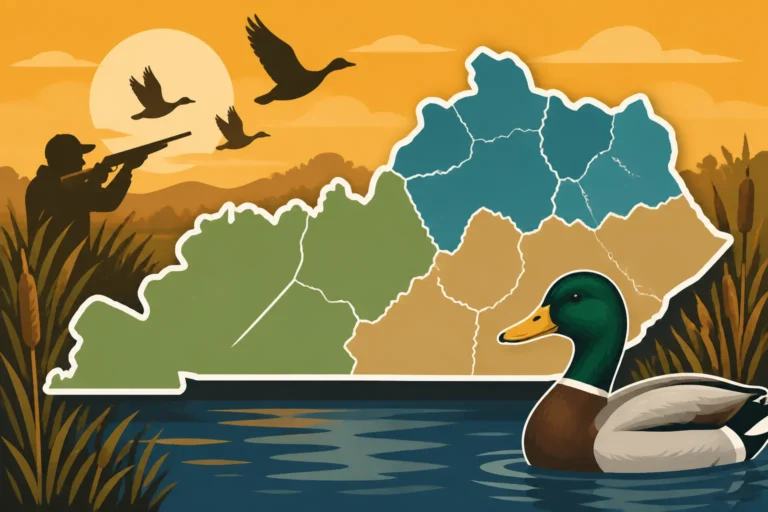
Kentucky is also divided into different Kentucky Duck Zone Boundaries for waterfowl seasons, which can sometimes lead to confusion. These zones (typically Western, Central, and Eastern) have different opening and closing dates and sometimes varying bag limits. Before you plan your hunt, always consult the current KDFWR Waterfowl Guide or check the official KDFWR website to confirm which zone you're hunting in and what the specific dates and regulations are for that season. For example, if you're planning Early Goose Season Tactics in Kentucky, knowing your zone is crucial for setting out on the right dates.
Here’s a quick summary of the essential permits and certifications for different types of migratory bird hunting in Kentucky:
| Hunting Type | Basic KY Hunting License | KY Migratory Bird Certification (HIP) | Federal Duck Stamp | KY Waterfowl Permit |
|---|---|---|---|---|
| Doves | Yes | Yes | No | No |
| Woodcock/Snipe | Yes | Yes | No | No |
| Ducks/Geese | Yes | Yes | Yes | Yes |
| Rails/Gallinules | Yes | Yes | No | No |
Special Considerations for Dove, Snipe, and Woodcock
While doves, snipe, and woodcock require the basic Kentucky hunting license and the HIP certification, they do not require the Federal Duck Stamp or the Kentucky Waterfowl Permit. This is an important distinction that often trips up new hunters. If your primary migratory bird interest is Dove Hunting a Cut Kentucky Field or stalking timber for hunting the woodcock flight through Kentucky, you can breathe a sigh of relief knowing you won't need those additional stamps. However, all migratory bird species, including these upland birds, have specific season dates and bag limits set by the KDFWR. Always consult the most current Kentucky Fall Hunting and Trapping Guide or the KDFWR website before each season to ensure you are up-to-date on all regulations for the species you intend to hunt. Staying informed is the best way to ensure a legal and enjoyable hunting experience in the Bluegrass State.
Disclaimer
Please note: Hunting regulations can change. While this guide provides comprehensive information based on current knowledge, always verify all season dates, bag limits, and licensing requirements with the official Kentucky Department of Fish and Wildlife Resources (KDFWR) regulations before heading into the field. This content is for informational purposes only and should not be considered legal advice.