Kentucky Deer Damage Permits for Farmers
If you're a farmer in Kentucky, you know the frustration firsthand: you spend countless hours tilling the soil, planting crops, and nurturing your fields, only to watch a healthy deer herd come in and decimate your hard work. It's not just a minor inconvenience; it can be a significant economic blow, impacting your livelihood directly. This comprehensive guide is designed specifically for you, the Kentucky landowner facing deer depredation, to explain everything about the Kentucky Deer Damage Permits, how they work, and how you can leverage them to protect your agricultural investments.
Understanding Kentucky Deer Damage Permits
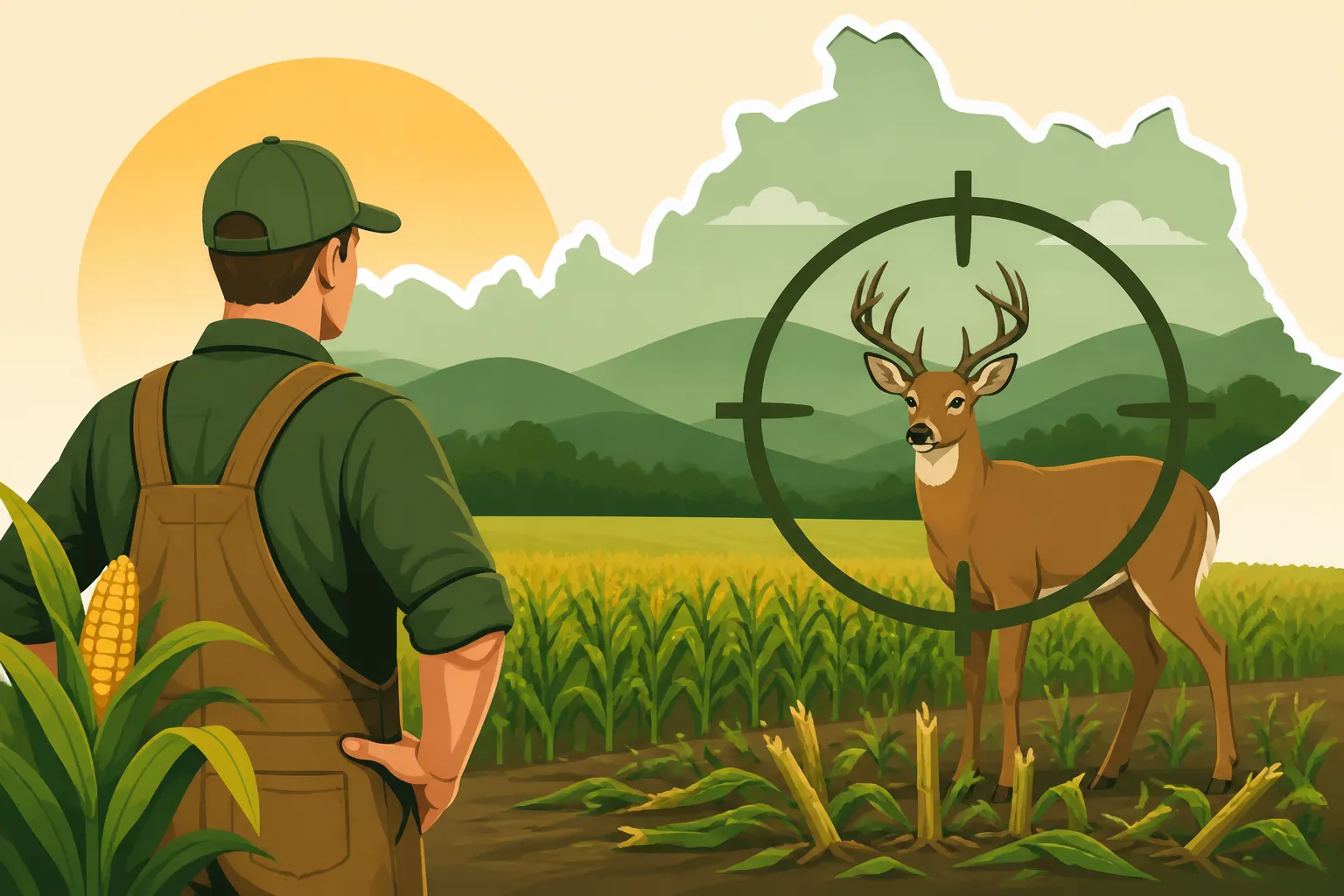
Dealing with deer damage on your farm can feel like a losing battle. One day your corn is knee-high and promising, the next it looks like a deer highway, with rows flattened and ears nibbled down to nubs. It's a common story across the Commonwealth, and it highlights a persistent challenge in wildlife management: balancing a healthy deer population with the needs of agricultural producers.
The Problem of Deer Depredation on Farmland
Kentucky boasts a thriving white-tailed deer population, which is fantastic for hunters, but it presents a real headache for farmers. Deer are opportunistic feeders, and a lush soybean field or a newly sprouted alfalfa patch can be an irresistible buffet. The damage isn't limited to row crops; orchards, nurseries, hayfields, and even timber plantations can suffer significant losses. We're talking about direct financial impacts that can range from a few hundred dollars to tens of thousands in lost revenue, not to mention the time and effort wasted.
Imagine a scenario: you've got a prime tobacco crop coming in, and just weeks before harvest, deer start bedding down in it, trampling plants and nipping off leaves. Or maybe it's your hay, meant to feed your cattle through the winter, that's being browsed heavily along the field edges. These aren't minor issues; they hit the bottom line. The Kentucky Department of Fish and Wildlife Resources (KDFWR) recognizes this very real economic strain, and that's precisely why measures like the Deer Damage Permit program exist. It's an acknowledgement that while deer are a valuable resource, their numbers sometimes need to be managed more directly in areas where they conflict heavily with human enterprise.
What is a Deer Damage Permit?
Simply put, a Kentucky Deer Damage Permit is a special authorization issued by the KDFWR that allows a landowner or their designated agents to remove deer causing agricultural or property damage outside of the regular hunting seasons, or with methods not typically allowed during standard seasons. Think of it as a targeted tool, designed to provide immediate relief when traditional hunting seasons aren't enough to mitigate damage. These aren't just extra tags; they come with specific conditions and purposes.
The permits aren't a free-for-all, but rather a carefully regulated means to address severe issues. For example, if you're experiencing heavy damage during the summer months when deer season is closed, a damage permit might allow you to cull a certain number of deer to alleviate the pressure on your crops. They are a recognition that general season bag limits, such as those determined by the varying Kentucky Deer Management Zone Rules, might not be sufficient for properties experiencing extreme, localized depredation. It's about giving farmers a direct, legal avenue to protect their livelihood when deer activity becomes genuinely destructive.
The KDFWR's Role in Wildlife Management
The KDFWR is tasked with managing all of Kentucky's wildlife, including its robust deer herd, for the benefit of all citizens. This includes conservation efforts, regulating hunting seasons, and also addressing conflicts between wildlife and people. The Deer Damage Permit program falls squarely into this last category. Their goal isn't to eliminate deer, but to maintain healthy, sustainable populations while also being responsive to the very real challenges faced by landowners.
They approach this balancing act through scientific population monitoring, hunter feedback, and programs like these permits. It's a constant effort to adapt to changing conditions, whether it's shifts in deer density, new agricultural practices, or evolving land use patterns. The KDFWR staff, including wildlife biologists and conservation officers, are the ones who assess damage, issue permits, and ensure the program is administered fairly and effectively. Their involvement is crucial to ensuring that any actions taken under a damage permit are necessary, humane, and contribute to sound wildlife management principles across the state, even as they provide relief at a local level.
Eligibility and Application Process for Damage Permits
So, you're convinced a damage permit might be the answer to your deer problems. The next logical step is to understand if you qualify and what hoops you need to jump through to get one. It’s not as simple as walking into a local shop and buying a tag; there's a specific process to ensure the permits are used appropriately.
Who Qualifies for a Damage Permit?
Generally, a landowner, tenant, or farm manager experiencing significant agricultural or property damage caused by deer is eligible to apply for a damage permit. The key word here is "significant." The KDFWR isn't going to issue a permit for a few nibbled plants in your garden. They're looking for quantifiable, substantial economic loss to crops, orchards, nurseries, or other agricultural enterprises. This often requires visible evidence of extensive damage across a large enough area to warrant intervention beyond normal hunting seasons.
For instance, if you own 100 acres with 50 acres of soybeans, and 10% of that crop is being routinely destroyed by deer before it reaches maturity, you likely have a strong case. Conversely, if deer are occasionally eating a few hostas around your house, that might not meet the threshold for a damage permit. The intent is to alleviate commercial or substantial property loss, not just nuisance activity. It’s about protecting livelihoods, so be prepared to articulate and ideally demonstrate the scope of the problem when you engage with the KDFWR.
Step-by-Step Application Guide
Applying for a Kentucky Deer Damage Permit typically involves a few critical steps. First, you'll need to contact your local KDFWR office or a conservation officer to report the damage. Don't just show up; a phone call is usually the best initial approach to explain your situation. They'll likely ask for details about the type of damage, the crops affected, the estimated loss, and the frequency of deer activity.
Next, a KDFWR biologist or conservation officer will usually schedule an on-site visit to your property. This is crucial. They need to visually confirm the extent of the damage, identify the species causing it (though deer sign is pretty unmistakable), and assess whether a damage permit is the appropriate solution. During this visit, be ready to walk them through your fields, point out specific areas of concern, and explain the economic impact. It's a collaborative process where you provide the evidence, and they determine the best course of action. This visit also allows them to assess the local deer population density and existing hunting pressure, ensuring permits aren't issued unnecessarily.
Required Documentation and Inspection
When the KDFWR representative visits your property, having some prepared materials can be extremely helpful. While often not strictly required beforehand, photographic evidence of damage over time can strengthen your case. Keep a log of dates and locations where damage is observed. Be able to clearly articulate the approximate financial loss you're incurring. The officer will be conducting their own assessment, looking for things like deer tracks, browse lines, rub damage on trees, and patterns of crop destruction.
They'll also want to know what, if any, measures you've already taken to mitigate the damage. Have you increased regular hunting pressure during the season? Have you tried deterrents? This shows you're making a good faith effort to manage the problem. Once the KDFWR confirms the need for a permit, they'll issue a specific number of tags, outline the permitted harvest methods, and set a timeframe. It's not a generic license; it's a prescriptive solution for a specific problem. You might find resources like Scouting With the Kentucky Hunt Fish App useful for documenting damage locations and tracking deer activity patterns on your land.
Permit Conditions and Management Strategies
Once you've secured a deer damage permit, it's vital to understand the rules and how to use it effectively. These permits come with specific guidelines for a reason, designed to ensure ethical harvesting and proper management.
Legal Harvest Methods and Restrictions
Damage permits aren't a blank check for hunting however and whenever you please. The KDFWR will specify the legal methods for taking deer under the permit. This might include firearms, archery equipment, or even night hunting with artificial lights, depending on the severity of the problem and the safety considerations of your property. For example, if you're in a more populated area, firearms might be restricted, while archery could be permitted. These permits typically allow for the harvest of antlerless deer, as does are the primary drivers of population growth, but in cases of extreme damage, some antlered deer may also be permitted.
The specific number of deer you're authorized to remove will also be stipulated. It's not uncommon for permits to be issued for a certain number of deer over a defined period, say, 10 deer over 60 days. This allows for a targeted reduction of the problem herd without indiscriminately culling deer. You'll need to strictly adhere to these conditions. Any deviation could result in violations and jeopardize future permit eligibility. Remember, the goal is damage control, not just a bonus hunting opportunity.
Reporting Requirements and Follow-Up
Just like deer harvested during regular seasons, any deer taken under a damage permit must be properly reported to the KDFWR. This is a crucial step for accountability and for the KDFWR to monitor the effectiveness of their programs and the overall Kentucky Deer Population Estimate. You'll typically be given specific instructions on how and when to report your harvest, often mirroring the Kentucky Deer Harvest Reporting Rules that apply to regular season hunters, such as using the Telecheck system.
For example, if you take a deer under a damage permit, you might have 24 hours to Telecheck it, just like any other deer. The KDFWR might also require follow-up visits or reports on the effectiveness of the permit in reducing damage. This ongoing communication helps them understand if the measures are working and if further intervention is needed. It’s a partnership; you're helping them manage the herd on a local level, and they're helping you protect your property. Keeping detailed records, including dates, times, and locations of harvests, will be invaluable for these reports.
Utilizing Permits Effectively for Crop Protection
To truly make the most of your damage permit, you need a strategy. Don't just randomly shoot a deer when you see one. Think about the specific areas experiencing the most damage. Are deer entering from a particular woodline? Are they targeting a specific crop? Focus your efforts on those high-impact zones. Targeting does is often the most effective way to reduce future population pressure and hence, future damage.
Consider timing your efforts to coincide with periods of peak vulnerability or activity, like early morning or late evening when deer are most likely to be in your fields. If you have agents (friends, family, or trusted hunters) helping you, ensure they are fully aware of all permit conditions, harvest limits, and reporting requirements. Effective use also means combining the permit with other strategies where possible, such as deterrents or even adjusting planting schedules to minimize vulnerable windows. For properties with consistent heavy pressure, integrating insights from tools like GoHunt, which can help analyze satellite imagery and topo maps, might pinpoint specific deer travel corridors or bedding areas impacting your fields, allowing for even more targeted and efficient use of your damage permit.
Beyond Permits: Integrated Deer Management for Farmers
While deer damage permits offer immediate relief, they are just one tool in a broader strategy for managing deer and protecting your agricultural interests. For long-term success, farmers often need to consider a more integrated approach that combines various methods.
Habitat Modification and Exclusion Techniques
Sometimes, the best offense is a good defense. Habitat modification involves making your property less attractive or accessible to deer. This could mean clearing brush lines that provide immediate cover next to sensitive crops, or planting buffer crops that deer prefer to eat before they reach your high-value produce. While you might be focused on "Food Plots on Kentucky Private Land" for hunting season, thinking about strategic plantings for damage control during off-season can also be beneficial.
Exclusion techniques are often the most effective, albeit sometimes the most costly. Fencing, especially electric fencing, can be a highly successful deterrent. Deer typically won't jump a fence they can't see through easily, so opaque or visually dense fencing can work. For smaller, high-value areas like gardens or orchards, specialized deer netting can be a game-changer. While an upfront investment, a well-placed, sturdy fence can dramatically reduce damage and pay for itself over time. It's about breaking the habit of deer feeding on your land, making them seek food sources elsewhere.
Long-Term Population Control and Hunter Access
One of the most sustainable ways to control deer damage on private land is through consistent hunter access during regular seasons. Encouraging hunters to utilize their tags on your property, particularly for antlerless deer, is vital for long-term population management. Many farmers are hesitant to allow outside hunters, but a managed hunting program can be mutually beneficial. Hunters get access, and you get help reducing the herd.
Consider forming relationships with responsible hunters who are willing to abide by your rules. This isn't just about the main modern gun season; allowing hunters during How Kentucky's Archery Season Runs Into January or early muzzleloader can also significantly impact local deer numbers. You can even set up "landowner permits" if you qualify, which allows for additional antlerless harvest tags beyond the general statewide limits. By consistently lowering the local population through regulated hunting, you can proactively reduce the pressure that leads to crop damage, making damage permits less frequently necessary. This also plays into the overall management goals of the KDFWR for White-Tailed Deer Across Kentucky.
Utilizing Technology and Resources
In today's world, farmers have access to incredible technology and resources to help manage deer. GPS mapping apps, for instance, can help you map out damage areas, identify deer trails, and even pinpoint potential bedding areas. Services like GoHunt offer advanced mapping tools that allow you to overlay property boundaries, topographic features, and satellite imagery, helping you visualize deer movement patterns and strategically place deterrents or organize hunting efforts more effectively. Understanding where deer are coming from, and where they spend their time, is half the battle.
Working with your local agricultural extension office can also provide valuable insights into deer-resistant crop varieties or additional deterrent methods. The KDFWR also maintains an extensive website with resources, including maps to help you understand your specific Kentucky Deer Management Zone Rules and bag limits. Whether it's reading detailed Reading Aerial Photos for Eastern Kentucky Deer or setting up trail cameras to monitor deer activity, technology can empower you to make informed decisions about managing deer on your farm. Don't forget that programs like the Kentucky Landowner Deer Permit Rules also exist, offering more harvest opportunities for those managing their own land.
Here’s a quick overview of various deer management strategies:
| Strategy | Description | Pros | Cons |
|---|---|---|---|
| Damage Permits | KDFWR-issued tags for targeted deer removal outside regular seasons. | Immediate relief, targeted removal of problem deer. | Requires significant damage, specific rules, limited duration. |
| Fencing/Exclusion | Physical barriers to prevent deer access to crops. | Highly effective, long-term solution. | High initial cost, maintenance required, can be visually intrusive. |
| Habitat Modification | Altering environment to make it less attractive or accessible for deer. | Can be cost-effective, ecological benefits. | Slower results, may require ongoing effort, not always fully effective. |
| Increased Hunting | Encouraging hunters to harvest deer during regular seasons. | Sustainable, cost-free, contributes to overall management. | Dependent on hunter access, weather, and deer behavior. |
| Deterrents (Repellents) | Chemical or physical deterrents to discourage deer. | Easy to apply, non-lethal. | Limited effectiveness, requires reapplication, costly for large areas. |
| GoHunt Mapping | Using digital mapping tools to understand deer movement & plan strategies. | Data-driven insights, improves strategy efficiency. | Requires tech savviness, subscription cost. |
Ultimately, managing deer damage on your farm is an ongoing process. By combining the immediate relief offered by Kentucky Deer Damage Permits with proactive, long-term strategies, you can protect your crops, minimize economic losses, and maintain a healthier balance between wildlife and agriculture on your land. It takes effort, but the peace of mind knowing your hard work is protected is well worth it.
Disclaimer
The information provided in this guide is for informational purposes only and is not intended as legal advice. Hunting regulations and permit requirements can change. Always consult the most current Kentucky Department of Fish and Wildlife Resources regulations and contact KDFWR directly for the most accurate and up-to-date information regarding deer damage permits and hunting laws in Kentucky.