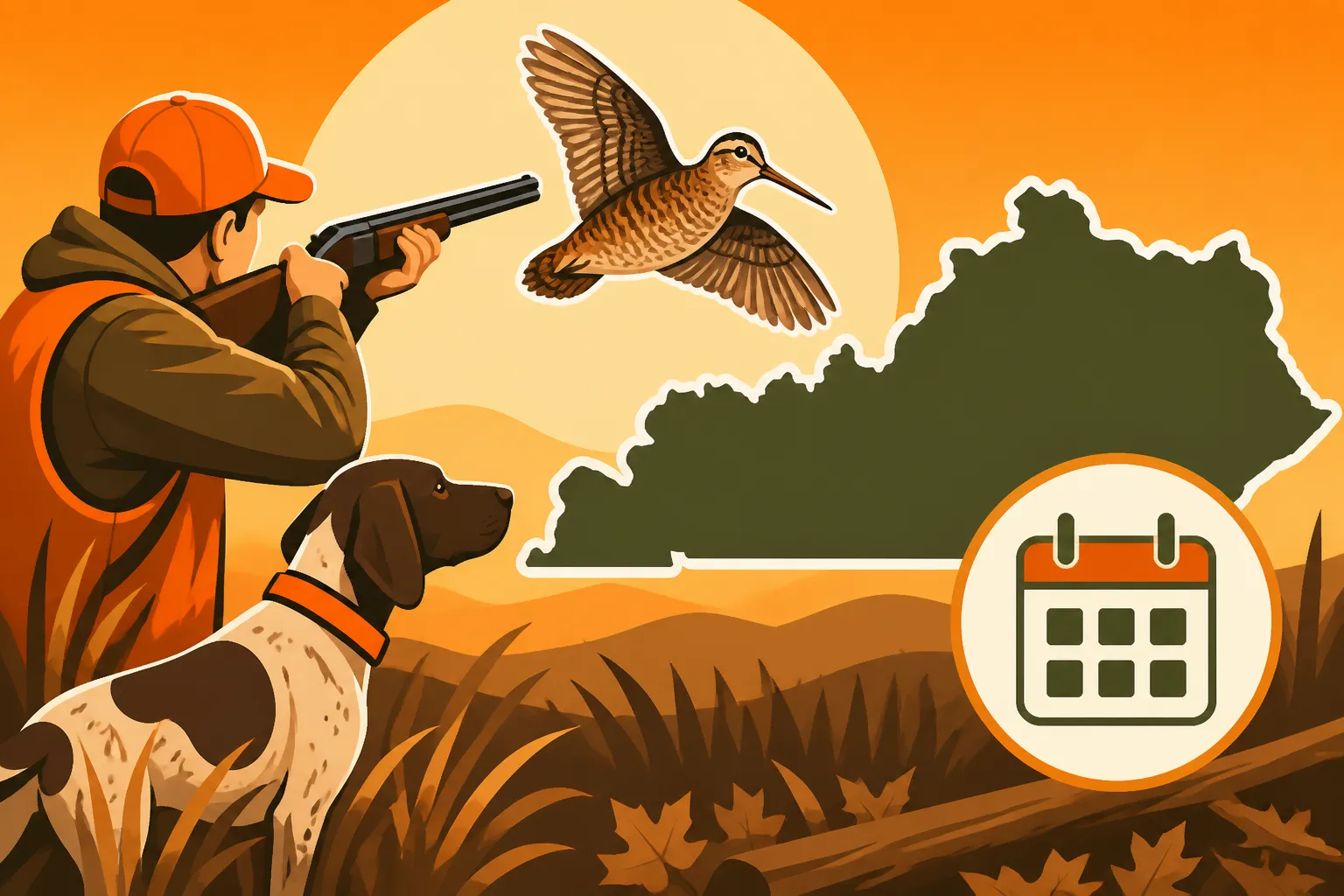
Kentucky Woodcock Season Dates
The crisp autumn air in Kentucky brings a unique excitement for hunters, but if your sights are set on the elusive timberdoodle, you might find yourself a little lost in the shuffle compared to the well-publicized deer and turkey seasons. Unlike our resident game, woodcock are migratory birds, which means their season dates operate under a different set of rules, often leaving hunters scratching their heads about when they can actually head afield. This guide is here to untangle all that confusion, breaking down Kentucky's woodcock season dates and everything you need to know to pursue these fascinating birds.
Understanding Kentucky's Woodcock Season Framework
When we talk about hunting in Kentucky, most folks immediately think of our robust deer or turkey populations, which are managed primarily at the state level. However, woodcock are a whole different ballgame. They're migratory birds, which means their management falls under federal guidelines established by the U.S. Fish and Wildlife Service, in cooperation with state agencies like the Kentucky Department of Fish and Wildlife Resources (KDFWR). This federal oversight ensures that populations are managed across their entire migratory range, from their breeding grounds in the north to their wintering spots in the south.
The season structure for migratory birds tends to be more dynamic and requires specific certifications beyond a standard hunting license. It's not just about knowing when the season opens; it's about understanding the framework that dictates those dates and how they might shift slightly year to year based on population surveys and broader flyway management strategies. This intricate dance between federal and state regulations is what often makes figuring out the exact dates a bit more challenging than just glancing at a calendar for deer season.
Key Dates for the Upcoming Season
For the dedicated upland hunter, pinpointing the exact woodcock season dates is paramount. Typically, Kentucky's woodcock season opens in mid-to-late October and runs through early December. For example, in a recent season, you might have seen dates like October 21st to December 4th. These windows are carefully chosen to align with the birds' migration patterns through the state, providing hunters with an opportunity to intercept birds as they move south.
It’s crucial to remember that while these dates are usually pretty consistent, they are set annually and can see slight adjustments. The daily bag limit for woodcock is generally three birds, with a possession limit of nine. Shooting hours usually extend from one-half hour before sunrise to sunset. Always, always double-check the current year’s Kentucky Fall Hunting & Trapping Guide published by the KDFWR. That’s your definitive source for the most up-to-date and legally binding information. A helpful resource like GoHunt can also often provide quick access to state regulations and season dates, streamlining your pre-hunt research.
Why Woodcock Seasons Differ from Other Game
The reason woodcock seasons march to a different drummer than, say, Kentucky's Statewide Modern Gun Season, comes down to their biology and legal status. Woodcock, along with ducks, geese, doves, and rails, are protected under the Migratory Bird Treaty Act. This international agreement, signed by the U.S., Canada, Mexico, Japan, and Russia, aims to protect migratory bird populations. This means the federal government sets frameworks for season lengths, bag limits, and shooting hours, and then individual states choose their specific dates within those federal guidelines.
This system ensures conservation efforts are coordinated across continents, preventing overharvest in one area from negatively impacting populations elsewhere. It's a complex, but necessary, approach to managing species that don't recognize state or national borders. So, while you might just need a deer permit for a whitetail, hunting woodcock requires a little more administrative legwork to comply with both state and federal migratory bird regulations. This is why you'll often hear about things like the Migratory Bird Harvest Information Program (HIP) – it's all part of this larger, coordinated effort.
Essential Licenses and Certifications for Woodcock Hunters
Alright, let's get down to brass tacks about what you need in your pocket to legally pursue woodcock in Kentucky. It's not just about having a gun and a good pair of boots; there are specific licenses and certifications you absolutely must have. Missing even one of these can turn a great day afield into a costly and frustrating encounter with a conservation officer. This is often where new migratory bird hunters get tripped up, thinking their general hunting license covers everything. It doesn't.
Understanding these requirements upfront will save you a lot of headaches and ensure you're contributing to sound wildlife management. It’s a small investment that makes a big difference in keeping these seasons open and vibrant for future generations. Don't let bureaucracy scare you off; once you know the ropes, it's pretty straightforward.
General Hunting License Requirements
First and foremost, just like with any other game animal in the Commonwealth, you'll need a valid Kentucky hunting license. This is your baseline ticket to hunt in the state. Whether you're a resident or a nonresident, you'll need to purchase the appropriate license. Kentucky offers various options, including annual licenses, combination licenses, and even a special Sportsman's License that bundles many common permits together.
If you're new to hunting in Kentucky or haven't checked license prices in a while, it's a good idea to visit the KDFWR website or use a reliable hunting app to see the current fees. For a detailed breakdown of costs, you can always check out a guide like Kentucky Resident Hunting License Cost. Make sure your license is current and that you have proof of it with you in the field, whether that's a physical copy or stored digitally on your phone through the KDFWR app.
The Migratory Bird Permit (HIP)
This is the big one that often gets overlooked by hunters new to migratory birds. For any migratory bird hunting in Kentucky—and that absolutely includes woodcock—you are required to obtain a Migratory Bird-Waterfowl Permit, which includes federal Harvest Information Program (HIP) certification. This isn't a federal duck stamp, though you'd need that for ducks and geese. This is specific to migratory birds like woodcock and doves.
The HIP certification is typically free and simply involves answering a few questions about your migratory bird harvest intentions when you purchase your license. It helps the U.S. Fish and Wildlife Service gather critical data on hunter participation and harvest numbers, which in turn informs future season setting and conservation efforts. It's a quick step, but an absolutely vital one. You can find more comprehensive details on how to get this certification in articles like Kentucky HIP Certification for Bird Hunters and Kentucky Migratory Bird Certification. Without it, even with a valid general hunting license, you're not legally permitted to hunt woodcock.
Finding Your Flight Birds: Prime Habitats and Scouting Tips
Knowing when to hunt woodcock is only half the battle; the other, equally important half is knowing where to find them. These aren't deer that might be found almost anywhere there's cover and food. Woodcock are particular about their real estate, preferring very specific types of habitat that cater to their unique diet and behaviors. Understanding their preferences is key to a successful hunt, and it often involves scouting areas that might seem unconventional compared to typical deer or turkey spots.
Kentucky, with its diverse landscapes, offers pockets of excellent woodcock cover. From the young, regenerating timber of eastern Kentucky to the moist bottomlands of the west, the discerning hunter can find these secretive birds if they know what to look for. Utilizing modern mapping tools, like those available through GoHunt, can be immensely helpful in identifying these specific habitat types from the comfort of your home before you ever set foot in the woods.
Ideal Woodcock Habitat in Kentucky
Woodcock are connoisseurs of young, early successional forest habitats. Think areas that have been recently clear-cut, old abandoned fields transitioning back to forest, thick brushy creek bottoms, or alder and willow thickets. They thrive in moist, loamy soils where they can easily probe for their primary food source: earthworms. These areas are typically characterized by dense overhead cover for protection from raptors and ground predators, but with relatively open understories that allow them to walk and forage.
You'll often find them along the edges of larger timber stands, especially where a creek runs through a regenerating clear-cut. Look for thickets of saplings, briar patches, and areas with a good mix of sun and shade that keep the ground moist. In Eastern Kentucky, this might mean steep hollows with young growth, while in Western Kentucky, it could be brushy fencerows or creek bottoms within agricultural landscapes. These specific habitat needs are what makes hunting them so unique compared to other species, often leading you to areas you might otherwise overlook for Grouse and Small Game Hunting in Kentucky.
Scouting for Woodcock Sign
Unlike deer, woodcock don't leave massive tracks or rub lines. Their sign is subtle but distinct once you know what to look for. The most obvious indication of woodcock presence is their "borings" – small, round holes poked into the soft, moist ground as they probe for worms with their long bills. These borings will typically be clustered in areas where they are actively feeding. You might also find "splashings," which are white, chalky droppings, often about the size of a quarter, typically found on leaves or sparse vegetation in their feeding or roosting areas.
Identifying these signs requires getting out there and walking these specific habitat types. Look for fresh borings and splashings, as old sign indicates past presence, not necessarily current birds. Pay attention to areas where you spook birds during other early fall hunts, as these might be ideal woodcock spots. Understanding patterns, like Kentucky Woodcock Singing Ground Surveys (though these are for breeding season), can give a general idea of population distribution, but ground-level scouting is indispensable. Sometimes, an experienced bird dog can be your best scout, as they'll pick up the scent of these camouflaged birds long before your eyes do.
Gear and Tactics for a Successful Woodcock Hunt
Hunting woodcock in Kentucky isn't about long-range precision or elaborate calling setups. It's about quiet movement, quick reactions, and having the right gear for busting through thick cover. These birds are renowned for their incredible camouflage, often sitting tight until you're practically on top of them before flushing with an explosion of wings. This makes for exhilarating, close-quarters shooting opportunities that require a different approach than sitting in a treestand or calling a gobbler.
The beauty of woodcock hunting is its simplicity, but that doesn't mean you can just wander out with any old shotgun. A few thoughtful gear choices and an understanding of their flushing behavior will dramatically increase your chances of success. It's an active, engaging form of hunting that keeps you moving and constantly alert, perfect for those who love to walk the woods.
Recommended Gear for the Covert Hunter
When it comes to gear, lightweight and maneuverable are the names of the game. A light, fast-swinging shotgun is crucial. Many woodcock hunters favor 20-gauge or even 28-gauge shotguns with open chokes (like Improved Cylinder or Skeet) and smaller shot sizes (like 7 1/2 or 8). Shots are often close and quick, so a dense pattern at short range is more important than a tight pattern at distance.
Beyond the firearm, comfortable and durable clothing is essential. You'll be walking through briars, thickets, and dense undergrowth, so good brush pants or chaps are a lifesaver. An upland vest with plenty of game bag space and water capacity, as highlighted in Upland Vests With Water Capacity, is invaluable for carrying birds, shells, and hydration. Finally, rugged, waterproof boots that offer good ankle support are a must for navigating uneven, often damp terrain. Check out tips on Boots for Walking Kentucky Ridges for inspiration. Don't forget eye protection, as branches can be a real hazard, and hearing protection for obvious reasons.
Hunting Techniques and Strategies
Woodcock hunting is primarily a walking hunt. You'll want to move slowly and deliberately through prime habitat, covering ground thoroughly. Woodcock often hold incredibly tight, sometimes flushing only a few feet in front of you. This is where a good bird dog truly shines, scenting out the birds and pointing them, giving you a heads-up before the flush. If you're hunting without a dog, walk with frequent pauses, as a sudden stop can sometimes trigger a flush from a bird that was trying to remain hidden.
Work the edges of thickets, creek bottoms, and regenerating cuts. When a bird flushes, focus on quickly shouldering your shotgun and getting on target. They fly in an erratic, twisting pattern, often darting through trees, so quick reflexes are key. It’s a challenging but incredibly rewarding shot. Remember, When Woodcock Migrate Through Kentucky is when these birds are most active, so timing your hunts with peak migration can significantly improve your odds. It's an active, engaging form of hunting that's a true test of your wingshooting skills.
| Aspect | Detail |
|---|---|
| Typical Season | Mid-October to Early December (e.g., Oct 21 – Dec 4) |
| Daily Bag Limit | 3 woodcock |
| Possession Limit | 9 woodcock |
| Shooting Hours | One-half hour before sunrise to sunset |
| Required Licenses | Kentucky Hunting License + Migratory Bird Permit (HIP certified) |
| Prime Habitat | Young, brushy successional growth, moist soil, creek bottoms |
Disclaimer
Please remember that hunting regulations, season dates, and license requirements can change. Always consult the most current Kentucky Department of Fish and Wildlife Resources (KDFWR) Fall Hunting & Trapping Guide before heading afield. This guide is for informational purposes only and does not constitute legal advice.