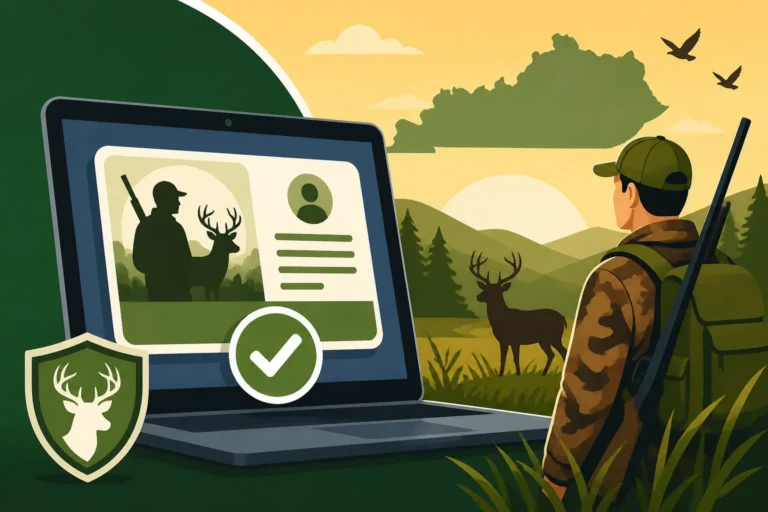
Taking Kentucky Hunter Education Online
Embarking on your hunting journey in Kentucky is an exciting prospect, full of potential for adventure and connection with nature. However, for many aspiring hunters, the requirement of hunter education can feel like a daunting hurdle, often due to busy schedules or the perceived difficulty of traditional classroom settings. This comprehensive guide is here to demystify the process of taking Kentucky hunter education online, walking you through every step to ensure you're fully prepared, knowledgeable, and ready to safely enjoy the wild places of the Bluegrass State.
Why Kentucky Hunter Education Matters for Every Hunter
Hunter education isn't just another checkbox to tick off before you hit the woods; it's the bedrock of responsible, ethical, and safe hunting. Kentucky takes its wildlife and its hunters seriously, and for good reason. Understanding the principles taught in these courses can literally mean the difference between a safe, memorable outing and a dangerous, regrettable incident.
The Importance of Safety and Responsibility
Let's be real: handling firearms and venturing into natural environments comes with inherent risks. Hunter education is designed to minimize these risks significantly. It's about instilling a deep respect for the tools we use, the game we pursue, and the environment we operate in. You'll learn critical lessons on firearm safety, the proper way to handle and store weapons, and how to safely navigate varied terrain. This isn't just for your own protection, but for the safety of fellow hunters, landowners, and anyone else who might be enjoying the outdoors.
Beyond safety, the course emphasizes ethical hunting practices. This includes understanding fair chase, proper shot placement to ensure a quick and humane harvest, and the importance of conservation. It teaches you to be a good steward of Kentucky's wildlife resources, contributing positively to the legacy of hunting. It’s about more than just pulling a trigger; it’s about participating in a tradition with integrity and a forward-thinking mindset for the future of our game populations. You’ll find that these principles are echoed in broader discussions about Kentucky Wildlife Disease Monitoring and maintaining healthy ecosystems across the state.
Who Needs Hunter Education in Kentucky
So, who exactly needs to complete hunter education here in Kentucky? The rules are fairly straightforward, but it's crucial to understand them before you plan your first hunting trip. Generally speaking, anyone born on or after January 1, 1975, must successfully complete an approved hunter education course before being able to purchase a hunting license and hunt independently. This ensures that a baseline of safety and knowledge is met by a significant portion of Kentucky's hunting population.
However, there are a few important exceptions and nuances. If you’re under 10 years old, you cannot take the course at all. Those between 10 and 15 years old can take the course, but they must be accompanied by an adult when hunting, regardless of certification. If you're 16 or older and haven't completed hunter education, you can participate in Kentucky's Apprentice Hunter License program. This allows you to hunt for up to one year under the direct supervision of an experienced, licensed hunter. It’s a fantastic way to get started and gain some real-world experience before committing to the full hunter education course. You can learn more about this valuable option by checking out the Kentucky Apprentice Hunter License Rules. Once you decide to jump into hunter education, remember that the goal is to equip you with the knowledge needed to operate safely and confidently, whether you're stalking deer or calling turkeys.
Navigating the Online Hunter Education Course
The beauty of online hunter education is its flexibility, allowing you to learn at your own pace from the comfort of your home. However, it's vital to remember that in Kentucky, an online course alone isn't enough. It's a two-part process that requires both the digital learning and a mandatory in-person field day.
Choosing an Approved Online Provider
The first step in your online hunter education journey is selecting an approved provider. The Kentucky Department of Fish and Wildlife Resources (KDFWR) partners with a few reputable organizations to offer these courses, ensuring they meet the state’s rigorous standards. You'll typically find options from nationally recognized providers like Hunter-ed.com or IlearnToHunt.com. These platforms are designed to be user-friendly, interactive, and comprehensive, covering all the necessary material in an engaging format.
When choosing a provider, consider factors like cost, user interface, and any additional resources they might offer. While the core curriculum is standardized, some platforms might have different teaching styles or supplementary materials that appeal more to your learning preferences. Be wary of any website claiming to offer "free" or unapproved courses; always double-check with the KDFWR website to ensure your chosen provider is legitimate and their course will be accepted. Remember, this investment in your education is crucial for your safety and legal compliance. While you're exploring the hunting landscape and planning your next trip, excellent resources like GoHunt can help you find public land and understand game movements, but for the official hunter education course itself, stick to the KDFWR-approved platforms.
Course Structure and Content
Once you enroll in an online hunter education course, you'll typically encounter a modular structure. This means the material is broken down into digestible sections, each focusing on a specific aspect of hunting safety and knowledge. You can expect topics to include:
- Firearm Safety: This is paramount, covering everything from the basic rules of firearm handling (like always pointing the muzzle in a safe direction) to proper loading, unloading, and storage. You’ll learn about different types of firearms and ammunition.
- Hunting Techniques and Wildlife Identification: You'll gain knowledge about various hunting methods, ethical shot placement for different game animals, and how to identify common Kentucky game species, like white-tailed deer and wild turkeys. This section also often covers tracking wounded game and basic field dressing.
- Conservation and Wildlife Management: Understanding the role of hunters in conservation is a key component. You’ll learn about wildlife biology, habitat management, and how hunting seasons and bag limits contribute to healthy game populations. The course often touches on the history of wildlife restoration in Kentucky, highlighting successes like the rebuilding of the Kentucky's Record Elk Herd.
- Outdoor Preparedness and Survival: This section equips you with essential skills for navigating the outdoors safely, including compass and GPS use, basic first aid, and what to do in emergency situations. Knowing how to prepare for unexpected weather or getting turned around in the woods can make a huge difference, especially when you are Hunting Eastern Kentucky Ridges.
- Hunting Laws and Regulations: Perhaps one of the most important modules, this will walk you through Kentucky-specific hunting regulations, including licensing requirements, legal hunting hours, and species-specific rules. Knowing these inside and out will prevent accidental violations. For broader context on regulations, you might also want to explore Kentucky Hunting Licenses and What They Cost and Kentucky Deer Season Structure Explained.
Each module usually concludes with a short quiz to test your understanding before you can move on to the next section. This self-paced format allows you to re-read material and solidify your knowledge before progressing, which is a real advantage for many learners.
The Required Field Day Experience
Here's the critical part that sometimes catches people off guard: completing the online modules is only half the battle in Kentucky. To earn your full hunter education certification, you must attend a mandatory in-person field day. This isn't just a formality; it's a vital component that brings the online learning to life.
During the field day, you'll get hands-on experience that simply can't be replicated on a screen. You'll participate in live-fire exercises at a shooting range, demonstrating safe firearm handling skills under the watchful eye of certified instructors. This is where you put theory into practice, learning how to safely load, shoot, and unload a firearm in a controlled environment. Instructors will observe your muzzle control, trigger discipline, and overall safe handling.
Beyond the range, field days often include practical exercises like safe zone-of-fire drills, treestand safety demonstrations, and ethical shot placement scenarios. You might learn how to properly cross a fence with a firearm, practice identifying game, or discuss specific Kentucky hunting scenarios with experienced mentors. It’s an invaluable opportunity to ask questions, learn from seasoned hunters, and apply the knowledge you gained online in a practical setting. You'll find these field days typically scheduled at various locations across the state, and you'll need to pre-register for them through the KDFWR website after completing your online course. Make sure to plan ahead, as spots can fill up, especially during peak seasons.
Tips for a Successful Online Hunter Education Journey
Embarking on your hunter education journey, even with the convenience of online learning, requires a bit of planning and dedication. Thinking strategically about how you approach both the online and in-person components will set you up for success and ensure you get the most out of the experience.
Preparing for Your Online Study
Treat your online hunter education course like any other important learning endeavor. Don't try to rush through it in one sitting. Break it down into manageable chunks, perhaps tackling one module per day or week, depending on your schedule. Find a quiet, distraction-free environment where you can focus on the material. Taking notes, even during an online course, can help reinforce what you're learning and give you something to review before quizzes.
It’s also incredibly beneficial to supplement the course material with real-world research. Spend some time familiarizing yourself with Kentucky’s current hunting regulations on the KDFWR website. Look up the specific zones and rules that apply to the areas you plan to hunt. Using resources like GoHunt can also aid in your scouting and planning efforts, allowing you to visualize terrain and potential hunting spots, which can make the safety and ethics lessons resonate even more. Understanding the basics of Scouting With the Kentucky Hunt Fish App can also give you a head start, connecting your education to practical application. The more context you give yourself, the easier it will be to absorb and remember the information presented in the course.
Maximizing Your Field Day Success
The field day is your chance to solidify your knowledge and demonstrate your skills. Don't wait until the last minute to review the online material before attending. Refresh your memory on firearm safety rules, game identification, and common hunting scenarios. If possible, practice safe firearm handling at home with an unloaded weapon, or even with a BB gun, to build muscle memory before hitting the range.
Arrive at the field day well-rested, on time, and prepared to actively participate. Dress appropriately for outdoor conditions, as you’ll likely be spending time outside, even on the range. Don't be afraid to ask questions! The instructors are there to help you learn and ensure you are confident and safe. This hands-on experience is where you truly become a safer, more responsible hunter. Think of it as the practical exam for everything you’ve learned, and an opportunity to meet other aspiring hunters and experienced mentors who share your passion for the outdoors.
What Happens After Completion
Once you successfully complete both the online course and the in-person field day, you'll receive your Kentucky Hunter Education certification. This certification is a critical document, and you should always carry proof of it when hunting, just as you would your Kentucky Resident Hunting License Options or deer permit. Many hunters keep a digital copy on their phone, which is perfectly acceptable and convenient. You can also explore how to manage your licenses and certifications through the Carrying Proof of License on Your Phone.
Receiving your certification isn't the end of your learning journey; it's merely the beginning. The world of hunting is constantly evolving, with new regulations, conservation efforts, and techniques emerging. Stay informed by regularly checking the KDFWR website for updates on Kentucky Wildlife Violation Penalties or season changes. Join local hunting clubs, read hunting publications, and seek out opportunities to mentor with experienced hunters. Continuous learning ensures you remain a safe, ethical, and effective hunter, contributing positively to Kentucky’s rich hunting heritage for years to come.
Here's a quick overview of the Kentucky Hunter Education process:
| Step | Description | Key Considerations |
|---|---|---|
| 1. Determine Eligibility | Confirm if you are born on or after Jan 1, 1975, or fall into an exception (e.g., Apprentice Hunter). | Min. age 10 for certification. Under 16 requires adult supervision. |
| 2. Choose Online Provider | Select an official KDFWR-approved online hunter education course (e.g., Hunter-ed.com). | Verify approval status. Consider cost and course format. |
| 3. Complete Online Coursework | Work through modules covering safety, ethics, regulations, wildlife ID, and outdoor preparedness. | Self-paced study. Take notes. Quizzes after each module. |
| 4. Register for Field Day | After online completion, find and register for a mandatory in-person field day through KDFWR. | Spots fill up, so plan ahead. Check KDFWR website for schedule and locations. |
| 5. Attend Field Day | Participate in practical exercises, including live-fire range time and hands-on safety demonstrations. | Bring required documents. Dress appropriately. Be ready to actively participate and learn. |
| 6. Receive Certification | Upon successful completion of both parts, you'll earn your Kentucky Hunter Education Card. | Carry proof when hunting (physical or digital). This enables you to purchase a license. |
Disclaimer
The information provided in this guide is intended for general informational purposes only and does not constitute legal advice. Hunting regulations in Kentucky are subject to change. It is the responsibility of every hunter to consult the official Kentucky Department of Fish and Wildlife Resources (KDFWR) website and current hunting regulations manual for the most up-to-date and accurate information before engaging in any hunting activities. Adherence to all local, state, and federal laws is mandatory.