Kentucky Woodcock Singing Ground Surveys
It's a common challenge for hunters to truly understand the pulse of migratory game birds like woodcock. Unlike deer or turkeys that might stick to a local area year-round, these secretive "timberdoodles" are constantly on the move, making it tough to gauge their numbers. This guide will walk you through Kentucky's Woodcock Singing Ground Surveys, explaining what they are, why they matter, and how understanding them can help you become a more informed and successful woodcock hunter.
Understanding the American Woodcock's Unique Spring Ritual
The American Woodcock, affectionately known by many as the "timberdoodle," is a bird shrouded in a bit of mystery. They’re masters of camouflage, spending their days hidden in dense, damp thickets and along creek bottoms, probing soft earth for earthworms with their long bills. But come spring, these usually reclusive birds put on one of nature's most enchanting and bizarre courtship displays, a ritual that is central to how wildlife agencies like Kentucky Fish and Wildlife Resources (KDFWR) track their populations.
The Mystique of the "Timberdoodle" and Its Courtship Display
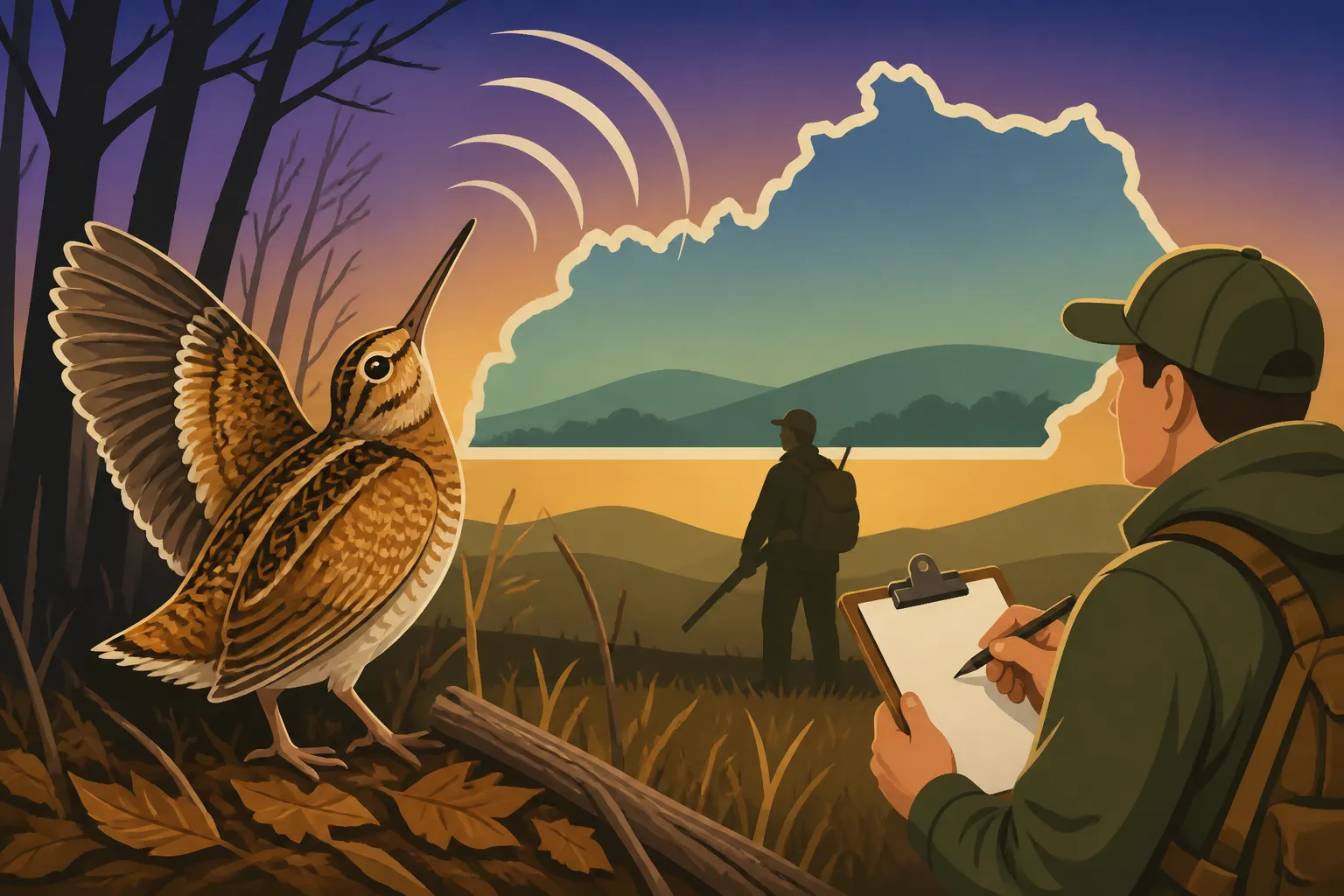
Imagine standing in a clearing as dusk settles, the air still, and suddenly you hear it – a sharp, nasal "peent!" followed by a rising, whistling spiral flight, ending with a gurgling, chirping dive back to earth. That's the woodcock's performance. The male woodcock stakes out a small piece of ground, his "singing ground," where he spends evenings and mornings throughout early spring trying to attract a mate. He performs this aerial ballet, sometimes repeating it dozens of times, ascending hundreds of feet into the twilight sky before plunging back down. It's a spectacular show, and it’s this very behavior that allows biologists and volunteers to effectively count them. Without this specific, predictable display, getting an accurate count of such a cryptic bird would be nearly impossible. This brief, vulnerable period in the open is a small window into their otherwise hidden lives.
Why Spring is Crucial for Woodcock Population Assessment
The springtime courtship display isn't just for show; it's a vital biological indicator. It signals that males are on their breeding grounds, having migrated back from their southern wintering areas. Because males are so vocal and visible during this period, it offers a consistent, repeatable method for population sampling. Counting these active singing males provides a reliable index of the breeding population size. If observers count more "peenting" males along a standardized route year after year, it suggests a healthy or growing population. Conversely, a decline can be a red flag, prompting further investigation into habitat loss, predation, or other environmental factors. This narrow window in spring, usually between March and May in Kentucky, is when the woodcock is most detectable, making these surveys an indispensable tool for their management.
The Mechanics of Kentucky's Singing Ground Surveys
Kentucky's involvement in the national Woodcock Singing Ground Survey (WSGS) is part of a larger, coordinated effort across the species' breeding range. These surveys aren't just random walks in the woods; they are scientifically designed routes that are repeated annually to provide consistent, comparable data. It's an organized system that relies on dedicated individuals and a standardized methodology to ensure the results are as accurate and useful as possible.
Who Conducts These Surveys and How They're Organized
The KDFWR coordinates Kentucky's contribution to the national WSGS, working with both state biologists and a network of trained volunteers. These folks are passionate about wildlife and spend their evenings listening intently to the sounds of the night. Each survey route is carefully laid out, often traversing diverse habitats where woodcock are likely to be found. Volunteers and staff undergo training to ensure they understand the survey protocols, from route selection and timing to accurate identification of calls and recording data. This consistency across all survey participants, both within Kentucky and across other states, is what gives the national data its scientific power, allowing for broad assessments of population health and trends for the American woodcock, a truly migratory species.
The Specifics of a Survey Route: Listening and Counting
A typical Kentucky Woodcock Singing Ground Survey route consists of 10 listening stops, spaced out along a prescribed path, usually a rural road. Surveyors start their route about 20-30 minutes after sunset, when woodcock activity is at its peak. At each stop, they listen for a set period – usually two minutes – recording every "peent" they hear and the number of aerial displays observed. This timing is critical because woodcock activity is highly concentrated during the crepuscular hours of dawn and dusk. The routes are driven at a slow, deliberate pace between stops, allowing for additional observations. The consistent timing and methodology across all routes minimize variability and ensure that any changes in counts are more likely due to actual population shifts rather than differences in observation technique. This dedication to detail is what makes these surveys such a reliable indicator.
Data Collection and Reporting: What Information is Gathered
Beyond just counting "peents" and flight displays, surveyors also record environmental conditions like temperature, wind speed, and cloud cover, as these factors can influence woodcock activity and detectability. They also note any other wildlife observed, providing a richer ecological snapshot of the survey area. This data is then compiled by the KDFWR and submitted to the U.S. Fish and Wildlife Service, which manages the national database. Over time, this collective data allows biologists to track long-term population trends, assess the effectiveness of habitat management efforts, and make informed decisions about hunting regulations. For a hunter looking to understand Kentucky Woodcock Season Dates, this data is the backbone of those decisions.
What Kentucky Hunters Can Learn from Survey Data
As hunters, we want to know that the game we pursue is healthy and abundant. For woodcock, singing ground survey data provides that crucial insight. It's not just for biologists; this information can directly impact your hunting strategy and understanding of the species. Knowing where to look for this data, and how to interpret it, empowers you to be a more knowledgeable and successful upland bird hunter.
Gauging Regional Population Trends and Habitat Health
The beauty of the WSGS data is its ability to reveal regional trends. While woodcock numbers might fluctuate locally year-to-year due to weather or habitat changes, the broader trends from these surveys tell us about the overall health of the breeding population in Kentucky and beyond. If the data shows a consistent decline in counts across multiple routes in the state, it signals a potential problem. This often points to widespread habitat loss or degradation, as woodcock rely on specific young forest and brushy wetland habitats. Conversely, stable or increasing counts can indicate that conservation efforts are working or that conditions are favorable. For hunters who lament the Kentucky Ruffed Grouse Decline or the ongoing challenges faced by Kentucky Bobwhite Quail Decline, understanding woodcock trends offers a different perspective on upland bird conservation and management.
How Survey Results Influence Kentucky's Woodcock Hunting Seasons
The data collected from singing ground surveys is a primary factor in setting migratory bird hunting seasons, including for woodcock. KDFWR biologists analyze the state and national trends to ensure that harvest levels are sustainable and don't negatively impact the breeding population. If surveys indicate a significant population decline, regulatory changes, such as reduced bag limits or shorter seasons, might be considered to protect the species. Conversely, robust populations allow for more generous hunting opportunities. Hunters who invest in a Kentucky HIP Certification for Bird Hunters are directly contributing to the funds that support these crucial surveys and the management decisions they inform. This feedback loop between scientific data, conservation action, and hunting regulations is vital for responsible wildlife management.
Using Survey Data to Plan Your Own Kentucky Woodcock Hunts
While the survey data offers broad population trends, savvy hunters can use it to fine-tune their hunting plans. For instance, if certain regions of Kentucky show higher woodcock activity in the surveys, it might suggest those areas have better habitat or more consistent populations, making them potentially more productive hunting grounds during the season. Although you won't get hyper-local, "this specific thicket" information, understanding where the general population is doing well can help you choose a broader area for your scouting efforts.
For example, if you're using a mapping application like GoHunt to scout public lands, you can cross-reference areas with suitable woodcock habitat (young successional forests, alder thickets, moist bottomlands) with the general regions showing strong survey numbers. This allows you to prioritize your scouting time. Knowing that GoHunt can show you areas of clear-cuts or overgrown fields, which are prime woodcock spots, becomes even more valuable when paired with an understanding of overall population health from the surveys. This data, combined with knowing When Woodcock Migrate Through Kentucky, gives you a powerful advantage in the field.
| Woodcock Survey Indicator | What it Suggests for Hunters | Implications for Hunting Strategy |
|---|---|---|
| Consistent High Counts | Healthy, stable local population | Good potential for hunting, focus on prime habitat within the region. |
| Declining Counts | Potential local population stress | May indicate habitat issues; consider other regions or different tactics. |
| Increasing Counts | Strong, recovering population | Excellent potential; habitat improvements may be yielding results. |
| Early Spring Activity | Warm migration, potential early nesting | May mean birds are settled earlier in the season. |
| Late Spring Activity | Cold migration, delayed nesting | Birds may arrive later, or be more concentrated when they do. |
| Good Weather During Survey | Reliable indicator of actual bird numbers | Data is likely highly accurate. |
| Poor Weather During Survey | Counts may be lower than actual numbers | Exercise caution when interpreting, birds may be less active. |
Broader Conservation Efforts and the Future of Kentucky Woodcock
The American woodcock faces challenges, much like many other upland species. Their reliance on specific habitat types means their future is intrinsically linked to how we manage our lands. Singing ground surveys are just one piece of a much larger puzzle in ensuring these unique birds continue to thrive in Kentucky and across their range.
The Link Between Habitat Quality and Woodcock Numbers
Woodcock are often referred to as "early successional" species, meaning they depend on young, brushy forests and shrubby areas – places that are often seen as "overgrown" by human standards. These habitats are critical for nesting, brooding, and feeding. As forests mature, or as agricultural practices change, these necessary young habitats decline. The loss of these areas is the single biggest threat to woodcock populations. This is why conservation efforts often focus on creating and maintaining these dense thickets, which also benefit other species like Grouse Hunting the Cumberland Mountains and cottontail rabbits. Programs that encourage landowners to manage their property for young forest growth are vital, as much of Kentucky's suitable habitat is on private land.
The Role of Hunter Participation in Woodcock Management
Hunters are often the first to notice changes in wildlife populations, and their participation is crucial for woodcock conservation. Beyond simply purchasing licenses and Kentucky Small Game Season Rules permits, which directly fund KDFWR's research and habitat work, hunters can actively contribute. Reporting woodcock sightings, especially during times outside the traditional survey windows, can provide valuable supplemental data. Engaging with conservation groups like the Ruffed Grouse Society (which also works for woodcock) or local chapters of GoHunt that advocate for habitat improvements can make a tangible difference.
Furthermore, hunters can be advocates for sound land management practices. Understanding what woodcock need – those dense, brushy areas – allows you to have informed conversations with landowners, foresters, and policymakers. By supporting active forest management, including timber harvests that create early successional habitats, hunters play a direct role in shaping the landscape that woodcock, and many other game species, call home. This hands-on approach ensures that the "peenting" of the timberdoodle continues to echo through Kentucky's spring evenings for generations to come. Kentucky Hunter Education Requirements often touch on the broader role of hunters in conservation, and woodcock management is a prime example of this partnership in action.
Disclaimer
This article is for general informational purposes only and does not constitute professional advice. Laws, prices and regulations vary by location and change over time. Consult a qualified professional for guidance on your specific situation.