Best Kentucky Counties for Wild Quail
If you've spent any time chasing bobwhite quail in Kentucky over the last few decades, you know the feeling of trudging through prime-looking cover, hoping for that explosive flush, only to be met with silence. It's a frustrating reality for many, as wild quail populations have seen significant declines. But don't despair entirely! While finding thriving coveys is tougher than it once was, certain regions and counties in Kentucky still offer the best prospects for experiencing the thrill of a wild quail hunt. This guide will help you understand where those pockets of opportunity lie and what makes them special.
The Decline of Kentucky's Bobwhite Quail and What It Means
It's no secret that Kentucky's wild bobwhite quail have faced an uphill battle for many years. Generations ago, the whirring flush of a quail covey was a common sound across the Bluegrass State. Farmers working the land would regularly encounter these little feathered rockets, and hunters could reliably fill their vests with relative ease. That picture-perfect scene, unfortunately, has largely faded, leaving many hunters longing for the "good old days."
Historical Context of Quail in Kentucky
Kentucky, with its rich agricultural heritage and diverse landscape, was once a bobwhite quail paradise. The patchwork of small farms, hedgerows, fallow fields, and timber provided an ideal mosaic of habitat. Quail thrived in this environment, offering both sustenance and sport to rural communities. They were an integral part of the ecosystem and a beloved game bird, deeply intertwined with the state's hunting traditions. It wasn't just about the hunt; it was about the culture, the sound, the connection to the land.
The sheer abundance of quail made them a primary target for small game hunters, and the opportunity to pursue them was often taken for granted. Stories from grandfathers and great-grandfathers recount days when a hunter and his dog could walk a few fields and easily find multiple coveys. The memory of these days still fuels the passion for quail hunting today, even in the face of dwindling numbers. Understanding this past helps us appreciate the efforts being made now, and also the challenge in finding those elusive birds.
Primary Causes of the Decline
The decline of Kentucky Bobwhite Quail Decline isn't a simple issue with one easy answer; it's a complex puzzle with many pieces. One of the biggest culprits is undoubtedly habitat loss and degradation. As agriculture industrialized, small farms gave way to vast monoculture fields, hedgerows were ripped out to maximize planting area, and fencerows were cleaned up. This eliminated the critical "edge" habitat that quail depend on for nesting, brood-rearing, and escape cover. Forests matured, losing the early successional growth that quail need, and suburban sprawl ate up open land.
Beyond habitat, other factors have played a significant role. Increased predation from species like coyotes, raccoons, and feral cats—some of which thrive in human-altered landscapes—can take a heavy toll on quail and their nests. The widespread use of pesticides and herbicides in modern farming can reduce insect populations, which are a vital food source for quail chicks, and also degrade the cover plants. It's a cumulative effect, slowly but surely squeezing the bobwhite out of their traditional strongholds. How Kentucky Quail Numbers Fell Since the 1960s delves deeper into these specific impacts.
Understanding What Wild Quail Need to Thrive
To find wild quail, you first have to understand their needs. Quail aren't like deer that can adapt to many different environments; they are particular about their living space. They need a very specific set of habitat components to not just survive, but to truly thrive and reproduce successfully. When you're scouting, whether on foot or with a mapping tool like GoHunt, you're essentially looking for these critical ingredients.
Ideal Habitat Components
Wild quail demand a very specific kind of neighborhood. They are creatures of what biologists call "early successional habitat." This means areas with a mix of diverse native grasses and forbs (flowering plants) that provide excellent nesting cover, along with open ground for easy movement, and dense, low-growing brushy cover for protection from predators and the elements. Think about the types of places where a chicken-sized bird would feel safe nesting on the ground, find plenty of insects for its young, and have immediate thick cover to dive into if a hawk or fox appears.
Ideal quail habitat is a mosaic, not a monoculture. It includes areas of perennial native grasses like switchgrass, big bluestem, and indiangrass, interspersed with patches of ragweed, partridge pea, and lespedeza. These areas provide food, loafing cover, and nesting sites. Crucially, quail also need dense, shrubby escape cover, often in the form of plum thickets, blackberry brambles, or small pockets of young trees. This brushy cover is their sanctuary, their emergency exit, and without it, they simply cannot survive heavy predation or harsh winters.
The Role of Land Management and Conservation Efforts
Because ideal quail habitat is often ephemeral—it naturally progresses to forest without intervention—active land management is absolutely vital for sustaining wild quail populations. The Kentucky Department of Fish and Wildlife Resources (KDFWR) has several programs aimed at creating and improving quail habitat, often working with private landowners. These efforts might include prescribed burns to set back succession, disking fields to promote native annuals, or planting beneficial native grasses and shrubs.
Many of Kentucky's Wildlife Management Areas (Kentucky Wildlife Management Areas) are managed with small game, including quail, in mind. These areas often employ targeted habitat work to create the conditions quail need. Hunters looking for potential quail spots can research which WMAs have active habitat management plans that benefit early successional species. Beyond public lands, numerous private landowners, with assistance from programs like the federal Farm Bill initiatives, are restoring quail habitat on their properties. Using mapping resources like GoHunt can sometimes help identify areas with these types of features, especially if you're looking for larger tracts of land with a mosaic of fields, timber edges, and brush.
Climate and Geography
Kentucky's diverse geography naturally lends itself to different types of habitat, which in turn affects where quail are most likely to be found. The western part of the state, with its flatter terrain and extensive agricultural lands, historically held the highest quail densities. Here, the challenge is that modern agricultural practices have often eliminated the necessary edge habitat. However, where thoughtful farming meets conservation, western Kentucky can still produce.
In contrast, the more rugged, forested terrain of Eastern Kentucky is generally less ideal for quail. While they can exist in pockets, they thrive less in dense timber and steep hillsides. The exception might be areas where significant timber harvesting has occurred, creating new early successional growth, or old abandoned farmsteads that are slowly reverting to nature but still hold some remnants of brush and open fields. Central Kentucky, with its mix of agriculture and rolling hills, presents a varied picture, with quail more likely to be found on larger farms that practice diverse land use.
Pinpointing Kentucky's Top Counties for Wild Quail
Given the factors we've discussed, how do we narrow down the search to specific counties? While no county boasts the quail numbers of yesteryear, certain areas continue to show more promise due to a combination of habitat, land use, and dedicated conservation efforts. It's about finding the exceptions to the rule, the places where the habitat components align perfectly.
Western Kentucky's Best Prospects
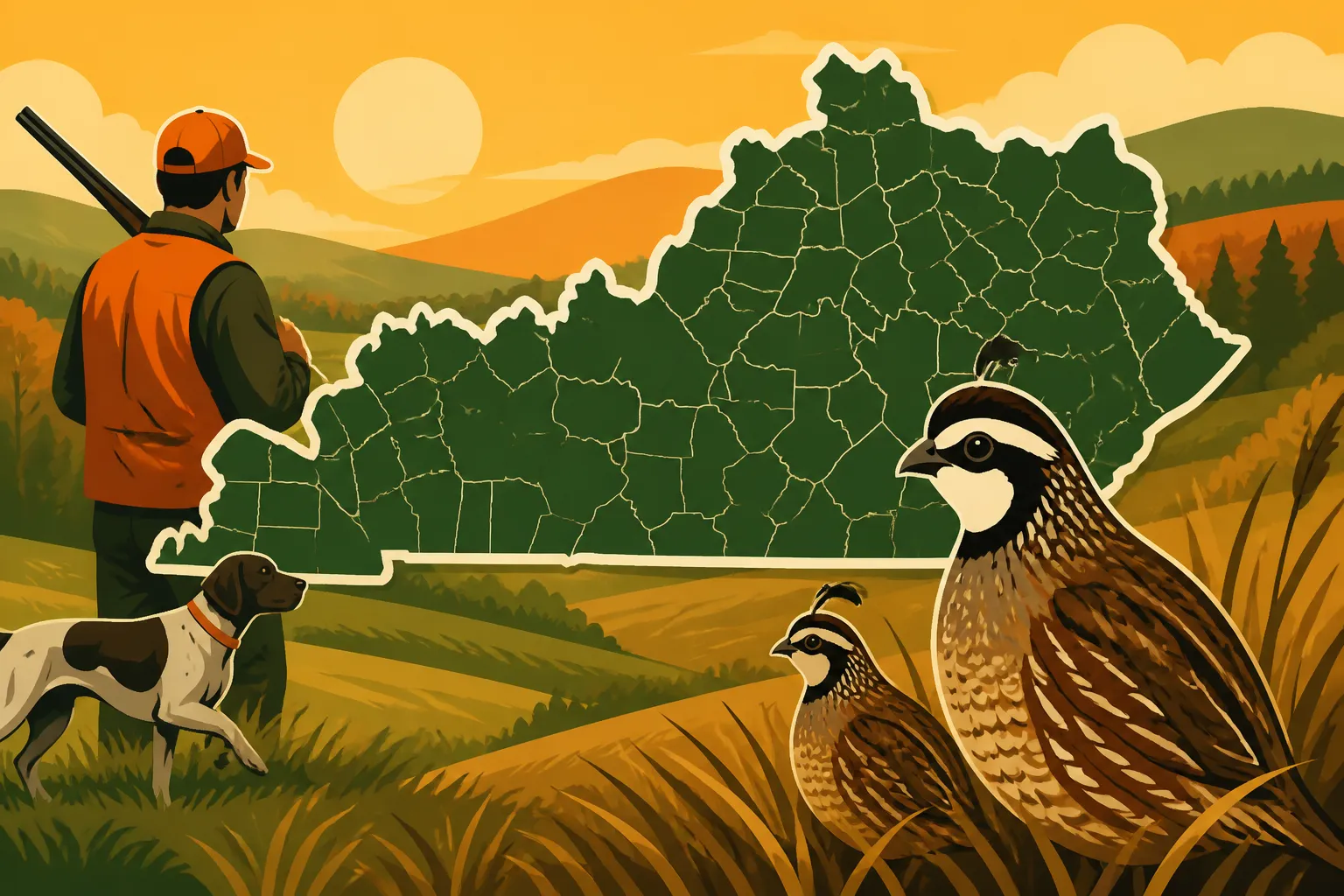
Historically, western Kentucky has always been the heartland of bobwhite quail. Counties like Henderson, Union, Daviess, and Ballard in the far west, along with Caldwell, Christian, and Todd further east, often come up in discussions about where quail still exist. These counties are characterized by a mix of agricultural fields (corn, soybeans, wheat) and timber, but the key is finding areas where that "mix" still includes diverse edges, fencerows, and brushy cover.
Henderson and Union Counties, for example, are along the Ohio River and have large tracts of farmland. While much of it is intensively farmed, pockets of less disturbed land, especially near larger river systems or smaller tributaries with overgrown banks, can hold birds. Similarly, Caldwell, Christian, and Todd Counties have expansive agriculture, but also retain some larger tracts of timber and cattle operations where field edges might be less manicured. Places like Peabody Wildlife Management Area, though heavily hunted, are actively managed for small game and can offer some of the best public land prospects. Using an aerial mapping tool like GoHunt can be incredibly helpful here, allowing you to visually scan for those crucial habitat transitions: overgrown field edges, creek bottoms with dense cover, and younger timber cuts adjacent to open land.
Central and Eastern Kentucky's Niche Opportunities
While generally less productive for quail than the west, central and eastern Kentucky can offer niche opportunities, particularly for the dedicated hunter willing to scout hard. Counties like Butler, Edmonson, and Grayson in west-central Kentucky, which feature a mix of farmland, timber, and sometimes older, less intensive agricultural practices, can harbor isolated coveys. These areas may have a higher percentage of fescue pasture, which isn't ideal, but look for properties that have undergone habitat restoration or are bordered by more diverse cover types.
In Eastern Kentucky, finding quail is a true challenge, but not impossible. Focus your efforts on counties in the foothills and plateau regions rather than the deep, rugged mountains. Counties like Adair, Casey, and Russell might present opportunities, particularly on abandoned farmsteads, reclaimed strip mine lands that have undergone revegetation, or along power line cuts and logging roads where early successional growth is abundant. These are usually much smaller, more isolated populations, but finding and flushing a wild covey in these areas can be incredibly rewarding. It's often about finding specific pockets, sometimes just a few acres, that have the perfect storm of cover, food, and escape routes.
Key Indicators of Good Quail Country
When you're out scouting, or even when you're pouring over maps on GoHunt or similar platforms, what should you actually be looking for?
- Diverse Edge Habitat: This is paramount. Look for transitions where a timber stand meets a field, but instead of a clean-cut line, there's a ragged, brushy border with briars, young saplings, and weeds. This provides immediate cover for birds moving between feeding and loafing areas.
- Overgrown Fallow Fields: Fields that haven't been intensely farmed for a few years and have naturally reverted to native grasses and forbs are quail magnets. They provide excellent nesting and bugging habitat.
- Brushy Creek Bottoms and Drainages: These areas often retain dense cover that isn't disturbed by farming. They can act as natural corridors and sanctuaries, especially in heavily agricultural landscapes.
- Young Clear-cuts or Timber Stands: While mature timber is poor quail habitat, areas that have been recently clear-cut (within 3-10 years) and are regenerating with dense saplings, briars, and weeds can be excellent, particularly if they are adjacent to open areas.
- Prescribed Burn Areas: If you know an area has had a recent prescribed burn, it's worth investigating a year or two later. Burns promote the growth of native grasses and forbs and reduce undesirable woody vegetation, creating prime quail habitat.
Remember, a successful wild quail hunt in Kentucky today often hinges on extensive scouting, sometimes year-round, to identify these precious habitat remnants. Don't be afraid to Scouting Kentucky Public Land Before Season or knock on doors to Getting Private Land Permission in Kentucky in promising areas.
Strategies for Hunting Wild Quail in Kentucky
Once you've identified a promising area, the real work (and fun!) begins. Hunting wild quail in Kentucky today requires patience, persistence, and usually, a good canine companion. It's less about fast limits and more about the experience of finding those hard-won birds.
Essential Gear and Dog Work
For wild quail, a lightweight, fast-swinging shotgun is your best friend. A 20-gauge or even a 28-gauge shotgun, typically choked improved cylinder or modified, is perfect for the close-quarters flushes you'll encounter. Lightweight shot shells in 7.5 or 8 shot will do the trick. Don't forget an Upland Vests With Water Capacity for yourself and water for your dog, as you'll be covering a lot of ground.
Perhaps more critical than any piece of gear is a well-trained bird dog. A good pointing dog, whether a setter, pointer, Brittany, or German shorthair, is absolutely invaluable. Their ability to locate scent, lock up on point, and hold the birds until you can flush them is what makes wild quail hunting possible. Without a dog, finding and recovering coveys in thick cover is an exercise in futility. The dog not only finds the birds but also helps you conserve coveys by ensuring you're not walking past unpointed birds that could be flushed without a shot.
Approaching Cover and Flushing Birds
Quail are masters of camouflage and holding tight. When your dog goes on point, approach deliberately, always being mindful of where the birds are likely to flush. They'll often burst from the densest part of the cover. Be ready for fast, erratic flight patterns. It’s a good idea to work parallel to dense cover or along habitat edges, as birds often use these as travel corridors. Always be prepared for a covey to scatter; mark where individual birds fly, as singles can often be re-pointed and offer additional shooting opportunities. Shot Size for Squirrel and Rabbit can also apply to quail if you're looking for a versatile load for mixed small game.
Ethical Considerations and Conservation
Given the fragile state of Kentucky's wild quail populations, ethical hunting practices and a conservation mindset are more important than ever. Always know and abide by the Kentucky Small Game Season Rules regarding bag limits and season dates. Consider taking fewer birds from a covey, especially smaller ones, to ensure they have enough remaining members to survive and reproduce. Many hunters today focus more on the experience of finding and working a wild covey than on filling a bag.
Supporting habitat initiatives, whether through buying a Kentucky hunting license or volunteering for conservation groups, also plays a crucial role. Every bit of good quail habitat we can create or protect is a step towards ensuring future generations can still experience the thrill of a wild bobwhite flush.
Hunting wild quail in Kentucky is a testament to perseverance and a deep appreciation for nature's delicate balance. It's a reminder that sometimes, the greatest rewards come from the hardest-won battles. While the broad landscapes of the past may be gone, dedicated efforts and careful scouting can still connect you to the heritage of Kentucky's bobwhite quail.
Disclaimer
This article is for general informational purposes only and does not constitute professional advice. Laws, prices and regulations vary by location and change over time. Consult a qualified professional for guidance on your specific situation.