Poult-to-Hen Ratios and What They Mean
It’s a feeling every turkey hunter knows all too well: a spring morning where the woods feel strangely silent, or a fall hunt where you just can’t seem to locate a flock. We pour over maps, scout for sign, and practice our calls, but sometimes the birds just aren't there in the numbers we expect. This quiet can be baffling, and often, it points to broader trends in the wild turkey population that are directly influenced by what happened during the previous nesting season. Understanding the poult-to-hen ratio—a crucial metric for wildlife biologists—can offer a significant peek behind the curtain, giving you insights into the health of Kentucky's turkey flocks and helping you anticipate what kind of hunting season lies ahead. This guide will break down exactly what this ratio means, why it’s so important for our wild turkeys, and how you can use this knowledge to become a more informed and successful hunter.
Understanding the Poult-to-Hen Ratio: What It Is and Why It Matters
When we talk about wild turkeys, especially the health and future of their populations, one of the most fundamental indicators is the success of their reproduction. The poult-to-hen ratio is a direct measure of this success, giving us a snapshot of how many young turkeys (poults) are surviving per adult hen. It's not just a dry biological statistic; it's a vital sign that tells a story about the challenges and triumphs facing our feathered friends, and by extension, our hunting opportunities.
The Basics of the Ratio
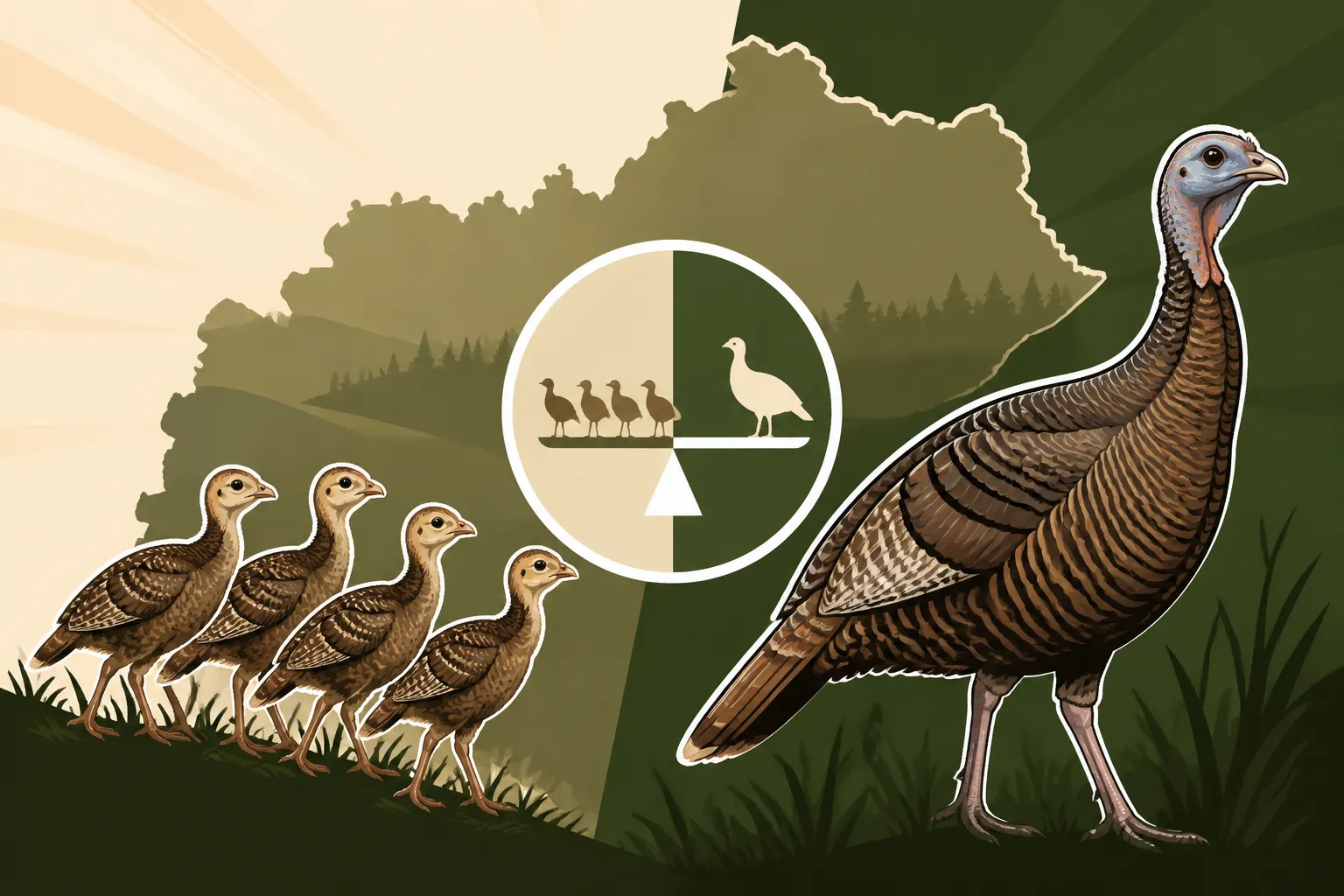
At its core, the poult-to-hen ratio is exactly what it sounds like: a count of the number of poults observed for every adult hen during surveys. Wildlife agencies, like the Kentucky Department of Fish and Wildlife Resources (KDFWR), conduct brood surveys, often in late summer, where they observe groups of turkeys and record how many adult hens are accompanied by young birds, and how many poults are in each brood. These observations are then compiled to provide a statewide or regional average. For instance, if you hear that the ratio is 2.5, it means that, on average, for every adult hen observed, there were 2.5 surviving poults. A higher number indicates a more successful nesting and brood-rearing season, while a lower number suggests struggles in raising young birds. This figure is a critical piece of the puzzle when biologists assess overall Kentucky Turkey Population Trends.
Why Wildlife Biologists Track It
Wildlife biologists don't track this ratio just for kicks; it's a fundamental tool in managing wild turkey populations. By consistently monitoring the poult-to-hen ratio year after year, they can identify trends in productivity. Is the population increasing, decreasing, or remaining stable? Are certain regions experiencing better hatches than others? This information helps them understand the impacts of various environmental factors, habitat changes, and even hunting pressure. If ratios are consistently low, it might trigger investigations into factors like increased predation, habitat degradation, or disease outbreaks. Conversely, healthy, consistent ratios indicate a resilient and thriving turkey population. This long-term data also informs decisions about season lengths, bag limits, and management strategies to ensure sustainable hunting opportunities for future generations.
How It Impacts Your Turkey Season
For hunters, the poult-to-hen ratio is a direct predictor of future hunting success. A strong hatch translates into more jakes and two-year-old gobblers in the coming seasons. Think about it: poults from this year become jakes next spring, and two-year-old gobblers the year after. If the ratio is high, say 3.0 or more, you can expect a flush of young, eager gobblers a season or two down the line, often more responsive to calling. These younger birds haven't been pressured as much and can be more aggressive. Conversely, a consistently low ratio (e.g., 1.0 or less) can mean fewer young birds entering the population, leading to tougher hunting with more mature, call-shy gobblers dominating the landscape. You might find yourself having to work harder, needing more patience, and perhaps even covering more ground to find those elusive birds. It helps explain why some seasons just feel "off" or why you hear fewer gobblers sounding off from their Kentucky Turkey Roost Tree Preferences. Services like GoHunt often compile or reference this type of biological data, giving hunters a centralized place to potentially find and interpret these trends.
Factors Influencing Kentucky's Poult-to-Hen Ratios
Kentucky's landscape is diverse, from the rugged mountains of the east to the rolling farmland of the west, and this diversity means that factors influencing turkey reproduction can vary widely. Understanding these influences helps us appreciate the delicate balance of nature and the challenges wild turkeys face in raising their young. It's never just one thing; usually, it's a combination of environmental pressures that dictate how many poults make it to adulthood.
Weather and Its Role in Nesting Success
Weather is arguably one of the most critical factors influencing poult-to-hen ratios. Wild turkey nests are vulnerable, and young poults are particularly susceptible to cold, wet conditions. A late spring cold snap, especially one accompanied by heavy, prolonged rain, can be devastating to newly hatched poults. They chill easily and can succumb to hypothermia. Severe thunderstorms during nesting can also flood nests, destroying eggs. On the flip side, extremely hot and dry conditions can impact insect populations, which are a vital food source for young poults in their first few weeks of life, affecting their growth and survival. The timing and intensity of these weather events during the nesting and brood-rearing period (typically April through July in Kentucky) are paramount. A mild, dry spring often correlates with a booming hatch, while a harsh one can lead to a significant dip in the ratio.
Predation and Habitat Quality
Another major influence on turkey productivity is predation and the quality of available habitat. Nests are targets for a variety of predators, including raccoons, opossums, skunks, snakes, and even coyotes. Poor habitat that lacks adequate nesting cover leaves hens and their nests exposed, increasing the likelihood of predation. Hens need thick, protective cover to conceal their nests and successfully hatch their clutches. Once hatched, poults require dense undergrowth and abundant insects to hide from aerial and ground predators. Areas with fragmented habitat, invasive plant species that offer poor cover, or a lack of suitable brooding areas will inevitably see lower poult survival rates. This is why agencies often focus on habitat management efforts, trying to improve conditions that provide better cover and food for turkeys. Hunters utilizing mapping tools like GoHunt can often identify areas with good potential habitat, which often correlates with higher local turkey densities.
Disease and Other Environmental Stressors
While less frequently discussed than weather and predation, diseases and other environmental stressors can also impact poult-to-hen ratios. Outbreaks of diseases, though not common for wild turkeys in Kentucky on a large scale, can weaken hens, making them less capable of nesting successfully or caring for their broods. Stressors such as prolonged drought can reduce available food sources or water, which can affect the overall health of the adult turkey population and, in turn, their reproductive output. Human disturbance, though usually localized, can also play a role, as repeated disturbance near nesting areas can cause hens to abandon nests. While wildlife agencies monitor for diseases like Avian Influenza, the primary drivers of annual poult-to-hen fluctuations in Kentucky usually come back to the basics: weather and habitat.
Interpreting Kentucky's Ratio Data for Better Hunting
Knowing what the poult-to-hen ratio is and what influences it is one thing, but actually using that information to enhance your hunting strategy is where the rubber meets the road. It's about taking the science and applying it to your boots-on-the-ground efforts in the Kentucky woods. Think of it as another layer of intelligence, giving you a more complete picture of the turkey population you'll be pursuing.
Finding Reliable Data for Your Area
The first step in using this data is knowing where to find it. The Kentucky Department of Fish and Wildlife Resources (KDFWR) is the primary source for official poult-to-hen ratios. They typically release annual brood survey results in late summer or early fall, often through their website, publications, or during public meetings. These reports may provide statewide averages, or sometimes more specific regional data, which is far more useful for localized planning. Look for these reports a few months before Kentucky Spring Turkey Season Rules are published, as they offer the earliest indicators of what the following spring might hold. While some hunting platforms, including those like GoHunt, might aggregate or reference this data, always cross-reference with the official KDFWR reports for the most accurate and up-to-date information pertaining to specific counties or regions.
Adjusting Your Tactics Based on the Numbers
Once you have the data, how do you adjust your hunting strategy?
- High Poult-to-Hen Ratios (e.g., 2.5 or higher): This is fantastic news! It suggests a robust population with many young birds. In the subsequent spring, you can expect a good number of jakes and two-year-old gobblers. These younger birds are often less wary and more aggressive, making them excellent candidates for calling in. You might be more successful with aggressive calling sequences, cutting, and yelping, as these birds are still figuring things out and are eager to establish dominance. There might be more birds to choose from, increasing your odds, and you might even have good luck with multiple birds coming into a single setup. This is when Run-and-Gun Turkey Tactics on Public Land can be particularly effective.
- Moderate Poult-to-Hen Ratios (e.g., 1.5 to 2.4): This indicates a fair hatch. You'll likely still encounter a decent number of birds, but there might be more pressure and fewer overly aggressive youngsters. You'll need to work a bit harder, perhaps scouting more thoroughly and varying your calling. Focus on patience and persistence, as gobblers might be more spread out or less inclined to commit. It’s a good year to really hone your woodsmanship.
- Low Poult-to-Hen Ratios (e.g., below 1.5): This signals a tough year for reproduction. You can expect fewer jakes and two-year-old gobblers in the following seasons, meaning the birds on the landscape will be older and wiser. This calls for a more cautious, patient approach. Less aggressive calling, longer waits between calling sequences, and meticulous scouting for fresh sign become critical. You might need to cover more ground, focusing on areas with proven turkey density or targeting isolated gobblers. This is when knowing When Kentucky Gobblers Go Quiet in May becomes crucial, as you’ll need to adapt to even tougher conditions.
Long-Term Trends and What They Tell Us
Beyond just the single-year data, looking at poult-to-hen ratios over several years can reveal important long-term trends about Kentucky Turkey Population Trends. A sustained decline in the ratio might indicate systemic issues like ongoing habitat loss, increasing predator populations, or changing climate patterns affecting multiple nesting seasons. Conversely, a consistent pattern of high ratios points to healthy, productive habitat and successful management efforts. As a hunter, understanding these trends helps you adjust your expectations and contribute to conservation efforts. If the numbers are consistently down, it might be a year to pass on a jake, allowing more birds to mature. It fosters a more responsible and conservation-minded approach to hunting, recognizing that our actions today impact tomorrow's flocks.
What Hunters Can Do to Help Wild Turkey Populations (and Ratios)
As hunters, we're not just consumers of wildlife resources; we're also their most fervent conservationists. While we can't control the weather, there's plenty we can do to positively influence poult-to-hen ratios and the overall health of Kentucky's wild turkey populations. Our actions, both individually and collectively, contribute directly to the future of this magnificent game bird.
Habitat Improvement on Private Land
If you're fortunate enough to hunt or own private land, you have a direct opportunity to impact turkey reproduction. Focusing on habitat improvement for wild turkeys means creating the diverse cover and food sources they need to thrive. This can involve planting native grasses and wildflowers for nesting cover, creating small clearings with clover or chufa for brood-rearing areas, or managing timber to promote mast production. Leaving natural buffers along agricultural fields, managing fencerows, and maintaining diverse forest stands all contribute to a healthier ecosystem for turkeys. Even small efforts, like disking a strip to encourage beneficial weeds, can make a difference. These improvements provide safe nesting sites, abundant insect life for poults, and escape cover from predators, directly enhancing the chances of a successful hatch and contributing positively to local poult-to-hen ratios.
Supporting Conservation Efforts
Beyond direct habitat work, financially supporting state and national conservation organizations is paramount. Groups like the National Wild Turkey Federation (NWTF) and the KDFWR are on the front lines, conducting research, advocating for wildlife-friendly policies, and implementing large-scale habitat projects on public and private lands. A portion of every Kentucky Turkey Permit Cost and Kentucky Hunting Licenses and What They Cost goes directly towards conservation, so simply buying your licenses and permits is a contribution. Participating in local NWTF chapters or volunteering for KDFWR projects also puts boots on the ground, helping to improve habitat or conduct surveys that provide critical data like the poult-to-hen ratio. When we contribute, we're investing in the future of the species we love to pursue.
Ethical Hunting Practices
Finally, ethical hunting practices play a subtle but important role in population management, particularly as it relates to hen survival. While most spring seasons are gobbler-only, ensuring that we accurately identify our target is crucial. An accidental hen harvest during spring can set back a local population’s reproductive potential, directly affecting future poult-to-hen ratios. Adhering to bag limits and season dates is non-negotiable, ensuring that enough birds survive to perpetuate the species. Furthermore, being respectful of private landowners and sharing public lands responsibly helps maintain positive public perception of hunting, which is vital for the continued support of wildlife management and conservation. Our role as stewards of the land and its wildlife means making choices that benefit the long-term health of wild turkey populations, ensuring that future generations can enjoy the thrill of Hunting Kentucky's Fall Turkey Season and a vibrant spring woods full of gobblers.
Here's a quick look at how different poult-to-hen ratios can generally translate into hunting outlooks:
| Poult-to-Hen Ratio Range | General Interpretation (Hatch Success) | Hunter Outlook for Future Seasons | Potential Hunting Challenges/Opportunities |
|---|---|---|---|
| Below 1.0 | Poor | Very Challenging | Fewer birds, high pressure, call-shy gobblers |
| 1.0 – 1.4 | Fair to Below Average | Challenging | Limited young birds, patience critical |
| 1.5 – 2.4 | Average to Good | Moderate to Good | Balanced population, varied calling works |
| 2.5 and Above | Excellent | Excellent | Abundant young birds, aggressive calling, more action |
Disclaimer
This article is for general informational purposes only and does not constitute professional advice. Laws, prices and regulations vary by location and change over time. Consult a qualified professional for guidance on your specific situation.