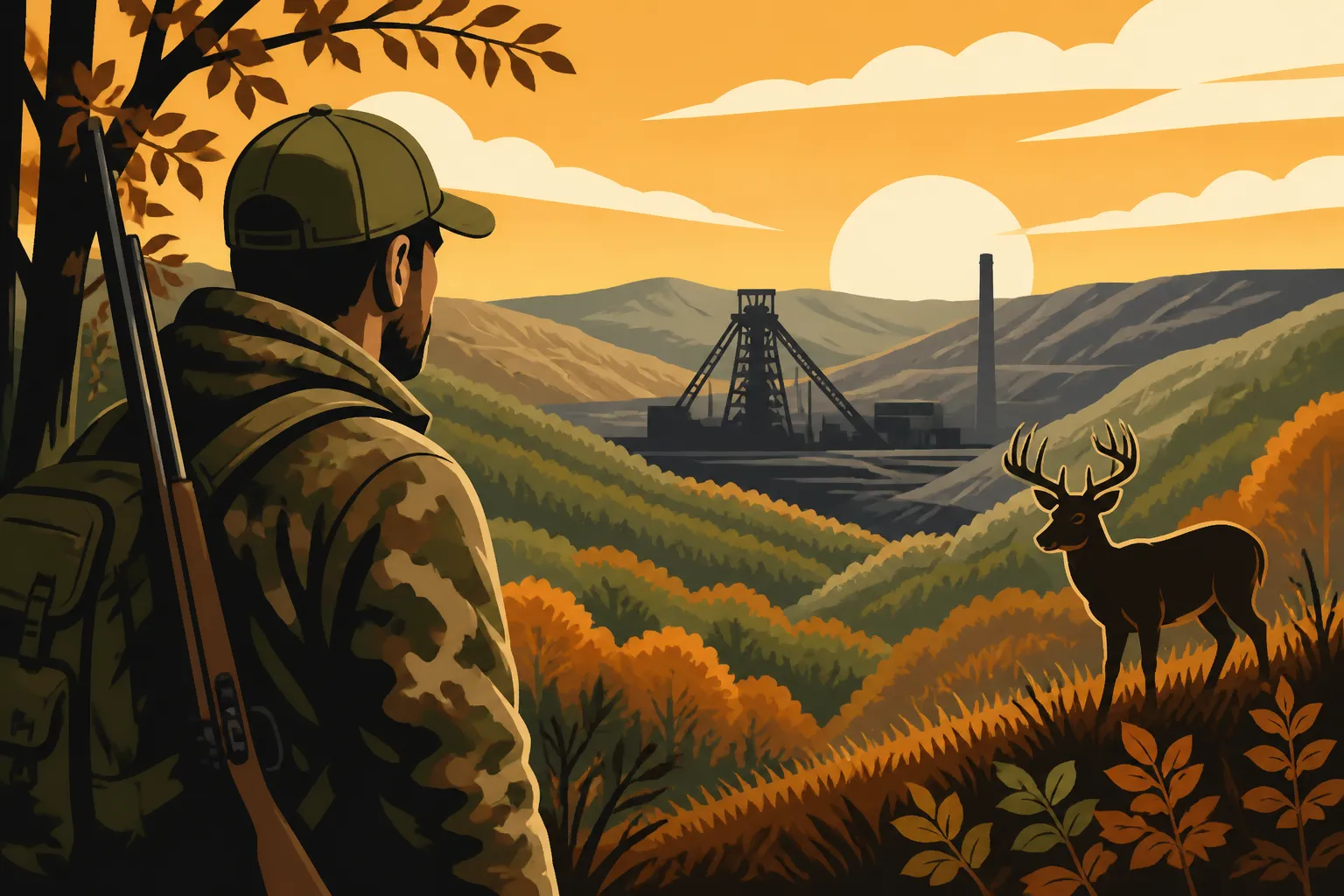
Hunting Eastern Kentucky Coalfield Country
Hunting Eastern Kentucky's coalfield country isn't for the faint of heart, or for those who prefer perfectly flat, manicured landscapes. It's a land of steep climbs, dense hollows, and often, a patchwork of public and private ownership that can be incredibly confusing to navigate. Many hunters feel overwhelmed by the sheer scale and difficulty of accessing truly productive ground, often burning precious hunting time just trying to figure out where they can legally step. This comprehensive guide is dedicated to demystifying hunting in the Eastern Kentucky coalfields, offering practical strategies and insights to help you unlock the potential of this challenging yet rewarding region.
Understanding the Eastern Kentucky Coalfield Landscape
The eastern portion of Kentucky is defined by the rugged Appalachian Mountains, a landscape deeply shaped by centuries of geological forces and, more recently, by extensive coal mining. This isn't your rolling agricultural land of Western Kentucky; here, every step is a climb or a descent, and the timber is often thick, challenging even the most seasoned hunter. Before you even think about hoisting a rifle or drawing a bow, it's crucial to grasp the unique characteristics of this unforgiving yet incredibly rewarding environment.
Geography and Terrain Features
When you picture Eastern Kentucky, envision a continuous series of steep ridges and deep, narrow hollows. These aren't gentle slopes; we're talking about pitches that will test your knees and lungs, often requiring you to use your hands for balance. Interspersed within this roller coaster of hills, you'll find benches – flatter, sometimes wider sections along a ridge or hillside that often act as natural travel corridors for wildlife. These benches are goldmines for deer and elk, offering easier movement and often holding better browse. Old logging roads and reclamation efforts from mining operations have also sculpted the land, creating a network of trails, some maintained, some long forgotten, that can either provide access or create impenetrable tangles. Understanding this vertical world is your first step to success.
The sheer ruggedness dictates everything, from how animals move to how you should plan your hunt. Deer, for example, will often bed high on southern-facing slopes for warmth, or seek dense cover in rhododendron thickets along benches. Elk, with their greater size and migratory tendencies, might utilize broader valleys and reclaimed strip mine areas, especially during certain times of the year. The hollows themselves, often damp and dark, provide crucial water sources and escape routes. You'll quickly learn that a mile on the map in this country feels like five, and planning your entry and exit routes with the terrain in mind is paramount to avoid exhaustion and getting caught out after dark in an unfamiliar, steep ravine.
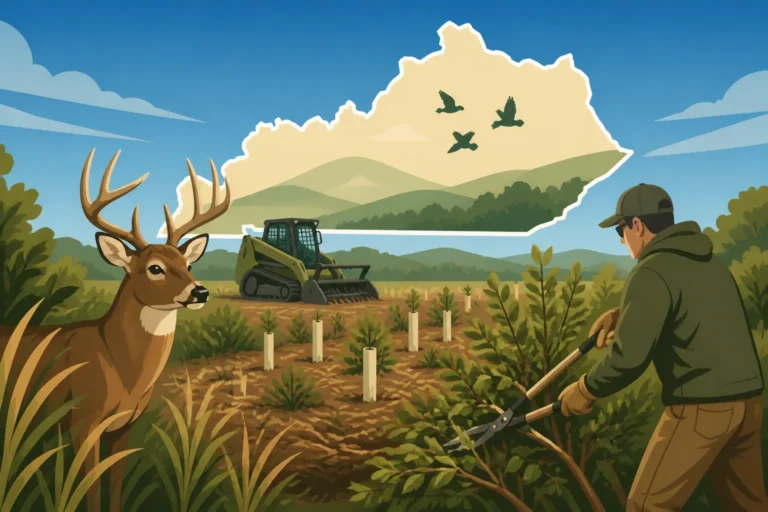
Then there's the unique aspect of reclaimed land. While some areas are pristine national forest, others are former strip mines that have been reforested or allowed to re-vegetate. These areas often have very different characteristics: flatter tops, dense young growth, and sometimes a surprising abundance of food sources. They might also be crisscrossed with old haul roads, which, while offering easier walking, can also be highly visible and expose you to other hunters. Learning to read these diverse landscapes, differentiating natural forest from reclaimed tracts, is a skill that comes with experience and careful scouting.
Habitat Characteristics
The dominant habitat in Eastern Kentucky coalfields is deciduous forest, primarily a mix of various oak species, hickory, maple, and poplar. This means mast crops, particularly acorns, are absolutely vital to the wildlife. In a good mast year, deer and turkeys will spread out, feeding heavily on the abundant nuts. In a poor mast year, however, animals will concentrate around alternative food sources, making those areas high-priority hunting spots. Identifying key oak ridges or specific stands of productive trees can be the difference between seeing game and coming home empty-handed.
Beyond the major timber, you'll encounter thickets of rhododendron, mountain laurel, and greenbrier. These dense, often thorny tangles provide incredible bedding and escape cover for deer, bears, and other wildlife. They can be nearly impossible for a human to penetrate quietly, making them perfect sanctuaries. Learning to hunt around these areas, setting up on the fringes where game filters in and out, is often more effective than trying to push through them. These thickets often hold mature bucks that know exactly how to use the impenetrable cover to their advantage.
Water is generally plentiful in the coalfields, with countless small creeks, seep springs, and ephemeral drainages running through the hollows. These act as natural travel corridors and gathering points, especially during dry spells or late season when other water sources freeze. Identifying these water sources on a map and then confirming them on the ground can help you locate game trails and potential ambush points. Additionally, in areas with reclaimed mines, you might find small ponds or reservoirs that draw wildlife, particularly waterfowl or animals seeking a drink. The overall habitat diversity, from mature timber to young clear-cuts and thick underbrush, creates a complex ecosystem that supports a wide array of game animals, each utilizing the land in its own way.
Public Land Opportunities in the Coalfields
One of the biggest advantages of hunting in Eastern Kentucky is the sheer amount of public land, a welcome contrast to many other parts of the state. However, "public land" isn't a monolithic entity here; it comes in various forms, each with its own rules, challenges, and opportunities. Knowing these distinctions is key to planning a successful and legal hunt.
Daniel Boone National Forest Access and Challenges
The Daniel Boone National Forest (DBNF) sprawls across much of Eastern Kentucky, offering hundreds of thousands of acres of rugged, wild country. It's a fantastic resource for hunters seeking an immersive, backcountry experience. Access points are numerous, ranging from well-maintained trailheads to barely discernible two-track roads. Many hunters utilize the forest's extensive network of gravel and dirt roads to get deep into the woods, but be warned: some of these roads can be rough, and many are seasonally closed to vehicle traffic. Always check local forest service regulations and signage before driving in.
Hunting the DBNF means embracing the challenge of steep terrain and often thick timber. Deer densities might not be as high as in some of the more agricultural regions, but the opportunity for a truly wild, unpressured animal is real. You'll need to be prepared to hike significant distances, often vertically, to get away from road noise and other hunters. Look for areas with diverse habitat, such as mixed oak and pine stands, or areas that have seen recent timber harvest, which can create excellent browse for deer. Remember that Treestand Setups in Daniel Boone National Forest require careful consideration of public land rules regarding leaving stands overnight. Using a detailed map, especially one from a service like onX Hunt, is invaluable for navigating the vastness of the DBNF and identifying promising features like saddles, benches, and creek drainages.
The biggest challenge in the DBNF is often simply the scale of it. It can be intimidating. Don't expect to just walk in off the road and immediately find a hot spot. It requires scouting, patience, and a willingness to explore. Water sources, especially during early archery season, can be key focal points. Many hunters find success focusing on the transition zones between different forest types or identifying remote sections accessible only by foot, far from the nearest parking area. While the density of deer may be lower, the quality of the hunting experience and the chance at an older, wiser buck can make the effort worthwhile.
State Forests and Wildlife Management Areas
Beyond the DBNF, Kentucky boasts several State Forests and Wildlife Management Areas (WMAs) in the eastern region that offer excellent hunting opportunities. Places like Pine Mountain State Forest, Robinson Forest, and Begley Wildlife Management Area are prime examples. These areas are typically managed directly by the Kentucky Department of Fish and Wildlife Resources (KDFWR) or the Division of Forestry, often with specific objectives for wildlife habitat enhancement. As a result, they can sometimes hold higher densities of game than vast, unmanaged forestland.
Pine Mountain State Forest, for instance, offers rugged mountain hunting similar to the DBNF but often with more defined access points and specific management goals. Pine Mountain State Forest Hunting is a great resource if you're looking for more details on this particular area. Robinson Forest, while primarily a research forest, does allow hunting in certain designated areas, but often comes with its own set of unique rules that you absolutely must check before heading out. WMAs like Begley, especially in the heart of the Elk Restoration Zone, can provide incredible opportunities, including the chance to draw an elk tag. These areas are often actively managed with prescribed burns, timber cuts, and food plots, all designed to benefit game animals.
It’s crucial to understand that rules on WMAs can differ significantly from DBNF or general statewide regulations. Some WMAs might have specific permit requirements, restricted weapon types, or even lottery hunts for certain species. Always consult the KDFWR Hunting and Trapping Guide or the specific WMA’s regulations page before your hunt. While these areas might see more hunting pressure due to their focused management and easier access, they also offer some of the most consistent opportunities for deer, turkey, and even bear. Knowing the nuances of each WMA, which can be found through the Kentucky Hunt Fish app or by digging into the KDFWR website, will set you up for success.
Reclaimed Mine Lands
One of the most unique and increasingly important public land hunting opportunities in Eastern Kentucky comes in the form of reclaimed mine lands. These are vast tracts of land that were once strip mines, but have since undergone environmental reclamation, often through backfilling, grading, and reforestation. Peabody Wildlife Management Area is perhaps the most well-known example of this type of landscape. Peabody Wildlife Management Area offers a truly distinct hunting experience. These areas often feature a mix of flatter, open grassy areas, young successional forests, and older, re-established timber stands.
The topography of reclaimed land can be very different from the surrounding natural forest. Instead of endless steep ridges and hollows, you might find broad, flat benches (the former mine benches) separated by steep, man-made embankments. This creates unique travel patterns for deer and other game. The younger vegetation provides abundant browse, which can attract and hold deer, especially in areas where food sources might be scarce in mature timber. Elk also thrive in these landscapes, utilizing the open areas for grazing and the younger forests for cover.
Hunting reclaimed mine lands presents its own set of challenges. Old haul roads, while providing access, can also be quite visible. The vegetation, especially in younger stands, can be incredibly dense and difficult to move through quietly. Also, the patchwork nature of the reclamation can sometimes lead to confusing boundaries, making a reliable mapping tool like GoHunt or onX Hunt absolutely essential to ensure you're on legal hunting ground. Despite these challenges, the sheer amount of productive habitat and the potential for encountering quality animals, particularly deer and elk, makes these reclaimed areas some of Eastern Kentucky's most exciting hunting destinations.
Navigating Access and Boundaries
The checkerboard nature of land ownership in Eastern Kentucky, especially within and adjacent to large public tracts, can be a hunter's biggest headache. You might be hunting what feels like deep public land, only to unknowingly step onto a small private parcel. Avoiding trespassing is not just good ethics; it's a legal requirement, and it demands diligent preparation.
Utilizing Mapping Tools
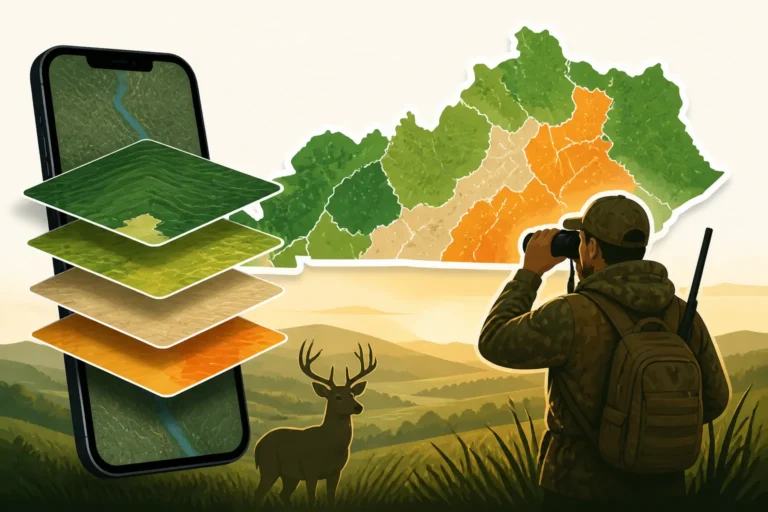
In the rugged, often remote terrain of Eastern Kentucky, a reliable mapping tool is no longer a luxury—it’s an absolute necessity. Traditional paper maps are a good backup, but for real-time boundary awareness, GPS-enabled smartphone apps have revolutionized how we hunt. Brands like onX Hunt and GoHunt offer incredibly detailed mapping layers that display public land boundaries, private property lines with landowner names (where available), aerial imagery, and topographic features. These tools are invaluable for understanding the complex land ownership patterns. Scouting With the Kentucky Hunt Fish App can also provide some official information, but for detailed property lines, the commercial apps excel.
Before you even leave your driveway, you should be digitally scouting with these apps. Zoom in on areas you plan to hunt. Look for the distinct colors that delineate public from private ground. Identify potential access points, whether they are gated forest roads, hiking trails, or even just old logging paths that aren't on official maps but show up on satellite imagery. Use the topographic layer to understand the lay of the land – where the steep sections are, where the benches run, and where creek bottoms might funnel game. Save offline maps for areas where cell service is unreliable, which is common in many deep hollows and remote ridge lines of Eastern Kentucky.
Once you’re in the field, keep your mapping app active. It provides a real-time "you are here" marker, showing your exact position relative to property lines. This is especially critical when moving through areas where public and private land are intermingled or where boundaries might not be clearly marked with signs or paint. Imagine you're still-hunting a ridge and come across a promising saddle. A quick glance at your phone can confirm if that saddle is on public ground or if you need to adjust your route. These tools remove the guesswork and give you the confidence to explore deeper, knowing you're staying within legal bounds.
Understanding Public vs. Private Boundaries and Easements
Beyond the technical aspects of mapping, it's crucial to grasp the legal realities of public versus private land. In Eastern Kentucky, you'll often find private in-holdings or adjacent tracts to public lands. Sometimes, these private lands may look just like the public land, with no fences or clear markers. That's why relying solely on visual cues can lead to trouble. Always assume land is private unless you can confirm it is public. Kentucky Trespass and Permission Law is clear: you need permission to hunt private land, and ignorance of a boundary is not a defense.
Another aspect to consider are easements. Sometimes, public land agencies negotiate easements across private land to allow access to otherwise landlocked public tracts. These easements are usually narrow corridors, and while you can traverse them, hunting on the easement itself is generally prohibited, as the land on either side remains private. Your mapping app should highlight these or provide information if you're looking at a specific parcel. It's vital to respect these agreements and understand their limitations.
When you do encounter marked boundaries, whether it's painted trees or "No Trespassing" signs, pay attention. Yellow or orange paint often denotes public land boundaries, but always verify with your map. Even if you have permission to hunt a private tract, ensure you know its exact boundaries to avoid inadvertently crossing onto a neighbor's land. The best practice is always to err on the side of caution. If there's any doubt about whether you're on public land or a permitted private parcel, back out and find a confirmed legal spot. Being a responsible hunter means respecting property rights and ensuring you never give other hunters a bad name by disregarding the rules of access.
Target Species and Their Behavior
The rugged, diverse landscape of the Eastern Kentucky coalfields supports a remarkable array of game species. While deer are undoubtedly the main attraction for many, this region offers unique opportunities for elk, black bear, and various small game. Understanding the behavior of these animals within this specific environment is paramount to a successful hunt.
Whitetail Deer Strategies
Whitetail deer in Eastern Kentucky coalfield country are tough, resilient, and highly adapted to their steep, timbered environment. They aren't the field-edge dwellers you might find in farm country; these deer live in the thick stuff. Their travel patterns are heavily dictated by topography: they'll often use benches along hillsides, ridge-top saddles, and creek bottoms as primary thoroughfares. Learning to identify these natural funnels and pinch points is crucial. Hunting a Ridge-Top Saddle for Rutting Bucks can be incredibly effective, as these high points offer easier movement and serve as natural crossings between hollows.
Food sources are another major driver. As mentioned earlier, acorns are king. In years of good mast, deer will often be widely dispersed throughout the oak ridges. In lean years, they'll concentrate around alternative food sources like greenbrier, honeysuckle, or any agricultural plots (often small and isolated) on private land adjacent to public ground. Scouting for fresh sign – droppings, tracks, rubs, and scrapes – along these travel corridors and near food sources is vital. Reading a Ridge for Cumberland Deer involves more than just looking for tracks; it's about understanding the subtle nuances of topography and how deer use it to their advantage.
Bedding areas are typically found in dense cover, often on steep, south-facing slopes to catch the sun, or within thickets of rhododendron and mountain laurel. Hunting the fringes of these bedding areas, particularly during the middle of the day or late afternoon, can be productive. The rut in Eastern Kentucky, peaking around early November, can bring bucks out of their reclusive habits, making them more susceptible to calling and strategic stand placement. Understanding that these deer often live and die without ever seeing a corn field means adjusting your tactics to their timber-centric existence.
Elk Hunting in the Restoration Zone
Eastern Kentucky is home to the largest elk herd east of the Mississippi River, making elk hunting a truly once-in-a-lifetime opportunity for those lucky enough to draw a tag in the Elk Restoration Zone. Hunting Kentucky's Record Elk Herd is a testament to the success of this conservation effort. The elk primarily inhabit the former coalfields, utilizing the mix of reclaimed lands (with their open grazing areas) and dense forested ridges for cover. Their behavior is different from whitetails; they are much larger, travel in herds, and their movements are often more expansive.
Elk movements are highly seasonal. During the rut in September and early October, bugling bulls can be heard across the mountains, drawing hunters to the remote hollows and high ridges. After the rut, they often disperse, seeking food and security in smaller groups. Open, reclaimed mine lands are often key areas for grazing, especially at dawn and dusk, while the deep timber provides thermal cover and security during the day. Access can be a challenge, as prime elk habitat is often far from roads, requiring significant hiking.
Drawing an elk permit is incredibly difficult, with thousands of applicants for a limited number of tags each year. Applying for a Kentucky Elk Quota Hunt details the process. If you are fortunate enough to draw, extensive scouting, both digital and on-the-ground, is non-negotiable. Knowing the specific unit you've drawn, understanding the terrain, and identifying potential bedding and feeding areas are critical. Elk are smart, and while they can be patterned, their sheer size and ability to cover ground quickly means you need to be physically prepared and have a solid plan.
Black Bear Encounters and Hunting Considerations
Kentucky's black bear population has made a remarkable comeback, with the highest densities found in the southeastern coalfield counties. While opportunities are limited and regulated by strict quotas, the chance to hunt bear is a growing reality. Kentucky's Black Bear Population has expanded significantly over the last few decades. Bear habitat largely overlaps with deer and elk habitat, favoring dense, mountainous forests with abundant mast crops.
Bears are opportunistic omnivores, feeding heavily on acorns, berries, and other mast when available. They are also drawn to natural food sources in creek bottoms and can sometimes be found foraging in clear-cuts or along the edges of reclaimed lands. Encounters with bears, even if you're not specifically hunting them, are increasingly common in the coalfields, especially during archery and early gun seasons. It's always wise to be "bear aware" – knowing how to react if you encounter one and understanding their behavior.
Bear hunting in Kentucky is primarily done through spot-and-stalk or still-hunting, particularly in the fall when they are actively feeding. Baiting is also a legal option in certain zones and under strict regulations, though it requires significant time and effort. Bear Hunting Southeastern Kentucky offers more specific tactics. Successful bear hunting relies on locating abundant food sources, identifying travel corridors, and moving through the woods quietly and patiently. A quality mapping app can help you identify areas with dense cover and potential mast-producing timber that bears will frequent.
Small Game and Turkey Prospects
While deer, elk, and bear often steal the spotlight, the Eastern Kentucky coalfields also offer excellent opportunities for small game and wild turkeys. Squirrels, particularly gray squirrels, are abundant throughout the hardwood forests. Hunting them early in the season, often when the leaves are still on the trees, requires keen eyesight and stealth. Focus on oak and hickory ridges, looking for cutting and listening for their chatter. Rabbit hunting can also be productive in areas with thick brush, fencerows (if on private land), and young clear-cuts. Grouse and Small Game Hunting in Kentucky can be a great way to spend a day in the woods when deer season is closed or to fill downtime.
Wild turkeys thrive in this varied landscape. Spring turkey hunting is incredibly popular, with gobblers often roosting in tall trees along ridge lines and flying down into hollows or onto reclaimed fields to strut. The rugged terrain means you'll do a lot of walking, often running and gunning to cover ground and locate birds. Fall Turkey Tactics With a Shotgun can also be very effective, often focusing on breaking up flocks and then calling the scattered birds back in. Turkeys, much like deer, depend heavily on mast crops, so scouting for feeding areas is key for fall success.
While ruffed grouse populations have seen declines in many areas, pockets of huntable birds can still be found in the more remote, older growth forests with a good mix of young regeneration. Hunting grouse here is a physically demanding endeavor, requiring you to navigate dense cover. The coalfields are a truly diverse hunting ground, offering something for almost every type of hunter willing to put in the effort.
Effective Hunting Tactics for the Coalfields
Hunting the steep and often dense Eastern Kentucky coalfields demands a different approach than what might work in flatter, more open terrain. Patience, stealth, and an understanding of how animals use the landscape are your most valuable assets.
Still-Hunting and Scouting Steep Terrain
Still-hunting is perhaps the most effective tactic in this country. It's a slow, deliberate method of hunting where you move a few steps, then stop and carefully observe your surroundings, listening and looking for any sign of game. The key is to blend in with the environment, taking advantage of the thick cover and undulating terrain to conceal your movements. Still-Hunting Eastern Kentucky Ridges requires careful attention to wind direction and thermals, which are constantly shifting in mountain terrain. Warm air rises in the morning and evening, pulling scent uphill, while cool air sinks into the hollows. Using these thermal currents to your advantage, especially when approaching a known bedding area, can be crucial.
Scouting is an ongoing process, not just something you do before the season. Every time you're in the woods, you should be looking for fresh tracks, droppings, rub lines, and scrapes. Pay close attention to transition areas – where different habitat types meet, or where a dense thicket gives way to more open timber. These are often high-traffic zones. Look for "bench cuts" or subtle flat spots along steep hillsides where deer and elk prefer to travel. These become superhighways for game, offering easier passage than climbing straight up or down. Your mapping app, like onX Hunt, can help identify these topographical features from above, but confirming them on the ground is essential.
When scouting for bedding areas, look for thick, brushy cover, often on south-facing slopes that get good sun exposure. During hunting season, approach these areas from downwind or with a crosswind, moving slowly and stopping frequently to glass ahead. Remember, in this thick cover, a deer can be incredibly close before you ever see it. The more time you spend on your feet, moving quietly, the more you'll learn the nuances of the terrain and how animals are using it, ultimately leading to more success.
Treestand and Ground Blind Considerations
Given the steep and rugged nature of the coalfields, choosing and setting up treestands or ground blinds requires thoughtful planning. Portability is key. Heavy, bulky stands can be a nightmare to pack into remote areas. Lightweight climbers, hang-on stands, and saddle hunting setups are popular choices for their ease of transport and adaptability. Safety is paramount on steep slopes; always use a full-body harness and a lifeline. Treestand Setups in Daniel Boone National Forest often involve long hikes, so a comfortable pack is also essential.
Finding a suitable tree for a stand can sometimes be a challenge on steep ground. Look for mature, straight trees on benches, near saddles, or overlooking creek bottoms that serve as natural funnels. Consider how you'll get in and out of the stand without spooking game, especially if the terrain forces you into a specific entry path. Sometimes, the best strategy is to set up just off a primary trail or feeding area, using thick cover to break up your silhouette.
Ground blinds also have their place, particularly in areas with limited suitable trees or on reclaimed lands with younger, denser growth. Using a Ground Blind on Kentucky Public Land can be effective, but you need to consider concealment and scent control. Brush in your blind extensively to make it disappear into the landscape, and choose locations that offer good shooting lanes while still providing plenty of natural cover behind you. Ground blinds are excellent for hunting field edges, small food plots (if legal and available), or dense thickets where deer might be bedding. Always ensure your setup allows for comfortable, quiet movement and a clear shot when the opportunity arises.
Cold Weather and Late Season Adaptations
The late season in Eastern Kentucky, typically from December into January, presents unique challenges and opportunities. The leaves are down, offering increased visibility, but temperatures can plummet, and snow or ice might cover the ground. Hunting pressure often drops significantly after the modern gun season, meaning deer that have been pressured may begin to move more freely. However, food sources become more critical, and deer will adjust their patterns to conserve energy. Late-Season Food Sources for Kentucky Whitetails will often be limited to remaining acorns, greenbrier, honeysuckle, or any persistent agricultural crops if you have access to adjacent private land.
When facing cold weather, proper layering is non-negotiable. Sitting still for hours in freezing temperatures in a treestand requires a well-thought-out clothing system. Cold-Weather Sitting Strategy in Kentucky means starting with moisture-wicking base layers, adding insulating mid-layers, and topping it off with a windproof and waterproof outer shell. Hand and foot warmers are your best friends. Insulated, waterproof boots are essential for keeping your feet warm and dry, especially when navigating damp hollows or snow-covered ridges.
During the late season, deer are heavily focused on food and security. Concentrate your efforts on south-facing slopes that offer thermal cover and absorb more sunlight, making them more attractive bedding areas. Focus on remaining food sources and the trails leading to and from them. Deer often move more in the middle of the day during cold weather, taking advantage of the warmest hours. Don't be afraid to try still-hunting the edges of dense cover or slowly traversing creek bottoms, as deer will often seek the sheltered areas. The late season can be mentally and physically demanding, but for those willing to brave the cold, it can offer some of the most rewarding hunting experiences of the year.
Essential Gear for Eastern Kentucky
Hunting in the rugged Eastern Kentucky coalfields demands gear that is durable, reliable, and appropriate for the challenging environment. From what you wear on your feet to the optics you carry, every piece of equipment plays a role in your comfort, safety, and success.
Footwear and Clothing for Rugged Conditions
Your feet are your most important asset in the coalfields, so investing in quality footwear is non-negotiable. You'll be doing a lot of climbing, descending, and traversing uneven, rocky, and often wet terrain. Sturdy, waterproof boots with excellent ankle support and aggressive traction are essential. Look for boots designed for mountain hunting or serious hiking. Boots for Kentucky Hollows and Creek Bottoms need to stand up to mud, rocks, and water. Leather boots, or high-quality synthetics, with a durable rand, will serve you well. Break them in thoroughly before your hunt to avoid painful blisters.
When it comes to clothing, layering is the name of the game. Kentucky weather can be unpredictable, swinging from mild mornings to freezing afternoons, or sudden rain showers. A good layering system allows you to adapt to changing conditions and activity levels, preventing overheating when climbing and keeping you warm when sitting still. Start with moisture-wicking base layers to pull sweat away from your skin. Add insulating mid-layers like fleece or wool, chosen based on expected temperatures. Layering for a Kentucky Deer Stand should account for the fact that you'll be exerting yourself hiking in, then sitting for long periods. Finally, a durable, waterproof, and windproof outer shell is crucial to protect against the elements. Wool or quiet synthetic fabrics are often preferred for their warmth-to-weight ratio and stealth. And don't forget the blaze orange! Always check current regulations for minimum requirements.
Optics and Navigation Tools
In the dense timber and steep terrain of Eastern Kentucky, quality optics are invaluable. A good pair of binoculars, typically 8×42 or 10×42, will help you pick apart distant hillsides, spot subtle movements in thick cover, and identify game in low light. Binocular Choice for Kentucky Whitetails often comes down to balancing magnification with field of view, and in this country, a wider field of view can be beneficial for quickly acquiring targets. A rangefinder is also essential for confidently taking shots, as judging distance in steep, uneven terrain can be incredibly deceptive. You might think a shot is 200 yards, when it's actually 250, or vice versa, leading to a missed or poorly placed shot.
For navigation, while a traditional compass and paper map are always wise backups, a reliable GPS unit or a smartphone with a dedicated hunting app (like onX Hunt or GoHunt) is truly a game-changer. As discussed, these apps provide real-time location tracking, property boundaries, topographic maps, and satellite imagery, all critical for staying found and on legal ground. Ensure your phone is fully charged and consider carrying a portable power bank, as cold weather and constant GPS use can quickly drain batteries. Remember, cell service is often spotty or non-existent in remote coalfield hollows, so download offline maps before you head out. GPS Units Versus Phone Apps each have their pros and cons, but having both bases covered is ideal.
Rifle/Bow Considerations for Mountain Hunting
The choice of weapon for hunting in Eastern Kentucky will largely depend on the specific season and your personal preference, but the terrain itself does influence optimal gear. For rifle hunting, many hunters prefer a versatile caliber that can handle both closer, timber shots and longer shots across hollows or open reclaimed sections. Rifle Setups for Kentucky Deer Hunting often lean towards calibers like .308 Winchester, .270 Winchester, or 6.5 Creedmoor, offering a good balance of accuracy, energy, and manageable recoil. A rifle that is relatively lightweight and easy to carry on long hikes is also a huge plus. Practical shooting ranges in the dense timber might be 50-150 yards, but across a reclaimed area, you might have shots out to 300 yards.
For bowhunters, the challenges are similar. You'll want a reliable, accurate bow (either vertical or crossbow) that you're proficient with. Shots are generally closer in the timber, often within 20-40 yards, but the steep angles can complicate things. Broadhead choice is critical, ensuring good penetration on a deer or bear. Bow and Crossbow Setups for Kentucky should prioritize quiet operation and consistent accuracy. For both rifle and bow, practice shooting from various positions – sitting, kneeling, and even standing – to simulate real-world hunting scenarios in rugged terrain. Ultimately, the best rifle or bow is the one you shoot most accurately and can carry comfortably through the steep, unforgiving landscape of the Eastern Kentucky coalfields.
Respecting the Land and Local Communities
Hunting in Eastern Kentucky isn't just about bagging an animal; it's about connecting with a unique landscape and culture. Being a responsible and respectful hunter ensures that these opportunities remain available for generations to come.
Packing It In, Packing It Out
The principle of "Leave No Trace" is more than just a catchy phrase; it's a fundamental ethical guideline for hunting on public land, especially in remote areas like the Eastern Kentucky coalfields. This means everything you pack into the woods with you—food wrappers, empty water bottles, spent casings, discarded gear—must come back out. Period. Nothing spoils a beautiful hunting spot faster than finding someone else's trash. It reflects poorly on all hunters and can lead to increased restrictions or closures.
Beyond visible trash, consider your impact on the environment itself. Avoid damaging trees unnecessarily for treestands (if allowed) or blazing new trails. Stick to established paths or move through the woods with minimal disturbance. If you field dress an animal, make an effort to do so away from primary trails or water sources, scattering entrails to allow them to decompose naturally. The goal is to leave the area as pristine, or even more pristine, than you found it. This respect for the land is a cornerstone of ethical hunting and ensures that others can enjoy the same wild experience you did.
Understanding Local Culture and Regulations
Eastern Kentucky has a rich and proud heritage, and respecting the local communities and their way of life is just as important as respecting the land. Many residents have deep ties to the mountains, and some may view outsiders, even fellow hunters, with a degree of caution. Be courteous, friendly, and respectful in your interactions with locals, whether you're buying gas, getting a meal, or asking for directions. A simple "hello" and a friendly demeanor can go a long way. Remember, many small communities in this region rely on the tourism and economic activity that hunters bring, so being a good ambassador for the hunting community is important.
Furthermore, always be meticulously aware of all hunting regulations, both statewide and specific to the area you're hunting. This includes season dates, bag limits, weapon restrictions, and blaze orange requirements. The KDFWR website and the annual Hunting and Trapping Guide are your authoritative sources. Pay particular attention to any special regulations for WMAs or specific forest districts, as these can vary. Kentucky Hunter Education Requirements exist to ensure hunters are safe and knowledgeable. Ignorance of the law is never an excuse, and violating regulations can lead to fines, loss of hunting privileges, and a black eye for the sport. By being knowledgeable, respectful, and ethical, you contribute positively to the future of hunting in Eastern Kentucky and ensure these wild places remain accessible and cherished.
Disclaimer
This article is for general informational purposes only and does not constitute professional advice. Laws, prices and regulations vary by location and change over time. Consult a qualified professional for guidance on your specific situation.