Cave Run Lake Public Hunting Access
Venturing out to hunt public land, especially around a major feature like Cave Run Lake, can feel like you're staring at a giant puzzle with no picture on the box. You've got these vast stretches of beautiful, wild country, but figuring out where you can legally hunt, how to access it, and what strategies will actually pay off feels incredibly overwhelming. It's easy to waste precious hunting days just trying to get your bearings or, worse, accidentally trespassing. This guide is here to break down the complexities of public hunting around Cave Run Lake, offering practical advice and insights to help you confidently navigate its unique landscape and increase your chances of a successful outing.
Navigating the Unique Landscape of Cave Run Lake Hunting
Cave Run Lake, nestled in the gorgeous foothills of the Appalachian Mountains in Eastern Kentucky, isn't just a pretty face for recreation. It's surrounded by a mosaic of public lands that offer tremendous hunting opportunities, but understanding where those opportunities lie is crucial. This isn't your average flatland farm country; it's rugged, often steep, and characterized by a mix of different land management agencies, each with its own set of rules and access points.
Understanding Boundaries and Regulations
The primary public hunting ground surrounding Cave Run Lake is managed by the Daniel Boone National Forest (DBNF), specifically within the Morehead Ranger District. This means you'll be operating under federal forest regulations, in addition to statewide Kentucky Department of Fish and Wildlife Resources (KDFWR) rules. There are also significant portions of land managed by the U.S. Army Corps of Engineers (USACE) immediately adjacent to the lake itself, which can have slightly different restrictions, especially concerning permanent structures or vehicle access.
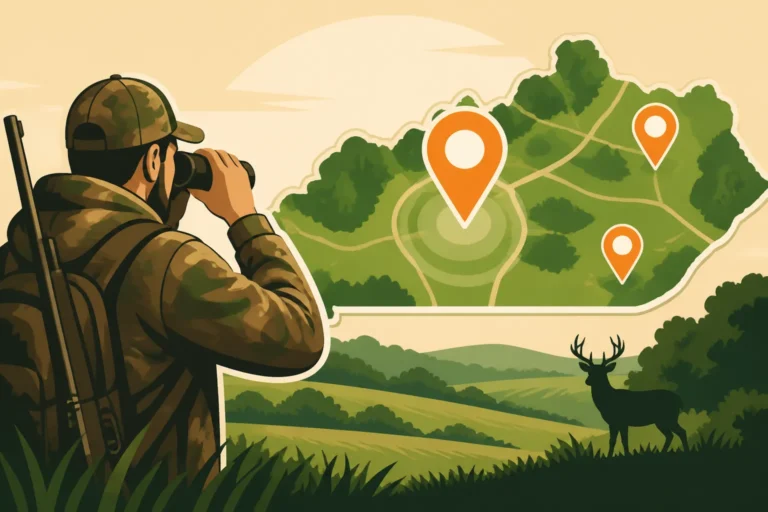
One of the biggest frustrations for hunters new to the area is the interwoven nature of public and private property. It's not uncommon to find a public tract completely surrounded by private parcels, or for a logging road that looks public to suddenly dead-end at a "No Trespassing" sign. This is where digital mapping tools become absolutely invaluable. Tools like onX Hunt are lifesavers for instantly identifying property boundaries, showing you public vs. private land, and helping you navigate confidently. You don't want to get yourself into a sticky situation by inadvertently crossing onto private ground. Always double-check your maps, and consider scouting during the off-season to familiarize yourself with the lay of the land without the pressure of a live hunt. For a broader overview of state resources, check out Scouting With the Kentucky Hunt Fish App.
Designated Hunting Zones and Restrictions
While much of the Daniel Boone National Forest surrounding Cave Run Lake is open to general hunting, it's vital to be aware of any specific areas that might have unique regulations or be off-limits. For instance, developed recreation areas, campgrounds, and designated wildlife viewing zones often have restrictions on hunting or firearm discharge for safety reasons. Always look for signage at trailheads and access points, and consult the current KDFWR hunting guide for any updates specific to the DBNF or the Cave Run Lake area.
Some portions might be part of larger Wildlife Management Areas (WMAs) that fall under the DBNF umbrella, and these sometimes have more specific rules regarding harvest quotas, weapon types, or even hunter access dates. For example, some WMAs might have special deer quota hunts or specific rules for Kentucky Archery Season Dates that differ slightly from the general forest regulations. It's your responsibility to know these nuances before you head out. Don't rely on assumptions; always verify the rules for the exact parcel of land you intend to hunt. This due diligence ensures a legal and enjoyable hunt.
Gaining Access: Entry Points and Terrain Challenges Around Cave Run Lake
Accessing the hunting grounds around Cave Run Lake presents its own set of challenges and opportunities. This isn't flat, easy-to-walk terrain. We're talking about classic Eastern Kentucky hills and hollows, often steep and thick, especially away from the main roads. Hunters who understand the unique access points and are prepared for the physical demands will have a significant advantage.
Boat-In Access for Seclusion
One of the best-kept secrets for hunting around large reservoirs like Cave Run Lake is leveraging boat-in access. The lake's irregular shoreline, punctuated by countless coves, fingers, and embayments, creates a massive amount of public land accessible only by water. These areas often see significantly less hunting pressure simply because they require a boat to reach, deterring many hunters who prefer roadside access.
Imagine launching your boat from one of the many public ramps – there are several around the lake – and motoring into a remote cove. From there, you can beach your boat and hike up into untouched timber or along secluded ridges. This strategy can be particularly effective for targeting mature bucks or wary turkeys that avoid areas with heavy foot traffic. You might find yourself walking into a basin that's holding deer where others don't even bother to look. Just be prepared for the climb once you leave the water's edge. The hills around Cave Run rise sharply, and retrieving a deer down a steep slope to a waiting boat can be a serious workout. Always scout these areas from the water and with satellite imagery beforehand to identify potential landing spots and determine the feasibility of hauling game back to your boat.
Roadside Access and Trail Systems
For those without boat access, or who prefer a less aquatic approach, there are still numerous roadside access points and established trail systems that lead into the public hunting lands. The Daniel Boone National Forest has a network of forest service roads, many of which are open to vehicle traffic, particularly during hunting season. These roads often have pull-offs or small parking areas where you can begin your hike. Look for marked hiking trails, equestrian trails, or even old logging roads that branch off from the main routes. These can provide a solid starting point for penetrating deeper into the woods.
However, roadside access often means more hunting pressure, especially on opening weekends or during peak rut. To escape the crowds, you'll need to be willing to walk. Don't be afraid to put in the miles; often, the best hunting begins where most other hunters turn back. Finding Ground Others Walk Past is a key strategy here. Use your mapping apps like onX Hunt or GoHunt to identify these roads and trails, but also to recognize areas that are further from easy access. Pay attention to topography and look for features like saddles, benches, or hollows that might serve as natural funnels, especially if they are a mile or more from a parking spot. These spots might offer better opportunities for encountering undisturbed game.
Understanding the Topography
The terrain around Cave Run Lake is quintessential Eastern Kentucky: steep, broken, and beautiful. You'll encounter a mix of hardwood forests, dense undergrowth, and rocky outcrops. The hills can be relentless, with long, steep climbs and descents into deep hollows. This topography significantly impacts deer movement and how you approach hunting. Deer often use saddles and benches along ridgelines to travel efficiently, avoiding the steepest climbs. They'll also bed on benches or in thick cover on south-facing slopes, especially in colder weather, to catch the sun.
When planning your hunt, consider Wind and Thermals on a Kentucky Ridge. In these hilly environments, thermals—the rising and falling air currents—play a huge role, especially in the mornings and evenings. Warm air rises in the morning, carrying your scent uphill, while cool air falls in the evening, taking your scent down into the hollows. Understanding and hunting with the thermals is just as crucial as hunting with the prevailing wind. If you're not physically prepared for challenging climbs and descents, start getting in shape well before the season. The effort you put in now will pay dividends when you're dragging a deer out of a steep hollow later.
Strategies for Hunting Common Game Species Around Cave Run Lake
Cave Run Lake and its surrounding public lands offer a diverse hunting experience, primarily focusing on white-tailed deer and wild turkeys, with some limited opportunities for other small game and occasional waterfowl. The key to success here lies in adapting your strategies to the unique landscape and the behavior of the animals in this environment.
Whitetail Deer Tactics
Deer hunting is, without a doubt, the most popular pursuit around Cave Run Lake. The Daniel Boone National Forest provides vast tracts of habitat for whitetails. The steep ridges and deep hollows create natural travel corridors and bedding areas that, once understood, can be exploited by observant hunters.
- Food Sources: Early in the season, deer will be focused on soft mast like persimmons and hard mast, especially acorns. White oaks are gold when they're dropping, and finding a productive oak ridge can be the ticket to success. Later in the season, after the primary mast crops are gone, deer will shift to browse and any remaining green forage in creek bottoms or open areas. Pay attention to creek bottoms; they often hold more consistent food and cover, offering a dynamic that's somewhat comparable to Hunting Western Kentucky River Bottoms, even in this mountainous region.
- Bedding Areas: Look for thick cover on south-facing slopes where deer can bed and soak up the sun in colder weather. These areas offer both thermal advantage and security. Benches part-way down a ridge are also prime bedding spots, providing deer with a good vantage point to see or smell danger approaching from below or above.
- Travel Corridors & Funnels: Deer often use saddles between ridges, distinct points, and the bottoms of hollows as natural travel routes. Scout for these funnels, especially where two hollows converge or where a ridge narrows. Understanding how deer move through these areas is critical for setting up a successful ambush. A mapping app like GoHunt can help you identify these topographical features from your couch, saving you precious scouting time. For more on this, check out Hunting a Funnel Between Two Hollows.
- Stand Placement: Given the steep terrain and the prevalence of thermal currents, treestand placement is paramount. Consider where the wind and thermals will carry your scent. Sometimes, hunting just off the top of a ridge, or halfway down a slope, can keep you out of a deer's direct line of sight or smell. Portable treestands and climbing sticks are ideal for adapting to the diverse tree cover and finding that perfect setup. For insights on adapting to varied timber, refer to Treestand Setups in Daniel Boone National Forest.
Wild Turkey Hunting
Spring turkey hunting around Cave Run Lake can be fantastic, but it demands patience and persistence. The turkeys here are wild and wary, accustomed to navigating the rugged landscape.
- Roosting: Locating roosted birds the evening before a hunt is a classic and highly effective strategy. Turkeys will often roost on the tallest trees along ridgelines or near creek bottoms. Owl hoots or crow calls at dusk can often elicit a shock gobble, helping you pinpoint their location. Once you've located a roost, plan your morning approach to get as close as possible before fly-down without bumping the birds. Check out Calling a Kentucky Gobbler Off the Roost for more tips.
- Calling Strategies: Be ready for run-and-gun tactics. Turkeys in mountainous terrain can cover a lot of ground. Don't be afraid to move, setting up and calling from different vantage points. Incorporate a variety of calls – slate, mouth, and box calls – to mimic different hens and add realism. Sometimes a subtle cluck and purr is all it takes; other times, an aggressive series of cutts will fire them up.
- Terrain to Focus On: Like deer, turkeys use the contours of the land to their advantage. Focus on long, accessible ridgelines where gobblers like to strut, and follow creek bottoms where they often feed and travel. Look for areas with open timber mixed with thicker undergrowth, providing both visibility and cover.
Waterfowl Opportunities
While Cave Run Lake isn't primarily known as a major waterfowl hunting destination like Kentucky Lake or Lake Barkley, there can certainly be opportunities for jump-shooting ducks or setting up small decoy spreads in certain areas.
- Small Coves and Feeder Creeks: Focus your efforts on the countless small coves, inlets, and the mouths of feeder creeks that flow into the main lake. These areas can hold resident wood ducks, mallards, and sometimes even geese, especially early in the season or during migration.
- Patience and Scouting: Waterfowl hunting on Cave Run requires diligent scouting. You'll need to observe which coves or creek mouths birds are using, paying attention to their flight patterns and preferred feeding spots. A small boat or kayak is invaluable for accessing these more secluded spots. Don't expect huge flights, but a few wood ducks over the decoys can make for a memorable hunt. Be mindful of public boating access and other lake users, and always prioritize safety on the water.
Essential Gear and Preparation for a Cave Run Lake Hunt
Hunting around Cave Run Lake means preparing for a dynamic environment. The weather can change quickly, the terrain is physically demanding, and you're often far from your vehicle. Having the right gear and a solid plan isn't just about comfort; it's about safety and maximizing your effectiveness.
Mapping and Navigation Tools
In an area as complex as Cave Run Lake and the Daniel Boone National Forest, reliable mapping and navigation are non-negotiable. Forget relying solely on paper maps unless you've got a detailed topo and a compass and know how to use them proficiently.
- Digital Mapping Apps: This is where modern technology shines. Apps like onX Hunt and GoHunt are indispensable. They provide detailed satellite imagery, topographical maps, and, most importantly, clearly delineate public and private land boundaries. You can drop pins for your stand locations, mark sign, track your route, and navigate confidently even in thick timber or dense fog. Offline map capability is crucial, as cell service can be spotty to non-existent in many hollows and remote areas around the lake. Before you head out, download your maps for the entire area you plan to cover.
- GPS Units: While phone apps are powerful, a dedicated GPS unit can offer a robust backup, especially if your phone battery dies or gets wet. Many hunters still prefer the tactile buttons and rugged durability of a handheld GPS for navigating deep woods. Learn to use both, and always carry a physical compass and know how to orient yourself as a last resort. This is part of being truly prepared for the unexpected. When reading aerial photos for Reading Aerial Photos for Eastern Kentucky Deer, you can then transfer those insights to your GPS or mapping app.
Weather and Water Considerations
Kentucky weather, especially in the mountains, can be notoriously fickle. You might start your day in crisp, cool air and end it in a soaking rain or even an unexpected snow shower. Being prepared for these changes is essential.
- Layered Clothing: Dress in layers that you can easily add or shed as temperatures fluctuate or as your activity level changes. Avoid cotton, which absorbs moisture and stays wet, leading to hypothermia. Opt for wool or synthetic base layers that wick moisture away from your skin. You can get tips from Wool Versus Synthetics in Wet Cold.
- Rain Gear: A lightweight, packable set of waterproof and windproof outerwear is a must. A sudden downpour can make a hunt miserable and dangerous if you're not protected.
- Footwear: Sturdy, waterproof boots with good ankle support are critical for navigating the steep, uneven, and often muddy terrain. Expect creek crossings, damp leaves, and potentially slick rocks.
- Staying Hydrated: Even in cooler weather, hiking these hills can be dehydrating. Carry plenty of water, or a water filter if you know of reliable water sources and prefer to lighten your load.
Retrieval Strategies and Safety
Successfully harvesting an animal is only half the battle, especially in this challenging terrain. Retrieving a deer or turkey from a steep hollow or a remote cove can be one of the most physically demanding parts of the hunt.
- Physical Preparation: As mentioned, the hills are no joke. Be honest with yourself about your physical conditioning and train accordingly. Hauling a heavy animal up a steep incline is exhausting work.
- Retrieval Aids: Consider bringing a game cart if your hunting area has relatively flat old logging roads or trails leading to it. For steeper, rougher terrain, a quality deer sled or drag rope can make a huge difference, particularly if you're hunting alone. For truly challenging recoveries, such as Dragging a Deer Out of a Steep Hollow, having a partner is invaluable.
- First Aid Kit: Always carry a well-stocked first aid kit. Accidents happen, especially when traversing rough terrain with sharp tools or after dark. Include items for cuts, scrapes, blisters, and basic emergency needs.
- Communication: A fully charged cell phone (with a power bank backup) is essential, but remember that service can be spotty. Consider a satellite messenger device if you plan to venture deep into remote areas. Let someone know your hunting plans, including your exact location and expected return time.
- Blaze Orange/Pink: During firearm seasons, blaze orange or blaze pink is mandatory in Kentucky. Even during archery season, it's wise to wear some blaze color when walking in or out of your hunting spot, especially on public land where other hunters might be present. Always know Blaze Orange Jackets Versus Vests rules for the specific season and weapon you're using.
| Aspect of Hunt | Considerations for Cave Run Lake Hunting |
|---|---|
| Terrain | Predominantly steep, broken ridges and deep hollows. Mix of mature hardwoods, thick undergrowth. Numerous creek drainages. Physically demanding. |
| Access | Mix of roadside access (forest roads), designated hiking trails, and extensive boat-in access along the lake shoreline. Roadside areas often see higher pressure; boat-in areas can offer more seclusion. Property boundaries between public (DBNF, USACE) and private land are interwoven, requiring careful navigation. |
| Game Species | White-tailed Deer: Abundant, utilize ridgelines, saddles, and hollows for travel. Feed on mast (acorns, persimmons) in season, browse otherwise. Wild Turkey: Common in spring, roost on ridge tops, travel widely. Small Game (Squirrels, Rabbits): Found in various habitats, especially oak ridges for squirrels and thickets/fencerows for rabbits. Waterfowl: Limited opportunities, primarily jump-shooting or small spreads in secluded coves and feeder creeks. |
| Primary Challenges | Navigating complex public/private boundaries. Physical exertion from steep terrain. Spotty cell service. Retrieving game from difficult locations. Variable weather conditions. Higher pressure near easily accessible areas. |
| Key Strategies | Utilize mapping apps (onX Hunt, GoHunt) for boundary identification and navigation. Embrace boat-in access for remote areas. Be prepared to walk long distances to escape pressure. Understand thermals and wind in hilly country. Adapt calling and hunting methods for wary mountain game. Dress in layers, carry rain gear. Plan for arduous game retrieval. |
| Essential Gear | Digital mapping app (with offline maps), GPS, compass, sturdy waterproof boots, layered clothing (no cotton), rain gear, first aid kit, water, game retrieval aids (sled, drag rope), reliable light source, communication device (satellite messenger for deep dives). Appropriate weapon system for chosen game. |
Cave Run Lake offers a truly rewarding hunting experience for those willing to put in the effort to understand its unique characteristics. With proper preparation, a keen eye for terrain, and a commitment to safe practices, you'll find that its wild beauty provides not just a challenge, but also some incredibly memorable days in the Kentucky woods. Pack your gear, charge your devices, and get ready to explore the hidden hunting gems surrounding this magnificent lake.
Disclaimer
This article is for general informational purposes only and does not constitute professional advice. Laws, prices and regulations vary by location and change over time. Consult a qualified professional for guidance on your specific situation.