Finding Access Near Bowling Green
For many hunters, the excitement of a new season can quickly turn into frustration when trying to figure out where to actually go hunting, especially in an unfamiliar region like south-central Kentucky around Bowling Green. It's not always obvious where public land is, how to get permission on private tracts, or what the local nuances might be. This comprehensive guide is designed to help you navigate the landscape near Bowling Green, giving you the knowledge and tools to find ethical and productive hunting access.
Understanding the Hunting Landscape Near Bowling Green
South-central Kentucky, particularly the area surrounding Bowling Green, presents a unique blend of hunting opportunities and challenges. Unlike the vast expanses of national forest found further east, this region is characterized by rolling farmlands, timbered creek bottoms, and numerous lakes, all contributing to a rich habitat but also a fragmented land ownership picture. Knowing what to expect before you even pack your truck is half the battle.
The Unique Challenges of South-Central Kentucky
When you're looking for hunting access around Bowling Green, you're primarily dealing with a landscape dominated by private agricultural land. This isn't big, unbroken tracts of wilderness. Instead, you'll find a patchwork of cornfields, soybean fields, pastures, and woodlots, often dissected by fencerows and small creeks. This means public hunting grounds tend to be more limited in acreage and can feel more pressured because hunters converge on the fewer available spots. The local deer herd thrives in this mix of agriculture and timber, but finding a spot to intercept them legally and ethically requires diligence. Access roads might be limited, and navigating property boundaries, particularly near larger towns, demands careful attention. You're less likely to "wander" into a good spot and more likely to need specific research and permission.
Common Game Species in the Region
While deer are undoubtedly the most popular pursuit, the Bowling Green area offers a variety of game species that thrive in its diverse habitat. White-tailed deer are abundant, making this a prime destination for both archery and firearm seasons. You’ll find a mix of mature timber bucks and agricultural deer, offering different hunting styles. For those pursuing spring turkeys, the mix of hardwoods and fields provides excellent habitat for gobblers, though pressure can be high on public lands. Small game such as squirrels and rabbits are also plentiful in the woodlots and fencerows. Waterfowl hunting can be productive on the larger lakes and their associated river systems, particularly for ducks and geese during migration. Coyotes are also common, offering year-round hunting opportunities for those interested in predator control. Understanding these populations helps you narrow down your search for suitable hunting grounds.
Exploring Public Hunting Opportunities
Kentucky does a commendable job providing public hunting access, and while the Bowling Green area isn't flush with national forest, it boasts some excellent Wildlife Management Areas (WMAs) and other state-managed lands that offer fantastic opportunities. These areas require careful scouting and an understanding of specific regulations, but they can be incredibly rewarding.
Key Wildlife Management Areas in the Vicinity
Near Bowling Green, the most prominent public hunting opportunity is often found at state-managed Wildlife Management Areas (WMAs). These lands are purchased and managed by the Kentucky Department of Fish and Wildlife Resources (KDFWR) specifically for wildlife habitat and public recreation, including hunting. The flagship WMA in the region is Green River Lake Public Hunting Ground. While a bit of a drive east from Bowling Green, it offers significant acreage with diverse habitat, ranging from mature hardwoods to dense brush, providing excellent deer and turkey hunting. The lake itself also draws waterfowl. Another significant option is the Barren River Lake Public Hunting Access, which encompasses thousands of acres around the lake, providing a similar mix of timber, fields, and water. Closer to Bowling Green, though often smaller, are WMAs like the Shanty Hollow WMA and various smaller tracts that might be less known but can offer surprisingly good hunting for those willing to do their homework. Remember, WMAs often have specific rules beyond statewide regulations, so always check the KDFWR website or signage at the property. Many hunters find success by utilizing Scouting Kentucky Public Land Before Season to learn the lay of the land before opening day.
State Park Hunting Opportunities
Kentucky State Parks, while primarily designed for recreation, occasionally offer controlled or quota hunts. These opportunities are generally limited and often require an application or drawing process. While not a consistent option for everyday access, they can provide unique, less-pressured hunting experiences. It's crucial to consult the KDFWR website and individual state park pages for specific details on if and when hunting is allowed, as rules can vary greatly from park to park. For example, some parks might host special archery hunts to manage deer populations within their boundaries. While there might not be a major state park with open hunting right in Bowling Green, it’s worth checking those within an hour or two’s drive.
Finding Other Public Access Points
Beyond the larger WMAs, sometimes public hunting ground exists in less obvious forms. This could include Army Corps of Engineers land around major reservoirs like Green River Lake, Barren River Lake, and Nolin River Lake, which can have designated public hunting sections. Additionally, some smaller state forests or even utility easements might be open to hunting under specific conditions. To really pinpoint these, you'll need to rely heavily on mapping tools and the KDFWR's online resources. The Using the Kentucky Hunt Fish App is an invaluable tool for this, as it overlays public land boundaries directly onto maps, helping you identify these smaller, often overlooked parcels. Don't be afraid to cross-reference with county GIS maps, which are sometimes available online and can reveal public ownership details that aren't immediately apparent.
Navigating Private Land Access
In a region dominated by private farms and timberland, securing permission to hunt on private property is often the most effective way to find quality hunting access near Bowling Green. This approach requires more legwork and interpersonal skills, but it frequently leads to less crowded and more productive hunts.
The Art of Asking for Permission
Asking a landowner for permission to hunt isn't just about a quick "Can I hunt here?" It's about building a relationship based on respect and trust. Start by researching the property owner (often available through county PVA websites or by simply observing local mailboxes and signs). Approach landowners respectfully, neatly dressed, and during non-peak hours when they're not busy with farm work. Clearly state your intentions: what you want to hunt, when, and how you plan to be safe and considerate. Offer to help with chores, share your harvest, or assist with nuisance wildlife issues like coyotes or wild hogs if they're a problem on the property. Bringing a map, perhaps from onX Hunt, showing their property and where you'd like to hunt, can demonstrate your seriousness and respect for their boundaries. Many hunters feel uncomfortable knocking on doors, but a polite, honest conversation can open up doors to incredible opportunities. Always have your Kentucky Hunting Licenses and What They Cost and your Hunter Education card ready to show, demonstrating you're a responsible hunter.
Leasing and Hunting Clubs as Options
For those looking for more consistent, long-term private land access, joining a hunting club or leasing ground are viable options. Hunting clubs typically involve a membership fee and communal hunting on a shared tract of land. This can be a great way to meet other local hunters and gain access to larger parcels, but it often comes with shared responsibilities and club rules. Leasing, on the other hand, involves paying a landowner directly for exclusive hunting rights to their property for a set period, usually a year. While potentially more expensive, it offers unparalleled control and privacy. Near Bowling Green, you might find smaller family farms willing to lease out their back forty, or larger clubs managing hundreds of acres. Websites and local classifieds can sometimes list these opportunities, but word-of-mouth through local hardware stores, feed mills, or taxidermists is often just as effective. Be prepared to discuss terms, liability, and a clear understanding of what you're paying for.
Understanding Trespass Laws
Whether you're on public or private land, it's absolutely paramount to understand Kentucky's trespass laws. In Kentucky, hunting on private land without permission is illegal. Landowners are not required to post their property to prohibit trespass; it is the hunter's responsibility to know if they are on private land and to have permission. The state's laws generally consider entering private property without permission as trespassing. If you're granted permission, make sure you understand the exact boundaries of where you're allowed to hunt. Never assume. Always err on the side of caution. If you accidentally cross a property line while tracking game, you may need to contact the landowner immediately to request permission to retrieve your animal. Familiarize yourself with Kentucky Trespass and Permission Law to avoid any legal issues and maintain a good reputation for hunters in the area.
Leveraging Mapping and Scouting Tools
In today's hunting world, effective scouting and navigation go hand-in-hand with finding access. The right tools can save you countless hours of wandering aimlessly and prevent uncomfortable encounters with landowners or other hunters.
Essential Digital Mapping Tools
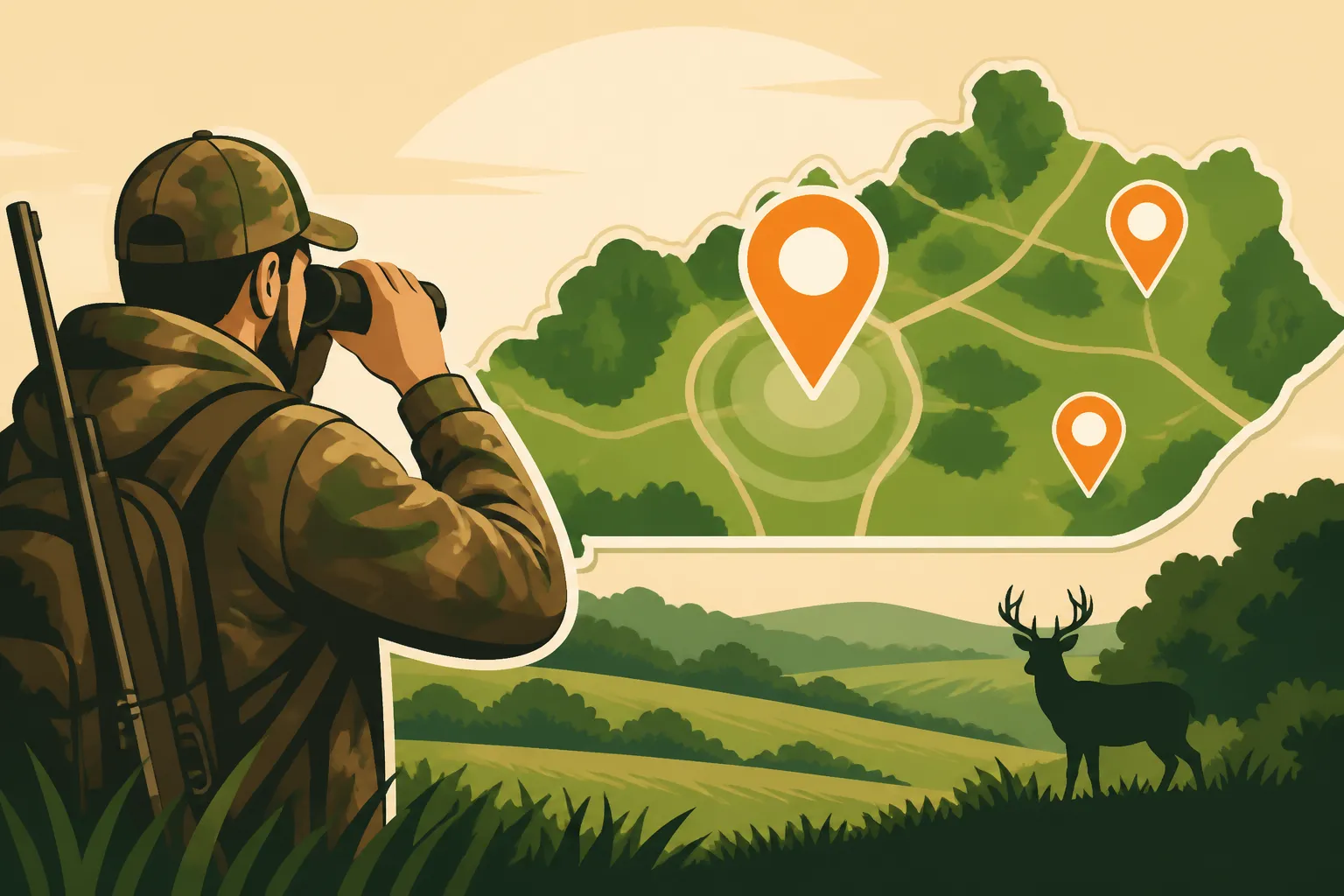
Modern digital mapping applications are game-changers for finding and utilizing hunting access, especially around Bowling Green's mixed landscape. Tools like onX Hunt are indispensable. They offer detailed satellite imagery, topographic maps, and crucially, property ownership overlays that show public/private land boundaries and landowner names. This allows you to identify potential hunting spots, locate pinch points or funnels, and know exactly whose door to knock on for permission. Another excellent platform is GoHunt, which, while often geared towards Western big game, also provides robust mapping features and data layers that can be applied to Kentucky. The KDFWR also provides its own interactive map, often integrated into their Using the Kentucky Hunt Fish App, which is specifically tailored to show public hunting lands, WMAs, and their specific regulations. Before you ever set foot in the woods, spend hours poring over these maps, identifying food sources, bedding areas, water, and travel corridors.
Ground Scouting and Interpreting Sign
While digital maps provide an invaluable bird's-eye view, there's no substitute for boots-on-the-ground scouting. Once you've identified potential areas on your map, whether public or private (with permission), it's time to hit the woods. Look for fresh deer tracks, rub lines, and scrape lines, especially around the edges of fields, timber, and creek bottoms. Note prevailing wind directions and how they interact with terrain features like ridges and hollows – Wind and Thermals on a Kentucky Ridge is a good read, even if the terrain near Bowling Green isn't as dramatic as the eastern mountains. During turkey season, listen for gobblers at dawn and look for strut marks. For small game, identify food sources like oak ridges for squirrels or thick brushy cover for rabbits. Pay attention to bedding areas, often dense cover or thickets, and how game animals move between them and feeding areas. A fresh set of eyes can often reveal details that satellite imagery can't, like a newly cut logging road, an overlooked persimmon tree, or a small waterhole that holds promise.
Considering Local Regulations and Resources
Beyond finding the land, understanding the specific rules and knowing where to turn for information is crucial for a successful and ethical hunt. Kentucky has a robust system of regulations designed to manage wildlife populations and ensure fair chase.
Kentucky Hunter Education and Licensing
Before you even think about setting foot in the woods near Bowling Green, you must ensure you are properly licensed and, if required, have completed your hunter education. Kentucky law generally requires anyone born on or after January 1, 1975, to complete a hunter education course to purchase a hunting license. There are exceptions, such as the apprentice hunter license which allows new hunters to hunt for a limited time under the direct supervision of a licensed adult. Regardless, every hunter needs a valid hunting license and the appropriate permits for the game they pursue (e.g., deer permits, turkey permits, migratory bird permits if applicable). You can purchase licenses online through the KDFWR website, at various retail agents (like sporting goods stores or county clerk offices), or by phone. Always carry proof of your license and permits while hunting. For more details on this, refer to Kentucky Hunter Education Requirements.
Staying Informed with KDFWR Resources
The Kentucky Department of Fish and Wildlife Resources (KDFWR) is your primary resource for all official hunting information. Their website is a treasure trove of current regulations, season dates, bag limits, and detailed maps of public lands. They also provide valuable information on Kentucky Deer Season Structure Explained and Kentucky Deer Management Zone Rules, which are critical for understanding antlerless harvest limits in your specific area. Bowling Green is located in Warren County, so you'll want to check Finding Which Deer Zone Your County Sits In to understand the local deer harvest regulations. The KDFWR often publishes annual hunting guides that consolidate all regulations into an easy-to-read format. Additionally, they sometimes offer local seminars or public meetings where you can ask questions directly to wildlife biologists and conservation officers. Following their social media channels or signing up for email newsletters can also keep you abreast of real-time updates, such as disease surveillance information or new public access opportunities.
Local Considerations for Responsible Hunting
When hunting near Bowling Green, remember that you're often in a more populated, mixed-use landscape compared to deep wilderness. This means being extra mindful of your backstop when shooting, respecting noise ordinances, and always cleaning up after yourself. If hunting near agricultural fields, be aware of crops and livestock, and ensure you're not disturbing them. Be considerate of other users on public lands – hikers, birdwatchers, and other hunters all share these spaces. Practice ethical shot placement and always follow through with tracking and recovery, particularly during warmer early season hunts where meat spoilage is a concern. Building a positive relationship with both landowners and the non-hunting public is vital for preserving hunting traditions in such areas.
Here's a quick comparison of different access types you might encounter:
| Access Type | Description | Pros | Cons |
|---|---|---|---|
| Wildlife Management Areas (WMAs) | State-owned lands specifically managed for wildlife and public use. | Free access, managed habitat, diverse game. | Can be pressured, specific WMA rules apply, limited in size compared to national forests. |
| Other Public Lands | Corps of Engineers land, some state forests, utility easements. | Free or low-cost access, potentially less pressure. | May be smaller, harder to locate, rules can be complex. |
| Private Land (Permission) | Land owned by individuals, hunted with explicit consent. | Less pressure, potential for trophy game, tailor hunt to property. | Requires effort to build landowner relationships, permission can be revoked. |
| Private Land (Lease/Club) | Exclusive hunting rights via paid lease or membership in a club. | Consistent access, privacy, shared responsibility in clubs. | Can be expensive, club rules may limit flexibility, commitment required. |
Ultimately, finding consistent and ethical hunting access near Bowling Green requires a blend of research, respect, and persistence. By utilizing available mapping tools, understanding state regulations, and building relationships with landowners, you can unlock a wealth of hunting opportunities in this vibrant region of Kentucky.
Disclaimer
This article is for general informational purposes only and does not constitute professional advice. Laws, prices and regulations vary by location and change over time. Consult a qualified professional for guidance on your specific situation.