Hunting Western Kentucky Bottomland
For many hunters, the image of Kentucky hunting brings to mind steep, oak-covered ridges of the Daniel Boone National Forest, or perhaps the rolling hills of the Bluegrass region. But if you've ever ventured into the western part of the state, you know a completely different world exists – one defined by vast bottomlands, sprawling river systems, and a unique set of challenges and rewards. The dense, wet, and often unpredictable nature of Western Kentucky's bottomland forests can be incredibly frustrating, making traditional hunting tactics feel utterly useless. This comprehensive guide is here to shed light on that often-overlooked landscape, offering strategies, gear recommendations, and location insights to help you navigate and ultimately conquer the rich, yet demanding, hunting grounds of Western Kentucky's river bottoms.
The Unique Challenge and Reward of Western Kentucky Bottomland Hunting
Hunting Western Kentucky's bottomlands isn't for the faint of heart, or for those who prefer wide-open spaces. This isn't big-timber hunting where you can see a deer coming for a quarter-mile. Instead, it's a world shaped by water, dense vegetation, and a labyrinth of sloughs and timber that can feel impenetrable. Yet, within this challenging environment lies some of the most productive and overlooked hunting in the state, holding mature whitetails, abundant waterfowl, and a host of small game.
Geographic Characteristics and Hydrology
Western Kentucky is dominated by the floodplains of major river systems: the mighty Ohio River to the north, the winding Green and Tradewater rivers, and of course, the expansive Mississippi River valley along its western edge. This creates a distinctive landscape of low-lying, often flat terrain punctuated by oxbow lakes, winding sloughs, and vast stretches of hardwood timber. Think cypress swamps, dense willow thickets, and expansive oak flats, all intertwined with rich agricultural fields that butt right up against the woodlands. The ground here is often soft, muddy, and prone to holding water for extended periods, making travel tough and scent control even tougher.
The plant life reflects this wet environment, with water-tolerant species like bald cypress, tupelo gum, black willow, and various water oaks thriving. These trees, particularly the oaks, provide critical food sources for deer, while the dense undergrowth offers exceptional bedding and security cover. Understanding these foundational elements – the dominant water features and the specific tree species – is the first step to unlocking the secrets of these productive, yet demanding, hunting grounds.
The Impact of Seasonal Water Levels on Deer
What truly defines the bottomland hunting experience is water. Seasonal flooding, particularly in late fall and winter, transforms the landscape dramatically. A slough that's barely a trickle in September can become a wide, impassable barrier after a few days of heavy rain, or when the rivers crest. This isn't just an inconvenience; it's a primary driver of deer movement, dictating where they can bed, feed, and travel. Deer are incredibly adaptable, but they're not going to swim vast distances if they don't have to.
When water levels rise, deer are naturally pushed to higher ground. These "islands" of slightly elevated land, even just a few feet above the flood line, become critical sanctuaries. Similarly, subtle ridges or old logging roads that remain above water transform into funnel points, concentrating deer movement into predictable corridors. Conversely, during drier periods, those same sloughs and oxbows become vital water sources, attracting deer that might otherwise be scattered. Understanding these hydrological shifts, and how they force deer into specific patterns, is absolutely crucial for success. It means paying attention to river gauges and recent rainfall as much as wind direction.
Game Species: The Bottomland Bounty Beyond Deer
While the Kentucky Department of Fish and Wildlife Resources reports impressive deer populations statewide, the bottomlands offer a unique subset of game. It's not just about that big buck you're after; these areas are teeming with diverse wildlife, providing opportunities for a truly well-rounded hunting experience.
Adapting to the Landscape: Whitetails of the Western Kentucky Bottoms
The whitetail deer found in Western Kentucky's bottomlands are incredibly tough and resilient. They've adapted to an environment that would challenge any creature. Unlike their ridge-country cousins who might roam vast territories, bottomland deer often have surprisingly smaller home ranges, largely due to the dense cover and the restrictive nature of water features. They become masters of navigating the thickets, using dense brush and subtle elevation changes as their personal highways and hideouts. They are experts at melting away into cover, making them notoriously difficult to spot and stalk without a very keen eye and patient approach.
Their diet is a mix of natural browse and agricultural delights. During mast years, the abundance of acorns from the various oak species, especially pin oaks and water oaks, can keep them fat and happy deep in the timber. But don't underestimate the draw of the vast agricultural fields that often border these bottomlands. Corn, soybeans, and winter wheat are powerful magnets, pulling deer out of the timber, especially under the cover of darkness. This creates predictable patterns for setting up on field edges, but also means scouting for those subtle entry and exit points into the dense woods. Tracking these deer, once hit, presents its own unique challenge, as thick vegetation and soft, muddy ground can quickly obscure a blood trail. Tracking a Deer Through Kentucky Leaf Litter
Waterfowl and Small Game: Added Opportunities
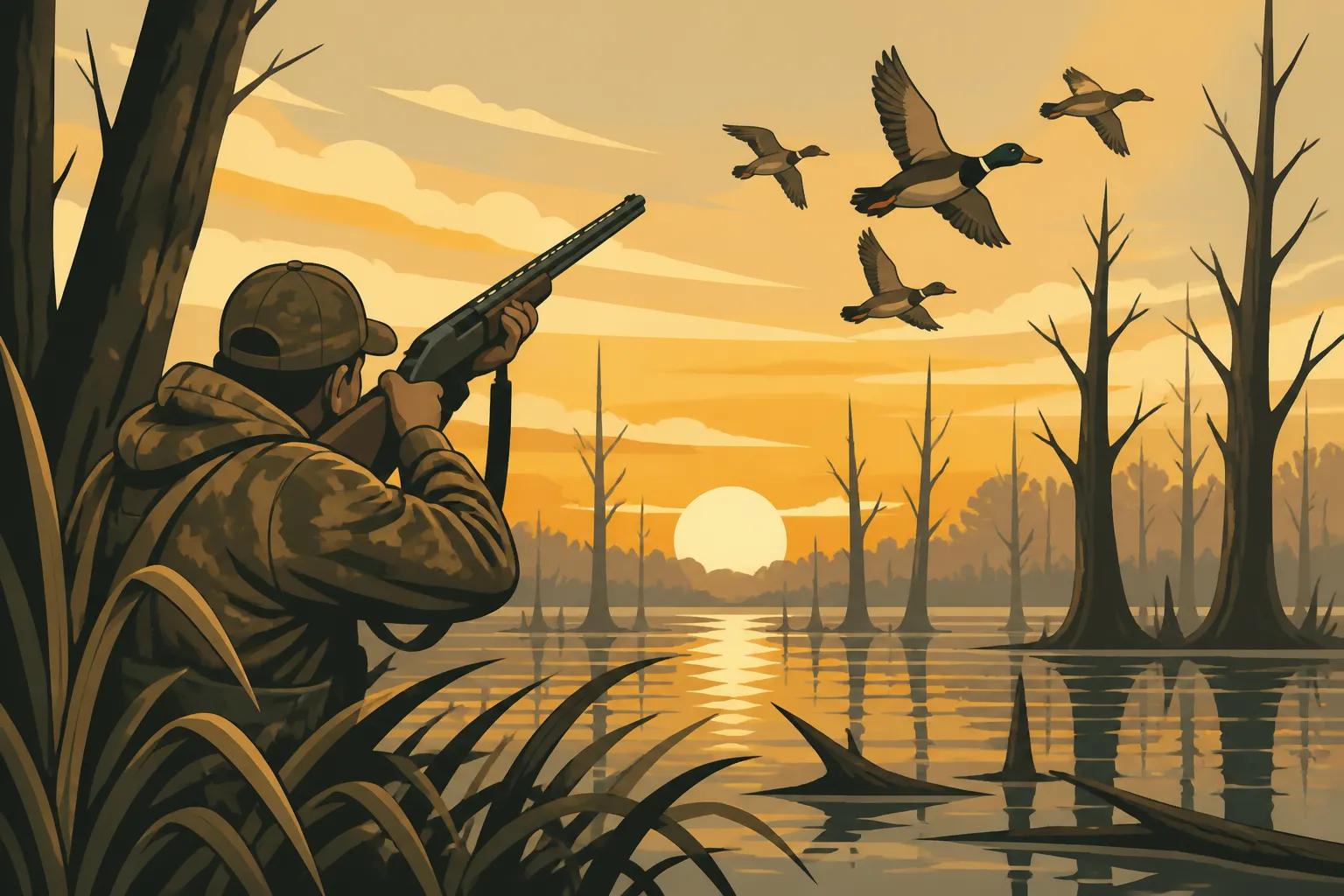
Beyond whitetails, Western Kentucky's bottomlands are a waterfowl hunter's paradise. Situated strategically along the Mississippi Flyway, the region attracts an incredible number of migrating ducks and geese. The combination of abundant natural water sources (rivers, sloughs, oxbows) and surrounding agricultural fields, often purposely flooded, creates ideal habitat. Many WMAs, such as the Sloughs WMA and Ballard WMA, are renowned for their managed waterfowl hunting opportunities, often requiring permits or draws. Hunting Land Between the Lakes Waterfowl
But it's not just big game and birds. The dense hardwood forests and brushy fencerows are prime habitat for small game. Squirrels are abundant, especially in areas with mature oaks, and a crisp fall morning can provide excellent bushytail action. Rabbit populations also thrive in the thick, briar-filled edges and brush piles that are so common in this environment. Bringing along a shotgun on a deer hunt can often lead to a bonus squirrel or rabbit, adding another layer of enjoyment and sustenance to your trip.
Mastering Bottomland Scouting: Leveraging Technology and Terrain
Scouting in Western Kentucky bottomlands is less about covering vast distances and more about meticulous observation, both from afar and on the ground. The terrain often hides more than it reveals, making digital tools and a sharp eye indispensable.
Digital Reconnaissance: Mapping the Muck with onX Hunt and GoHunt
Before you ever set foot in the woods, digital mapping tools like onX Hunt are your absolute best friend. Seriously, do not hit these bottomlands without a robust mapping app. Satellite imagery can reveal subtle changes in elevation that are nearly invisible from the ground – those crucial high spots that become deer islands during a flood. You can identify historical water lines, old logging roads that might provide drier travel, and the boundaries between dense timber and open fields. Look for pinch points created by sloughs or thick impenetrable cover. OnX Hunt allows you to mark potential bedding areas, probable travel routes, and even locate property boundaries, which is essential for public land hunting.
Another great resource, especially if you're looking for broader intel on game movement and even historical harvest data (though often geared more towards western big game), can be found through platforms like GoHunt. While perhaps not as hyper-focused on bottomland micro-terrain as onX Hunt's satellite view, understanding regional patterns and general game density can inform your overall strategy. Combine these powerful tools: use the aerial views to identify promising spots and potential access routes, marking them digitally. This prep work saves countless hours of slogging through mud and briars, and more importantly, minimizes disturbance to the areas you intend to hunt. Reading Aerial Photos for Eastern Kentucky Deer
Boots-on-the-Ground Intelligence: Reading the Wet Woods
Once you've done your digital homework, it's time for the boots-on-the-ground reality check. This type of scouting is slow and deliberate. You're not necessarily looking for long-distance observations, but rather intimate details: fresh tracks in the soft earth, rubs on saplings, and active scrape lines along subtle ridges or the edges of sloughs. Muddy areas are your friend here, as they perfectly preserve tracks, telling you exactly where deer are moving and how recently.
Focus on finding natural funnels – places where the land or water features squeeze deer into a narrow corridor. This could be a strip of high ground between two flooded sections, a narrow band of timber between a field and a slough, or even a hardened trail through an otherwise impenetrable thicket. Pay close attention to transition zones where different habitat types meet, such as where thick brush gives way to more open timber, or where a cornfield borders a swamp. These are prime locations for deer movement. Remember, the goal is to confirm your digital findings and adapt them to the reality of the present conditions. Use the Kentucky Hunt Fish App to double-check WMA boundaries and regulations as you scout. Scouting With the Kentucky Hunt Fish App
Strategic Hunting Methods for Western Kentucky Bottoms
Hunting bottomlands requires a different playbook than hunting hill country. Forget wide-open shots and long-distance glassing. Here, it’s about intimate knowledge of the terrain, patience, and adapting to the conditions.
Stand and Blind Placement: Capitalizing on Natural Funnels and High Ground
In dense bottomland cover, visibility is often severely limited. This means elevated stands, like treestands, are invaluable for gaining even a slight advantage in seeing movement. Look for trees along those natural funnels you identified during scouting, particularly on the edges of sloughs, creek bottoms, or the fringes of feeding areas. A stand placed overlooking a subtle rise or a strip of dry ground that deer use to avoid water can be deadly. Position yourself to intercept deer as they transition between bedding areas in the thickest cover and feeding grounds, whether those are natural mast crops or agricultural fields. Remember, scent control is paramount, as deer are often moving at closer ranges here. Treestand Setups in Daniel Boone National Forest
Ground blinds can also be incredibly effective, especially in areas where tall, thick vegetation offers natural concealment. Brushing in a pop-up blind along a field edge or deep within a thicket can provide excellent cover and help contain your scent. They're also a great option when the ground is too wet to sit comfortably or if suitable trees for treestands are scarce. Just be sure to set them up well in advance to allow deer to get used to their presence. Using a Ground Blind on Kentucky Public Land
The Art of Still-Hunting and Effective Deer Drives
Still-hunting is a highly underrated tactic in Western Kentucky's bottomlands, and it often outperforms sitting in a stand for long periods. The dense cover, by its very nature, limits visibility for both you and the deer, making close encounters more likely. The key is to move incredibly slowly, pausing every few steps to scan, listen, and let the woods settle. Focus on moving into the wind or with a slight crosswind, and use the terrain and cover to your advantage, slipping through the woods like a ghost. This isn't a race; it's a careful chess match where patience and keen observation win. Look for horizontal lines (a deer's back or belly) in a vertical world of trees.
For those impenetrable thickets or vast stretches of cover, small, organized deer drives can be incredibly effective. This is particularly true on public land where deer often bed down in the nastiest, hardest-to-reach places. A drive involves a few hunters acting as "pushers" who slowly and methodically move through a section of cover, gently nudging deer towards "standers" positioned on escape routes or funnel points. Safety is paramount here; clear communication, knowledge of everyone's position, and bright blaze orange clothing are non-negotiable. Two-Way Radios on a Deer Drive This tactic can be physically demanding, but it’s often the only way to get deer moving in truly dense cover.
Navigating by Water: Unlocking Remote Hunting Opportunities
One of the most unique and rewarding aspects of bottomland hunting is the ability to use water for access. A kayak, canoe, or even a small jon boat can open up vast tracts of land that are otherwise inaccessible to hunters on foot. Imagine silently paddling a slough in the pre-dawn dark, slipping into an isolated pocket of timber that few other hunters bother to reach. This can be a game-changer for finding unpressured deer, especially on public lands that see heavy foot traffic.
You can set up a stand or ground blind overlooking a small island, or a narrow strip of land that becomes an absolute deer magnet during high water. You can even hunt from a small boat, anchored stealthily in flooded timber, watching for deer pushed out by rising water or moving between islands. Just be sure to have all necessary safety equipment, including life vests, and always be aware of changing water conditions and potential currents. This method requires careful planning but offers unparalleled opportunities for solitude and success.
Equipping for the Elements: Essential Gear for Success
The bottomland environment is unforgiving. It's wet, muddy, often cold and damp, and full of obstacles. Having the right gear isn't just about comfort; it's about safety and ensuring you can stay in the hunt when others might pack up and head home.
Footwear and Apparel: Staying Dry and Comfortable
This is where many hunters make their biggest mistake in the bottomlands. Your feet will get wet, and if they get cold, your hunt is over. High-quality, knee-high rubber boots are an absolute non-negotiable. Forget your fancy leather hiking boots; they'll just get soaked and muddy. Look for insulated rubber boots that offer good traction in slippery mud. In truly flooded areas, chest waders might be necessary, especially if you plan on using water for access or traversing flooded timber. Waders for Flooded Timber Hunting
For clothing, think layers. The weather can change quickly, from damp, foggy mornings to surprisingly warm afternoons, especially during early archery season. Waterproof and windproof outer layers are crucial. Choose quiet fabrics that won't rustle loudly when moving through dense brush, which is critical for still-hunting. Opt for synthetic or wool base layers that wick moisture away from your skin, keeping you warm even if they get damp. And of course, if you're hunting during modern gun season, don't forget your blaze orange.
Navigation and Safety: Tools for the Untamed Wet
As mentioned earlier, GPS devices or reliable smartphone apps like onX Hunt are absolutely essential. The bottomlands often lack distinct landmarks, and it's incredibly easy to become disoriented in the dense, repetitive timber, especially if you're chasing a blood trail or moving in the dark. Always carry a power bank to keep your phone charged. For group hunts, two-way radios ensure constant communication, which is vital for safety, particularly during deer drives.
Safety should always be your top priority. A quality headlamp with extra batteries is a must for walking in before dawn or out after dark. A basic first-aid kit, a whistle, a knife, and fire-starting materials are also wise additions to your pack. Given the potential for wet, cold conditions, an emergency space blanket can also be a literal lifesaver. Never underestimate the ability of this environment to quickly turn a minor inconvenience into a serious situation.
| Gear Category | Essential Items | Why It's Crucial in Bottomlands |
|---|---|---|
| Footwear | Knee-high Insulated Rubber Boots | Waterproof, warm, excellent traction in mud/water, prevents cold feet. |
| Chest Waders (optional, for deep water access) | Allows access to flooded timber and crossing deeper sloughs. | |
| Apparel | Layered, Waterproof, Windproof Outerwear | Keeps you dry and warm in damp, cold conditions; quiet fabrics for stealth. |
| Moisture-Wicking Base Layers (Wool/Synthetic) | Prevents chilling, keeps you comfortable even if you sweat. | |
| Blaze Orange/Pink (gun season) | Mandatory safety requirement, vital in dense cover. | |
| Navigation | GPS Device or onX Hunt App (with downloaded maps) | Essential for preventing disorientation in uniform, dense cover. |
| Portable Power Bank | Keeps electronics charged; critical for navigation and communication. | |
| Safety & Survival | Headlamp with Extra Batteries | Navigating dark, thick terrain safely. |
| First-Aid Kit | For minor injuries from briars, slips, or falls. | |
| Whistle, Knife, Fire Starter | Basic survival essentials in remote, wet environments. | |
| Hunting Specific | Treestand/Ground Blind (appropriate for terrain) | Provides elevation/concealment in dense cover. |
| Binoculars (8x or 10x) | Helps pick out deer in thick brush at closer ranges. | |
| Durable Broadheads (for archery) | Handles potential brush deflection, ensures deep penetration. | |
| Game Cart or Deer Sled | Makes extracting game through mud and thickets easier. |
Weapon Choices: Adapting to Close-Quarters and Dense Cover
Given the often-dense cover and shorter shooting lanes in bottomlands, your weapon choice can make a difference. For rifle hunters, calibers that perform well in close to moderate ranges are ideal. While a .30-06 or .270 will certainly do the job, consider something like a .30-30 or a straight-wall cartridge rifle, which can be excellent in thick brush where shots are rarely long. A slug gun is also a fantastic option, particularly if you're in areas with strict regulations or prefer a powerful, close-range option. Best Rifle Caliber for Kentucky Deer
Archery hunters will find the dense cover to be both a challenge and an advantage. Shots are often close, requiring quick, decisive action. A vertical bow is perfectly capable, but crossbows truly shine in this environment. Their ease of use in tight spots, ability to be held at full draw, and inherent accuracy make them a strong contender for bottomland hunting. Crossbow Versus Vertical Bow in Kentucky Regardless of your choice, ensure your weapon is clean, well-maintained, and capable of withstanding damp, muddy conditions.
Navigating Public Lands: Premier Western Kentucky Bottomland Destinations
Kentucky boasts a good amount of public hunting land, and Western Kentucky offers some prime bottomland opportunities. Knowing where to go and understanding the specific rules for each area is paramount.
Spotlight on Key Wildlife Management Areas
Western Kentucky is home to several Wildlife Management Areas (WMAs) that offer excellent bottomland hunting. The Sloughs WMA in Henderson and Union counties is a prime example, covering thousands of acres of bottomland forests, cypress swamps, and agricultural fields. It’s a haven for deer, waterfowl, and small game, but it's also notorious for its wet conditions and dense cover. Access can be challenging, often requiring boats or a willingness to wade. Sloughs Wildlife Management Area
Further west, Ballard WMA in Ballard County is nationally recognized, primarily for its incredible waterfowl hunting. While deer hunting is also permitted, the area is heavily managed for migratory birds, meaning specific regulations and draw hunts are common. This WMA is a mosaic of sloughs, flooded timber, and agricultural fields, offering classic bottomland experiences. Ballard Wildlife Management Area
Then there's the Kentucky portion of Land Between the Lakes National Recreation Area, particularly its western side bordering Kentucky Lake. While LBL has a variety of terrain, its lower elevations and creek bottoms offer classic bottomland hunting, especially for deer and waterfowl. Managed hunts and specific regulations apply here, so always check the current rulebook before planning a trip. These WMAs are managed by the Kentucky Department of Fish and Wildlife Resources and offer incredible, yet demanding, opportunities.
Understanding Regulations and Access on Public Bottomlands
Hunting on any public land in Kentucky, especially WMAs, requires you to be intimately familiar with the specific regulations for that area. WMA rules can differ significantly from statewide regulations, covering everything from legal weapons, hunting hours, use of ATVs, and even blaze orange requirements. Always pick up a current copy of the Kentucky Hunting and Trapping Guide and check the KDFWR website for any WMA-specific amendments or special hunt dates. Many WMAs require a specific WMA permit in addition to your general hunting license and deer permits.
Access to bottomland WMAs can be tricky. Gravel roads might turn into muddy quagmires after rain, and some areas are only reachable by boat. Always have a plan for vehicle recovery and be prepared to hike or paddle further than you might initially anticipate. Respect all posted signs, stay off private property, and leave no trace. Understanding and adhering to these rules not only keeps you legal but also ensures these valuable public hunting grounds remain open and productive for future generations.
Overcoming Obstacles: Tips for a Rewarding Bottomland Hunt
Hunting Western Kentucky's bottomlands is a commitment. It's not always easy, but the rewards—a unique experience, unpressured game, and truly wild encounters—are well worth the effort.
Conquering the Critters, the Muck, and the Thick Stuff
Let's be realistic: hunting bottomlands means dealing with mud, mosquitoes, ticks, and briars. During warmer parts of the season, mosquitoes can be relentless, so industrial-strength bug spray or permethrin-treated clothing is a must. Ticks are a year-round threat, so always perform thorough checks after every hunt. The mud? It's just part of the experience. Embrace it, but invest in good quality rubber boots that can handle it.
Moving quietly through dense vegetation is an art form. It requires patience and a willingness to slowly pick your way through tangles of briars, grapevines, and thick underbrush. Learn to use the wind to muffle your movements, and always keep an eye out for potential shot lanes, no matter how small. It can be frustrating, but remember, the deer live here all the time; they're masters of silent movement in this environment. You need to become one too.
Outsmarting Pressure and Finding Seclusion
Public bottomlands, especially those with good reputations, can draw a crowd, particularly on opening weekends and during peak rut. However, the challenging nature of the terrain often means that hunting pressure drops off significantly just a short distance from easily accessible roads or parking areas. The average hunter might not be willing to wade a slough or push through a mile of dense briars. This is where your preparedness and willingness to put in the extra effort pay off.
Look for areas that are difficult to access, perhaps requiring a long walk, a paddle across a body of water, or navigating particularly nasty thickets. These are the places where deer find refuge and where you're more likely to encounter unpressured animals. Hunting during weekdays or during less popular times of the season can also dramatically reduce the competition. Use your onX Hunt app to scout for remote corners or overlooked pockets of cover. Finding Ground Others Walk Past
Successful Game Recovery in Challenging Terrain
The dense cover and soft, wet ground of the bottomlands make game recovery a serious undertaking. Even a well-placed shot can result in a challenging blood trail. Always make the best possible shot, and if there's any doubt, wait before tracking. Give the animal time, as a wounded deer can travel surprisingly far in thick cover.
When you do start tracking, go slowly and meticulously. Look for any sign – not just blood, but disturbed leaves, broken twigs, or even hair. Mark your last known blood trail regularly with flagging tape (and remember to remove it after). Having a tracking dog can be an invaluable asset if legal in your area. For extraction, a sturdy deer sled or game cart can make the arduous task of dragging a deer through mud and thickets significantly easier. Deer Sleds for Ridge Country Always have a plan for how you'll get your game out before you ever step into the woods.
Disclaimer
This article is for general informational purposes only and does not constitute professional advice. Laws, prices and regulations vary by location and change over time. Consult a qualified professional for guidance on your specific situation.