Harlan County Public Hunting Ground
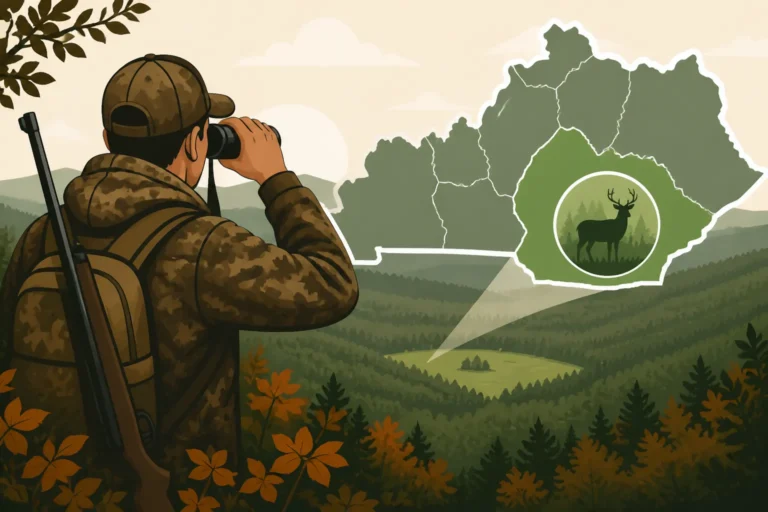
Hunting in Harlan County is a unique beast, presenting both incredible challenges and immense rewards. If you've ever stared at a topo map of Eastern Kentucky and felt a mix of excitement and intimidation, you know exactly what I'm talking about. The steep ridges, dense timber, and remote hollows can make finding and accessing public ground feel like a puzzle. This guide aims to demystify hunting the public lands of Harlan County, offering practical advice to help you navigate this rugged, beautiful landscape and increase your chances of success.
Navigating the Rugged Beauty of Harlan County Public Lands
Harlan County, nestled deep in the Appalachian Mountains, offers a hunting experience unlike much of the rest of Kentucky. This isn't your flat, open farmland with easy access. Here, the land rises sharply, covered in a mix of hardwoods and pines, carved by countless creeks and drainages. It's a place that demands physical fitness, navigational prowess, and a deep understanding of how animals move through extreme terrain. For those willing to put in the effort, it promises solitude and the chance at truly wild game.
Topography and Its Impact on Deer and Turkey
The topography of Harlan County is defined by its dramatic elevation changes. You'll encounter steep, often relentless, climbs to reach ridge tops, followed by equally steep descents into deep hollows. This isn't just a physical challenge; it dictates how deer and turkeys use the landscape. Deer, while incredibly adaptable, will often stick to benches, saddles, and more subtle terrain features that allow for easier travel and thermal regulation. They'll also gravitate towards natural funnels created by the terrain, particularly during the rut. Reading a Ridge for Cumberland Deer becomes an essential skill here, understanding how these animals utilize every contour.
Turkeys, on the other hand, are often found roosting on higher ground, descending into hollows to feed in the mornings before heading back up to strut on benches or along ridge lines. Their movements are heavily influenced by the availability of mast crops like acorns and beechnuts, which can vary greatly year to year and location to location. When hunting here, don't expect easy walks; every step is an effort, but it's that very difficulty that often keeps hunting pressure at bay, pushing you into areas few others bother to tread.
The Allure of Elk and Bear in Harlan's Backcountry
Perhaps what truly sets Harlan County apart for hunters is its place within Kentucky's Elk Restoration Zone and Kentucky's Bear Zone. This region is home to some of the most robust populations of these magnificent animals east of the Mississippi. For many, the dream of calling in a bull elk or spotting a black bear in the wild Appalachian woods is what draws them to Harlan. These animals, much like the deer and turkey, are deeply integrated into the mountainous landscape.
Elk, being larger and more wide-ranging, will utilize expansive areas, often preferring reclaimed mine lands for foraging but retreating to dense timber and steep slopes for bedding and security. Calling a Southeastern Kentucky Bull Elk requires not only skill but also an intimate knowledge of their travel corridors and bedding areas within this rugged environment. Bears, similarly, thrive in the remote, forested tracts, feasting on the abundant mast crops and finding refuge in the thickest cover. Encountering either of these species in Harlan's backcountry is an unforgettable experience and a testament to the success of Kentucky's wildlife management efforts. Understanding Kentucky's Black Bear Population and Kentucky's Record Elk Herd can provide context to the opportunities available.
Key Public Hunting Grounds and Access Points
Finding public land in Harlan County isn't always straightforward on a basic map. While much of the county is privately owned, significant tracts of public hunting ground are available, primarily through the Daniel Boone National Forest and certain state-managed or reclaimed lands. Knowing how to identify these areas and, more importantly, how to access them legally and efficiently, is paramount to a successful hunt.
Hunting Within Daniel Boone National Forest
A substantial portion of Harlan County falls within the proclamation boundary of the Daniel Boone National Forest, offering vast expanses of public hunting opportunities. These lands are generally open to public hunting in accordance with statewide regulations and specific national forest rules. Access often involves driving forest service roads, which can range from well-maintained gravel to deeply rutted, high-clearance-only tracks. Many of these roads lead to parking areas or trailheads, but be prepared for significant foot travel to get away from the immediate road system. Daniel Boone National Forest Hunting provides a broader look at what to expect across the forest, but in Harlan, expect even more pronounced vertical challenges.
When planning to hunt the Daniel Boone, it's crucial to obtain detailed maps, as cellular service is often nonexistent in the deep hollows. Boundary lines, while often marked, can be subtle and easily missed, especially in dense vegetation. Always be aware of your position relative to private land and designated wilderness areas, where certain activities might be restricted. The sheer size of the national forest in Harlan means that even during peak season, you can often find solitude if you're willing to hike.
Understanding Access to Reclaimed Mine Lands
Another unique aspect of public hunting in Harlan County, and indeed much of Hunting Eastern Kentucky Coalfield Country, is the availability of hunting opportunities on reclaimed mine lands. These are former surface mining operations that have been restored, often planted with grasses, legumes, and various tree species, creating a mosaic of open fields, brushy clearings, and reforested areas. These habitats are incredibly attractive to deer and elk, providing ample forage in areas that would otherwise be dense, unbroken timber.
Access to these reclaimed lands can be tricky, as many are still owned by private timber companies or mining interests, even if managed for public use through agreements with the Kentucky Department of Fish and Wildlife Resources (KDFWR). Some may be explicitly designated as Wildlife Management Areas (WMAs), while others might require permission or adherence to specific access rules. Always check the latest KDFWR regulations and property maps. These areas often feature a different kind of terrain – less extreme vertical, but still rugged with uneven ground, old haul roads, and thick regrowth, offering excellent cover for game.
Utilizing Digital Tools for Public Land Navigation
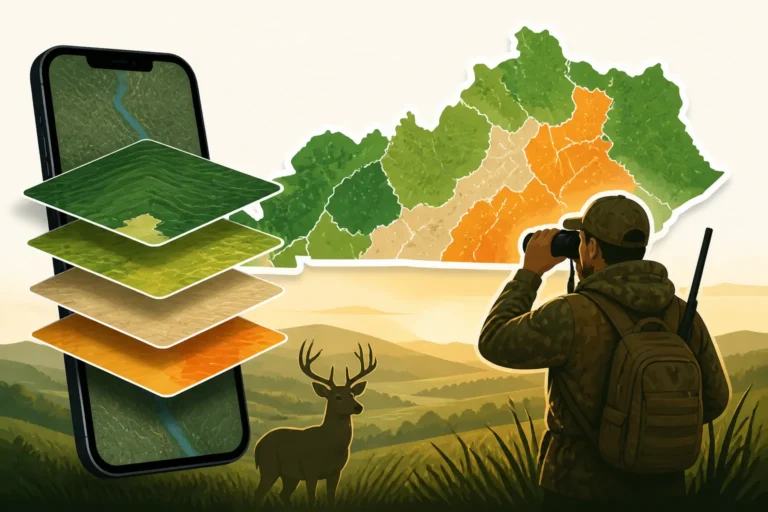
In this type of terrain, relying solely on paper maps can be daunting, especially when trying to differentiate public from private land or pinpoint subtle terrain features like benches and saddles. This is where modern digital mapping applications become indispensable. Tools like onX Hunt and GoHunt, when loaded onto your smartphone or a dedicated GPS unit, can display public and private land boundaries in real-time, often with landowner names, making it much easier to avoid accidental trespass.
These apps also offer invaluable topographical features, allowing you to visualize elevation changes, identify potential travel corridors, locate water sources, and mark key features like old logging roads or rub lines. Many hunters download maps for offline use before heading into areas with no cell service, ensuring they always have their bearings. Learning to interpret these digital maps and combine them with traditional scouting is a game-changer for hunting Harlan County's public lands. Scouting Kentucky Public Land Before Season becomes far more efficient with these tools at your disposal.
Strategic Approaches for Success in Mountainous Terrain
Hunting Harlan County's public lands demands a different mindset and skillset than hunting flatter, more open country. The extreme terrain and dense cover require hunters to be physically prepared, mentally resilient, and strategic in their approach. Understanding how to scout effectively, adapt your hunting methods, and even deal with other hunters are all crucial components of a successful trip.
Scouting Smart and Reading the Landscape
Pre-season scouting is absolutely non-negotiable in Harlan County. You simply cannot expect to show up on opening day and be consistently successful without a thorough understanding of the specific area you plan to hunt. Start by pouring over those digital maps, looking for key features like saddles, benches, natural funnels between hollows, and old logging roads that animals might use for easier travel. Identify potential bedding areas on leeward slopes or thickets, and consider water sources.
Once you're on the ground, focus on finding fresh sign: rubs, scrapes, tracks, and droppings. Pay close attention to food sources, especially acorns in the fall. During spring turkey season, listen for gobblers from ridgetops at dawn. Look for consistent game trails along benches or crossing steep draws. Understanding Wind and Thermals on a Kentucky Ridge is paramount; animals rely on these air currents for scent detection, and so should you. Early morning thermals typically rise, while evening thermals fall, which dramatically affects how and where you set up.
Adapting Hunting Methods to Steep Hollows and Ridges
When it comes to the actual hunt, flexibility is key. For deer, still-hunting or spot-and-stalk can be highly effective, especially when paired with patience and stealth. Moving slowly along benches or just below a ridge top, constantly glassing and listening, can yield results. For archery hunters, identifying key pinch points or rub lines and setting up a well-placed stand can pay off. Climbing sticks and mobile setups are often more practical than heavy ladder stands, allowing you to adapt to new sign or changing conditions.
Turkey hunting often involves significant hiking to locate birds, followed by aggressive run-and-gun tactics to close the distance. Be prepared to move quickly and set up against a large tree, using the terrain to your advantage. For elk and bear, a patient approach, often involving glassing large clearings or old mine cuts at dawn and dusk, combined with strategic calling, can be successful. Regardless of the species, remember that every animal in Harlan County is a mountain animal, accustomed to its surroundings, and incredibly adept at using the terrain for cover and escape.
Dealing with Hunting Pressure in Popular Areas
While Harlan County offers vast tracts of public land, some areas, especially those with easier access, can experience significant hunting pressure, particularly during opening weekends. Don't let this discourage you. The key to finding success, and solitude, is often to simply walk further and climb higher than most other hunters are willing to go. Identify those harder-to-reach hollows or the steepest ridge points that are a half-mile or more off the nearest road.
Other hunters can inadvertently push game your way. If you know where popular parking areas or trails are, consider setting up downwind and deeper in, anticipating game movement away from the pressure. Remember, everyone is after the same thing: a great hunting experience. Always be respectful, give other hunters ample space, and prioritize safety. Often, the challenge of the terrain itself acts as the best filter, meaning that if you can endure the physical demands, you'll be rewarded with less competition.
Important Regulations and Local Knowledge for Harlan Hunters
Beyond the general tactics, success in Harlan County also hinges on a solid understanding of Kentucky's hunting regulations and specific rules that apply to public lands in this region. This includes everything from license requirements to specific rules for elk and bear, as well as general safety considerations.
General Kentucky License and Tag Requirements
Before you even think about setting foot in Harlan County with your hunting gear, you need to ensure you have the proper Kentucky hunting licenses and permits. This typically includes a general statewide hunting license, and then specific permits for the game you intend to pursue, such as deer, turkey, or migratory bird permits if applicable. Non-residents will have different fee structures than residents. It's crucial to understand Kentucky Hunting Licenses and What They Cost and to carry proof of your licenses while afield.
Additionally, always be aware of season dates and bag limits, which are set by the Kentucky Department of Fish and Wildlife Resources. These can vary by species, weapon type, and sometimes even by specific zones or WMAs. For deer, Kentucky Deer Management Zone Rules will dictate antlerless bag limits based on the county you are hunting in. Always check the current hunting guide published by KDFWR, as regulations can change annually.
Special Considerations for Elk and Bear Seasons
Harlan County sits squarely within Kentucky's designated Elk Zone and Bear Zone, meaning these species are managed with specific quotas and regulations. Elk hunting in Kentucky is primarily done through a lottery-based quota hunt system, requiring a special application and permit if drawn. Even if you don't have an elk tag, understanding the Kentucky Elk Quota Hunt Rules and the presence of elk is important as you might encounter them while hunting other species.
Bear hunting also has its own specific season dates, zone rules, and harvest quotas. Harlan falls into a particular bear zone, and hunters must be aware of these boundaries and any specific reporting requirements. Kentucky's Bear Zone System outlines these rules. Be prepared for robust checking requirements for both elk and bear harvests, which are essential for population management. Even if you're not specifically targeting these animals, knowing they are present means being prepared for an encounter and understanding what to do if you see one.
Safety and Respecting Local Traditions
Hunting in rugged, remote country like Harlan County comes with inherent risks. Always prioritize safety. Tell someone where you're going and when you expect to return. Carry a well-stocked first-aid kit, extra water, and navigational tools. Wearing blaze orange or pink during gun seasons is not only a legal requirement in Kentucky but also a critical safety measure, even if you are an archery hunter during a firearm season. Review Kentucky Hunter Education Requirements for a refresher on best practices.
Beyond the formal regulations, it's also important to respect the local culture and traditions of Harlan County. Hunting is a way of life for many residents, and local knowledge can be invaluable. Be courteous to landowners, even if you're only hunting public land, as many access points might traverse private property. Leave no trace, pack out everything you pack in, and help maintain a positive image for hunters. These mountains are a shared resource, and responsible hunting ensures they remain productive for generations to come.
Here's a quick summary of key game and their preferred habitat in Harlan County:
| Game Species | Primary Habitat Types | Hunting Challenges |
|---|---|---|
| White-Tailed Deer | Steep ridges, benches, hollows, thickets, reclaimed lands | Steep terrain, dense cover, finding travel corridors |
| Wild Turkey | Ridge tops, mature timber, hollows, old logging roads | Locating roosts, steep climbs, quiet approach |
| Black Bear | Remote forested areas, mast-producing timber, thickets | Elusive nature, dense cover, specific regulations |
| Elk | Reclaimed mine lands (forage), dense timber (bedding) | Lottery permit, vast range, understanding their patterns |
| Small Game | Creek bottoms, brushy edges, timbered slopes | Thick cover, identifying active areas |
Disclaimer
This article is for general informational purposes only and does not constitute professional advice. Laws, prices and regulations vary by location and change over time. Consult a qualified professional for guidance on your specific situation.