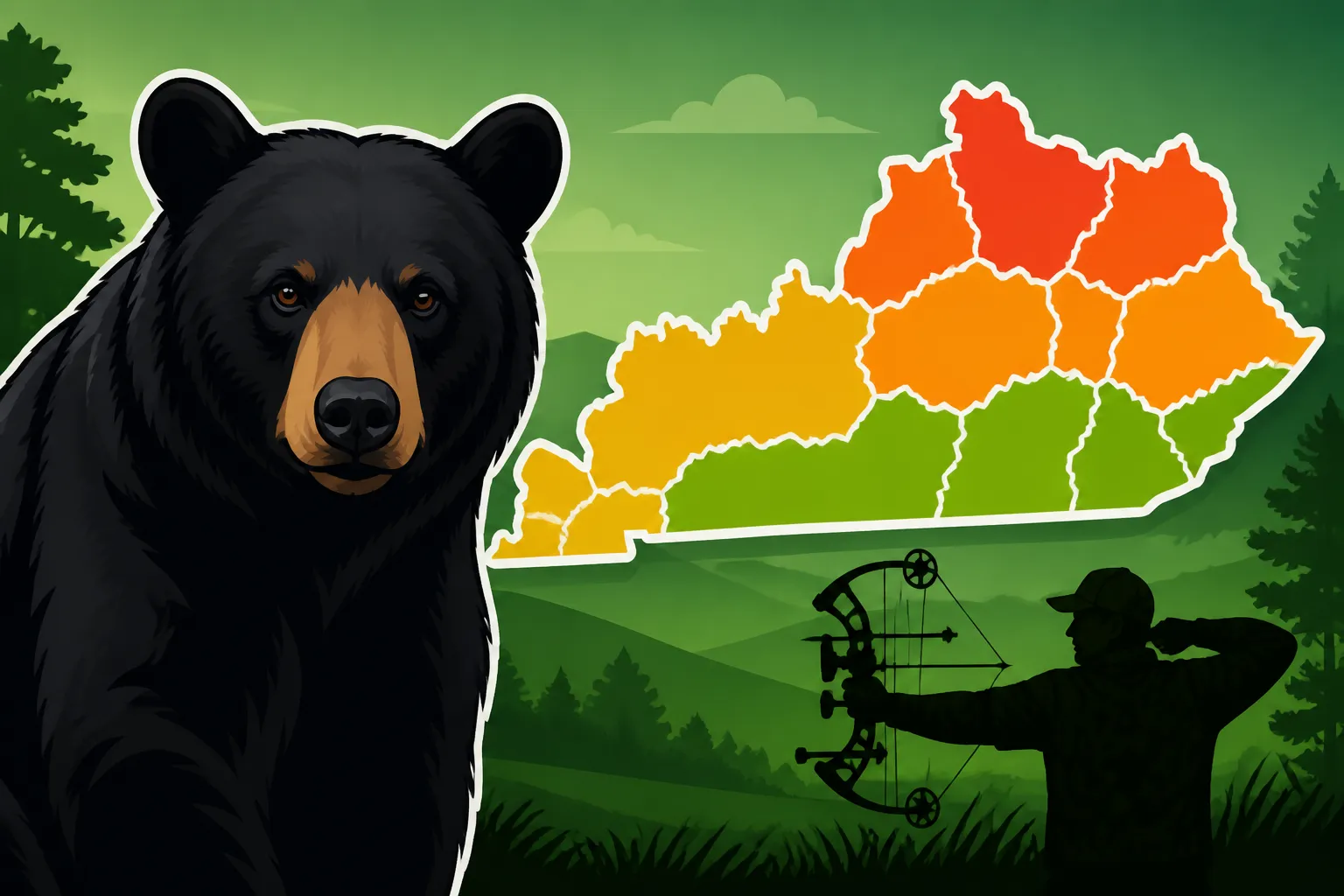
Kentucky’s Bear Zone System
For folks who love to hunt in Kentucky, the thought of pursuing a black bear can be incredibly exciting. But let's be honest, trying to wrap your head around the state's bear regulations, especially the specifics of its "zone system," can feel like trying to track a ghost through thick fog. It's not always clear which counties fall into which category, what the harvest quotas might be, or how the rules differ depending on where you're standing. This comprehensive guide is here to untangle all that complexity, breaking down Kentucky's bear zone system so you can plan your hunt with confidence and clarity.
Understanding Kentucky's Bear Zone System: A Primer
For many years, the idea of hunting a wild black bear in Kentucky seemed like a distant dream, if not an impossibility. However, thanks to incredible conservation efforts, Kentucky's black bear population has not only recovered but is thriving in certain areas. This comeback story led the Kentucky Department of Fish and Wildlife Resources (KDFWR) to establish a managed hunting season, and with that came the need for a carefully crafted zone system to ensure sustainable population growth while providing hunting opportunities. It’s a delicate balance, and these zones are the key to maintaining it.
Why Zones Are Necessary for Bear Management
Imagine a single, statewide regulation for bear hunting. It would either be too restrictive for areas with burgeoning populations, leading to conflicts with landowners and an overabundance of bears, or far too liberal for regions where bears are just starting to establish a foothold. This is precisely why a zone system is crucial. It allows the KDFWR to tailor harvest quotas, season lengths, and even hunting methods to the specific dynamics of the bear population in different geographic areas. Areas with higher bear densities can sustain more hunting pressure, while areas where bears are still expanding their range might have more conservative regulations, or even no hunting at all, to protect these pioneering animals.
Moreover, these zones help manage human-bear conflicts, which naturally increase as bear populations grow and expand into new territories. By providing hunting opportunities in specific zones, the KDFWR can help keep bear numbers in check in certain areas, potentially reducing nuisance complaints and property damage. It's not just about hunting; it's about ecosystem management and coexisting with a magnificent apex predator. For hunters, understanding these nuances is essential, as the success of future seasons hinges on responsible participation within these regulated zones.
A Brief History of Kentucky's Bear Population Recovery
Kentucky's black bear story is a testament to what dedicated conservation can achieve. Historically, black bears were abundant across the state, but westward expansion, habitat loss, and unregulated hunting led to their extirpation by the mid-19th century. For over a century, a wild black bear was a rare, almost mythical sight in the Bluegrass State. However, beginning in the late 1980s and early 1990s, bears from neighboring states, particularly West Virginia and Virginia, began to naturally recolonize the rugged, forested landscapes of Eastern Kentucky.
The KDFWR recognized this incredible natural return and actively worked to facilitate their recovery, focusing on habitat protection, public education, and monitoring their expansion. Today, Kentucky's Black Bear Population is estimated to be thriving, primarily concentrated in the mountainous eastern counties, but with sightings and established populations expanding westward into central Kentucky. This recovery paved the way for the first modern bear hunting season in 2009, a cautious but significant step, marking a full circle from absence to abundance. This journey underscores the importance of the zone system, as it evolves to reflect the continued success and expansion of these incredible animals.
General Principles of Zone Regulations
At its core, Kentucky's bear zone system operates on the principle of adaptive management. This means that the KDFWR constantly monitors bear populations, harvest data, and public input to make adjustments to season dates, bag limits, and zone boundaries as needed. Generally, zones with higher, more established bear populations have longer seasons or more flexible hunting opportunities. Conversely, areas where bears are newer or less dense tend to have more restrictive rules, sometimes opening for only very short periods or with specific weapon limitations.
One of the most critical aspects of these regulations is the use of harvest quotas. Unlike deer or turkey hunting, which often have fixed season lengths and bag limits per hunter, bear hunting in Kentucky often operates with a hard quota. This means that once a certain number of bears (either male, female, or total bears) are harvested within a specific zone, the season for that zone can close immediately, regardless of the published end date. This quota system is a highly effective way to manage harvest pressure and prevent overharvest, particularly of female bears, which are vital for population growth. Hunters must stay vigilant and check for real-time updates from KDFWR, often available via their website or dedicated hotline, especially if they are hunting in a zone with a rapidly approaching quota.
Bear Zone One: The Heart of the Mountains
When most Kentuckians think of bear hunting, they're probably picturing Bear Zone One. This is where the black bear recovery truly took hold, a region of rugged mountains, deep hollows, and dense forests that offer ideal bear habitat. It’s also where hunting opportunities have historically been the most robust, reflecting the established and growing bear population within its boundaries.
Counties Included and Geographic Characteristics
Bear Zone One encompasses a significant portion of Kentucky's southeastern mountains. Historically, this has included counties such as Bell, Breathitt, Clay, Floyd, Harlan, Knott, Leslie, Letcher, McCreary, Magoffin, Martin, Owsley, Perry, Pike, Pulaski, Whitley, and a portion of Knox. These counties are characterized by their steep terrain, extensive timberlands, and numerous natural food sources like acorns, berries, and various plants. This geographical makeup provides excellent cover and forage, allowing bears to thrive and expand their numbers with relatively fewer human disturbances compared to flatter, more agricultural regions.
For hunters, these characteristics also define the hunting experience. Expect challenging hikes, limited road access in many areas, and a true backcountry feel. Much of this land falls within the Daniel Boone National Forest or state-managed wildlife areas, providing ample public access. Understanding the terrain, utilizing contour maps, and being prepared for strenuous physical activity are paramount for success in this demanding but rewarding zone. Scouting these areas, perhaps even with tools like GoHunt, can give you a crucial edge in finding those hidden pockets where bears prefer to roam, away from common human traffic.
Specific Rules and Regulations for Zone One
Given its status as the core bear habitat, Bear Zone One generally sees the longest and most comprehensive bear hunting seasons. While specific dates and quotas can shift annually, this zone typically offers both archery/crossbow and firearm seasons. Archery and crossbow seasons often precede the firearms season, providing an earlier opportunity for hunters using those methods. The firearms season usually includes dedicated periods for still-hunting and, in some instances, a specific window for Kentucky Bear Dog Season Windows. These dog seasons are often shorter and have strict regulations, including limits on the number of dogs and specific harvest quotas.
A critical aspect of hunting in Zone One is the strict adherence to harvest quotas, which are typically broken down by sex (male versus female bears) or sometimes a total bear quota. These quotas are monitored in real-time by the KDFWR. Hunters are legally obligated to check the KDFWR website or call the bear hotline before heading out each day to confirm that the season for their chosen weapon and bear sex is still open. Failing to do so could result in harvesting a bear illegally if the quota has been met, leading to severe penalties. For detailed, up-to-the-minute information on season dates and bag limits, always consult the official KDFWR hunting guide for the current year.
Prime Hunting Opportunities and Challenges
Zone One offers some of the best Bear Hunting Southeastern Kentucky can provide. The dense forests and rugged terrain mean that bears often aren't as wary of human presence as they might be in areas with higher population density or more open landscapes. Hunters often focus on areas rich in mast crops, such as oak ridges producing acorns, or hollows with dense berry bushes in late summer and early fall. Scouting for fresh bear sign – scat, tracks, claw marks on trees, and flipped rocks – is absolutely essential.
However, the challenges in Zone One are as significant as the opportunities. The steep hillsides and thick rhododendron thickets can make travel arduous, especially when trying to retrieve a harvested bear. Hunters must be physically fit and well-prepared with appropriate gear for backcountry travel, including navigation tools, first-aid, and sufficient water. Furthermore, the sheer vastness of the public lands, like sections of the Daniel Boone National Forest, means that successful hunters often employ strategies like Spot-and-Stalk Tactics for Pine Mountain Bears or focus their efforts on locating natural funnels and bedding areas. Patience, perseverance, and a deep understanding of bear behavior in this specific environment are key to punching a tag in Zone One.
Bear Zone Two: Expanding Opportunities
As Kentucky's black bear population continued its remarkable comeback, their range naturally expanded beyond the most rugged strongholds of Zone One. This expansion led to the creation of Bear Zone Two, designed to manage these growing populations in areas that might still be considered "frontier" for bears, but where numbers are clearly on the rise.
Counties Comprising Zone Two
Bear Zone Two typically includes counties that border or are adjacent to the primary bear habitat of Zone One, or those where bears are consistently being sighted and establishing new breeding populations. While the precise list can vary slightly year to year based on KDFWR assessments, counties like Harlan, Knox, and McCreary, which share borders with Zone One counties, are often part of Zone Two. Additionally, counties a bit further out, such as Wayne and Clinton, have recently seen increased bear activity and have been integrated into a tiered system that accounts for this expansion. The KDFWR uses a data-driven approach, constantly evaluating bear sightings, vehicle collisions, and nuisance reports to determine which counties are ready for inclusion in a hunting zone, ensuring that management strategies align with biological realities.
The landscapes in Zone Two can be a mix of the rugged Appalachian foothills and more rolling, mixed hardwood forests, sometimes interspersed with agricultural lands. This diversity means bears might utilize different food sources and travel patterns than those in the denser, more remote wilderness of Zone One. Hunters need to adjust their scouting and tactics accordingly, paying attention to creek bottoms, powerline cuts, and edges where forest meets farmland, as these can serve as prime travel corridors and feeding areas for expanding bear populations.
Key Differences in Regulations from Zone One
The primary difference between Zone One and Zone Two regulations usually boils down to conservatism. Zone Two generally has shorter seasons and/or lower harvest quotas compared to Zone One. This is a deliberate strategy to allow the still-expanding bear populations in Zone Two to continue growing and establishing themselves without excessive hunting pressure. For instance, the firearm season in Zone Two might be significantly shorter, perhaps only a few days, compared to a week or more in Zone One. Similarly, overall quotas for Zone Two might be lower, and often, there's a higher emphasis on harvesting male bears to protect the breeding females crucial for population growth.
Another notable difference might be restrictions on hunting methods. While Zone One often allows for Kentucky Bear Dog Season Windows, Zone Two might limit hunting to still-hunting only, or have very specific and limited dog hunting opportunities. These regulations reflect the KDFWR's cautious approach to managing a species that is still in the process of recolonization in these areas. Hunters targeting Zone Two must be even more diligent about checking the current year's hunting guide and staying updated on real-time quota closures, as the shorter seasons and lower quotas mean things can close very quickly.
Strategic Hunting Considerations in Zone Two
Hunting in Bear Zone Two requires a strategic mindset, often focused on understanding bear dispersal patterns and finding areas where new populations are establishing. Since bears are often expanding from Zone One, tracking historical sightings and natural travel corridors between major tracts of timber can be very productive. This might mean identifying remote woodlots, creek drainages, or steep draws that offer security cover and connect to food sources.
Because the populations might be less dense, patience and thorough scouting are even more critical. Utilizing trail cameras in strategic locations, like around known mast trees or along game trails connecting bedding and feeding areas, can help confirm bear presence. Hunters should also be prepared for a higher likelihood of encountering dispersing younger bears, particularly boars, as they strike out to find new territories. Employing tactics focused on Hunting Bears Over Natural Mast in the Mountains and understanding the specific natural food sources available in the mixed habitats of Zone Two can lead to success. Given the potentially shorter seasons and lower quotas, having a flexible schedule and being able to hunt at a moment's notice when the season is open is a huge advantage for Zone Two hunters.
Kentucky's New Bear Zone Three: Recent Changes and Implications
The continued success of Kentucky's black bear population has led to further expansion, necessitating adjustments to the zone system. The most recent and significant development has been the creation of Bear Zone Three, a testament to the bears moving further west and north from their traditional strongholds. This isn't just a minor tweak; it signifies a new chapter in Kentucky's bear management.
Why Clinton and Wayne Joined Bear Zone Three
The inclusion of counties like Clinton and Wayne into Kentucky's New Bear Zone Three reflects the undeniable evidence of sustained bear presence and increasing populations in these areas. For years, these counties were on the periphery, seeing occasional sightings of transient bears. However, consistent reports of sows with cubs, indicating successful breeding, and an uptick in bear-related incidents (like vehicle collisions or property damage reports) provided the KDFWR with compelling data. The decision to include them in a new zone is a proactive measure, allowing for management strategies to be put in place before bear populations reach densities that could lead to more significant human-wildlife conflicts.
The landscapes in these new Zone Three counties often represent a transition from the heavily forested mountains to more agricultural or mixed-use lands. While still possessing significant timber tracts, they might also have more open fields, smaller woodlots, and more fragmented habitats compared to Zones One and Two. This means bears in Zone Three might behave differently, potentially being more nocturnal or utilizing cover more sparingly. For hunters, this translates to adapting strategies to these unique environmental conditions, perhaps focusing on transition zones, creek drainages, or dense brushy cover within smaller blocks of timber.
Understanding the Unique Rules for Zone Three
As the newest and often the most conservative zone, Bear Zone Three typically comes with the most restrictive hunting rules. The primary goal in Zone Three is generally to allow for limited, targeted harvest opportunities while prioritizing the continued growth and establishment of the bear population. This often means very short seasons, sometimes just a few days, and extremely low quotas, often focused solely on male bears. The intent is to allow for some harvest pressure on dispersing males, which helps manage potential conflicts and provides hunting opportunities, while vigorously protecting the reproductive segment of the population.
Hunting methods in Zone Three are almost exclusively limited to still-hunting, with bear dog seasons typically not permitted, or only considered much further down the line if populations significantly increase and become well-established. Hunters must be acutely aware of the specific dates and quotas, as the season can be incredibly short and close with little notice. The KDFWR's official hunting guide and real-time updates are absolutely non-negotiable resources for anyone considering hunting in Zone Three. This conservative approach acknowledges that bears are still relatively new to these landscapes, and long-term population health is the paramount concern.
Hunter Impact and Management Goals
The establishment of Bear Zone Three, and future potential expansions, highlights the growing success of Kentucky's bear conservation efforts. For hunters, this means new opportunities, but also an even greater responsibility to understand and respect the regulations. In Zone Three, every harvested bear is a significant data point for the KDFWR. It helps them track population health, distribution, and the impact of hunting pressure. Hunters play a crucial role as citizen scientists, providing valuable information through the mandatory check-in process.
The management goals for Zone Three are clear: facilitate sustainable population growth, monitor expansion, and manage human-bear interactions effectively. By providing regulated hunting opportunities, the KDFWR can proactively address potential conflicts and ensure bears are viewed as a valuable, manageable resource rather than just a nuisance. For aspiring bear hunters, particularly those utilizing mapping tools like GoHunt to scout new areas, researching historical bear sightings and understanding the current year's incredibly specific Zone Three regulations are the absolute first steps. Your adherence to these rules directly contributes to the long-term viability of bear hunting in these expanding territories.
Navigating Bear Season Dates and Quotas Within the Zones
Successfully hunting bears in Kentucky isn't just about finding the animal; it's about mastering the complex dance of season dates, weapon restrictions, and critical harvest quotas that can change on a dime. This intricate system is designed to provide hunting opportunities while meticulously managing the black bear population across its varied Kentucky range.
Archery and Firearm Season Overlaps and Differences
Kentucky's bear seasons typically open with an archery/crossbow season, allowing bowhunters an earlier opportunity to pursue bears. These seasons often run for several weeks, encompassing prime early fall conditions. During this period, only archery equipment and crossbows are permitted, giving hunters a chance to utilize stealth and intimate knowledge of bear movements without the added pressure of firearms. Later in the fall, a dedicated firearm season opens, often running for a shorter duration. This season allows for the use of rifles, shotguns (with slugs), and sometimes handguns, typically offering hunters a more extended range and often coinciding with cooler weather.
The key is that these seasons, while distinct, are always subject to the real-time harvest quotas specific to each bear zone. For example, Kentucky Bear Archery Season Dates might allow bowhunters a certain number of bears, and Kentucky Bear Firearms Season Dates a separate quota. However, if the overall male or female quota is met during the archery season, the firearms season for that sex may not open, or may close prematurely if it has already begun. This dynamic makes vigilance paramount. Hunters must check the KDFWR's official website or call their dedicated hotline every day before entering the woods to ensure the season is still open for the specific bear zone, weapon, and sex they intend to hunt. This isn't just a suggestion; it's a legal requirement that protects the bear population and ensures a fair chase for everyone.
Kentucky Bear Dog Season Windows
For many traditional bear hunters, using hounds is a deeply ingrained and effective method. Kentucky recognizes this tradition by providing specific Kentucky Bear Dog Season Windows, primarily within Bear Zone One, and sometimes in limited capacities in Zone Two depending on current population data. These dog seasons are usually very short, often only a few days, and come with their own distinct set of regulations and quotas. The use of dogs requires specialized training, equipment (like GPS collars), and a solid understanding of bear behavior when pursued by hounds.
The regulations for dog seasons are typically more stringent, focusing on ethical pursuit and preventing overharvest. There might be limits on the number of dogs per hunter, specific training requirements, and strict rules about how bears are treed or bayed. Crucially, like all other bear seasons, the dog season is subject to immediate closure once its specific quota is met. Hunters participating in a bear dog season must be in constant communication with the KDFWR's reporting system. These seasons are often highly successful, leading to rapid quota fulfillment, so prompt reporting and checking the hotline are even more critical for hound hunters to avoid accidental violations.
The Importance of Monitoring Quotas in Real-Time
This cannot be stressed enough: real-time quota monitoring is the single most important aspect of hunting bears in Kentucky. The KDFWR maintains a robust system, often updated hourly, that shows the current number of bears harvested against the established quota for each zone and, sometimes, by sex. Once a quota is met, the season for that specific category (e.g., "male bear, Zone One, archery" or "total bears, Zone Two, firearms") closes immediately. It is the hunter's responsibility to know the current status before they even step foot on public or private land.
This system, while crucial for sustainable management, can be a source of frustration for hunters who might drive hours only to find the season closed. However, it's an unavoidable part of managing a recovering, highly valued big game species like the black bear. Tools like the KDFWR's official app or readily available online resources are invaluable. Missing this step can lead to a forfeited bear, fines, and even hunting license revocation. Always prioritize checking those quotas; it's the responsible way to participate in Kentucky's bear hunt and ensure that future generations can also experience the thrill of Hunting Kentucky's Record Elk Herd or chasing a mature bear.
Essential Gear and Tactics for Zone-Specific Bear Hunting
Bear hunting in Kentucky, regardless of the zone, is a demanding endeavor. The terrain, the weather, and the animal itself present unique challenges that require thoughtful preparation. Having the right gear and employing zone-specific tactics can make all the difference between a successful, safe hunt and a frustrating, even dangerous, experience.
Spot-and-Stalk Tactics for Pine Mountain Bears
In the rugged, expansive landscapes of places like Pine Mountain, particularly within Bear Zone One, Spot-and-Stalk Tactics for Pine Mountain Bears can be highly effective. This involves patiently glassing large areas, often from high vantage points, to locate bears moving through openings, feeding on mast, or traveling along ridge lines. Given the dense cover, high-quality optics are not just a luxury but a necessity. A good pair of 10x binoculars, and perhaps a spotting scope for long-distance observation, will allow you to pick apart distant hillsides and identify bears before they identify you.
Once a bear is spotted, the real work begins. The stalk often involves navigating extremely steep, broken terrain, thick undergrowth, and unpredictable winds. Understanding wind direction and thermals in mountainous regions is critical, as a slight shift can carry your scent directly to the bear. Approach slowly, using natural cover, and be prepared to stop and reassess frequently. This tactic requires immense patience, physical fitness, and the ability to make quick, informed decisions, but the reward of getting close to a wild Kentucky black bear on its home turf is unparalleled. Having a reliable rifle in an appropriate caliber, such as a .30-06 or .300 Win Mag, is crucial for those potential longer shots after a successful stalk, and for ensuring a clean, ethical harvest.
Hunting Bears Over Natural Mast in the Mountains
Black bears are highly opportunistic omnivores, and their diet shifts with the seasons. In the fall, especially in the mountainous regions of Zones One and Two, natural mast crops, particularly acorns, become an irresistible food source. Hunting Bears Over Natural Mast in the Mountains is a tried-and-true tactic. Bears will concentrate their feeding efforts on areas with abundant hard mast, sometimes spending hours under productive oak trees.
Scouting these areas before and during the season is key. Look for areas with a heavy acorn drop, paying attention to specific oak species that drop earlier or later. Signs of bear activity include fresh scat (often full of acorn hulls), disturbed leaf litter from bears flipping rocks or logs, and claw marks on trees. Setting up a treestand or ground blind downwind of an active mast area, particularly near a well-used game trail leading to or from the feeding zone, can be highly effective. Patience is vital here; bears often move slowly and deliberately while feeding. Your hunting pack should include scent control, comfortable seating, and enough provisions for an all-day sit. Don't forget a quality knife for Field Dressing a Deer in Cold Weather (or a bear in this case), and a solid plan for getting that animal out of the woods.
Gear Considerations for Different Zones and Methods
No matter which zone you're hunting or what method you prefer, reliable gear is paramount. For any bear hunting in Kentucky's rugged country, a comfortable, well-fitting pack is essential for carrying water, food, first-aid, navigation tools (a GPS unit or a robust app like GoHunt is invaluable), and emergency supplies. Sturdy, waterproof boots with good ankle support are non-negotiable for traversing steep, uneven terrain.
When considering firearms, ensure you meet Kentucky Minimum Rifle Caliber Rules for big game. Common choices for bear include .30-06, .308, .270, and magnum calibers, all paired with high-quality, heavy-for-caliber bullets designed for deep penetration. If using archery equipment, a compound bow with sufficient draw weight or a crossbow capable of delivering a powerful, accurate shot with a sturdy broadhead is necessary for Bowhunting Kentucky's Long Archery Season for bear. For hound hunters, specialized GPS collars for dogs are essential for tracking them through vast, dense cover. Finally, always carry a powerful headlamp or two for the inevitable walk out after dark, especially if you're retrieving a bear. Being prepared for any eventuality will significantly increase your chances of success and safety.
Obtaining Permits and Following Reporting Requirements
The excitement of a potential bear hunt must always be tempered with the essential, albeit sometimes tedious, tasks of securing the proper permits and meticulously following all reporting regulations. These administrative steps are not mere formalities; they are critical components of Kentucky's bear management strategy, ensuring that the harvest is monitored and controlled effectively.
Kentucky Bear Tag Cost and Application Process
Before you can even dream of heading into the woods for bear, you need to secure the necessary permits. In Kentucky, a standard statewide hunting license is a prerequisite. Beyond that, a specific Kentucky Bear Tag Cost must be paid, and this tag is a separate purchase. Unlike deer or turkey tags which might be included in a "Sportsman's License" bundle, the bear tag is usually a standalone item, reflecting its unique management status. These tags are often available for purchase online through the KDFWR website, at various vendor locations across the state, or by phone. It's crucial to purchase your bear tag well in advance of the season, as you don't want to be scrambling at the last minute.
Additionally, some bear hunting opportunities, particularly certain limited quota hunts or specific WMA permits, might require an application process, similar to the Applying for a Kentucky Elk Quota Hunt. This is less common for the general bear seasons but can happen for special management efforts. Always consult the current year's hunting guide to understand if any application periods or draw systems are in place for the specific bear hunting opportunity you're targeting. For most bear seasons, however, it's a direct purchase, so ensure your licenses and tags are in hand and valid before opening day.
Mandatory Bear Checking Requirements
Harvesting a bear in Kentucky comes with a strict and immediate responsibility: mandatory checking. This isn't optional; it's a legal requirement that directly contributes to the KDFWR's ability to manage the bear population effectively. After harvesting a bear, hunters are typically required to contact the KDFWR within a very specific timeframe – often within 24 hours – to telecheck or report their harvest. This initial report provides basic information like the county of harvest, sex of the bear, and the hunting method used.
However, the process doesn't end there. All harvested bears must also be presented to a KDFWR biologist or designated check station within another short timeframe (e.g., 24-48 hours) for a physical inspection. During this physical check, biologists collect vital biological data, such as tooth samples for aging the bear, weight, sex verification, and specific measurements. This data is invaluable for assessing population health, age structure, and overall recruitment. Failure to complete both the telecheck and the physical check can result in significant penalties. Make sure you understand exactly how to Kentucky Bear Checking Requirements before you head out, and have a plan for transporting your bear to a check station, especially if hunting in remote areas. Knowing how to properly Handling a Bear After the Shot and transport it without contaminating the meat is also crucial.
Understanding Carcass Movement Restrictions
While Kentucky currently does not have specific Chronic Wasting Disease (CWD) concerns directly related to bears (CWD primarily affects deer, elk, and moose), it's important for all hunters to be aware of potential carcass movement restrictions, which primarily affect deer. However, the general principle of responsible carcass handling is vital. If CWD were ever detected in the bear population, similar restrictions could be implemented, limiting the movement of certain bear carcass parts out of designated surveillance zones to prevent disease spread.
Even without CWD concerns for bears, proper carcass handling is essential for meat quality and public health. This includes promptly field dressing the bear, cooling the meat, and ensuring it's transported in a sanitary manner. For hunters traveling from out of state, or those planning to process their bear outside of the harvest county, understanding any general KDFWR guidelines on transporting game meat across county or state lines is a good practice. Always err on the side of caution and consult the KDFWR if you have any doubts about carcass movement, particularly if you're taking your harvest to a processor far from the kill site.
The Future of Bear Management and Zone Adjustments
Kentucky's black bear population continues to be a conservation success story, and with that success comes the dynamic need for ongoing adaptation in management strategies. The zone system isn't static; it's a living framework that will undoubtedly evolve as the bears themselves expand their range and solidify their presence across the Commonwealth. Understanding the philosophy behind these changes can give hunters insight into what the future might hold.
Why Kentucky Dropped the Bear Harvest Quota
It might seem counterintuitive, but the KDFWR has historically adjusted and even dropped specific bear harvest quotas in certain scenarios. For example, in years past, Kentucky utilized a fixed statewide quota system, often with strict limits that could cause seasons to close very quickly. The shift towards the current, more nuanced zone-based system with localized quotas, and the flexibility to adjust those quotas, reflects a greater understanding of the bear population dynamics. In fact, understanding Why Kentucky Dropped the Bear Harvest Quota in a previous iteration is important context. The current system, while still using quotas, focuses on adaptive management within specific zones, making it more responsive to local population densities rather than a blanket statewide number. This allows for more targeted management, providing increased opportunity where bears are abundant while protecting nascent populations.
The general trend has been towards greater flexibility and a more data-driven approach. Instead of a single, rigid quota that might be met too quickly in one area while leaving bears unmanaged in another, the KDFWR uses a combination of zone-specific male and female quotas. This allows for more precise control, protecting breeding females while still allowing for a sustainable harvest of males. This evolutionary approach ensures that hunting remains a tool for healthy population management, rather than a mere response to population size, and enables a more detailed approach, perhaps even using tools like GoHunt to analyze harvest data year over year.
Factors Influencing Future Zone Revisions
The KDFWR continuously monitors several key factors that influence future decisions regarding bear zones and harvest regulations. These include:
- Population Estimates: Ongoing research, including population modeling, DNA analysis from hair snares, and field observations (like sow-cub sightings), helps estimate overall bear numbers and density within specific regions. As How Many Kentucky Black Bears There Are continues to increase, zones may shift.
- Harvest Data: Information collected from mandatory bear checks (age, sex, weight, location) provides invaluable insight into the health and structure of the hunted population.
- Bear-Human Conflict Reports: The number of nuisance complaints, property damage reports, and vehicle collisions involving bears are crucial indicators of population expansion and density, particularly as Bears Moving Into Central Kentucky are becoming more common.
- Habitat Availability and Quality: Assessments of forest health, mast crop production, and overall habitat connectivity help determine the carrying capacity of different regions.
- Public Input and Hunter Feedback: The KDFWR actively seeks input from the public and hunters, understanding that stakeholder perspectives are important components of wildlife management.
Based on these factors, zones might expand further, new zones could be created (as with Zone Three), or regulations within existing zones might be adjusted to reflect changing bear populations and societal needs. For instance, if bear populations continue to grow robustly in counties bordering Zone Three, those counties might be added to an existing zone or form a new management unit.
The Role of Hunters in Conservation and Data Collection
Hunters are undeniably the most important partners in Kentucky's bear conservation efforts. Every tag purchased, every bear harvested and properly checked, contributes directly to the KDFWR's ability to manage this incredible resource. The data collected from your bear helps biologists understand population trends, age structure, and the overall health of the herd. Without this information, management decisions would be based on speculation rather than sound science.
Beyond direct reporting, hunters serve as crucial eyes and ears in the field. Reporting unusual bear sightings, signs of disease, or even instances of potential poaching contributes to the overall knowledge base. By strictly adhering to all regulations, practicing ethical hunting methods, and respecting the resource, Kentucky's bear hunters ensure the sustainability of this unique hunting opportunity for generations to come. Your participation is an investment in the future of Kentucky's Black Bear Population, allowing this remarkable comeback story to continue unfolding across the diverse landscapes of the Bluegrass State.
Bear Zone Summary Table
To help clarify the distinctions between Kentucky's bear zones, here's a general summary. Please remember that specific county lists, season dates, quotas, and allowed hunting methods can change annually. Always consult the official Kentucky Department of Fish and Wildlife Resources (KDFWR) hunting guide for the most current regulations before planning your hunt.
| Feature | Bear Zone One (Established Core) | Bear Zone Two (Expanding Populations) | Bear Zone Three (Newest Expansion) |
|---|---|---|---|
| Location | Primarily Southeastern KY mountains | Adjacent to Zone One, mixed mountains/foothills | Further expansion, often mixed agricultural/timber |
| Counties (Example) | Bell, Breathitt, Clay, Harlan, Knott, Leslie, Letcher, Perry, Pike, Pulaski, Whitley | Knox, McCreary, (Historically some other border counties) | Clinton, Wayne (Latest additions) |
| Season Length | Generally longest seasons | Shorter seasons | Very short seasons (often just a few days) |
| Harvest Quota | Highest quotas, often by sex (male/female) | Moderate quotas, often male-focused | Lowest quotas, usually male-only |
| Hunting Methods | Archery/Crossbow, Firearms, Bear Dogs (specific windows) | Archery/Crossbow, Firearms (often still-hunting only) | Primarily Archery/Crossbow, Firearms (still-hunting only) |
| Management Goal | Provide robust hunting opportunity, manage stable population | Facilitate continued population growth, limited harvest | Prioritize population establishment, very conservative harvest |
| Vigilance Required | High (for real-time quota closures) | Very High (for rapid quota closures due to shorter seasons) | Extremely High (for rapid closures & very specific rules) |
Disclaimer
The information provided in this guide is intended for educational purposes and general guidance only. Hunting regulations in Kentucky are subject to change annually and can be complex. While we strive to provide accurate and up-to-date information, it is the hunter's sole responsibility to consult the official Kentucky Department of Fish and Wildlife Resources (KDFWR) hunting regulations, proclamations, and any real-time updates before engaging in any hunting activities. Failure to do so may result in legal penalties. Always prioritize safety, ethical hunting practices, and adherence to all current laws.