Bow and Crossbow Setups for Kentucky
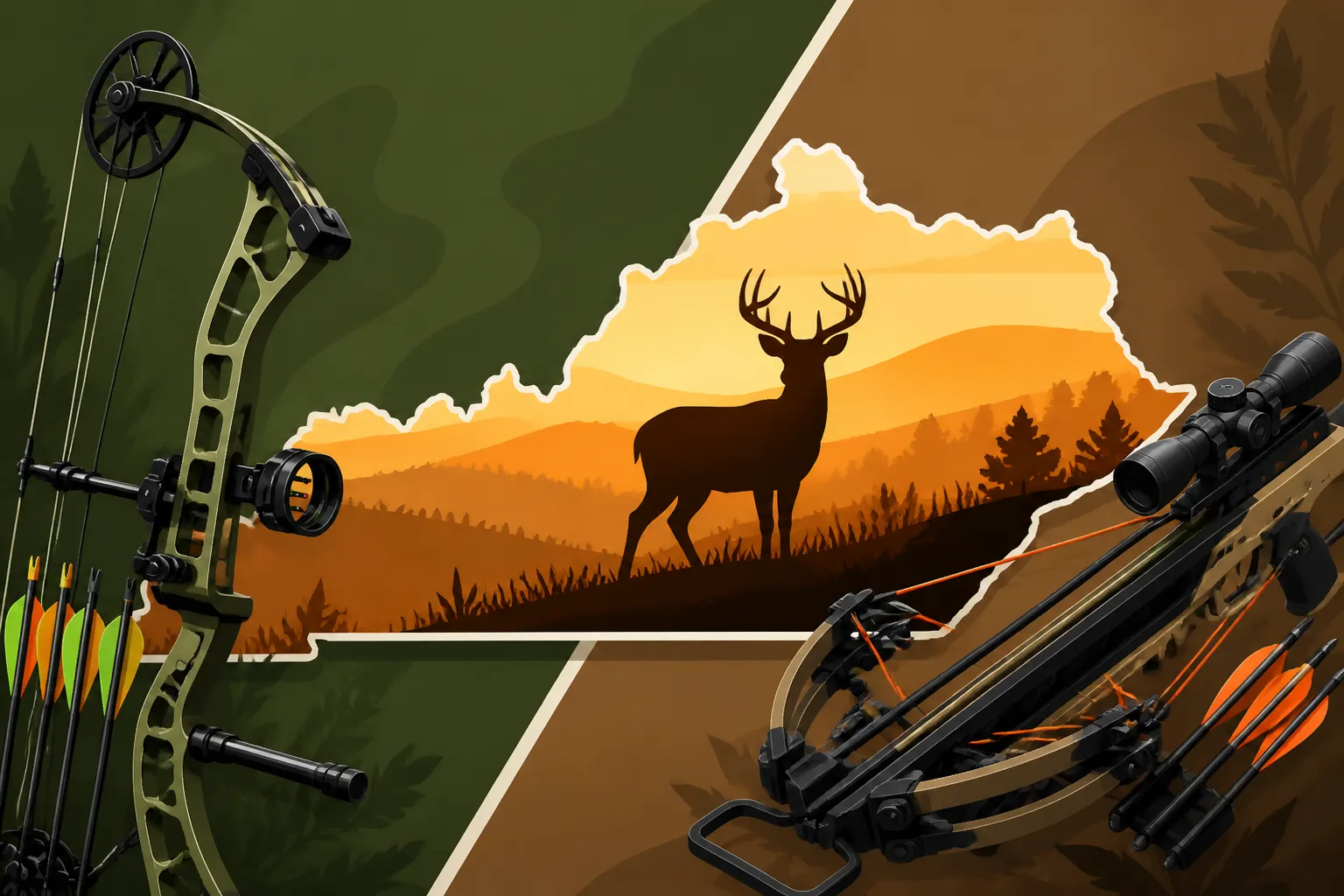
Heading into Kentucky's diverse woods with a bow or crossbow can feel overwhelming; the rolling hills, dense timber, and sprawling farmlands each present their own unique challenges for archers. Whether you're chasing an early season whitetail in the heat or patiently waiting for a rutting buck in November, having the right gear is paramount to success and a responsible hunt. This guide will walk you through setting up your vertical bow or crossbow for the unique demands of hunting in the Bluegrass State, ensuring you're confident and prepared when that moment of truth arrives.
Understanding Kentucky's Archery Hunting Landscape
Kentucky offers an incredible variety of hunting opportunities for bow and crossbow enthusiasts, but its diverse topography and game populations mean that a one-size-fits-all approach to gear simply won't cut it. From the rugged mountains of the east to the expansive river bottoms of the west, your equipment choices need to be as adaptable as the land itself.
The Diverse Terrain of the Bluegrass State
Eastern Kentucky, dominated by the Appalachian foothills and the Daniel Boone National Forest, features steep ridges, deep hollows, and dense hardwood forests. Here, shots are often close, and movement through thick cover is a constant. You might be climbing steep grades to get to a ridge-top saddle or slipping silently through a creek bottom. Your gear needs to be light enough for the ascent and quiet enough for close encounters. A long, cumbersome stabilizer might catch on brush, while a heavy bow can become a burden after hours of still-hunting.
Conversely, Western Kentucky presents a different set of challenges with its gentler, rolling hills, vast agricultural fields, and extensive river bottoms along the Ohio and Mississippi. Here, you might find yourself hunting field edges, navigating flooded timber, or setting up in small woodlots surrounded by crop fields. Shots can sometimes be longer across open lanes, and concealment in more open terrain becomes a primary concern. The demands on your equipment shift from pure maneuverability to potentially needing greater range and stability, especially when dealing with wind or longer shots.
The central Bluegrass region, with its mix of horse farms, small woodlots, and suburban fringes, also presents unique bowhunting scenarios. Often, you're dealing with smaller private tracts and needing to be incredibly stealthy and discreet. Understanding the typical shot distances and cover types in your specific hunting area is the first step in tailoring your setup.
Common Game Species and Their Habits
While Kentucky is perhaps best known for its robust white-tailed deer population, bowhunters can also pursue wild turkeys, black bears, and even elk in designated zones. Each species, and the way you hunt them, influences your gear choices.
For deer, which are the primary target for most bowhunters, a versatile setup is key. Deer can be encountered in thick brush at spitting distance, or you might need to make a longer shot across a small food plot. During Hunting the Rut in Early November, bucks are on the move, making quick, decisive shots often necessary. Your bow needs to be forgiving enough for adrenaline-fueled moments and powerful enough for ethical kills.
Turkey hunting with a bow requires extreme patience and precision, often involving decoying birds into very close range. You need gear that allows for minimal movement and quiet operation. Spring Turkey Hunting in Kentucky can be intense, and a bulky bow setup might hinder your ability to draw undetected. Bear hunting, particularly with archery gear, demands a powerful setup and broadheads designed for maximum penetration on a larger, tougher animal. And for those fortunate enough to draw an Applying for a Kentucky Elk Quota Hunt tag, your bow or crossbow will need to be capable of delivering serious energy at potentially longer ranges, often in steep, rugged terrain.
Regulatory Considerations for Bow and Crossbow
Kentucky has specific regulations for both vertical bows and crossbows that every hunter must understand. For vertical bows (compound, recurve, longbows), there are minimum draw weight requirements to ensure humane harvest. While these minimums are generally achievable for most adult hunters, it's crucial to confirm your bow meets these standards before heading afield.
Crossbows have specific rules too. They are legal for deer, bear, and elk throughout the entire archery season in Kentucky, which is a significant advantage for many hunters. There are no draw weight minimums for crossbows, but many hunters opt for higher poundage models for increased kinetic energy. It's important to remember that crossbows, like vertical bows, are subject to projectile weight and broadhead blade width requirements. Knowing these rules, which can be found in the Kentucky Department of Fish and Wildlife Resources regulations handbook, is non-negotiable. Always check the current regulations before each season, as they can sometimes change. Kentucky Crossbow Rules During Archery Season provides more detail on these specifics.
Choosing Your Vertical Bow Setup
For many, the vertical bow is the quintessential archery tool, demanding a deep connection between hunter and equipment. Kentucky’s varied terrain and hunting situations can really test your setup, making careful selection crucial.
Compound Bows: Power and Precision
Compound bows are by far the most popular choice for modern bowhunters in Kentucky due to their balance of speed, power, and shootability. These bows use cams or wheels to create a "let-off" at full draw, allowing you to hold the bow back for longer with less effort, which is incredibly beneficial when waiting for a deer to offer the perfect shot. A good compound bow for Kentucky hunting should prioritize reliability and quiet operation. Look for models that are not overly long axle-to-axle, as this makes them easier to maneuver in dense timber or from a treestand nestled against a tree trunk.
When selecting a compound, consider your draw length and draw weight carefully. While many bows are adjustable, getting one that fits you properly from the start will prevent a lot of frustration. Most Kentucky deer hunters will find that a draw weight between 60-70 pounds is more than sufficient for an ethical harvest, provided the arrow and broadhead combination is effective. Remember, it's not about how much weight you can pull, but how much you can comfortably and consistently shoot accurately. Brands like Bowtech, Hoyt, Mathews, and PSE offer a wide range of compound bows suitable for various budgets and hunting styles, all capable of taking down Kentucky whitetails.
Recurve and Longbows: Traditional Challenges
For those who embrace tradition, recurve and longbows offer a deeply satisfying, albeit more challenging, hunting experience. These bows require a higher degree of skill, practice, and a keen understanding of animal anatomy due to their typically slower arrow speeds and lack of sights or let-off. Hunting with traditional archery equipment in Kentucky's thick cover can be incredibly rewarding, forcing you to get closer to your quarry and become a master of stealth.
When choosing a traditional bow, fit is even more critical. Your draw length and the bow's designated draw weight at your draw length must match perfectly for consistent accuracy. Most traditional bowhunters opt for draw weights in the 45-60 pound range, again focusing on shootability over sheer power. The simplicity of traditional gear means less to go wrong, but also less forgiveness for errors. Many traditional bowhunters prefer shorter recurves or longbows for their maneuverability in tight spots, which is particularly useful when Still-Hunting Eastern Kentucky Ridges. The challenge lies in consistent form and practice, turning hunting into a true art form.
Accessories for the Vertical Bow Hunter
Beyond the bow itself, several key accessories enhance the vertical bow hunting experience in Kentucky. A quality sight, whether it's a multi-pin fixed sight or a single-pin adjustable model, is essential for accurate shot placement. Many hunters prefer a sturdy rest, like a drop-away, that ensures maximum fletching clearance and consistent arrow flight. A good stabilizer can significantly reduce hand shock and improve accuracy, especially when shooting from a treestand.
Your release aid is another critical component; a comfortable, consistent release is vital for accuracy. Options range from basic wrist-strap caliper releases to more advanced thumb-button or back-tension styles. Lastly, a durable quiver, either attached to the bow or worn on your back, will keep your arrows safe and readily accessible. When you're trying to stay hidden in a thick fencerow or climb into a stand quietly, having your arrows secured and out of the way is a huge benefit. A great resource for researching gear and finding options that fit your hunting style is a detailed platform like GoHunt, where you can often find reviews and comparisons.
Selecting Your Crossbow Setup
Crossbows have gained immense popularity in Kentucky, offering a different approach to archery hunting with their rifle-like shooting characteristics and often higher power. They can be a fantastic option for hunters who may have physical limitations, or simply prefer the added stability and accuracy potential at longer ranges.
Crossbow Types and Performance
There are two main types of crossbows: recurve and compound. Recurve crossbows are generally simpler in design, often more robust, and easier to maintain in the field, as string changes are typically less complex. They tend to be wider, which can sometimes be a consideration in very dense cover, but their reliability is a major draw for many.
Compound crossbows, much like their vertical bow counterparts, use a system of cams and cables to achieve higher speeds in a more compact package. They are often narrower axle-to-axle, making them more maneuverable in treestands or ground blinds. However, they can be more complex to maintain and string changes usually require specialized tools or a trip to a pro shop. Both types are highly effective for Kentucky game, and the choice often comes down to personal preference for size, speed, and maintenance. Brands like TenPoint, Ravin, Excalibur, and Wicked Ridge are well-regarded for their performance and reliability.
| Feature | Recurve Crossbows | Compound Crossbows |
|---|---|---|
| Design | Simple, wide limbs | Cams and cables, narrower limbs |
| Speed | Generally moderate to fast | Often faster, higher kinetic energy |
| Maintenance | Easier string changes, less complex | More complex string changes, may require press |
| Maneuverability | Can be wider, sometimes less maneuverable | Generally narrower, easier in tight spaces |
| Noise | Can be louder without dampeners | Often quieter with dampening systems |
| Cost | Generally more budget-friendly | Can be more expensive, especially high-end models |
Scopes and Sighting Systems for Crossbows
One of the significant advantages of crossbows is their ability to utilize rifle-style scopes, which greatly enhances aiming precision, especially at varying distances. Most crossbows come with a multi-reticle scope designed to compensate for bolt drop at different yardages. It's crucial to accurately sight in your crossbow at several distances (e.g., 20, 30, 40 yards) to understand where each reticle corresponds. Don't assume the factory settings are perfect; always verify.
Beyond standard multi-reticle scopes, some hunters opt for illuminated reticles, which can be a huge benefit in low-light conditions prevalent during dawn and dusk hunts or deep in Where Daniel Boone Forest Bucks Bed. Others might choose variable power scopes for greater flexibility. While often overlooked, the quality of your scope can make or break your accuracy. A clear, bright image is essential for identifying your target and making an ethical shot. Just like with rifle hunting, practice with your scope is key, understanding its limitations and capabilities in the field.
Bolts and Broadheads Specific to Crossbows
Choosing the right bolts and broadheads for your crossbow is just as important as the crossbow itself. Crossbow bolts are typically shorter and thicker than vertical bow arrows, designed to handle the immense energy output of the crossbow. Bolt weight and spine (stiffness) are critical for accuracy and proper flight. Always follow your crossbow manufacturer's recommendations for bolt weight; using bolts that are too light can damage your crossbow and be dangerous.
For broadheads, the same considerations for fixed-blade versus mechanical broadheads apply, but some mechanical broadheads are specifically designed for the higher speeds and kinetic energy of crossbows. It's paramount to test your chosen broadheads with your bolts to ensure they fly accurately out of your specific crossbow. Broadhead flight can differ significantly from field tip flight, so never skip this step. A well-tuned crossbow firing a perfectly matched bolt and broadhead combination will deliver devastating terminal performance on any Kentucky game animal. Many hunters also consider a resource like GoHunt for insights into recommended setups and performance data for various bolt and broadhead combinations.
The Critical Role of Broadheads and Arrows/Bolts
The choice of broadhead and the quality of your arrow or bolt are arguably the most critical components of your archery setup. They are the only parts of your system that actually touch the animal, and their performance directly dictates the success of your shot and the ethical harvest of your game.
Mechanical Versus Fixed-Blade Broadheads
This is a perennial debate among bowhunters, and both types have their place in Kentucky's hunting fields. Fixed-blade broadheads feature blades that are rigidly attached to the ferrule, meaning they don't deploy upon impact. Their main advantage is reliability; there are no moving parts to fail. They tend to be very durable and can be sharpened repeatedly. For hunters who prioritize deep penetration and don't mind tuning their bow meticulously to ensure perfect flight, fixed blades are an excellent choice. They are particularly favored for larger game like Hunting Kentucky's Record Elk Herd or Bear Hunting Southeastern Kentucky due to their robust construction and consistent penetration.
Mechanical broadheads, on the other hand, feature blades that are tucked away during flight and deploy upon impact. Their primary advantage is that they often fly more like field tips, requiring less tuning to achieve accuracy, which can be a relief for many hunters. Once deployed, they create a wider cutting diameter, often leading to larger wound channels and more profuse blood trails. However, there's always a slight risk of mechanical failure or incomplete deployment, especially if they hit heavy bone. For deer hunters, especially those shooting compound bows or crossbows at higher speeds, modern mechanical broadheads have become incredibly effective, offering a balance of accuracy and lethal cutting power. It's vital to choose a mechanical broadhead known for its robust construction and reliable deployment.
Arrow and Bolt Weight, FOC, and Spine
The characteristics of your arrow or bolt play a huge role in its flight and terminal performance. Arrow/bolt weight, measured in grains, affects speed and kinetic energy. A heavier arrow or bolt will fly slower but carry more momentum and kinetic energy, leading to better penetration. Lighter arrows are faster but lose energy more quickly. Finding the right balance for your setup and target species is key. For most Kentucky deer, a medium to heavy arrow (around 400-500 grains total weight for a compound bow, or manufacturer-recommended weight for a crossbow) is a solid choice.
FOC, or Front of Center, refers to the percentage of an arrow's total weight that is located in the front half of the arrow. A higher FOC generally improves flight stability and penetration. Achieving a good FOC involves strategic component selection, like heavier broadheads or inserts. Lastly, spine refers to the stiffness of the arrow or bolt. It must be correctly matched to your bow's draw weight and draw length (or crossbow's speed) to ensure consistent, accurate flight. An improperly spined arrow will flex excessively, leading to erratic flight. This is why consulting an archery pro shop is always a good idea to ensure your arrows or bolts are perfectly matched to your setup.
Ethical Shot Placement and Penetration
No matter how advanced your bow or crossbow setup, ethical shot placement is paramount. Understanding deer anatomy, specifically the location of the heart and lungs, is essential for a quick, humane kill. The broadhead's job is to create a large cutting surface to cause rapid blood loss, and sufficient penetration ensures it reaches these vital organs. This is why testing your setup for penetration on a target designed to simulate animal tissue (like a foam block) is a good idea.
Factors like broadhead design, arrow/bolt weight, and kinetic energy all contribute to penetration. A sharp, well-designed broadhead on a properly spined, heavy-enough arrow, delivered with good form and accurate shot placement, is the recipe for success. Never compromise on ethical shot distances; know your maximum effective range and stick to it, even if it means letting an animal walk. This commitment to ethical hunting is a core principle for any responsible Kentucky archer.
Essential Archery Accessories for Kentucky Hunters
While the bow or crossbow itself is central, a suite of accessories can significantly enhance your comfort, safety, and effectiveness in the Kentucky woods. These tools are often the unsung heroes of a successful hunt.
Quivers, Releases, and Stabilizers
A quality quiver is more than just a place to store arrows; it needs to protect your broadheads, hold arrows securely, and allow for quiet access. Whether you prefer a bow-mounted quiver, a back quiver, or a hip quiver, choose one that doesn't interfere with your shot and keeps your arrows quiet as you move. A rattling quiver is a surefire way to alert game.
For vertical bow hunters, a reliable release aid is non-negotiable. It connects you to the string and ensures a consistent, clean release every time. Experiment with different styles – wrist-strap, thumb-button, or back-tension – to find what feels most natural and promotes the best accuracy for you. A consistent release is fundamental to tight groups.
Stabilizers, those rods extending from the front of your bow, do exactly what their name implies: they stabilize. They help balance the bow, absorb vibration, and reduce noise after the shot. Longer stabilizers often provide more stability, which can be beneficial for longer shots or in windy conditions, but a shorter, more compact stabilizer might be preferred for navigating thick Kentucky brush or for treestand hunters needing maneuverability. Finding the right balance for your hunting style is a personal choice.
Rangefinders and Optics for Bowhunting
In archery, knowing the exact distance to your target is absolutely critical, as arrow trajectory drops significantly more than a bullet. A reliable rangefinder is perhaps the most indispensable accessory for a Kentucky bowhunter. Whether you're in a sprawling Western Kentucky field edge or a tight Eastern Kentucky hollow, being able to quickly and accurately range a deer before drawing your bow can make the difference between a clean kill and a miss. Many modern rangefinders offer angle compensation, which is particularly useful when shooting from a treestand into a hollow or across a steep ridge, providing the "shoot-to" distance rather than the line-of-sight distance.
While not always necessary for all bowhunting situations, a good pair of binoculars can significantly aid in spotting game, especially when Scouting Kentucky Public Land Before Season. Even in thick cover, optics can help you pick apart brush, identify antler characteristics, and assess shot opportunities. Compact binoculars (8×32 or 10×32) are often preferred for bowhunting as they are lightweight and easy to carry without being cumbersome. Some hunters even opt for rangefinding binoculars, combining two essential tools into one, although these tend to be a higher investment. Platforms like GoHunt often review optics that perform well in diverse hunting conditions.
Treestands, Ground Blinds, and Safety Gear
Kentucky's varied terrain means you'll likely hunt from a variety of positions. Treestands are extremely popular for elevated vantage points, especially in the state's abundant timber. Whether you prefer hang-on stands, climbers, or ladder stands, safety is paramount. Always use a full-body safety harness and a lifeline when ascending, descending, and while in your stand. Treestand Setups in Daniel Boone National Forest require particular attention to safety due to the often steep and remote terrain.
Ground blinds offer excellent concealment and can be a great option for hunting field edges, fencerows, or for less mobile hunters. They provide warmth and shelter in inclement weather and are excellent for hunting with kids or new hunters. Remember to brush in your ground blind effectively to break up its outline. Regardless of your chosen method, ensuring your stand or blind is set up safely, quietly, and strategically for prevailing winds is crucial. Using a Ground Blind on Kentucky Public Land can also be a game-changer when used correctly.
Tuning Your Equipment for Peak Performance
Even the most expensive bow or crossbow is only as good as its tune. Taking the time to properly tune your equipment is not just about accuracy; it's about consistency, confidence, and ultimately, ethical hunting.
Paper Tuning and Walk-Back Tuning
For vertical bow hunters, paper tuning is one of the most fundamental steps to ensure your arrow leaves the rest cleanly and flies true. By shooting an arrow through a piece of paper held a few feet from the bow, you can observe tears in the paper that indicate how the arrow is flexing upon release. A perfect bullet hole tear means your arrow is flying perfectly straight out of the bow. If you see horizontal or vertical tears, it means adjustments are needed to your rest, nocking point, or even your grip. This is a process of small, incremental adjustments until you achieve that perfect tear.
Walk-back tuning is another critical method, especially for fine-tuning longer distances. After achieving a good paper tune, you shoot an arrow at a target from 10 yards, aiming at a specific spot. Without adjusting your sight, you then back up to 20, 30, and 40 yards, continuing to aim at the same spot on the target. If your arrows are consistently hitting low as you walk back, it often indicates an issue with your nocking point or rest. This method helps confirm that your arrow is leaving the bow consistently at all distances, ensuring your sight pins align accurately with your arrow's trajectory. These tuning methods are what separate a good shot from a great one.
Dialing in Your Crossbow's Accuracy
While crossbows often feel more like shooting a rifle, they still require diligent tuning and sighting in. The first step is to consistently group bolts at a close range, typically 20 yards. Once you're grouping tightly, you can begin to verify your scope's reticles at longer distances. Crossbow bolts drop faster than rifle bullets, so understanding how your specific setup performs at 20, 30, 40, and even 50 yards is essential. Shoot multiple bolts at each distance to confirm your zero for each reticle.
One common issue with crossbows is inconsistent bolt flight due to rail lubrication or nock fit. Always ensure your rail is lightly lubricated according to the manufacturer's instructions and that your nocks fit snugly but not too tightly on the string. Environmental factors like wind, temperature, and even bolt fletching can affect accuracy, so practicing in varying conditions will build confidence. Knowing your crossbow's true limitations in the field is key to Hunting Western Kentucky Bottomland Deer where longer shots might present themselves.
Practice Regimens for Field and Broadhead Accuracy
Consistent practice is the bedrock of ethical archery hunting. It's not enough to simply sight in your bow or crossbow; you need to practice regularly, building muscle memory and confidence. For vertical bowhunters, this means shooting from various positions – standing, kneeling, even from a treestand or ground blind if possible. Practice with the same clothing and gear you'll wear hunting, as it can affect your anchor point or bow arm. Emphasize consistent form and a surprise release.
Crucially, always practice with your broadheads before season. Fixed Versus Mechanical Broadheads can fly differently than field tips, and any slight difference needs to be identified and corrected. If your broadheads are flying significantly off from your field tips, it's an indication that your bow or crossbow is not perfectly tuned. For crossbow hunters, practice shooting from a rest, but also off-hand or from a simulated hunting position to prepare for real-world scenarios. The goal of practice is to make every shot in the woods feel like just another shot on the range.
Maintaining Your Archery Gear
Proper maintenance extends the life of your equipment, ensures reliability in the field, and helps maintain accuracy. Ignoring regular care can lead to frustrating equipment failures and missed opportunities.
Bow String and Cable Care
The string and cables on your vertical bow or crossbow are under immense tension and are subjected to the elements. They are arguably the most critical components for consistent performance. Inspect your string and cables regularly for fraying, serving separation, or wear. A small amount of string wax applied periodically helps protect the fibers and extend their life, especially in Kentucky's often humid and sometimes wet conditions. Pay particular attention to the serving at the nocking point and where the string contacts the cams or rest.
If you notice significant wear or damage, it's time for a replacement. Do not risk a string failure in the field; it can be dangerous and costly. For vertical bows, a professional pro shop can typically replace and properly install new strings and cables. For crossbows, especially compound models, string and cable changes are often more complex and also best handled by an experienced technician. Regular waxing and visual inspection can catch small issues before they become major problems.
Crossbow Limb and Rail Maintenance
Crossbow limbs, like vertical bow limbs, are subjected to extreme forces with every shot. Inspect them regularly for any cracks, splinters, or delamination. While rare with modern manufacturing, any visible damage to a limb means the crossbow should not be shot until professionally inspected. The rail of a crossbow is also critical, as the bolt slides along it during the shot. Keep the rail clean and lightly lubricated (using manufacturer-recommended lubricant) to ensure smooth bolt flight and reduce wear on the string. Dirt or debris on the rail can cause accuracy issues and premature string wear.
Beyond the limbs and rail, check all screws and bolts for tightness. Vibration from shooting can loosen components over time. A small amount of removable threadlocker on non-critical screws can help prevent this, but always consult your owner's manual. A well-maintained crossbow will deliver consistent performance season after season, giving you confidence whether you're hunting Kentucky's Statewide Modern Gun Season with your crossbow during its allowed dates or in the archery season.
Storage and Off-Season Preparation
When the season winds down, proper storage of your archery gear is essential for its longevity. Store your bow or crossbow in a cool, dry place, ideally in a padded case that protects it from bumps and dust. For vertical bows, it's a good idea to slightly back off the limb bolts a turn or two (if your bow allows this without affecting tune) to relieve some tension, though many modern bows are designed to be stored at full draw weight. Never completely unstring a compound bow unless instructed to do so by the manufacturer, as it can damage the cams.
For crossbows, follow the manufacturer's recommendations for off-season storage. Some suggest uncocking the crossbow, while others are fine with it stored cocked for short periods, but it's generally best to relieve tension. Remove batteries from any electronic components like illuminated scopes or rangefinders to prevent corrosion. Give your bow or crossbow a thorough cleaning, inspect it one last time, and address any maintenance issues before putting it away for the off-season. This attention to detail will ensure your gear is ready to go when Kentucky Archery Season Opening Day rolls around again.
Adapting Your Setup for Specific Kentucky Hunts
Kentucky's hunting seasons offer a wide range of conditions, and a truly prepared archer knows how to adapt their gear for the unique challenges each presents. What works perfectly in September might need tweaking for January.
Early Season Whitetails in Warm Weather
Kentucky's archery season often kicks off in early September, when temperatures can still be quite warm, even hot. This presents several challenges for hunters and their gear. Scent control becomes even more critical, as perspiration amplifies human odor. Your clothing choice should prioritize lightweight, breathable fabrics that wick moisture away. For your bow or crossbow, the primary concern is often less about the equipment itself and more about the effect of heat on the hunter. Staying hydrated, moving slowly, and picking shaded stand locations are key.
One critical gear consideration for early season is meat care. If you harvest a deer in warm weather, the clock starts ticking immediately. Having a plan for quick field dressing, potentially quartering the animal in the woods, and having large coolers with plenty of ice readily available is essential to preserve the venison. Coolers and Game Bags for Early Archery are not just accessories but necessities. Your broadhead choice might also lean towards those known for creating massive wound channels to maximize blood trails, as warm weather can sometimes make trailing more difficult.
Hunting the Kentucky Rut in Early November
The Kentucky rut is a magical time for deer hunters, with bucks actively searching for does, often throwing caution to the wind. This period, typically peaking in early to mid-November, is when many hunters spend the most time in their stands. The weather can be highly variable, from mild autumn days to crisp, cold mornings, so layering your clothing is crucial. Hunting the Rut in Early November often involves extended sits, requiring comfortable and quiet clothing that can adapt to changing conditions.
From a gear perspective, this is when scent control is absolutely paramount, as bucks are using their noses constantly. Your bow or crossbow setup should be well-tuned and practiced, as opportunities can arise quickly and unexpectedly. Having a reliable rangefinder for quick target acquisition is vital. Calls, like grunt tubes or rattling antlers, can be very effective during the rut, so ensure they are easily accessible and practiced. While your bow setup itself might not change much, your strategy and the auxiliary gear you carry should be optimized for this high-action period.
Late Season Challenges and Gear Adjustments
As Kentucky's archery season stretches into January, conditions can become brutally cold, with snow, ice, and biting winds often in play. This late season presents the toughest challenges for both hunter and gear. Proper layering with insulated clothing, including wool or synthetic base layers, mid-layers, and a windproof outer shell, is essential to stay warm and alert during long sits. Cold-Weather Sitting Strategy in Kentucky is all about maximizing comfort to stay on stand.
Your bow or crossbow needs to be able to perform in the cold. Ensure your scope lenses are anti-fog treated, and your release aid (for vertical bows) functions smoothly with gloves on. Some hunters might consider adding a heavier arrow for increased penetration on potentially tougher, colder hide. Hand warmers, insulated boots, and a warm hat become indispensable. Finding reliable late-season food sources, like standing corn or winter greens, becomes key, and your setup needs to allow for quiet, patient hunting in these often open areas. A platform like GoHunt can be invaluable for finding satellite imagery to pinpoint these crucial food sources and plan your late-season strategy.
Disclaimer
This article is for general informational purposes only and does not constitute professional advice. Laws, prices and regulations vary by location and change over time. Consult a qualified professional for guidance on your specific situation.