Hunting Bear With Archery Gear in Kentucky
If you've ever dreamt of pitting your wits and skills against one of Kentucky's most formidable big game animals with nothing but a bow or crossbow in hand, you know it's a challenge unlike any other. The Bluegrass State's black bear population has seen a remarkable comeback, offering incredible, yet demanding, opportunities for archers. But successfully pursuing these elusive giants requires deep knowledge, meticulous preparation, and the right gear. This comprehensive guide will walk you through everything you need to know, from understanding bear behavior and selecting your equipment to proven scouting and hunting strategies, ensuring you're as ready as possible for your Kentucky archery bear hunt.
Understanding Kentucky's Black Bear Population and Zones
Kentucky's black bear population has truly been a conservation success story. Once extirpated from the state, bears have made a strong return, primarily in the rugged, forested landscapes of Eastern Kentucky. This recovery has created exciting, though often physically demanding, hunting opportunities for those willing to venture into their domain.
Where Bears Roam in the Bluegrass State
The heart of Kentucky's black bear country lies deep within the Appalachian foothills of the southeastern part of the state. Counties like Harlan, Bell, Letcher, Leslie, McCreary, and Whitley are well-known strongholds, boasting the highest densities of these magnificent animals. These areas are characterized by vast tracts of timber, steep hollows, and abundant mast-producing trees like oaks and hickories, which are critical food sources for bears, especially in the fall. You'll find bears thriving in national forests, state forests, and other large expanses of unbroken woodland.
However, it's not just these traditional strongholds anymore. Bear sightings, and thus their range, have been steadily expanding over the past few decades. Bears are now being seen, and even establishing small populations, in counties further west and north, including parts of the Big South Fork National River and Recreation Area, and even into counties like Wayne, Clinton, and Knox. This expansion is a testament to the health and adaptability of the population, but it also means hunters need to stay vigilant and scout even in areas where bears might be less common. Understanding these expanding ranges is crucial for successful scouting, as a new food source or undisturbed pocket of habitat could hold a bear even in unexpected places.
Navigating Kentucky's Bear Zone System
To manage this growing population effectively, the Kentucky Department of Fish and Wildlife Resources (KDFWR) has established a bear zone system. This system dictates where and when hunting is permitted, along with specific harvest quotas that ensure sustainable management. Currently, there are two primary hunting zones, Zone 1 and Zone 2, encompassing counties with varying bear densities. Zone 1 typically includes the core bear counties with the highest populations, while Zone 2 includes counties with moderate, often expanding, bear numbers. It's absolutely critical to know which zone your intended hunting area falls into, as regulations, season dates, and even the existence of a harvest quota can differ significantly.
The KDFWR often sets a statewide quota for the total number of bears harvested, and sometimes specific quotas for sows, to maintain a healthy breeding population. Once these quotas are met, the season in that zone or statewide can close immediately, sometimes even mid-day. This means you need to be constantly aware of the current harvest numbers, often checking the KDFWR website or their social media channels daily during the season. This dynamic regulatory environment adds another layer of complexity, and excitement, to bear hunting in Kentucky. Staying informed about Kentucky's Bear Zone System is not just good practice, it's essential for legal and ethical hunting.
Archery Season Specifics for Black Bears
Kentucky's bear archery season typically runs for a limited window, usually in the early fall, preceding the modern gun season. This gives archery hunters a unique opportunity to pursue bears before they've been heavily pressured by firearms hunters. The specific dates for Kentucky Bear Archery Season Dates are released annually by the KDFWR, and it’s your responsibility to know them inside and out. These dates are often carefully chosen to coincide with prime bear feeding periods, such as when hard mast (acorns, hickory nuts) is beginning to drop, which concentrates bears in specific areas.
For archery gear, Kentucky regulations generally allow the use of traditional bows, compound bows, and crossbows. Minimum draw weights and arrow/bolt specifications are typically in place to ensure a humane and effective harvest. For vertical bows, a minimum draw weight is usually set to ensure enough kinetic energy to penetrate the thick hide and bone structure of a bear. For crossbows, specific draw weight and bolt length requirements are also common. While exact figures can vary year to year, the spirit of the law is always about ensuring a clean kill, which means choosing equipment that generates sufficient power and penetration. It’s always best to consult the most current KDFWR hunting guide for the precise legal requirements before heading afield.
Essential Archery Gear for Kentucky Bear Hunters
Taking on a black bear with archery gear is a serious endeavor, demanding gear that is robust, reliable, and capable of delivering a swift, humane kill. This isn't the time to cut corners on equipment; your setup needs to be top-notch to penetrate a bear's thick hide, heavy muscle, and dense bone structure.
Choosing the Right Bow or Crossbow Setup
When it comes to selecting your bow or crossbow, power and precision are paramount. For vertical bow hunters, a compound bow with a draw weight of at least 60-70 pounds is highly recommended. You're aiming for maximum kinetic energy and momentum to push a heavy arrow and sharp broadhead through a bear. While some hunters use traditional bows, the learning curve and precision required for consistent, high-energy shots on large game like bears can be steep. Ensure your bow is well-tuned and you can consistently shoot tight groups out to your comfortable maximum range.
Crossbows have become increasingly popular for bear hunting in Kentucky, and for good reason. They often offer higher kinetic energy, a flatter trajectory, and a reduced learning curve compared to vertical bows, making them an excellent choice for many hunters. Ensure your crossbow meets Kentucky's legal specifications, and practice extensively with the bolts and broadheads you intend to use. Regardless of whether you choose a vertical bow or a crossbow, the goal is the same: to deliver a powerful, accurate shot. A detailed look into Bow and Crossbow Setups for Kentucky can provide even more guidance on optimizing your equipment for the season.
Broadheads and Arrows for Maximum Impact
This is perhaps one of the most critical gear choices for bear hunting. A bear's hide is tough, their muscle structure is dense, and their bones are stout. You need a broadhead designed for deep penetration and reliable performance. Many experienced bear hunters lean towards fixed-blade broadheads, known for their structural integrity and consistent penetration, especially when encountering bone. Look for a strong, sharp, two or three-blade fixed head with a wide cutting diameter. Some hunters successfully use mechanical broadheads, but if you do, choose a robust, well-tested design known for its reliability on tough hides and bones, ensuring it opens consistently and doesn't break upon impact.
Pair your broadhead with a heavy, durable arrow or bolt. Heavier arrows carry more momentum, which translates directly to better penetration. Many bear hunters prioritize a higher FOC (Front of Center) by using heavier broadheads or adding weight to the front of their arrows. This helps the arrow fly true and drive deeper into the animal. Practice with your chosen broadhead and arrow combination extensively to ensure accuracy and confidence in your setup. Understanding Broadheads for Timber Shots is a good start, but remember a bear requires even more consideration for penetration.
Optics and Accessories for Bear Country
Beyond your bow, several other pieces of gear are indispensable for bear hunting in Kentucky's rugged terrain. High-quality optics are a must. A good pair of binoculars (10×42 or 12×50 are popular choices) will help you glass distant ridgelines, identify potential feeding areas, and confirm bear sign from a distance. A reliable rangefinder is also non-negotiable for archery hunting. Bears can appear deceptively close, and knowing the exact yardage is crucial for an ethical shot.
Other critical accessories include a durable backpack capable of carrying all your day's essentials, including extra layers, water, snacks, and game processing supplies. Scent control is also paramount; bears have an incredible sense of smell, so diligent scent management—from specialized clothing to scent elimination sprays—can make a significant difference. Don't forget a bright headlamp for those early morning walks in or late evening walks out, as you'll likely be hiking in low light. Finally, consider a sturdy game cart or a heavy-duty pack frame for packing out a harvested bear, as the terrain can be brutal. For more detailed advice on spotting and navigating, check out Optics for Eastern Kentucky Ridges.
Scouting and Locating Bears with Archery Tactics
Locating a black bear with archery gear is arguably the most challenging part of the hunt. Bears are creatures of habit but incredibly secretive. Success hinges on thorough, intelligent scouting that helps you understand their daily patterns and preferred haunts.
Identifying Prime Bear Habitat and Sign
Bears are opportunists, always on the lookout for food, water, and secure cover. In Kentucky, this often means focusing your scouting efforts on areas rich in mast crops, particularly during the fall archery season. Oak ridges and hickory bottoms are goldmines when nuts are dropping. Look for claw marks on trees where bears have climbed to access nuts or rub their backs. Creek bottoms and shaded hollows provide crucial water sources, especially during drier periods, and often serve as travel corridors. Dense thickets, laurel slicks, and clear-cuts with abundant regrowth offer excellent bedding and security cover. Don't overlook reclaimed mine lands, as these areas often produce abundant berry crops and thick vegetation that bears love.
Beyond just identifying habitat, you need to become an expert at reading bear sign. Tracks are a dead giveaway, especially fresh ones in mud or soft earth. Bear scat can tell you what they've been eating – look for berry seeds, nut fragments, or insect remains. Overturned rocks and torn-apart logs indicate bears foraging for grubs and insects. Rubbed saplings or broken branches can also signal a bear's presence, as they mark territory or forage. Pay attention to every detail; a broken cobweb or disturbed leaves could be the only sign that a bear passed through recently. Good scouting extends beyond just walking, it involves observing every subtle nuance of the forest. If you're looking for more general scouting tips, Scouting Kentucky Public Land Before Season provides an excellent foundation.
Utilizing Trail Cameras and Digital Scouting Tools
Trail cameras are invaluable for bear scouting, allowing you to monitor active areas without constant human presence. Place cameras on established bear trails, near known food sources, or along creek bottoms and travel corridors. If legal in your hunting area, consider a mock "bait" site (even if it's just a pile of mast or naturally occurring edibles) to draw them in. Position cameras to get clear shots of the bear's size and direction of travel. Check your cameras discreetly and infrequently to avoid pressuring the bears. Remember, bears are incredibly smart and will quickly pattern human activity.
Digital mapping tools are another game-changer for bear hunters. Platforms like GoHunt allow you to overlay property boundaries, topographic maps, and satellite imagery, helping you identify potential food sources, bedding areas, and travel corridors from your couch. You can mark potential stand locations, plot quiet entry and exit routes, and even identify steep terrain that might act as natural funnels. Before you ever set foot in the woods, use GoHunt to meticulously plan your scouting trips, saving you valuable time and effort. Using a digital mapping platform, such as GoHunt, allows you to drop pins on potential sign and track your movements, making your scouting efforts more efficient. This kind of detailed planning is crucial when trying to pinpoint where a bear might be consistently moving, especially when you consider Where to Hang a Camera on a Logging Road to optimize your intel.
Interpreting Bear Behavior and Movement Patterns
Understanding bear behavior is key to predicting their movements. Their patterns are heavily influenced by food availability, particularly during the archery season when they are focused on bulking up for winter. If acorns are abundant in one area, bears will concentrate there. If a preferred food source is scarce, they will travel further to find alternatives. Bears are primarily crepuscular, meaning they are most active at dawn and dusk, though they can be active throughout the day, especially during peak feeding times or when undisturbed.
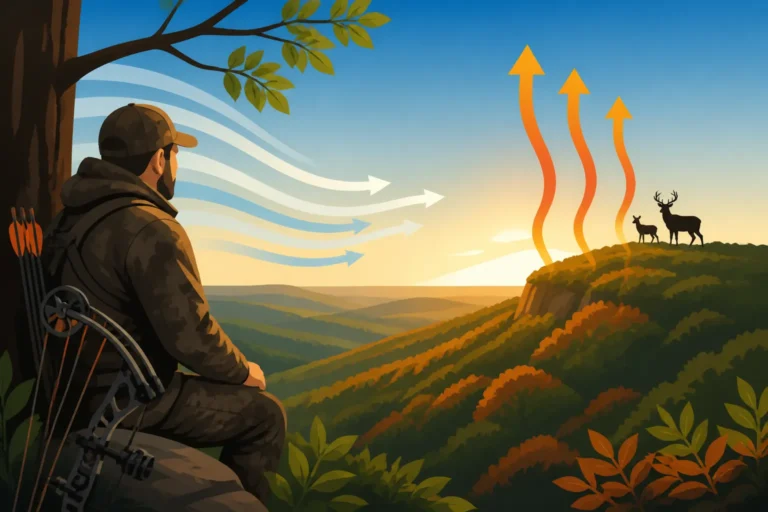
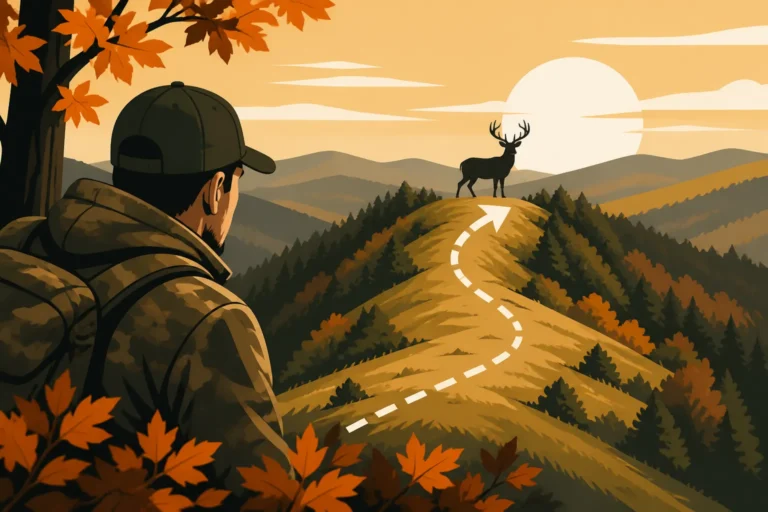
Look for areas where bears transition between dense bedding cover and feeding areas. Ridgelines, saddles, and hollows can act as natural funnels that bears use to travel efficiently. They often follow the path of least resistance. Observe how bears use topography; they will often skirt around steep hillsides rather than going directly over them, creating well-worn trails. Wind and thermals also play a huge role in bear movement. They often travel into the wind to catch scent and will use thermals dropping down into hollows in the evening to detect danger. Patience and observation are your best allies in deciphering their elusive patterns.
Archery Hunting Strategies and Shot Placement
Once you've done your homework and located some active bear sign, it's time to transition from scouting to hunting. Archery bear hunting demands stealth, strategic positioning, and unwavering focus when the moment of truth arrives.
Stand Placement and Still-Hunting Approaches
For archery hunting, stand placement is absolutely critical. Bears are extremely wary and have an exceptional sense of smell and hearing. You need to position yourself downwind or crosswind of expected bear travel routes, feeding areas, or water sources. Look for pinch points, saddles, or creek crossings that naturally funnel bear movement. Aim to set your stand where you have clear shooting lanes at distances you've practiced, ideally within 20-30 yards. Concealment is key; use natural cover to break up your outline. Many hunters utilize treestands, setting them high enough to get above a bear's line of sight and sense of smell. For a deeper dive into effective tree stand usage, you might find tips in Treestand Setups in Daniel Boone National Forest that can be adapted for bear.
Still-hunting is another effective strategy, especially in areas with very dense cover or limited stand opportunities, like parts of Pine Mountain. This involves moving incredibly slowly, pausing frequently to observe and listen. Focus on areas with fresh bear sign, moving into the wind or with favorable crosswinds. Use binoculars constantly to pick apart dense thickets and shadows. The key is to blend into the environment, become part of the forest, and move so quietly that you might encounter a bear unexpectedly. When still-hunting, be prepared to draw and shoot quickly, as encounters can be fleeting. For those looking to brave the rugged landscape, Spot-and-Stalk Tactics for Pine Mountain Bears can offer valuable insights.
Mastering the Archery Shot on a Bear
This is perhaps the most challenging and critical aspect of archery bear hunting. Bears have a different anatomy than deer, and their vital organs are positioned slightly differently, often protected by thick muscle and a heavy layer of fat. The ideal shot placement for a bear is the double-lung, aiming for the area directly behind the shoulder. This shot will penetrate both lungs, leading to a quick and humane harvest. Avoid quartering-to shots, as these offer minimal penetration to the vitals and a high risk of wounding the animal. Quartering-away shots can be effective if you aim for the opposite shoulder, ensuring penetration through the vitals.
When a bear presents a broadside or slightly quartering-away shot, wait for it to be calm and settled. Take a deep breath, control your nerves, and focus on a specific spot. Your arrow needs to pass through the ribs and into the thoracic cavity. Remember that bears can be incredibly tough, and a poorly placed shot can result in a lost animal. Only take shots you are 100% confident in, and always prioritize ethical harvesting. Understanding the nuances of Shot Placement on a Kentucky Black Bear is non-negotiable for any aspiring bear archer.
Tracking and Recovery After the Shot
After you release your arrow, the real work often begins. Unlike deer, bears don't always react dramatically to a shot. Sometimes they'll simply run off without much indication of a hit. Your first step should always be to observe and remember the exact spot where the bear was standing and its direction of travel. Listen for any sounds of it crashing or running. After the shot, give the bear plenty of time – at least 30 minutes to an hour for a confirmed hit, and longer (2-4 hours, or even overnight) for a questionable hit. Bears are incredibly resilient, and pushing them too soon can make recovery much harder.
Once you begin tracking, look for blood, broken branches, disturbed leaves, and any other sign. Bear blood can sometimes be darker and thicker than deer blood. Mark your trail with flagging tape or by dropping distinct objects to avoid getting disoriented, especially in dense cover or after dark. If the trail is sparse, expand your search pattern in the direction of travel. Recovering a bear in rugged Kentucky terrain can be a monumental task, especially if it descends into a steep hollow. It's wise to have a recovery plan, perhaps with a hunting partner, and consider a sturdy game cart or sled for extraction. Learning how to effectively track game, even if it's Tracking a Deer Through Kentucky Leaf Litter, offers transferable skills that are vital for bear recovery.
Post-Harvest Considerations and Regulations
Harvesting a black bear with archery gear is an incredible accomplishment, but the work isn't over when the animal hits the ground. Proper post-harvest care and adherence to Kentucky's regulations are essential for preserving your harvest and ensuring legal compliance.
Field Dressing and Meat Care in the Field
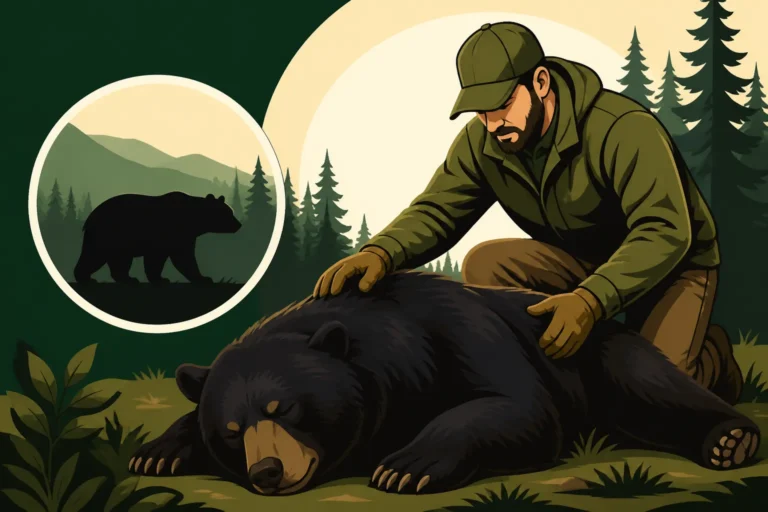
One of the most critical aspects of bear recovery is prompt and thorough field dressing. Bear meat, particularly from bears harvested during warmer early archery seasons, can spoil quickly due to their thick fat layer which acts as an insulator. The moment you find the bear, begin the field dressing process immediately. This involves gutting the animal to remove heat from the body cavity. Be prepared for a significant amount of fat, as bears are often gorging themselves in the fall.
If you can, quarter the bear in the field to allow for faster cooling and easier transport. Skinning the bear will also help cool the meat down rapidly. Carry game bags to protect the meat from dirt, insects, and debris. If you're hunting in a remote area and plan to pack the meat out over several trips or distances, having a robust pack frame is essential. Consider bringing large, heavy-duty trash bags to keep the hide separate and clean during transport. The goal is to get the meat cooled down and processed as quickly as possible to ensure its quality for the dinner table.
Checking and Reporting Your Bear Harvest
Kentucky has mandatory check-in requirements for all harvested bears. This isn't just a suggestion; it's a legal obligation and a crucial part of the KDFWR's bear management program. You'll need to report your harvest via the KDFWR Telecheck system or designated check stations. Be prepared to provide details such as the county of harvest, date, sex of the bear, and the equipment used. In many cases, the KDFWR may also require a biological sample, such as a tooth, for age analysis, or other tissue samples for disease monitoring.
It's vital to familiarize yourself with the precise Kentucky Bear Checking Requirements for the current season. These rules can change, so always consult the most recent hunting guide. Following these regulations not only keeps you compliant with the law but also provides invaluable data to wildlife biologists, helping them monitor the health and dynamics of Kentucky's bear population and ensuring sustainable hunting opportunities for future generations.
Handling Transport and Processing
Once your bear is field-dressed and checked, the challenge shifts to transportation and final processing. Moving a whole or quartered bear, especially in steep, rugged terrain, is physically demanding. Have a plan for extraction, whether it's a sturdy game cart, a pack frame, or an extra set of hands. Keep the meat as cool as possible during transport. This might mean using coolers with ice, especially if you have a long drive or warm temperatures.
For processing, you can either take the bear to a professional wild game processor or butcher it yourself. Bear meat can be quite delicious but requires careful handling and cooking due to its fat content. Rendering some of the fat can yield excellent lard for cooking. Remember that all parts of the bear should be utilized if possible, honoring the animal and the hunting tradition. Bear meat is often excellent for roasts, stews, chili, and ground meat, but always ensure it is cooked to an internal temperature of at least 160°F (71°C) to eliminate any potential parasites.
Disclaimer
Hunting regulations and season dates are subject to change. Always consult the most current Kentucky Department of Fish and Wildlife Resources (KDFWR) hunting guide and local regulations before planning any hunting trip. This guide is for informational purposes only and does not supersede official state regulations.