Hunting Kentucky’s Fall Turkey Season
Fall turkey hunting in Kentucky presents a unique set of challenges compared to the boisterous spring season. Gone are the days of locating gobblers on the roost by their thunderous calls, replaced by elusive flocks and quieter woods. If you've found yourself frustrated by silent mornings and invisible birds, this comprehensive guide is here to unravel the mysteries of Kentucky's fall turkey season, equipping you with the knowledge and tactics to fill your tag.
Understanding Fall Turkey Behavior in Kentucky
Autumn turkeys are a different breed altogether when it comes to hunting them. Unlike the spring, where breeding instincts drive gobblers to be vocal and visible, fall birds are primarily focused on survival, which means finding food, staying safe, and maintaining flock cohesion. This fundamental shift in priorities dictates everything from where they spend their time to how they react to calls. Understanding these behaviors is the bedrock of successful fall turkey hunting.
Flocking Instincts and Social Dynamics
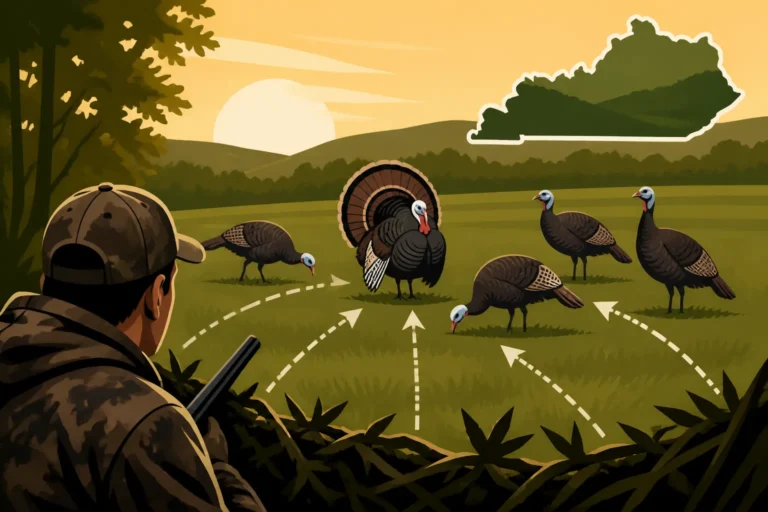
In the fall, turkeys transition from their smaller, breeding-season groups into larger, mixed-gender flocks. Hens will be with their poults (now nearly full-grown), and these "family groups" are the most common sight. Bachelor groups of gobblers will also form, often comprising several mature toms or a mix of jakes and older birds. The social structure within these flocks is strong; birds rely on each other for security and companionship. If you break up a flock, their immediate instinct is to regroup, making them vulnerable to specific calling tactics.
This strong flocking instinct is both your biggest hurdle and your greatest opportunity. You're not trying to entice a lone, lovesick gobbler, but rather to exploit the social bonds of a large group. They are constantly communicating with soft clucks and purrs, ensuring everyone stays together. If a bird gets separated, it will often emit a distinctive "kee-kee" run, a plaintive whistle-like call, hoping to signal its location to the rest of the flock. Learning to mimic these subtle, reassuring calls is far more critical than loud, aggressive gobbling in the fall.
The sheer number of eyes and ears in a large fall flock also means they are incredibly wary. Approaching a flock undetected can feel like trying to sneak past a dozen security cameras all at once. Any sudden movement, loud noise, or uncharacteristic behavior will send them scattering. This heightened alertness makes stealth and patience paramount. You're hunting a collective intelligence, and every member of that collective is on high alert.
Seasonal Diet Changes and Foraging Habits
As the leaves change and temperatures drop, so does the turkey's menu. Gone are the abundant insects of summer. Fall turkeys shift their focus to mast crops, particularly acorns, beechnuts, and wild grapes. They'll spend hours meticulously scratching through leaf litter in oak and hickory stands, gorging themselves to build up fat reserves for the lean winter months. Finding these primary food sources is often the key to locating birds in the fall. If the acorns are dropping, that's where the turkeys will be.
Beyond acorns, they'll also consume seeds, agricultural grains like corn and soybeans (if available in nearby fields), and persistent fruits. Areas where different food sources converge, such as a hardwood ridge adjacent to an old field, become prime turkey habitat. Think about transition zones where they can feed and then quickly move to cover. Unlike spring birds that might parade in open fields, fall turkeys often prefer the cover of timber while feeding, only venturing into openings when they feel safe.
This dependence on mast crops means that a good or bad acorn year can significantly impact turkey distribution. In years with heavy mast, birds might be spread out, feeding contentedly almost anywhere. In lean years, they'll concentrate in the few areas where food is available, making them easier to locate but potentially harder to approach due to higher bird densities. Scouting for these food sources is even more crucial than in spring, as it directly dictates where the turkeys will be spending their days.
Impact of Weather on Fall Birds
Weather, as always, plays a significant role in hunting, and fall turkeys are no exception. Mild, dry days are generally preferred by turkeys. They'll be more active, ranging further to forage, and their calls will carry better. Cold, rainy, or windy days can make them more lethargic and less inclined to move or call. They might seek shelter in dense pine thickets or sheltered hollows, reducing their visibility and responsiveness.
Heavy rain can really put a damper on things, quite literally. Turkeys dislike getting thoroughly soaked, so they might roost longer or stay under dense canopy. The noise of rain also makes it harder for them to hear approaching predators – or your calls – and for you to hear them. Wind, too, is a challenge. It can make turkeys skittish, as it interferes with their hearing and makes trees creak and leaves rustle, masking subtle sounds. On windy days, focus on the lee side of ridges or in sheltered hollows where the wind's impact is lessened.
A sudden cold snap or the first significant snowfall can also drastically alter turkey behavior. They might increase their feeding activity dramatically right before a major weather event, trying to pack in as many calories as possible. After a snowfall, they'll often scratch through the snow in sunny areas, looking for exposed food, or concentrate along stream bottoms where snow cover might be thinner. Always check the forecast and adjust your strategy accordingly; it's a critical piece of the puzzle.
Kentucky's Fall Turkey Season Structure and Regulations
Navigating the regulations for fall turkey season in Kentucky can sometimes feel like trying to understand a tax form. It's not as straightforward as spring, with different weapon options and specific dates. But knowing the rules inside and out is non-negotiable for a legal and ethical hunt. The Kentucky Department of Fish and Wildlife Resources (KDFWR) works to manage the turkey population sustainably, and these rules are designed to ensure that.
Key Season Dates and Weapon Options
Kentucky offers several distinct fall turkey seasons, generally separated by weapon type. Typically, you'll find an archery season, a crossbow season (often running concurrent with archery), and a shotgun/firearms season. The specific dates can vary slightly year to year, so always check the current KDFWR hunting guide, but generally, the archery/crossbow season opens earlier, often in early September, and runs for an extended period, sometimes even through January, overlapping with deer season. The shotgun season is usually shorter, often just a week or two, and occurs later in the fall.
It's crucial to understand which season you're hunting and what weapons are legal during that time. For example, during the archery-only dates, carrying a firearm for turkeys is not permitted, even if it's deer season. Crossbows are legal during Kentucky's archery season, offering hunters flexibility. When the shotgun season opens, hunters can typically use shotguns (with specific shot size restrictions, usually no larger than #2 lead or equivalent for non-toxic shot) or archery equipment. Some hunters prefer the challenge of calling a bird into bow range, while others opt for the broader pattern of a shotgun, especially in thicker cover. For detailed dates, always consult the official KDFWR guide or their website, or refer to resources like the Kentucky Fall Archery Turkey Dates or Kentucky Fall Turkey Season Dates.
Bag Limits and Reporting Requirements
Kentucky's fall turkey bag limit is typically two birds per hunter, but there are important caveats. Only one of these birds may be a "gobbler or bearded turkey," meaning you can harvest one gobbler (any age, as long as it has a beard) and one "either-sex" turkey (which includes hens or gobblers). Or, you can harvest two "either-sex" turkeys. This is a significant difference from spring, where you're often limited to bearded birds only. This flexibility in the fall acknowledges the different hunting strategies and population management goals.
Every turkey harvested in Kentucky, regardless of whether it's spring or fall, must be immediately tagged with a durable tag from your license, and then telechecked or reported via the KDFWR app. This must happen by midnight of the day the bird was harvested. Failing to telecheck your bird is a serious violation and can result in fines and loss of hunting privileges. Make sure you understand the Kentucky Turkey Checking Requirements before you head afield. It's a simple process, but one that's easy to forget in the excitement of a successful hunt. Always carry your license and a pen or pencil with you.
Public Land Considerations and WMA Rules
Hunting on public land in Kentucky, such as Wildlife Management Areas (WMAs) or Daniel Boone National Forest, comes with its own set of rules and considerations, especially for fall turkeys. Some WMAs may have specific restrictions, such as archery-only zones, different season dates, or special quota hunts. It's vital to check the individual WMA regulations before you hunt, as these can vary significantly from statewide regulations. The KDFWR website and its "Hunt Fish" app are excellent resources for finding these WMA-specific rules.
Additionally, remember that public lands are open to multiple users, including deer hunters, squirrel hunters, hikers, and even mushroom foragers. This means increased pressure and the need for heightened safety awareness. Always wear blaze orange during firearm deer seasons, even if you're turkey hunting, for your safety and the safety of others. While turkey hunting generally doesn't require blaze orange during archery seasons, if you're on public land during any firearms deer season, it becomes mandatory. Be mindful of others and practice courtesy afield. For general guidelines on public land, understanding the Kentucky Public Land Hunting Hours is also helpful.
Essential Gear for Fall Turkey Success
While some of your spring turkey gear will certainly crossover, fall turkey hunting often benefits from a slightly different gear setup. The focus shifts from attracting aggressive gobblers to outsmarting wary flocks, and the longer sits or more extensive scouting efforts demand specific tools. Don't let your gear be an afterthought; the right equipment can make a significant difference when birds are tight-lipped and highly alert.
Calling Devices for Autumn Flocks
Your calling arsenal for fall should emphasize subtlety and a wider range of vocalizations than just spring gobbler yelps. Friction calls (slate, glass, box calls) are excellent for producing soft clucks, purrs, and the plaintive kee-kee run. A good slate or glass call allows for precise control over tone and volume, which is essential when trying to mimic the nuanced sounds of a fall flock. Box calls can also produce realistic kee-kees, especially the higher-pitched ones that mimic young birds.
Mouth calls are indispensable for hands-free calling, allowing you to remain still with your gun mounted while still communicating with birds. Learning to produce soft clucks, purrs, and particularly the kee-kee run with a mouth call will be your most valuable skill. Forget the loud, aggressive gobbler yelps for the most part; think gentle, reassuring sounds. Some hunters even carry a gobble tube or shriek call, not necessarily to gobble, but to break up a flock by making them think a predator is near. For more specific recommendations, explore Turkey Calls Worth Carrying in Kentucky.
Optics and Scouting Aids
Good optics are your best friend in the fall. Binoculars (10×42 or 8×42 are popular choices) are crucial for scanning distant ridges, spotting feeding flocks, and identifying specific birds without having to move. Turkeys can be surprisingly hard to spot in dense timber, and quality glass allows you to pick apart shadows and movement from a distance. A rangefinder can also be useful, especially if you're carrying a shotgun and need to confirm distances for ethical shots.
Beyond traditional optics, digital scouting aids have revolutionized fall turkey hunting. Apps like GoHunt provide invaluable satellite imagery, topo maps, and public/private land boundaries, allowing you to scout from your couch. You can mark potential food sources (like oak flats), travel corridors, and bedding areas. Before you even set foot in the woods, you can identify high-probability areas for fall turkey activity. These tools are especially helpful when Scouting Kentucky Public Land Before Season, helping you pinpoint remote, less-pressured spots where turkeys might feel more secure.
Clothing and Concealment Strategies
Concealment is always key in turkey hunting, but in the fall, with larger flocks and potentially bare trees, it becomes even more critical. Full camouflage, including head net and gloves, is a must. The camouflage pattern should ideally match the autumn foliage – think browns, grays, and muted greens, possibly with some orange or yellow tones to blend with falling leaves. Breaking up your silhouette against a tree or brush is paramount.
Layering your clothing is also essential for Kentucky's variable fall weather. Mornings can be quite chilly, but afternoons can warm up considerably. Start with a moisture-wicking base layer, add an insulating layer, and top it off with a quiet, waterproof outer shell. You'll want to avoid any noisy fabrics that can rustle when you move. Comfortable, waterproof boots are also non-negotiable, as you'll likely be doing a fair amount of walking, potentially through damp leaves or creek bottoms. Don't forget a comfortable Turkey Vests With a Kickstand Seat for those long sits.
Effective Calling Strategies for Autumn Birds
Forget the aggressive, boisterous calling often heard in the spring; fall turkey calling is an art of subtlety, patience, and mimicking the natural social sounds of a flock. Your goal isn't to draw in a dominant gobbler, but rather to exploit the deep-seated flocking instinct of these birds. The most effective fall strategies revolve around breaking up a flock and then calling the scattered birds back together.
Breaking Up Flocks and Responding to Lost Calls
The cornerstone of fall turkey hunting is often to intentionally break up a flock. This tactic, sometimes called "running and gunning," involves locating a flock, then rushing them, either alone or with hunting partners, to send them scattering in all directions. The goal is to separate birds completely, turning a wary, cohesive unit into individual, vulnerable, and lonely birds. Once they've flushed, wait about 15-30 minutes for things to settle down, then set up in the area where they scattered.
After a flock has been broken, the birds will instinctively want to regroup. This is when the "lost call" comes into play. Listen intently for soft clucks, purrs, or the distinct "kee-kee" run from scattered birds. Your job is to mimic these sounds, offering reassurance and a direction for them to follow. Start with soft, pleading kee-kees and soft clucks. Don't call too loudly or too frequently initially; let the birds indicate their desire to regroup. As they respond and get closer, you can increase volume and frequency. This is where patience truly pays off, as it might take an hour or more for a single bird, or several, to commit to your calls. More specific guidance can be found in Breaking Up a Fall Turkey Flock.
Locator Calls and Their Role in Fall
While spring hunters rely heavily on gobblers to give away their positions, fall turkeys are much quieter. This means traditional locator calls like owl hoots or crow calls are used differently, or sometimes not at all, as they can sometimes spook wary fall birds. However, if you do use them, use them sparingly and softly. The aim isn't necessarily to get a turkey to gobble, but to elicit a subtle cluck or yelp that might reveal their general location.
Sometimes, a sharp, loud hen yelp from a slate or box call can act as a locator, provoking a response without necessarily attracting the entire flock. If you're hunting in particularly thick areas, a soft purr or even a feather scratch on your slate can make birds curious enough to investigate. The key is to be subtle and patient. Don't expect dramatic gobbling; you're often listening for faint communication within the flock or the soft sounds of a scattered bird trying to find its companions. A sharp whistle, mimicking a hawk or even a human sound, can sometimes get a reaction, but again, use caution and discretion.
Decoy Use and Setups
Decoys are not as universally critical in fall turkey hunting as they are in spring, but they can still be highly effective, especially for drawing in scattered birds or adding realism to a setup. A single hen decoy, or a jake and hen combination, can be convincing to a bird looking to rejoin its flock. Place decoys in a spot where they are visible from a distance but don't force a turkey to walk through dense brush to get to them. Open areas, field edges, or logging roads are ideal.
When using decoys, remember the wary nature of fall birds. They will often approach cautiously, circling to get a better look. Your setup needs to allow for multiple shot angles. A ground blind can be incredibly beneficial here, providing excellent concealment and allowing you to adjust for approaching birds without being seen. Consider setting up your decoys about 20-30 yards from your position, giving you a good shot window as the turkey focuses on the fakes. If you're utilizing Turkey Tactics for Farmland Field Edges, a decoy can be especially enticing.
Scouting and Locating Fall Turkeys
Successful fall turkey hunting starts long before you ever make a call. Scouting is paramount, perhaps even more so than in spring, because fall birds are largely food-driven and less vocal. You need to become a detective, reading the landscape for subtle clues that reveal where these elusive flocks are spending their time. Without proper scouting, you're essentially hunting blind, hoping to stumble upon a flock.
Reading the Landscape for Fall Sign
When scouting for fall turkeys, your eyes should be peeled for specific signs. Look for fresh scratchings in the leaf litter, especially under oak or hickory trees where acorns are dropping. These "turkey signs" are unmistakable – wide, fan-shaped disruptions where birds have been digging for food. The fresher the scratches, the closer you are to active feeding areas. Pay attention to the size and depth; larger, deeper scratches typically indicate bigger birds or a more intense feeding session.
Beyond scratchings, look for turkey droppings (often larger and firmer in the fall compared to spring), tracks in soft earth or mud, and dusting bowls. Dusting bowls are shallow depressions where turkeys have rolled in dry soil or dust to clean their feathers, similar to a bird bath for dust. These indicate regular turkey activity. Also, listen for subtle sounds. Turkeys can be surprisingly noisy while foraging, clucking and purring softly as they scratch. You might hear the distinct "thump" of a heavy gobbler jumping down from a roost, even if he doesn't gobble.
Utilizing Mapping Tools and Aerial Imagery
Modern mapping tools are invaluable for fall turkey scouting. Platforms like GoHunt allow you to pore over satellite imagery and topographic maps from the comfort of your home. Look for areas with dense oak and hickory forests, especially on south-facing slopes that receive more sunlight and may hold earlier dropping mast. Identify potential travel corridors like old logging roads, creek bottoms, or saddlebacks between ridges. These are natural funnels where turkeys will often move between feeding and roosting areas.
Overlaying different map layers, such as timber cuts or agricultural fields, can reveal additional insights. A newly cut area might provide thick cover for bedding, while a standing cornfield could be a late-season food magnet. Use these tools to identify remote areas on public land that might see less pressure, as well as potential access points and terrain features that could give you an advantage. Mark waypoints for every potential food source, water hole, or promising roosting area. This pre-season planning saves countless hours in the woods and helps you develop a solid hunting plan before you ever step foot into Kentucky's timber.
Early Season vs. Late Season Scouting
The nature of your scouting efforts will shift as the fall season progresses. In early fall (September-October), focus on areas with the earliest dropping mast. Acorns from white oaks typically drop before red oaks, so target those areas first. Turkeys will be actively feeding and building fat, and flocks will be relatively stable. This is also a good time to observe flock dynamics without immediately hunting them.
As late fall and early winter approach (November-December and into January), food sources become scarcer. Turkeys will concentrate in areas with remaining mast, persistent fruits, or accessible agricultural fields. Snow cover can make tracking easier but also limits food availability, forcing birds into specific spots. Your scouting shifts to finding these remaining food caches and determining daily travel patterns between roosts, food, and water. This is when Late-Season Food Sources for Kentucky Whitetails (which often overlap with turkey food sources) become especially important. Don't be afraid to change your scouting locations as the season progresses and food sources are depleted.
Hunting Tactics for the Kentucky Fall Hunter
Once you've done your scouting homework and understand the fall turkey's mindset, it's time to put boots on the ground. Fall hunting requires a flexible approach, often blending stealth, patience, and aggressive tactics. There's no single "magic bullet" for fall turkeys; rather, success comes from adapting to the birds' behavior and the specific conditions you encounter.
Sit-and-Wait Ambush Tactics
One of the most effective tactics for fall turkeys, especially if you've done thorough scouting, is the sit-and-wait ambush. Identify a primary feeding area (like a heavily used oak flat) or a common travel corridor between feeding and roosting sites. Set up quietly before dawn or during midday, concealing yourself completely against a wide tree trunk or within a natural ground blind. Patience is key here; you might sit for hours without hearing a peep, only for a flock to materialize silently from the timber.
This tactic works particularly well on public land, where turkeys might be more wary of calling and prefer to move silently. If you know where they want to be, simply being there first and waiting can pay dividends. If you're on a field edge, consider building a natural blind or utilizing a manufactured one. Knowing Using a Ground Blind on Kentucky Public Land can be a major advantage, providing excellent concealment and allowing for slight movements without detection. Keep calling to a minimum, maybe just a soft cluck or purr every 15-20 minutes, unless you hear a bird responding. Let the turkeys come to you on their own terms.
Run-and-Gun for Scattered Birds
The classic "run-and-gun" approach, typically associated with spring turkey hunting, has a different application in the fall. Here, it primarily means actively seeking out flocks, busting them, and then calling the scattered birds back in. Once you've located a flock, perhaps by spotting them from a distance or hearing subtle vocalizations, make a strategic rush to break them apart. This requires being decisive and aggressive.
After the flush, immediately move to a hidden setup, preferably where you can see the direction the birds flew. Wait 15-30 minutes for the woods to quiet down, then begin calling with soft clucks, purrs, and especially the kee-kee run. You might need to move and set up multiple times throughout the day, always trying to find and break up new flocks or call to previously scattered birds. This method is physically demanding but incredibly rewarding when it works. It's often the most exciting way to hunt fall turkeys, demanding quick decisions and strategic positioning. When employing this tactic, refer to Fall Turkey Tactics With a Shotgun for optimal setup.
Driving and Pushing Fall Flocks
While often viewed as controversial, deer drives are a common and legal hunting method in Kentucky, and a similar concept can be adapted for fall turkeys, particularly on private land with permission or less-pressured public land. This tactic involves having one or two hunters (drivers) slowly and quietly push through a known turkey roost or feeding area towards other hunters (posters) who are waiting concealed at natural escape routes or funnels. The idea isn't to blast birds as they flush, but to gently push them towards the waiting hunters.
The key to a successful turkey push or drive is communication, safety, and knowing the terrain. Posters must be completely still and camouflaged, ready for a silent approach. Drivers should move slowly, making occasional soft clucks or purrs to keep the birds moving without spooking them into a dead run. This method is best suited for larger tracts of land and requires careful planning to ensure everyone involved understands their role and safety zones. It's not about being loud and reckless, but about subtly manipulating the flock's movement.
Common Challenges and Troubleshooting
Fall turkey hunting isn't always a walk in the park. In fact, it's often more challenging than spring hunting due to the birds' wariness and their different social dynamics. You're bound to run into situations that test your patience and your calling skills. Knowing how to troubleshoot common problems can turn a frustrating outing into a successful one.
Dealing with Unresponsive or Call-Shy Birds
One of the most common frustrations in the fall is encountering birds that simply won't respond to your calls. They might be in a large, cohesive flock that feels no need to regroup, or they might be heavily pressured and call-shy. In these situations, persistence and a change of tactics are your best friends. If a flock is unresponsive, resist the urge to over-call. Sometimes, less is more. Try a softer approach, using very subtle clucks and purrs, mimicking content feeding birds.
If calling isn't working, shift to a more aggressive, ambush-style hunt. Watch their movements, predict their travel routes between feeding and roosting areas, and try to get ahead of them. This is where your scouting with mapping tools comes into play. You might need to move significantly to get in front of a traveling flock. Another approach is to simply not call. Let the natural sounds of the woods do the work. Often, a silent, well-hidden hunter in a high-traffic area will be more successful than one constantly yelping to unresponsive birds.
Managing Hunting Pressure
Kentucky's public lands, while abundant, can see significant hunting pressure, especially during the overlap of deer and turkey seasons. This pressure can make fall turkeys incredibly wary and even change their behavior patterns. They might become nocturnal or stick to the densest, most inaccessible cover. To combat this, you need to think outside the box and be willing to work harder than the average hunter.
Utilize your mapping apps, like GoHunt, to find remote corners of public land that are far from roads and parking areas. The farther you're willing to walk, the less pressure you're likely to encounter. Scout these areas for hidden food sources or roosting spots. Sometimes, turkeys on pressured land will avoid traditional calling entirely, making ambush tactics or very subtle calling more effective. Consider hunting during weekdays when pressure is lower, or right after a significant weather event that might keep other hunters home. Finding ground that others walk past is often the key to success on public land.
Recovering a Fall Turkey
Harvesting a fall turkey is a moment of triumph, but the work isn't over until the bird is recovered. Turkeys, especially large gobblers, can be incredibly tough, and a good hit can still result in a significant run. Always mark the exact spot where the bird was standing when you shot, and where you last saw it. Pay attention to any visual cues, like a feather flurry or a specific tree.
After the shot, give the bird a few minutes, especially if it flew off or ran into thick cover. Approach cautiously, gun ready, as a downed bird can still get up and run. Look for blood, feathers, or disturbed leaf litter. If you lose the trail, spread out and grid-search the area. Turkeys don't typically go far once hit hard, but they can be surprisingly adept at hiding in thick cover. Once recovered, remember to tag and telecheck your bird promptly, as required by KDFWR regulations. This is similar to Blood Trailing After Dark in Kentucky tactics for deer, requiring patience and thoroughness.
Processing and Enjoying Your Fall Turkey
The final, and arguably most rewarding, stage of your fall turkey hunt is processing and preparing your harvest. A wild turkey is lean, flavorful meat, and handling it properly from field to table ensures you get the most out of your efforts. From quick field dressing to proper storage, every step impacts the final product.
Field Dressing and Transport
As soon as your turkey is recovered, field dressing is a critical first step, especially on warmer fall days. While some hunters simply breast out the bird in the field, a full field dress helps cool the carcass quicker and prevents spoilage. Remove the entrails (guts, liver, heart, etc.) carefully. If you want to save the heart and liver, place them in a small bag on ice. Wipe out the cavity as best you can with paper towels or leaves. For an entire bird, you can remove the head, feet, and wings (at the first joint) at this stage or wait until you're back home.
Transporting your bird needs to be done with care. If temperatures are mild, placing the bird in a cooler with ice (or ice packs) is advisable. Keep it out of direct sunlight. If you're walking a long distance, a game bag or backpack can help protect the meat and make carrying easier. Remember, the goal is to cool the meat down as quickly as possible to prevent bacterial growth and ensure the best flavor. This process is very similar to how you would approach Field Dressing a Deer in Cold Weather, though turkeys are smaller and easier to manage.
Meat Care and Storage
Once you get your bird home, you have several options for processing. You can breast out the bird, removing the large breast meat in two sections. Don't forget the tenderloins, which are small strips of meat on the underside of each breast. You can also harvest the legs and thighs, which are excellent for slow-cooking or stewing, as they tend to be tougher than breast meat. Some even save the wings for stock.
After processing, the meat should be thoroughly cleaned, dried, and then packaged for storage. Vacuum sealing is the best option for freezing, as it prevents freezer burn and extends shelf life. Properly vacuum-sealed turkey meat can last well over a year in the freezer. If you're planning to consume it within a few days, store it in the refrigerator. Consider dry-brining or marinating the breast meat for extra flavor and tenderness before cooking.
Cooking Your Wild Turkey
Wild turkey meat is much leaner than its domestic counterpart, so it requires different cooking methods to prevent it from drying out. The breast meat is fantastic pan-seared, grilled, or roasted, but often benefits from brining, marinating, or being wrapped in bacon to retain moisture. Don't overcook it; aim for an internal temperature of 165°F.
The legs and thighs are rich in flavor but can be tough. They are best cooked slowly, either braised, stewed, or smoked. Pulled turkey sandwiches made from slow-cooked legs and thighs are a delicious way to enjoy this often-overlooked meat. Experiment with different seasonings and recipes. Wild turkey is a versatile protein, and there are countless ways to prepare it to truly savor the fruits of your fall hunting efforts.
Disclaimer
The information provided in this guide is for general informational purposes only and is not a substitute for the official regulations published by the Kentucky Department of Fish and Wildlife Resources. Hunting regulations, season dates, and bag limits are subject to change. Always consult the most current KDFWR hunting guide or their official website before participating in any hunting activity. Failure to comply with all regulations can result in fines, penalties, and loss of hunting privileges. Safety should always be your top priority in the field.