Turkey Tactics for Farmland Field Edges
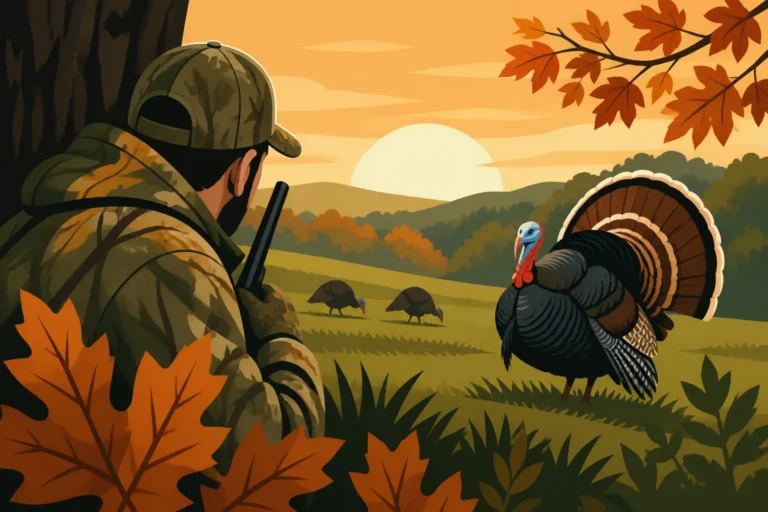
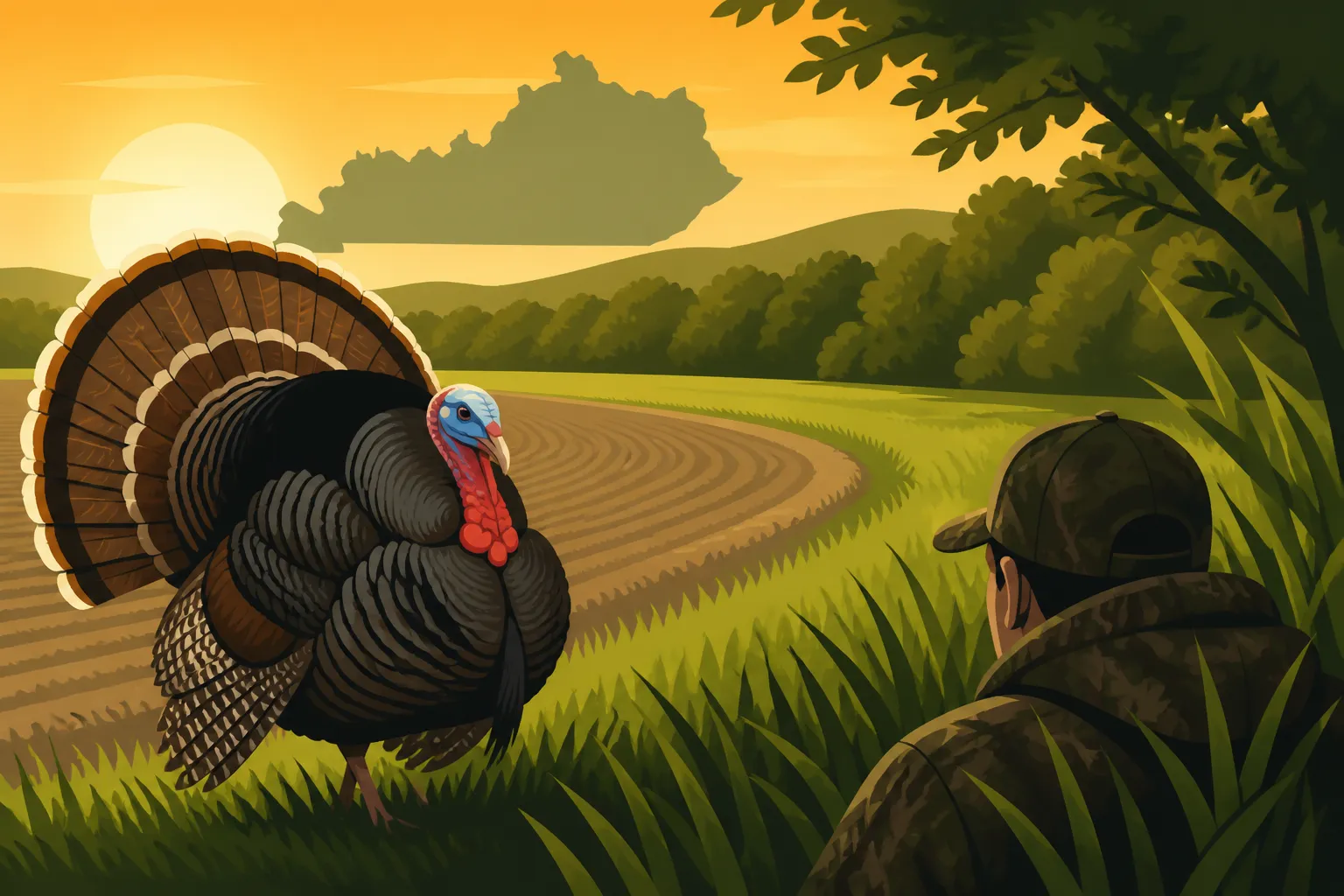
There's nothing quite like the sound of a spring gobbler hammering from the roost, but when those birds fly down and head straight for a wide-open farm field, the game changes dramatically. Many of us have faced the frustrating scenario of a big tom strutting arrogantly at 200 yards, completely visible and totally unapproachable. This guide will walk you through proven strategies and subtle tactics to outsmart those field-edge turkeys, turning those long-distance stares into close-range encounters in Kentucky's agricultural landscapes.
Understanding Farmland Turkeys and Their Habits
Hunting turkeys on farmland field edges is a unique challenge that requires a deep understanding of their behavior in these specific environments. Unlike the dense timber of Eastern Kentucky, open fields demand different approaches.
Why Field Edges Are Turkey Magnets
Farmland field edges are not just convenient transit routes for turkeys; they are often the epicenter of their daily activities, especially during the spring breeding season. These areas offer an irresistible combination of food, visibility, and safety, making them prime real estate for gobblers and hens alike.
First and foremost, food sources are abundant. After the fall harvest, many Kentucky farm fields are left with residual waste grain, like corn or soybeans, which provides a high-energy meal for turkeys throughout the colder months and into early spring. As the weather warms, these fields also become prime foraging grounds for insects, particularly grasshoppers, beetles, and other invertebrates that are essential for growing poults and adult turkeys alike. Beyond the grains and bugs, early spring green-ups along field edges and in freshly planted plots offer succulent young plants that turkeys crave. A gobbler might strut along a fenceline, picking at insects and tender shoots, while keeping an eye out for hens. You'll often see them dusting themselves in dry, loose soil along these edges too, another vital part of their daily routine.
Beyond sustenance, visibility is a massive draw. Turkeys are creatures of sight, and open fields allow them to survey their surroundings for predators from a considerable distance. A gobbler strutting in the middle of a field or along its edge can be seen by hens from far off, increasing his chances of breeding. This also means they can see you from a long way off, which is the crux of the challenge. They’ll often stage just inside the timber, peering out into the field before committing, or hold up on a subtle rise that offers them an even better vantage point. This constant vigilance is why stealth and careful setup are absolutely paramount when hunting these areas.
Finally, field edges serve as critical travel corridors. Turkeys frequently use the natural breaks in cover—like fencelines, hedgerows, creek bottoms, or the transition zone between woods and field—as highways to move between roosting sites, feeding areas, and breeding grounds. Observing these patterns, perhaps through diligent preseason scouting or by using a mapping tool like GoHunt, can reveal predictable routes that turkeys use daily. Understanding these pathways is crucial for setting up an effective ambush.
Reading the Landscape for Roosting and Feeding Patterns
Successful field-edge hunting hinges on your ability to "read" the landscape and anticipate turkey movements. This involves understanding how topographical features, types of cover, and proximity to water influence where turkeys roost, feed, and spend their day.
When you're looking at a Kentucky farm field, don't just see a flat expanse. Look for the subtle undulations, the small draws, the isolated clumps of trees, or the meandering creek beds that break up the monotony. These features are critical. Turkeys, especially gobblers, love to roost in tall, mature trees—often oaks or sycamores—that offer an unobstructed view and easy flight paths. These roost trees are almost always located along a major wood line adjacent to a field or a water source. If you can identify these preferred roosting areas, you're halfway to understanding their morning routine. For instance, in areas like Western Kentucky's bottomland farms, large river birch or cottonwood trees along the Ohio or Mississippi River bottoms can be prime roosting spots, offering easy access to the surrounding fields. Listening carefully before dawn to locate Where Kentucky Gobblers Roost can pinpoint these spots.
Feeding patterns are often dictated by the specific crop rotations and soil conditions. Freshly tilled ground, fields with winter wheat, or pastures with clover will attract turkeys at different times. Turkeys will often spend the first part of their day foraging in these fields, gradually working their way along the edges. After mid-morning, as temperatures rise, they might retreat slightly into the shade of the timber along the field edge, or move to a different part of the field where the sun hasn't baked the ground as much. Observing whether they favor certain corners, specific draws, or even particular areas of shorter grass can give you crucial insights. This is where a good scouting app can pay dividends, allowing you to mark observations and predict patterns over time.
Water sources, even small ones like puddles, ditches, or shallow creeks along a field boundary, are also important. Turkeys need water daily, and a consistent water source can concentrate their activity to a specific part of a field edge. Additionally, the type and density of timber surrounding the field greatly influence their comfort level. A thick, impenetrable wood line might offer more security for roosting and quick escape, whereas a more open, park-like timber stand might see turkeys venture further in for dusting or bugging. Pay attention to how these elements combine to create a turkey's daily circuit, as this knowledge will dictate your setup.
Setting Up for Success on Field Edges
Once you understand how turkeys use farmland edges, the next step is to master the art of the setup. This is where many hunts are won or lost, as turkeys have incredible eyesight and a keen sense of their surroundings.
Concealment is Key: Blinds, Natural Cover, and Decoy Placement
When hunting along open field edges, becoming invisible to sharp turkey eyes is not just a suggestion; it's a non-negotiable requirement. Turkeys are notorious for spotting even the slightest anomaly, especially against the backdrop of an open field.
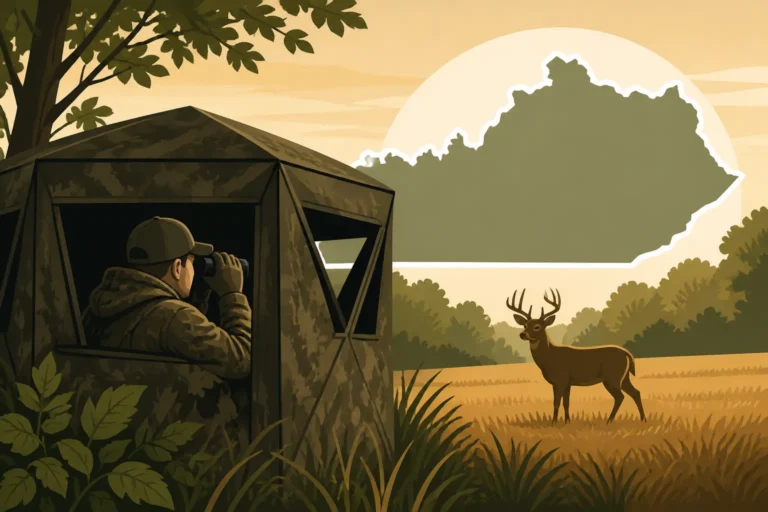
The most common and often most effective method for concealment is a ground blind. A good quality pop-up blind, camouflaged to match the natural surroundings, provides full concealment for multiple hunters and allows for movement inside the blind without spooking birds. However, simply setting up a blind isn't enough. You absolutely must brush it in. Cut natural vegetation from the area – branches, dead saplings, tall grasses, multiflora rose – and strategically place it around the blind to break up its outline. Make it look like a natural part of the landscape. Even better, set your blind up several days or a week before your hunt, if possible, to allow turkeys to get accustomed to its presence. Place it along a fenceline, tucked into a hedgerow, or nestled against a large tree line. When choosing a location, consider your shooting lanes and the sun's position throughout the morning. You don't want the sun glaring off your blind or creating a silhouette.
If you prefer a more minimalist approach or are hunting public land where blinds might be restricted or impractical to leave, natural cover is your best friend. Look for large, mature trees with wide trunks that can break up your outline. Thickets of multiflora rose, honeysuckle, or even fallen tree tops can provide excellent natural concealment. Always ensure that whatever natural cover you choose, you are completely hidden from the turkey's likely approach direction. Sit with your back against something wider than your shoulders and avoid any movement. Even a subtle twitch of a finger can be enough to send a wary gobbler packing. For instance, Setting Up Against a Big Oak can provide ample cover.
Decoy placement is another critical element. On open field edges, you have the advantage of visibility, but also the challenge of realism. A common mistake is placing decoys too far out into the field, forcing a gobbler to cross a vast, unprotected area to reach them. Instead, position your decoys closer to the field edge, within your comfortable shooting range—typically 20-30 yards. This encourages the gobbler to approach the edge of the timber or fenceline, where you're hidden, rather than hanging up in the middle of the field.
The type of decoy setup matters too. For wary, pressured birds, a single, submissive hen decoy often works best. It looks inviting but non-threatening. For more aggressive gobblers, a jake and hen decoy setup can be incredibly effective, especially if you position the jake in a vulnerable, submissive posture. The jake decoy acts as a challenge to an incoming gobbler, making him more likely to commit and come in aggressively to assert dominance. You can also experiment with multiple hen decoys to mimic a small flock, which can be reassuring to an approaching gobbler. Remember to position the decoys so the gobbler approaches them, and you, from a direction that offers you the best shot angle, ideally quartering away.
Finally, think about your entry and exit routes. Turkeys will often fly down from the roost and quickly survey the area. If you spook them on your way in, your hunt is likely over before it even begins. Plan a route that keeps you completely hidden until you are in your setup. This might mean walking a ditch, using a hedgerow, or staying deep in the timber before quietly slipping into your blind. The same goes for leaving after a hunt – avoid disturbing the field edges if you plan to hunt the spot again.
Calling Strategies for Farmland Gobblers
Calling turkeys on wide-open farmland requires a nuanced approach. The calls you make, their volume, and their frequency can either seal the deal or send a gobbler running for the hills.
The biggest mistake many hunters make when calling on field edges is calling too loudly or too aggressively, especially at first light. Remember, sound travels much further in open country than in thick woods. A loud yelp that might sound perfect in a timber stand could be ear-splitting and unnatural to a gobbler 300 yards away across a quiet field. Start with soft, subtle calls. A few soft tree yelps as light breaks, mimicking a hen waking up on the roost, can be incredibly effective. Once the birds fly down, switch to soft clucks and purrs. These calls convey contentment and natural turkey chatter, which can be very inviting.
If you're trying to pull a gobbler across a wide-open field, patience is paramount. Sometimes, a single soft yelp or cluck is all it takes. Let him gobble, wait a bit, then offer another soft series. Don't fall into the trap of over-calling. If he's gobbling consistently but not moving, try turning your calls into him. Instead of aiming your call directly at him, point it slightly away, as if the hen is moving off or not overly interested. This can often pique his curiosity and make him feel like he's missing out.
For gobblers that are already in the field, perhaps strutting with hens, your strategy needs to shift. Often, you won't be able to call those hens away from him, and he won't leave them. In this scenario, aggressive calling can sometimes work, but it needs to be timed perfectly. Try to mimic a "lost hen" call or an excited hen calling. You're trying to draw his hens away from him, or entice him to come investigate a new, exciting hen. This can be tricky, as other hens might also respond and lead him away.
A good tactic for a gobbler hanging up just out of range on a field edge is to use a "gobble" call. While primarily used as a locator call, sometimes a gobble tube can challenge a dominant gobbler enough to make him come strutting into range, especially if he thinks another gobbler is trying to steal his hens. This works best when you already have hens or a jake decoy visible to him.
Consider the role of "cutting" as well. Short, sharp, aggressive yelps or cuts can imitate an excited or annoyed hen. This can be effective in getting a gobbler's attention or breaking him away from his existing hens. However, use it sparingly. Too much can sound unnatural and scare birds away.
Finally, if the gobbler is responding but simply not committing, especially if he's far out in the field, you might need to try a "run-and-gun" approach, as detailed in Run-and-Gun Turkey Tactics on Public Land. This means quickly and quietly moving your position to cut off his likely travel path or get closer to him, then setting up again. This is a high-risk, high-reward strategy that demands stealth and a good understanding of the terrain. Having a mapping app like GoHunt can help you quickly identify potential new setup locations and approach routes. Remember to adjust your volume and call type based on the bird's response and the distance. When selecting your tools, consider all the Turkey Calls Worth Carrying in Kentucky to ensure you have the right options for these varied scenarios.
Approaching and Engaging Farmland Turkeys
Once you've scouted, chosen your spot, and prepared your setup, the moment of truth arrives. How you approach and engage those birds determines your success.
The Art of the Early Morning Roost Hunt
The early morning roost hunt is often the most exhilarating, but also the most challenging, when dealing with farmland turkeys. Your success hinges on stealth, precision, and timing.
Your primary goal is to get into your chosen setup location undetected well before the first hint of dawn. This means pre-scouting your entry route in daylight, noting any obstacles or noisy spots. Walk slowly, quietly, and use a headlamp on its lowest setting, or better yet, a red light filter to preserve your night vision and minimize your visible signature. Turkeys are light sleepers, and even a crunching leaf can alert them. As you approach, stop frequently to listen for subtle sounds from the roost: soft clucks, wing beats, or even a pre-dawn gobble. This confirms their exact location and allows you to adjust your final approach.
Once you’re in position, whether in a blind or natural cover, remain absolutely still. Do not move or make any noise until the sky begins to lighten. As the eastern horizon glows, turkeys will begin their pre-fly-down routine. You’ll hear soft yelps, clucks, and perhaps a wing flap or two as they stretch. This is the time to start your calling sequence. Begin with very soft, contented tree yelps. Just a few short, sweet yelps, mimicking a hen waking up. Avoid aggressive calling while they’re still on the limb. You’re simply letting them know there’s a hen nearby.
When the gobblers start hammering from the roost, resist the urge to gobble back aggressively. Instead, answer with more soft hen calls. The goal is to pique their interest and make them want to fly down to you. As they pitch down from the roost, which often happens with a flurry of wingbeats and excited gobbling, increase your call volume slightly, but maintain realism. A series of excited yelps and clucks as they hit the ground can be very effective, making them believe a hot hen is waiting just out of sight. Remember, calling a Kentucky gobbler off the roost requires timing and patience.
The biggest challenge is when gobblers fly down directly into an open field, often with their hens already present. If this happens, your strategy shifts. You might need to go silent for a bit, letting them settle in, and then try a more subtle approach, using soft purrs and clucks to draw them closer to the field edge where you're hidden. If they're completely ignoring your calls and moving away, sometimes a strategic move can save the day. If the field edge offers more cover further down, a quick, quiet relocation might be your best bet, using the terrain to block their line of sight.
Mid-Day and Afternoon Field Tactics
Hunting turkeys mid-day and into the afternoon on farmland can be just as productive as morning hunts, but it requires a different set of tactics, often focusing on patience, observation, and adaptability.
By mid-morning, many gobblers have left their roosts, bred some hens, and might be cruising field edges or already in the open fields, often with a group of hens. This is where patience becomes a virtue. Instead of blindly calling, your best bet is often to set up in a strategic location with a good view of a field or a known travel corridor, and simply observe. This is where a good pair of binoculars comes in handy. Scan the fields, look for movement along the edges, and listen for distant gobbling. Turkeys often spend the warmer parts of the day feeding casually, dusting, or loafing in shaded areas near field edges before becoming active again later in the afternoon.
If you spot a gobbler, or a group of turkeys, already in a field, your options are typically:
- Intercepting their path: If you can predict their direction of travel (e.g., they're slowly moving towards a distant wood line or a specific corner of the field), you might be able to circle around, stay out of sight, and set up ahead of them. This requires intimate knowledge of the terrain and an understanding of Wind and Thermals on a Kentucky Ridge or in flatter areas, how the wind might carry your scent.
- Calling them in: This is the harder option if they're already with hens. The gobbler has what he wants, so why should he come to you? In this scenario, very soft, contented clucks and purrs might attract the hens, and if the hens come, the gobbler will follow. Alternatively, if he's alone or with just one hen, a more aggressive, challenging call (like cuts or excited yelps) might draw him in if he thinks a new hen has entered his territory.
- Breaking up the flock: If you have a solid setup and a flock of turkeys is approaching but just out of range, sometimes the best move is to try to break them up. If they get close enough, run out, shout, and wave your arms to scatter them. This can be chaotic, but once scattered, turkeys will often try to regroup, especially hens, using alarm putts and lost calls. You then mimic a lost hen, and an eager gobbler might come looking. This is a high-risk, high-reward tactic and requires careful consideration of safety and local regulations.
As the afternoon progresses, turkeys will often move towards their evening roosting areas. Identifying these travel corridors during your scouting, perhaps marked on your GoHunt app, is crucial. Setting up along these routes, either with or without decoys, and using intermittent calling can be highly effective. A gobbler might be less responsive to aggressive calling earlier in the day but might come in readily to investigate a lonely hen call as he’s making his way to roost.
One often-overlooked tactic is patience from a static position. Sometimes, the best thing to do is pick a spot with good concealment, watch a field, and offer only minimal, soft calls every 15-20 minutes. You might be surprised how a gobbler that seemed disinterested suddenly changes his mind an hour later, especially if he loses his hens or decides to cruise for new ones. Kentucky's diverse farmlands, from the rolling hills of the Bluegrass region to the flatter, more expansive fields of Western Kentucky bottomlands, offer endless opportunities for the observant and patient turkey hunter.
Overcoming Common Challenges on Farmland Edges
Hunting turkeys on farmland field edges isn't always smooth sailing. There are unique challenges that often arise, from wary birds to unpredictable weather. Knowing how to adapt is key.
Dealing with Pressured Birds and Field-Shy Gobblers
Kentucky's spring turkey season is popular, and some farmland areas, especially those near population centers or on readily accessible public land, can see a lot of hunting pressure. This pressure makes gobblers incredibly wary, leading to what many call "field-shy" birds—toms that will gobble their heads off but refuse to commit to stepping foot out of the timber and into your shooting lane.
The most crucial adjustment for pressured birds is to dial back the aggression. Loud, persistent calling often works against you. These gobblers have heard it all before, and they've learned that a loud hen often means danger. Instead, opt for subtlety. Use soft, contented clucks and purrs. Think about what a truly comfortable, unpressured hen sounds like: calm, quiet, almost sleepy. A few soft tree yelps at first light, then silence. Let the gobbler do the work. If he gobbles, wait. If he gobbles again, give him a soft cluck or two. Make him want to find that quiet, unassuming hen. Sometimes, not calling at all after an initial setup is the best call. Let the visual of your decoy do the work.
Speaking of decoys, less can often be more with field-shy gobblers. A single, submissive hen decoy, placed close to your concealment, suggests a casual, approachable bird. Avoid aggressive jake or strutting gobbler decoys, which can intimidate an already wary tom, especially if he's not the dominant bird in the pecking order. If you do use a jake, ensure it's in a submissive posture. The goal is to look completely natural and non-threatening. For more ideas on effective visuals, check out Turkey Decoys That Work on Pressured Birds.
Another tactic is to become incredibly patient with your setup. Instead of trying to force a bird into the open, think about ambushing his natural travel routes. If a gobbler repeatedly circles a field and stays just inside the timber line, don't try to pull him into the middle. Instead, set up just inside the timber yourself, along the path you've observed him using. Use a map tool like the Kentucky Hunt Fish App or GoHunt to analyze aerial photos for subtle funnels or pinch points along the field edge where he's likely to pass.
Finally, consider the element of surprise. Sometimes, if a bird is completely hung up and you know he's actively seeking hens, a silent, slow stalk along the timber edge to close the distance can work. This is risky, as his hens or other turkeys could spot you. Always move when the bird's head is down or obscured, or when he's gobbling loudly. This tactic is extremely challenging on open farmland, but for an experienced hunter who can read the terrain and the bird's mood, it can pay off. Remember, the key is to avoid anything that screams "hunter!" and to make yourself blend seamlessly into the Kentucky landscape.
Weather Considerations on Open Farmland
Kentucky weather during spring turkey season can be notoriously unpredictable. From crisp, clear mornings to sudden downpours and blustery winds, these conditions significantly impact turkey behavior and your calling strategies, especially on open farmland.
Wind: Wind is arguably the biggest challenge for turkey hunters on field edges. Strong winds make it incredibly difficult to hear gobblers, and equally hard for gobblers to hear your calls. If you're hunting on a windy day, position yourself with the wind at your back or across your body if possible. This helps carry your calls further downwind and allows you to hear birds better. Increase your call volume slightly, but avoid being overly aggressive; a mouth call or a louder slate call might be more effective than a soft box call. Turkeys, when it's windy, tend to seek out more sheltered areas, often moving deeper into the timber or into draws and hollows along the field edge. They also become more visual, so your decoy spread and concealment become even more critical. You might need to move and reset several times, focusing on protected pockets where the wind's influence is minimized.
Rain: A light drizzle can sometimes make turkeys more active, as it can soften the ground, making it easier to forage for insects. Gobblers might also be more inclined to respond to calls, perhaps because other hunters are staying home. However, heavy rain typically shuts down turkey activity. They'll often seek dense cover to get out of the downpour. If you find yourself in a heavy rainstorm, it might be a good time to take a break or focus on scouting from a vehicle (where legal) to locate birds for when the rain breaks. If you do hunt in the rain, focus on areas with thick overhead cover like cedars or pines along field edges, and use waterproof gear to stay comfortable. Your calls will likely need to be louder to cut through the rain noise.
Sun and Temperature: Clear, sunny mornings often mean turkeys will be very active. They'll strut, gobble, and display for hens. However, as the day heats up, especially by mid-day, they might seek shade and activity can slow down. Position your blind or natural cover so that the sun is at your back in the morning, illuminating the field where turkeys will be, but not directly in your eyes or glaring off your equipment. On unusually hot spring days, focus your efforts around water sources or shaded creek bottoms adjacent to fields. Conversely, very cold mornings might see turkeys taking longer to fly down from the roost, waiting for the sun to warm the ground. In these conditions, be patient, stay warm, and consider the birds will likely head straight for sunny spots in the field once they're on the ground. Understanding these weather impacts and adapting your tactics accordingly will significantly improve your chances of success on Kentucky's diverse farmland edges.
Disclaimer
Please remember that hunting regulations, seasons, and licensing requirements can change. Always consult the official Kentucky Department of Fish and Wildlife Resources (KDFWR) regulations before heading afield. Safety should always be your top priority. Ensure you meet all Kentucky Hunter Education Requirements and follow all blaze orange rules during relevant seasons. This content is for informational purposes only and does not constitute legal advice.