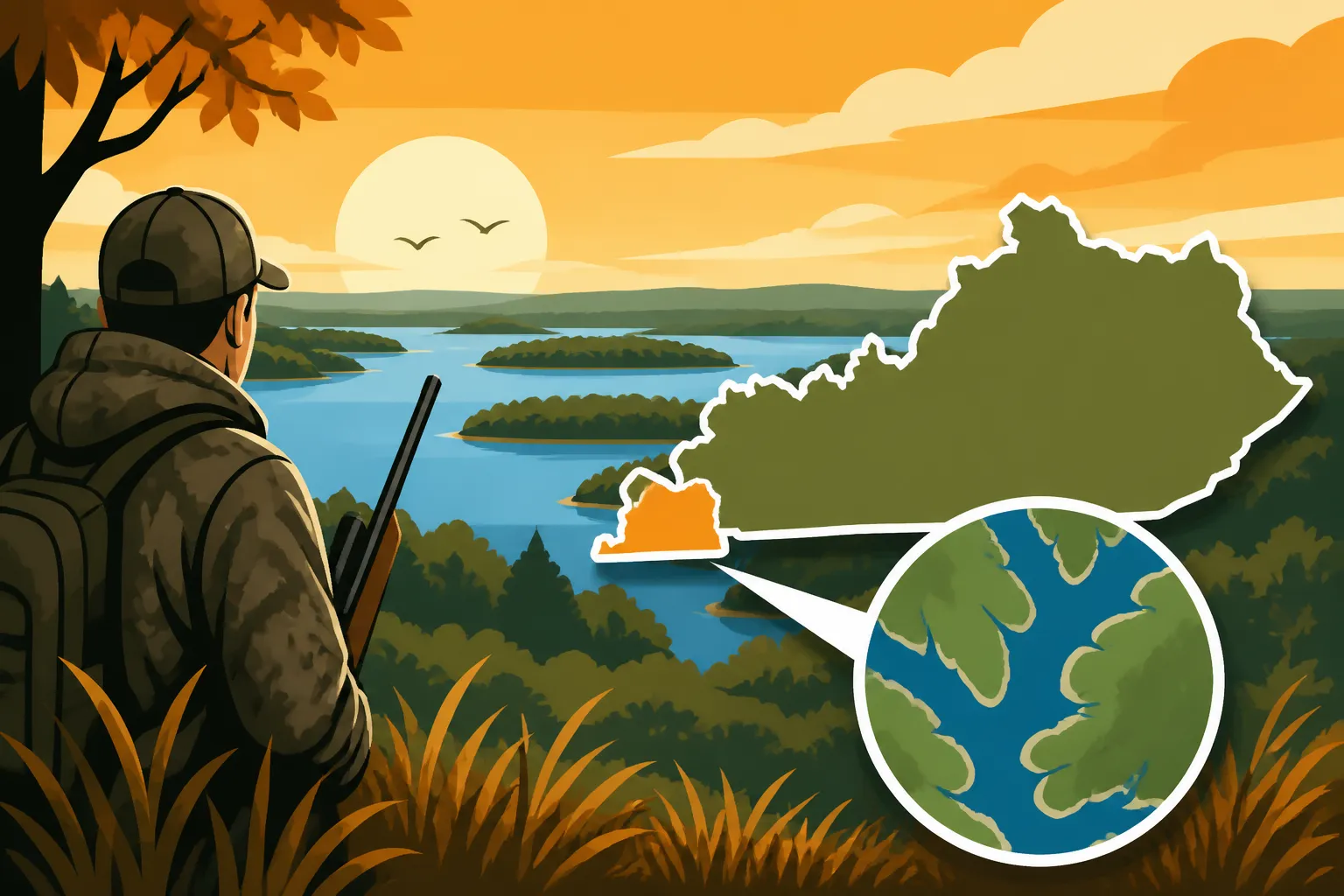
Lyon County Land Between the Lakes Access
Finding quality hunting land in Kentucky can feel like a never-ending quest, and when you finally set your sights on a popular public area like Land Between the Lakes, the thought of navigating its vastness and specific rules can be downright daunting. This guide is here to untangle the complexities of hunting access within the Lyon County portion of Land Between the Lakes, helping you plan a successful and enjoyable trip without all the usual headaches.
Understanding Land Between the Lakes (LBL) in Lyon County
Land Between the Lakes National Recreation Area, or LBL as we all call it, is a truly unique expanse of public land that straddles the Kentucky and Tennessee border, offering an incredible variety of outdoor opportunities. For hunters, it's a huge draw, but its popularity often comes with its own set of challenges. Knowing what you're getting into, particularly in the Lyon County portion, is your first step toward a rewarding hunt.
What Makes LBL Unique for Hunters?
Imagine over 170,000 acres of forests, open lands, and waterways, all managed federally but with state-specific hunting regulations applying to residents and non-residents alike. That's LBL. What makes it so special, and sometimes a bit overwhelming, is this blend of management. You're not just hunting a typical Kentucky WMA; you're hunting a federal recreation area where conservation, recreation, and hunting all coexist. The sheer scale means diverse habitats, from mature hardwood forests and pine plantations to old fields and the vast shorelines of Kentucky Lake and Lake Barkley. This variety can hold an abundance of game, but it also means understanding the terrain and how game uses it. The downside? Its reputation means it can draw a crowd, especially during peak seasons. Finding those quiet, less-pressured pockets becomes a real art form, often requiring you to put in some extra legwork, literally, or utilize powerful scouting tools.
General Access Points and Permits for LBL
Before you even think about hitting the woods in Lyon County's LBL, you need to understand the access requirements. This isn't just a matter of having your Kentucky hunting license and deer permit; you also need a specific LBL hunting permit. These permits are typically available online through the LBL website or at various local vendor locations. Always check the current year's regulations and availability well in advance, as things can change. Once you have your permits in hand, you'll find numerous access points throughout Lyon County, primarily off US-68/KY-80 and other smaller county roads that branch into the recreation area. Many of these are clearly marked, leading to parking areas or designated administrative roads that allow vehicle access for a certain distance. It’s crucial to stick to marked roads and trails, as off-road vehicle use is generally restricted to protect the natural resources. Familiarizing yourself with these general access points and understanding the permit system is a critical first step. You can read more about the specifics of securing the right paperwork in Getting a Land Between the Lakes Hunt Permit.
Specific Hunting Opportunities in Lyon County LBL
Lyon County's portion of Land Between the Lakes offers a rich tapestry of hunting opportunities, primarily focused on deer, but with considerable potential for small game and waterfowl as well. The varied landscape means that different tactics will shine in different areas.
Deer Hunting in Lyon County's LBL Tracts
White-tailed deer are undeniably the main attraction for most hunters in LBL, and the Lyon County sections are no exception. The habitat here is incredibly diverse, from expansive, mature oak-hickory forests on the uplands to thick pine stands and the fertile bottomlands bordering Kentucky Lake and Lake Barkley. Bucks can grow to impressive sizes, particularly in areas with good mast crops and less disturbance. During the early archery season, you might find deer still clinging to agricultural fields or feeding heavily on acorns in the timber. As the season progresses into late October and November, the rut really kicks in, and bucks will be on the move, chasing does across ridges and through hollows. This is when rattling and grunting can be particularly effective, especially if you're in a travel corridor. Later in the season, focus shifts to remaining food sources and thick cover where deer seek refuge from hunting pressure and cold weather. Still-hunting through the timber, especially after a fresh snow or light rain, can be incredibly productive, as can well-placed treestands or ground blinds near pinch points or food sources. When scouting, especially remotely, tools like onX Hunt are invaluable for identifying property boundaries, potential bedding areas, and travel corridors, even when you're miles from the nearest road. You can also gain insight into general deer behavior in Western Kentucky's varied terrain by checking out Hunting Western Kentucky Bottomland Deer.
Small Game and Waterfowl Prospects
While deer hunting often dominates the conversation, LBL in Lyon County also provides solid opportunities for small game and waterfowl. Squirrels, both gray and fox, are abundant throughout the mature hardwood forests, offering a fantastic early-season hunt. You'll find them primarily in areas with oak, hickory, and beech trees, especially where nut crops are plentiful. Rabbit hunting can also be productive in brushy clearcuts, fencerows (where they exist), and the edges of old fields that provide good cover. A good dog can really enhance a rabbit hunt, but careful still-hunting or methodical pushing through cover can also yield results. For waterfowl enthusiasts, the vast stretches of Kentucky Lake and Lake Barkley, along with their numerous coves and sloughs, provide excellent habitat for various duck and goose species during migration. Layout blind hunting in cut agricultural fields adjacent to the lakes can be effective for geese and puddle ducks, while jump-shooting smaller creeks or setting up decoys in flooded timber (where permitted and accessible) offers opportunities for mallards and wood ducks. Remember that waterfowl hunting often requires specialized gear and a good understanding of decoy spreads and calling techniques. Detailed information on hunting ducks and geese in the region can be found in Hunting Land Between the Lakes Waterfowl or Hunting Land Between the Lakes Flooded Timber.
Exploring Remote Zones and Low-Pressure Areas
One of the biggest frustrations with hunting popular public land like LBL is the sheer volume of other hunters, especially during peak firearm seasons. It can feel like every good spot is already taken, or worse, you're constantly bumping into other folks. The key to success in LBL, particularly in Lyon County, often lies in finding those remote zones that other hunters aren't willing to walk to. This usually means venturing deeper than most, often a mile or more from established parking areas or main roads. Look for topography that creates natural barriers, like steep ridges, thick draws, or areas where the shoreline makes access difficult. These places often hold deer that have learned to avoid pressure. Utilize scouting apps like onX Hunt to identify these harder-to-reach pockets. Look for subtle terrain features like saddles, benches, or dense thickets that might offer sanctuary. Sometimes, finding ground that others walk past simply means exploring areas without obvious "textbook" features. It might require more effort, but the reward of finding an unpressured buck is well worth it. Understanding Finding Ground Others Walk Past and Hunting Pressure on Kentucky Public Land can significantly improve your strategy here.
Navigating Regulations and Planning Your Hunt
Hunting LBL isn't quite the same as hunting a typical private woodlot or a small state WMA. The federal oversight, combined with state regulations, creates a unique regulatory environment that you absolutely need to understand before heading out.
Key Regulations Unique to LBL and Lyon County
While your general Kentucky hunting license and permits are essential, LBL has its own set of rules and nuances that hunters must follow. For instance, in addition to your state permits, you are typically required to purchase an LBL-specific hunting permit. These can sometimes include special zone permits or quota hunt applications that are unique to the recreation area. Vehicle access is strictly controlled, generally limited to paved roads and designated administrative roads; off-road travel is almost universally prohibited. Treestands are allowed, but they must be portable and cannot be left overnight for extended periods, and you can't use screws or nails that damage trees. Baiting is generally not allowed, and certain areas might have specific restrictions or closures, so always consult the current LBL hunting guide for the exact rules for the specific zone you plan to hunt. Blaze orange requirements generally follow Kentucky's statewide regulations during firearm seasons, but it's always wise to double-check. Proper deer check-in procedures also apply, and you'll need to know if there are any LBL-specific reporting requirements beyond the standard Kentucky Telecheck system. For broader context on deer management, you might want to review Kentucky Deer Management Zone Rules, which apply to LBL within Kentucky. Also, general Kentucky Public Land Hunting Hours are important to remember, as LBL follows these closely.
Essential Scouting and Preparation Tips
Success in LBL, like any large public land area, hinges on thorough scouting and preparation. Don't just show up on opening day hoping for the best; that's a recipe for frustration. Start with digital scouting from home. Use online mapping tools like onX Hunt or even Google Earth to study aerial photographs and topographical maps. Look for changes in elevation, natural funnels, pinch points, and areas of diverse cover. Identify potential bedding areas (often dense thickets or north-facing slopes with good thermal cover) and likely feeding areas (oak ridges, old fields, or areas of recent timber activity). Pinpoint water sources, as deer will often travel along creeks or near ponds. Once you've narrowed down some promising spots, boots on the ground scouting is crucial. Visit the area before the season opens, if possible, to confirm your digital findings. Look for fresh rubs, scrapes, and tracks. Pay attention to prevailing wind directions and thermal drafts, especially in hilly terrain. Having a good GPS unit or a reliable hunting app on your phone (like onX Hunt, which works great even without cell service if you download maps beforehand) is non-negotiable for navigating vast LBL timber. Another valuable resource is the Scouting With the Kentucky Hunt Fish App, which can provide general information about public land. Additionally, understanding how to effectively Reading Aerial Photos for Eastern Kentucky Deer can be adapted to the LBL landscape to spot prime habitat.
Gear Considerations for LBL Hunting
When you're venturing into LBL, whether it's the Lyon County portion or elsewhere, your gear choices can make or break your hunt. Given the expansive nature and varied terrain, you'll want to be prepared for long walks and potentially rugged conditions.
Here's a quick rundown of essential gear:
| Gear Category | Essential Items | Why It's Important in LBL |
|---|---|---|
| Footwear | Waterproof, comfortable hunting boots | You'll be walking miles, potentially through mud, creek bottoms, and up/down hills. |
| Navigation | GPS unit or hunting app (e.g., onX Hunt) | Crucial for staying oriented, marking locations, and finding your way back, especially in dense timber. |
| Optics | Binoculars, Rangefinder | Spotting deer in thick cover, accurately gauging distances for shots. |
| Pack | Daypack with ample storage and hydration | Carrying water, snacks, extra layers, first-aid, and gear for potential long hauls. Refer to Packs for a Daniel Boone Forest Day Hunt. |
| Clothing | Layered system, blaze orange (if applicable) | Adapting to changing weather, quiet movement, meeting safety requirements. Consider Boots for Kentucky Hollows and Creek Bottoms. |
| Game Retrieval | Rope, game cart, or deer drag | LBL can be remote; having a way to get your animal out is critical. |
| Safety | First-aid kit, flashlight/headlamp, knife | Essential for unexpected situations, navigating in the dark, and field dressing. |
| Tree Stands/Blinds | Portable stand/saddle, safety harness, climbing sticks | For elevated hunting, ensure it adheres to LBL's "no damage to trees" rule. See Treestand Rules on Kentucky Public Land. |
A sturdy pair of boots that can handle both the dry ridge tops and the often-soggy creek bottoms is paramount. You'll cover a lot of ground, so comfort and support are key. A quality daypack capable of carrying water, snacks, extra layers, and all your hunting essentials for an all-day sit is also non-negotiable. And don't forget a reliable headlamp for those early morning walks in and late evening walks out.
Maximizing Your Lyon County LBL Experience
Hunting in Lyon County's LBL is more than just bagging an animal; it's about connecting with a unique piece of Kentucky's natural heritage. To truly make the most of your time, it pays to adopt a broader perspective that goes beyond just the immediate hunt.
Respecting the Environment and Other Users
LBL is a multi-use area, meaning hunters share the landscape with hikers, birdwatchers, anglers, and campers. It's incredibly important to remember this and practice good outdoor etiquette. Always follow "Leave No Trace" principles, packing out everything you pack in, including spent shell casings and trash. Be mindful of noise, especially near popular recreational trails or camping areas. During the hunting season, especially firearm season, wearing sufficient blaze orange isn't just a legal requirement; it's a vital safety measure that protects you and alerts other users to your presence. A shared understanding and respect for all who use LBL ensures that everyone can enjoy its beauty and resources. After all, we all love spending time in these wild places.
Adapting to Seasonal Changes
The LBL landscape, and the game within it, changes dramatically throughout the hunting seasons. Early archery season in September means dealing with warmer temperatures, thicker foliage, and deer patterns often centered around early-ripening mast or remaining green browse. As fall progresses, leaves drop, temperatures cool, and the rut begins to influence deer movement. Later in the season, particularly during the December muzzleloader and late archery/firearm periods, food sources become scarcer, and deer often concentrate around remaining acorns, honeysuckle, or small pockets of evergreen cover. Waterfowl patterns are entirely dependent on cold fronts and migration timing, so staying informed on local conditions is key. Understanding these seasonal shifts and adapting your strategies accordingly is crucial for consistent success. Scouting isn't just a pre-season activity; it's an ongoing process as the season unfolds.
Learning from Every Outing
No matter how experienced you are, every hunt in LBL offers a chance to learn something new. Take mental notes, or better yet, use your phone or a small notebook to record observations: where you saw deer, what they were doing, wind direction, time of day, and how other hunters might have influenced movement. Mark successful spots, but also note areas that seemed promising but didn't produce – understanding why a spot didn't work can be just as valuable as knowing why one did. LBL is a massive, complex ecosystem, and unraveling its secrets takes time and persistence. Don't get discouraged if a hunt doesn't go as planned. Public land hunting is often a game of patience and perseverance. Embrace the challenges, celebrate the small victories, and know that every time you step into the woods of Lyon County's LBL, you're gaining valuable experience that will make you a more effective and knowledgeable hunter.
Disclaimer
This article is for general informational purposes only and does not constitute professional advice. Laws, prices and regulations vary by location and change over time. Consult a qualified professional for guidance on your specific situation.