Eastern Kentucky Versus Western Kentucky Deer
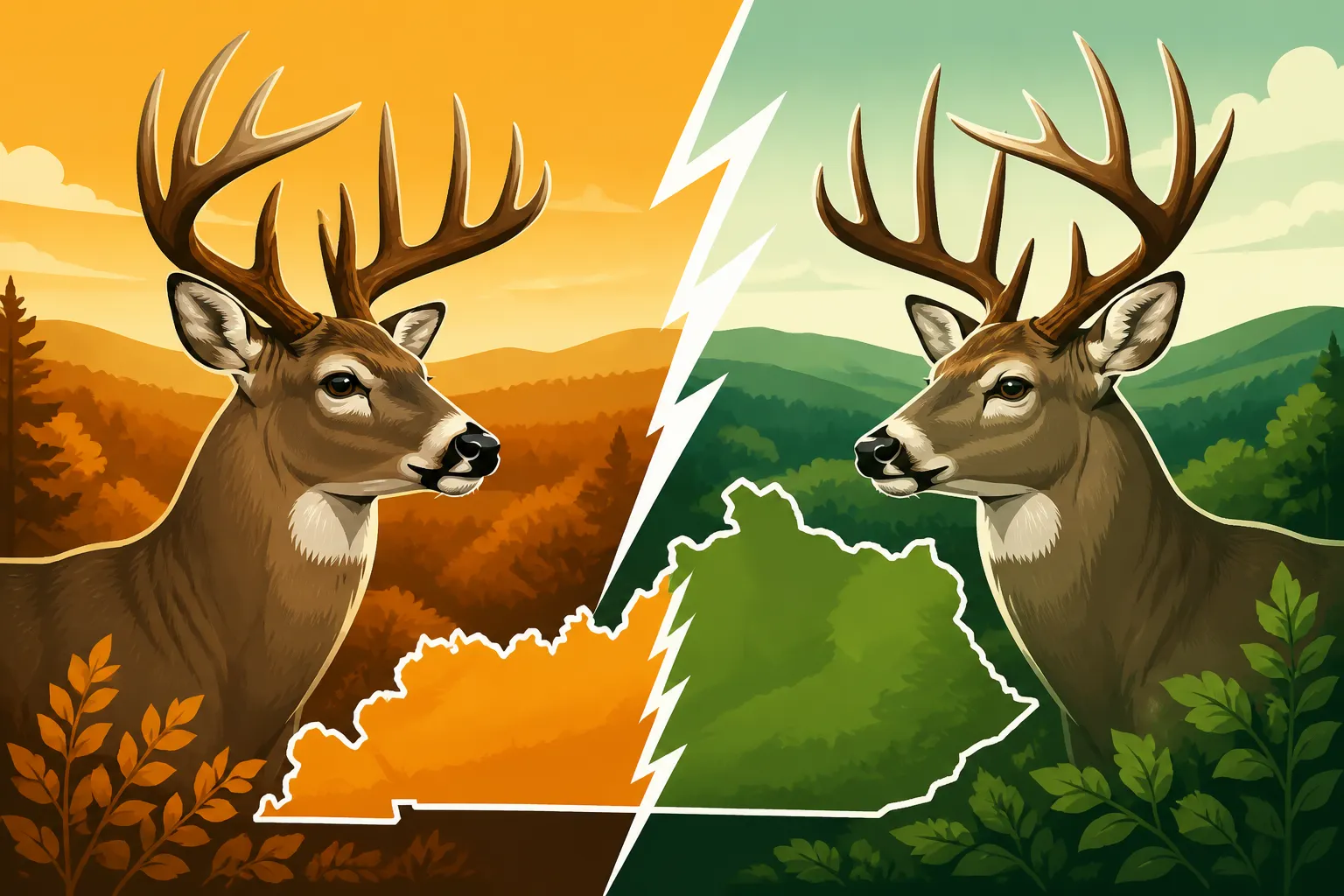
If you've spent any time at all chasing whitetails in Kentucky, you know that a deer hunt in the rugged eastern mountains feels a whole lot different than one in the sprawling agricultural fields of the west. It's not just the scenery that changes; the deer themselves, their behavior, and the strategies needed to tag one can be worlds apart. This guide will dive deep into these differences, helping you understand what to expect and how to adapt, whether you're climbing a steep ridge or overlooking a cut cornfield.
The Lay of the Land: Geographic Differences Defining Deer Habitat
Kentucky is a state of remarkable diversity, from the Appalachian foothills in the east to the Mississippi River lowlands in the west. This varied landscape profoundly shapes deer habitat, influencing everything from available food sources to bedding cover and movement patterns. Understanding these fundamental geographical distinctions is the first step to truly grasping the differences between eastern and western Kentucky whitetails.
Rugged Terrain and Forested Blocks in the East
Eastern Kentucky is characterized by its dramatic, often steep, topography. We're talking about the western edge of the Appalachian Mountains, with deep hollows, winding creeks, and extensive, unbroken tracts of timber. The Daniel Boone National Forest, the Big South Fork National River and Recreation Area, and numerous state forests dominate this region, creating a vast, heavily wooded landscape. Deer here are forest creatures, relying on a patchwork of mature hardwoods, regenerating clear-cuts, and the natural mast crops like acorns that provide crucial sustenance. You'll find fewer large, open agricultural fields compared to the west, meaning deer have to work harder and travel farther for their food, often navigating challenging vertical terrain. This environment naturally dictates lower deer densities in many areas, but it also fosters incredibly resilient and often larger-bodied animals that are masters of stealth. Hunters in this region often find themselves "Reading a Ridge for Cumberland Deer" or navigating dense undergrowth.
Agricultural Powerhouses and River Bottoms in the West
Contrast that with Western Kentucky, a region largely defined by its fertile agricultural land, gentle rolling hills, and the broad river bottomlands of the Ohio and Mississippi. Here, corn, soybeans, and wheat fields stretch for miles, interspersed with woodlots, fencerows, and creek drainages. This landscape is a deer paradise, offering an endless buffet of high-energy food sources throughout the year. The western part of the state also features iconic hunting grounds like Land Between the Lakes and the vast bottomlands of the Green River and Tradewater River, offering diverse habitats from flooded timber to thick, brushy cover. Deer in these areas often have access to an abundance of forage, leading to generally higher population densities and, frequently, larger-racked, healthier animals due to superior nutrition. The challenges here aren't typically steep climbs but rather understanding how deer use specific cover to move between feeding and bedding areas, often in close proximity to human activity and extensive farming operations. When hunters are "Hunting Western Kentucky Bottomland Deer", they're dealing with a completely different set of environmental factors.
Understanding Deer Density and Population Dynamics
One of the most immediate and impactful differences you'll notice between hunting in Eastern versus Western Kentucky is the sheer number of deer you're likely to encounter. This isn't just anecdotal; the Kentucky Department of Fish and Wildlife Resources (KDFWR) manages deer populations based on regional data, and their assessments clearly show significant variations in deer density across the state. These differences dictate not only your hunting strategy but also the antlerless harvest opportunities available to hunters.
Lower Densities and Isolated Pockets in Eastern Kentucky
In Eastern Kentucky, especially within the vast expanses of the Daniel Boone National Forest and other heavily forested regions, deer densities tend to be lower than in the state's agricultural heartland. This isn't necessarily a bad thing; it reflects the carrying capacity of a more rugged, less food-rich environment. Deer here are often more spread out, and finding concentrations of animals can be a real challenge. You might go a full morning without seeing a deer, then suddenly find a hot sign concentrated in a specific hollow or along a particular bench. Success often comes down to intense scouting and understanding how deer use the limited prime habitat available. For instance, a small clear-cut that offers fresh browse might hold the only deer for a mile around. Hunters often rely on tools like GoHunt's mapping features to pinpoint these isolated pockets of suitable habitat, especially when tackling steep terrain where finding consistent deer movement can be tough. The KDFWR's data on "Eastern Kentucky Deer Density" helps to illustrate this more dispersed population.
This lower density also impacts antlerless harvest goals. In many eastern counties, regulations are designed to allow for herd growth or maintenance, rather than aggressive reduction. This means hunters often have more restrictive antlerless bag limits, focusing primarily on harvesting bucks. The hunting experience becomes more about the challenge of finding that single, elusive animal rather than filling a freezer with multiple does. It's a testament to the resilience of these deer, which have adapted to an environment that demands more from them. These deer are truly wild and often grow to be exceptional trophies, having survived multiple seasons in a tough landscape.
High Deer Numbers in Western Kentucky's Farm Belt
Shift your focus to Western Kentucky, and the story changes dramatically. Here, thanks to the rich agricultural landscape, deer densities are significantly higher. The abundant food sources—corn, soybeans, winter wheat, and lush alfalfa—provide optimal nutrition, leading to a booming deer population. It's not uncommon to see multiple deer, or even large groups, feeding in a single field, especially in the late afternoons or early mornings. This high density can mean more frequent encounters, making for a different kind of hunting experience where opportunity often presents itself more readily. The sheer volume of deer can make public land feel a bit more crowded, but it also increases your odds of encountering active deer during your hunt. The "Kentucky Deer Population Estimate" shows just how robust the numbers are in the western part of the state.
The KDFWR recognizes this abundance, and regulations in many western counties are geared towards managing a high deer population. This translates to more liberal antlerless bag limits, with many counties designated as Zone 1, allowing hunters to harvest multiple does. This approach helps to keep the herd in balance with the available habitat and mitigate crop damage for farmers. For hunters, this often means more opportunities to fill the freezer and contribute to herd management efforts. While finding a trophy buck still requires skill and patience, the overall chances of seeing and harvesting deer are generally much higher, making it a popular destination for hunters looking for consistent action and meat for the table.
Antler Quality and Body Size: What to Expect
When it comes to the tangible results of a hunt – the size of a buck's antlers or the overall body weight of a deer – both Eastern and Western Kentucky offer their own unique characteristics. While genetics play a role statewide, the differences in habitat and nutrition between these two regions significantly influence what hunters can typically expect to see in terms of trophy potential and overall herd health.
Age-Class Bucks and Hard-Earned Gains in the East
Eastern Kentucky deer, particularly the bucks, often develop impressive antlers, but the journey to maturity is typically harder-fought. In the rugged, heavily forested environment, food sources are more scattered and less nutrient-dense compared to agricultural areas. Deer here spend more energy simply surviving, navigating steep terrain, and foraging across larger home ranges. This means that while the genetics for big antlers are certainly present, it often takes bucks longer to express their full potential. You might find a mature 4 or 5-year-old buck with a substantial rack, but it will have earned every inch through sheer survival and adaptation. These bucks are tough, resilient, and often boast denser, harder antlers. They are truly wild animals, having grown up away from the abundant food plots and consistent feed of farm country.
Body weights in Eastern Kentucky can also be slightly lower on average for a given age class compared to their western counterparts, again due to the demanding environment and less consistent access to high-quality forage. However, don't mistake this for a lack of quality. A mature eastern Kentucky buck is a formidable animal, often lean and muscular, perfectly adapted to its mountainous home. Harvesting one is often seen as a significant accomplishment, a testament to the hunter's persistence and the deer's hardiness. When you consider "Kentucky Boone and Crockett Whitetails", many record-book deer come from various regions, but the eastern giants are truly a special breed.
Nutrition-Rich Bucks and Consistent Growth in the West
In Western Kentucky, the story of antler growth and body size is largely one of abundance. The vast agricultural fields provide a year-round buffet of high-protein, high-energy food sources. This superior nutrition allows bucks to put more energy into antler development and body mass earlier in their lives. Consequently, it's not uncommon to see impressive racks on younger age-class bucks, and older bucks often reach truly massive proportions. The combination of genetics, abundant food, and effective herd management (including ample antlerless harvest) contributes to a robust deer herd with strong trophy potential.
Body weights are also consistently higher in Western Kentucky. A mature western buck will often tip the scales significantly heavier than an eastern buck of the same age, simply because it has had consistent access to rich nutrients. This isn't just about antlers; it means healthier deer overall, often with better fawn survival rates and robust populations. While every hunt is a challenge, the potential for encountering a buck with a truly eye-popping rack seems to loom a little larger in the western half of the state. Many hunters gravitate to this region specifically for the opportunity to pursue these well-fed giants, knowing that the nutrition translates directly into impressive headgear.
Behavioral Adaptations: How Deer Respond to Their Environment
Beyond mere size and density, the way deer behave and survive in Eastern versus Western Kentucky is strikingly different. These behavioral adaptations are direct responses to the distinct pressures and opportunities presented by their respective environments. Understanding these nuances is paramount for any hunter hoping to consistently find success.
Pressure-Wise Mountain Deer and Their Elusive Habits
Deer in Eastern Kentucky, particularly those residing in large tracts of public land like the Daniel Boone National Forest, are often described as "pressure-wise." They face unique challenges: rugged terrain, dense cover, and often more dispersed food sources. This forces them to be incredibly adaptable and notoriously elusive. They learn quickly to avoid human disturbance and develop highly sophisticated survival tactics. Instead of large, open-field movements, you'll see them using thick laurel patches, steep draws, and dense regeneration as escape routes and bedding areas. Their home ranges can be extensive, as they might travel significant distances between bedding cover and prime feeding locations, especially when natural mast crops are scarce.
These deer also have a keen understanding of thermals and wind currents in the mountains, using them to their advantage to detect predators. During hunting season, they'll often become largely nocturnal, moving under the cover of darkness. Daytime movement might be limited to brief periods in secluded areas or during peak rut activity. Hunters pursuing these wily animals must become exceptional woodsmen, focusing on silent movement, understanding subtle sign, and being prepared for long days with fewer deer sightings. Setting up a treestand in Daniel Boone National Forest, for example, requires meticulous attention to details like wind, thermal currents, and subtle funnels created by terrain. Successful hunting here often involves still-hunting or methodical spot-and-stalk tactics, patiently deciphering the subtle clues left behind by these truly wild and intelligent animals.
Farm Country Deer and Their Reliance on Food Sources
Western Kentucky deer, especially those inhabiting the agricultural belt, exhibit a different set of behaviors, primarily driven by the abundance of food and the interspersed nature of cover. While they certainly can be pressure-wise, their movements are often more predictable and tied directly to the availability of crops. Deer will regularly move between dense woodlots, creek bottoms, and standing cornfields, following established travel corridors to access their preferred forage. This makes them somewhat more patternable, particularly during early season and late season when food is the primary driver. You might observe them emerging from a timber edge into a soybean field with regularity, allowing for more strategic stand placement along these transition zones.
However, don't mistake predictability for ease. These deer are still wild animals and adapt quickly to hunting pressure. They learn which woodlots offer the most security, how to use thick fencerows as hidden highways, and when to adjust their feeding times to avoid hunters. The challenge here often lies in getting into position undetected and intercepting deer as they move between bedding and feeding, often in relatively open country. Deer drives on Kentucky public land can be effective in this environment, pushing deer out of small, thick blocks of cover. Hunters here might focus more on "Setting Up on a Western Kentucky Field Edge" or understanding how deer use funnels between distinct habitat types, a strategy sometimes known as "Hunting a Funnel Between Two Hollows" even if the "hollows" are more like subtle depressions or drainages. The use of ground blinds is also more prevalent, allowing hunters to blend into field edges and small cover patches.
Hunting Strategies: Tailoring Your Approach
Given the distinct habitats and deer behaviors, it stands to reason that the most effective hunting strategies will also differ significantly between Eastern and Western Kentucky. What works wonders in a mountain hollow might be a complete bust overlooking a cornfield, and vice-versa. Adapting your tactics to the specific environment is crucial for consistent success.
Still-Hunting, Scouting, and Stand Placement in the Mountains
Hunting in Eastern Kentucky's rugged terrain is often a physical and mental marathon. The sprawling public lands, characterized by steep climbs and dense timber, demand a more active and intimate approach. Still-hunting becomes an art form here, requiring slow, deliberate movement, keen observation, and an acute awareness of wind and thermals. You're not just waiting for deer; you're actively searching for them, interpreting subtle signs like rubs, scrapes, and tracks along old logging roads or faint deer trails. Knowing how to interpret changes in elevation and vegetation, and how deer use these features for travel and security, is paramount. Before the season, "Scouting Kentucky Public Land Before Season" involves grueling miles on foot, looking for those key pinch points or secluded benches that might hold a mature buck.
When it comes to stand placement, it’s all about finding those subtle funnels and ambush points within the vastness. Instead of classic field edges, you're looking for saddles between ridges, benches on steep hillsides, or dense regenerating clear-cuts that act as bedding sanctuaries. Hunters might use lightweight climbing treestands or saddle hunting setups that allow them to be mobile and adapt to changing conditions. The ability to hang a stand quietly and efficiently in challenging spots is a major advantage. Furthermore, understanding "Wind and Thermals on a Kentucky Ridge" is not just a preference; it's a necessity to avoid alerting wary mountain deer. You'll spend more time walking, glassing, and carefully picking apart the landscape, relying on your woodcraft more than specific food sources.
Field Edge Stands, Funnels, and Drives in Western Farmland
Western Kentucky offers a different canvas for hunters, one often defined by agricultural fields and the strategic patches of timber that break them up. Here, successful hunting often revolves around understanding deer movement patterns between these distinct habitat types. Stand placement is frequently focused on field edges, pinch points where cover narrows, or major travel corridors that connect bedding areas in woodlots to feeding areas in crops. Many hunters favor enclosed ground blinds or tower stands that offer comfort and concealment for long sits, especially during the colder months. These blinds are often brushed in meticulously along known deer travel routes, like those near standing cornfields.
While passive waiting is effective, active strategies like deer drives can also be highly successful, particularly on smaller private parcels or during specific times on public land. These drives, involving a few hunters pushing deer towards others, capitalize on the denser deer populations and the tendency for deer to move through predictable escape routes. Utilizing mapping tools like those from GoHunt or onX can be incredibly valuable in this region, helping hunters identify property lines, locate hidden drainages, and pinpoint those crucial funnels that deer use consistently. During the rut, rattling and grunting in Kentucky's farm country can be particularly effective, drawing out bucks looking for rivals or receptive does near these food-rich areas. The focus here is less on brute force scouting and more on precision placement and timing, capitalizing on the deer's reliance on abundant food.
Navigating Regulations and Zone Differences
Understanding Kentucky's deer hunting regulations is critical, and these rules are far from uniform across the state. The KDFWR employs a deer management zone system, which directly influences antlerless harvest opportunities. These zone designations are largely a reflection of deer density and local habitat conditions, meaning what's legal in the west might not be in the east, and vice-versa.
Zone 2 and 3 Rules: Balancing Harvest in the East
Many of Kentucky's eastern counties, particularly those within the Appalachian region, fall into Deer Management Zones 2 and 3. These zones are characterized by lower deer densities, more rugged terrain, and typically larger tracts of contiguous forest. The KDFWR manages these zones to maintain or slowly grow deer populations, allowing them to thrive in an environment that naturally has a lower carrying capacity for deer than the prime agricultural areas. As a result, antlerless bag limits in Zones 2 and 3 are generally more conservative.
In Zone 2, hunters are typically allowed to harvest one antlerless deer in addition to their statewide limit of one antlered deer. Zone 3 is even more restrictive, often limiting hunters to just the one antlered deer, with no additional antlerless opportunities unless specific county-level landowner permits are in effect. These regulations mean that hunters in the east often focus their efforts primarily on harvesting an antlered buck. While this can make for a more challenging hunt in terms of filling the freezer, it ensures the sustainability of the herd in a more demanding environment. Always double-check the current year's "Kentucky Deer Management Zone Rules" for the specific county you plan to hunt, as they can change annually.
Zone 1 Rules: Managing Abundance in the West
Conversely, many of Kentucky's western and central counties, especially those with extensive agricultural lands, fall into Deer Management Zone 1. This designation signifies robust deer populations and a high carrying capacity due to abundant food sources. In these zones, the KDFWR's primary goal is often to manage deer numbers to prevent overpopulation, reduce crop damage, and maintain herd health. This translates into much more liberal antlerless harvest opportunities for hunters.
In Zone 1 counties, hunters are generally allowed to harvest an unlimited number of antlerless deer, provided they possess the appropriate permits and follow all other regulations. This allows hunters to contribute significantly to population control and can make for a very productive hunt in terms of venison. It's not uncommon for hunters in Zone 1 to fill multiple antlerless tags throughout the season, taking advantage of the plentiful opportunities. This abundance also means that hunters might focus on harvesting antlerless deer earlier in the season to manage the herd, then shift their focus to antlered bucks during the peak of the rut. The free youth weekend in December, for example, often provides an excellent opportunity for young hunters to take advantage of these more liberal antlerless rules. Again, checking the specific county's regulations before you head afield is essential to ensure compliance.
Here's a quick comparison of key characteristics between Eastern and Western Kentucky deer hunting:
| Feature | Eastern Kentucky Deer Hunting | Western Kentucky Deer Hunting |
|---|---|---|
| Terrain | Rugged, steep mountains, deep hollows, extensive forest | Rolling hills, vast agricultural fields, river bottomlands |
| Deer Density | Lower, more dispersed populations | Higher, concentrated populations, especially near food sources |
| Antler/Body Size | Often takes longer to mature, lean but tough; impressive age-class bucks | Rapid growth due to nutrition, consistently larger racks/bodies |
| Primary Food Source | Natural mast (acorns, berries), browse, regenerating cuts | Agricultural crops (corn, soybeans, wheat), supplemental food plots |
| Deer Behavior | Highly elusive, pressure-wise, extensive home ranges, nocturnal | Patternable movements between food/cover, adapts to pressure quickly |
| Typical Strategy | Still-hunting, aggressive scouting, mobile stand setups | Field edge stands, funnel hunting, ground blinds, deer drives |
| Antlerless Harvest | Zone 2 (limited), Zone 3 (very limited/bucks only) | Zone 1 (liberal/unlimited antlerless opportunities) |
| Common Hunting Areas | Daniel Boone National Forest, state forests | Private farmland, Land Between the Lakes, WMA bottomlands |
Ultimately, both Eastern and Western Kentucky offer incredible deer hunting experiences, each with its own unique charm and set of challenges. By understanding these fundamental differences, you can better prepare, adapt your strategies, and increase your chances of a successful and rewarding hunt.
Disclaimer
Hunting is an inherently dangerous activity. Always prioritize safety, follow all local and state regulations, and obtain proper landowner permissions. This information is for educational purposes only and should not be considered a substitute for official regulations from the Kentucky Department of Fish and Wildlife Resources or professional safety training. Ensure you are familiar with current hunting seasons, bag limits, and licensing requirements before heading afield.