Kentucky Bear Zone One County List
It's incredibly frustrating trying to make sense of Kentucky's bear hunting regulations, especially when you're just trying to figure out where you can even begin to pursue these amazing animals. The zones can feel like a maze, and knowing which counties fall into each category is half the battle. This guide is here to untangle that confusion, specifically focusing on the counties that make up Kentucky's Bear Zone One, so you can confidently plan your next hunt.
Understanding Kentucky's Bear Zone System
Kentucky's black bear population has experienced a remarkable resurgence over the past few decades, thanks to dedicated conservation efforts. This success, however, brings with it the need for careful management to ensure the population remains healthy, balanced, and doesn't create undue conflict with human communities. That's where the bear zone system comes into play. It’s designed to allow for targeted hunting pressure where it’s most needed and sustainable, helping balance wildlife and human interests.
Why Zones Are Necessary for Bear Management
Imagine a single statewide bear season – it simply wouldn't work effectively. Bear populations aren't evenly distributed across Kentucky. Some areas, particularly in the southeastern coalfields, are prime, established bear habitat with robust numbers. Other areas are seeing bears for the first time in generations as their range expands. This varied distribution means that a "one size fits all" approach to hunting regulations would either over-harvest bears in sensitive areas or fail to adequately manage populations where they are thriving and potentially causing nuisance issues for landowners.
The Kentucky Department of Fish and Wildlife Resources (KDFWR) uses these zones to apply specific regulations, harvest quotas, and season dates that reflect the local bear population dynamics and habitat availability. It's a pragmatic approach that allows for greater precision in conservation and management. For instance, in areas with established, healthy bear populations, higher harvest quotas or longer seasons might be permitted. Conversely, in areas where bears are just starting to recolonize, regulations might be more conservative to encourage growth and establishment. Without this zonal approach, hunters would face a much more unpredictable and potentially less sustainable hunting landscape.
The Different Bear Zones in Kentucky
Kentucky currently operates with three distinct bear zones, each with its own set of rules and objectives. Think of them as rings of a target, moving outward from the core bear habitat.
- Bear Zone One: This is the heartland, the primary bear range where the most robust and established populations reside. These are typically the rugged, heavily forested mountains of southeastern Kentucky. The regulations here often reflect a desire to manage a thriving population through controlled harvest.
- Bear Zone Two: Surrounding Zone One, these counties represent areas where the bear population is present but generally less dense or less historically established. While still offering good hunting opportunities, the regulations might be slightly more conservative than in Zone One to support continued expansion and density.
- Bear Zone Three: This newest zone encompasses counties where bears are actively expanding their range, often leading to increased sightings and potential human-bear conflicts. The goal in Zone Three is typically to manage nuisance bears and allow for a very limited, targeted harvest to encourage dispersion and reduce conflicts. As the bear population continues to expand into new areas, it’s not uncommon for counties to be moved between zones. For example, counties like Clinton and Wayne, which were once considered part of the traditional bear range, have recently been moved to Kentucky's New Bear Zone Three, reflecting this dynamic management strategy. You can also dive deeper into Kentucky Bear Zone Two County List to understand the nuances of those areas.
Pinpointing the Counties in Kentucky's Bear Zone One
When you're looking to hunt Kentucky black bear, understanding which zone a county falls into is paramount. Zone One represents Kentucky's most historic and densest bear habitat, offering some of the best opportunities for a successful hunt. These counties are a testament to the wildness that still exists within the Commonwealth.
The Core Bear Habitat: A Detailed List of Zone One Counties
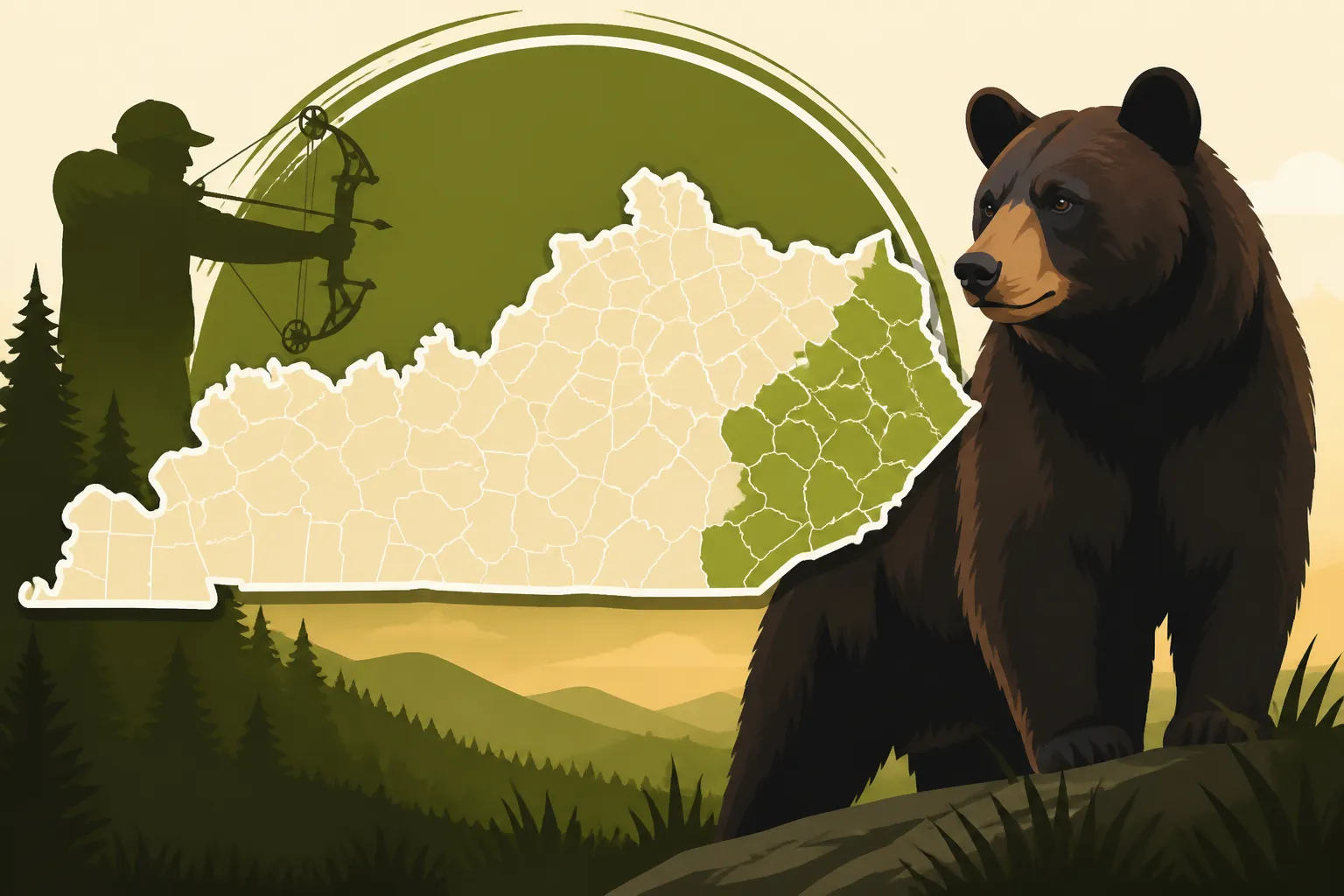
As of the current regulations, Kentucky's Bear Zone One includes the following counties: Bell, Harlan, Letcher, Leslie, Knox, McCreary, and Whitley. These seven counties form the bedrock of Kentucky's bear country, characterized by vast tracts of public and private forest, rugged topography, and an abundance of natural food sources.
Let's break down what makes each of these counties special for bear hunting:
- Bell County: Nestled in the southeastern corner, Bell County is incredibly rugged, dominated by dense hardwood forests and steep hollows. It shares a border with both Tennessee and Virginia, and its mountainous terrain makes for challenging but rewarding hunting. Bears here thrive on the abundant acorn crops and thick cover. Access can often mean steep climbs and long walks, but these remote areas are precisely where mature bears often roam unpressured.
- Harlan County: Often referred to as "the heart of the Cumberlands," Harlan County boasts Kentucky's highest peaks, including Black Mountain. The sheer scale of its wilderness is impressive. Bears here have vast stretches of untouched forest to roam, making scouting crucial. Looking for sign around dense laurel thickets and along old logging roads, perhaps using mapping tools like GoHunt to identify potential travel corridors, can be highly effective. The public lands here, including parts of the Daniel Boone National Forest, offer expansive hunting opportunities.
- Letcher County: This county, rich in coal-mining history, still retains significant swaths of wild, mountainous terrain. The landscape is a mix of steep ridges, deep valleys, and thick regrowth from past timbering, providing excellent bear habitat. Mast crops like acorns, hickory nuts, and various berries are vital food sources, and understanding their availability can guide your hunt. Bear sign near streams and seepages can be productive during dry spells.
- Leslie County: Similar in character to its neighbors, Leslie County is another rugged, heavily forested area. It's often overlooked compared to some of the more well-known bear counties, which can sometimes mean less hunting pressure. Expect steep climbs and descents, and pack light but smart. Focus on connecting ridges and areas with diverse mast-producing trees.
- Knox County: Located on the western edge of the traditional elk and bear zone, Knox County offers a slightly different flavor of bear habitat. While still mountainous, it can present areas with more mixed-use land, requiring hunters to be diligent about property boundaries. Bears often follow river bottoms and creek drainages that offer dense cover and travel corridors. Look for fresh tracks along muddy banks or in soft ground after a rain.
- McCreary County: This county borders the Big South Fork National River and Recreation Area, offering immense tracts of public land within the Daniel Boone National Forest. The terrain is a classic mix of steep ridges, rocky bluffs, and numerous creek drainages. Bears here benefit from the relative solitude and diverse food sources. Scouting for oak flats and identifying areas with good berry production will be key to success.
- Whitley County: Another county bordering Tennessee, Whitley County features heavily timbered hills and valleys. The bear population here is strong and well-established. Hunters often find success by focusing on areas with a good mix of mature hardwoods and dense undergrowth, which provides both food and cover. Similar to other Zone One counties, patience and persistence are crucial for Spot-and-Stalk Tactics for Pine Mountain Bears and locating these elusive animals.
Here's a quick reference table for Zone One counties and a key characteristic:
| County | Key Terrain/Hunting Characteristic |
|---|---|
| Bell County | Rugged mountains, dense forests, strong bear numbers, challenging access. |
| Harlan County | Kentucky's highest peaks, vast wilderness, abundant mast. |
| Letcher County | Steep ridges, deep valleys, regrowth areas, good cover. |
| Leslie County | Heavily forested, sometimes overlooked, potential for less pressure. |
| Knox County | Mountainous with mixed-use land, river bottoms, creek drainages. |
| McCreary County | Big South Fork border, Daniel Boone NF access, diverse food sources. |
| Whitley County | Heavily timbered hills, strong population, good mix of food/cover. |
Navigating Regulations Specific to Zone One
Hunting in Zone One comes with specific regulations that are important to understand. While the general state regulations apply, Zone One often has specific season dates and harvest quotas tailored to its robust bear population. It's not just about knowing where the bears are, but also when and how you can legally hunt them.
Kentucky offers various opportunities to hunt bears, including archery, firearms, and even with hounds in designated seasons. For instance, Kentucky Bear Archery Season Dates typically open earlier in the fall, providing a quiet, primitive hunting experience. Later, the Kentucky Bear Firearms Season Dates offer another window, often coinciding with deer season in some areas, though specific bear firearms seasons are generally shorter and more restrictive.
If you're considering using hounds, understanding the Kentucky Bear Dog Season Windows is critical, as these are highly specific and regulated to ensure ethical hunting practices and sustainable harvest. Always double-check the latest KDFWR hunt guide for the current year, as dates and quotas can shift based on population assessments and previous year's harvest data. You might find that tools like GoHunt offer updated regulations information or links to official sources, which can be a real time-saver. Remember, failure to comply with these rules can result in significant penalties, so knowledge is your best hunting partner. Also, be prepared for the Kentucky Bear Tag Cost, which is separate from your general hunting license.
Essential Considerations for Hunting Bear in Zone One
Bear hunting in Kentucky's Zone One isn't your average deer hunt. It requires specific preparation, a deep understanding of the terrain, and a commitment to safety. The ruggedness of these mountains, combined with the solitary nature of bears, presents unique challenges and rewards.
Scouting and Access Challenges in Rugged Terrain
The topography of Kentucky's Zone One counties is, to put it mildly, demanding. We're talking about steep inclines, deep hollows, dense rhododendron and laurel thickets, and remote areas that are far from any main road. This isn't flat farmland hunting.
- Pre-season Scouting is Non-Negotiable: You absolutely need to get into these woods before the season opens. Relying solely on satellite imagery can give you a false sense of security about access. What looks like a gentle slope on a map might be a near-vertical climb in person. Look for mast crops – particularly acorns, which are a primary food source for bears. Identify natural funnels, benches, and thick bedding areas. Tracking apps like GoHunt can be invaluable here, allowing you to mark potential bear sign, water sources, and safe routes in and out. This kind of detailed scouting also helps you identify potential spots for Hunting Bears Over Natural Mast in the Mountains.
- Navigating Difficult Terrain: Be prepared for strenuous hikes. Proper footwear, trekking poles, and a sturdy pack are essential. Consider the physical demands of not only getting in but also getting out with a bear. These remote areas mean you're likely going to be packing meat out over difficult ground, often far from the nearest vehicle access point. Understanding things like Dragging a Deer Out of a Steep Hollow can be surprisingly relevant to a bear hunt, too, as the challenges are similar, just on a larger scale.
Safety and Ethical Practices
Bear hunting, especially in dense cover, demands a heightened awareness of safety and ethical hunting practices. While Kentucky black bears are generally shy, they are powerful animals, and encountering one unexpectedly can be startling.
- Bear Awareness: Always be aware of your surroundings. While attacks are rare, it's good practice to make noise as you move through thick cover to avoid surprising a bear at close quarters. Carry bear spray, especially if you're alone in very remote areas – it's an extra layer of peace of mind.
- Shot Placement and Tracking: When the moment comes, a clean, ethical shot is paramount. Bears are tough, and a poorly placed shot can lead to a long, difficult, or even unsuccessful recovery. Aim for the vital organs, ensuring a quick and humane harvest. In these rugged, leaf-littered woods, tracking can be incredibly challenging. A well-placed shot minimizes the tracking distance. For detailed guidance, understanding Shot Placement on a Kentucky Black Bear is crucial. Should you make a successful harvest, remember that Handling a Bear After the Shot involves specific requirements for checking and processing.
- Respecting the Resource: Follow all regulations, including harvest reporting rules, meticulously. The KDFWR uses this data to ensure the sustainable management of Kentucky's growing bear population. Your ethical actions contribute directly to the future of bear hunting in the state.
Understanding Bear Behavior in Core Habitats
To successfully hunt bears in Zone One, you need to think like a bear. Their movements and patterns are heavily influenced by food availability, breeding cycles, and the need for security.
- Food Sources are Key: Bears are opportunistic omnivores, but their diet heavily revolves around seasonal mast crops. In the fall, they are intensely focused on gorging themselves to put on weight for winter hibernation. Acorns (especially white oaks, which are less tannic), hickory nuts, and beechnuts are gold. During late summer and early fall, they'll also seek out soft mast like blackberries, blueberries, and wild grapes. Focus your scouting efforts on areas with abundant, diverse mast production. A poor mast year in one area might push bears to travel further in search of food.
- Denning Behavior: As winter approaches, bears will start looking for den sites. These can be rock crevices, hollow trees, brush piles, or even simple beds dug into steep hillsides. While you're unlikely to disturb a den during hunting season, understanding Kentucky Bear Denning Behavior gives you insight into their seasonal movements and habitat preferences. They'll be feeding heavily right up until denning, often staying close to prime food sources.
- Movement Patterns: Bears are creatures of habit, often using the same travel corridors along ridgelines, creek bottoms, and through dense cover. Look for bear sign – tracks, scat, rub trees, and overturned rocks – in these areas. Early morning and late evening are often prime times for movement as they travel between feeding and bedding areas. Paying attention to wind and thermals, especially in the steep terrain, is critical so your scent doesn't give you away.
Remember, patience and persistence are key when hunting these intelligent and elusive animals in Kentucky's Bear Zone One.
Disclaimer
The information provided in this guide is for general informational purposes only and is not intended as legal advice. Hunting regulations, season dates, and zone boundaries are subject to change. Always consult the official Kentucky Department of Fish and Wildlife Resources (KDFWR) hunting guide and website for the most current and accurate regulations before planning any hunting activity. It is the hunter's responsibility to know and follow all applicable laws.