Setting Up Against a Big Oak
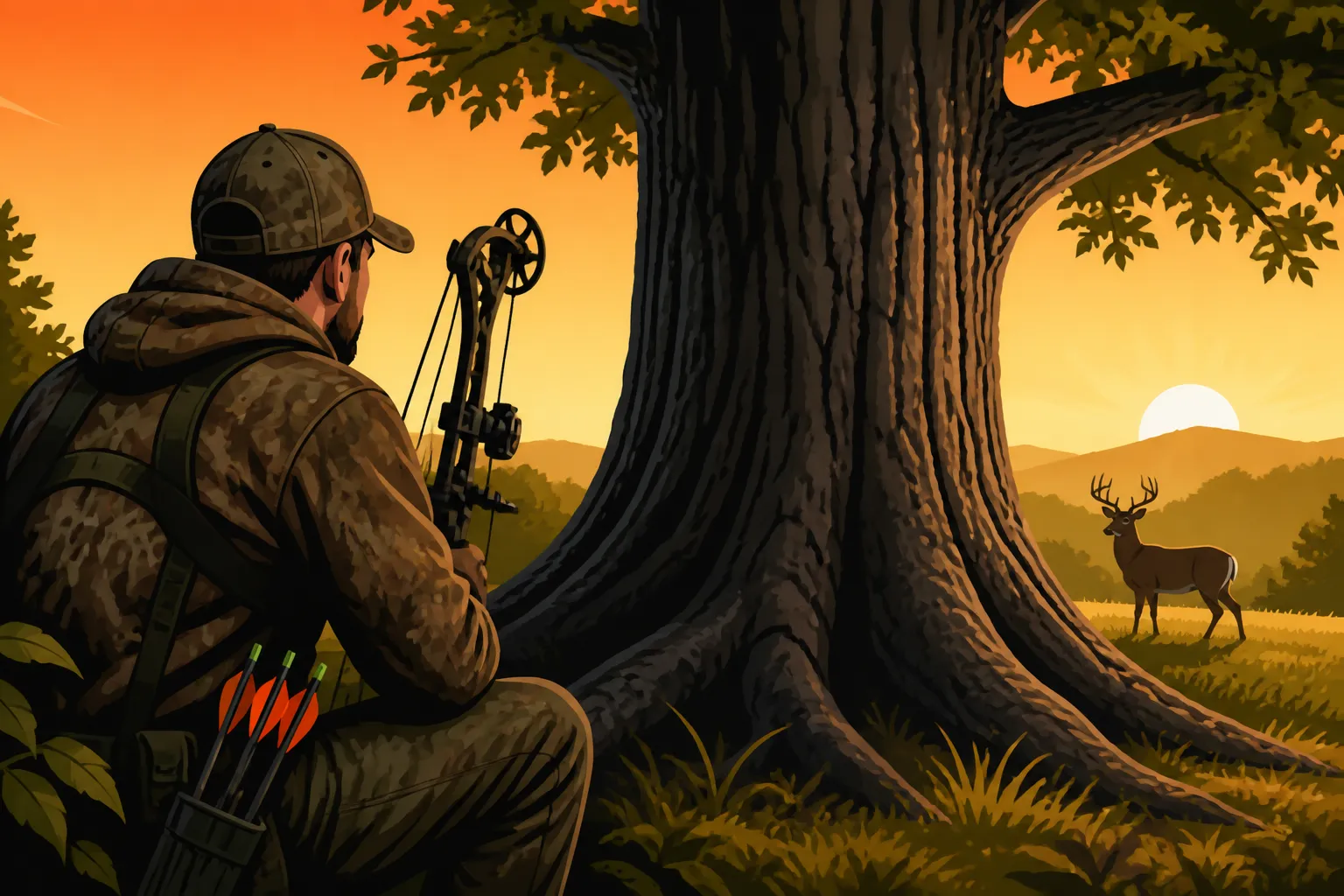
Finding that perfect hunting spot in Kentucky's vast timber can feel like searching for a needle in a haystack, especially when you know deer are hitting a specific food source. Setting up effectively near a towering oak, particularly one dropping a bounty of acorns, is a time-honored strategy that can make or break your hunt. This comprehensive guide will walk you through everything from identifying the right oak to fine-tuning your approach, helping you capitalize on these natural deer magnets and increase your odds of success.
Why Big Oaks Are Prime Hunting Spots in Kentucky
There’s just something about a grand old oak tree. They stand as sentinels in the Kentucky landscape, and for deer hunters, they often signal a golden opportunity. When those acorns start to drop, whitetails absolutely key in on them, making big oaks a strategic cornerstone for many successful hunts across the Bluegrass State.
The Allure of Acorns: Understanding the Whitetail Buffet
Acorns are more than just a snack for a deer; they're a high-energy superfood, packed with fats and carbohydrates that whitetails crave, especially as they bulk up for the rut and the colder months ahead. When acorns are plentiful, deer will often prioritize them over other food sources, even agricultural crops like corn or soybeans. It’s their natural, preferred sustenance, offering quick and easy calories.
Kentucky boasts a variety of oak species, each with its own rhythm for dropping acorns. White oaks, like the common white oak and chestnut oak, are often the first to drop their sweeter, less tannic acorns, typically in late summer and early fall. Deer will hit these hard as soon as they become available. As the season progresses, red oaks, such as northern red oak, scarlet oak, and pin oak, begin to drop their acorns, which contain more tannins and are generally less palatable initially. However, these acorns last longer on the ground and can become a critical food source when the white oak crop is depleted or frozen over. Understanding this cycle is crucial; if you're Hunting After a Poor Acorn Year, deer patterns will shift dramatically, forcing you to find alternative food sources. But in a good mast year, finding those productive oak flats, particularly in areas like the Daniel Boone National Forest, can put you right in the thick of the action.
Natural Habitat and Historical Significance
Beyond the food they provide, big oaks often grow in mature timber stands, signaling a healthy, established habitat. These areas naturally offer dense cover, escape routes, and proximity to bedding areas and water sources—all critical components of a deer's home range. A large oak isn't just a food tree; it's often an anchor in a broader ecosystem that deer rely on.
Historically, Kentuckians have recognized the significance of these trees. Our ancestors, both human and animal, have depended on the bounty of the oak forests for centuries. Deer have adapted to these woodland environments, and their movements are inherently tied to the mast crop. Setting up on an oak isn't just a modern hunting tactic; it's a nod to a deeply ingrained instinct in whitetails. These venerable trees become natural hubs for activity, from does and fawns browsing to mature bucks cruising through during the rut, making them ideal places to Finding Sign in Big Daniel Boone Timber or to understand Reading a Ridge for Cumberland Deer movements.
Reading the Oak and Its Surroundings
Identifying a big oak is one thing, but understanding its role in the immediate environment and how deer are using it requires keen observation and smart scouting. This isn't just about finding any oak; it's about finding the right oak and knowing how to approach it.
Identifying Productive Oaks and Acorn Drop
Not all oaks are created equal, and not every oak will be dropping acorns every year. Oak trees operate on a mast cycle, with bumper crops typically occurring every few years, interspersed with lighter drops. When you’re Scouting Kentucky Public Land Before Season, you need to actively look for signs of current acorn production. Fresh, intact acorns on the ground, especially those with visible caps, are your first clue. More importantly, look for "deer sign" directly under and around the tree. This includes fresh tracks, tell-tale deer droppings, and disturbed leaf litter where deer have been rooting around for acorns.
It's also essential to be able to identify your oak species. White oaks (like the classic Quercus alba) have rounded lobes on their leaves and produce acorns that mature in one year. Red oaks (like Quercus rubra) have pointed, bristle-tipped lobes and acorns that take two years to mature. Knowing the difference helps predict when the acorns will drop and how long they'll last. White oaks are typically preferred by deer, so an active white oak dropping in September or October is pure gold, while a red oak dropping in November or December can save a hunt during the late season lull. You can even leverage modern technology; mapping apps like GoHunt often have features that help identify tree species or analyze satellite imagery for concentrated oak flats, helping you pinpoint potential hotspots from home.
Scouting for Sign Around the Tree
Once you've found a promising oak, the real detective work begins. Deer leave a wealth of clues that tell you how and when they're using a particular area. Fresh tracks leading to and from the tree are paramount. Are they faint, old impressions, or crisp, defined tracks pressed into damp earth? Look for well-worn trails that connect the oak to known bedding areas, water sources, or other food plots.
Beyond tracks, examine the ground for deer droppings. Fresh droppings are moist and clumped; older ones are dry and scattered. The quantity and freshness of droppings can tell you if deer are consistently feeding there. Don't overlook rubs on smaller trees nearby, or better yet, Scrape Lines Along a Logging Road or at the edges of the oak flat. While scrapes are primarily associated with the rut, a fresh scrape near a heavily used oak indicates a buck is checking that spot regularly. Interpreting these signs correctly allows you to build a picture of deer routines and decide on the best setup location.
Considering Topography and Travel Corridors
Kentucky's varied terrain, from the rolling hills of the Bluegrass to the rugged mountains of the east, heavily influences deer movement. Big oaks aren't usually found in isolation; they're part of a larger landscape. Pay close attention to how the topography around your chosen oak dictates deer travel. Is it on a ridge top, a gentle slope, or a creek bottom? Deer often utilize natural funnels created by terrain, such as saddles between ridges, narrow benches, or points that drop into hollows. An oak strategically located within one of these natural corridors can be a game-changer.
For example, an old white oak on a bench halfway down an Eastern Kentucky ridge might intercept deer traveling from bedding areas on the steeper slopes above to water in the hollow below. Conversely, an oak flat along a Hunting Western Kentucky Bottomland Deer might catch deer moving between river bottoms and higher ground. Consider also how the oak connects to other resources. Is there a water source nearby? A thick bedding thicket within a quarter-mile? Deer will create well-defined travel lanes connecting these vital areas, and if your oak lies along one, you’ve hit the jackpot. This holistic view is crucial for understanding Hunting a Funnel Between Two Hollows and optimizing your stand placement.
Tactical Setup Against a Big Oak
You’ve found the perfect oak, read the sign, and understand the deer movement. Now comes the critical part: setting up without alerting every deer in the county. This involves careful consideration of your hunting platform, your access routes, and the invisible battle against scent.
Choosing Your Perch: Treestand vs. Ground Blind
The choice between a treestand and a ground blind depends on several factors: the specific tree, the surrounding cover, your personal hunting style, and even the weather.
Treestands offer a significant advantage in elevation, which can help with scent dispersal, giving you a better view of the surrounding woods, and often providing clearer shooting lanes over brush. For a truly massive oak, a hang-on stand with climbing sticks or a tree saddle might be your best bet, as a climber stand can be challenging to use on trees with wide, irregular trunks or low-hanging branches. If you're looking at Treestand Setups in Daniel Boone National Forest, you'll quickly realize how varied the timber can be. The downside? Setting up can be noisy, and you're exposed to the elements. You also need a tree that provides adequate cover (branches, thick canopy) to break up your silhouette.
Ground blinds offer superb concealment, are generally quieter to set up, and provide comfort and shelter from the wind and rain. They're excellent for situations where a suitable treestand tree is unavailable, or if you prefer to be at eye level with the deer. However, ground blinds limit your visibility, and scent can pool more easily at ground level if the wind isn't cooperating. It’s crucial to brush in your blind meticulously, using natural vegetation to break up its outline, making it seem like a natural part of the landscape. For examples of effective concealment, consider tactics for Using a Ground Blind on Kentucky Public Land.
Here's a quick comparison to help you weigh your options:
| Setup Type | Advantages Around a Big Oak | Disadvantages Around a Big Oak | Best Use Case |
|---|---|---|---|
| Treestand | Elevated view, better scent dispersal, clear shooting lanes over brush | Noisy to set up, requires suitable tree, exposed to elements, less mobile | Moderate cover, consistent wind, scouting shows deer pass higher, good for archery |
| Ground Blind | Excellent concealment, easy setup, comfortable, good for youth hunters | Limited visibility, scent pooling at ground level, deer can see movement | Thick cover, variable wind, close-range shots expected, good for firearms |
Entry and Exit Strategies to Avoid Detection
This is perhaps one of the most overlooked, yet critical, aspects of hunting. Getting to and from your stand without spooking deer is paramount, especially when targeting a specific oak. A perfect setup is useless if you blow out all the deer on your walk-in.
Your entry route needs to be as quiet and concealed as possible. Use natural terrain features like creek beds, ditches, ridgelines, or dense thickets to hide your approach. Walk slowly, deliberately, and avoid breaking branches or making unnecessary noise. Whenever possible, plan your entry and exit so that the wind is in your favor, blowing your scent away from where you expect deer to be. This might mean taking a longer, more circuitous route.
Similarly, your exit strategy is just as important. Leaving your stand quietly after dark ensures you don't educate deer that might move through after legal shooting hours. Use a headlamp sparingly, if at all, and remain vigilant. Modern mapping apps, like GoHunt, are invaluable for planning these routes, allowing you to mark obstacles, dense cover, and ideal pathways, giving you a tactical advantage before you even set foot in the woods. While the article Entry Routes Through Standing Beans focuses on agricultural fields, the principles of silent, concealed entry apply directly to timber hunting.
Wind, Thermals, and Scent Control
You can do everything else right, but if you don't manage your scent, your hunt is likely doomed. Whitetails have an incredible sense of smell, and the slightest whiff of human odor will send them fleeing. Wind and Thermals on a Kentucky Ridge are your primary allies and enemies in this battle.
Always, always, always play the wind. This means ensuring your scent is blowing away from the direction you expect deer to approach or occupy. This might require having multiple stand locations for different wind directions, or being willing to move if the wind shifts unexpectedly. In Kentucky's hilly terrain, you also need to understand thermals. In the mornings, air rises as the sun heats the ground, carrying your scent uphill. In the evenings, as the air cools, it falls, carrying your scent downhill. You must position yourself so that these thermal currents carry your scent away from crucial deer travel routes or feeding areas.
Beyond wind direction, rigorous scent control is non-negotiable. This includes showering with scent-free soaps, washing your hunting clothes in scent-free detergent, storing them in airtight containers, and wearing rubber boots to avoid leaving human scent on the forest floor. Avoid strong-smelling foods, colognes, or even scented deodorants before a hunt. Every little detail matters when you're trying to fool a whitetail's nose.
Adapting to Conditions and Post-Setup Considerations
Hunting big oaks isn't a set-it-and-forget-it strategy. The woods are dynamic, and deer behavior changes with pressure, food availability, and weather. Staying flexible and adaptable is key to long-term success.
Hunting Pressure and Oak Tree Popularity
Let's be realistic: if you've found a big oak dropping acorns on public land, chances are other hunters have, too. Hunting Pressure on Kentucky Public Land is a real factor, and popular food sources like oak flats will often see more activity. This doesn't mean you should avoid them, but you need a strategy to mitigate the impact of other hunters.
One approach is to go deeper. Most hunters stick close to roads or easily accessible trails. If you're willing to walk an extra half-mile or climb a steep ridge, you might find an equally productive oak that sees far less pressure. Another tactic is to hunt mid-day. While many hunters are in their stands at dawn and dusk, deer often continue to feed or move during the middle of the day, especially if pressured earlier. Using a mapping app like GoHunt can help identify less-traveled areas by showing public land boundaries, roads, and topography, allowing you to scout for those secluded, overlooked oaks. Sometimes, the most productive big oak isn't the most obvious one.
Late Season and Alternative Food Sources
Acorns, unfortunately, don't last forever. Eventually, they'll be eaten, rot, or get buried under snow. When that happens, deer will shift their feeding patterns, and you'll need to shift with them. This is where a good scouting ethic really pays off.
As the late season progresses, especially from December into January, you might find that the white oak flats are barren. Red oak acorns can provide some sustenance, but deer will increasingly turn to other food sources. This includes browse (tender twigs, buds, and leaves), standing crops like corn or soybeans if available, green fields planted for deer, or even cut-over areas where new growth emerges. Knowing Late-Season Food Sources for Kentucky Whitetails is crucial. If your trusty oak is no longer producing, it’s time to move to secondary locations. A big oak might still be a travel corridor, but its primary appeal as a food source will diminish. This is a critical adjustment, particularly when you’re facing Hunting the Late-Season January Lull.
Managing Your Hunting Zone
A big oak stand is an investment of time and effort. To maximize its potential, you need to manage your presence carefully. Don't overhunt a single spot, especially if you're targeting a mature buck. Too much pressure can make deer nocturnal or push them out of the area entirely. If you hunt the same tree repeatedly, deer will eventually pattern you.
Have a few different options for your stand placement around the oak, or even entirely different oaks in the same general area, so you can rotate stands. This keeps deer guessing and minimizes your impact. Pay attention to how deer react after your hunts. Did they bust you on your exit? Did they stop coming to the tree? Learning from these observations allows you to refine your strategy. Remember, your goal is to be a ghost in the woods, not a disruptor.
Disclaimer
Hunting is a challenging and rewarding activity that requires adherence to local laws and regulations. Always consult the Kentucky Department of Fish and Wildlife Resources (KDFWR) for the most current hunting seasons, bag limits, licensing requirements, and specific regulations for public and private land before heading afield. Safety should always be your top priority.