Bird Dog Boots and Cut Pads
It’s a truly frustrating moment when you’re deep in the Kentucky woods, your bird dog is working hard, and suddenly you notice them limping or holding up a paw. Nothing can sideline a promising hunt faster than a cut, torn, or abraded pad. This comprehensive guide will walk you through everything you need to know about protecting your loyal hunting partner’s paws, from understanding Kentucky’s challenging terrain to selecting the right boots and pads, and even training your dog to wear them comfortably.
Why Your Bird Dog Needs Paw Protection in Kentucky
Kentucky's varied landscapes, while beautiful and teeming with game, are anything but soft on a dog's paws. From the rugged peaks of the Cumberland Mountains to the dense thickets of the Western Kentucky bottomlands, your bird dog is constantly exposed to elements that can cause painful injuries. Ignoring these risks isn't just a disservice to your hunting partner; it can prematurely end your season or lead to costly vet visits.
Understanding Kentucky's Diverse Terrain and Its Risks
Think about where you hunt pheasants, quail, or grouse in Kentucky. You're often pushing through dense cover, navigating rocky creek beds, or scrambling over downed timber. In Eastern Kentucky, particularly areas near the Daniel Boone National Forest or Grouse Hunting the Cumberland Mountains, you'll encounter sharp shale, jagged sandstone outcroppings, and rocky slopes that can easily slice open a tender pad. These aren't just minor scrapes; deep cuts can lead to infections and a long recovery.
Then you head west, maybe towards the Mississippi River bottomlands or specific areas mentioned in Hunting Western Kentucky Bottomland Deer, and the challenges shift but don't lessen. Here, you're dealing with thick briar patches, thorny locust trees, multiflora rose bushes, and unseen stumps or fallen branches hidden beneath leaf litter. Even the seemingly softer ground of a damp creek bottom can hide broken glass or sharp debris from past logging operations. A bird dog covering miles in these conditions, nose to the ground, is a prime candidate for a paw injury. Even in colder months, patches of ice or frozen ground can be abrasive and cause cracking or slips. It's a constant battle out there to keep their feet safe.
The Hidden Dangers of Long Days Afield
It’s not just about the obvious, sharp hazards. Even on what seems like relatively gentle terrain, the cumulative effect of a long day’s hunt takes a toll. Imagine your dog, brimming with enthusiasm, running, stopping, and turning sharply dozens, if not hundreds, of times over a period of several hours. This constant friction, even from dry grass or packed earth, causes wear and tear on their pads. Over time, pads can become abraded, thin, and prone to cracking, especially in colder, drier weather. A seemingly minor split can quickly worsen, becoming incredibly painful and making every step agonizing.
Furthermore, a small thorn or burr that might not immediately cause a deep wound can work its way into the pad, causing irritation, inflammation, or even leading to an abscess if not addressed quickly. The excitement of the hunt often masks these initial discomforts, and it’s only when your dog is at rest that you might notice them licking their paws excessively or showing signs of lameness. You might consult resources like First Aid Kits for Remote Daniel Boone Forest Ground for human preparedness, but your dog's field first aid is just as crucial. It's truly disheartening to have to cut a hunt short when your dog, who lives for these moments, is hurting. That's why preventative measures are so important.
Types of Paw Protection: Boots, Pads, and Waxes
When it comes to safeguarding your dog’s paws, you have a few options, each with its own benefits and drawbacks. Understanding which solution is best for your dog and your specific hunting conditions in Kentucky is key to making an informed choice.
Bird Dog Boots: Choosing the Right Fit and Material
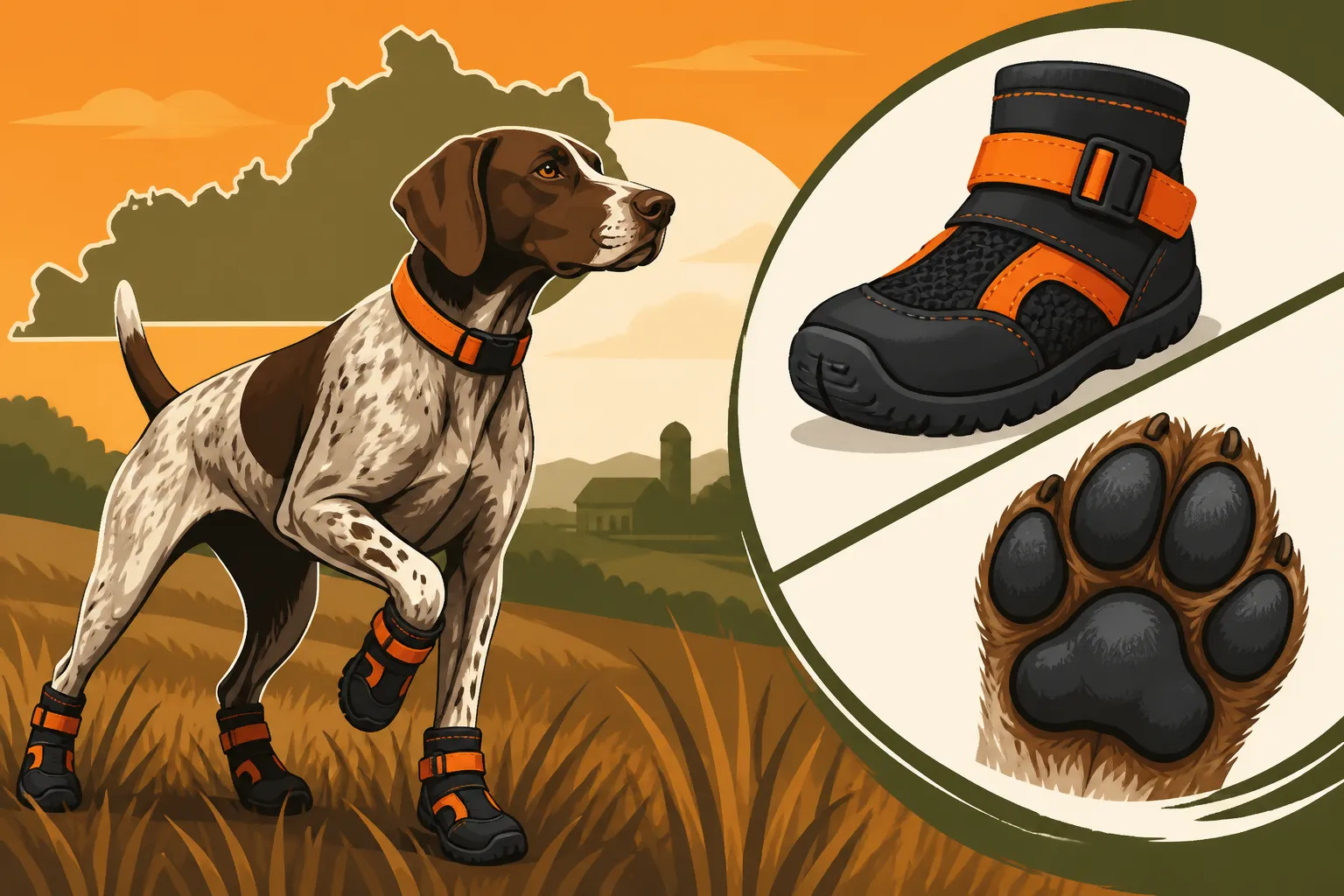
Bird dog boots are often the most robust form of paw protection, offering comprehensive coverage against cuts, abrasions, thorns, and extreme temperatures. However, finding the right boot and getting your dog to accept them can be a journey. You'll find boots made from various materials: durable Cordura fabric, flexible neoprene, tough leather, or even specialized rubber soles for extra grip and puncture resistance. Cordura and neoprene are popular for their balance of durability and flexibility, allowing for natural paw movement. Some boots feature tougher rubberized soles, similar to hiking boot treads, which are excellent for rocky terrain but can be heavier and potentially less breathable.
The absolute most critical factor is fit. A boot that’s too loose will spin, slip off, or rub and cause sores. One that’s too tight can restrict circulation or cause discomfort. It's essential to measure your dog's paws carefully, often by tracing their paw on a piece of paper and measuring the widest point. Different brands have different sizing charts, so don’t assume a "medium" is universal. Look for closure systems that are secure, usually strong Velcro straps, sometimes combined with elastic or additional cinching mechanisms. Some boots extend up the leg a bit, offering more stability. While no boot is 100% foolproof against coming off in dense briars or deep mud, a proper fit drastically reduces the chances. Many hunters find success with brands that offer reinforced seams and durable stitching, knowing that the Kentucky woods will put any gear to the test, especially when traversing areas like those discussed in Boots for Kentucky Hollows and Creek Bottoms.
Adhesive Cut Pads and Topical Waxes: When to Use Them
Sometimes, a full set of boots isn't necessary, or you might need a more targeted approach. That's where adhesive cut pads and topical paw waxes come into play. Adhesive cut pads are essentially tough, self-adhesive patches that you apply directly to your dog’s paw pads. They're fantastic for covering minor nicks, scrapes, or splits that have already occurred, providing a protective barrier to prevent further injury and allow healing. They can also be used preventatively on just one or two pads that are historically weaker or more prone to injury. They offer a good balance of protection without the bulk or potential for rubbing that boots can sometimes present. However, they aren't as robust as boots and can sometimes lose adhesion in very wet or muddy conditions, or with aggressive running.
Paw waxes, on the other hand, are a different kind of preventative measure. These balms and waxes are designed to be rubbed directly onto your dog's pads. They serve multiple purposes:
- Conditioning: They moisturize and soften the pads, preventing cracking, especially in cold, dry weather or on abrasive surfaces.
- Protection: They create a breathable barrier that helps protect against snow and ice buildup, hot pavement, sand, and minor irritants. They can also offer a slight increase in traction.
- Toughening: Regular application can help to naturally toughen the pads over time, making them more resilient to the wear and tear of hunting.
Waxes are not a substitute for boots when facing truly harsh conditions like sharp rocks or heavy briars, but they are an excellent addition to your dog's paw care routine for general conditioning and minor environmental protection. They are especially useful for those hunts where you're covering diverse ground, perhaps a mix of open fields and light timber, and you want that extra layer of resilience without the commitment of full boots. Thinking about a hunt that might take you across various terrain types? Consider using a wax before you head out, and keep a few adhesive pads in your pack for quick repairs. Scouting Kentucky Public Land Before Season might involve walking different terrains, making this combination practical.
| Protection Method | Primary Use | Pros | Cons | Best for Kentucky Conditions |
|---|---|---|---|---|
| Dog Boots | Maximum protection, injury prevention | Best defense against sharp objects, briars, ice, extreme temps | Can be tricky to fit, dogs may resist, can fall off in thick cover | Rocky Eastern KY terrain, dense briar patches, cold/icy conditions |
| Adhesive Pads | Covering minor injuries, targeted prevention | Less bulky than boots, good for small cuts, easier for dogs to tolerate | Not as durable as boots, can lose adhesion, limited overall protection | Short hunts, covering existing minor injuries, milder terrain |
| Paw Waxes | Conditioning, minor environmental protection | Conditions pads, prevents cracking, light barrier against hot/cold | Offers minimal protection against sharp objects or heavy abrasion | General conditioning, light snow/ice, hot pavement, daily walks |
Training Your Dog to Accept Paw Protection
So, you've invested in some good quality paw protection. That's a great first step! But the journey isn't over. Many hunters experience the frustration of a dog that simply refuses to wear boots, chewing them off, walking awkwardly, or even refusing to move. This is where patience and a positive training approach come in.
Starting Early and Making It Positive
The key to success is to introduce paw protection in a gradual, positive way, ideally long before opening day. Don't wait until the morning of your big hunt to put boots on your dog for the first time; that's a recipe for disaster. Start at home, in a relaxed environment. Put just one boot on for a minute or two, immediately offering high-value treats and praise. The goal is to create a positive association. Let them wear it while they eat their dinner or play with a favorite toy.
Over several days, gradually increase the number of boots and the duration of wear. Two boots, then three, then all four. Keep the sessions short and fun. Distract them with play or a short walk in the yard. If your dog tries to chew them off, immediately redirect with a toy or a "leave it" command, then praise when they stop. You want them to associate the boots with good things, not with a punishment or an uncomfortable ordeal. Consistency is far more important than intensity in these early stages. Think of it like teaching a new command – repetition with positive reinforcement wins the day. This preparation applies to all aspects of your hunting strategy, much like the comprehensive approach to understanding Kentucky's Bear Zone System or preparing for Kentucky's Statewide Modern Gun Season.
Gradual Acclimation and Field Trials
Once your dog is tolerating the boots or pads around the house, it's time to move to more realistic scenarios. Start with short walks in your yard, then progress to local parks or less strenuous trails. Observe their gait; initially, they might walk a bit awkwardly, doing a "high-step" or "clown walk." This is normal, and most dogs adapt fairly quickly. Over time, their natural coordination will return.
Gradually increase the length and intensity of these "field trials." A short, easy training session or a brief excursion to a known, safe public land area, perhaps one you've explored with mapping tools like GoHunt, is perfect. The goal is to simulate hunting conditions without the pressure of a full-blown hunt. Pay close attention to any signs of rubbing or discomfort. After each session, remove the boots and inspect your dog's paws for any red spots, chafing, or signs of irritation. Adjust the fit or consider different boot styles if you notice persistent issues. It’s better to discover these problems during training than when you’re miles deep into a good covey of birds. Your dog's comfort means a better, more successful hunt for both of you.
Maintenance, Care, and Field Repairs
Even the toughest gear needs care, and your dog's paw protection is no exception. Proper maintenance extends the life of your equipment and ensures it's ready when you need it. And let's be honest, things break in the field. Knowing how to perform a quick repair can save a hunt.
Cleaning and Inspecting Your Dog's Gear
After every hunt, especially one in Kentucky's notorious mud or rocky terrain, take a few minutes to clean and inspect your dog's boots or pads. Mud, burrs, and fine grit can get lodged in the seams, strap closures, or even inside the boot itself. Use a brush or damp cloth to remove any caked-on mud and debris. For boots, a thorough rinse with water (and a mild soap if heavily soiled) is often all that's needed. Make sure to let them air dry completely before storing them to prevent mildew and odor, which can compromise the material over time.
While cleaning, carefully inspect the boots for any signs of wear and tear:
- Stitching: Are any seams coming loose?
- Fabric: Are there any small tears or abrasions in the main body of the boot?
- Soles: Are the soles worn down, or is there any sign of delamination?
- Velcro/Straps: Are the closures still strong and secure? Worn Velcro can lead to lost boots.
For adhesive pads, check if they are still securely attached and haven't started to peel at the edges. If they're showing significant wear or have been on for several days, it's usually time to replace them. This regular inspection helps you catch small problems before they become major failures in the field. Remember, just like you check your rifle after a long day in the woods, or review your Rifle Setups for Kentucky Deer Hunting, your dog's gear needs the same attention.
Essential Field Repair Kits for Dog Owners
No matter how well you prepare, things can and do go wrong. A rock can tear a boot, or a briar can compromise an adhesive pad. Having a small, dedicated field repair kit for your dog's paws can be a lifesaver. Here’s what I recommend carrying in your pack:
- Extra Boots/Pads: Always, always carry at least one spare boot, if not a full set of two, especially if you're using individual boots. Similarly, a few extra adhesive pads are lightweight and easy to carry.
- Heavy-Duty Duct Tape or Electrical Tape: This is your emergency fix-all. You can use it to patch a small tear in a boot, secure a loose strap, or even wrap a paw directly if a boot is lost or severely damaged.
- Vet Wrap (Self-Adhering Bandage): This flexible, breathable, and self-adhering bandage is invaluable for immediate paw injuries. It can hold gauze in place, provide light compression, or create a temporary protective layer directly on the paw.
- Super Glue or Fabric Glue: For small tears in fabric boots that tape might not hold long-term, a dab of super glue can sometimes buy you enough time to finish the hunt.
- Small Scissors: Essential for cutting tape, vet wrap, or trimming away loose threads that might snag.
- Antiseptic Wipes/Spray: For immediate cleaning of a cut or scrape before applying a bandage.
Imagine you're deep in a thicket, maybe Hunting the New Bear Zone Three with your hounds, and a boot comes off or gets shredded. Having these items means you can quickly stabilize the situation, protect the paw, and continue the hunt or safely make your way back to the truck. It’s all about being prepared for the unexpected, just like carrying a First Aid Kits for Remote Daniel Boone Forest Ground for yourself. Knowing you can address a paw issue on the spot provides immense peace of mind and keeps your hunting partner healthy and happy.
Disclaimer
This article is for general informational purposes only and does not constitute professional advice. Laws, prices and regulations vary by location and change over time. Consult a qualified professional for guidance on your specific situation.