.30-30 in Thick Bottomland Cover
Hunting the thick, tangled bottomlands of Kentucky can be an incredibly rewarding experience, but it also presents a unique set of challenges. You're often navigating dense river cane, briar patches so thick they seem impenetrable, and low-lying areas prone to flooding, all while trying to move quietly enough not to spook a whitetail that could be just yards away. Many hunters wonder if their tried-and-true .30-30 lever action, a rifle steeped in hunting tradition, is truly the right tool for these close-quarters encounters. This guide will dive deep into why the .30-30 is not just adequate, but often an excellent choice for hunting Kentucky's dense bottomland cover, helping you understand its strengths, choose the right ammunition, and adapt your tactics for success.
The Enduring Appeal of the .30-30 for Brush Hunting
There's a reason the .30-30 Winchester has been a staple in deer camps for over a century. It's not the flat-shooting, long-range powerhouse of modern magnums, and it was never designed to be. Instead, it was crafted for the woods, for quick shots at deer that suddenly appear in dense cover. For many Kentuckians, it's the rifle their grandfather carried, and for good reason.
Why the .30-30 Has Always Shined in Dense Cover
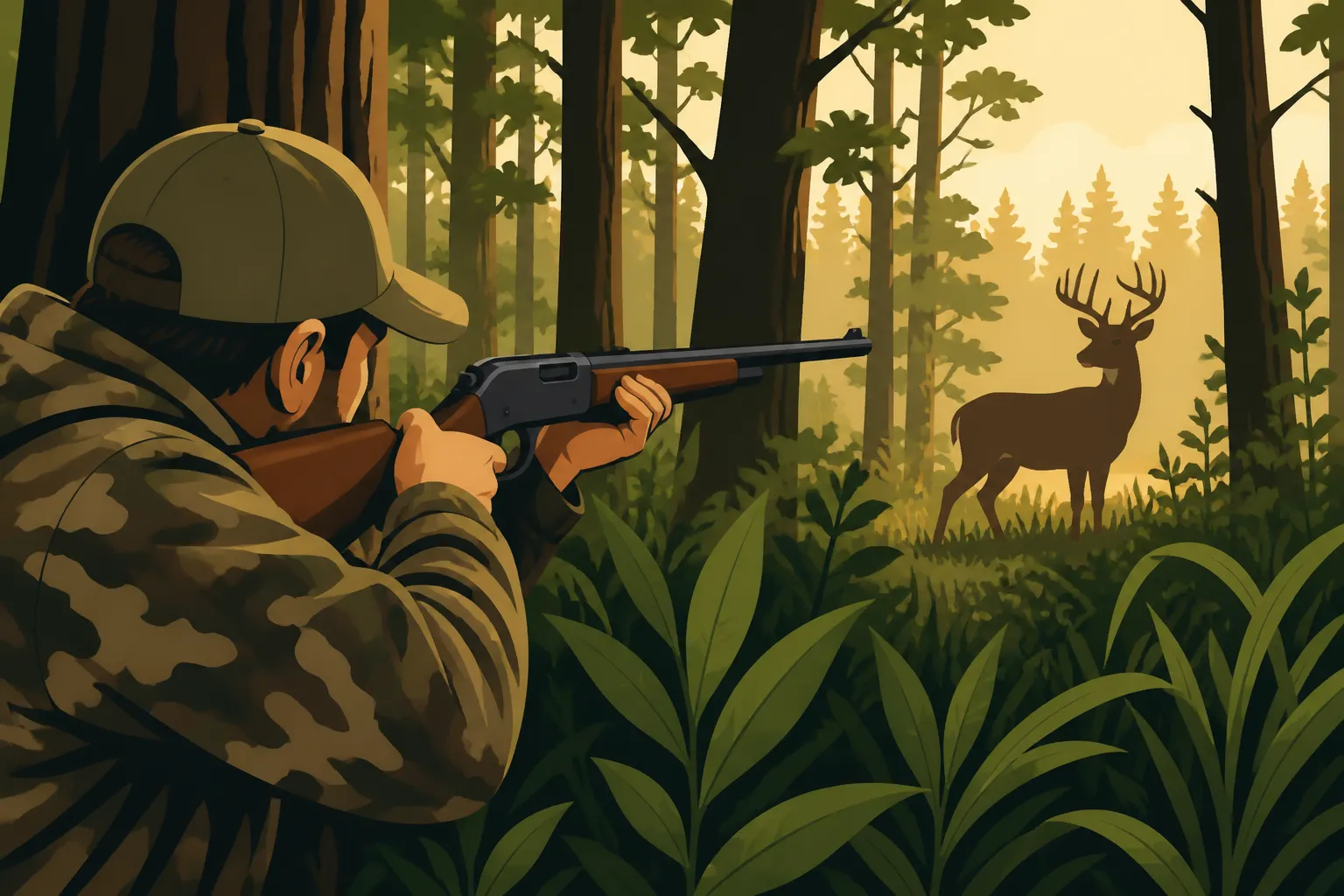
The .30-30 built its legendary reputation in environments very similar to Kentucky's bottomlands – thick timber, brushy draws, and areas where shots were measured in tens of yards, not hundreds. Its design, primarily in a lever-action platform, lends itself perfectly to this kind of hunting. The short overall length of a lever-action rifle makes it incredibly maneuverable. You can swing it quickly in a tight spot, navigating through thick brush without getting constantly snagged on branches. The action itself is fast and intuitive for follow-up shots, which can be crucial when a big buck jumps up unexpectedly from a honeysuckle thicket.
Bullet design also plays a huge role. Historically, .30-30 cartridges typically came with round-nose or flat-point bullets. These aren't aerodynamic marvels, but they are absolutely devastating at closer ranges. They're designed to transfer a tremendous amount of energy into the target upon impact, creating a wide wound channel without excessive over-penetration, which means more energy stays within the deer. This "brush-busting" reputation, while sometimes exaggerated, speaks to its ability to deliver a heavy, slower projectile effectively through minor obstructions, maintaining its course and energy better than some lighter, faster, more fragile bullets might. Plus, the recoil is usually very manageable, making it pleasant to shoot and allowing for faster sight recovery for that second shot if needed.
Understanding Kentucky's Bottomland Environments
To truly appreciate the .30-30 in this context, you have to picture Kentucky's bottomland environments. We're talking about the low-lying areas along our rivers and creeks, the often-flooded timber, and the vast expanses of the Mississippi and Ohio River floodplains. Think of places like the Sloughs Wildlife Management Area or the fertile river bottoms of western Kentucky. These are areas characterized by incredibly dense vegetation: thick stands of river cane, tangled masses of honeysuckle and greenbrier, areas of young regenerating timber, and often standing water or muddy conditions.
Visibility here can be brutally limited. A shot across a clear-cut or an open field edge might be 150 yards, but in bottomland, you're often lucky to see more than 40 or 50 yards, and frequently much less. Deer in these areas often hold tight, relying on the cover for security. When they move, it’s typically along well-worn trails or through natural funnels, and they can appear and disappear like ghosts. Your shot windows are fleeting, demanding quick target acquisition and a rifle that handles well in tight quarters. This environment screams for a rifle that performs reliably and powerfully at close distances, making the .30-30 a surprisingly modern choice despite its age. If you're Hunting Western Kentucky Bottomland Deer, the .30-30 is definitely in its element.
Ballistics and Performance in Close Quarters
When we talk about the .30-30, we're not focusing on ballistic coefficients or wind drift at 300 yards. We're talking about pure, unadulterated knockdown power right where you need it: up close and personal. Understanding how this cartridge performs specifically in thick bottomland is key to maximizing its effectiveness.
Bullet Selection for Maximum Effectiveness
For bottomland hunting with a .30-30, bullet selection isn't just important; it's paramount. You want bullets that are designed for rapid energy transfer and reliable expansion at the velocities the .30-30 produces, which are moderate compared to faster calibers. Forget about sleek, aerodynamic Spitzer bullets; they're built for long-range precision and can be less stable if they encounter even minor brush, potentially deflecting more significantly than a heavier, blunter bullet.
Instead, look for traditional soft-point, flat-nose bullets. These designs mushroom aggressively upon impact, creating a wide wound channel that leads to quick, humane kills. Many ammunition manufacturers offer excellent loads specifically tailored for the .30-30, often in 150-grain or 170-grain weights. Some modern options, like certain polymer-tipped flat-point designs, offer improved ballistic characteristics while maintaining the safe design needed for tubular magazines. These newer bullets can extend the effective range slightly while still excelling in close cover. The key is that they're designed to dump their energy into the deer, rather than punching through with minimal expansion, which is precisely what you need when a deer bursts out of a thicket at 30 yards. You want that deer to go down fast.
Range Limitations and Practical Accuracy
Let's be realistic: the .30-30 Winchester is a short-to-medium range cartridge. While some experienced shooters can make impressive shots further out, its sweet spot for reliable, ethical deer hunting is generally within 150 yards, and arguably even closer in dense bottomland. Given the typical visibility in these areas, you're rarely going to get a shot opportunity beyond 75-100 yards anyway.
"Practical accuracy" for a .30-30 in bottomland isn't about shooting sub-inch groups at 200 yards from a bench rest. It's about confidently placing a shot into a deer's vital zone at 50, 75, or maybe 100 yards, often off-hand or with a quick brace. The trajectory of a .30-30 round drops more quickly than flatter-shooting cartridges, but within 100 yards, that drop is easily compensated for, especially if you zero your rifle appropriately. Many hunters find a 75-yard zero provides an excellent "point-blank range" for deer vitals, meaning you can aim dead-on anywhere from 20 to about 100 yards without significant holdover. This simplicity is a massive advantage when a deer is moving through thick cover and you have mere seconds to make a decision. Don't worry about trying to Zeroing at 100 Yards for Ridge Hunting with a .30-30 in bottomland; a closer zero is often more practical.
Tactics and Gear for Bottomland .30-30 Success
Having the right rifle is one thing, but pairing it with the right gear and employing effective tactics tailored to Kentucky's bottomland is what truly brings success. It's about working with the .30-30's strengths, not against its perceived weaknesses.
Getting Your Setup Right for Tight Spaces
When you're hunting in incredibly dense cover, your rifle setup needs to complement the environment. A massive scope with high magnification is going to be a hindrance more often than not. Instead, consider:
- Low-Power Optics or Red Dots: A 1-4x or 2-7x variable scope is ideal. You can keep it on the lowest magnification for wide field of view and quick target acquisition, then dial up just slightly if you need a clearer view. Even better, many hunters are finding success with red dot sights, which offer lightning-fast target acquisition and unlimited eye relief, perfect for those snap shots when a deer jumps from thick cover. Peep sights, the classic choice, are also excellent for speed and durability.
- A Good Sling: Navigating briars, slick mud, and downed trees often requires two hands. A comfortable, durable sling is absolutely essential for keeping your rifle secure and ready when you need it, but out of the way when you don't.
- Gun Fit and Handling: Make sure your lever action shoulders quickly and naturally. Practice shouldering and bringing the rifle to your eye swiftly. In bottomland, the deer are often close, and the encounter can be over in a flash.
When you're preparing for a hunt, resources like the Kentucky Hunt Fish App or even platforms like GoHunt can be invaluable for studying topography, identifying potential pinch points, and understanding access in these dense regions. Knowing where you're going and what obstacles you might face beforehand can make all the difference when you're carrying a rifle through knee-deep mud.
Hunting Strategies Specific to Bottomland with a .30-30
The .30-30 truly shines when paired with specific bottomland hunting strategies. It's a rifle for active hunting, not typically for long-range glassing.
- Still-Hunting: This is where the .30-30 excels. Moving incredibly slowly, taking one or two steps, then stopping and scanning for several minutes. You're looking for the flicker of an ear, the horizontal line of a deer's back in a vertical world of trees. The short, maneuverable lever action is perfect for this. When you spot a deer, you're usually close, and a quick, precise shot is needed. You might find a lot of success applying principles from Still-Hunting Eastern Kentucky Ridges even if the terrain is different, as the core concept of slow, methodical movement remains.
- Stand Placement: If you prefer elevated hunting, focus on pinch points, creek crossings, and the edges of bedding areas within the thickest cover. Look for those natural funnels between two hollows or sections of dense timber. Hunting a Funnel Between Two Hollows can be highly effective in bottomland, as deer are often forced into narrow travel corridors. Your .30-30 will be more than adequate for any shot presented from a stand in these tight spots. Just remember to use a good safety harness; even low stands in thick cover can be dangerous. You might also consider Using a Ground Blind on Kentucky Public Land if the cover is dense enough to blend into.
- Deer Drives: The .30-30 is a fantastic choice for deer drives, whether you're a "pusher" or a "stander." Its quick-handling nature and fast follow-up shots are perfect for deer being pushed through dense cover. The moderate range is ideal for shots that typically materialize at closer distances during a drive. Consider coordinating a Deer Drives With Three or Four Hunters with your buddies; the .30-30 will serve you well.
- Reading Sign: Bottomlands, especially after a rain, are fantastic for Reading Kentucky Mud for Fresh Deer Movement. Look for fresh tracks, especially larger ones indicating a mature buck. Scout for rubs and scrapes along creek banks and elevated ridges within the bottomland. These areas can reveal exactly where deer are traveling and what their habits might be. Pay attention to how deer move after Hunting After a Poor Acorn Year, as they might shift their focus to other food sources found in bottomland.
Advantages and Disadvantages of the .30-30 in Bottomland
Like any piece of hunting gear, the .30-30 has its specific strengths and weaknesses, especially when pitted against the unique demands of Kentucky's bottomland. Understanding these can help you decide if it's the ultimate tool for your hunt or if you might need to consider other options for different scenarios.
The Perks of Carrying a Classic Lever Action
There's an undeniable charm and practical advantage to carrying a .30-30 lever action in the thick stuff.
- Maneuverability: As we've discussed, the compact nature of most lever-action rifles chambered in .30-30 makes them incredibly easy to handle in tight situations. They don't have long barrels or protruding magazines to snag on briars or low-hanging branches, which is a constant frustration with longer bolt-action rifles in dense cover. This means you can move more quietly and efficiently through the tangled mess that defines Kentucky's bottomlands.
- Reliability: Lever actions are generally robust, simple machines. They are less prone to issues with dirt, mud, or moisture than some more complex actions, which is a huge plus when you're hunting in potentially wet and gritty bottomland conditions. This kind of reliability is comforting when you're deep in the woods and count on your equipment to perform.
- Nostalgia and Tradition: For many, the .30-30 isn't just a rifle; it's a connection to generations of hunters before them. There's a deep satisfaction in carrying a classic into the woods, especially in Kentucky, where hunting heritage runs deep. It's a testament to the cartridge's enduring effectiveness that it still holds its own today.
- Sufficient Power: Make no mistake, a .30-30 with a well-placed shot is more than enough to ethically harvest any whitetail deer in Kentucky. At typical bottomland ranges, it delivers ample energy for a quick, humane kill. This isn't a cartridge to underestimate; it has been filling freezers for over a century. Just make sure you know your Kentucky Legal Firearms for Deer Hunting rules!
Potential Drawbacks and When to Consider Alternatives
While the .30-30 is fantastic for its niche, it's not a universal solution, and it's important to be honest about its limitations.
- Limited Range: This is the most significant drawback. If your hunting plans involve crossing open fields, shooting across large clear-cuts, or setting up on a Setting Up on a Western Kentucky Field Edge where shots can easily stretch beyond 100-150 yards, the .30-30 might leave you feeling under-gunned. Its rainbow-like trajectory becomes a factor at longer distances, requiring more precise range estimation and holdover.
- Bullet Drop and Ballistics: Compared to modern, high-velocity cartridges like a .270 or 6.5 Creedmoor, the .30-30 has significantly more bullet drop. While this isn't an issue at close bottomland ranges, it becomes a distinct disadvantage if you find yourself needing to take a shot beyond its comfort zone. You won't be using a .30-30 for long-range target practice or for something like Hunting Kentucky's Record Elk Herd.
- Ammunition Versatility: While there are good hunting loads available, the selection isn't as vast or diverse as for more popular modern calibers. This can sometimes limit choices for specific bullet types or manufacturers, although standard hunting ammunition is usually readily available.
For these reasons, many hunters choose different rifles for different terrains. For open country, a flatter-shooting cartridge might be better. However, for those dense, close-quarter battles in Kentucky's bottomlands, the .30-30 remains a formidable and incredibly effective choice. When researching different options, platforms like GoHunt can help you analyze various calibers and their suitability for different hunting scenarios and species, ensuring you make an informed decision for every hunt.
Here's a quick summary of the pros and cons of the .30-30 for thick bottomland cover:
| Feature | Pros for Bottomland Hunting | Cons for Bottomland Hunting (and General) |
|---|---|---|
| Maneuverability | Excellent; short, compact design, no protruding magazines. | None in bottomland; superior to longer rifles. |
| Power/Effectiveness | Sufficient for whitetail at close range; rapid energy transfer. | Not ideal for larger game like elk or bear. |
| Range | Ideal for typical bottomland shot distances (under 100 yards). | Limited effective range (generally under 150 yards). |
| Follow-up Shots | Quick and intuitive with a lever action. | Not as fast as a semi-auto, but very capable. |
| Recoil | Generally mild and manageable. | None; a comfortable rifle to shoot. |
| Reliability | Simple, robust mechanism, less prone to environmental issues. | None; a very dependable platform. |
| Bullet Selection | Good selection of effective soft-point/flat-nose hunting loads. | Less variety than more popular modern calibers. |
| Optics Choice | Excels with low-power scopes, red dots, or open sights. | Not suitable for high-magnification, long-range optics. |
| Tradition | Rich history, strong connection to hunting heritage. | None; a cherished aspect for many hunters. |
Ultimately, the best rifle is the one you shoot most accurately and confidently. For many, that rifle, especially in the tangled wilds of Kentucky's bottomlands, is still the dependable .30-30 Winchester. Just remember to always carry your Carrying Proof of License on Your Phone and know the local regulations before heading out. Whether you're pulling a deer out of a wet bottomland, perhaps having to Recovering a Deer From a Steep Hollow if it runs uphill, or just enjoying the solitude of the woods, the .30-30 is a partner you can trust.
Disclaimer
This article is for general informational purposes only and does not constitute professional advice. Laws, prices and regulations vary by location and change over time. Consult a qualified professional for guidance on your specific situation.