Kentucky Wild Turkey Subspecies
It can be incredibly confusing, can't it? You hear folks talking about different types of wild turkeys, and if you're like most Kentucky hunters, you might wonder if there's some secret subspecies roaming our hollers that you don't even know about. This guide is here to cut through the chatter and give you the real scoop on the wild turkey populations you'll encounter in Kentucky, helping you understand their unique traits and where they truly belong.
Unraveling the Wild Turkey Family Tree in Kentucky
When we talk about wild turkeys, it's easy to get caught up in the various subspecies that exist across North America. From the swamps of Florida to the arid lands of the Southwest, different turkeys have adapted to their unique environments, developing distinct characteristics. However, here in Kentucky, things are a lot more straightforward than you might initially think. There's one king of the woods that reigns supreme, and understanding it is key to your success afield.
The Eastern Wild Turkey: Kentucky's Resident King
Without a shadow of a doubt, the Eastern Wild Turkey (Meleagris gallopavo silvestris) is the only true wild turkey subspecies you will consistently find and hunt in Kentucky. These magnificent birds are native to the eastern United States, thriving in our mix of mature hardwood forests, rolling hills, and scattered agricultural fields. They are the backbone of our thriving turkey population, the birds you hear gobbling on crisp spring mornings and see strutting in a field corner come fall.
The Eastern's comeback story in Kentucky is nothing short of incredible. Decades ago, wild turkeys were practically wiped out in many parts of the state due to habitat loss and unregulated hunting. But thanks to dedicated conservation efforts by the Kentucky Department of Fish and Wildlife Resources (KDFWR), often involving trap-and-transfer programs, these resilient birds have repopulated almost every county. They've found a perfect home in our diverse landscapes, from the Appalachian foothills to the western coalfields, adapting well to various cover types and food sources. This success story is why we have such a robust Wild Turkeys in Kentucky population today, supporting fantastic hunting opportunities year after year.
Dispelling Myths: Other Subspecies and Their Presence
It’s natural to wonder about other subspecies like the Rio Grande, Osceola, or Merriam's. You might hear stories or see pictures from hunts out west or down south and think, "Could they be here too?" The simple answer for Kentucky is: no, not in any wild, self-sustaining, or genetically pure capacity.
The Rio Grande Wild Turkey is primarily found in the brush country of Texas and parts of the Great Plains. They're built for more open, arid landscapes and wouldn't typically thrive in Kentucky's forested environment. The Osceola Wild Turkey, also known as the Florida Wild Turkey, is restricted to the Florida Peninsula and is a bird of palmetto thickets and cypress swamps. They are distinctly different and geographically isolated from us. Lastly, the Merriam's Wild Turkey calls the mountainous regions of the West home, preferring ponderosa pine and mixed conifer forests. Their adaptation to high altitudes and different vegetation makes them ill-suited for the rolling hills and deciduous forests of Kentucky.
While it's possible for captive-bred turkeys of other subspecies to be released, it's generally illegal and strongly discouraged, as it can introduce disease or compromise the genetic integrity of our native Easterns. Any turkey you encounter in a true wild setting in Kentucky will be an Eastern, or at the very least, a bird with dominant Eastern genetics. There's no secret population of Rio Grandes in your back forty, no matter how much you wish there was! The state works hard to manage for our native birds, ensuring a healthy and stable population for hunters like us.
Distinguishing Easterns: Field Marks and Habits
When you're out in the woods, especially during Spring Turkey Hunting in Kentucky, knowing what an Eastern Wild Turkey looks like and how it behaves can be incredibly helpful. While there might not be other subspecies to confuse them with here, understanding the nuances of our Easterns makes you a more informed and often more successful hunter. Plus, it's just plain fascinating to truly appreciate the bird you're pursuing.
Physical Traits and Plumage
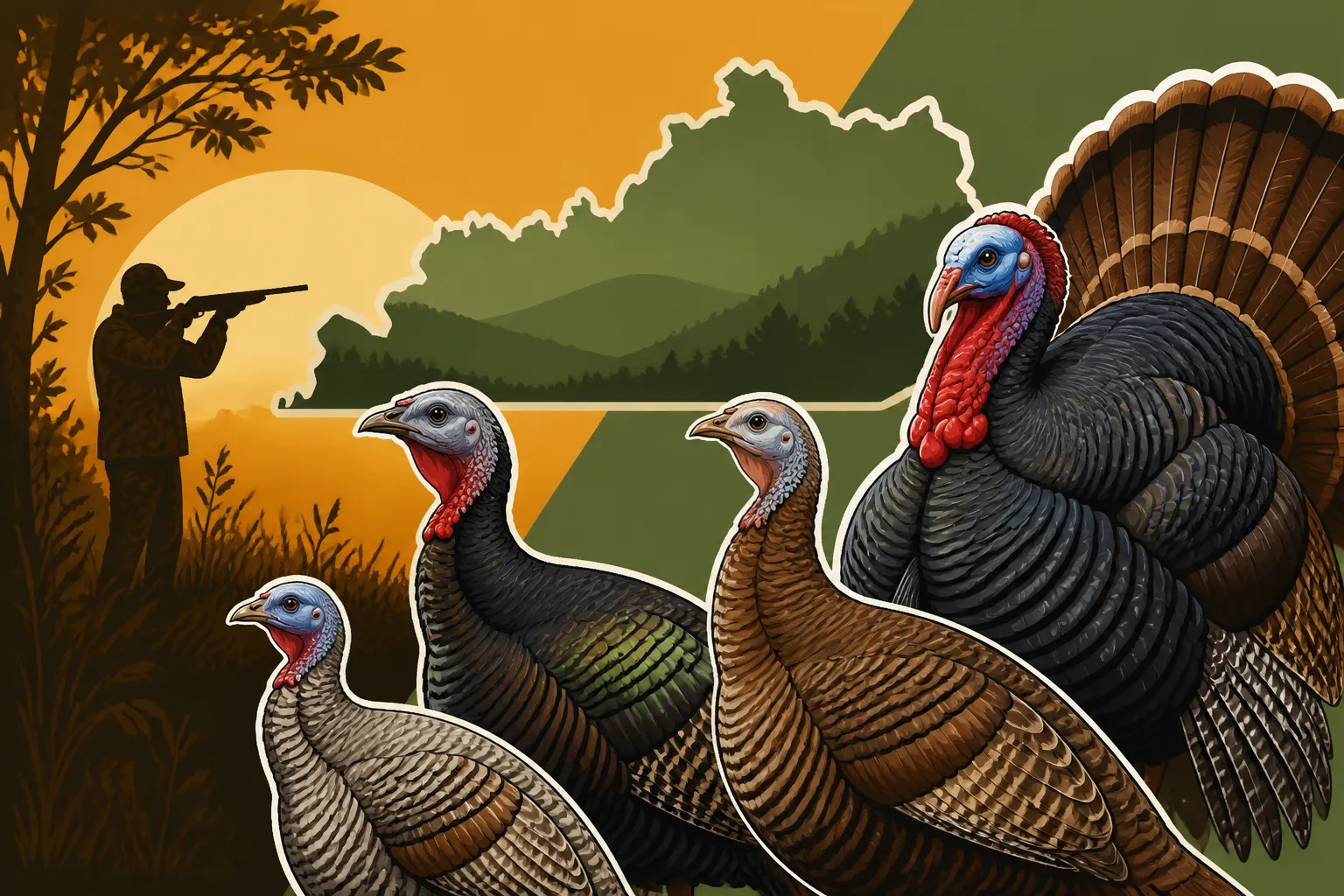
The Eastern Wild Turkey is a striking bird, known for its iridescent plumage that shimmers with shades of copper, bronze, green, and red in direct sunlight. Here are some key physical characteristics to look for:
- Body Feathers: Generally, Easterns have dark, metallic feathers with rich bronze and copper tones. The tail feathers are banded with dark brown, followed by a wide band of buff or chestnut, and then a narrower black band before the tip. This is a crucial identifier that helps differentiate them from other subspecies. For instance, Merriam's have white or buff tail tips, and Rio Grandes have a yellowish-buff band.
- Head and Neck: The bare skin on the head and neck of a gobbler can change color dramatically depending on its mood and excitement level, ranging from white to blue to vibrant red. Hens typically have duller, more muted head colors.
- Legs: Eastern turkeys usually have dark, sometimes reddish-pink, legs and feet. Gobblers will also sport prominent spurs, which grow longer and sharper with age.
- Beard: Mature gobblers will have a "beard"—a tuft of coarse, bristle-like feathers—growing from their chest. While some hens can grow beards (known as "bearded hens"), it's far less common and usually shorter and thinner.
- Size: Easterns are generally the largest of all turkey subspecies, with mature gobblers often weighing 18-25 pounds, though some can tip the scales even higher. Their impressive size and robust build are part of their allure.
When you're studying a bird through your binoculars or your GoHunt app's mapping tool, pay attention to these details. They tell you a lot about the bird's health, age, and potentially even its genetics if you were in a hybrid zone, though here in Kentucky, it's mostly about appreciating our pure Easterns.
Vocalizations and Behavior
Eastern Wild Turkeys are incredibly vocal, and understanding their language is arguably the most critical skill for a turkey hunter. Their vast repertoire of calls allows them to communicate everything from alarm to mating intentions.
- Gobbles: The most iconic call, primarily made by gobblers to announce their presence and attract hens. It's a loud, resonant sound that can carry a long distance, especially on a still morning.
- Yelps: A series of typically 3-9 plaintive notes, often used by hens to communicate with other turkeys. Hunters mimic this call frequently.
- Clucks and Purrs: Soft, contented sounds that indicate a turkey is calm and feeding. Clucks can also be sharper, signaling slight alarm.
- Puts: A sharp, single note used as an alarm call, often indicating a turkey has spotted danger and is about to bolt.
Beyond their calls, understanding their daily routine is vital. Turkeys will typically fly down from their roost trees at dawn, often congregating in fields or open woods to feed and socialize. Throughout the day, they'll forage for acorns, insects, and greens, moving through timber and field edges. As dusk approaches, they'll seek out tall, sturdy trees to roost in for the night. Knowing Where Kentucky Gobblers Roost can be a huge advantage for planning your morning approach.
Their behavior is heavily influenced by the breeding season. During spring, gobblers are focused on breeding, strutting, gobbling, and fighting for dominance. Hens, after breeding, become more secretive as they begin nesting. Come fall, the flocks tend to be larger and more dispersed, with turkeys focusing on food sources and generally being less vocal than in spring. This difference in behavior impacts your hunting strategy significantly, whether you're chasing them in April or during Kentucky's Fall Turkey Season.
Habitat Preferences and Management for Easterns
The health and abundance of Kentucky's wild turkey population are directly tied to the quality of their habitat. Eastern Wild Turkeys are incredibly adaptable, but they truly thrive in specific conditions that offer them everything they need to survive and reproduce. As hunters and conservationists, understanding these preferences helps us appreciate the landscape and support efforts that benefit these birds.
Ideal Kentucky Landscapes for Turkeys
Eastern Wild Turkeys flourish in a diverse mosaic of mature forests, interspersed with openings like agricultural fields, pastures, and regenerating timber cuts. Here’s a breakdown of what makes an ideal Kentucky turkey habitat:
- Mature Hardwood Forests: These are crucial for roosting and providing critical food sources like acorns, hickory nuts, and beech nuts, especially in fall and winter. Large, old-growth trees offer secure roosting sites high above predators. You'll find excellent examples of this in areas like Daniel Boone National Forest.
- Open Understory: While they need mature timber, turkeys also prefer forests with a relatively open understory that allows them to move freely and detect predators. Dense, impenetrable thickets can limit their movement and visibility.
- Agricultural Fields and Pastures: These open areas provide bugs, insects, and grains like corn and soybeans, which are vital protein sources, especially for poults. Fields also serve as excellent strutting grounds for gobblers in the spring. Finding Turkey Tactics for Farmland Field Edges can be a game-changer if you hunt areas with mixed agricultural use.
- Water Sources: Like all wildlife, turkeys need access to water, whether it's a creek, pond, or even dew on vegetation.
- Diverse Topography: Kentucky's rolling hills, hollows, and ridge tops offer a variety of microclimates and vegetation, ensuring food and cover are available year-round. Turkeys will often move up and down hillsides throughout the day, following the sun or seeking sheltered areas.
You’ll find excellent turkey habitat scattered across the state, from the rugged eastern coalfields to the more agricultural western regions. Certain counties, particularly in the central and western parts of the state, consistently report high Kentucky Turkey Harvest Numbers and boast healthy turkey populations. This is largely due to the excellent blend of timber and agriculture found there.
The Role of Habitat in Population Health
Effective habitat management is the cornerstone of a healthy wild turkey population. The Kentucky Department of Fish and Wildlife Resources, along with private landowners and organizations like the National Wild Turkey Federation, work tirelessly on initiatives that benefit these birds.
- Forest Management: Selective timber harvesting, which creates diverse age classes of trees, can be beneficial. It opens up the canopy, allowing sunlight to reach the forest floor, promoting the growth of native grasses, forbs, and fruit-bearing plants that turkeys feed on. It also provides areas of regenerating cover that hens use for nesting.
- Prescribed Burns: Controlled burns are a powerful tool in habitat management. They reduce leaf litter, stimulate the growth of new, tender vegetation, control invasive species, and create more open understory conditions that turkeys prefer. These burns mimic natural fire cycles that once shaped our eastern forests.
- Food Plot Development: On private lands, planting food plots with clover, chufa, or various grains can supplement natural food sources, especially in areas where natural mast crops might be inconsistent. This can help hold turkeys in an area and provide crucial nutrition, particularly during lean times.
- Streamlined Regulations: Alongside habitat work, sensible hunting regulations play a huge part. Regulations like Kentucky Spring Turkey Season Rules and bag limits are carefully crafted to allow the population to thrive, ensuring that hunting remains sustainable while allowing hunters to enjoy the outdoors. Using tools like the GoHunt app can help you keep track of all the rules and regulations for your specific area.
Understanding habitat isn't just for biologists; it's for every hunter. When you know what makes a good home for a turkey, you can better identify prime hunting locations and even contribute to conservation efforts on your own land or through volunteer work.
Hunting Considerations for Kentucky Easterns
Hunting Eastern Wild Turkeys in Kentucky is a rewarding challenge, steeped in tradition and requiring a blend of patience, woodsmanship, and a keen ear. While the principles of turkey hunting remain similar across the country, knowing how to approach our specific Eastern populations can certainly tip the odds in your favor.
Understanding Local Turkey Dynamics
Kentucky's landscape is incredibly varied, and so too can be the behavior of its turkeys. What works in the steep, timbered ridges of eastern Kentucky might need tweaking for the wide-open fields of the west.
- Weather Effects: Turkeys are creatures of habit, but weather can throw a wrench in their plans. A sudden cold snap might delay gobbling activity, while warm, sunny days tend to get gobblers fired up. Rain can make them seek dense cover, and high winds can make hearing calls a real struggle. Always check the forecast and adjust your plans.
- Hunting Pressure: Public lands, especially popular ones, can see significant hunting pressure, particularly on opening weekend. Birds on pressured ground become "call-shy" or will often gobble on the roost but go silent once on the ground. You might need to be more patient, employ quieter calling, or walk further to find unpressured birds. Tools like GoHunt can sometimes show heat maps of hunter activity, giving you an idea of where the crowds might be. Conversely, hunting small, private tracts with limited pressure can sometimes feel like a whole different ballgame.
- Food Sources: Turkeys follow the food. In spring, they're often found near fields with insects and fresh greens. In fall, they'll key in on mast crops like acorns. Scouting before the season to identify key food sources is crucial for both spring and Hunting Kentucky's Fall Turkey Season. If it's been Hunting After a Poor Acorn Year, for instance, birds might be more concentrated around alternative food.
Taking the time to scout, whether through early morning drives listening for gobblers or walking potential hunting areas, gives you an invaluable advantage. Understanding Kentucky Turkey Population Trends in your specific hunting zone can also provide context for what to expect in terms of bird numbers.
Tactics Tailored to Easterns
Hunting Easterns often involves a blend of classic calling and strategic setups. They are notorious for being "hang-up" birds, meaning they might come close but stop just out of range, particularly if they've been hunted heavily.
- Calling Strategies: A soft approach often works best on educated Eastern gobblers. Start with subtle hen yelps and clucks, escalating only if the gobbler responds enthusiastically. Over-calling can spook wary birds. Knowing how to mimic a wide range of hen calls – from the excited cutting to the soft purrs – can be incredibly effective. Sometimes, a simple fly-down cackle can be all it takes to get them off the roost and heading your way. Calling a Kentucky Gobbler Off the Roost requires timing and finesse.
- Decoy Use: Decoys can be incredibly effective, especially for drawing in a lonely gobbler. A single hen decoy or a jake/hen setup often works well. Place them in an open area where they can be easily seen, ideally 20-30 yards from your position, so that a gobbler coming to investigate presents a shot at that range. Be mindful of safety when using decoys, especially on public land.
- Setup is Key: Once you get a gobbler to respond, your setup determines success. Position yourself with good back cover (like a wide tree or a thick brush pile) that breaks up your silhouette and allows you to move slightly without being detected. Ensure you have a clear shooting lane in the direction you expect the turkey to approach. Setting Up Against a Big Oak isn't just a classic image, it's a proven tactic for good reason. Being ready the moment the gobbler steps into view is paramount.
- Patience and Persistence: Easterns can be notoriously frustrating. A gobbler might answer every call but refuse to commit, or he might go silent entirely. Don't give up. Sometimes, a change of pace, a different call, or simply waiting them out can make all the difference. Mobility is also a virtue. If a setup isn't working, don't be afraid to Run-and-Gun Turkey Tactics on Public Land to try and find a more cooperative bird.
Ultimately, hunting Eastern Wild Turkeys in Kentucky is a rewarding experience that connects you with the wild landscapes and rich hunting heritage of our state. With proper preparation, a good understanding of the birds, and the right tactics, you'll be well on your way to punching your tag.
| Characteristic | Eastern Wild Turkey (Kentucky) |
|---|---|
| Primary Range | Eastern United States (Kentucky, Appalachia, Midwest) |
| Head/Neck Color | Varies (red, white, blue) based on excitement; generally paler blue/white on top of head. |
| Body Plumage | Iridescent bronze, copper, green, red; dark, metallic appearance. |
| Tail Feathers | Dark brown base, wide buff/chestnut band, narrow black band, then dark tip. |
| Leg Color | Dark, often reddish-pink. |
| Habitat | Mature hardwood forests, mixed forests, agricultural fields, open understory. |
| Size | Largest subspecies; mature gobblers 18-25+ lbs. |
| Key Differentiator | Broad, dark sub-terminal tail band with a dark tip. |
Disclaimer
This article is for general informational purposes only and does not constitute professional advice. Laws, prices and regulations vary by location and change over time. Consult a qualified professional for guidance on your specific situation.