Kentucky Deer Season Structure Explained
Navigating Kentucky's deer season can feel like trying to untangle a giant ball of fishing line. With different weapon types, shifting zone regulations, and special opportunities, it's easy for even seasoned hunters to get confused, let alone newcomers. The sheer volume of information can be overwhelming, leading to missed opportunities or, worse, unintended violations. This comprehensive guide is here to unravel the complexities, breaking down Kentucky's deer season structure so you can hunt confidently and effectively, maximizing your time afield.
Understanding Kentucky's Deer Season Philosophy
Before we dive into the nitty-gritty of dates and permits, it's helpful to grasp the core philosophy behind Kentucky's deer season structure. The Kentucky Department of Fish and Wildlife Resources (KDFWR) doesn't just pull dates out of a hat; there's a well-thought-out strategy aimed at maintaining a healthy, robust deer herd while providing abundant hunting opportunities. This balance is crucial for both the long-term sustainability of the resource and the satisfaction of hunters.
The KDFWR Approach to Deer Management
Kentucky has done an incredible job rebuilding its deer population from near extirpation to one of the most envied herds in the nation. The KDFWR utilizes a blend of biological data, hunter input, and adaptive management principles to set regulations. They monitor harvest numbers, herd health indicators like antler growth and fawn recruitment, and public opinion to inform their decisions. This scientific approach ensures that seasons are tailored to local conditions, preventing overharvest in some areas while encouraging antlerless harvest in others where deer populations might be impacting agriculture or forest regeneration. It's a dynamic system, meaning regulations can and do change, making it vital for hunters to stay informed each year.
The KDFWR aims for a balanced deer population across the state, which is why you see varying antlerless bag limits from county to county. In areas with high deer densities, more liberal antlerless harvest is encouraged to keep the population in check, reduce crop damage, and promote healthier animals by alleviating competition for food. Conversely, in areas where deer numbers are lower or where habitat is more marginal, antlerless harvest might be restricted. This granular approach, while sometimes confusing, is incredibly effective at managing a statewide resource that faces diverse pressures and habitats.
Balancing Hunter Opportunity with Herd Health
Kentucky's deer seasons are designed to offer a wide array of opportunities, catering to different hunting styles and preferences. Whether you're a traditional archer, a crossbow enthusiast, a muzzleloader purist, or a modern gun hunter, there's a season for you. This diversity ensures that more people can participate in hunting, which is vital for conservation funding through license and permit sales. By extending seasons and offering various weapon choices, KDFWR acknowledges the cultural significance of hunting in Kentucky and works to keep it accessible.
However, these opportunities are always weighed against the imperative of herd health. For instance, the timing of the modern gun season is carefully set to coincide with peak rut activity in some regions, providing high success rates, but also to manage populations effectively. Archery and crossbow seasons, which are significantly longer, allow for greater flexibility but typically have lower success rates compared to firearms, thus placing less overall pressure on the herd. It’s a delicate dance, ensuring enough deer remain to sustain future seasons while allowing hunters to pursue their passion. This balance is what makes Kentucky such a fantastic state for deer hunting.
Statewide Season Dates: Archery, Crossbow, Muzzleloader, and Modern Gun
Kentucky's deer season kicks off with the earliest, longest, and arguably most challenging periods, gradually progressing through different weapon types until the final days of winter. Understanding these overarching dates is the first step in planning your hunt. Each season offers a unique experience and set of challenges, often dictated by deer behavior and weather patterns.
Kicking Off with Archery and Crossbow
The Kentucky deer season typically begins in early September with the archery and crossbow seasons. These seasons are incredibly long, often extending all the way into mid-January. This extended window gives bowhunters ample time to scout, hunt, and adapt to changing conditions from the late summer heat through the frosty grip of winter. The early part of the season, in September and early October, is characterized by warm weather and deer still mostly on predictable summer feeding patterns, making food sources like standing beans or alfalfa fields prime spots.
As the season progresses into late October and November, archers and crossbow hunters often find themselves right in the thick of the rut, providing some of the most exciting hunting of the year. During this time, bucks are far more active during daylight hours, cruising for does, and can be responsive to calling. Later in the season, after the major firearm pressure, deer often revert to more secluded areas and focus on reliable food sources, offering a different set of challenges. For more details on the specific start date, you can check out When Kentucky's Archery Season Opens.
The Modern Gun Season: A Kentucky Tradition
For many hunters, the modern gun season is the highlight of the year. This period, usually starting in mid-November, is shorter but offers the highest success rates due to the widespread use of powerful firearms and the timing with the peak of the rut in many parts of the state. It's a time when Kentucky woods are abuzz with activity, and deer camps become centers of camaraderie and tradition. The modern gun season is generally a statewide affair, meaning the dates are uniform across most counties, simplifying planning for many hunters. You'll find specific details on this critical period in Kentucky Modern Gun Season Opening Day.
The intensity of the modern gun season is unmatched. Deer are often highly active, chasing does, rubbing, and scraping, making them more visible and vulnerable. However, it also means increased hunter pressure, especially on public lands. Hunters often rely on accurate rifles and optics, positioning themselves overlooking travel corridors, food plots, or clear-cuts where deer are likely to be moving. It’s a whirlwind, often concluding within about two weeks, making every moment in the stand critical.
Muzzleloader Windows: Early and Late Opportunities
Muzzleloader hunters in Kentucky get two distinct opportunities to pursue deer: an early muzzleloader season and a late muzzleloader season. The early season typically falls in mid-October, offering a primitive weapon alternative during a time when deer are still relatively unpressured by firearms and transitioning from summer to fall feeding patterns. It's a fantastic chance to hunt before the modern gun season brings widespread pressure, often coinciding with cooler weather and changing foliage. This early window can be incredibly rewarding for those who appreciate the challenge of muzzleloading. For the precise dates, check out When Kentucky's Early Muzzleloader Weekend Falls.
The late muzzleloader season, usually in early to mid-December, offers a chance to hunt after the modern gun season has concluded. By this point, deer have settled back into more predictable patterns, focusing heavily on available food sources to build up reserves for winter. Pressure is generally much lower than during modern gun, but deer are often warier. This late season often coincides with colder temperatures, requiring different strategies for success, such as focusing on dense thermal cover near food. Finding the exact dates for this later hunt can be found in When Kentucky's Late Muzzleloader Week Falls. Both muzzleloader seasons require a keen understanding of primitive firearms and patient hunting tactics.
Kentucky's Deer Management Zone System
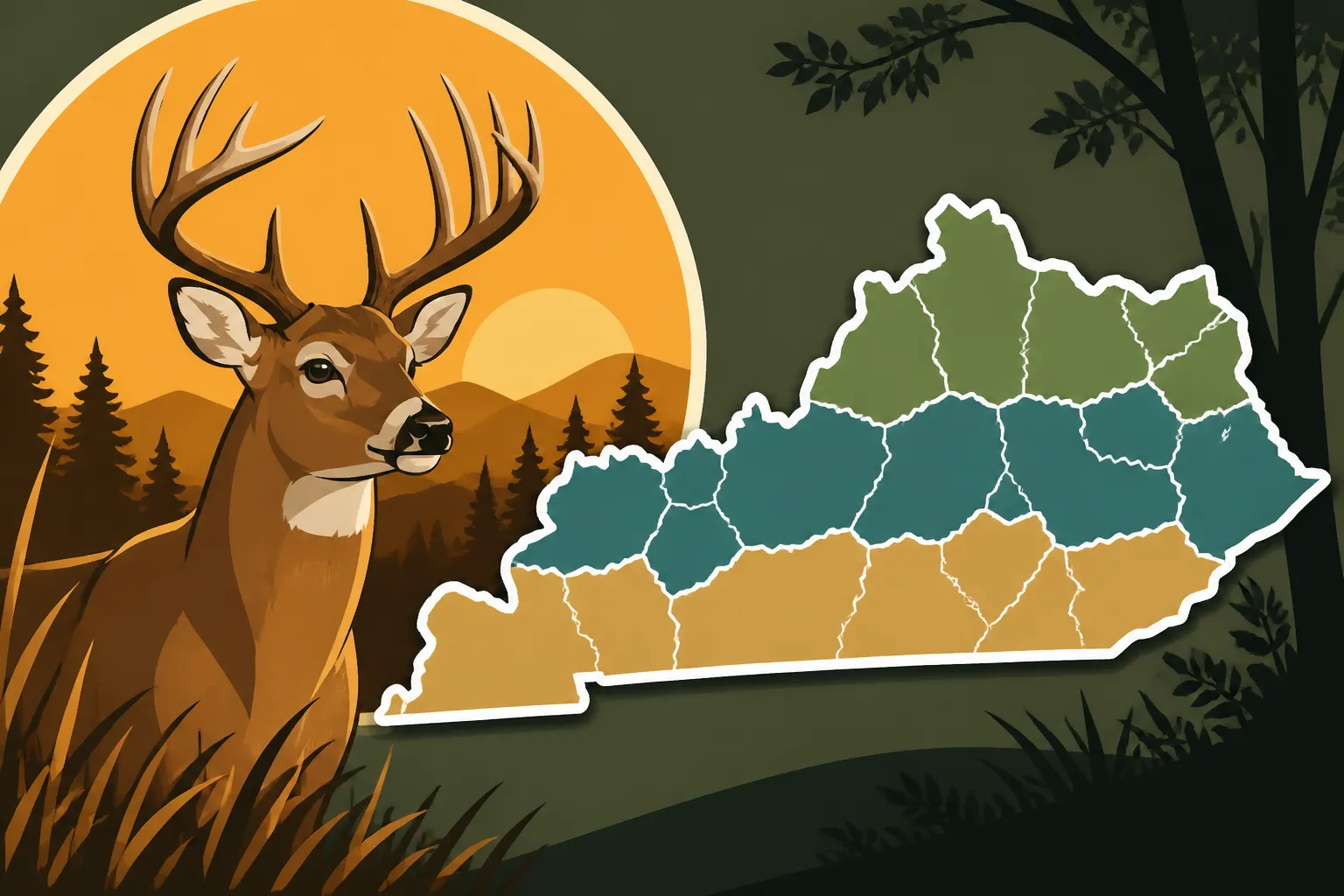
One of the most crucial elements of Kentucky's deer season structure, and often the most confusing for new hunters or those crossing county lines, is the Deer Management Zone System. Kentucky divides its 120 counties into four distinct zones: Zone 1, Zone 2, Zone 3, and Zone 4. Each zone has specific regulations, particularly regarding antlerless deer harvest, designed to manage deer populations effectively at a localized level. Ignoring these zone distinctions can lead to serious violations, so paying close attention to your specific hunting county is paramount.
Demystifying the Four Deer Zones
The KDFWR assigns counties to zones based on deer population density, habitat quality, landowner tolerance for deer, and past harvest data. Zone 1 counties typically have the highest deer populations and the most liberal harvest regulations, often encouraging hunters to take multiple antlerless deer. These are areas where deer numbers need to be actively managed to prevent overpopulation, reduce agricultural damage, and maintain overall herd health. You'll often find Zone 1 counties in prime agricultural areas or regions with abundant, high-quality habitat.
Conversely, Zone 4 counties have the lowest deer populations and the most restrictive regulations, sometimes even prohibiting antlerless harvest entirely or allowing it only during specific periods. These zones are usually in areas with less ideal habitat or where deer numbers are still recovering or being closely monitored. Zones 2 and 3 fall somewhere in between, with progressively more restrictive antlerless limits as you move from Zone 1 to Zone 4. This tiered system is a dynamic tool that allows KDFWR to tailor management efforts to the specific needs of each region.
How Zones Impact Antlerless Harvest Limits
The primary impact of the deer zones is on the antlerless bag limit. While the statewide limit for antlered deer is generally one per hunter per license year (with very specific exceptions for bonus tags in CWD zones), the number of antlerless deer you can harvest varies significantly by zone. In a Zone 1 county, during the modern gun season, you might be able to take an unlimited number of antlerless deer, or perhaps a very high number like four or five, provided you have the appropriate bonus tags. This is to aggressively manage populations. For detailed information on specific limits, refer to How Many Antlerless Deer Your Zone Allows.
As you move into Zone 2, the antlerless limit becomes more conservative, perhaps two or three. Zone 3 might restrict you to one antlerless deer, or only allow it during certain parts of the season. Zone 4, as mentioned, can be the most restrictive, sometimes only allowing antlerless harvest during archery or not at all, particularly on private lands where permissions might be harder to come by. It's a direct reflection of the KDFWR's assessment of the local deer population and management goals. Always double-check the current regulations for the specific county you plan to hunt.
Finding Your County's Deer Zone
Before you even think about hitting the woods, you absolutely need to know which zone your hunting county falls into. The KDFWR provides an official deer season guide each year that includes a map and a county-by-county list of zone assignments. You can also find this information readily available on their website. It's a quick but essential step. Many hunting apps, such as GoHunt, also integrate this information into their mapping layers, allowing you to see the zone boundaries right on your phone as you scout or hunt. This real-time information can be a game-changer when you're hunting near a county line or in an unfamiliar area.
Beyond just knowing the zone, it’s important to understand that public lands or Wildlife Management Areas (WMAs) within a county might have their own specific rules that supersede the general county zone regulations. Always consult the WMA-specific rules if you're hunting public ground, as they can sometimes be more restrictive. Knowing Finding Which Deer Zone Your County Sits In is the baseline, but local variations are common, so always read the fine print!
| Deer Management Zone | Typical Antlerless Harvest Rules (Modern Gun) | General Deer Population Status | Management Goal |
|---|---|---|---|
| Zone 1 | Liberal (e.g., Unlimited or 4-5) | High Density | Reduce/Stabilize population; maximize hunter opportunity |
| Zone 2 | Moderate (e.g., 2-3) | Moderate to High Density | Stabilize population; provide good opportunity |
| Zone 3 | Conservative (e.g., 1) | Moderate to Low Density | Grow/Maintain population; manage specific areas |
| Zone 4 | Restrictive (e.g., None or Archery-only) | Low Density | Grow population; protect herd |
Note: These are typical rules and can vary annually. Always consult the current KDFWR Hunting & Trapping Guide for exact limits.
Special Seasons and Opportunities
Beyond the general statewide archery, muzzleloader, and modern gun seasons, Kentucky offers several special opportunities designed to engage specific groups of hunters, manage local populations, or simply provide more days afield. These specialized seasons are often tailored to promote hunter recruitment, address specific management needs, or offer a unique hunting experience.
The Youth Firearms Season: Mentoring Future Hunters
Kentucky is deeply committed to fostering the next generation of hunters, and the Youth Firearms Season is a cornerstone of this effort. This special weekend, usually held in early October, allows young hunters (typically 15 years old and younger) to hunt deer with firearms prior to the general modern gun season. It's a fantastic, less pressured environment for kids to learn and experience deer hunting, often with milder weather conditions than the late fall. The regulations for this season are typically generous, often allowing both antlered and antlerless deer, depending on the zone. It’s a prime opportunity for parents, guardians, or experienced mentors to introduce children to the sport in a supportive and focused setting. Check out Kentucky Youth Firearms Weekend Dates for specific timing each year.
The emphasis during the Youth Firearms Season isn't just on harvesting a deer, but on teaching safe hunting practices, ethical decision-making, and an appreciation for wildlife and the outdoors. Mentors play a critical role, guiding the young hunter through everything from firearm safety to tracking and field dressing. These early experiences are vital in shaping responsible future conservationists. It's also a chance to bond in the woods without the usual intensity and crowds of the regular gun season.
Free Youth Weekend: An Important Incentive
In addition to the mentored Youth Firearms Season, Kentucky also offers a "Free Youth Weekend" in December, usually coinciding with the second weekend of the late muzzleloader season. This is an incredible incentive for young hunters, as it allows youth residents and non-residents 15 and younger to hunt deer without needing a hunting license or deer permit. The regulations for this weekend typically align with the late muzzleloader season, meaning specific weapon restrictions might apply, and youth must still adhere to zone-specific bag limits. This initiative aims to remove financial barriers and further encourage youth participation, especially for families who might be considering getting into hunting.
The Free Youth Weekend is also a chance for youth hunters to extend their season and potentially harvest an antlerless deer if they haven't already. While hunting during December can be challenging due to colder weather and wary deer, it offers a valuable late-season experience. It reinforces Kentucky's commitment to nurturing hunting traditions and ensuring the longevity of its conservation efforts through youth engagement.
Landowner Opportunities and Crop Damage Permits
For landowners, Kentucky provides specific allowances and programs to manage deer on their properties, especially when deer populations lead to significant crop damage or property destruction. Landowners who reside on their property or their dependents, along with those they grant written permission to, often have more liberal options for harvesting antlerless deer, particularly in high-density zones. This recognizes the direct impact deer can have on agricultural operations and private property.
Furthermore, KDFWR offers "Deer Damage Permits" in specific situations where a landowner is experiencing severe depredation by deer. These permits allow for additional deer to be harvested outside of the regular hunting seasons, under very specific conditions and reporting requirements. This is a targeted management tool to address localized problems without impacting the broader deer season structure. It underscores the KDFWR's collaborative approach with private landowners, who collectively manage a significant portion of Kentucky's deer habitat. Engaging with local conservation officers is the first step for landowners considering these options.
Antlered and Antlerless Deer Hunting Rules
Understanding the rules surrounding antlered and antlerless deer is paramount to hunting legally and responsibly in Kentucky. While the concept seems straightforward, specific nuances, especially concerning bonus tags and CWD zones, require careful attention. Kentucky's regulations are designed to manage the sex and age structure of the herd, aiming for a healthy balance that supports both trophy potential and population control.
The One Antlered Deer Statewide Limit
Generally speaking, Kentucky hunters are limited to harvesting one antlered deer per license year, regardless of the weapon used or the zone hunted. This "one buck rule" is a cornerstone of quality deer management, allowing a higher percentage of bucks to reach older age classes and express their full antler potential. It encourages hunters to be more selective, passing on younger bucks in hopes of encountering a more mature animal later in the season or in future years. This commitment to buck age structure has been instrumental in Kentucky consistently producing large-racked deer.
However, there are very specific exceptions to this rule, primarily within the Chronic Wasting Disease (CWD) Surveillance Zone. In these designated counties, hunters may be allowed to harvest a second antlered deer, provided they purchase a "CWD Zone Bonus Antlered Deer Tag." This exception serves a dual purpose: it increases hunter participation in areas where increased harvest may be desired for disease surveillance, and it provides an additional opportunity for hunters who are willing to participate in mandatory CWD testing. But for most of the state, remember: one buck and you're done.
Navigating Antlerless Bag Limits by Zone
As we've discussed, the number of antlerless deer a hunter can harvest is directly tied to the deer management zone in which they are hunting. This is where your understanding of Zone 1, 2, 3, and 4 becomes critically important. For example, during the modern gun season in a Zone 1 county, a hunter might be able to harvest multiple antlerless deer, often limited only by the number of bonus antlerless tags they possess. This contrasts sharply with a Zone 4 county, where antlerless harvest might be restricted to archery season only, or even prohibited altogether.
The rationale behind these varied limits is simple: to control the overall deer population. In areas where deer are abundant, encouraging antlerless harvest helps prevent overpopulation, reduces damage to crops and forests, and can improve the health of the remaining deer by reducing competition for resources. In sparser areas, limiting antlerless harvest allows the population to grow. Always consult the annual KDFWR hunting guide or a reliable mapping app like GoHunt to confirm the specific antlerless limits for the county and season you intend to hunt. It's not uncommon for these rules to be updated, so last year's guide might not be current.
Using Bonus Antlerless Tags Effectively
To harvest additional antlerless deer beyond the first (which is usually covered by your base deer permit), Kentucky hunters must purchase "bonus antlerless tags." These tags are typically inexpensive and can be purchased online, by phone, or from authorized license vendors. The number of bonus tags you can buy and utilize is directly linked to the antlerless bag limit of the zone you are hunting. If a Zone 1 county allows you to harvest four antlerless deer during modern gun, and your primary deer permit covers one, you would need to purchase three bonus tags to reach that limit. For the specifics on purchasing, look at Kentucky Deer Permit Cost.
Using these bonus tags effectively means targeting does when you have the opportunity, especially early in the season or during periods of high deer activity. Many hunters focus on antlerless harvest in the first few days of a season or during archery season before the main firearms pressure hits. This helps fill the freezer and contributes directly to the KDFWR's management goals. Remember, each harvested deer, whether antlered or antlerless, must be reported through the Telecheck system. Properly utilizing bonus tags is a smart way to maximize your hunting opportunities and support healthy deer populations.
Chronic Wasting Disease (CWD) and Its Impact on Seasons
Chronic Wasting Disease (CWD) is a neurological disease affecting deer, elk, and moose, and its presence in Kentucky has introduced new layers of regulation and concern for hunters. While the KDFWR is working diligently to monitor and manage the disease, hunters play a critical role in surveillance efforts. Understanding CWD, its surveillance zone, and the associated rules is not just about compliance, it's about being a responsible steward of Kentucky's deer herd.
Kentucky's CWD Surveillance Zone
Kentucky has established a CWD Surveillance Zone, which is a group of counties where CWD has been detected in captive or wild deer, or counties that are adjacent to those with known cases. This zone is a dynamic area, expanding or contracting as new information becomes available. For instance, the detection of CWD in a captive facility in Breckinridge County or the confirmation of a wild deer case in Pulaski County led to the expansion of this zone. These zones are critical for the KDFWR to monitor the prevalence and spread of the disease. Knowing if your hunting area falls within this zone is the first step, and you can find a current list of counties in Kentucky's Twenty-Two County Surveillance Zone.
Hunting within the CWD Surveillance Zone often comes with additional rules, such as mandatory testing requirements for harvested deer and restrictions on carcass movement. These measures are designed to gather data on the disease and prevent its further spread. While it might add an extra step to your hunting process, participating in CWD surveillance is a vital contribution to the long-term health of Kentucky's deer herd.
Mandatory Testing and Carcass Movement Restrictions
If you successfully harvest a deer within the CWD Surveillance Zone, you will typically be subject to mandatory CWD testing requirements during designated periods, often the opening weekend of modern gun season or specific weekends throughout other seasons. This means taking your harvested deer to a designated CWD sampling station for tissue collection. The KDFWR provides these stations at various locations within and near the surveillance zone, and some taxidermists or processors also act as collection points. This testing helps scientists understand the prevalence of the disease and track its spread.
Furthermore, there are strict carcass movement restrictions in place for deer harvested within the CWD Surveillance Zone. Generally, you cannot transport certain parts of a deer (like the brain, spinal cord, or lymph nodes) out of the surveillance zone unless specific processing requirements have been met. This is to prevent inadvertently carrying the prions (the infectious agents of CWD) to new areas. You might be allowed to transport deboned meat, clean skull plates, antlers, hides, or finished taxidermy mounts. Always check the latest KDFWR regulations regarding Moving a Deer Carcass Out of the Surveillance Zone to ensure you're in compliance.
How CWD Affects Local Hunting Regulations
Beyond mandatory testing and carcass movement, the presence of CWD can also influence local hunting regulations directly. In some CWD-affected counties, the KDFWR might implement more liberal antlerless deer harvest limits or even allow for a second antlered deer (with a special bonus tag) to increase overall harvest pressure. The goal here is often to reduce deer densities, as higher densities can potentially facilitate CWD transmission among animals. This is why you see the rare exception to the "one antlered deer" rule within the CWD Zone.
These adjustments are dynamic and can change annually based on disease prevalence and surveillance results. The KDFWR's priority is to contain CWD and minimize its impact on Kentucky's deer herd. As hunters, staying informed about these specific CWD-related regulations, participating in testing, and adhering to carcass restrictions are crucial parts of responsible hunting in Kentucky today. It's a collective effort to protect the resource we all cherish.
Licensing, Permits, and Harvest Reporting Essentials
Hunting in Kentucky, like any state, requires proper licensing and permits. These aren't just bureaucratic hurdles; they are the financial backbone of wildlife conservation, directly funding the KDFWR's efforts in habitat management, law enforcement, and research. Understanding what licenses you need and how to report your harvest correctly is non-negotiable for every hunter.
The Essential Kentucky Hunting License
Before you can even think about hitting the woods, you need a valid Kentucky hunting license. For Kentucky residents, there are several options, from an annual statewide hunting license to more comprehensive bundles like the "Sportsman's License" which often includes deer, turkey, and other permits at a discounted rate. Non-residents also have annual and short-term license options. The cost of a Kentucky Resident Hunting License Cost is an investment in conservation, and it’s important to purchase the correct one for your situation. Youth hunters often have different requirements or even free opportunities, as mentioned with the Free Youth Weekend.
You can purchase licenses and permits online through the KDFWR website, by phone, or in person at various vendors across the state, including many sporting goods stores and county clerk offices. It's crucial to carry proof of your license while hunting, whether it's a physical copy, a screenshot on your phone, or a digital version accessible via the KDFWR app. Kentucky law requires hunters to produce their license upon request by a conservation officer.
Deer Permits and Bonus Tags
In addition to your general hunting license, you will also need a specific "deer permit" to legally harvest deer in Kentucky. This permit typically allows you to harvest one antlered deer and a specified number of antlerless deer, depending on the deer zone and season. For instance, your base deer permit might cover one antlered deer and one antlerless deer. If you plan to harvest more antlerless deer in a Zone 1 or Zone 2 county that allows for a higher bag limit, you will need to purchase additional "bonus antlerless tags." As discussed earlier, there might also be specific CWD Zone Bonus Antlered Deer Tags if you're hunting in those areas and wish to take a second buck.
The cost of a Kentucky Deer Permit Cost is separate from your general hunting license. These permits are crucial for tracking harvest numbers and funding deer-specific management programs. Always ensure you have the correct combination of a valid hunting license and the necessary deer permits/bonus tags for the number and type of deer you intend to harvest, for the specific county and zone you are hunting in.
Telecheck: Reporting Your Harvest Accurately
Kentucky operates a mandatory "Telecheck" system for reporting all deer harvests. This means that after you successfully harvest a deer, you are legally required to report it through the KDFWR Telecheck system by calling a toll-free number, using the KDFWR website, or via the official KDFWR mobile app. This must be done by midnight on the day the deer is recovered, prior to any processing or dismemberment that would prevent the identification of species, sex, and antler development. This is a critical step for KDFWR to collect real-time harvest data, which is vital for managing the herd.
During the Telecheck process, you'll be asked for information such as your license number, the date and county of harvest, the species (deer), sex (buck or doe), and whether it was antlered or antlerless. You'll also provide the number of points on an antlered deer. Once reported, you'll receive a confirmation number. This confirmation number must remain with the deer until it reaches its final processing destination. For a detailed guide on the process, refer to Reporting a Deer Through Kentucky Telecheck. Failing to Telecheck a harvested deer is a violation and can result in penalties.
Planning Your Kentucky Deer Hunt: Key Considerations
With a clear understanding of Kentucky's deer season structure, the next step is to translate that knowledge into a successful hunting plan. This involves more than just knowing dates; it requires strategic thinking about scouting, land access, and adhering to specific local regulations. A well-prepared hunter is often a successful and ethical hunter.
Scouting and Strategy Across Different Seasons
Effective scouting is the foundation of any successful deer hunt, and it's particularly important in Kentucky with its varied terrain and season lengths. For the early archery season, focus on identifying primary food sources, water, and bedding areas. Deer are often still in their summer patterns, so looking for fresh browse, acorn crops, or agricultural fields can be key. As the season progresses into the rut during modern gun season, shifting your focus to travel corridors, pinch points, and scrape lines becomes more effective. Deer drives on public land are also a common tactic during this period, particularly in the rugged terrain of eastern Kentucky. A mapping tool like GoHunt can be invaluable here, allowing you to mark sign, potential stand locations, and plan your entry and exit routes without disturbing the area.
Late season, following the firearms pressure, requires a different strategy. Deer become warier and primarily focus on caloric intake. Identifying late-season food sources like standing corn, winter wheat, or persistent acorn patches, especially those close to thick cover, can be highly productive. Understanding Hunting the Rut in Early November is vital for those prime weeks, but adapting your strategy throughout the other seasons is what makes a well-rounded Kentucky deer hunter.
Public vs. Private Land: Rules and Access
Kentucky offers a wealth of hunting opportunities on both public and private lands, but the rules and access requirements differ significantly. Public lands, including Daniel Boone National Forest, Wildlife Management Areas (WMAs), and certain state parks, are open to all licensed hunters, often with specific regulations tailored to that area. While public land offers great access, it also means increased hunter pressure, especially during opening weekends. Researching specific WMA rules before you go is a must, as some may have special draw hunts, limited access, or different bag limits than the surrounding county.
Hunting on private land in Kentucky generally requires explicit permission from the landowner. While Kentucky law doesn't always mandate written permission, it's always a good practice to obtain it to avoid any misunderstandings or potential trespassing issues. Building relationships with landowners can unlock access to prime hunting ground and often leads to more consistent success. Whether you're hunting public or private ground, always respect property lines and leave no trace.
Understanding Local Regulations and WMA-Specific Rules
While the statewide regulations provide a general framework, it's the hyper-local rules that can often trip up hunters. As mentioned, individual WMAs often have specific regulations that can differ from the county they are located in. These might include antler restrictions, different antlerless bag limits, specific legal weapon types, or even restricted hunting days. For example, some WMAs might be designated "Pioneer Weapons Only" tracts, limiting you to specific primitive firearms or archery gear.
It's your responsibility as a hunter to consult the specific rules for any WMA or public land you plan to hunt. The KDFWR website and their annual hunting guide are your best resources for this information. Don't assume that just because you know the rules for one county or WMA, they apply everywhere. A few minutes of research can prevent a citation and ensure a safe, legal, and enjoyable hunt. This level of detail is crucial for maximizing your success.
Disclaimer
Please note that hunting regulations, season dates, and zone classifications are subject to change by the Kentucky Department of Fish and Wildlife Resources. While this guide aims to be comprehensive and up-to-date, it is the hunter's responsibility to consult the most current official Kentucky Hunting & Trapping Guide before engaging in any hunting activities. Always prioritize safety, ethical hunting practices, and compliance with all applicable laws and regulations.