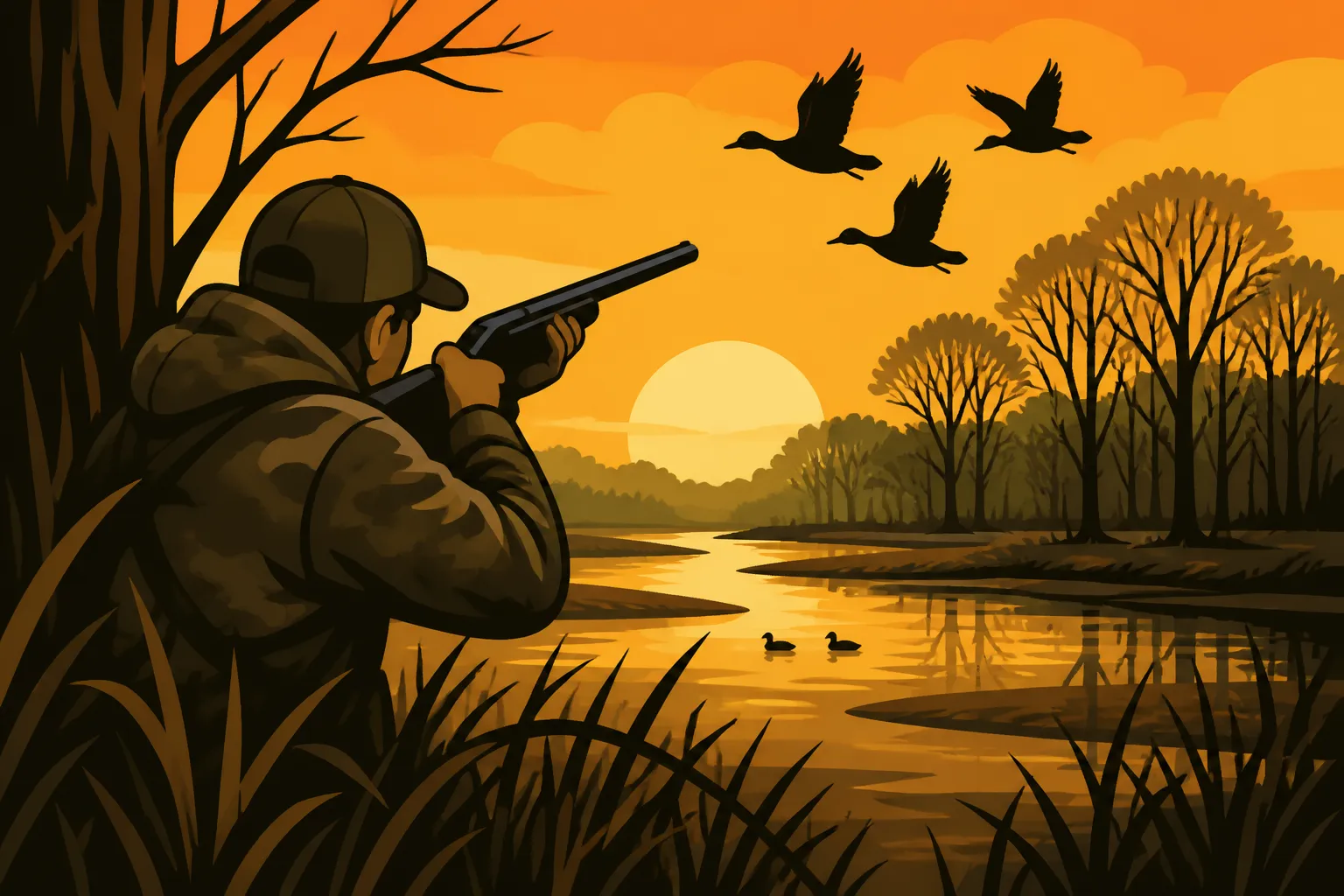
Hunting Western Kentucky River Bottoms
Those vast, sprawling river bottoms in Western Kentucky can feel like a labyrinth, can't they? All that dense cover, winding waterways, and fluctuating water levels often leave hunters scratching their heads, wondering where to even begin. If you've ever felt overwhelmed by the sheer scale and complexity of these unique hunting grounds, you're not alone. This comprehensive guide will peel back the layers of these incredible ecosystems, offering practical, on-the-ground strategies to help you unlock their secrets and consistently find success, whether you're after whitetails, waterfowl, or small game.
Understanding the Unique Ecology of Western Kentucky River Bottoms
Western Kentucky is blessed with an incredible network of river systems, most notably the Ohio and Mississippi rivers, along with major tributaries like the Green, Tradewater, and Cumberland. These rivers create vast expanses of low-lying, often flood-prone land known as river bottoms, or bottomlands. These areas are a world unto themselves, a rich tapestry of habitat that draws in game animals from miles around. But what makes them so special, and often so challenging, for us hunters? It's all about the interplay of water, food, and cover, which combine to create an unparalleled haven for wildlife.
The Dominant Influence of Water Features
Water is the lifeblood of these bottomlands, dictating everything from deer movement to waterfowl activity. You'll encounter a dynamic landscape of oxbow lakes, sloughs, seasonal wetlands, and backwater areas that are constantly changing with the river's ebb and flow. These features aren't just pretty scenery; they're critical components of the ecosystem. Deer, for example, will use sloughs and shallow backwaters as security cover, often bedding down on small, elevated islands or peninsulas that are harder for predators (and hunters) to access. They also create natural funnels and pinch points where deer are forced to travel, making scouting and stand placement much more predictable.
During periods of high water, the game animals often retreat to higher ground, even if it’s just a foot or two of elevation difference, creating temporary concentrations that can be golden opportunities for hunters. Knowing how to read the river's stage and anticipate these movements is a skill developed over time, but one that pays huge dividends. For waterfowl, these flooded areas are obvious magnets, providing critical feeding and resting grounds during migration and throughout the season. Understanding the nuances of water levels and how they impact animal behavior is truly step one in mastering these challenging, yet rewarding, environments.
Abundant Food Sources and Their Seasonal Appeal
River bottoms are inherently fertile, thanks to rich alluvial soils deposited by periodic flooding. This fertility translates directly into an incredible abundance and diversity of food sources, making these areas incredibly attractive to wildlife, especially deer. You'll find towering mast-producing trees like various oak species (especially pin and Nuttall oaks that tolerate wet feet) that drop acorns well into the late season, along with pecan and persimmon trees. Beyond mast, the thick understory provides a buffet of browse, from woody stems to succulent forbs.
It’s not just the natural bounty, either. Much of Western Kentucky's river bottom country is intertwined with agriculture. Think vast fields of corn, soybeans, and winter wheat that run right up to the timber edge. Deer will often bed deep in the thick cover of the bottomlands and pour out into these fields at dawn and dusk. This combination of natural forage and agricultural crops creates a year-round food supply that can hold deer in a relatively small area. Understanding when these different food sources are most appealing throughout the year is key to predicting deer movement. For instance, early archery season might see deer hitting isolated persimmon trees, while late season is all about those hard-to-reach standing cornfields or late-dropping acorns.
Dense Cover and Thermal Regulation
One of the most defining characteristics of river bottoms is the sheer density of the vegetation. We’re talking about impenetrable cane thickets, tangled briar patches, willow stands, and dense sapling regeneration. For deer, this isn’t just cover; it's a fortress. This thick structure provides ultimate security from predators and hunters alike, often making it extremely difficult to penetrate without making a ruckus. Bucks, especially, will often seek out these nearly impenetrable havens, feeling completely safe.
Beyond security, this dense vegetation plays a crucial role in thermal regulation. In the sweltering heat of early archery season, the deep shade and often slightly cooler air closer to water provide respite. Conversely, during the bitter cold snaps of December and January, these dense thickets act as fantastic windbreaks and insulation, helping deer conserve precious body heat. Knowing that deer will gravitate towards these areas for comfort, not just safety, gives you another piece of the puzzle. When you're Hunting the Late-Season January Lull, finding these thermal sanctuaries becomes paramount for success.
Deer Hunting Strategies Tailored for River Bottoms
Hunting deer in Western Kentucky's river bottoms demands a specific approach, one that leans into the unique characteristics of the terrain rather than fighting against it. It's about reading the subtle signs, understanding how deer navigate water, and patiently observing their patterns in this complex environment. Forget those wide-open timber strategies; here, precision and stealth are your best friends.
Pre-Season Scouting and Reading the Land
Effective scouting in river bottoms starts long before you ever step foot in the woods, primarily with good old-fashioned map work. Tools like GoHunt's satellite imagery can be incredibly powerful for identifying key features. Look for areas where water creates natural bottlenecks, narrowing down vast expanses of timber into predictable travel corridors. Pinpoint elevated ground that might serve as bedding areas during higher water, or slight rises that remain dry even when everything else is flooded. Creek crossings, old logging roads, and even subtle changes in vegetation density can all be revealed from an aerial perspective.
Once on the ground, your boots-on-the-ground scouting needs to be meticulous. Look for heavy trails along slough edges, parallel to major rivers, or leading from dense bedding cover to feeding areas. Pay close attention to rub lines and scrape lines; these are often concentrated along these natural travel corridors. During the summer, before leaves completely fill in, is a great time to identify those seemingly impenetrable thickets that offer supreme security cover – those are often prime bedding spots. Don't be afraid to get a little wet and dirty; the areas that are hardest for you to access are often where the biggest bucks feel safest. For example, learning to read a ridge for Cumberland deer might seem different, but the principle of identifying travel corridors between bedding and feeding is the same, just adapted to the bottomland's unique contours.
Stand Placement for Success in Wet Terrain
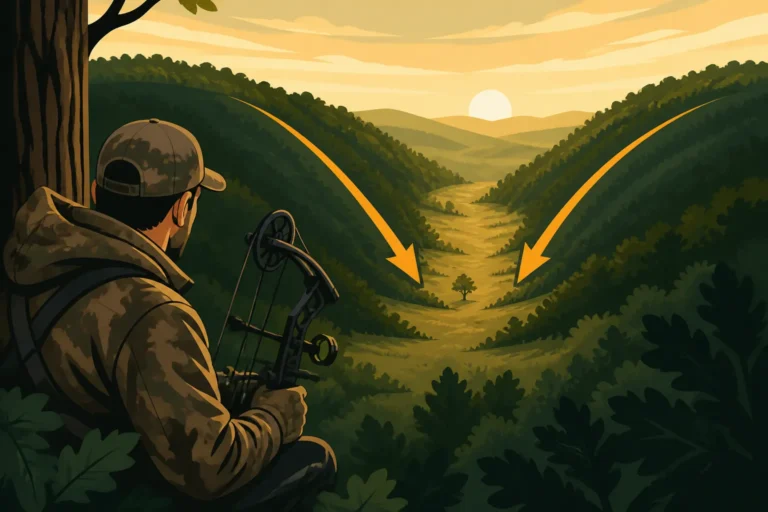
Choosing the right stand location in river bottoms is critical, and it often revolves around predicting how deer will move through, around, or even across water features. Funnels are paramount here. Look for narrow strips of dry ground between two sloughs, where a slight elevation change forces deer into a tight corridor. Creek bends, points of land jutting into water, and the edges of dense cane breaks are all excellent places to set up. These are the natural highways deer use to navigate the landscape.
When considering your approach and exit, always think about the wind and your scent, especially given the typically flat topography where thermals can be less predictable. Often, setting up where you can use a water feature for a quiet entry and exit, like canoeing to a stand location, can be a game-changer. Consider using a ground blind if you're on a field edge or in a thicket. Using a ground blind on Kentucky public land offers excellent concealment in the dense undergrowth often found in bottomlands. Focus on transition areas: where a soybean field meets a timber edge, or where thick cover thins out into more open woods. Deer will often pause and survey their surroundings in these spots before committing to an open area. Remember, the goal isn't just to see a deer, but to get a shot opportunity, so always have a clear shooting lane, even if it's a small window in the brush.
Hunting the Rut in Western Kentucky Bottoms
The rut in Western Kentucky river bottoms can be absolutely phenomenal, but it requires understanding how bucks behave in this specific habitat. During the peak of the rut, roughly when Hunting the Rut in Early November is in full swing, bucks will be actively cruising for does. In these bottomland environments, this often means they’re patrolling the edges of thick cover, scent-checking sloughs and oxbows, and following established trails. They might not cover vast, open areas, but rather meticulously work through the dense vegetation, following subtle terrain features and established corridors.
Tactics like rattling and grunting can be particularly effective, especially if you position yourself in a good travel corridor with good visibility. A buck cruising a slough edge might hear your calls and come to investigate, thinking another buck is in his territory. Don't be afraid to get aggressive with your calling during this period. Also, keep an eye on those small islands and elevated spots within flooded areas. Does often seek refuge there, and bucks will certainly follow. You might even observe deer driving on Kentucky public land during the rut, pushing deer out of these dense bedding thickets and creating shot opportunities. Patience and being prepared for a quick, close-range shot are essential when hunting the rut in these dynamic environments.
Beyond Deer: Other Game in Western Kentucky River Bottoms
While whitetails often steal the spotlight in Western Kentucky river bottoms, these rich ecosystems are teeming with other game species that offer fantastic hunting opportunities throughout the year. From the thunder of a duck flush to the quick scamper of a cottontail, the bottomlands provide diverse challenges and rewards for the multi-species hunter.
Waterfowl Opportunities in Flooded Timber and Sloughs
Western Kentucky, especially along the Ohio and Mississippi rivers, is a major stopover on the Mississippi Flyway, making its river bottoms prime real estate for waterfowl hunters. Flooded timber, oxbow lakes, and the numerous sloughs that checker the landscape are magnets for ducks and geese. Mallards and wood ducks are particularly prevalent, drawn to the abundant acorns and other natural foods found in these areas. Early in the season, wood ducks are often found in tight, secluded pockets of flooded timber, while later in the year, mallards will dominate the larger open water areas and feed in adjacent agricultural fields.
Setting up for waterfowl in these areas requires knowledge of local flight patterns and, often, a boat or waders to access prime locations. For flooded timber hunts, setting out a spread of decoys within shooting lanes carved out of the trees, often with a spinning wing decoy, can be deadly. In larger sloughs, layout blinds and a diverse spread of duck and goose decoys can attract passing birds. Being able to read a bottomland slough for a morning flight is a skill that takes practice, but understanding how ducks use these waterways for resting and feeding is crucial. Many public areas, like Sloughs Wildlife Management Area, are renowned for their waterfowl hunting, and often require special permits or draw hunts, so always check the Kentucky Department of Fish and Wildlife Resources (KDFWR) regulations for specific areas.
Small Game Galore: Squirrels, Rabbits, and More
Don't overlook the incredible small game opportunities within these river bottoms. The dense forests and thick underbrush create ideal habitat for squirrels and rabbits, providing both food and ample cover. For squirrel hunters, the bottomland timber, especially stands of mature oak, pecan, and hickory, is a goldmine. You'll find gray and fox squirrels alike, busily cutting nuts. A good strategy is to find a stand of mast-producing trees and patiently wait, or slowly still-hunt through the woods, stopping frequently to scan the treetops. When Squirrel Hunting Kentucky Bottomland Hardwoods, focus on areas with fresh cuttings under the trees. A good pair of binoculars can help spot movement in the dense canopy.
Rabbit hunting truly shines in the briar patches, cane thickets, and fencerows that are characteristic of river bottoms. These dense areas provide perfect protection for cottontails. Running beagles is a classic and highly effective method, as the dogs can push rabbits out of the thickest cover into more open areas where hunters can get a shot. If you don't have dogs, jump-shooting by slowly working through these thickets, often in a small group, can also be productive. When Rabbit Hunting Kentucky Fencerows, pay attention to areas where fencerows meet larger thickets, as these serve as travel corridors and escape routes. The action can be fast and furious, offering an exciting change of pace from deer hunting.
Navigating Access, Public Lands, and Regulations
Hunting in Western Kentucky river bottoms, particularly on public land, often comes with its own set of logistical challenges. From understanding complex land boundaries to adhering to specific WMA rules, successful navigation requires careful planning and a thorough understanding of the regulations. It's not always as simple as parking and walking into the woods; sometimes, a boat is your best friend.
Public Versus Private Land Complexities
The checkerboard nature of public and private land ownership in Western Kentucky can be incredibly confusing, especially in river bottom areas. Many public lands, such as portions of the Sloughs Wildlife Management Area or Peabody Wildlife Management Area, are often interspersed with private agricultural fields or parcels. It's absolutely crucial to know exactly where you are at all times. Using a reliable mapping application like GoHunt's property line layers can prevent accidental trespassing and save you a lot of headaches. These apps can also highlight landlocked public parcels that can only be accessed by crossing private property (which requires permission) or by navigating waterways.
Always respect private land boundaries, even if a deer runs onto posted property. Under Kentucky law, you typically need permission to retrieve game from private land. Before venturing out, identify all the public land access points and boundaries in your target area. Some WMAs might also have unique rules regarding vehicle access, camping, or even specific hunting zones, so a quick check of the KDFWR website for the specific WMA is always a smart move. When Scouting Kentucky Public Land Before Season, mapping out these boundaries and potential access routes is a top priority.
Water Access and Safety Considerations
Given the prevalence of water features in river bottoms, understanding water access is often key to unlocking remote hunting spots that see less pressure. Using a canoe, kayak, or small jon boat can allow you to reach areas that are otherwise difficult or impossible to access on foot. This can mean getting to a secluded island bedding area for deer or slipping into a quiet slough for waterfowl. However, water access comes with its own safety considerations.
Always wear a life vest, especially when operating a boat in cold weather or swift currents. Be mindful of changing water levels; what might be navigable one day could be too shallow or too swift the next. Pay attention to weather forecasts for strong winds or sudden downpours, which can quickly turn a calm river into a dangerous environment. Understand the specific boating and hunting regulations for each body of water you intend to use. For example, some areas may have restrictions on motor size or type. Remember, getting to your spot is only half the battle; you also need to get back safely, especially when loaded with gear or a harvested animal.
Local Regulations and Telecheck Requirements
Beyond general statewide hunting regulations, many of Western Kentucky's river bottom WMAs and public areas have specific rules that you absolutely must abide by. These can include restrictions on hunting methods, specific dates for certain game species, or special permit requirements for quota hunts. For instance, Ballard Wildlife Management Area is renowned for its waterfowl hunting but operates under a complex blind draw system with strict rules.
Always consult the current Kentucky Hunting and Trapping Guide and any specific addendums for the WMA you plan to hunt. Make sure your licenses and permits are up to date; you'll need a valid hunting license and often a deer permit or turkey permit, depending on what you're chasing. Remember that all deer and turkey harvests must be reported through the Kentucky Telecheck system by midnight on the day the animal is harvested. Understanding the Kentucky Deer Season Structure Explained is critical to ensuring you're compliant with bag limits and season dates for your specific zone. Being prepared and informed ensures a safe, legal, and ultimately more enjoyable hunt in Western Kentucky's challenging but rewarding river bottoms.
Western Kentucky River Bottoms Hunting Overview
| Game Species | Primary Habitat Focus | Best Season(s) | Key Tactics | Common Challenges |
|---|---|---|---|---|
| Whitetail Deer | Slough edges, dense cane thickets, transition lines to ag fields, elevated islands | Archery (Early/Rut), Modern Gun, Muzzleloader | Scouting pinch points, trail cameras, stand placement on travel corridors, calling during rut | Dense cover, fluctuating water, scent control in humid air, access limitations |
| Waterfowl (Ducks/Geese) | Flooded timber, oxbows, sloughs, agricultural fields adjacent to water | Fall/Winter | Decoy spreads, blind concealment, calls, boat access, scouting flight patterns | Changing water levels, competition for spots, specific WMA regulations (draws, etc.) |
| Squirrels (Gray/Fox) | Mature bottomland hardwoods (oak, pecan, hickory), riparian forest | Early Fall, Late Fall/Winter | Still-hunting, watching mast trees, small caliber rifles or shotguns | Dense canopy, spotting movement, heavy leaf litter |
| Rabbits | Briar patches, cane thickets, fencerows, brush piles along edges | Fall/Winter | Running dogs (beagles), jump-shooting thickets, small gauge shotguns | Thick cover, quick shots, dog management |
Disclaimer
Hunting is an inherently dangerous activity. Always prioritize safety, including wearing appropriate blaze orange/pink when required, using fall restraint systems in treestands, and following all firearm safety rules. Consult the current Kentucky Hunting and Trapping Guide for the most up-to-date regulations, season dates, and license requirements. This guide provides general information and recommendations and should not replace official KDFWR publications or professional safety instruction.