Still-Hunting Eastern Kentucky Ridges
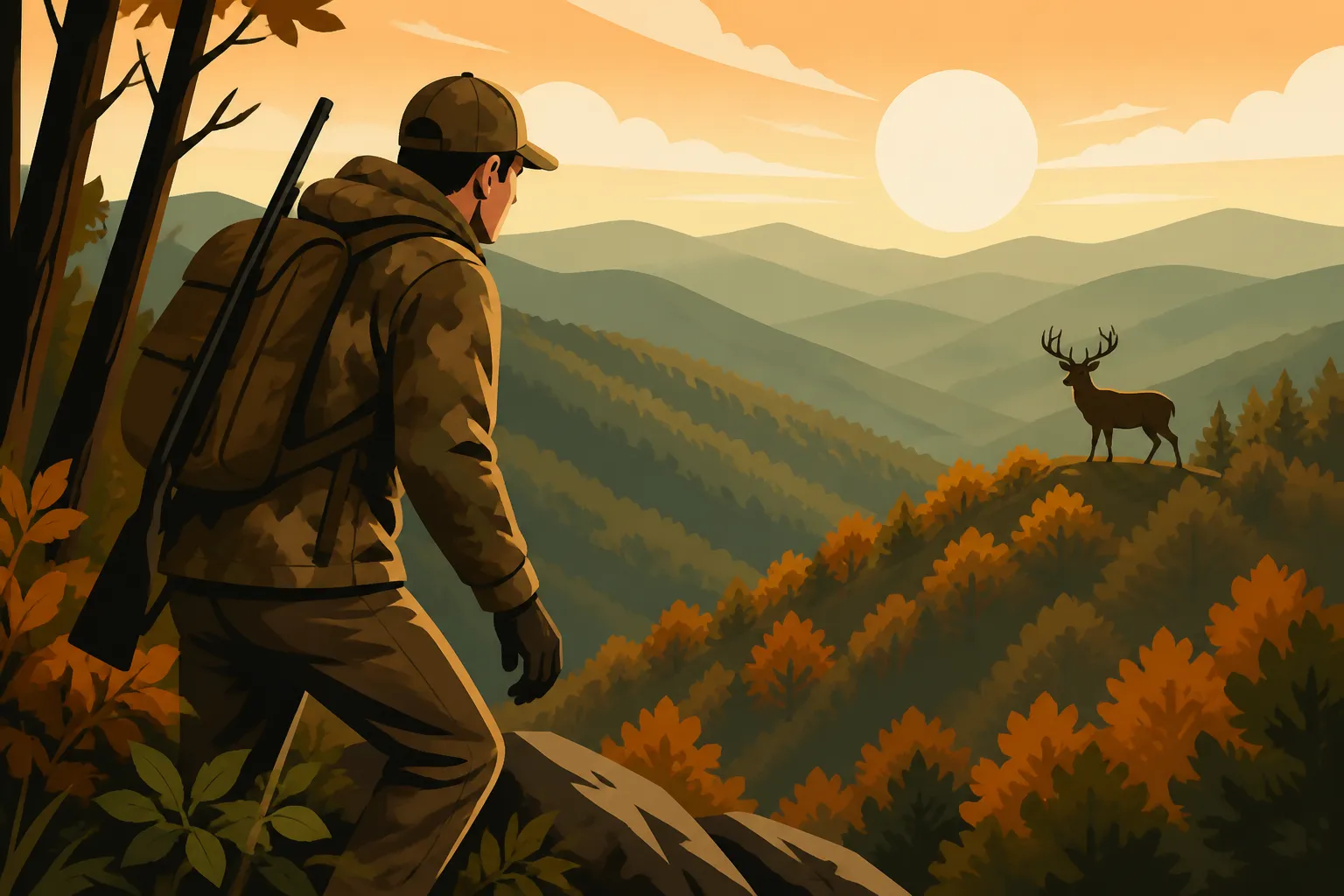
Hunting the rugged, steep terrain of Eastern Kentucky can feel like a daunting task, especially when those whitetails seem to melt into the landscape the moment you step foot in the woods. Many of us have experienced the frustration of busting deer before we even know they're there, or walking for hours only to see nothing. This guide is all about mastering the nuanced art of still-hunting these challenging Eastern Kentucky ridges, transforming your approach from just walking through the woods to becoming an active, stealthy predator.
Understanding Eastern Kentucky Terrain and Deer Behavior
Eastern Kentucky isn't like the flat farmlands of the west. It's a world of rolling hills that quickly turn into steep mountains, deep hollows, and dense timber. Successfully still-hunting here means understanding this unique environment and how deer navigate it.
Ridge Systems and Topography
The topography of Eastern Kentucky is defined by its complex network of ridge systems. You've got long, sprawling main ridges, often with old logging roads or trails along their spines, that then splinter off into countless smaller fingers and points. These fingers typically drop steeply into deep hollows and creek bottoms. Deer use these elevation changes constantly. They'll often bed on benches or small flats just below the crest of a ridge, catching the thermal drafts that rise in the morning and fall in the evening, providing them with advanced warning of anything approaching. Identifying these subtle terrain features, like saddles between two high points or small benches on a steep slope, is crucial. These are natural funnels where deer movement concentrates. A powerful mapping application, like GoHunt, can be incredibly helpful for e-scouting these nuances before you even hit the woods, allowing you to visualize elevation changes and potential travel routes.
Deer Habits in Steep Country
Deer in Eastern Kentucky are masters of using the terrain to their advantage. They don't just wander; they move with purpose, often sticking to paths of least resistance or areas that offer the most security. You'll find them traveling along the top third of a ridge, especially if there's good cover, or using subtle benches that contour along a hillside. They're notoriously wary, always listening and watching downhill for threats, and using the wind to detect anything approaching from above. During the rut, bucks will often cruise these ridge lines and benches, checking for does, so understanding Hunting the Rut in Early November becomes paramount. Expect deer to be bedded in thick cover, often just out of sight, ready to bail down into a hollow at the first sign of danger. Their behavior is largely dictated by food sources, cover, and hunting pressure.
Food Sources and Travel Corridors
In Eastern Kentucky, food sources are predominantly natural mast crops like acorns, beech nuts, and wild grapes, supplemented by browse from various woody plants. When acorns are abundant, deer will gravitate towards oak flats, often found on upper ridge slopes or in certain hollows. During years with a poor acorn crop, you might find deer focusing more on browse in younger timber cuts or seeking out more persistent food sources in creek bottoms. Understanding Hunting After a Poor Acorn Year can drastically change your still-hunting strategy. Travel corridors are less about wide-open trails and more about subtle deer runs weaving through the timber, following benches, drainages, or the path of least resistance up and down a ridge. Look for these faint trails and rub lines, especially during the pre-rut and rut, as they can indicate active travel routes.
Essential Gear for Still-Hunting Success
Still-hunting is physically demanding, especially in Eastern Kentucky's rugged terrain. Having the right gear isn't just about comfort; it's about efficiency, safety, and maximizing your chances of success.
Optics and Visibility
Good optics are non-negotiable for still-hunting these steep, timbered ridges. You're constantly scanning, trying to pick apart shadows, distinguish a branch from a leg, or find that tell-tale horizontal line of a deer's back in a vertical forest. A quality pair of 8x or 10x binoculars is ideal. I personally lean towards 10×42 for this type of country, as the extra magnification can make a real difference when trying to identify a deer at distance or through dense cover, though some prefer 8x for a wider field of view. Consider Binocular Power for Ridge Hunting when making your choice. A rangefinder is also incredibly useful, not just for shot placement, but for quickly measuring distances to potential bedding areas or funnels you want to check out. The dense timber and undulating terrain can play tricks on your eyes, making distances hard to judge.
Footwear and Layering
Your feet are your most important tool when still-hunting. You'll be covering miles, often on uneven, steep, and potentially wet ground. Comfortable, waterproof, and supportive boots are a must. Look for boots with aggressive tread for traction on slippery leaves and mud, and good ankle support to prevent twists and turns on rocky slopes. Consider Boots for Walking Kentucky Ridges as a starting point. Layering your clothing is also critical for managing your body temperature throughout the day. You'll be working up a sweat climbing ridges, but then sitting or moving slowly, potentially in cold or windy conditions. A good base layer to wick moisture, a mid-layer for insulation, and a quiet, waterproof outer shell are essential. Wool or quiet synthetics are preferred over noisy cotton.
Pack Essentials for a Long Day
Even on a "day hunt," a well-stocked pack is crucial. You never know when a quick trip might turn into an all-day affair, especially if you harvest an animal. My pack always includes a water bladder or bottles, high-energy snacks, a headlamp, a small first-aid kit, a sharp knife, game bags, a roll of flagging tape (for tracking or marking a stand location), and a communication device (phone and maybe a satellite messenger for areas without service). Even if you're not planning to hang a stand, having a few pieces of flagging to mark a blood trail or a specific tree where you saw sign can be a lifesaver. Given the potential for remote areas, knowing how to navigate using a mapping app like GoHunt on your phone, even offline, is invaluable.
Mastering the Art of Still-Hunting Movement
Still-hunting isn't about walking; it's about flowing through the woods, integrating yourself into the environment rather than intruding upon it. This demands incredible patience and awareness.
The Slow, Deliberate Pace
The most common mistake still-hunters make is moving too fast. To truly still-hunt effectively in Eastern Kentucky, you need to move at a snail's pace. I'm talking one step, then pause for a minute or more. Seriously. Your movement should be so slow that if someone were watching you, they might not even realize you're moving. This allows you to really see the woods, not just walk through them. It gives you time to pick apart cover, identify deer sign, and spot deer before they spot you. It also allows time for any deer you might have bumped to settle down, or for new deer to move into an area. Think of it as hunting with your eyes and ears first, and your feet second. The goal isn't to cover ground, it's to cover ground effectively and undetected.
Using Cover and Contours
Every step you take should be intentional, using the terrain and natural cover to your advantage. Try to stay below ridge crests as much as possible, using the rolling contours of the land to break up your silhouette. If you must walk along the very top of a ridge, do so with extreme caution, often peeking over the edge rather than exposing your full body. Walk with trees, thickets, or rock outcroppings between you and potential deer bedding areas. When crossing an open area, move quickly but quietly, and then get back into cover. In steep hollows, deer will often travel along benches or subtle terrain breaks; emulate this to move more naturally through their world. This careful navigation is key to finding Ground That Sees Fewer Hunters.
Stopping, Looking, and Listening
This is the core of still-hunting. After every few steps – or even just one – you must stop. And I mean truly stop. Lean against a tree, take a knee, or just stand motionless. Then, systematically scan your surroundings. Don't just glance; use your binoculars to scrutinize every shadow, every clump of brush, every unusual shape. Look for horizontal lines (a deer's back), contrasting colors (a deer's belly against dark timber), or flicking ears. Scan 360 degrees, including behind you. While scanning, listen. What does the woods tell you? A distant crow? A squirrel chattering angrily? The rustle of leaves that wasn't you? Pay particular attention to the sounds of falling acorns or subtle crunching that might indicate a deer feeding. This hyper-awareness is what separates successful still-hunters from those who merely take a walk. Often, it's the subtle flick of a tail or the slight shift of weight that reveals a deer standing perfectly still.
Reading the Woods: Interpreting Sign and Conditions
Being able to "read the woods" is like having a secret language with nature. It tells you where deer have been, where they're going, and what they might be doing.
Identifying Fresh Sign
As you move slowly, constantly be on the lookout for fresh deer sign. This includes tracks, droppings, rubs, and scrapes. Tracks in soft dirt or mud can tell you the size of the deer, its direction of travel, and how recently it passed. Fresh droppings are shiny and moist; older ones are dull and dry. Rubs, where a buck has rubbed its antlers on a sapling, indicate male deer activity, and fresh sap or bark tells you it's recent. Scrapes, patches of bare earth where a buck has pawed away leaves and urinated, are another major sign, especially during the pre-rut and rut. Pay attention to their freshness. A hot scrape with a strong odor could mean a buck is actively checking it. Finding Scrape Lines Along a Logging Road can be a huge clue to buck movement.
Understanding Wind and Thermals
Wind and thermals are your best friends or worst enemies in the Eastern Kentucky mountains. Wind dictates your primary scent cone, while thermals are localized air currents that rise and fall with temperature changes. In the morning, as the sun warms the ground, thermals generally rise, carrying your scent uphill. In the evening, as the air cools, thermals drop, carrying your scent downhill. You want to hunt against these air currents whenever possible. If you're still-hunting up a ridge in the morning, stay on the downwind side of the thermal. In the evening, reverse it. The wind, however, is king. Always try to keep the prevailing wind in your face or quartering. Understanding Wind and Thermals on a Kentucky Ridge is absolutely crucial for still-hunting success, especially when moving through complex terrain where air currents can swirl.
Reading Terrain for Ambush Points
Still-hunting isn't just about finding deer; it's about positioning yourself for a shot when you do. As you move, constantly identify potential ambush points or natural funnels where a deer might appear. These could be saddles, creek crossings, the convergence of multiple deer trails, or a natural pinch point between thick cover and an open feeding area. Think like a deer: where would you feel safe traveling? Where would you stop to browse? Where would you cross a hollow? Knowing Hunting a Funnel Between Two Hollows is a skill that translates directly to still-hunting. Once you identify such a spot, move towards it slowly, using all available cover, and then stop, settle in, and intently watch for deer movement. Your still-hunt might pause for 20-30 minutes, or even longer, essentially turning into a mini-sit.
| Still-Hunting Pace | Key Focus | Ideal Terrain | Advantages | Disadvantages |
|---|---|---|---|---|
| Snail Pace | Maximum stealth & observation | Thick cover, bedding areas | Highest chance of spotting deer first, close encounters | Very slow, covers little ground, requires immense patience |
| Creep Pace | Balanced stealth & coverage | Feeding areas, travel corridors | Good for covering more ground slowly, good visibility | Can still bust wary deer if not careful |
| Power Pace | Rapid movement between zones | Open timber, approach routes | Efficient for reaching distant spots, less fatigue | High risk of bumping deer, minimal observation |
Adapting to Weather and Pressure
Kentucky weather can be notoriously fickle, and hunting pressure is a constant reality on public land. Successful still-hunters know how to adapt to these variables.
Hunting in Rain or Snow
Adverse weather, while uncomfortable for us, can actually be a boon for still-hunting. Light rain or drizzle softens the leaf litter, making your movement incredibly quiet. The reduced visibility and sound also tend to make deer feel more secure and move more freely. Heavy rain, however, can make it difficult to see and hear, and can quickly soak you to the bone. Snowfall is arguably the best still-hunting condition. Fresh snow also silences your footsteps, and more importantly, it makes deer incredibly visible against the white backdrop. Their tracks are also fresh and easy to follow. A light, fresh snowfall can be one of the most exciting times to still-hunt those Eastern Kentucky ridges, as deer are often moving to feed after the weather breaks. Always wear your best Rain Gear for a Kentucky Downpour to stay comfortable.
Dealing with Hunting Pressure
Public lands in Eastern Kentucky, especially portions of the Daniel Boone National Forest Hunting, can experience significant hunting pressure. Deer quickly learn to avoid obvious trails and roads, becoming more nocturnal or seeking out the thickest, steepest, most inaccessible cover. When facing pressure, the still-hunter has an advantage over static stand hunters. You can adapt your route in real-time. Look for areas that are difficult to access, steep hollows, or brushy points that others might walk past. Deer often get pushed into these sanctuaries. Be prepared to walk further and work harder. Also, consider hunting during the week rather than weekends, or during less popular seasons like the late archery season when Hunting the Late-Season January Lull might mean fewer hunters are out. Using a mapping app can help identify overlooked pockets of public land.
Late Season Considerations
As the hunting season progresses into late fall and early winter, still-hunting dynamics shift. Deer are often more focused on persistent food sources, and they're also much warier due to sustained hunting pressure. Your still-hunting approach should emphasize these factors. Focus on finding late-season food, such as remaining acorns in sheltered pockets, honeysuckle thickets, or browse in recent timber cuts. Deer will often be grouped up more, especially does and fawns. Bucks will be recovering from the rut and may be found in thick, secure cover, conserving energy. Your approach needs to be even slower and more deliberate, with an emphasis on thermal cover and sunny slopes during cold snaps. Knowing Late-Season Food Sources for Kentucky Whitetails can greatly increase your odds of success during this challenging period.
Post-Harvest and Recovery Strategies
Taking an animal in steep, rugged country is a huge accomplishment, but the work isn't over. Recovering your deer in Eastern Kentucky presents its own unique set of challenges.
Tracking in Steep Terrain
Even with a perfect shot, tracking a deer in Eastern Kentucky can be a monumental task. The steepness, the dense undergrowth, and the thick leaf litter can make blood trailing incredibly difficult. Go slow, mark your last blood with flagging tape, and always look ahead for the next sign. Don't push a deer that you're unsure about; give it time. If the blood trail peters out, expand your search in circles or grids, always thinking about the path of least resistance for a wounded animal. They'll often try to go downhill, or seek thick cover. Remember to bring a bright headlamp, as Blood Trailing After Dark in Kentucky is often necessary. If you're on public land, be aware of any specific regulations regarding tracking after legal hunting hours.
Field Dressing and Pack Out Challenges
Once you've located your deer, the real work begins. Field dressing on a steep slope can be awkward and messy. Try to orient the deer so that gravity works with you, allowing blood to drain downhill. The steepness also complicates the pack-out. Dragging a deer down a hollow can be incredibly difficult and even dangerous. Consider using a deer cart if the terrain allows, but often, the only practical method is to bone out the animal and pack it out in pieces. This means having sharp knives, game bags, and a sturdy pack. For larger deer, a strong frame pack is essential. Understanding Dragging a Deer Out of a Steep Hollow is a skill you'll want to have well before you need it. It's physically demanding work, so be prepared, and if possible, hunt with a buddy to share the load.
Disclaimer
The information provided in this guide is for educational purposes only and is not a substitute for official regulations. Always consult the Kentucky Department of Fish and Wildlife Resources (KDFWR) for the most current hunting seasons, bag limits, and specific regulations before heading afield. Safety should always be your number one priority.