Robinson Forest Research Tract Rules
Hunters often get frustrated trying to understand the nuances of various public lands in Kentucky, and Robinson Forest is one of those places that can really throw a curveball. It's not just another WMA; it's a dedicated research tract, and that comes with a distinct set of regulations that can be confusing if you're not prepared. This guide will walk you through the specific rules and considerations for hunting Robinson Forest, ensuring you understand how to navigate its unique environment and increase your chances of a successful, legal hunt.
Understanding the Unique Nature of Robinson Forest
Robinson Forest isn't managed solely for public recreation like a typical Wildlife Management Area (WMA). Instead, it's primarily a research forest owned by the University of Kentucky, focusing on forest ecology, wildlife management, and sustainable forestry practices. This critical distinction means that while hunting is allowed, it's often under more restrictive conditions than you might find elsewhere in the state. Many hunters, myself included, have shown up at a new public land only to realize too late that it has its own unique set of hoops to jump through. It's a real bummer to drive hours only to find out you didn't have the right permit or weren't aware of a specific closure.
The Research Focus and Its Impact on Hunting
Because Robinson Forest is a living laboratory, every rule is designed to minimize interference with ongoing studies while still allowing for regulated hunting. This means things like mandatory check-ins, specific hunting days, limited access points, and sometimes even species-specific quotas are in place to ensure that research data remains untainted. You might encounter areas marked off for specific studies, or be asked to provide data on your harvest that goes beyond the standard Telecheck process. It's not meant to make things harder for you, but to protect valuable scientific work that ultimately contributes to better wildlife management across the state. Understanding this foundational purpose helps you appreciate why certain rules exist, rather than just seeing them as arbitrary restrictions. It's a balance, really, between scientific inquiry and recreational opportunity.
How Robinson Forest Differs from Other WMAs
While most WMAs are managed by the Kentucky Department of Fish and Wildlife Resources (KDFWR) with a primary goal of providing public hunting and fishing opportunities, Robinson Forest operates under the University of Kentucky's College of Agriculture, Food and Environment. This organizational difference trickles down into daily operations and regulations. For instance, many WMAs have relatively straightforward access, often just requiring a general hunting license and possibly a WMA permit. At Robinson, you'll find additional requirements, often involving specific permits issued directly by the forest management or through a more involved application process with KDFWR that funnels directly to the forest. It's a much more controlled environment, reflecting its academic purpose. Don't go in expecting it to be like Peabody Wildlife Management Area or Sloughs Wildlife Management Area with their broader recreational mandates.
Navigating Specific Hunting Regulations and Permits
The biggest hurdle for many hunters looking to explore Robinson Forest is understanding the specific regulations and securing the necessary permits. It's not as simple as showing up with your general hunting license. You absolutely need to do your homework well in advance, because showing up unprepared will only lead to disappointment.
Mandatory Permits and Application Processes
To hunt in Robinson Forest, you'll almost certainly need a special permit in addition to your standard Kentucky hunting license and appropriate tags (deer, turkey, etc.). These permits are often limited in number and require an application, sometimes with specific deadlines. The application process generally involves contacting the University of Kentucky's Department of Forestry and Natural Resources or the Robinson Forest office directly. They'll outline what specific permits are available for the upcoming season, which species are open, and how to apply. Sometimes, these are drawn through the KDFWR quota hunt system, similar to how Applying for a Kentucky Elk Quota Hunt works, but other times it's a direct application with the university. Always check the most current regulations directly on the University of Kentucky's Robinson Forest website or by calling their office. Relying on outdated information can cost you a valuable hunting opportunity.
Season Dates and Species-Specific Rules
Don't assume that Robinson Forest follows the statewide season dates for deer or turkey. While it generally aligns, there are often specific deviations or shorter seasons to manage hunter impact and protect research integrity. For example, deer archery season might be abbreviated, or modern gun season could be entirely different, perhaps even restricted to certain areas or specific weapons. Turkey seasons might also have unique windows or even require you to report your bird directly to forest staff in addition to Telecheck. Kentucky Deer Season Structure Explained covers general statewide dates, but Robinson Forest often has its own addendums. Always, always verify the exact opening and closing dates for your target species directly with Robinson Forest management.
Weapon Restrictions and Hunter Harvest Reporting
Weapon restrictions are another area where Robinson Forest might differ. While Kentucky Legal Firearms for Deer Hunting gives the statewide overview, the forest could impose further limitations – perhaps restricting certain calibers or mandating traditional archery-only periods, even during parts of the statewide crossbow season. It's not uncommon for research forests to favor more primitive methods or specific firearm types that have a lower impact on the overall environment or nearby research plots.
Harvest reporting also has an extra layer here. You'll still need to follow the statewide Reporting a Deer Through Kentucky Telecheck process, but you might also be required to check your animal in at a designated Robinson Forest check station or notify forest staff immediately after a harvest. This is crucial for their data collection. They might want to examine the animal, take samples, or gather specific biological information related to their ongoing studies. It’s all part of cooperating with their mission.
Access, Boundaries, and Navigating the Terrain
Once you've got your permits sorted, understanding how to actually get around Robinson Forest and identify its boundaries is your next big challenge. This isn't flat, open farmland; it's rugged, Appalachian terrain that demands careful planning and navigation.
Identifying Boundaries and Access Points
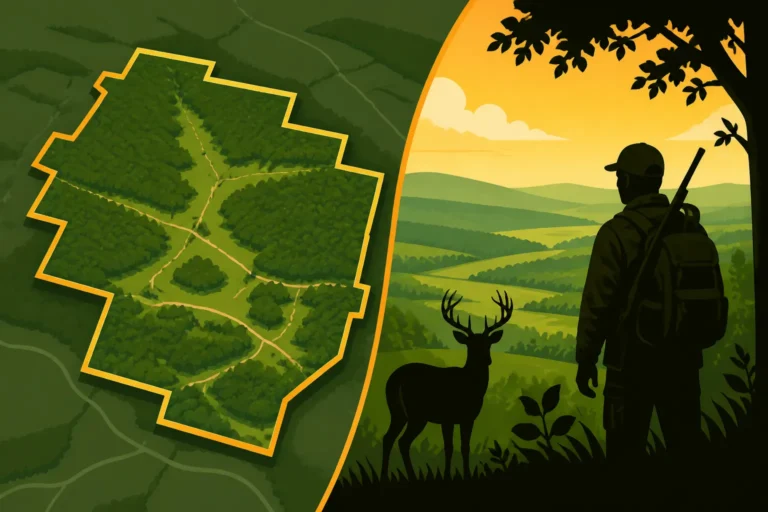
Robinson Forest spans a significant portion of Breathitt, Knott, and Perry counties, deep in Hunting Eastern Kentucky Coalfield Country. The boundaries can sometimes be tricky to discern on the ground, especially if you're not familiar with the area. It’s absolutely essential to use detailed mapping tools. I highly recommend using a robust GPS app like onX Hunt. Its property line layer is invaluable for knowing exactly where you are and ensuring you stay within the forest boundaries, which can often be intermingled with private parcels. You don't want to accidentally trespass while chasing a gobbler. It’s also wise to grab a paper map from the forest office if available, or print detailed sections from the University of Kentucky's website. These tools, combined with scouting, are your best friends for Finding Kentucky Property Lines.
Access points are also tightly controlled. There aren't endless roads or open gates like some public lands. Many access roads are gated and locked, only accessible with a specific permit or during certain hours. You'll need to know exactly which roads are open to public hunting access and which require special permission or are strictly for administrative use. Pay close attention to signage. Ignorance of an access restriction won't get you out of a citation.
Navigating the Rugged Landscape
The terrain within Robinson Forest is classic Eastern Kentucky: steep ridges, deep hollows, and dense hardwood forests. This isn't a place for casual strolling. Expect significant elevation changes, rocky footing, and thick undergrowth in many areas. It's physically demanding, and you need to be prepared for strenuous hikes. When considering Treestand Setups in Daniel Boone National Forest, similar principles apply here – thinking about elevation, thermals, and deer travel corridors is key.
- Topographical Maps: Before you even set foot in the woods, study topographical maps. Look for saddles, benches, creek bottoms, and ridge lines that might serve as natural funnels or travel routes for deer and turkeys. Tools like onX Hunt allow you to view topo maps and satellite imagery, helping you visualize the landscape from home.
- Wind and Thermals: In this kind of terrain, wind and thermals play a huge role. Early morning, thermals typically pull air (and scent) uphill. In the afternoon and evening, they often drop downhill. Understanding Wind and Thermals on a Kentucky Ridge is crucial for setting up your stand or planning your stalk effectively. Your scent is your biggest enemy.
- Preparation: Wear appropriate footwear with good ankle support. Carry plenty of water, a first-aid kit, and tell someone exactly where you're going and when you expect to return. Cell service can be spotty to non-existent in some of these deep hollows, so don't rely solely on your phone for navigation or emergencies.
Strategies for a Successful Hunt in Robinson Forest
Hunting Robinson Forest successfully requires not just understanding the rules, but also adapting your hunting strategies to its unique environment and the potential for limited hunting pressure in some areas. This is big woods hunting at its finest, demanding patience, stealth, and keen observation.
Scouting for Game Sign and Habitat
Given the ruggedness and the research focus, pre-season scouting is paramount. You can't just expect to show up and stumble into animals. Look for classic deer sign: rubs, scrapes, and heavy trails. In the deep woods, food sources like acorns (especially white oak acorns) can be a magnet for deer. Pay attention to mast crop conditions, as a poor acorn year will shift deer patterns dramatically. Hunting After a Poor Acorn Year will require you to find alternative food sources like green browse or honeysuckle thickets.
For turkeys, scouting involves listening for roosting birds and looking for scratching and dusting areas. These birds can be very spread out in big timber. Understanding Where Kentucky Gobblers Roost can help you pinpoint potential morning setups. Using tools like the Scouting With the Kentucky Hunt Fish App or even Google Earth can give you a bird's-eye view of clearcuts, logging roads, and creek bottoms that might concentrate game. While GoHunt might offer insights into general big game behavior and strategies, for Kentucky-specific habitat, combining KDFWR resources with detailed mapping tools like onX Hunt will be your most effective scouting strategy.
Adapting Your Hunting Style
Because of the challenging terrain and potentially lower hunter density in some areas, a more "still-hunting" or "ambush" style might be more effective than, say, deer drives commonly employed on flatter public lands. Still-Hunting Eastern Kentucky Ridges is a highly effective tactic here. Moving slowly, stopping frequently to glass and listen, and covering ground quietly can pay dividends. If you're hunting deer, finding a good funnel or pinch point between two hollows, or along a ridge-top saddle, can be a golden opportunity. Hunting a Ridge-Top Saddle for Rutting Bucks can be incredibly productive, especially during the peak of Hunting the Rut in Early November.
If you opt for a stand, be prepared for long walks in and out. Consider lightweight climbing sticks and a portable stand or a saddle hunting setup. Remember to follow specific rules regarding stand placement and removal, as some research areas may have restrictions on leaving stands overnight or using screw-in steps. Always practice ethical hunting, including proper Field Dressing a Deer in Cold Weather and swift recovery, especially in this challenging terrain.
Table: Comparison of Robinson Forest Rules vs. General WMAs
To help clarify some of the key differences, here's a quick comparison:
| Feature | Robinson Forest Research Tract | Typical Kentucky WMA |
|---|---|---|
| Primary Purpose | Forest Ecology & Wildlife Research | Public Hunting & Recreation |
| Managing Authority | University of Kentucky | Kentucky Department of Fish & Wildlife Resources (KDFWR) |
| Required Permits | Special Robinson Forest Permit (in addition to state licenses) | State hunting license + appropriate tags (WMA permit for some) |
| Season Dates | Often modified/abbreviated from statewide dates; check specific | Generally follows statewide season dates |
| Access Control | Highly restricted; gated roads, specific entry points | More open access, designated parking areas |
| Reporting Harvest | KDFWR Telecheck AND often mandatory check-in with forest staff | KDFWR Telecheck only |
| Weapon Restrictions | Potentially more specific (e.g., archery-only zones) | Generally follows statewide weapon regulations |
| Research Interference | High priority to avoid; specific rules to protect study areas | Less emphasis, though general regulations apply |
This table highlights why it's so critical to treat Robinson Forest as a unique entity, rather than just another spot on the map.
Respecting the Environment and Research Efforts
Finally, remember that you're a guest in a research facility. This means leaving no trace, respecting all posted signage, and minimizing your impact on the environment. Pack out everything you pack in, and perhaps even a little more. If you encounter research equipment or marked study plots, leave them undisturbed. Your cooperation ensures that hunting opportunities can continue to be offered in this special part of Kentucky. It's a privilege, not just a right, to hunt in a place dedicated to understanding our natural world. By being a responsible and informed hunter, you contribute positively to both wildlife management and future recreational opportunities.
Disclaimer
This article is for general informational purposes only and does not constitute professional advice. Laws, prices and regulations vary by location and change over time. Consult a qualified professional for guidance on your specific situation.