How Big the Seven Thousand Acre Pioneer Tract Is
Hunters often look at public land maps and see a big number like "7,000 acres" and wonder if it's truly enough space to get away from the crowds, or if that number is deceptive. The reality is, how you perceive a 7,000-acre tract for hunting depends heavily on its terrain, habitat, and the specific regulations governing it. Today, we're going to dive deep into what it really means to hunt a substantial tract like Kentucky's Pioneer Weapons Only WMA, exploring its size, unique rules, and how to effectively navigate and hunt such a special piece of public land.
Understanding the Scale of 7,000 Acres in a Hunting Context
When you hear "7,000 acres," it sounds like a truly massive expanse, and in many respects, it absolutely is. This kind of acreage can evoke images of endless wilderness, far from roads and other hunters. But the reality on the ground, especially in Kentucky's diverse topography, can often be a complex mix of expectation versus experience. It’s not just a number on a map; it’s a living, breathing landscape that challenges you to understand its true dimensions.
Visualizing the Space: Is It Truly "Big"?
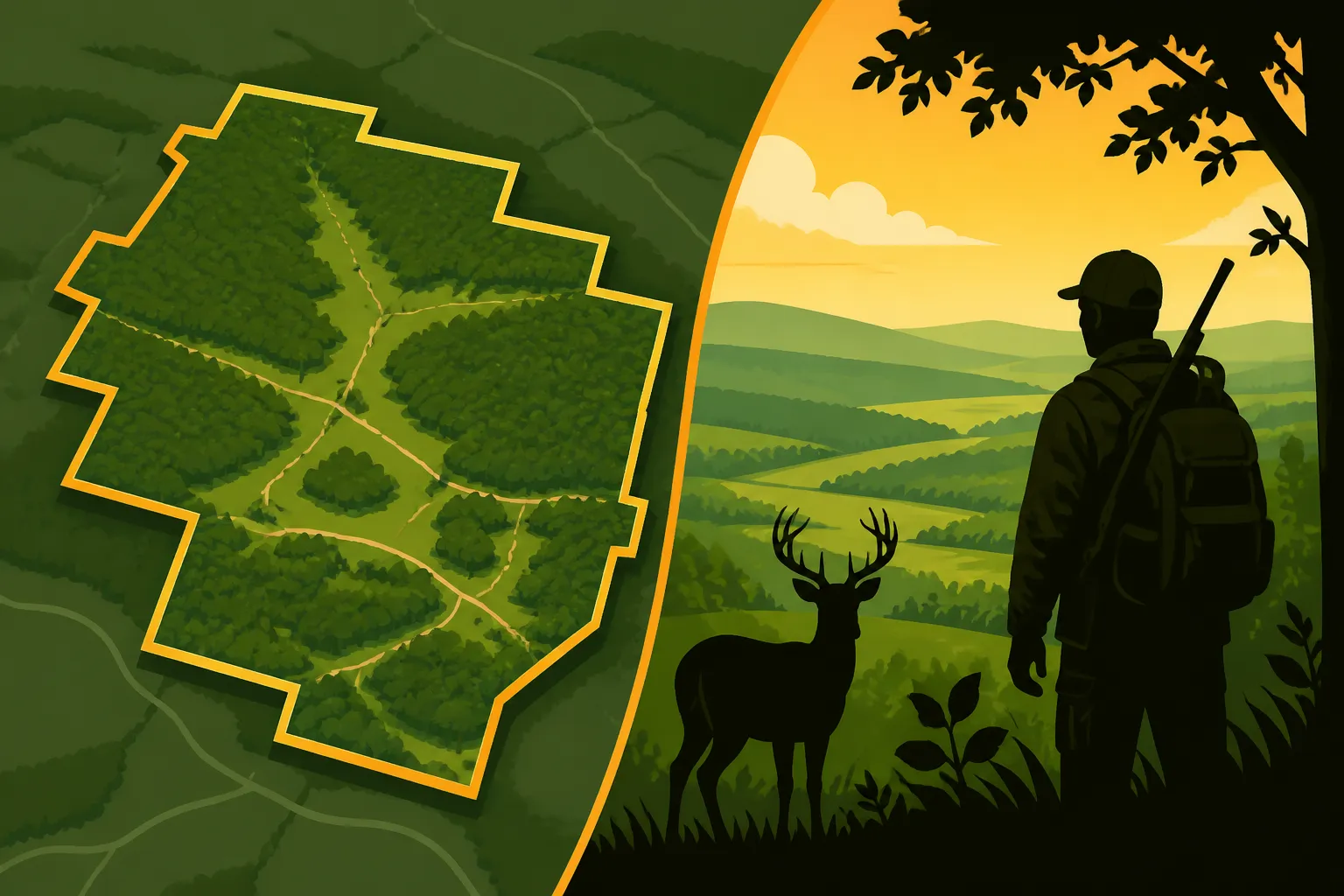
To put 7,000 acres into perspective, it's roughly 11 square miles. Imagine a block of land that's approximately 3.3 miles long by 3.3 miles wide. Compared to your typical backyard, or even a small 100-acre private hunting lease, this is an immense amount of territory. Many Kentucky farms might only span a few hundred acres, making 7,000 acres seem like a whole different world.
However, the sheer size alone doesn't always tell the full story for a hunter. For many, the initial excitement of seeing such a large block of public land quickly gives way to the reality of how little of it they can actually cover in a day, or even a season. If you're used to hunting smaller, more easily accessible tracts, a 7,000-acre WMA can feel overwhelming. It's often the sheer immensity that intimidates, but this vastness also presents the unique opportunity to find truly unpressured spots that others might overlook or simply not be willing to hike to. The "bigness" is real, but how you interact with it is what truly matters.
Impact of Terrain and Habitat on Perceived Size
The physical characteristics of those 7,000 acres dramatically alter how "big" they feel and how you can hunt them. A tract of flat, easily traversable land, perhaps a mix of fields and open timber, will allow you to cover ground much faster and more extensively. In such an area, 7,000 acres might feel somewhat manageable, even if still very large.
But in Kentucky, many of these larger public lands, especially those designated as "Pioneer Weapons Only" areas, are intentionally located in more rugged, less accessible terrain. Think deep, winding hollers, incredibly steep ridge lines, and dense, unbroken timber that makes every mile walked feel like two or three. The Cumberland Plateau, for instance, offers some truly brutal country. This kind of rough topography naturally segments the area, creating pockets that are harder to reach and thus less prone to heavy hunting pressure. Instead of feeling like one massive block, it becomes a series of challenging mini-hunts within the larger whole. Learning skills like Reading a Ridge for Cumberland Deer or Still-Hunting Eastern Kentucky Ridges becomes absolutely critical in these environments. The harder the walking, the slower your pace, and the smaller the area you can effectively hunt, making even 7,000 acres feel less overwhelming but also far more physically demanding.
The Pioneer Weapons Only Distinction and Its Implications
The term "Pioneer Weapons Only" isn't just a quaint name; it's a profound declaration that shapes the entire hunting experience within these boundaries. It defines not only the type of equipment you can use but also the very ethos of the hunt, influencing everything from hunter numbers to individual strategy.
What "Pioneer Weapons Only" Means for Hunters
At its core, "Pioneer Weapons Only" restricts hunters to traditional forms of equipment. This typically means you're limited to muzzleloaders (often with open sights or very specific low-magnification restrictions), traditional archery equipment (like recurves, longbows, and sometimes crossbows, often without modern sights or with limitations on their use during certain seasons), and sometimes primitive shotguns. This immediately sets it apart from a typical Kentucky's Statewide Modern Gun Season experience.
The intent behind these regulations is to provide a more traditional, challenging, and often slower-paced hunting experience. These areas are frequently managed to reflect historical hunting conditions, emphasizing skill, tracking, and close-range encounters. For hunters seeking a deeper connection to hunting heritage, or simply a greater challenge, these areas are a treasured resource. It also acts as a natural filter, discouraging casual hunters who might prefer the ease and range of modern firearms. This often means you'll find a different kind of hunter in these areas – often more dedicated traditionalists, which can, in turn, reduce the overall hunting pressure in certain parts of the WMA, or at least change its nature from what you might expect elsewhere.
How Primitive Weaponry Influences Hunting Pressure and Strategy
The limitations inherent in pioneer weapons — shorter effective ranges, slower reload times, and less forgiving aiming systems — naturally encourage hunters to spread out and adopt different tactics. You won't find anyone attempting 300-yard shots with a traditional muzzleloader. This means hunters must typically get much closer to their quarry, focusing heavily on stalking, still-hunting, and mastering the art of the close-quarters ambush. This is where a deep understanding of game behavior and terrain becomes paramount.
Because success hinges on intimate knowledge of the land and game, hunters tend to get deeper into the woods, scouting more thoroughly for those crucial close-range encounters. It encourages a more deliberate, slower pace of hunting where patience is a virtue, and every step is considered. This inherent requirement for closer proximity to game means that hunters need more "personal space" to operate effectively, which can help distribute them across the 7,000 acres, making it feel less crowded than a similar-sized tract open to modern firearms. Mastering skills outlined in guides like Muzzleloader Deer Hunting in Kentucky or honing your approach for Bowhunting Kentucky's Long Archery Season is absolutely crucial for success here.
Strategies for Navigating and Hunting a Large Primitive Area
Tackling a 7,000-acre Pioneer Weapons Only WMA demands a thoughtful approach, combining modern technology with timeless woodsman skills. You can't just wander in and hope for the best; a successful hunt is built on preparation and strategic execution.
Pre-Season Scouting and Digital Mapping Tools
With 7,000 acres at your disposal, you simply cannot learn it all in a single season. Effective pre-season scouting is absolutely paramount. Start your planning from home using detailed digital maps. Tools like onX Hunt or GoHunt are truly game-changers for areas of this magnitude. They allow you to meticulously study topography, identify potential funnels, bedding areas, and subtle food sources long before you ever step foot in the woods. Look for creek bottoms that might serve as travel corridors, saddles between ridges where deer often cross, old logging roads that offer easier (but sometimes more pressured) access, and changes in timber type that indicate different cover or feeding opportunities.
Use these powerful mapping apps to mark potential access points, meticulously plan your entry and exit routes to avoid disturbing game, and identify those elusive areas that might be overlooked by other hunters due to difficult terrain. Remember, the goal isn't just to find deer, but to find deer in a spot you can realistically get to, hunt effectively with your chosen pioneer weapon, and retrieve your animal from. Reading Aerial Photos for Eastern Kentucky Deer can provide an invaluable bird's-eye view, helping you spot these subtle nuances from your couch.
On-the-Ground Tactics for Covering Big Ground
Once you're actually in the woods, efficient and stealthy movement is critical. Resist the urge to simply wander; have a clear plan based on your pre-season scouting. Focus on covering ground quietly and deliberately. Still-hunting, where you take a few slow, silent steps and then pause, observing and listening intently for several minutes, is exceptionally effective in these larger, dense areas, especially given the limited range of pioneer weapons. This patient approach allows you to spot game before it spots you and to pick up on subtle signs that a faster pace would miss.
Prioritize areas that show fresh sign – distinct tracks, freshly rubbed trees, active scrape lines, and abundant droppings. Don't be afraid to walk a mile or two, or even more, from the main roads or well-used trails. Often, the best hunting on large public tracts begins precisely where most other hunters stop. Consider strategies like those detailed in Hunting the Late-Season January Lull to capitalize on periods of reduced hunting pressure and altered deer behavior. Always carry reliable navigation tools, whether it's a dedicated GPS unit or a smartphone app like onX Hunt with downloaded offline maps. It's incredibly easy to get turned around in vast, featureless timber, especially in unfamiliar territory or as daylight begins to fade. A physical compass and map should always be a part of your essential gear as a backup.
Dealing with Hunting Pressure on a Large WMA
Even on a substantial 7,000-acre tract, especially during peak seasons like Kentucky Archery Season Opening Day or around Kentucky Early Muzzleloader Dates, you will likely encounter other hunters. The key to success isn't avoiding them entirely, but rather anticipating where that pressure will be and planning your hunt accordingly. Most hunters, naturally, tend to stick close to easy access points, main roads, and obvious, well-trodden trails.
To truly "get away" and find less pressured game on a tract of this size, you often have to embrace the difficult terrain. Look for areas marked by exceptionally steep inclines, dense creek bottoms, or thick, less desirable timber types (like young, regenerating clear-cuts that are nearly impenetrable). These are the places where deer will instinctively seek refuge from human activity, and where fewer hunters are willing to put in the physical effort to reach. Remember, the pioneer weapons designation itself acts as a kind of filter, meaning fewer people are geared up for this specific challenge, which naturally disperses hunters more than a regular firearms season might. Sometimes, Finding Ground Others Walk Past is all about going where others simply aren't willing to.
Game and Opportunity: What to Expect on a 7,000-Acre Pioneer Tract
Hunting a large, primitive weapons-only WMA is a unique experience that offers different challenges and rewards than hunting smaller, more managed private lands. Understanding what game you're likely to encounter and setting realistic expectations will make your time in the woods far more rewarding.
Primary Game Species and Their Movement Patterns
While specific game populations can vary from one WMA to another, on a 7,000-acre Pioneer Weapons Only WMA in Kentucky, white-tailed deer are almost certainly going to be your primary target. The extensive habitat provides plenty of room for deer to live and thrive without constant human interaction. Wild turkeys are also commonly found in these large timbered tracts and offer fantastic hunting opportunities with traditional archery equipment or primitive shotguns, especially during Kentucky Spring Turkey Season Rules. Other small game might also be present, depending on the specific habitat.
Deer movement in such large, wilder areas is predominantly influenced by natural food sources – think acorns, various types of browse, soft mast like persimmons or wild grapes, and reliable water sources. They won't be as reliant on manicured food plots or agricultural fields in the same way deer on private land might be. During the crucial breeding season, or rut, bucks will still be cruising for does, but their travel corridors might be subtle ridge lines, faint deer trails along benches, or winding creek bottoms rather than obvious field edges. Understanding these natural patterns, rather than just waiting on a visible food source, is absolutely crucial for success. For example, knowing how deer move during Hunting the Rut in Early November becomes a deep woods skill, not just a sit-and-wait game.
Understanding Success Rates and Realistic Expectations
Let's be completely honest: hunting a large, primitive weapons-only WMA is often more challenging than hunting highly managed private land. Because of the equipment limitations, the rugged terrain, and the sheer amount of ground to cover, success rates, especially for deer, can be lower than statewide averages. This isn't necessarily because there are no deer; it's because the hunting methods require a greater degree of skill, patience, and physical effort. The deer here are wilder, often older, and less accustomed to human intrusion, making them tougher to get close to with pioneer gear.
However, the reward for success in such an environment is often much, much greater. The satisfaction of harvesting an animal with traditional equipment in a vast, wild setting, having overcome the inherent challenges, is truly unmatched. It's an experience that connects you more deeply to the land and the traditions of hunting. Go into it with the mindset of enjoying the process, embracing the challenge, and appreciating the solitude, rather than solely focusing on filling a tag. A 7,000-acre tract offers incredible opportunities for adventure, exploration, and deep woods immersion. The sheer size means there are always new areas to explore and new challenges to overcome, ensuring that every hunt is a unique and memorable experience. And with powerful tools like GoHunt, you can track your explorations, mark findings, and continually refine your understanding of the area over time, making each visit more productive.
Understanding Land Area Equivalents
To help visualize the considerable size of a 7,000-acre tract, consider these common equivalences:
| Measurement | Equivalence to 7,000 Acres | Notes |
|---|---|---|
| Square Miles | ~10.94 square miles | Imagine a large, almost 3.3 by 3.3 mile square of wilderness. |
| American Football Fields | ~5,300 football fields | This comparison truly highlights the vastness. |
| Typical Kentucky Farms | ~10-14 average farms | Most individual farms are much smaller, perhaps 500-700 acres. |
| Manhattan's Central Park (NYC) | ~8.7 times the size | Central Park is around 843 acres, for urban context. |
| Rhode Island (smallest US state) | ~0.14% of Rhode Island | Still a fraction of a state, but substantial for a single tract. |
Disclaimer
This article is for general informational purposes only and does not constitute professional advice. Laws, prices and regulations vary by location and change over time. Consult a qualified professional for guidance on your specific situation.