Grouse and Quail in Kentucky
It's tough to admit, but if you've spent any time chasing grouse or quail in Kentucky over the last few decades, you know it's not the same world our grandfathers hunted. The heartbreaking decline of these iconic game birds has left many of us wondering if the classic upland hunt is a thing of the past. This guide is here to unravel the complex story behind their struggles, identify the last bastions where they might still be found, and explore what dedicated hunters and conservationists are doing to bring back the thrill of a bursting covey or a thundering flush.
The Plight of Kentucky's Upland Birds: A Difficult Reality
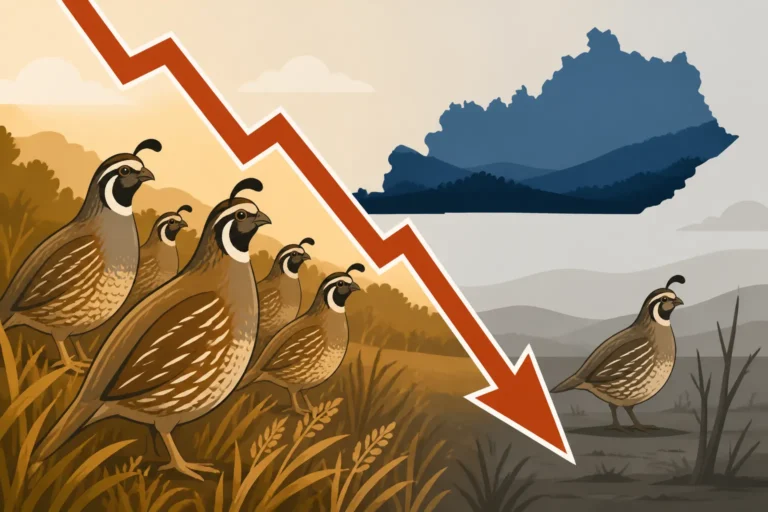
For many of us who grew up hearing tales of endless coveys and thickets rattling with ruffed grouse, the current reality of upland bird hunting in Kentucky can feel like a punch to the gut. The birds we cherish, the ones that represent a quintessential piece of our hunting heritage, are in serious trouble. It's not just a Kentucky problem, but here in the Bluegrass State, the decline has been particularly stark, painting a grim picture for future generations if we don't act.
Historic Abundance and Shifting Landscapes
Cast your mind back to the mid-20th century, and Kentucky was a different place for upland birds. Farmers kept small, diverse plots with hedgerows, fallow fields, and woodlots. Logging practices were often less intensive, creating a patchwork of early successional forests and young clear-cuts that grouse absolutely thrived in. You didn't have to look hard to find ruffed grouse drumming on a log or a dozen bobwhite quail exploding from a fencerow. These birds were truly a common sight, a vibrant part of the rural landscape and a reliable target for hunters throughout the state.
The very fabric of our landscape supported them. Back then, rural areas were often more fragmented, with small farms, homesteads, and less intensive forestry. This created the perfect mosaic of habitats – brushy edges for quail to escape predators, young saplings for grouse to hide and feed, and diverse food sources ranging from native seeds to wild berries. The habitat wasn't perfect, but it was dynamic, constantly disturbed by small-scale farming and logging, which is exactly what these birds need to survive and reproduce successfully.
Habitat Loss: The Primary Culprit
Fast forward to today, and the most significant factor in the decline of both ruffed grouse and bobwhite quail is undeniably habitat loss. For quail, the conversion of diverse farmland into large, monoculture agricultural operations, often with clean fence rows and heavy herbicide use, has been devastating. Those critical grassy field edges, plum thickets, and brushy draws that once provided nesting cover, escape routes, and winter food are simply gone. What used to be a patchwork quilt of cover is now vast, open fields, offering no haven for quail.
For grouse, the problem is largely forest maturation. As forests grow older, denser, and more uniform, they lose the critical early successional habitat that grouse require. Think about it: a grouse needs young, brushy cover to hide from predators, to nest, and for their young to feed on insects. When all the trees are mature and there's an open understory, it's a death trap. Practices like clear-cutting, while sometimes controversial, are vital in creating this specific type of habitat. Without it, grouse populations simply wither away, unable to find the dense, protective thickets they depend on for survival. Even in areas like Daniel Boone National Forest, a lot of the timber has simply aged out of optimal grouse habitat.
Climate Change and Other Factors
While habitat loss remains the dominant force, it would be shortsighted to ignore other contributing factors. Climate change, for instance, can subtly yet significantly impact these birds. Milder winters might sound nice, but they can sometimes lead to increased survival rates for predators, which in turn put more pressure on vulnerable grouse and quail. More erratic weather patterns, like severe droughts during nesting season or unusually heavy spring rains, can decimate broods, impacting recruitment for an entire year. These events, once rare, seem to be occurring with greater frequency.
Another factor is increased predation. With habitat fragmentation, predators like coyotes, raccoons, and raptors can become more efficient at finding and preying upon upland birds. Disease can also play a role, although it's less understood for these specific species in Kentucky compared to something like Chronic Wasting Disease in our deer herd. Lastly, and perhaps least, while hunting pressure can impact localized populations, it's widely accepted by wildlife biologists that harvest rates are not the primary driver of statewide decline given the overall low numbers of birds now. The problem runs much deeper than the number of birds taken by hunters.
Kentucky Ruffed Grouse: A Fading Icon
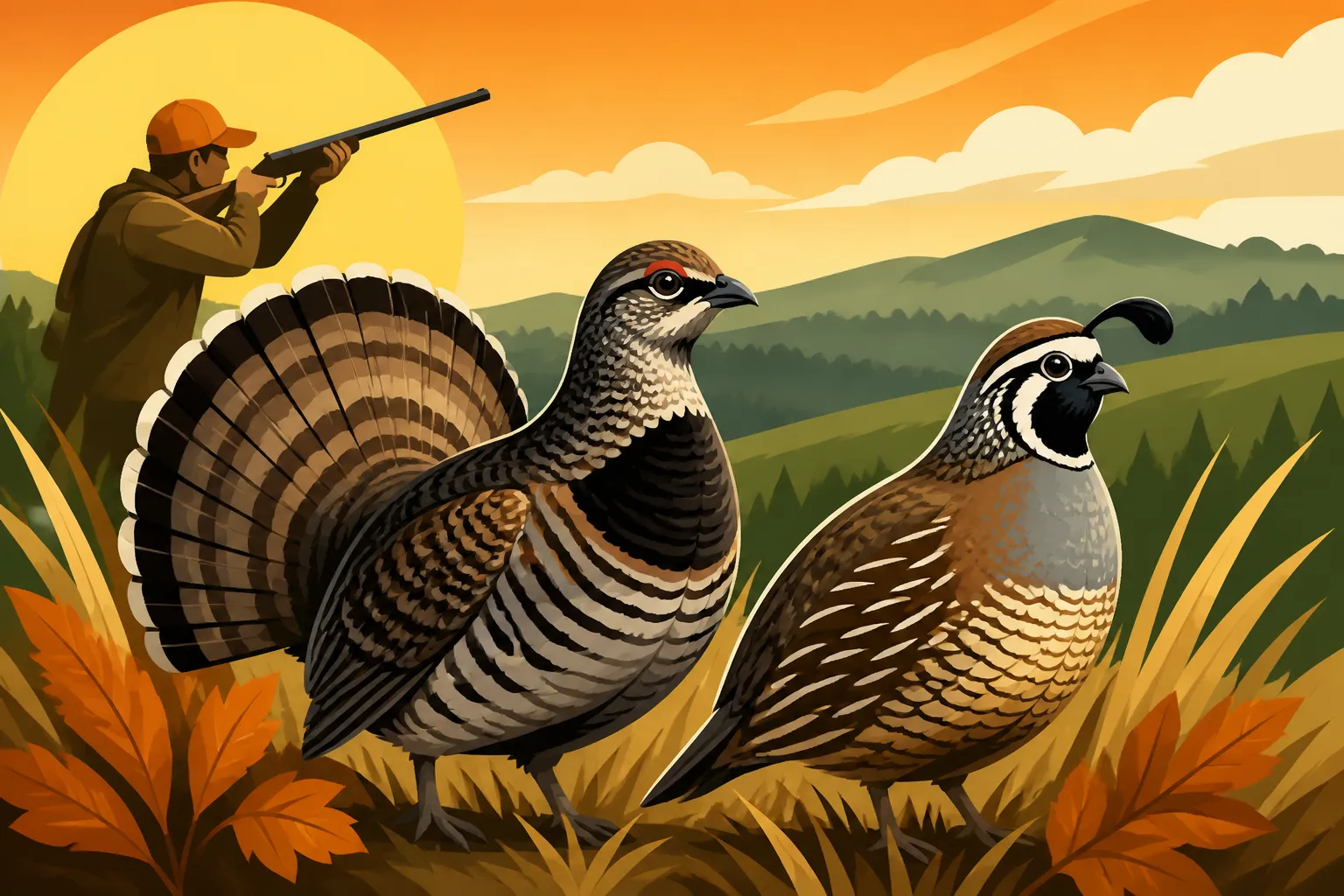
The ruffed grouse, with its explosive flush and the rhythmic drumming of the male, is truly a symbol of wild, untamed Appalachia. For generations, chasing grouse through the rugged terrain of eastern Kentucky was a rite of passage. Today, however, the "thunder chicken" is more of a whisper, a ghost in the mountains, and finding them requires dedication, knowledge, and a healthy dose of luck. The sound of a grouse bursting from a thicket is one of the most exciting things you can experience in the woods, but it's an increasingly rare privilege.
Where Grouse Still Roam
If you're determined to find ruffed grouse in Kentucky, your focus needs to be almost exclusively on the eastern third of the state. This is their historical stronghold, and frankly, their last one. Areas within the Daniel Boone National Forest, especially districts like the Redbird Ranger District or pockets of the Cumberland Mountains, are your best bet. While numbers are critically low across the board, these large, contiguous blocks of forested land still offer the potential for grouse habitat to exist, particularly in areas that have seen recent timber management or natural disturbances like wildfires.
You'll also find some scattered populations on specific Wildlife Management Areas (WMAs) in eastern Kentucky, especially those managed with a focus on forest health and early successional growth. Places like Grouse Hunting Cumberland Mountain Cover are known for their rugged terrain and pockets of suitable cover. However, even in these areas, don't expect to walk into a grouse paradise. It's more about finding isolated pockets where the specific habitat conditions are just right, often requiring extensive hiking and bushwhacking to reach. This isn't a casual stroll; it's a serious wilderness hunt.
Understanding Grouse Habitat Needs
The key to finding grouse is understanding their habitat. They are a creature of young forests and dense, brushy cover. Think about a timber stand that was clear-cut 5-15 years ago, now regenerating into a thick tangle of saplings, briars, and low-growing shrubs. This is prime grouse country. They need this dense cover for protection from aerial predators like hawks and owls, and ground predators like coyotes and bobcats. This is where they feel safe, where they can nest, and where their chicks can find the insects they need to grow. If you're wondering How Old a Cut Should Be for Grouse, that 5-15 year window is often ideal.
Beyond the young regenerating cuts, grouse also utilize older forest edges, particularly where they meet younger growth, or areas with dense rhododendron or mountain laurel thickets. These provide year-round cover. They feed on buds, catkins, leaves, and a variety of wild berries and seeds. Look for areas with a mix of aspen, birch, oak, and pine – diverse tree species provide diverse food sources. Steep, north-facing slopes can also hold birds, offering cooler, moister conditions and often denser undergrowth that offers sanctuary. Using mapping tools like those offered by GoHunt can help you identify these specific habitat features on public lands.
The Challenge of Hunting Kentucky Grouse
Hunting ruffed grouse in Kentucky is, without a doubt, one of the most physically demanding and often mentally frustrating pursuits in the upland world. The terrain is brutal – steep hillsides, tangled briars, fallen timber, and rocky outcrops are the norm. You'll spend hours covering ground, only to hear that heart-stopping flush and watch the bird disappear through the trees before you can even shoulder your shotgun. This is not a high-volume hunt; it's a test of endurance, patience, and marksmanship.
Many dedicated grouse hunters rely on dogs, typically setters or pointers, that are specifically bred and trained for this type of tough hunting. A good dog can find birds you would walk right past, and their ability to point or flush a bird in heavy cover can be the difference between seeing a grouse and just hearing one. However, it's entirely possible to go Flushing Grouse Without a Dog if you're willing to put in the legwork. This involves slowly still-hunting through prime cover, pausing frequently to listen for movement or to encourage a bird to flush. Focus on walking logging roads, old logging decks, and along the edges of clear-cuts where birds might feed or cross. Be ready for the shot to come fast and unexpectedly. It's a game of fractions of a second.
Kentucky Bobwhite Quail: The Elusive Southern Gentleman
The bobwhite quail, with its distinctive "bob-WHITE!" whistle, is another iconic game bird that has largely vanished from much of its historic range in Kentucky. Once a common sound of summer evenings and a thrilling sight for any bird hunter, coveys of quail are now a rare and precious find. The decline of the bobwhite is a deeply felt loss for many Kentuckians, particularly those who remember the days when a good dog could find multiple coveys in a single morning.
Remnant Populations and Key Regions
While once widespread, bobwhite quail populations in Kentucky are now largely fragmented and localized, primarily found in the western and south-central portions of the state. These areas still contain some of the agricultural landscapes that, with careful management, can support quail. Think of counties that still have a mix of row crops, pastures, and unmanaged field edges, especially those with some timber pockets nearby. Specific Wildlife Management Areas (WMAs) that prioritize grassland and early successional habitat management, often through prescribed burns and native warm-season grass plantings, might hold huntable numbers.
For example, WMAs like Peabody, Sloughs, and parts of Green River Lake Public Hunting Ground are often mentioned as places where conservation efforts are specifically aimed at benefiting quail. However, even in these areas, the density is rarely what it once was. You're looking for remnant populations, little pockets of birds that are hanging on. While it's hard to name the Best Kentucky Counties for Wild Quail today with absolute certainty due to the scattered nature, areas with robust private land conservation efforts often fare better than purely public land.
Ideal Quail Cover: What to Look For
Bobwhite quail are absolute masters of cover. They need a mosaic of different habitat types within a relatively small home range to survive. This includes dense, brushy escape cover (think plum thickets, blackberry brambles, sumac patches, or multiflora rose hedgerows) to protect them from predators and harsh weather. They also need open, grassy nesting cover, often comprised of native warm-season grasses like switchgrass, indiangrass, and big bluestem. These grasses provide concealment for nests and broods, but are open enough at the ground level for chicks to move through and forage for insects.
Beyond that, they require abundant weed seeds and insects for food, often found in fallow fields, food plots, or lightly tilled agricultural fields. The ideal scenario is a "soft edge" where these habitat components blend together seamlessly, creating a safe zone where quail can live their entire lives without needing to travel far. Clean farming practices, where fields are tilled right up to the edge and fencerows are cleared, eliminate these vital components. Understanding these needs is critical to How Kentucky Quail Numbers Fell Since the 1960s. They need that tangled, "messy" habitat to survive.
Quail Hunting Strategies: Persistence Pays Off
Quail hunting in Kentucky today is less about bagging a limit and more about the challenge, the dog work, and the sheer joy of finding a covey. It's a game of persistence. You'll need to cover a lot of ground, often hiking through difficult terrain. The primary tool for successful quail hunting is a well-trained bird dog – a pointer or setter – that can efficiently cover ground, locate scent, and hold a solid point. Without a dog, finding quail in Kentucky's limited cover is incredibly challenging, almost akin to finding a needle in a haystack.
When you do find a covey, approach it carefully, get ready for the flush, and be prepared for fast, often difficult shots. Once the covey breaks, mark where individual birds fly to. Quail will typically fly into the densest cover they can find, and then "sit tight." This is where the real fun of hunting scattered birds begins, as your dog works to find each single. Look for field edges that meet brushy draws, old home sites with grown-up foundations, and any kind of thick, linear cover. Consider areas where you might find Hunting Small Private Tracts in Kentucky, as these often have less intensive management. Remember, asking a landowner for permission by Asking a Kentucky Farmer for Permission could open up access to these overlooked spots.
Conservation Efforts and Hope for the Future
Despite the dire situation, there is a dedicated community of conservationists, hunters, and landowners working tirelessly to reverse the decline of grouse and quail in Kentucky. It's an uphill battle, no doubt, but one that many believe is worth fighting for the future of these magnificent birds and the hunting traditions they represent. Their efforts are largely focused on habitat restoration and management, recognizing that without suitable places to live, these species simply cannot recover.
KDFWR Initiatives
The Kentucky Department of Fish and Wildlife Resources (KDFWR) plays a crucial role in upland bird conservation. They manage many public lands, including various WMAs, with specific habitat goals for quail and grouse. This often involves techniques like prescribed burning, which mimics natural wildfires to set back forest succession and promote early successional growth, creating prime habitat. They also conduct timber stand improvements, thinning out older trees to allow sunlight to reach the forest floor and stimulate undergrowth.
Furthermore, KDFWR collaborates with private landowners through incentive programs designed to encourage habitat improvements on their property. These programs might offer technical advice and financial assistance for planting native warm-season grasses, establishing hedgerows, or creating brushy cover. This is critical because the vast majority of land in Kentucky is privately owned, making landowner participation absolutely essential for any widespread recovery. Hunters contribute directly to these efforts through the purchase of hunting licenses and stamps, which provide funding for KDFWR's vital conservation work.
Private Landowner Programs
Private landowners are truly the unsung heroes in the fight for upland birds. Organizations like Quail Forever and the Ruffed Grouse Society work directly with landowners, providing expertise and resources to implement habitat improvements. They often partner with government agencies like the Natural Resources Conservation Service (NRCS) to utilize programs such as the Environmental Quality Incentives Program (EQIP) or the Conservation Reserve Program (CRP). These programs can provide financial incentives for farmers to convert marginal cropland into native grass and pollinator habitat, or to conduct timber stand improvement that benefits grouse.
Implementing practices like prescribed grazing, which can mimic the disturbance quail thrive on, or establishing riparian buffers along creeks and streams with dense vegetation, can create critical habitat corridors. Even simply leaving fallow fields or not mowing field edges until late summer can make a huge difference for nesting birds. The collective impact of many private landowners making small, positive changes to their land management practices can be immense, potentially creating the larger landscape-level changes needed for these birds to rebound.
The Role of Hunters in Conservation
Hunters are, and always have been, the backbone of wildlife conservation in North America. Our license dollars and excise taxes on firearms and ammunition (through the Pittman-Robertson Act) directly fund state wildlife agencies like KDFWR. Beyond financial contributions, active participation and advocacy are vital. Joining conservation organizations like Quail Forever or the Ruffed Grouse Society helps amplify our voice and direct resources to specific habitat projects. You can get involved in local chapters, volunteer for habitat work days, or simply spread awareness about the importance of early successional habitat.
Additionally, responsible hunting practices ensure that our impact on these fragile populations is minimal. Understanding Kentucky Grouse Season Status and Kentucky Quail Season Status and adhering to bag limits helps ensure sustainability. Supporting scientific research into grouse and quail populations also aids conservation efforts by providing the data needed to make informed management decisions. Every hunter who cares about these birds has a role to play, from advocating for better habitat policies to getting dirt under their fingernails on a habitat project.
Essential Gear for Upland Bird Hunters in Kentucky
Upland bird hunting in Kentucky, especially for grouse or quail, isn't necessarily about having the fanciest gear, but it is about having the right gear. The terrain is often rugged, the weather can be unpredictable, and the birds are challenging targets. Being properly equipped can make the difference between an enjoyable, albeit tough, day in the field and a miserable, unproductive one. Preparation is key, and that extends to your choice of equipment.
Shotguns, Chokes, and Ammunition
For upland birds, a lightweight, fast-swinging shotgun is preferred. Many hunters opt for 20-gauge or 28-gauge shotguns due to their lighter recoil and ease of carry, though a 12-gauge with lighter loads is perfectly suitable. Over-and-under or side-by-side shotguns are traditional and effective, but semi-automatics and pumps also work well. The key is comfort and quick mounting. Given the dense cover, open chokes like Improved Cylinder or Skeet are often favored for the fast, close-range shots typical of grouse and quail. These open patterns give you a little more margin for error when a bird flushes just feet away.
When it comes to ammunition, lighter loads with smaller shot sizes are the norm. For grouse, 7.5 or 8 shot is common, while for quail, 8 or 9 shot is generally sufficient. These smaller pellets provide a dense pattern at close range without over-penetrating the bird. Always carry enough shells, but remember you'll be doing a lot of walking, so don't overpack. Investing in quality, fast-burning shells can also make a difference in performance and consistency, especially on those snap shots.
Dogs: The Ultimate Upland Partner
While some brave (and perhaps foolhardy) souls attempt to hunt grouse or quail without a dog, a well-trained bird dog is undeniably the greatest asset an upland hunter can possess. Pointers (English Pointers, German Shorthaired Pointers) and Setters (English Setters, Gordon Setters) are the quintessential upland breeds, known for their keen noses, endurance, and ability to hold a point, allowing the hunter to move into position for the shot. These dogs are specifically bred to cover vast amounts of ground efficiently and locate birds by scent.
Spaniels (Cocker Spaniels, Springer Spaniels) are also excellent flushers, working close to the hunter and pushing birds out of thick cover. Regardless of breed, a good upland dog requires significant training, often starting from a young age, to develop their bird sense, obedience, and endurance. They become more than just a tool; they're a partner, and watching a well-trained dog work a field or a thicket is often more rewarding than the actual shot. Don't forget their gear either – a durable collar, perhaps a GPS tracking collar for safety in thick cover, and plenty of water are essential.
Clothing, Boots, and Navigation Tools
Given the challenging terrain and dense cover in Kentucky, appropriate clothing and footwear are non-negotiable. Briar-resistant pants or chaps are an absolute must to protect your legs from thorns and thick brush. A good upland vest or game bag with plenty of pockets for shells, water, and a zippered game pouch to carry harvested birds is invaluable. Consider vests with a hydration pack integration, as you'll be burning a lot of calories. For a complete kit, ensure your Upland Vests With Water Capacity is sufficient. Layering is important, as temperatures can vary, especially during the fall.
Sturdy, waterproof, and comfortable boots with good ankle support are critical for navigating uneven ground, steep hillsides, and potentially wet conditions. A quality pair of hiking boots or specialized hunting boots will save your feet and prevent injuries. Finally, reliable navigation is paramount. While older hunters might prefer a topographic map and compass, a modern GPS unit or a hunting app on your smartphone (like the one from GoHunt) is incredibly helpful for tracking your movements, marking bird flushes, and ensuring you don't get turned around in unfamiliar territory, especially on large tracts of public land. Remember to carry a portable charger for your phone!
Planning Your Kentucky Upland Hunt
Embarking on a grouse or quail hunt in Kentucky is a commitment, and a successful (or at least rewarding) trip requires meticulous planning. You can't just show up and expect birds to jump out at you, especially given their current low numbers. From scouting to understanding the regulations and securing access, every step plays a vital role in increasing your odds and ensuring a safe, legal, and enjoyable experience.
Scouting and Research
Pre-season scouting is absolutely critical for upland birds, particularly in Kentucky where populations are so localized. This isn't just about looking for birds, but more importantly, looking for habitat. Use aerial maps and topographic maps to identify potential areas: recent clear-cuts (5-15 years old for grouse), dense creek bottoms, fallow fields, and areas with thick, brushy cover for quail. Online mapping platforms, including those like GoHunt which often integrate property lines and habitat layers, can be invaluable for identifying potential hotspots and public land access points. Remember to check out Using the Kentucky Hunt Fish Map Tool provided by KDFWR.
Once you have a few promising locations, physically walk them well before the season opens. Look for signs of bird activity, although these can be subtle for grouse and quail. Listen for drumming or whistling, look for droppings, or even just identify the ideal cover types. Pay attention to food sources, like wild berries or seeds that will be available during the season. Understanding the lay of the land, identifying natural funnels or escape routes, and noting terrain features will give you a significant advantage when the season arrives. It helps you mentally plan your hunt routes and where to focus your dog's efforts.
Seasons, Limits, and Regulations
Before you even step foot in the woods, it's essential to be thoroughly familiar with Kentucky's hunting regulations for grouse and quail. Seasons can be long, but bag limits are generally very conservative, reflecting the struggling populations. Always check the current KDFWR hunting guide for the most up-to-date information on Kentucky Grouse Season Status and Kentucky Quail Season Status, as these can change year to year. Note daily bag limits and possession limits, and any specific rules for certain WMAs.
Blaze orange requirements are also a critical safety consideration, especially when hunting with others or on public land. For many gun seasons in Kentucky, a certain amount of hunter orange is mandatory. Ensure you meet these requirements with a vest or hat that is clearly visible. Understand legal shooting hours, which typically run from one-half hour before sunrise to one-half hour after sunset. Violating regulations, even unintentionally, can result in fines and loss of hunting privileges, so take the time to read the rulebook carefully.
Public vs. Private Land
Navigating land access is another crucial aspect of planning. Kentucky offers a decent amount of public hunting land, including portions of the Daniel Boone National Forest and numerous WMAs. These areas are open to anyone with a valid hunting license, but they often receive more pressure and may require extensive hiking to find less disturbed spots. Many WMAs are actively managed for upland habitat, offering your best chance at encountering birds on public ground. Always check specific WMA rules, as some may have unique regulations or access restrictions.
Private land, while potentially offering less crowded hunting, requires securing permission from the landowner. This can be done by Asking a Kentucky Farmer for Permission in person, respectfully and well in advance of the season. Offer to help with chores, share your harvest, or simply be a good steward of their land. Many landowners are receptive to allowing access to responsible hunters, especially if you emphasize your focus on upland birds rather than deer. Never trespass; always get explicit permission before hunting private property. This is particularly important for quail, as some of the better habitat might exist on small, private tracts.
Looking Ahead: A Future for Upland Birds in the Bluegrass State
The road to recovery for Kentucky's ruffed grouse and bobwhite quail populations is long and steep, but it's not without hope. The passion of hunters, the dedication of conservation organizations, and the scientific expertise of wildlife agencies are all working in concert to try and turn the tide. It's a testament to the resilience of both the birds and the people who cherish them that these efforts continue, even in the face of significant challenges.
Long-Term Recovery Challenges
The biggest challenge to long-term recovery for both grouse and quail is the sheer scale of habitat restoration needed. We're not talking about small, isolated patches, but rather landscape-level changes that require significant investment and a shift in land-use practices. For grouse, this means a sustained commitment to active forest management, including timber harvests and prescribed burning, to create the mosaic of young forest needed across vast tracts of eastern Kentucky. This often conflicts with public perceptions of "pristine" forests, making it a socio-political as well as ecological challenge.
For quail, it means restoring diverse agricultural practices and extensive areas of native grassland and brushy cover, connecting fragmented populations. This requires working closely with farmers and other private landowners, which is a slow and incremental process. Climate change, invasive species, and continued development pressures also present ongoing hurdles that make the task even more complex. There's no single silver bullet, and progress will likely be slow and require immense patience and consistent effort over many decades.
What Every Hunter Can Do
While the challenges are formidable, every hunter can contribute to the future of upland birds in Kentucky. First and foremost, educate yourself and others about the specific habitat needs of grouse and quail. Understanding why they are declining is the first step towards solutions. Support organizations like the Ruffed Grouse Society and Quail Forever, either through membership, donations, or volunteering your time on habitat projects. Your involvement, however small, adds to the collective effort.
Consider implementing habitat improvements on your own property, even if it's just a small woodlot or a field edge. These efforts, when multiplied, can create crucial stepping stones for recovering populations. Finally, continue to introduce new hunters to the tradition of upland bird hunting. Even if the flushes are few and far between, the appreciation for the wild places these birds call home, and the dedication to their conservation, will be passed on to the next generation, ensuring that the fight for Kentucky's ruffed grouse and bobwhite quail endures.
Disclaimer
The information provided in this guide is for general informational purposes only and is not intended as legal advice or a substitute for consulting official Kentucky Department of Fish and Wildlife Resources regulations. Always refer to the most current KDFWR hunting guide for accurate and up-to-date regulations, season dates, and licensing requirements before engaging in any hunting activities. Hunting regulations can change annually.