Wild Hogs in Kentucky
If you've spent any time hunting or simply enjoying the outdoors in parts of Kentucky, you've likely seen the tell-tale signs: torn-up fields, churned-over forest floors, and wallows in muddy creek bottoms. These aren't the work of an overzealous farmer or a particularly clumsy deer herd; they're the calling card of wild hogs, an invasive species that is wreaking havoc on our state's precious ecosystems and agricultural lands. This comprehensive guide will walk you through everything you need to know about wild hogs in Kentucky, from understanding their impact to effective hunting strategies, helping you become part of the solution.
Understanding the Wild Hog Problem in Kentucky
The presence of wild hogs, often referred to as feral swine, is a relatively recent but rapidly escalating challenge for wildlife managers, landowners, and hunters across Kentucky. These highly destructive animals aren't native to North America, and their unchecked proliferation poses a significant threat to our native wildlife, agricultural crops, and natural habitats. It’s a complex issue with no easy answers, but understanding their origins and characteristics is the first step toward effective management.
The History and Spread of Wild Hogs
The story of wild hogs in North America is a fascinating, if troubling, one. They are descendants of domestic pigs brought to the Americas by early European explorers and settlers, alongside true European wild boar introduced for sport hunting in the early 20th century. Over centuries, these populations interbred and escaped into the wild, adapting to become the formidable creatures we see today. In Kentucky, their expansion has largely been a combination of natural migration from neighboring states where populations are well-established, and unfortunately, intentional, illegal translocations by individuals seeking to establish new hunting opportunities. This practice, known as "trap-and-release," is not only against the law but actively fuels the problem, making eradication efforts far more difficult.
What makes wild hogs such a persistent problem is their incredible adaptability and prolific breeding rates. A sow can begin breeding as early as six months old and can have two litters a year, with each litter averaging four to eight piglets. When you combine this with a lack of natural predators large enough to control their numbers, especially in Kentucky, you have a recipe for exponential population growth. They can survive in an astonishing array of habitats, from dense forests to agricultural fields, thriving wherever there is food and cover. This resilience means they are not going away on their own, and active intervention is absolutely necessary.
Distinguishing Wild Hogs from Domestic Swine
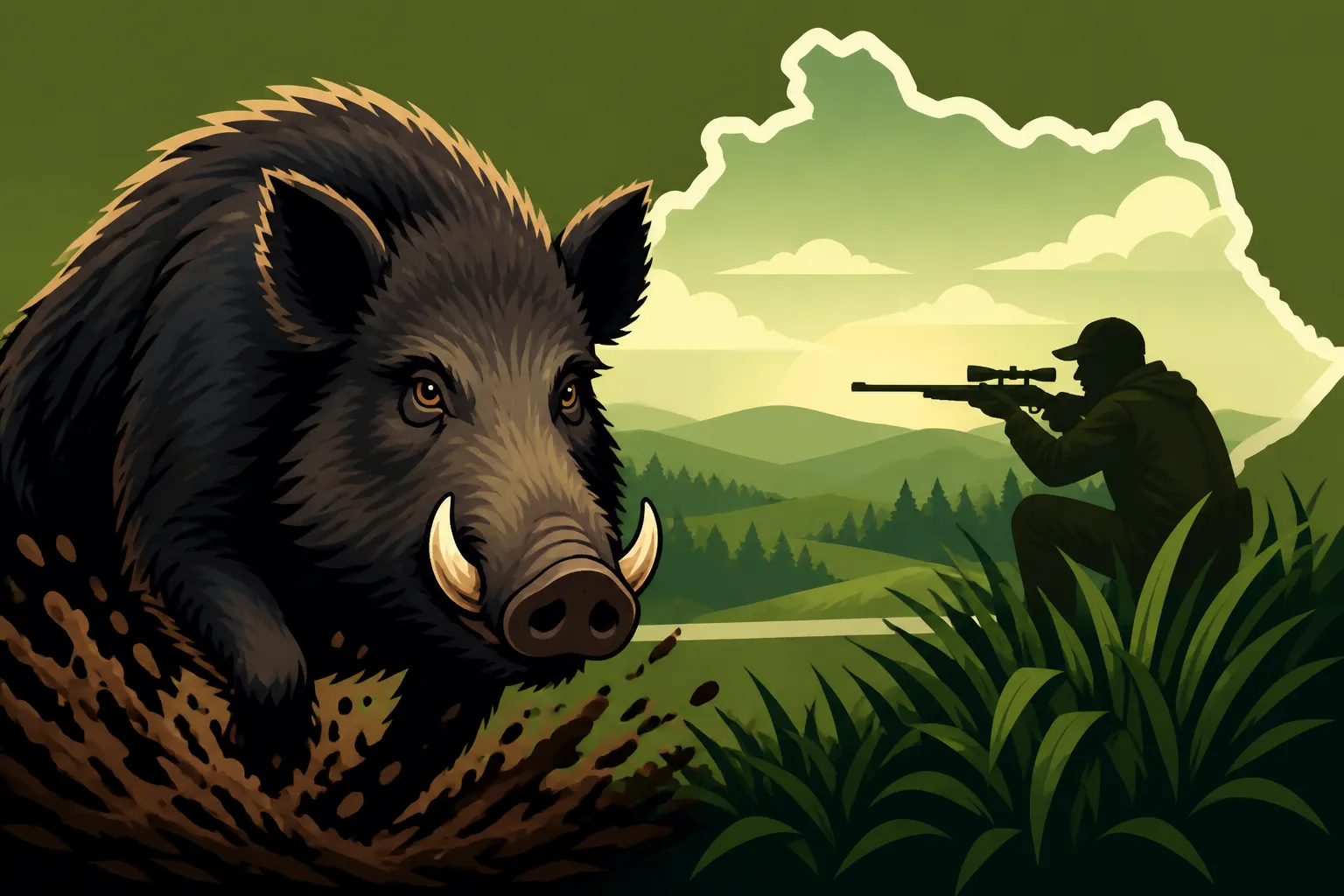
It might seem straightforward, but distinguishing between a truly wild hog and a domestic pig that has simply escaped a farm can be surprisingly tricky, especially if you're not seeing a full-grown boar with impressive tusks. Generally, wild hogs tend to have a more rugged appearance than their domestic counterparts. Their coats are typically darker, often black or dark brown, with coarse, bristly hair. They'll have longer, more slender snouts, and their ears will be smaller and more upright. The most distinguishing feature, especially on boars, is the presence of tusks – continuously growing canine teeth that protrude from their mouths, sometimes reaching impressive lengths. These tusks are not just for show; they're formidable weapons used for defense and for rooting in the soil.
Beyond physical traits, their behavior is a strong indicator. Wild hogs are typically more wary, elusive, and often nocturnal, especially in areas with human activity or hunting pressure. They move in family groups called "sounders" and can be incredibly destructive in their search for food. Escaped domestic pigs, on the other than, might be more docile, show a wider range of colors (pink, spotted, etc.), and their snouts and bodies tend to be shorter and broader. While all feral swine (wild hogs) are considered an unprotected species in Kentucky, it's worth noting that if you encounter what appears to be a recently escaped domestic pig, contacting local animal control or the farm it came from might be the first step, depending on the situation. However, for the purposes of managing the invasive population, the focus remains on the truly wild, free-ranging animals.
Where Wild Hogs Are Found in Kentucky
While wild hogs might not be as widespread across every county in Kentucky as, say, white-tailed deer, their presence is definitely not localized to just one small pocket. They tend to concentrate in areas that offer dense cover, abundant food sources, and access to water. Understanding these key areas is crucial for hunters looking to get involved in controlling these populations.
Primary Concentrations and Hotspots
The vast majority of Kentucky's wild hog population is concentrated in the rugged, forested terrain of southeastern Kentucky. This region, characterized by its steep hills, dense timber, and numerous creek bottoms, provides ideal habitat for these animals to thrive and evade detection. Specific counties that have consistently reported significant hog activity and damage include McCreary, Wayne, Clinton, Whitley, Knox, Bell, Harlan, Leslie, Perry, Pike, Letcher, Breathitt, Owsley, Clay, Laurel, and Pulaski. These areas often overlap with some of Kentucky's most important wildlife management zones, including our bear and elk populations, adding another layer of complexity to the issue.
Much of this activity occurs within the expansive Daniel Boone National Forest, a critical public land resource that unfortunately also provides vast, uninterrupted habitat for hogs. Areas like the Big South Fork National River and Recreation Area, straddling the Kentucky-Tennessee border, are also known hotspots, as hogs can easily move back and forth between states. These regions offer thick laurel and rhododendron thickets, abundant mast crops (acorns, hickory nuts), and plenty of water, making them perfect hideouts. If you're looking to target wild hogs, these southeastern strongholds are often your best bet for encountering consistent sign and opportunities.
How Wild Hogs Spread Across Kentucky
The spread of wild hogs isn't always a linear, gradual process. While natural dispersal accounts for some of their expansion, especially as younger boars seek new territories or sounders follow river drainages and timber cuts, human-assisted movement remains a major contributor. We touched on the illegal practice of releasing hogs for hunting, but even accidental escapes from domestic farms can contribute to the feral population if not quickly contained. The problem is that once established, even a small group of hogs can rapidly multiply and colonize new areas.
The Kentucky Department of Fish and Wildlife Resources (KDFWR) monitors these movements closely, and while the bulk of the population remains in the southeast, there have been increasing reports of Feral Swine Sightings in Central Kentucky in recent years. This highlights the ongoing challenge and the need for vigilance across the entire state. Hogs are adept at using dense cover and moving quietly, making their presence hard to detect until significant damage has already occurred. This rapid and often unpredictable spread underscores why hunters are encouraged to report any sightings or sign of wild hogs to KDFWR, regardless of location. Every piece of information helps wildlife agencies track their expansion and deploy control measures more effectively.
The Devastating Impact of Wild Hogs on Kentucky's Ecosystem and Economy
It's easy to look at wild hogs as just another game animal, but their status as an invasive species means their presence goes far beyond simple sport. The damage they inflict on Kentucky's natural resources and agricultural enterprises is profound and far-reaching, costing millions of dollars annually and jeopardizing the health of our native wildlife and ecosystems.
Habitat Destruction and Agricultural Damage
The most visually striking impact of wild hogs is their incessant rooting. These animals use their powerful snouts and strong necks to literally plow through the soil in search of roots, tubers, grubs, and fungi. The result is landscapes that look like they've been tilled by a small tractor, with vast expanses of ground turned over and vegetation destroyed. In forests, this rooting disrupts native plant communities, damages tree saplings (especially oak and hickory, vital mast producers), and significantly degrades soil quality, leading to increased erosion and changes in water runoff patterns.
For Kentucky farmers, the impact is devastating. Wild hogs can completely destroy entire fields of crops overnight. They target corn, soybeans, wheat, and even hayfields, causing immense financial losses. The problem is so severe that the Kentucky Department of Fish and Wildlife Resources specifically highlights Crop Damage Hogs Cause in Kentucky as one of the primary reasons for their urgent eradication efforts. Beyond crops, they also wallow in sensitive wetlands and riparian areas, polluting water sources with their waste and further accelerating erosion along streambanks. This direct and widespread destruction makes them one of the most destructive invasive species in the United States.
Disease Transmission and Wildlife Impacts
Beyond the physical damage to habitats and crops, wild hogs are notorious vectors for a host of diseases, posing serious health risks to domestic livestock, pets, humans, and especially native wildlife. They can carry and transmit diseases like brucellosis, pseudorabies, leptospirosis, trichinellosis, and even E. coli. For farmers, this means a constant threat of disease outbreaks in their hog and cattle herds, potentially leading to significant economic losses and culling. For hunters, it emphasizes the importance of proper hygiene and cooking practices when handling and preparing wild hog meat.
Furthermore, wild hogs directly compete with our cherished native game species for food and resources. They voraciously consume acorns and other mast crops, which are critical food sources for white-tailed deer, wild turkeys, and black bears, especially during the lean winter months. This competition can lead to declines in the health and populations of these native animals. But it doesn't stop there; wild hogs are also opportunistic predators. They will prey on fawns, turkey poults, ground-nesting birds and their eggs, and even small mammals. This direct predation, combined with habitat destruction and disease transmission, creates a multi-faceted threat that impacts the entire food web and biodiversity of Kentucky's wilderness. Their presence fundamentally alters the delicate balance of our ecosystems.
Hunting Wild Hogs in Kentucky: Regulations and Opportunities
Unlike most game animals in Kentucky, wild hogs are not a native species and are considered an unprotected, nuisance animal. This means the regulations surrounding their harvest are vastly different from those for deer, turkey, or elk. The Kentucky Department of Fish and Wildlife Resources actively encourages their removal, viewing hunters as a critical component in the ongoing efforts to control and, ideally, eradicate these destructive invaders.
Kentucky's "Unprotected" Status and Legalities
The most significant aspect of wild hog hunting in Kentucky is their legal status: they are classified as an "unprotected" species. What does this mean for hunters? On private land, with landowner permission, you can hunt wild hogs year-round, day or night, with almost any legal weapon, and there are no bag limits. You don't even need a Kentucky Hunting Licenses and What They Cost permit to hunt hogs on private land if you are a resident and solely targeting hogs. This incredible flexibility is a direct reflection of KDFWR's stance that these animals are a pest that needs to be removed at every opportunity. Many landowners are desperate for help, so securing permission for hog hunting can sometimes be easier than for traditional game, especially if you can demonstrate your ability to hunt safely and effectively.
However, the rules change when you move to public land. On Wildlife Management Areas (WMAs) and in the Daniel Boone National Forest, while hogs are still considered an unprotected species, hunters are generally required to possess a valid Kentucky hunting license. Furthermore, hunting on public lands must adhere to the specific regulations for other species that might be in season. For instance, if you're hog hunting on public land during deer archery season, you must follow archery season rules regarding equipment and daylight hours. Night hunting or using specific weapons (like thermal optics) might be restricted to legal hunting hours for other game, or prohibited altogether. It's absolutely crucial to check the specific regulations for the WMA or national forest you plan to hunt, as they can have unique rules regarding weapon types, seasons, and access. Never assume public land rules are the same as private land rules for hogs.
Encouraging Hunter Participation as a Control Measure
For the Kentucky Department of Fish and Wildlife Resources, hunting wild hogs isn't just about providing recreational opportunity; it's a vital tool in their overall strategy to mitigate the damage caused by these animals. Every hog removed by a hunter is one less animal destroying habitat, spreading disease, or competing with native wildlife. This makes hunter participation not just a hobby, but a direct contribution to conservation efforts in the state. KDFWR actively promotes ethical and effective hog hunting, encouraging hunters to view their efforts as a service to the land and its native inhabitants.
However, it's also important to approach wild hog hunting with a realistic mindset. While their unprotected status offers great opportunities, successfully eradicating or even significantly reducing a local population through sport hunting alone is incredibly challenging due to their breeding potential and elusiveness. Hunters are encouraged to learn about hog behavior, practice humane dispatch, and prioritize safety, especially when dealing with potentially aggressive animals. Beyond the harvest, reporting your hog sightings and harvests to KDFWR can provide invaluable data, helping the agency track populations and focus its more intensive control methods, such as strategic trapping, in key areas. Your efforts as a hunter truly make a difference in Kentucky's ongoing battle against these invasive pests.
Effective Tactics for Pursuing Wild Hogs
Hunting wild hogs requires a different approach than pursuing deer or turkeys. Their intelligence, nomadic tendencies, and destructive habits mean you'll need to adapt your scouting and hunting strategies to be successful. It’s an engaging challenge that can pay off with a freezer full of meat and the satisfaction of contributing to conservation.
Scouting and Locating Hog Activity
Before you can hunt wild hogs, you need to find them. This means becoming an expert at reading their sign. Wild hogs leave very distinct calling cards. The most obvious is rooting, where they've aggressively churned up the soil. Look for these "rototilled" areas in fields, along creek banks, or even deep in the woods where they're searching for food. Wallows, muddy depressions where hogs roll to cool off and remove parasites, are another clear indicator, often found near water sources. You'll also find distinct tracks (a cloven hoof, similar to deer but rounder and often with visible dewclaws), rubs on trees where boars mark territory, and droppings that vary widely depending on their diet.
Hogs are often most active during low-light hours – dawn, dusk, and throughout the night – especially in areas with human pressure. This nocturnal tendency makes trail cameras an invaluable scouting tool. Place cameras over fresh rooting, near wallows, or along heavily used trails leading to and from feeding areas. Remember to check the Trail Camera Rules on Kentucky Public Land if you're hunting public ground, as regulations can vary. Pay close attention to wind direction when scouting; hogs have an incredible sense of smell, and you'll spook them long before you see them if you're not careful. Finally, for pinpointing potential hotspots and understanding terrain, a mapping app like GoHunt can be incredibly useful, allowing you to identify remote public land areas, property lines, and potential hog habitat features like creek systems and dense cover.
Stand Hunting and Spot-and-Stalk Techniques
Once you've located consistent hog activity, you can employ various hunting methods. Stand hunting is a popular and effective strategy. This involves setting up a treestand or ground blind in areas where you've identified heavy traffic or feeding. Prime locations include edges of agricultural fields, funnel points between thick cover and food sources, or near water features where hogs wallow. If you're using an existing deer stand, make sure it's in a location that hogs frequent; a good resource for ideas is Treestand Setups in Daniel Boone National Forest, which offers insights into positioning for wary game. Since hogs are less sensitive to movement than deer but extremely sensitive to scent, meticulous scent control is paramount.
Spot-and-stalk hunting can be thrilling and effective, particularly in areas with more open terrain, such as reclaimed mine lands, large clear-cuts, or expansive fields. This method is best employed during early morning or late evening when hogs might be moving from bedding to feeding areas. You'll need good optics to scan distant fields and open timber for moving pigs. Once spotted, a careful, downwind approach is critical. Patience and stealth are your best friends here. Hogs can be surprisingly good at detecting subtle movements. Regardless of the method, always remember that wild hogs can be unpredictable and occasionally aggressive, especially sows with piglets or cornered boars, so always have an escape route and be prepared.
Trapping and Night Hunting
For serious hog control, particularly in areas with high populations, trapping is often the most effective method. While individual hunters can employ smaller traps, large-scale trapping operations often involve specialized corral traps designed to capture entire sounders at once. These operations often require significant resources and knowledge and are typically deployed by KDFWR or landowners with assistance. The goal of trapping is complete removal of a group, not just sport.
Night hunting is another highly effective tactic for wild hogs, especially on private land where rules are more permissive. Since hogs are largely nocturnal, hunting them after dark capitalizes on their natural activity patterns. On private land, you can often use powerful lights, thermal imaging, or night vision equipment, which is legal for unprotected species. While specific rules apply, you can draw some parallels from Night Hunting Rules for Kentucky Coyotes regarding equipment and safety. However, night hunting demands extreme caution. Always be absolutely certain of your target and what lies beyond it. Use shooting sticks or tripods for stability, and hunt with a partner for added safety. The use of suppressed firearms, where legal, can also be a significant advantage, reducing disturbance and allowing for multiple shots if a sounder is present. This is a highly specialized approach that yields results but requires careful planning and execution.
Gear and Equipment for Kentucky Hog Hunters
Effective wild hog hunting requires a thoughtful selection of gear. Their tough hides, often dense muscle, and unpredictable nature mean you need reliable equipment that can perform under challenging conditions. Having the right tools for the job not only increases your chances of success but also ensures safety and efficiency.
Recommended Firearms and Ammunition
When it comes to firearms for wild hogs, power and penetration are key. Their thick hide, tough bone structure (especially the "shoulder shield" on large boars), and dense muscle require a round that can punch through to vital organs. For rifles, popular calibers like the .223/5.56, .30-30, .308, 6.5 Creedmoor, and .270 are all capable, especially with well-placed shots. You can find more detail on their effectiveness in articles like Best Rifle Caliber for Kentucky Deer, as many deer calibers translate well to hogs. However, it's critical to use quality, heavy-for-caliber bullets designed for deep penetration and expansion, rather than light, frangible varmint rounds.
Shotguns loaded with slugs are also highly effective at closer ranges, particularly in thick cover where shots might be quick and close. For archery hunters, a setup capable of delivering significant kinetic energy is vital. Heavy arrows paired with sharp, stout broadheads (both fixed-blade and mechanicals designed for tough game) are essential for good penetration. Shot placement is paramount with any weapon; aim for the ear, the base of the ear, or the vitals just behind the shoulder, slightly lower and more forward than you might for a deer due to their anatomy.
Optics, Lights, and Trail Cameras
Good optics are indispensable for hog hunting. A reliable pair of binoculars or a spotting scope will help you scan fields, clear-cuts, and distant timber for hogs, particularly during those crucial dawn and dusk hours. For night hunting, the discussion quickly turns to specialized equipment. High-powered headlamps and flashlights are crucial for navigating in the dark and, if legal for your specific hunting scenario, for spotting animals. However, thermal imaging and night vision devices are game-changers for nocturnal hog pursuits, allowing you to see hogs in complete darkness, even through light cover. While an investment, they dramatically increase your effectiveness for night hunting.
As mentioned in the scouting section, trail cameras are invaluable for pattern hogs. Place them where you see fresh sign to confirm activity, identify travel routes, and determine peak times of movement. For navigation and identifying hunting areas, especially on larger public tracts like the Daniel Boone National Forest, a robust mapping app like GoHunt is a fantastic tool. It offers detailed satellite imagery, property lines, and public/private land distinctions, helping you stay oriented and plan your approach, even in areas with limited cell service.
Protective Gear and General Essentials
Given the rugged terrain and potential for close encounters, protective gear is a smart choice. Sturdy, comfortable boots are a must for navigating steep hollows and dense brush, especially in southeastern Kentucky. Gloves are highly recommended for handling hog carcasses, not just for grip but also for protection against potential diseases. While not always required for hog hunting specifically, if you're on public land during deer or turkey season, make sure you comply with Kentucky's blaze orange or pink requirements. Even when not required, wearing some visible color can enhance safety, especially if hunting with a group.
Beyond that, always carry the essentials: a good fixed-blade knife for field dressing, plenty of water, snacks, and a comprehensive first aid kit. Hogs can be tough animals, and tracking a wounded one through thick cover can be challenging and sometimes dangerous. A reliable GPS unit or a fully charged phone with a mapping app like GoHunt and backup battery pack is also critical for navigation, especially if you venture deep into remote areas. Preparation is key to a safe and successful hog hunt.
Processing and Utilizing Your Wild Hog Harvest
Harvesting a wild hog is only half the battle; the work continues with proper field dressing, meat care, and eventual butchering. Because wild hogs can carry diseases and their meat is generally leaner than domestic pork, a few key considerations will ensure your hard-earned harvest is safe and delicious.
Field Dressing and Meat Care
The moment a wild hog is on the ground, the clock starts ticking, especially in warmer Kentucky temperatures. Prompt field dressing is absolutely crucial to ensure the quality of the meat. Just like with deer, you’ll want to gut the animal as quickly as possible to allow the carcass to cool internally. This prevents bacterial growth and spoilage. Always wear gloves when field dressing any wild animal, but especially wild hogs, due to the potential for disease transmission. Sanitize your knife and other tools thoroughly afterward. A good field dressing knife, preferably one with a gut hook, will make the process much smoother.
Once field dressed, getting the carcass cooled down is paramount. If you're hunting in early archery season temperatures, or during warmer spells, having coolers filled with ice ready to go is essential. You might even consider quartering the animal in the field to allow for faster cooling and easier transport. Think about the tips for Coolers for an Early Archery Kill and apply them here. If you can't get it on ice immediately, hanging the hog in a cool, shaded spot can help, but nothing beats ice for rapid cooling. Be mindful of potential diseases; if you're dealing with a hog from an area of concern, similar caution to Handling Venison From a CWD Surveillance County should be exercised regarding meat handling and hygiene.
Butchering and Cooking Wild Hog
Butchering a wild hog is similar to butchering a domestic pig, but there are some notable differences. Wild hogs are typically much leaner than farm-raised pork, so you won't find the same thick layers of fat. This means the cuts will be leaner, and you might need to add fat (like bacon grease or pork fatback) when cooking certain preparations, especially ground meat. The tough skin and sometimes coarse hair also require a bit more effort during skinning. Many hunters opt to debone the entire animal, maximizing meat yield and simplifying the process.
When cooking wild hog, it is absolutely critical to cook the meat to a safe internal temperature of at least 160°F (71°C). This is to kill any potential parasites, such as Trichinella, or bacteria that the animal might carry. Never eat undercooked wild hog. Despite the precautions, wild hog meat can be incredibly delicious, offering a rich, robust flavor. It's excellent for sausage, roasts, chops, and slow-cooked preparations like pulled pork. Experiment with different marinades and spices to bring out its best qualities. If you're looking for inspiration, consider general game cooking advice like that found in "Best-Eating Game in Kentucky" or even "Cooking a Wild Turkey Breast," adapting the principles to the unique flavor profile of wild hog. With proper care and cooking, a wild hog harvest can provide many fantastic meals.
The Future of Wild Hog Management in Kentucky
The battle against wild hogs in Kentucky is an ongoing and complex one. While hunters play a crucial role, the Kentucky Department of Fish and Wildlife Resources (KDFWR) leads a multifaceted approach aimed not just at control, but at the ultimate eradication of these destructive invaders from the Commonwealth. It's a testament to the severity of the problem that eradication, rather than simply management, is the stated goal.
Continued Eradication Efforts by KDFWR
The KDFWR understands that individual sport hunting, while helpful, isn't enough to curb the exponential growth of wild hog populations. Their efforts often involve more intensive and systematic methods, primarily strategic trapping. This involves setting up large, sophisticated corral traps that can capture entire sounders (family groups) of hogs at once. These traps are monitored remotely and can be sprung via a mobile phone app once a sounder has fully entered. This "whole sounder" approach is far more effective than trying to pick off individual hogs, as even a few remaining animals can quickly repopulate an area. In certain, very specific circumstances and locations, aerial gunning might also be employed, but this is less common and more challenging in Kentucky's rugged terrain.
Central to the KDFWR's strategy is public cooperation. They depend on hunters, landowners, and outdoor enthusiasts to report any sightings of wild hog activity. This information is critical for tracking their spread, identifying new hotspots, and deploying trapping resources efficiently. The goal is to act swiftly to remove new populations before they become established. The state invests significant resources, sometimes with federal assistance, into these efforts, recognizing that the long-term cost of inaction far outweighs the cost of active eradication. It's a continuous, vigilant fight against a cunning and resilient adversary.
The Role of Hunters in Long-Term Management
As hunters, our responsibility in wild hog management extends beyond simply pulling the trigger. We are integral to the broader strategy, not just as harvesters but as informed stewards of Kentucky's wildlife. One of the most important roles hunters can play is through education and advocacy. Spreading awareness about the devastating impacts of wild hogs and, crucially, the illegality and irresponsibility of transporting or releasing them is paramount. This destructive practice undermines all eradication efforts and puts our native ecosystems at even greater risk.
Beyond education, active participation in hunting wild hogs year-round on private land, and within regulations on public land, directly contributes to reducing their numbers. Every hog removed is a victory for native wildlife and agricultural interests. Additionally, practicing responsible hunting—using humane dispatch methods, following all regulations, and prioritizing safety—upholds the integrity of our hunting traditions. By continuing to be vigilant, reporting sightings, and actively participating in their removal, Kentucky hunters are not just enjoying a unique challenge; they are actively helping to protect the Commonwealth's natural heritage from a formidable and relentless invasive threat.
Disclaimer
The information provided in this guide is for general informational purposes only and does not constitute legal advice. Hunting regulations in Kentucky can change frequently. It is the responsibility of every hunter to consult the most current Kentucky Department of Fish and Wildlife Resources (KDFWR) regulations and laws before engaging in any hunting activities. Always ensure you are in compliance with all local, state, and federal regulations.