Best Kentucky Ground for Public Land Bear
Hunting black bear on public land in Kentucky can feel like searching for a needle in a haystack, especially when you consider the sheer vastness of our state forests and the sometimes-elusive nature of these incredible animals. It’s easy to feel overwhelmed wondering where to even begin, but with the right knowledge and a focused approach, you absolutely can find success. This guide is here to cut through the confusion and help you pinpoint the best public hunting grounds for bear, offering practical advice to make your next hunt a rewarding one.
Understanding Kentucky's Bear Zones and Public Access
Before you even think about lacing up your boots and heading into the woods, it’s absolutely crucial to understand the regulatory framework that governs bear hunting here in Kentucky. This isn't like deer or turkey hunting, where opportunities are more widespread. Bear hunting is a much more tightly managed endeavor, and knowing where you can even pursue a bear on public land is your first, most important step.
The Lay of the Land: Where Bears Roam in Kentucky
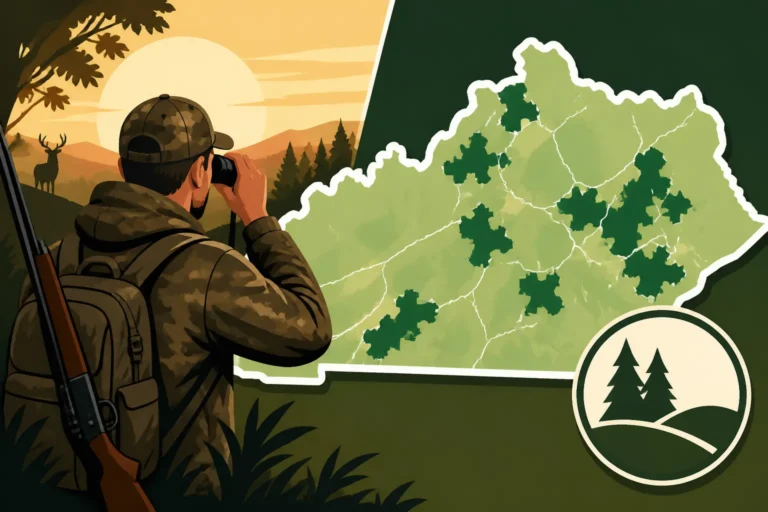
Kentucky's black bear population has made a remarkable comeback, primarily thriving in the rugged, forested terrain of the southeastern part of the state. While bears are slowly expanding their range, those core areas remain your best bet for public land hunting. The Kentucky Department of Fish and Wildlife Resources (KDFWR) has established specific bear zones to manage harvest and protect the population. Historically, the primary zones have been focused on the state's deeply forested eastern counties. Kentucky's Bear Zone System outlines these areas in detail, but broadly, think of counties like Bell, Harlan, Leslie, and Knox as key players in what is often considered Zone One or Zone Two.
These areas are characterized by vast tracts of Appalachian Mountain forest, steep hollows, dense rhododendron thickets, and abundant mast crops like acorns and berries, which are vital food sources for bears. As the population grows, some bears are venturing into new territories, leading to the establishment of Kentucky's New Bear Zone Three in counties like Clinton and Wayne, where opportunities might be emerging. However, for sheer bear density and traditional habitat, the heart of the eastern mountains remains king. Identifying public land within these designated zones is paramount, because a beautiful piece of public ground outside a bear zone, no matter how wild it looks, simply won’t offer you a legal hunting opportunity.
Navigating Public Land Regulations for Bear Hunting
Once you've zeroed in on the general geographic areas where bear hunting is permitted, the next hurdle is understanding the specific rules for public land within those zones. Unlike private land, public properties often have additional stipulations regarding access, allowed methods, and even reporting. It’s not just about having a bear permit; it's about adhering to the nuances of each individual WMA or National Forest tract.
For instance, the regulations in Kentucky Bear Zone One and Two Rules will detail specific season dates, bag limits, and potentially restrictions on hunting methods that might vary from other zones. Some areas might have limitations on the use of dogs, while others might be archery-only during certain periods. It's not uncommon for Wildlife Management Areas (WMAs) to have unique rules that supersede general statewide regulations, especially concerning access points, vehicle use, or even the type of treestand you can utilize. Always consult the KDFWR hunting guide for the most current information, paying close attention to any specific addendums for the public lands you plan to visit. Overlooking a small detail could turn a successful hunt into a frustrating, or even illegal, situation.
Prime Public Lands for Kentucky Bear Hunting
Kentucky is blessed with some incredible public land resources, particularly in the eastern part of the state, where bears call home. Knowing which of these vast areas offer the best potential, and what each one brings to the table, is key to narrowing down your search.
Daniel Boone National Forest: A Vast Wilderness Opportunity
When most hunters think of public land in Eastern Kentucky, the Daniel Boone National Forest immediately comes to mind. This sprawling national forest encompasses over 700,000 acres, offering truly wild and rugged country that is perfect for black bears. The sheer size alone provides endless opportunities for solitude and for bears to grow old and undisturbed. Daniel Boone National Forest Hunting is a fantastic resource for general information on this majestic area.
Within the DBNF, certain districts are particularly noteworthy for bear activity. The Redbird Ranger District, for example, known for its steep topography and extensive timber, is a prime candidate. Hunting the Redbird Ranger District provides a deeper dive into this specific area. Here, you'll find vast stretches of unbroken forest, deep hollows, and high ridges that are ideal for bears seeking mast crops in the fall and dense cover year-round. Look for areas with a mix of oak-hickory stands for acorns, along with thick rhododendron and mountain laurel patches for bedding and escape cover. The Big South Fork National River and Recreation Area, which borders Tennessee, also offers significant bear habitat within its Kentucky side, with similarly rugged terrain and dense forest cover. Successful hunting here often means embracing long walks, navigating challenging topography, and being prepared for remote conditions.
State Forests and Wildlife Management Areas in Bear Country
Beyond the Daniel Boone National Forest, Kentucky also offers several state forests and Wildlife Management Areas (WMAs) that hold significant bear populations and present excellent hunting opportunities. These areas, while sometimes smaller than large tracts of the DBNF, are often intensively managed for wildlife, which can concentrate game in specific areas.
Pine Mountain State Resort Park, though primarily a park, has surrounding state forest lands that are part of the bear zone and offer hunting. The rugged slopes and dense timber of Pine Mountain State Forest Hunting provide ideal conditions for bears. Similarly, Robinson Forest, an expansive research and experimental forest managed by the University of Kentucky, has public hunting opportunities for bear within its boundaries. Robinson Forest Public Hunting Rules will detail any special access or use restrictions, so always check before heading out. These areas can sometimes see more hunting pressure due to their more defined boundaries and sometimes easier access points compared to the deepest parts of the DBNF, but they can still be incredibly productive. Focus on identifying less accessible pockets, or those furthest from main roads, to find areas where bears feel safer and are less disturbed. Always remember that WMA rules can be highly site-specific, so double-checking the KDFWR website for the individual WMA you plan to hunt is always a smart move.
| Public Land Area | Typical Terrain | Key Features for Bear Hunting | Potential Drawbacks |
|---|---|---|---|
| Daniel Boone National Forest | Rugged mountains, steep hollows, vast timber | Extensive unbroken habitat, diverse mast crops, solitude | Challenging access, easy to get lost |
| Pine Mountain State Forest | Steep slopes, dense mixed forest | Good cover, historical bear habitat, managed land | Potentially higher pressure |
| Robinson Forest | Steep hills, mature hardwoods, dense undergrowth | Good mast production, research-informed management | Specific use rules, academic presence |
| Big South Fork NRRA (KY Side) | River gorges, cliffs, dense forests | Diverse ecosystems, limited access points | Can be very remote and difficult |
Strategies for Locating and Hunting Public Land Bears
Finding the "best ground" is only half the battle; the other half is knowing how to effectively scout and hunt that ground. Bear hunting is a blend of persistence, observation, and adaptability, especially on public land where you're competing with other hunters and dealing with varying levels of human disturbance.
Scouting for Bear Sign and Habitat
Effective bear hunting starts long before opening day. Dedicated scouting is absolutely essential, particularly when hunting in vast public lands. Bears are creatures of habit and necessity, constantly seeking food, water, and cover. Your job is to find the intersection of these critical elements. Begin by identifying key food sources: in the fall, this means acorns, hickory nuts, and beech nuts. Areas with a consistent mast crop will draw bears in like a magnet. Look for "bear trees" – oak or beech trees with claw marks on the trunk, indicating a bear has climbed up to feed. Also, scour the ground for fresh scat, which can give you clues about their diet and recent presence.
Water sources, especially in dry periods, are also crucial. Creek bottoms, spring heads, and seeps can be natural travel corridors and gathering points. Dense cover, such as thick rhododendron hells, laurel slicks, or regenerating clear-cuts, provides bears with security and bedding areas. When you're out there, really focus on terrain features. Saddles, benches, and ridges can act as natural funnels for animal movement. Using a mapping app like onX Hunt is invaluable here. You can use its satellite imagery and topo layers to identify these features from home, mark potential food sources, and even pinpoint remote access points. Downloading offline maps is a must, as cell service is often nonexistent in these rugged areas. For a broader scouting approach, check out Scouting Kentucky Public Land Before Season to prepare for any game. Understanding how to interpret maps is also key, and Reading Aerial Photos for Eastern Kentucky Deer offers great insights that apply equally well to bears.
Tactics for Success in Rugged Terrain
Hunting public land bears in Kentucky's mountains typically involves a lot of walking, climbing, and sometimes crawling. The terrain is often steep, and the cover can be incredibly thick. Two primary tactics usually come into play: spot-and-stalk or sitting over a high-potential area.
Spot-and-stalk hunting, as detailed in Spot-and-Stalk Tactics for Pine Mountain Bears, can be incredibly effective in areas with good visibility, such as along powerline cuts, logging roads, or in areas with more open timber, where you can glass large areas. This requires patience, good optics, and an understanding of wind direction, as a bear's nose is their best defense. Moving slowly and deliberately, pausing frequently to scan, can reveal a bear feeding or moving through the timber.
Alternatively, finding a high-traffic area, like a game trail leading to a prime mast crop or a crossing point between bedding and feeding areas, can be an excellent spot for a treestand or ground blind. Bears are often more predictable when it comes to food. Focus on hunting areas where bears are actively feeding on natural mast, as discussed in Hunting Bears Over Natural Mast in the Mountains. Setting up quietly before first light and remaining still and patient for extended periods is often the key. Remember that bears are incredibly intelligent and have an exceptional sense of smell, so playing the wind correctly is non-negotiable, and meticulous scent control is always recommended.
Utilizing Technology and Resources for Your Bear Hunt
In today's hunting world, technology can be a powerful ally, especially when you're tackling the vastness and challenges of public land bear hunting. Leveraging the right tools and knowing where to find reliable information can significantly increase your odds of success.
Mapping Tools and Mobile Apps
Modern hunting requires modern mapping. Forget trying to juggle paper maps in the backcountry; a robust mobile mapping application is an absolute game-changer. Both onX Hunt and GoHunt are excellent choices that provide invaluable features for public land bear hunters in Kentucky.
onX Hunt, for example, allows you to overlay public and private land boundaries directly onto detailed topographic and satellite maps. This is crucial for ensuring you're always on legal hunting ground and can help you identify potential access points from roads that might border private parcels. You can mark waypoints for bear sign, food sources, bedding areas, and potential stand sites, creating a personalized map of your hunting area. Its ability to show land features like timber cuts, water sources, and elevation changes is invaluable for predicting bear movement. Remember to download your maps for offline use before heading into remote areas, as cellular service is often non-existent in the deep woods. onX Layers for Kentucky Land Status can help you understand how to maximize the utility of such apps.
While GoHunt is often associated with Western big game draws, it also offers a wealth of information relevant to hunt planning and research, especially for quota hunts like Kentucky's bear season. It can provide insights into application periods, drawing odds (historically), and unit boundaries, which can be helpful for those serious about applying for a bear permit. While not as focused on real-time navigation as onX, it's a powerful tool for the strategic, long-term planning of your bear hunt. Think of it as your research desk, providing the data to inform your on-the-ground scouting with onX.
Connecting with Local Knowledge and KDFWR Resources
Beyond the apps, don't underestimate the power of human connection and official resources. The Kentucky Department of Fish and Wildlife Resources (KDFWR) is your primary source for all regulations, season dates, and bear harvest data. Their website contains the most up-to-date hunting guides, and often, specific regulations for WMAs or special bear hunt units. Familiarize yourself with their Kentucky Bear Checking Requirements so you know exactly what to do after a successful harvest. Looking at Kentucky Bear Harvest Trends can also provide insights into which counties or regions are seeing consistent bear harvests, helping you prioritize your scouting efforts.
Conservation officers are also invaluable sources of information. They spend countless hours in the field and often have a deep understanding of local bear movements and public land nuances. A polite, well-researched conversation with a CO can provide insights you won't find anywhere else. Similarly, connecting with local hunters, particularly those who have successfully hunted bears in Kentucky, can offer firsthand experience and tips that are worth their weight in gold. Join online forums, visit local sporting goods stores, or attend KDFWR public meetings to engage with the hunting community. Just remember to always verify information with the official KDFWR regulations.
Disclaimer
This article is for general informational purposes only and does not constitute professional advice. Laws, prices and regulations vary by location and change over time. Consult a qualified professional for guidance on your specific situation.