Best Kentucky Counties for Grouse
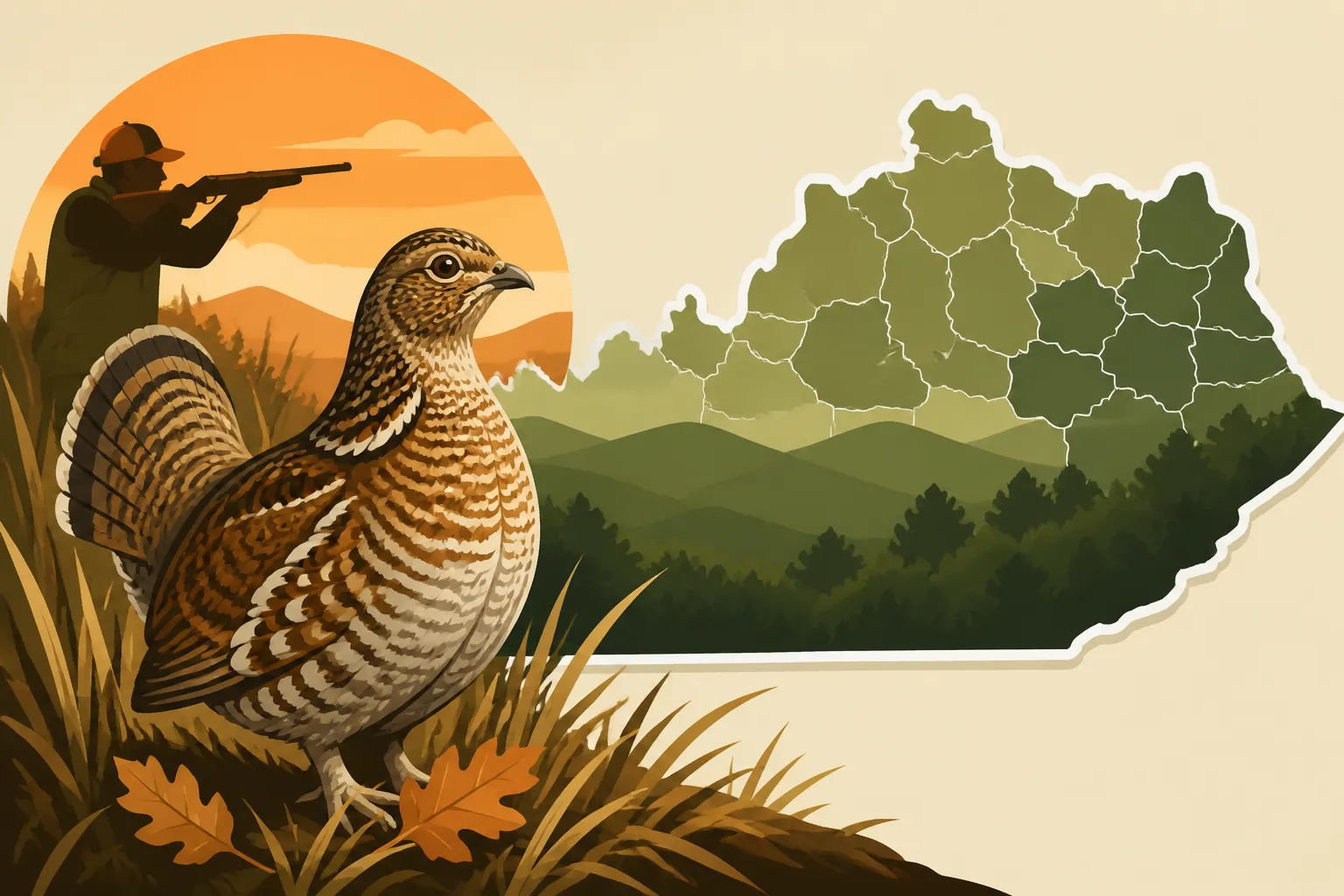
For many hunters, the quest for ruffed grouse in Kentucky feels like chasing a ghost. The reality is, grouse populations have seen significant declines over the past few decades, making the hunt incredibly challenging and often frustrating. This guide isn't here to sugarcoat that reality, but rather to help you understand where your best, albeit slim, chances lie for encountering these magnificent forest birds in Kentucky, and what kind of habitat to prioritize.
The Uphill Battle: Understanding Kentucky's Grouse Landscape
Let's be real: grouse hunting in Kentucky isn't what it used to be. If you talk to seasoned hunters who grew up in the 70s and 80s, they'll tell you stories of flushing coveys regularly from logging roads and thick cover. Those days, sadly, are largely behind us. But that doesn't mean the birds are gone entirely, or that the thrill of the hunt isn't still worth pursuing. It just means you need to adjust your expectations and know precisely where to focus your efforts.
The Historical Decline of Ruffed Grouse
The decline of ruffed grouse across much of their southern range, including Kentucky, is a well-documented and heartbreaking story for many sportsmen. For decades, Kentucky was known for its decent grouse hunting, especially in the eastern mountains. However, changes in forest management, maturation of timber stands, and other environmental factors have contributed to a steady reduction in population numbers. The dense, early successional forest habitat that grouse absolutely thrive in has simply become less prevalent. It's a tough pill to swallow, but understanding this history helps set a realistic stage for your hunt today. You might hear stories from your grandpa about how plentiful they once were, and while those tales are true, they reflect a different era. We're now dealing with a much more fragmented and older forest. For more on this, you can look into Kentucky Ruffed Grouse Decline.
Why Grouse are So Scarce Today
The primary culprit behind the scarcity of grouse boils down to habitat. Ruffed grouse are creatures of young, disturbed forest. They need dense, regenerating thickets, often found in recent clear-cuts, old timber harvests, or areas recovering from natural disturbances like wildfires or ice storms. This kind of cover provides them with food, protection from predators, and nesting sites. As forests mature, the canopy closes, shading out the understory and eliminating that crucial young growth. Without consistent forest management that creates these early successional stages, grouse populations struggle. Factors like increased predation from coyotes and raptors, disease, and even extreme weather events can also play a role, but habitat loss remains the dominant force.
Zeroing In: Top Regions and Counties for Grouse in Kentucky
Given the widespread decline, successfully locating ruffed grouse in Kentucky now requires a highly targeted approach. You can't just wander into any woods and expect to find them. Your best bet for encountering these elusive birds will almost exclusively be in the rugged, mountainous terrain of Eastern Kentucky, specifically within the Cumberland Plateau region.
The Heart of the Cumberland Plateau
The Cumberland Plateau, stretching across much of Eastern Kentucky, remains the last stronghold for ruffed grouse in the state. This area is characterized by steep ridges, deep hollows, and a mix of hardwood and pine forests. While even here the numbers are low compared to past decades, the sheer remoteness and the specific forest types found in parts of the plateau still offer pockets of suitable habitat. It's not easy hunting; you'll earn every flush with sweat and burning leg muscles, but the satisfaction of finding a bird in these wild places is unmatched. When you're looking at maps, especially using tools like GoHunt to understand public land boundaries and topography, keep this region firmly in mind.
Specific Counties to Explore for Ruffed Grouse
When we talk about the "best" counties for grouse in Kentucky, we're really talking about counties that still have grouse habitat, even if it's patchy. These are primarily found in the southeastern corner of the state, deep within the Appalachian foothills.
Here are some counties that have historically shown, and continue to show, some potential for ruffed grouse, along with notes on what makes them stand out:
- Leslie County: Often cited as one of the better remaining areas. Its rugged topography means that some areas are less accessible and thus less impacted by uniform forest maturation. You'll find a mix of older clear-cuts and natural regenerating areas here.
- Clay County: Similar to Leslie, with plenty of steep terrain and remote hollows. Look for old logging activity that has since grown into dense thickets.
- Harlan County: While famous for elk, Harlan also retains some quality grouse cover, especially in its higher elevations and areas impacted by past mining and logging that are now reverting to forest.
- Bell County: Nestled against the Tennessee border, Bell County's rugged terrain and sections of national forest or state lands offer limited but possible opportunities.
- McCreary County: This county has significant portions of the Daniel Boone National Forest, which can provide some of the necessary habitat diversity, particularly near younger timber cuts or areas of natural disturbance.
- Whitley County: Another county with sections of national forest and rugged terrain that might hold grouse.
It's important to stress that even within these counties, you're looking for specific habitat types, not just any patch of woods. You'll want to spend time on aerial maps, perhaps with a tool like GoHunt, to identify clear-cuts, power lines, or old logging roads that have dense secondary growth.
Public Lands with Potential
Much of the remaining grouse habitat is found on public land, primarily within the Daniel Boone National Forest and certain Wildlife Management Areas (WMAs). These areas often have ongoing timber management plans that can, at times, create beneficial early successional habitat, even if it's not always specifically for grouse.
- Daniel Boone National Forest: Spanning multiple counties in Eastern Kentucky, the DBNF is your best bet for extensive public land access. While vast, you'll need to pinpoint specific zones within it that have been recently logged or experienced other disturbances. The forest service does manage for various wildlife, and some of these efforts can benefit grouse. Searching for "Redbird Ranger District" or "Stanton Ranger District" within the DBNF can give you starting points, as these areas have seen some habitat work over the years. You can read more about hunting in this large area in Daniel Boone National Forest Hunting.
- Redbird Wildlife Management Area: Located within the Redbird Ranger District of the Daniel Boone National Forest, this WMA is specifically managed for wildlife. If there's any active grouse habitat management or recent timber cuts, this would be a place to investigate. It's known for its ruggedness, which means fewer hunters typically penetrate the deepest sections. More details can be found in Redbird Wildlife Management Area.
- Robinson Forest Public Hunting Rules: This area, primarily managed for forest research by the University of Kentucky, sometimes has specific public hunting sections. Any research involving timber harvesting could inadvertently create grouse habitat, so it's worth checking the rules and current conditions. Robinson Forest Public Hunting Rules will have more information.
Always check the Kentucky Department of Fish and Wildlife Resources (KDFWR) website for current WMA regulations and any specific rules or closures before heading out. Sometimes, areas with recent burns or timber cuts will be noted, which could be prime grouse territory.
Habitat is King: What to Look For on the Ground
Finding the right county or public land is only half the battle. Once you're there, you need to be able to identify the specific micro-habitats that grouse depend on. This is where your scouting skills truly come into play, and where a good mapping application like GoHunt can help you spot potential areas from home before you ever set foot on the ground.
Young Forest, Early Successional Growth
This is the golden rule for grouse hunting. You're looking for areas that were recently clear-cut, logged, or otherwise disturbed, and are now in the early stages of forest regeneration. This means dense thickets of saplings, briars, and various shrubs, usually between 5 to 20 years old.
- Why it's crucial: This thick cover provides grouse with an almost impenetrable fortress against aerial and ground predators. They can dart through the undergrowth, making it incredibly difficult for hawks, owls, or coyotes to catch them. It also provides abundant browse and insect life, which are key food sources. When scouting, look for evidence of past logging — old skid roads, stump fields, or changes in vegetation height visible on satellite imagery. This dense, low-growing vegetation is absolutely essential. For insight into what kind of cuts are best, check out How Old a Cut Should Be for Grouse.
North-Facing Slopes and Rhododendron Thickets
While grouse can be found on any slope, north-facing slopes often retain moisture longer and can foster a different, denser understory. Rhododendron thickets, particularly those on steeper slopes or in hollows, are classic grouse cover in Appalachia.
- Why it's crucial: Rhododendron provides excellent, evergreen thermal cover in winter and dense protection year-round. It's tough to walk through, which means it's also tough for predators. Grouse will dive into these impenetrable areas when flushed, making for challenging shots. Don't be afraid to push through these thorny, tangly spots – that's often exactly where the birds are hiding. Sometimes, these thickets will be interspersed with hemlock stands, offering additional cover and roosting sites.
Water Sources and Food Availability
Like all wildlife, grouse need access to water. Small springs, seeps, and creek bottoms can be productive areas, especially if they are surrounded by good cover. Beyond water, food sources are critical. Grouse have a varied diet, but they especially favor buds, catkins (like those from aspen or birch, though less common in Kentucky), berries, and acorns.
- Why it's crucial: Knowing their food preferences can help you narrow down your search. In late fall and winter, grouse will key in on persistent food sources like greenbriar berries or residual mast. In spring, they'll seek out buds and emergent greens. Areas with a diverse mix of hard and soft mast, coupled with dense cover and water, are prime real estate. Look for areas where different forest types merge, or where old fields meet new timber growth, as these "edge" habitats often concentrate food and cover in one spot.
Hunting Strategies for Elusive Kentucky Grouse
Hunting grouse in Kentucky is an exercise in determination. It's not a high-volume shoot; it's about covering ground, understanding habitat, and appreciating the few flushes you get. Your strategy needs to be tailored to the demanding terrain and the birds' low density.
Still-Hunting vs. Dogs
Both methods have their place, but each comes with considerations when pursuing Kentucky grouse.
- Still-Hunting: This involves slowly and deliberately moving through promising cover, pausing frequently to listen and observe. You're trying to surprise the bird and get a shot when it flushes. This method is incredibly demanding physically, as you're constantly climbing, navigating thickets, and staying alert. It requires a keen eye and ear, and often, an intimate knowledge of the terrain. The advantage is that you can be very quiet and methodical, slipping into areas a dog might blow through too quickly. For tips on this challenging approach, consider Flushing Grouse Without a Dog.
- Hunting with Dogs: A well-trained bird dog, especially a pointing breed, can dramatically increase your chances. A dog covers more ground, finds scent that you'd miss, and ideally, holds the bird on point, giving you time to get into position for a shot. However, hunting with dogs in the steep, briar-choked terrain of Eastern Kentucky is tough on both the dog and the handler. Your dog needs to be conditioned for rugged country, and you need to be prepared to follow it through some truly nasty cover. Hydration for both of you is paramount.
The Importance of Persistence and Patience
You might walk for hours without seeing or hearing a single bird. This is the reality of modern Kentucky grouse hunting. It's easy to get discouraged, but persistence is key. The more ground you cover in suitable habitat, the higher your chances.
- Mentality: Go into the hunt knowing it's a marathon, not a sprint. Enjoy the walk, the scenery, and the physical challenge. Every flush is a victory, whether you get a shot or not. Learn from each outing. Did you walk past an area that looked good? Did you miss a patch of cover? Use each experience to refine your future efforts. This kind of hunt builds character and a deep appreciation for the wild places you explore.
Gear Considerations for Mountain Grouse
Your gear can make or break a Kentucky grouse hunt. You'll be traversing rugged, often steep and overgrown terrain, so durability, comfort, and functionality are paramount.
- Footwear: Invest in comfortable, waterproof, and supportive boots. Ankle support is crucial for navigating uneven ground and steep slopes. Snake gaiters or chaps are also a very good idea, especially in warmer early season hunts, given the prevalence of venomous snakes in these regions.
- Clothing: Durable briar pants or chaps are non-negotiable. You'll be pushing through dense thorns and thickets. Dress in layers, as you'll be exerting yourself heavily, but mornings can be chilly, especially in the hollows. Blaze orange is often required on public lands, so carry a vest or hat. Check Kentucky Blaze Orange Requirements for specifics.
- Shotgun: A lightweight, fast-swinging shotgun in 20-gauge or 28-gauge is ideal for quick, close-range shots in thick cover. Barrel length is a personal preference, but shorter barrels (24-26 inches) are often preferred for maneuvering through dense brush. For more on this, check Barrel Length for Walking Thick Cover. Use light loads with smaller shot sizes (like 7.5 or 8).
- Navigation: A reliable GPS unit or a smartphone with a robust mapping app (like GoHunt, which can save maps for offline use) is essential. You'll be deep in the woods, often off-trail, and it's easy to get disoriented in the steep hollows. Mark your vehicle, important landmarks, and any flushes.
- Water and First Aid: Carry plenty of water, especially during early season hunts. A small first-aid kit is also a must for scratches, snake bites, or other minor injuries you might sustain while pushing through tough country.
Remember, the true reward of grouse hunting in Kentucky isn't necessarily a full vest, but the experience of seeking out these wild birds in some of the state's most challenging and beautiful landscapes.
Disclaimer
This article is for general informational purposes only and does not constitute professional advice. Laws, prices and regulations vary by location and change over time. Consult a qualified professional for guidance on your specific situation.