Nest Predation and Kentucky Turkey Hatches
Hunters often lament fewer turkey poults in the summer, and it's a frustrating trend to witness. You might wonder why those promising spring gobblers didn't translate into more young birds later in the year, leaving you scratching your head come fall. A significant, yet often overlooked, factor is nest predation. This guide will dive deep into understanding nest predation, identifying common culprits, and exploring how environmental factors influence turkey hatches here in Kentucky, offering insights into what can be done to help these magnificent birds thrive.
Understanding Nest Predation: A Major Hurdle for Kentucky Turkeys
Turkey season ends, and you're already dreaming of next spring's gobblers. But between the end of hunting and the next breeding cycle, a lot has to happen for the population to thrive. Hens lay their eggs, incubate them, and hopefully, hatch a clutch of poults that survive to adulthood. This critical period, from late spring through early summer, is fraught with danger, and a big one is nest predation. It's the heartbreaking reality where eggs, or even the incubating hen, fall victim to other animals. We've seen incredible success in bringing turkeys back to Kentucky, a testament to conservation efforts, as detailed in How Turkeys Were Restored to Kentucky, but maintaining those populations is an ongoing battle.
Think about it from a hen's perspective. She’s often trying to be secretive, finding a secluded spot, usually at the base of a tree, under a brush pile, or in thick weeds. She’s trying to hide, but the woods are full of hungry eyes and noses. Every day she sits on those eggs, she's a target. If her nest is discovered, it's not just the potential loss of a single bird; it's the loss of an entire future generation, potentially 8-12 eggs that would have become young turkeys. This phenomenon isn't just a casual occurrence; it's a primary driver in determining the success of a given year's turkey hatch and, subsequently, the overall health of Kentucky Turkey Population Trends.
When nest predation is high, Poult-to-Hen Ratios and What They Mean plummet, and we see fewer turkeys in the fall and fewer mature birds in subsequent spring seasons. This impact can be particularly acute in areas with fragmented habitat or high predator populations. It’s a natural part of the wild cycle, but when it impacts populations significantly, it becomes a concern for hunters and wildlife managers alike. Observing a healthy number of poults running with hens in late summer is often a better indicator of future hunting success than just counting gobblers in the spring.
The Usual Suspects: Who's Raiding Turkey Nests in Kentucky?
Kentucky's woodlands and farmlands are bustling with wildlife, and unfortunately for nesting turkeys, many of these creatures view turkey eggs as an easy, nutritious meal. It's a tough world out there, and every animal is just trying to survive, but when you're a turkey hunter, it's hard not to feel a pang of frustration when you think about these egg thieves.
Mammalian Predators
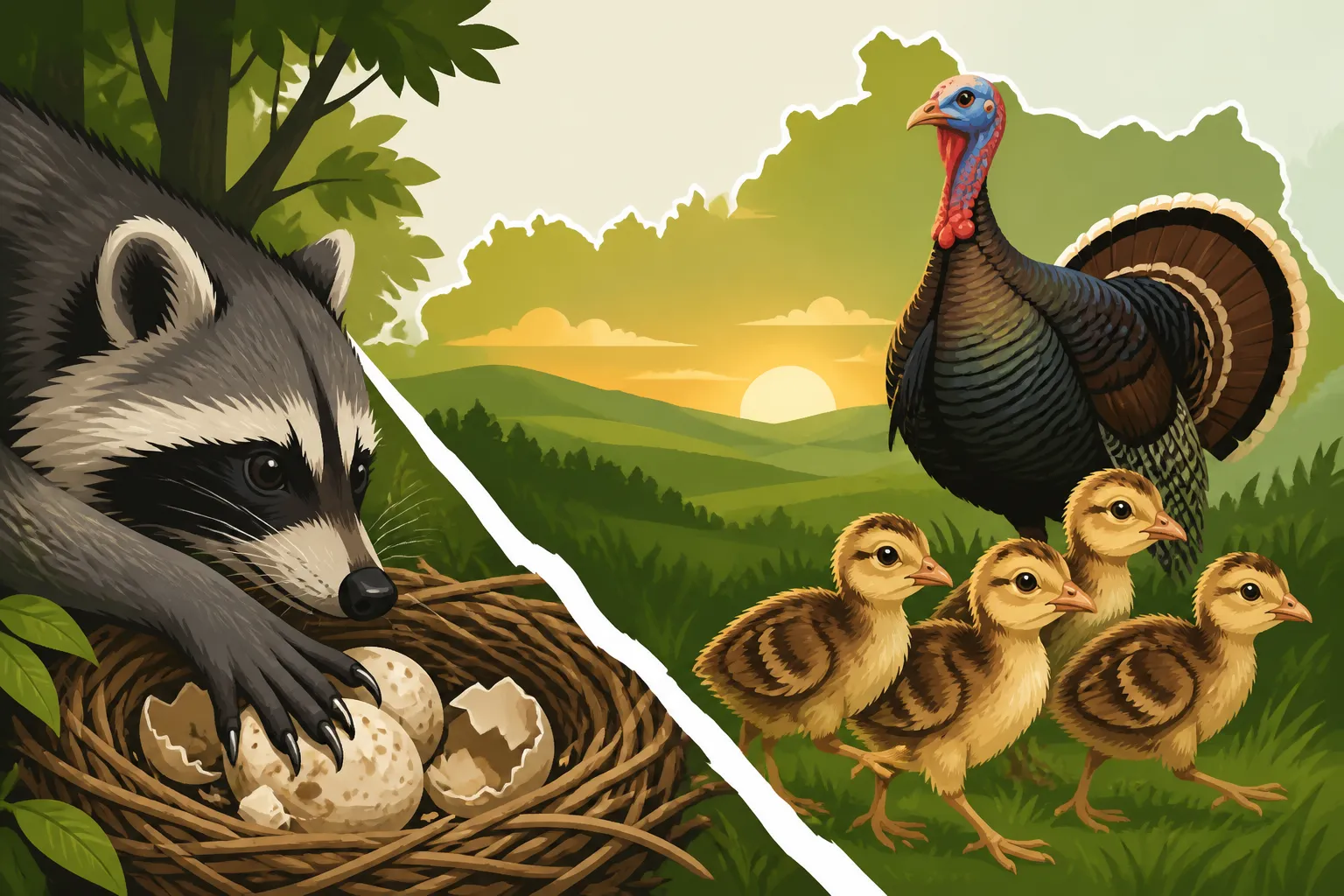
These are often the biggest culprits. Raccoons, opossums, and skunks are notorious for their keen sense of smell and opportunistic nature. They'll follow scent trails, explore thick cover, and literally sniff out a hidden nest. Their dexterity allows them to easily crack open eggs, making quick work of a clutch. Often, they work under the cover of darkness, making them difficult to detect.
Foxes, both red and gray, are also highly effective nest predators, quick and cunning, able to cover significant ground. Their predatory instincts mean they're constantly on the lookout for an easy meal, and a stationary hen on a nest can be a prime target. Coyotes, too, have expanded their range across Kentucky and are increasingly implicated in both nest and poult predation. Kentucky Coyote Range and Density These larger mammals don't just eat the eggs; sometimes, they'll also catch the hen on the nest, especially if she's a tight sitter and slow to flush, adding another layer of loss to the breeding population. Even feral hogs, which are unfortunately spreading in parts of Kentucky, can destroy nests just by rooting through an area, a phenomenon detailed in How Many Wild Hogs Kentucky Has. Their indiscriminate foraging can lead to accidental, yet devastating, nest destruction.
Avian Predators
While less common than mammals, some birds can also take a toll. Crows, for instance, are intelligent and opportunistic omnivores that will raid nests if given the chance, especially if the nest is exposed or the hen is repeatedly flushed. They often work in pairs or groups, with one distracting the hen while others raid the eggs. Great-horned owls can be a threat, particularly at night, when their silent flight and keen eyesight allow them to snatch an incubating hen or newly hatched poults right from the nest site. While they might not focus specifically on eggs, their impact on the breeding hen can be just as significant.
Reptilian Predators
Snakes, particularly larger species like black rat snakes or timber rattlesnakes, will consume turkey eggs whole. While less impactful on a population-wide scale compared to mammals, they can certainly devastate individual nests. They're silent, often undetected, and can access nests in tight spots that other predators might struggle to reach. A single snake can consume an entire clutch of eggs, leaving no trace except an empty, disturbed nest. Their presence can be a quiet, unseen menace to a hen's efforts.
It's a diverse cast of characters, and their presence and density vary across different regions of Kentucky. In areas with abundant fencerows and drainage ditches, raccoon and opossum numbers might be higher. In heavily wooded, rugged terrain, foxes and coyotes could be more prevalent. Understanding these local dynamics is crucial for any potential management strategies.
Habitat, Weather, and Predator Impact: A Complex Equation
The success of a turkey hatch isn't simply a matter of how many predators are around; it's a dynamic interplay between habitat quality, weather patterns, and the density of those hungry critters. All these elements combine to either give turkey hens a fighting chance or stack the odds heavily against them. Understanding the challenges faced during the Kentucky Spring Turkey Season Rules period, even before the hunting starts, is key to appreciating the hurdles these birds overcome.
Habitat Quality and Nesting Success
Good nesting habitat is dense, diverse, and provides ample cover. Think tall grasses, thick briar patches, regenerating clear-cuts, or dense undergrowth. This kind of cover helps conceal nests from visual predators like crows and makes it harder for scent-driven predators to pinpoint them immediately. The more visual and olfactory barriers a hen has, the better her chances. If suitable nesting cover is scarce, hens are forced to nest in less secure locations, making their eggs more vulnerable to discovery. These less-than-ideal spots might be on a field edge with little concealment or in sparse woods, essentially putting a target on the nest.
Agricultural practices also play a significant role. Early hay cutting, for example, can destroy countless nests if hens choose fields for nesting, which they often do due to the dense cover the crops provide. The timing of these activities can be devastating if it coincides with the peak nesting period. When hens are forced to re-nest after a failed first attempt, the subsequent clutches are often smaller, and the poults hatch later in the season, putting them at a disadvantage for growth and survival before winter.
Weather's Influence
Mother Nature has a significant say in turkey hatches. Cold, wet springs can reduce insect availability, which is critical protein for young poults that need to grow quickly to survive. More directly, heavy, prolonged rains can flood nests located in low-lying areas, drowning the eggs. While adult turkeys are resilient, newly hatched poults are incredibly vulnerable to exposure; a cold, wet snap right after a hatch can wipe out entire broods that simply can't regulate their body temperature.
Conversely, extremely dry conditions can make ground cover less effective, causing grasses and undergrowth to become sparse, increasing nest visibility and making it easier for predators to move through and spot nests. Drought can also impact insect populations, further stressing poults trying to find enough food to develop properly. The ideal scenario is a warm, relatively dry spring with plenty of sunshine and just enough rain to keep the insect populations booming and vegetation lush.
Predator Density and Management
While you can't realistically eliminate all predators (nor should you try, as they are part of a healthy ecosystem), their local density certainly impacts nest success. Some folks believe that a robust trapping program focused on generalist predators like raccoons and opossums can locally boost turkey hatch rates. This is a contentious topic, with varying results reported, but it speaks to the frustration hunters feel when faced with low poult numbers. Such efforts are usually most feasible and effective on smaller, intensively managed private lands.
The availability of other food sources for predators also plays a role; if natural prey is scarce, turkey nests become an even more attractive target. During periods of low rodent or insect populations, predators may turn more heavily to ground-nesting bird eggs. For hunters using platforms like GoHunt, understanding predator trends and how they correlate with poult production data can offer insights into local population dynamics. Even using tools like GoHunt to scout and understand regional population figures can offer context when you're noticing fewer birds in your hunting areas.
What Can Be Done? Strategies for Boosting Kentucky Turkey Hatches
Facing the challenges of nest predation and environmental factors can feel overwhelming, but there are proactive steps that hunters, landowners, and conservationists can take to try and improve turkey hatch success in Kentucky. It's not about eradicating predators, but about tipping the scales a little more in favor of the turkeys.
Habitat Enhancement for Nesting and Brooding
This is arguably the most impactful long-term strategy. Focus on creating and maintaining diverse, dense nesting cover. Turkeys need options, both for concealing their nests and for providing vital bugging habitat for newly hatched poults.
- Prescribed Burning: Controlled burns, when managed correctly, can stimulate new growth of grasses and forbs, creating excellent nesting and brooding habitat. They also help control dense brush that can become impenetrable for poults to navigate. However, burns need to be timed carefully to avoid active nesting periods, usually conducted in late winter or very early spring. A thoughtful burning regimen can create a mosaic of different successional stages, providing varied cover.
- Native Grass Plantings: Establishing warm-season native grasses like switchgrass or indiangrass provides excellent, secure nesting cover that holds up better through the winter than cool-season grasses. These dense stands offer superb concealment from both visual and scent-driven predators. They also offer crucial bugging areas for poults, which rely heavily on protein-rich insects for their first few weeks of life. This ties into broader Habitat Work on Kentucky WMAs and private land initiatives, where creating such diverse ecosystems benefits multiple wildlife species.
- Brush Piles and Early Successional Areas: Simply leaving brush piles after clearing can offer quick, temporary cover. More strategically, creating small clearings or maintaining early successional growth (young saplings, shrubs, weeds) through disking or light timber stand improvement provides mosaic habitat where hens can nest and poults can find refuge and food. GoHunt maps can even help identify areas ripe for these types of habitat improvements, pinpointing spots with suitable soil types or existing cover that could be enhanced.
Predator Management Considerations
This is a more direct, but often localized and short-term approach. While effective on a small scale, it requires consistent effort.
- Targeted Trapping: For landowners, targeted trapping of species like raccoons and opossums during the off-season (outside of nesting season, to avoid disturbing hens) can potentially reduce local predator pressure. This can involve live traps, foothold traps, or other legal methods, but it's crucial to be knowledgeable about proper techniques and animal handling. Always remember to follow Kentucky's regulations regarding trapping seasons, methods, and required licenses. Such efforts are usually most effective on smaller, intensively managed private lands where sustained pressure can be applied.
- Limiting Access and Disturbance: Reducing human disturbance in known nesting areas during the spring can also help. Repeated human presence, whether from hiking, shed hunting, or other activities, can inadvertently lead predators to a nest. Being mindful of sensitive areas during nesting season can make a difference. Avoiding driving ATVs or walking dogs off-leash through prime nesting cover can prevent unintended nest destruction or exposure.
Monitoring and Data Collection
Understanding what's happening on the ground is key to making informed decisions and assessing the success of any management efforts.
- Poult Surveys: Participating in or understanding the results of poult-to-hen surveys helps wildlife agencies gauge the success of a given hatch. These numbers are vital for making informed management decisions about future seasons, and can be crucial for assessing the overall Kentucky Turkey Population Estimate. These surveys typically involve counting hens and observing how many poults are accompanying them, providing a ratio that indicates nesting success and poult survival.
- Trail Cameras: Strategically placed trail cameras can offer insights into predator activity in specific areas, helping identify problem spots or prevalent predator species. Setting up cameras on potential travel corridors or near known nesting cover can reveal which animals are frequenting these areas. GoHunt or similar tools can often integrate with this data to provide a broader picture of wildlife activity, as covered in Trail Cameras on Kentucky Public Land. Analyzing these observations can enhance your Reading a Kentucky Harvest Report and connect it to on-the-ground realities, allowing you to fine-tune your approach.
No single solution will magically solve nest predation. It's a natural part of the ecosystem, and predators play a vital role. However, by understanding the dynamics and implementing thoughtful habitat improvements, coupled with strategic and legal predator management where appropriate, we can certainly do our part to give Kentucky's wild turkeys the best possible chance to thrive, leading to more birds for everyone to enjoy in the years to come.
Comparing Impact of Predator Types on Turkey Nests
Let's look at how different common predators might impact a turkey nest in Kentucky, considering their hunting styles and typical behavior.
| Predator Type | Primary Method of Discovery | Typical Nest Outcome | Impact on Hen | Likelihood of Repeat Predation in Area |
|---|---|---|---|---|
| Raccoon | Scent, Opportunistic | Eggs Eaten/Destroyed | Low (Hen usually flushes) | High, if successful |
| Opossum | Scent, Opportunistic | Eggs Eaten/Destroyed | Low (Hen usually flushes) | High, if successful |
| Skunk | Scent | Eggs Eaten/Destroyed | Low (Hen usually flushes) | Moderate |
| Fox (Red/Gray) | Scent, Sight, Opportunistic | Eggs Eaten/Destroyed, Hen sometimes taken | Moderate (Hen may be caught) | High, if successful |
| Coyote | Scent, Sight, Opportunistic | Eggs Eaten/Destroyed, Hen sometimes taken | Moderate to High (Hen may be caught) | High, if successful |
| Crow | Sight | Eggs Eaten/Removed | Low (Hen typically absent or flushes quickly) | Moderate, if nest exposed |
| Snake (e.g., Black Rat Snake) | Scent, Opportunistic | Eggs Swallowed Whole | Very Low (Hen usually unaware or absent) | Low (Less territorial) |
| Feral Hog | Random Rooting/Foraging | Nest Destroyed, Eggs Eaten | Low (Hen usually flushes) | Moderate, if group moves through |
This table illustrates that while all these animals can be devastating to a nest, their methods and potential impact on the hen herself can differ. Mammals with a strong sense of smell and a tendency to explore cover are often the most consistent threats due to their ubiquitous presence and foraging habits.
Disclaimer
This article is for general informational purposes only and does not constitute professional advice. Laws, prices and regulations vary by location and change over time. Consult a qualified professional for guidance on your specific situation.