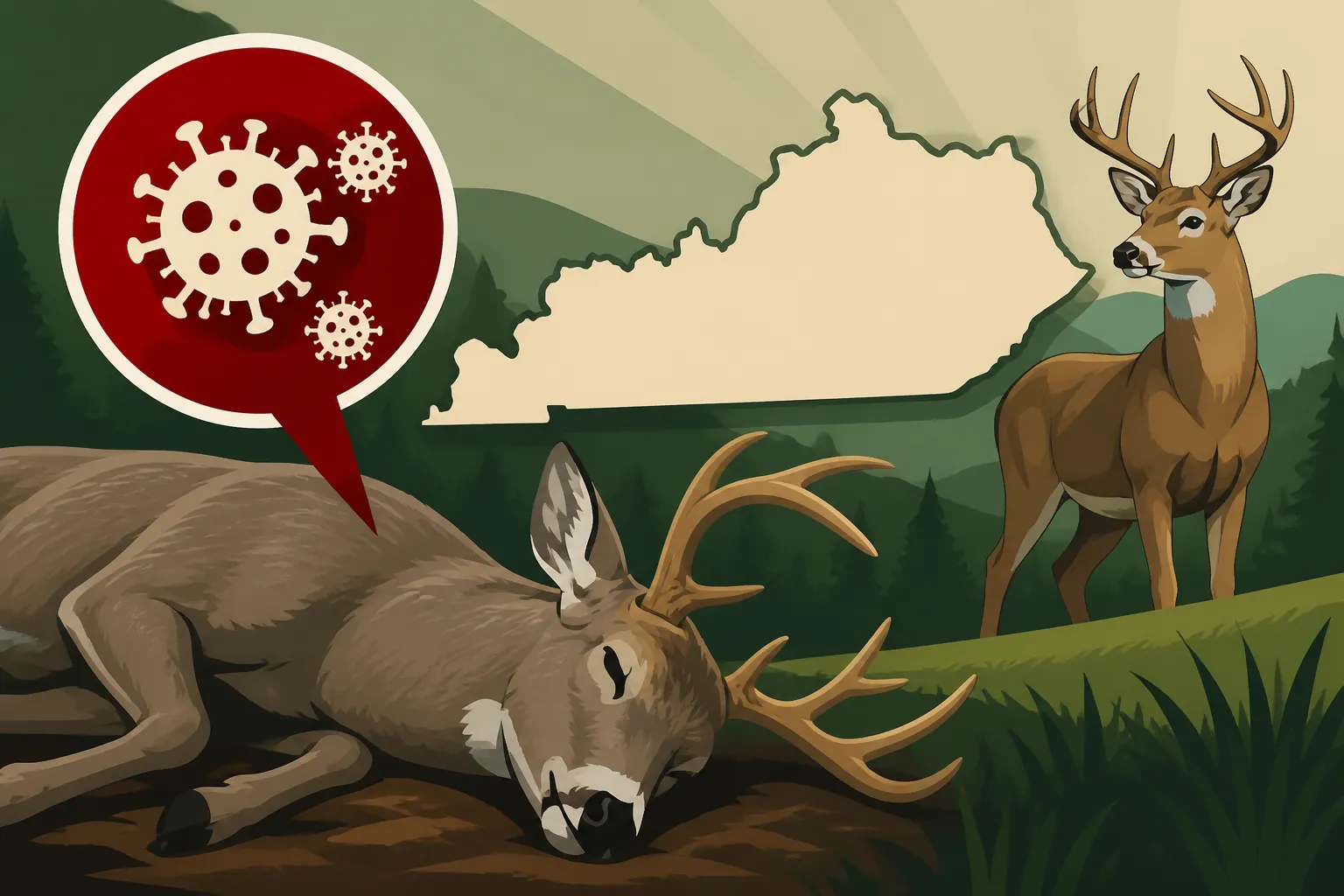
EHD Die-Offs in Kentucky Deer
It's a sight no hunter ever wants to see: a beautiful Kentucky whitetail, lying dead by a creek bank, bloated and lifeless, with no visible bullet wound or arrow entry. When you find one, it's heartbreaking. When you find several over the course of a few weeks, especially in late summer or early fall, a knot of dread can form in your stomach. You start to wonder, "What's going on with our deer herd? Is it something I should be worried about?" This guide aims to clear up the confusion and anxiety around Epizootic Hemorrhagic Disease (EHD) die-offs in Kentucky deer, explaining what it is, how to recognize it, and what it means for your hunting season.
Understanding EHD: What Exactly Is It?
Epizootic Hemorrhagic Disease, or EHD as it's commonly known, can sound like a scary, complex illness when you first hear the name. But at its core, it's a natural, recurring disease that impacts deer populations, especially here in the Southeast. It's a phenomenon that has always been a part of the deer management landscape, and understanding it is key to not panicking when you encounter its unfortunate effects.
The Culprit: Midges and the Virus
At the heart of EHD is a virus, specifically an orbivirus, that's transmitted through the bite of tiny insects called biting midges. You might know them as "no-see-ums" or "gnats" – those annoying little winged creatures that buzz around in the humid late summer air. They're so small you often feel their bite before you see them, and they're the primary vectors for spreading the EHD virus from one deer to another. Without these midges, the virus simply can't spread.
It's important to understand that this is a virus specific to deer and other ruminants, like elk, though deer are far more susceptible to severe illness. The good news for us hunters, and for our domestic pets and livestock, is that EHD is not transmissible to humans. You cannot contract EHD from handling an infected deer, nor can your dog or cattle. This is a critical distinction that often gets lost in the fear when a die-off occurs. The midges pick up the virus from an infected deer, and then, when they bite a healthy deer, they transmit the virus, continuing the cycle.
Symptoms of EHD in Deer
The symptoms of EHD can range from mild, almost unnoticeable illness to rapid, fatal progression, depending on the individual deer's immune response and the virulence of the specific viral strain. Typically, the first sign is a high fever. This fever causes the deer to seek out water, which is why so many EHD victims are found dead near creeks, ponds, and even puddles. They’re simply trying to cool down and rehydrate.
As the disease progresses, the virus attacks blood vessels, leading to hemorrhages throughout the body. This can manifest externally as swelling of the face, neck, tongue, and eyelids. Their tongues may become blue or purple due to lack of oxygen. The deer might appear lethargic, disoriented, and unafraid of human presence. In severe cases, the hooves can slough off, making walking incredibly painful and difficult. These symptoms often develop very quickly, sometimes within days, leading to a swift decline and death. It's a hard way for any animal to go, and encountering a deer in this state is truly unsettling.
The Cycle of Outbreaks
EHD outbreaks are intensely seasonal and directly linked to the life cycle of the biting midge. Here in Kentucky, we typically see EHD cases spike in late summer and early fall, usually from August through October. This is precisely when the midge populations are at their highest, and the weather is warm and humid, creating ideal breeding conditions for these tiny insects.
Interestingly, drought conditions can sometimes intensify these outbreaks. When water sources become scarce, deer tend to congregate around the remaining limited water, bringing more deer into close contact and, unfortunately, creating prime feeding grounds for infected midges. This concentration of both hosts and vectors can accelerate the spread of the virus. The good news, if there can be any, is that the first prolonged hard frost of the season typically signals the end of an EHD outbreak. The cold weather kills off the midges, breaking the transmission cycle until the following year. It's a natural, albeit harsh, annual reset that helps control the spread.
Identifying an EHD Die-Off in Kentucky
When you're out Scouting Kentucky Public Land Before Season in late summer, coming across a dead deer can be alarming. But understanding what an EHD die-off looks like can help you determine if it's EHD or something else entirely. It's not just about seeing a dead deer; it's about the context and the specific signs.
What to Look For: Carcasses and Behavior
The most common indicator of an EHD die-off is the presence of multiple dead deer within a relatively confined area, particularly near water sources. You might find them in or right next to a creek, a pond, or a muddy wallow. Often, the carcasses will appear bloated, and upon closer inspection, you might notice swollen tissues, especially around the head and neck. Sometimes, the tongue will be dark and protruding. If you find a living deer exhibiting symptoms like extreme lethargy, heavy drooling, severe swelling of the face or tongue, or lameness, these are strong indicators it's suffering from EHD.
It’s crucial to distinguish EHD from other issues. Unlike CWD, which leads to chronic weight loss and neurological symptoms over months, EHD is acute. A deer with EHD will often look robust and healthy in body condition, despite the external swelling, because the disease acts so quickly. If you're seeing multiple deer with these specific symptoms during the late summer/early fall window, it's highly probable you're witnessing an EHD event. Always err on the side of caution and reach out to the Kentucky Department of Fish and Wildlife Resources (KDFWR) if you suspect a major die-off.
Geographic Patterns and Local Impact
EHD is fairly common across Kentucky, and indeed, most of the southeastern United States. It's not restricted to one particular region, though some areas might experience more severe outbreaks than others in any given year. The severity of an outbreak is highly dependent on local factors like deer density, the prevalence of the midges, and environmental conditions such as rainfall affecting water availability. A localized drought in one county, for instance, might create more severe conditions for EHD than in an adjacent county that received more rain.
One interesting aspect of EHD is the development of herd immunity. Deer that survive an EHD infection develop antibodies and are generally immune to that particular strain for a period, if not for life. This means that areas with historical EHD outbreaks may have a higher proportion of immune deer, leading to less severe die-offs in subsequent years, unless a new, particularly virulent strain is introduced. This natural cycle contributes to the overall resilience of the Kentucky Deer Population Estimate, even in the face of these periodic die-offs. Hunters who use scouting tools like GoHunt can keep tabs on historical hotspots, helping them understand potential impacts on Deer Density by Kentucky Region.
Reporting Suspected Cases
Seeing sick or dead deer can be unsettling, but reporting these observations to the KDFWR is incredibly important. Your reports help biologists monitor the spread and severity of EHD outbreaks across the state. This information is vital for understanding local deer herd health and for making informed management decisions. Don't assume someone else has already reported it – every piece of information helps paint a clearer picture.
When you report a suspected EHD case, try to provide as much detail as possible. This includes the exact location (GPS coordinates are best if you have them), the date and time of observation, the number of affected deer, and any specific symptoms you observed in living animals or on carcasses. A simple phone call or online report can make a real difference. If you're unsure about how to identify EHD versus other diseases, your report still helps, and the professionals can follow up. The more eyes and ears out in the field, the better prepared KDFWR can be. Remember, you're not just a hunter; you're an important part of wildlife conservation. If you want to know more about the process, check out Reporting a Sick Animal in Kentucky.
Hunting After an EHD Event: What Hunters Need to Know
For hunters, an EHD die-off can raise a lot of questions and concerns. You invest a lot of time and effort into your season, and seeing a reduction in deer numbers, even if localized, can be disheartening. However, it's important to keep perspective and adapt your approach. The Kentucky deer herd is remarkably resilient.
Impact on Deer Populations
The immediate impact of an EHD outbreak is, of course, a reduction in the local deer population. In severe cases, a die-off can significantly decrease deer numbers in a particular area, sometimes by 20% or even more. What's often observed is that EHD can disproportionately affect older, larger bucks. This isn't because they are inherently more susceptible to the virus, but rather because they often have larger home ranges and are more likely to encounter infected midges and other infected deer. They also may be more stressed during the rut, making them more vulnerable.
Despite these immediate losses, deer herds typically recover quite quickly. Whitetail deer have a high reproductive rate, and does often give birth to twins or even triplets. This natural rebound mechanism means that even after a significant die-off, populations can bounce back to healthy numbers within a few years, especially if there's good habitat and food available. While it's tough to see the impact, the herd's ability to self-regulate and replenish is a testament to its hardiness. So, while you might find fewer deer in your usual spots this season, it's not a permanent blow to the overall Kentucky Deer Population Estimate.
Safety and Meat Handling Considerations
When it comes to harvesting deer after an EHD event, safety is naturally a top concern, even though we've established it's not transmissible to humans. The general rule of thumb is simple: if a deer appears sick or emaciated, do not harvest it. A deer suffering from EHD will often look lethargic and have obvious symptoms like swelling or severe lameness. While EHD is not a threat to human health, no one wants to eat meat from a sick animal.
If you harvest a deer that appears healthy but, upon field dressing, you notice internal hemorrhaging or other unusual signs, it's best to contact the KDFWR for guidance. They may want to collect samples for further analysis. For deer that have survived an EHD infection, you might see signs of chronic EHD, particularly in their hooves, which can show growth rings or even partial sloughing. If you harvest a deer with these signs, and the meat appears otherwise healthy and robust, it is generally considered safe to eat. Always practice good hygiene during field dressing and proper meat inspection, just as you would with any wild game.
Adjusting Hunting Strategies
After a significant EHD die-off, you might need to adjust your hunting strategies. The deer density in your usual haunts might be lower, so relying on old patterns might not be as effective. This is where diligent scouting becomes absolutely critical. You'll want to spend extra time in the woods, even more than usual, looking for fresh sign: tracks, droppings, rubs, and scrapes. Pay close attention to areas with abundant late-season food sources, as surviving deer will congregate there.
Consider using modern mapping tools like GoHunt, which can help you identify new areas, scout remotely, and understand terrain features that might concentrate surviving deer. Look for natural funnels, untouched bedding areas, and overlooked pockets of habitat that might have been less affected by the die-off. If you're seeing a significant impact on food sources, for example Hunting After a Poor Acorn Year, you'll need to adjust your focus even more. Patience will be a virtue, and adapting quickly to new deer patterns will be key to success. Don't be afraid to explore new territory or revisit areas you might have previously overlooked, because the surviving deer may have shifted their patterns.
Differentiating EHD from Other Deer Issues
Kentucky's deer herd faces various challenges, and it’s easy to confuse different diseases or mortality factors. Knowing the key differences between EHD and other common deer issues, especially Chronic Wasting Disease (CWD), is incredibly important for hunters.
EHD vs. Chronic Wasting Disease (CWD)
This distinction is perhaps the most crucial for hunters to understand. While both EHD and CWD can cause deer mortality, they are vastly different diseases. EHD is an acute, seasonal, viral infection transmitted by insects, causing rapid onset of symptoms and often quick death. CWD, on the other hand, is a neurological disease caused by abnormal proteins called prions. It's always fatal, but its progression is slow, taking months or even years.
Deer with CWD typically exhibit chronic weight loss (hence "wasting disease"), neurological symptoms like stumbling, tremors, listlessness, and excessive drooling. They don't typically have the acute swelling or hemorrhages seen with EHD, and they don't necessarily die near water. CWD is a long-term threat to deer populations and has no cure, nor does it have an insect vector. While EHD is not a human health risk, CWD is an ongoing area of scientific study, and it's recommended not to consume meat from CWD-positive animals. Kentucky has a significant effort underway to monitor and manage CWD, especially in Kentucky's Chronic Wasting Disease Surveillance Zone, where there are Mandatory Testing Inside Kentucky's CWD Zone requirements. Understanding these differences is vital for responsible hunting and herd health.
Here's a quick comparison:
| Feature | Epizootic Hemorrhagic Disease (EHD) | Chronic Wasting Disease (CWD) |
|---|---|---|
| Cause | Virus (Orbivirus) | Prion (abnormal protein) |
| Transmission | Biting midges (no-see-ums) | Direct contact (saliva, urine, feces), environmental |
| Seasonality | Late summer/early fall (ends with hard frost) | Year-round, progressive |
| Symptoms | High fever, swelling (face/tongue), hemorrhages, lameness, seeking water, often quick death | Chronic weight loss, neurological signs (stumbling, head-down, drooling), behavioral changes, slow progression |
| Duration | Acute (days to a few weeks) | Chronic (months to years) |
| Human Risk | No known risk | Not definitively known, but consumption not recommended |
| Herd Impact | Localized die-offs, rapid recovery due to reproduction | Long-term population decline, no known cure or recovery |
EHD vs. Other Natural Mortality Factors
Aside from EHD and CWD, deer face a host of other natural mortality factors in Kentucky. Vehicle collisions are a significant cause of death, especially during the rut and migration periods. Predation by coyotes and black bears also accounts for some deer mortality, particularly fawns. Other diseases, malnutrition, and even accidents (like falling into a deep creek or getting tangled in fences) contribute to the overall attrition of the herd.
What makes EHD stand out is its specific presentation: the sudden, relatively large number of deaths in a localized area, often concentrated near water, and during a particular season. If you find a single deer hit by a car, it's clearly a different scenario. If you find multiple deer in a short timeframe, all exhibiting similar internal and external hemorrhages or severe swelling, and it's late summer, EHD is the most likely culprit. Recognizing these patterns helps wildlife officials, and us as hunters, differentiate the impact of EHD from the background noise of everyday deer mortality.
How Hunters Can Help Wildlife Health Efforts
As hunters, we are often the first line of defense and observation when it comes to wildlife health. Our presence in the woods gives us a unique perspective, and our actions can significantly aid KDFWR's efforts to monitor and manage disease.
First and foremost, continue to report any sick or dead deer you encounter, particularly if they show symptoms consistent with EHD or CWD. The information you provide helps KDFWR track outbreaks and understand their scope. Secondly, if you hunt in an area with CWD surveillance, please participate in mandatory or voluntary CWD testing. It’s a simple process that provides crucial data. Finally, practice good carcass disposal by burying remains or bringing them to a landfill, especially if you're in a CWD-affected county, to prevent further environmental spread. By being vigilant and cooperative, Kentucky hunters play a vital role in ensuring the long-term health and sustainability of our cherished deer herd.
Disclaimer
This article is for general informational purposes only and does not constitute professional advice. Laws, prices and regulations vary by location and change over time. Consult a qualified professional for guidance on your specific situation.