Kentucky Bison History Before Settlement
It's easy to look out across Kentucky's rolling hills, vast agricultural fields, and dense forests today and imagine this is how it's always been. We see plenty of deer, an increasing number of elk, and even some bears, but it takes a real effort to picture a time when an entirely different megafauna dominated the landscape. Many of us, myself included, grew up with a faint understanding that "buffalo" once roamed here, but rarely do we grasp the true scale of their presence and the profound impact they had on shaping the very land we hunt and live on. This guide will take you back in time, unveiling the rich history of bison in Kentucky before European settlement, exploring their indispensable role in the ecosystem, and revealing the enduring, albeit subtle, echoes of their existence that still linger in our Commonwealth.
A Primal Landscape: Kentucky Before the Long Hunters Arrived
To truly understand the bison's place in Kentucky's past, we have to shed our modern perceptions and envision a landscape that would feel utterly alien to us today. It wasn't simply a continuous, unbroken forest, though dense woodlands certainly existed. It was a dynamic tapestry of environments, perfectly suited to support immense populations of large herbivores.
The Ancient Wilderness and Open Spaces
Imagine vast stretches of what we now call the Bluegrass Region, not as manicured horse farms, but as a mosaic of cane breaks, open woodlands with widely spaced trees, and expansive natural clearings. These clearings, sometimes referred to as "barrens" by early settlers, weren't just small patches; they were often extensive prairies, maintained by a delicate balance of natural forces. Wildfires, ignited by lightning or intentionally set by Native Americans for land management, played a crucial role in preventing forest encroachment, allowing grasses and forbs to thrive.
The grazing pressure from huge herds of bison themselves was another key factor. Their constant cropping of vegetation, trampling, and wallowing helped keep these areas open, creating a self-perpetuating cycle of grassland maintenance. This pre-settlement Kentucky was a land of incredible biodiversity, where these open spaces provided essential forage and travel corridors, contrasting sharply with the thick, mature timber found in other areas. It was a landscape of natural abundance, far different from the fragmented habitats we manage for White-Tailed Deer Across Kentucky today.
Salt Licks and Mineral Springs: Magnets for Wildlife
Perhaps the most iconic features of this ancient Kentucky were its numerous salt licks and mineral springs. These geological formations, where mineral-rich water or soil came to the surface, were absolute magnets for wildlife of all kinds. Animals, driven by an instinctive need for vital minerals like sodium, would travel enormous distances to visit these sites. Big Bone Lick in northern Kentucky is arguably the most famous, but countless smaller licks were scattered across the state.
These weren't just casual watering holes; they were bustling hubs of animal activity, especially for large herbivores like bison, elk, and deer. The sheer concentration of animals at these licks would have been astonishing, creating a landscape that would be almost unimaginable today. Generations of bison would congregate, leaving behind not just their massive hoofprints but also their bones, which accumulated over millennia to form significant paleontological deposits. These licks were vital arteries in the life of the ancient Kentucky ecosystem, drawing animals from hundreds of miles away and shaping their migration patterns.
The Shapers of the Land: Bison's Ecological Footprint
Bison were not passive inhabitants of the Kentucky landscape; they were active architects, shaping the very terrain and ecosystems through their daily lives. Their immense numbers and grazing habits made them true ecosystem engineers, leaving a legacy that still influences the land today, even in their absence.
Grazers, Trailblazers, and Ecosystem Engineers
Imagine thousands upon thousands of these powerful animals moving across the land, grazing continuously. Their diet of grasses and forbs prevented woody plants from taking over, maintaining open meadows and prairies that benefited many other species. As they grazed, they created "browse lines" and areas of disturbed soil. Their massive bodies created wallows – shallow depressions where they would roll to remove insects and shed fur. These wallows, when filled with rainwater, became temporary pools that provided crucial microhabitats for amphibians, insects, and other small aquatic life.
Beyond their grazing, bison were also master trail blazers. Their movements, especially between feeding grounds and salt licks, carved out distinct paths known as "buffalo traces." These weren't just small deer trails; some were hundreds of feet wide and worn several feet deep into the earth by centuries of hooves. These traces acted as natural pathways for a multitude of animals and, significantly, would later serve as critical routes for early European explorers and settlers. Observing how game animals move today, perhaps when Scouting Kentucky Public Land Before Season, offers a tiny glimpse into the intentionality of animal movement, but on a scale that beggars belief when thinking of bison.
A Keystone Species: Interconnectedness with Native Peoples and Other Wildlife
The bison's role extended far beyond just shaping the physical environment; they were a true keystone species, supporting an intricate web of life. For the various Native American tribes who called Kentucky home for thousands of years before European arrival, bison were utterly indispensable. They were a primary source of sustenance, providing not only meat but also hides for shelter and clothing, bones for tools, and sinew for thread. Their very existence was interwoven with the cultural and spiritual lives of these indigenous peoples. The bison's movements and seasonal availability would have dictated hunting patterns, migration, and settlement locations.
Furthermore, the vast herds of bison supported a diverse array of other wildlife. Predators like wolves and mountain lions thrived by hunting bison, keeping their populations healthy by culling the weak and old. Scavengers such as bears, eagles, and coyotes benefited from the carrion left behind by predators or from natural deaths. The continuous cycle of growth and decay, fueled by the bison, enriched the soil and maintained a healthy ecosystem that, in turn, supported everything from small rodents to large game birds like Wild Turkeys in Kentucky. The sheer biomass of bison would have been an incredible engine for ecological activity.
Traces and Testaments: Evidence of Kentucky's Lost Giants
Even though Kentucky's bison are long gone, their powerful presence wasn't erased without a trace. From the stories of early explorers to the very names etched onto our maps, evidence of these magnificent animals is all around us, waiting to be rediscovered by those who know where to look.
The Legendary "Buffalo Traces": Ancient Highways
Perhaps the most tangible legacy of Kentucky's bison are the "buffalo traces," those ancient superhighways carved by generations of hooves. These were not subtle trails; they were massive corridors, sometimes so wide that multiple wagons could travel abreast, worn deep into the earth. The sheer force of millions of bison moving over centuries created indelible paths that often followed the contours of the land, connecting prime grazing grounds with vital salt licks and river crossings.
Early pioneers like Daniel Boone relied heavily on these traces, finding them far easier to navigate than the pathless wilderness. Many modern roads, especially in the central and western parts of the state, actually follow these ancient buffalo traces, a testament to their efficiency as travel routes. When you drive through certain areas and notice a road inexplicably wide or following a seemingly odd contour, you might be driving on an ancient pathway worn by bison. It's a humbling thought, much like using a modern mapping tool from GoHunt to plan your route through Daniel Boone National Forest Hunting today, knowing that ancient animals once charted similar, albeit grander, courses across the wilderness.
Archaeological Discoveries and Historical Accounts
Our understanding of Kentucky's bison history is also profoundly enriched by both archaeological findings and the vivid accounts of early European explorers and settlers. At sites like Big Bone Lick, paleontologists have unearthed an astonishing trove of bison bones, alongside those of other megafauna like mammoths and mastodons. These discoveries provide irrefutable evidence of the bison's prevalence and the sheer numbers that once roamed here. The layers of bones tell a story thousands of years old, painting a picture of continuous presence.
The journals and letters of early pioneers are equally invaluable. Daniel Boone, for instance, frequently described encountering vast herds of bison, sometimes numbering in the thousands, during his explorations. These accounts speak of a land teeming with game, where bison were a dominant feature of the landscape, sometimes so numerous they would darken the horizon. They describe not just their presence, but their behavior, their movements, and the challenges (and opportunities) they presented to early inhabitants.
Enduring Place Names: Linguistic Echoes
Even in our modern lexicon, the bison's legacy endures. Across Kentucky, countless towns, creeks, ridges, and other geographical features still bear the name "buffalo" or "bison," serving as quiet, everyday reminders of their former inhabitants. Think of Buffalo Trace Distillery, Buffalo Creek, Buffalo Road, or even the numerous "Buffalo Lick" places that populate county maps.
These place names are more than just historical curiosities; they are linguistic markers of a time when these animals were so ubiquitous and significant that they became an integral part of the landscape's identity. They show us not only that bison were here, but where they were. A "Buffalo Lick" likely marks an actual salt lick that bison frequented. A "Buffalo Creek" probably indicates a stream that flowed near a major trace or a preferred grazing area. These names help us mentally reconstruct the ancient geography and distribution of Kentucky's lost giants.
| Evidence Type | Description | Significance |
|---|---|---|
| Buffalo Traces | Wide, deeply worn paths formed by generations of bison migrations between feeding grounds and salt licks. | Provided easy travel routes for early settlers; many modern roads follow these ancient corridors. |
| Salt Lick Discoveries | Vast quantities of bison bones (and other megafauna) found at mineral springs (e.g., Big Bone Lick). | Proof of immense historical populations; vital mineral sources that drew animals from vast distances. |
| Pioneer Accounts | Journals and letters from early explorers (e.g., Daniel Boone) describing encountering huge herds. | First-hand testimony of bison abundance and their dominance in the pre-settlement landscape. |
| Place Names | Numerous geographic features (creeks, towns, roads) still bearing "Buffalo" or "Bison" in their name. | Linguistic reminders of former distribution; indicates areas of historical importance to bison. |
The Fade to Memory: Extirpation from the Bluegrass State
The story of Kentucky's bison, unfortunately, takes a tragic turn with the arrival of European settlers. While Native Americans had hunted bison sustainably for millennia, the confluence of new technologies, economic motivations, and a different land ethic led to a swift and devastating decline that ultimately resulted in their complete disappearance from the state.
The Advance of Settlement and Market Hunting
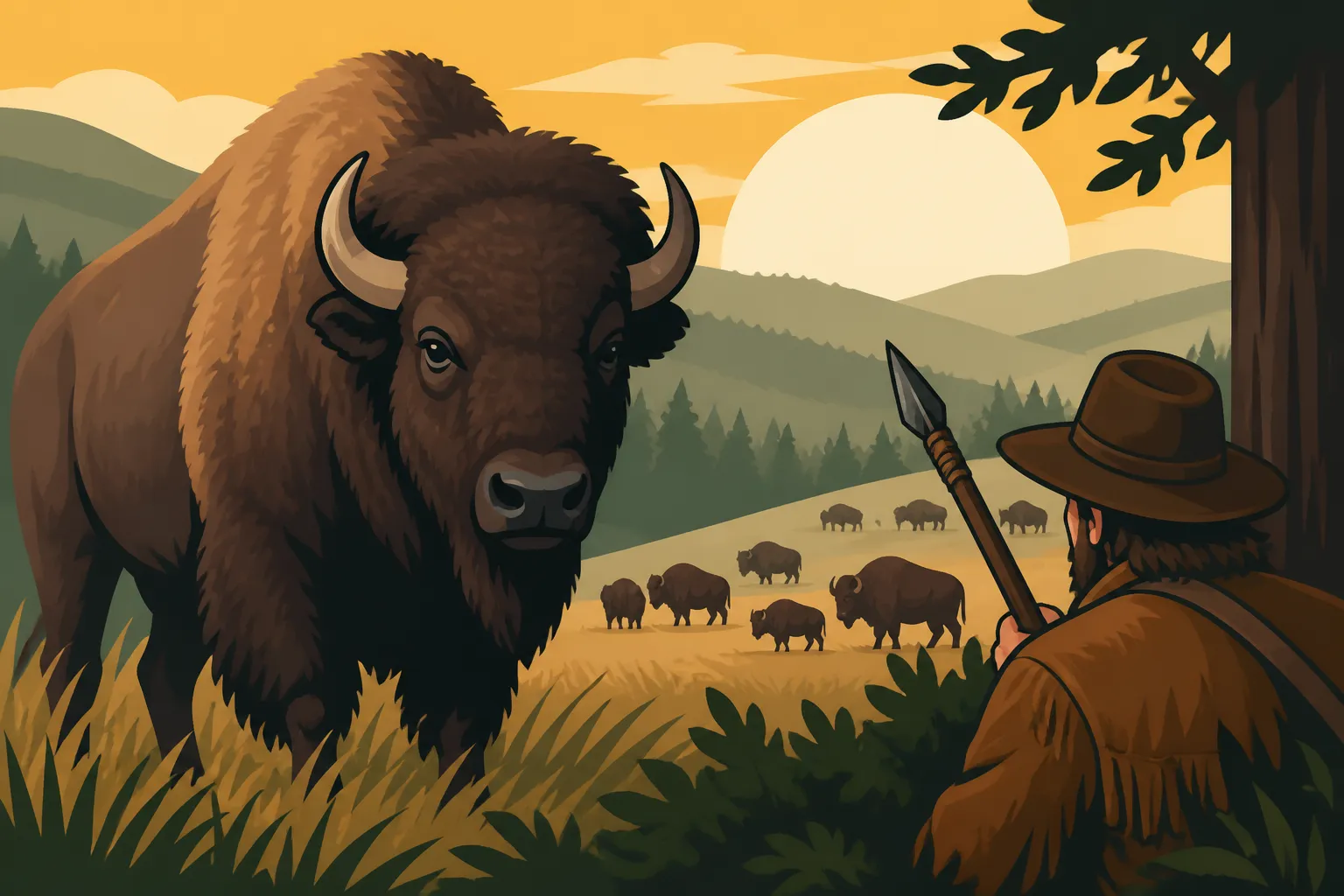
The primary drivers of the bison's extirpation were the rapid expansion of European settlement and the rise of market hunting. Unlike the subsistence hunting practiced by Native Americans, which focused on meeting immediate needs and respecting the resource, market hunting was driven by commercial demand for hides and meat. As settlers pushed westward into Kentucky, they brought with them a growing market for bison products back east. Hunters, often referred to as "long hunters," would kill dozens, sometimes hundreds, of bison at a time, taking only the hides and sometimes the tongue, leaving the rest to rot.
This unsustainable exploitation, coupled with increasingly efficient firearms, quickly decimated the once-uncountable herds. There were no regulations, no bag limits, and no understanding of sustainable harvest, a stark contrast to the careful management and Kentucky Deer Management Zone Rules or Kentucky Elk Quota Hunt Rules we have in place today for our game species. The mindset was one of limitless bounty, and the bison paid the ultimate price.
Habitat Fragmentation and Loss of "Wild Kentucky"
As settlers moved in, they didn't just hunt the bison; they fundamentally changed the landscape that supported them. Vast tracts of land were cleared for agriculture, turning prairies and open woodlands into farms and fields. Fences went up, roads were built, and towns sprouted, effectively fragmenting the once-continuous habitat that bison needed for their extensive migrations and grazing patterns.
These large, migratory animals simply couldn't adapt to a landscape that was increasingly broken up and domesticated. The essential links between feeding grounds, salt licks, and calving areas were severed. The ecological balance that had supported them for thousands of years was shattered with alarming speed. What was once "Wild Kentucky," a vast, interconnected ecosystem, rapidly transformed into something unrecognizable, sealing the fate of the bison.
The Last Known Sightings and a Century of Absence
The decline of Kentucky's bison was remarkably swift. While exact dates can be elusive, it's generally accepted that by the early 1800s, bison populations in Kentucky were severely diminished. The last known wild bison in Kentucky was reportedly killed around 1800-1810, effectively marking their complete extirpation from the Commonwealth. Within a single generation of intensive settlement, an animal that had dominated the landscape for millennia was gone.
The loss of the bison left an enormous ecological void. It meant the disappearance of a key grazer, a major food source for predators, and a vital cultural resource for Native Americans. While we are fortunate to have thriving populations of Kentucky's Record Elk Herd and a strong White-Tailed Deer Across Kentucky presence today, the sheer scale and ecological impact of the bison in pre-settlement Kentucky remain a powerful reminder of what once was and what can be lost if we don't steward our wildlife resources wisely. Their story is a testament to the profound and often irreversible changes that human activity can bring to a wild landscape.
Disclaimer
This article is for general informational purposes only and does not constitute professional advice. Laws, prices and regulations vary by location and change over time. Consult a qualified professional for guidance on your specific situation.