Kentucky Bobwhite Quail Decline
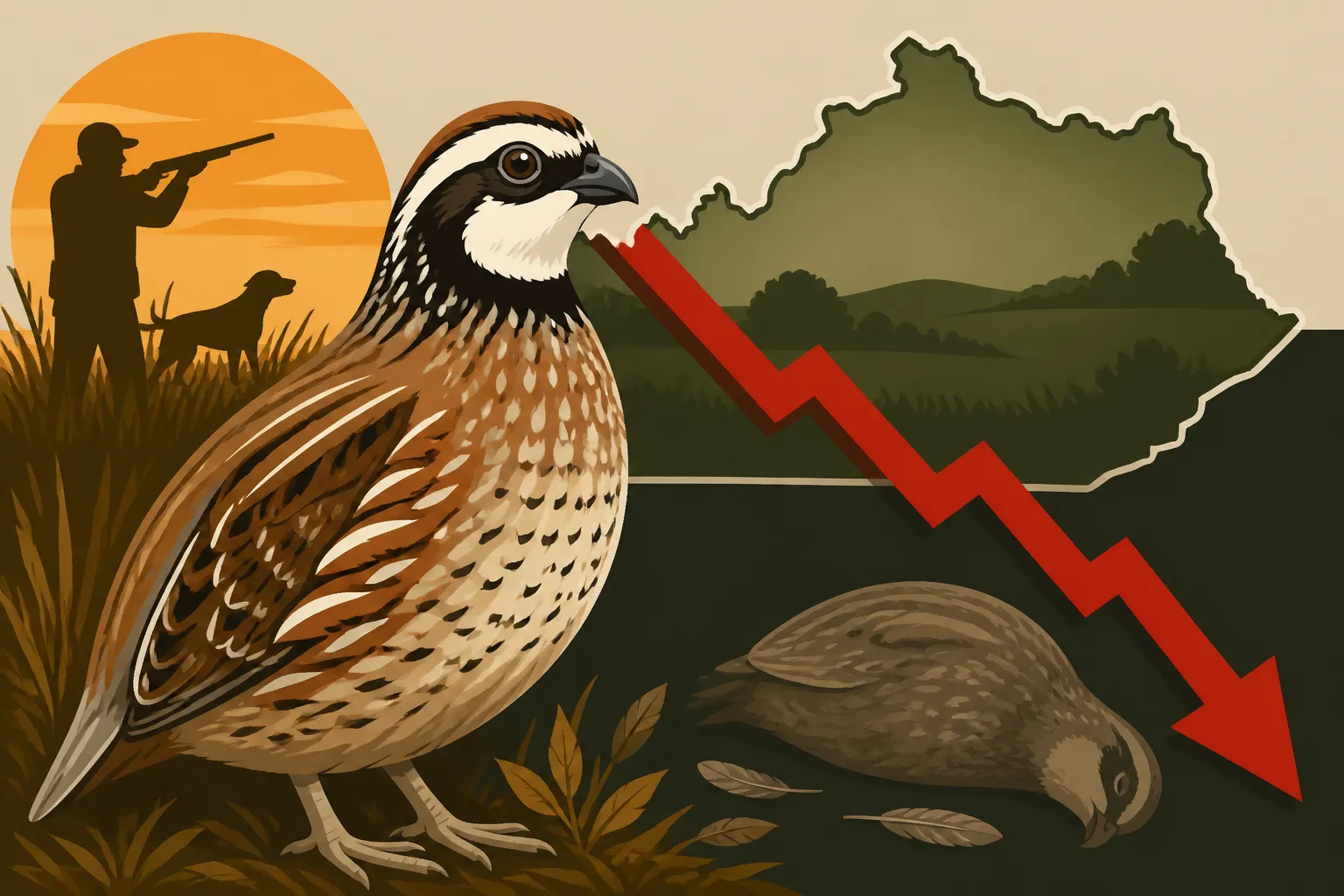
It's a tough pill to swallow for many hunters across Kentucky: the once-ubiquitous call of the bobwhite quail has grown increasingly faint, a ghost of the vibrant chorus that used to fill our fields and fencerows. For generations, chasing these explosive little birds with a good dog was a cherished tradition, a rite of passage for youngsters, and a source of deep satisfaction for veterans of the brush country. Today, the sad reality is that healthy, huntable populations of quail are few and far between, leaving many of us wondering what happened and if there's any hope for their return. This comprehensive guide will take a deep dive into the history of bobwhite quail in the Bluegrass State, explore the multifaceted reasons behind their drastic decline, and outline the vital conservation efforts underway, along with how passionate hunters like you can contribute to their recovery.
A Look Back at Kentucky's Quail Legacy
For hunters who grew up in Kentucky prior to the 1980s, the idea of chasing quail often evokes a powerful sense of nostalgia. The landscape was different then, and so was the abundance of this charismatic game bird. Many of us remember a time when finding a covey wasn't a rare stroke of luck, but an expectation in almost any suitable cover.
The Golden Age of Bobwhite Hunting
There was a time, not so long ago, when Kentucky was a bobwhite quail paradise. Farmers managed their land differently, leaving behind brushy fencerows, small patches of unkempt woods, and diverse crop rotations that created a mosaic of ideal habitat. Back then, it wasn't uncommon to flush multiple coveys in an afternoon hunt, the sudden explosion of wings and whistling calls a thrill that etched itself into the memory of every hunter. This wasn't just about the numbers; it was about the culture, the camaraderie of walking fields with friends and dogs, anticipating that burst of brown feathers from a thicket of blackberry briars.
Generations of Kentuckians learned to hunt small game with bobwhites as their primary target. These were the hunts that taught patience, dog handling, and how to read the land for subtle signs of life. The sound of a covey whistling in the late afternoon sun was as much a part of Kentucky's rural soundtrack as crickets chirping or distant coyotes howling. It was a tangible connection to the land and its wild inhabitants, a time when quail seemed an inexhaustible resource.
The memories of those days are bittersweet, reminding us of what we’ve lost but also fueling the desire to bring some of that abundance back. Many seasoned hunters recall specific farms where quail were always plentiful, a testament to agricultural practices that, perhaps inadvertently, created perfect conditions for these ground-nesting birds. The sheer density of birds allowed for robust hunting seasons and still left enough breeding stock to ensure healthy populations for the following year.
The Slow Slide into Scarcity
The shift wasn't sudden; it was a gradual, almost imperceptible decline that became undeniably clear over decades. Hunters first started noticing fewer coveys in their favorite spots in the 1970s and early 80s. What used to be a guarantee became a hopeful quest, then eventually, a rare occurrence. The changes in the landscape were subtle at first, then became more pronounced, and the quail numbers followed suit. It felt like watching a slow-motion unraveling of the natural world we knew.
This slow slide left many hunters feeling helpless and frustrated. Conversations at deer camp often turned to the "good old days" of quail hunting, lamenting the absence of those explosive flushes. It wasn't just about missing the hunt; it was about missing a piece of Kentucky's wild heritage. The concern mounted with each passing year, as biologists and conservationists began to echo what hunters were seeing on the ground: the bobwhite population was in serious trouble, not just in Kentucky, but across much of its historical range.
The data eventually confirmed what our eyes and ears had been telling us. Scientific surveys and harvest reports from the Kentucky Department of Fish and Wildlife Resources (KDFWR) showed a clear, consistent downward trend. The average number of birds per covey, the frequency of encounters, and the overall harvest numbers plummeted. This wasn't just a localized dip; it was a widespread, systemic issue that pointed to deeper ecological problems impacting these beloved birds.
Unraveling the Web of Decline: Key Factors
Understanding why bobwhite quail have declined is like peeling back the layers of a complex onion. There isn't a single "smoking gun" responsible; instead, it's a tangled web of interconnected factors, all contributing to the disappearance of their essential habitat and their ability to thrive.
Habitat Loss and Fragmentation
Without a doubt, the most significant factor in the bobwhite quail's decline is the widespread loss and fragmentation of suitable habitat. Quail need a very specific blend of cover types within a small area to survive and reproduce. This includes dense nesting cover, bugging areas for chicks, escape cover from predators, and reliable food sources. Modern land use has largely eradicated this mosaic.
Think about the classic Kentucky farm from 50 or 60 years ago: small fields, often with diverse crops, separated by thick fencerows choked with multiflora rose, blackberry, and native grasses. Around the edges of these fields, you'd find brushy draws, small woodlots with open understories, and un-mown patches. This created a perfect "edge habitat" that quail absolutely depend on. Today, those fencerows are often gone, replaced by clean field edges that make it easier for large farm equipment to operate, but leave no cover for quail.
Urban and suburban sprawl also plays a massive role. As towns grow, more and more farmland is converted into housing developments, shopping centers, and roadways. These developments obliterate vast tracts of potential quail habitat, replacing it with manicured lawns and concrete jungles that offer nothing to wildlife. The remaining patches of wild land become isolated "islands" too small to support viable quail populations, leading to further decline and genetic isolation.
Changing Agricultural Practices
The evolution of farming methods has been particularly devastating for bobwhite quail. The drive for increased efficiency and yield has led to practices that are simply incompatible with quail survival. "Clean farming" is a term often used to describe modern agriculture, where every inch of land is put into production.
This means larger fields, often planted in monocultures of corn or soybeans, with no room for the diverse weeds, native grasses, or brush that quail need. Herbicides are widely used to control weeds, eliminating crucial food sources and cover. Insecticides, while targeting crop pests, also reduce the insect populations that quail chicks rely on for protein during their critical early weeks. Even if a quail nest survives and hatches, chicks often struggle to find enough food in these sterile environments.
Furthermore, mechanical harvesting techniques are incredibly efficient, leaving little waste grain for birds to forage on. Early haying, especially for cool-season grasses, often destroys nests before chicks have a chance to hatch. The cumulative effect of these practices has transformed what was once prime quail country into an ecological desert for these birds. Many hunters remember when farmers would leave a buffer strip or "turn row" around fields; those are practically non-existent now.
Predation Pressure and Disease
While habitat loss is the primary driver, increased predation pressure certainly contributes to the struggle of remaining quail populations. With less dense, interconnected cover, quail become easier targets for a range of predators. Studies have shown that when habitat is fragmented and low-quality, predation impacts are magnified.
Kentucky is home to a robust population of predators, including raccoons, opossums, skunks, foxes, and even coyotes. These animals, many of which are generalist predators, thrive in altered landscapes and readily prey on quail nests, eggs, chicks, and adult birds. When quail don't have enough dense escape cover, they simply can't evade these threats effectively. It's a cruel feedback loop: poor habitat leads to higher predation, which further suppresses already struggling populations.
While less documented for wild quail, diseases can also play a role, especially in stressed populations. Birds living in suboptimal conditions might be more susceptible to parasites or pathogens, though this is often secondary to the overarching habitat issues. The primary challenge remains creating landscapes where quail can effectively hide, reproduce, and raise their young without constant threat.
Climate and Weather Extremes
Even with good habitat, extreme weather events can deliver devastating blows to quail populations. Kentucky's climate can be unpredictable, and severe conditions at critical times in the quail's life cycle can hinder recovery.
Harsh winters, especially those with prolonged periods of deep snow and ice, can decimate quail coveys. Quail rely on being able to find food and shelter from the elements. If food sources are buried under snow or ice, and thermal cover is lacking, birds can starve or freeze to death. A strong covey might be able to huddle together to survive a cold snap, but if their numbers are already low and their cover is sparse, a severe winter can wipe out an entire local population.
Conversely, extended periods of drought during nesting season can also be detrimental. Quail chicks need insects to survive, and drought conditions can reduce insect availability. Dry conditions can also lead to increased fire risk in some areas, though controlled burns are a beneficial habitat management tool when properly executed. On the other end of the spectrum, excessive rainfall during nesting season can flood nests, drown chicks, or make it difficult for hens to incubate eggs successfully. These weather extremes, seemingly more frequent and intense in recent years, add another layer of challenge to quail recovery efforts.
The Fight for Recovery: Kentucky's Conservation Efforts
Despite the daunting challenges, there's a dedicated community of biologists, landowners, and hunters who refuse to give up on Kentucky's bobwhite quail. Their efforts, though often slow and arduous, are the only real hope for bringing these birds back from the brink. It's a testament to the passion people have for this iconic species.
KDFWR Initiatives and Programs
The Kentucky Department of Fish and Wildlife Resources (KDFWR) has long recognized the severe decline of bobwhite quail and has implemented various initiatives aimed at habitat restoration and population recovery. These efforts often focus on public lands, like Wildlife Management Areas (WMAs), where the agency has direct control over land management practices. These are crucial laboratories for understanding what works for quail.
On WMAs across the state, KDFWR biologists are actively working to create and maintain early successional habitat – the type of young, brushy, herbaceous cover that quail thrive in. This includes techniques like prescribed burning, disking, selective timber harvesting, and planting native warm-season grasses and wildflowers. You might notice areas on public land that look "messy" to the untrained eye, but for a quail, it's a five-star resort. The goal is to mimic the diverse, patchy landscape that once supported abundant quail populations. Hunters can learn more about these efforts and even check on local regulations concerning small game by consulting the Kentucky Small Game Season Rules.
Beyond public lands, KDFWR also offers technical assistance and resources to private landowners interested in improving quail habitat. They provide guidance on various practices, often aligning with federal programs. Through these efforts, the KDFWR is trying to rebuild pockets of viable habitat, even as they acknowledge the scale of the challenge in a largely privately owned state. Tools like the Kentucky Hunt Fish App can help hunters identify WMAs where such habitat work might be occurring, making it easier to plan a scouting trip.
Private Landowner Engagement
Given that over 90% of Kentucky is privately owned, engaging landowners is absolutely critical for any widespread quail recovery. The habitat improvements on WMAs, while valuable, can only do so much if surrounding private lands remain ecological deserts for quail. This is where incentives and education truly shine, helping landowners see the value in practices that benefit wildlife.
Federal programs, such as the Environmental Quality Incentives Program (EQIP) and the Conservation Reserve Program (CRP) administered by the USDA Natural Resources Conservation Service (NRCS), provide financial and technical assistance to farmers and ranchers who implement conservation practices. These can include planting native warm-season grasses, creating field borders, establishing hedgerows, and managing timber for wildlife. These programs help offset the costs and potential loss of agricultural production that might come from setting aside land for habitat.
Many conservation groups, often in partnership with KDFWR, also work directly with private landowners, offering tailored advice and even volunteer labor for habitat projects. The goal is to demonstrate that wildlife-friendly farming practices aren't necessarily incompatible with agricultural productivity, and in some cases, can even enhance soil health and reduce erosion. Getting Private Land Permission in Kentucky is increasingly important, not just for hunting, but also for identifying potential habitat improvement partnerships.
Partnering for a Brighter Future
Quail recovery isn't a task any single agency or group can tackle alone. It requires a broad coalition of partners, pooling resources, expertise, and passion. Organizations like Quail Forever (QF) are at the forefront of this collaborative effort, dedicating themselves specifically to the conservation of quail, pheasants, and other wildlife through habitat improvements, public awareness, education, and land management policies.
Quail Forever chapters in Kentucky work directly with landowners, state agencies, and other conservation groups to implement on-the-ground habitat projects. They'll help plant native grasses, conduct prescribed burns, and manage invasive species. They also advocate for policies that support upland bird conservation, understanding that broad-scale change is necessary. Their biologists and volunteers are invaluable resources for anyone looking to make a difference for quail.
Other groups, like the National Wild Turkey Federation (NWTF), while primarily focused on turkeys, also contribute significantly to quail habitat. Many of the habitat management practices that benefit wild turkeys – such as prescribed burning and creating open woodlands – also create ideal conditions for bobwhite quail. Their efforts in managing forests and maintaining healthy ecosystems have positive ripple effects for many wildlife species, including quail and Grouse and Small Game Hunting in Kentucky. These partnerships multiply the impact, covering more ground and engaging more people in the fight for Kentucky's small game.
What Hunters Can Do: Becoming Part of the Solution
As hunters, we have a vested interest in the future of our game species. For bobwhite quail, this means moving beyond nostalgia and actively participating in their recovery. Our role goes far beyond just buying a license; it involves advocacy, land stewardship, and mindful hunting practices.
Advocating for Quail
One of the most powerful things a hunter can do is to become an informed advocate for quail conservation. This means staying up-to-date on the issues, understanding the science behind habitat management, and speaking up for policies that benefit wildlife. Organizations like Quail Forever or the Kentucky Coalition for Forests and Rivers often provide regular updates and ways for members to get involved.
Supporting conservation groups financially or through volunteer work is a direct way to contribute. Your membership dues or donations help fund habitat projects, research, and policy advocacy. Don't underestimate the power of showing up to local meetings, writing letters to your legislators, or simply talking to friends and neighbors about the importance of quail habitat. These conversations spread awareness and can inspire others to act.
When researching hunting regulations, public land access, or conservation initiatives, online platforms are incredibly useful. You might use a resource like GoHunt to stay informed about current land use proposals, conservation easements, or even identify potential areas for habitat improvement projects. Understanding the landscape, both literally and politically, is key to effective advocacy.
Habitat Work on Your Own Land (or Leased Ground)
If you own land, or if you lease hunting ground, you have an incredible opportunity to directly impact quail populations. Even small-scale efforts can make a difference, especially if you coordinate with neighbors to create larger patches of contiguous habitat. It's often said that "habitat is king," and nowhere is that truer than for bobwhites.
Practical steps include planting native warm-season grasses like switchgrass, indiangrass, and big bluestem. These grasses provide excellent nesting and brooding cover, remain standing through winter, and offer escape from predators. Creating brush piles from downed trees or cut limbs provides vital escape cover and thermal protection from winter weather. Field borders of native vegetation around crop fields can re-establish that crucial edge habitat that has been lost to clean farming. You can find detailed guides on best practices for Habitat Work on Kentucky WMAs which can be adapted for private land.
Prescribed burning, when done safely and correctly, is a highly effective tool for managing early successional habitat. It sets back woody encroachment, stimulates native plant growth, and controls invasive species. However, prescribed fire requires expertise and planning, so always consult with KDFWR or other land management professionals before attempting it. Even simple things like allowing fencerows to grow wild or delaying hay cutting in certain areas can provide significant benefits to quail.
Responsible Hunting Practices
While hunting pressure is generally not considered a primary driver of bobwhite quail decline in Kentucky today (due to already low populations), responsible hunting practices are still important. If you are fortunate enough to find a huntable covey, consider the long-term health of that population.
This might mean limiting your harvest, taking only a few birds from a covey, or even choosing to simply enjoy the experience of watching your dog work and flushing birds without firing a shot. The joy of a quail hunt is increasingly about the journey and the rare encounter, rather than the size of the bag limit. Understanding Kentucky Quail Season Status is vital for any hunter.
For those pursuing small game, ensure you are well-prepared for varying terrain and weather. Wearing proper gear, like durable Brush Pants for Kentucky Fencerows and carrying an Upland Vests With Water Capacity, will make your experience more enjoyable and safer, whether you're actively hunting or just scouting. Focusing on the quality of the experience, and recognizing that we are stewards of this resource, helps to preserve the spirit of quail hunting for future generations, even as we work to rebuild the populations.
The Road Ahead: Challenges and Hopes for Kentucky Quail
Looking to the future, the path for Kentucky's bobwhite quail is complex, riddled with challenges, but also illuminated by sparks of hope from dedicated conservationists and landowners. It’s not an easy fight, but it's one worth continuing.
Realistic Outlook for Recovery
Let's be realistic: returning to the "golden age" of quail hunting in Kentucky, with birds in every field, is a monumental task that will likely take generations, if it's even fully achievable. The scale of habitat alteration is immense, and reversing trends rooted in decades of land use change is incredibly difficult. Factors like increasing development pressure, the economics of modern agriculture, and the sheer amount of habitat required make widespread recovery a slow and arduous process.
However, a realistic outlook doesn't mean a hopeless one. It means focusing on achievable goals: creating and sustaining huntable pockets of quail on public and private lands, connecting these habitat patches where possible, and establishing robust local populations that can withstand environmental pressures. The KDFWR and its partners are focused on creating these "islands of excellence" – areas where quail can truly thrive and potentially expand from. These targeted efforts are where the real hope lies, rather than a broad, immediate resurgence across the entire state.
The challenge is not just restoring habitat, but maintaining it. Early successional habitat, the type quail need, is by its nature transient. Without active management through fire, disking, or other disturbance, it quickly grows into dense woods that no longer support quail. This requires sustained funding, labor, and a long-term commitment that can be difficult to secure over decades.
The Importance of Sustained Effort
Consistent, sustained effort from all stakeholders is the absolute key to any meaningful quail recovery. This isn't a project that can be started and stopped; it requires continuous dedication from government agencies, conservation organizations, private landowners, and hunters alike. The KDFWR cannot do it alone, nor can any single group.
Long-term funding for habitat programs, consistent public outreach, and ongoing research into quail biology and habitat needs are all essential. We need to continue educating landowners about the benefits of quail-friendly practices, and providing them with the resources and incentives to implement those practices. We also need to monitor populations closely, adapting our strategies as we learn more about what works best in different regions of Kentucky. Tools like those offered by GoHunt can assist in tracking changes to public land management plans or identifying regions where conservation easements are protecting habitat, which is crucial for Scouting Kentucky Public Land Before Season effectively.
For hunters, this means remaining engaged, even if the hunting opportunities for quail remain limited. It means supporting conservation efforts, volunteering time if possible, and teaching the next generation about the value of healthy ecosystems and the birds that depend on them. The fight for the bobwhite is a long game, and success will only come through unwavering commitment.
Finding the Remaining Pockets
While widespread quail populations are rare, dedicated hunters and conservationists are still finding and working to maintain isolated pockets where bobwhites continue to persist. These are often areas with unique management, such as certain WMAs, reclaimed mine lands, or private farms where landowners are actively managing for quail. Using tools like mapping applications, hunters can often identify potential habitat from afar, much like they might use Reading Aerial Photos for Eastern Kentucky Deer to locate deer habitat. These same analytical skills can be applied to finding quality quail cover.
Hunting these areas requires careful scouting and a deep understanding of quail habitat. It's less about covering vast amounts of ground and more about meticulously working prime cover, knowing that every flush is a precious event. Hunters can still experience the thrill of a covey rise, albeit less frequently, and in doing so, gain a profound appreciation for the immense effort it takes to sustain these birds. The experience becomes about the connection to the land and the bird, rather than the numbers.
For those who dream of hearing that distinctive "bob-white" whistle echo across Kentucky fields once again, the journey is ongoing. It’s a journey of patience, persistence, and partnership, built on the hope that with enough dedication, Kentucky’s bobwhite quail can, and will, make a comeback.
Historical Habitat Changes Affecting Kentucky Quail
To illustrate the dramatic changes in habitat, consider the following comparison between common land features from the mid-20th century and today.
| Habitat Feature | Mid-20th Century (1950s-1970s) | Early 21st Century (2000s-Present) | Impact on Quail |
|---|---|---|---|
| Field Size & Diversity | Smaller, irregularly shaped fields; diverse crop rotation (corn, hay, small grains) | Large, rectangular fields; monocultures (corn, soybeans) | Loss of diverse food sources, increased exposure to predators |
| Fencerows/Hedgerows | Wide, brushy fencerows with thick briars, native grasses, shrubs | Clean-farmed, narrow, or absent fencerows; few native plants | Elimination of crucial travel corridors, escape cover, and nesting sites |
| Field Edges | Untended, grassy, brushy edges; "turn rows" | Clean-tilled, mowed, or sprayed to property line | Lack of nesting, brooding, and winter cover |
| Pastures/Hay Fields | Diverse native warm-season grasses; rotation grazing; delayed cutting | Cool-season grasses; intensive, early haying | Destruction of nests; loss of insect-rich brooding habitat |
| Woodlots/Forest Edges | Open understories with patchy brush, herbaceous growth | Dense, closed canopy; little understory due to fire suppression | Reduced insect availability and suitable cover near edges |
| Pesticide/Herbicide Use | Limited or targeted use | Widespread, broad-spectrum application | Reduction of insect food base for chicks; loss of native forbs |
| Farm Buildings/Structures | Old barns, outbuildings, equipment often had surrounding brush | Fewer, larger, modern structures; clean surroundings | Loss of cover and unique micro-habitats |
Disclaimer
The information provided in this guide is for general informational purposes only. Hunting regulations, seasons, and licensing requirements can change frequently. Always consult the most current regulations published by the Kentucky Department of Fish and Wildlife Resources (KDFWR) before planning any hunting trip. Wildlife populations are dynamic and can be affected by many factors. This content is not intended as legal advice or as a substitute for professional ecological consultation.