Entry Routes Through Standing Beans
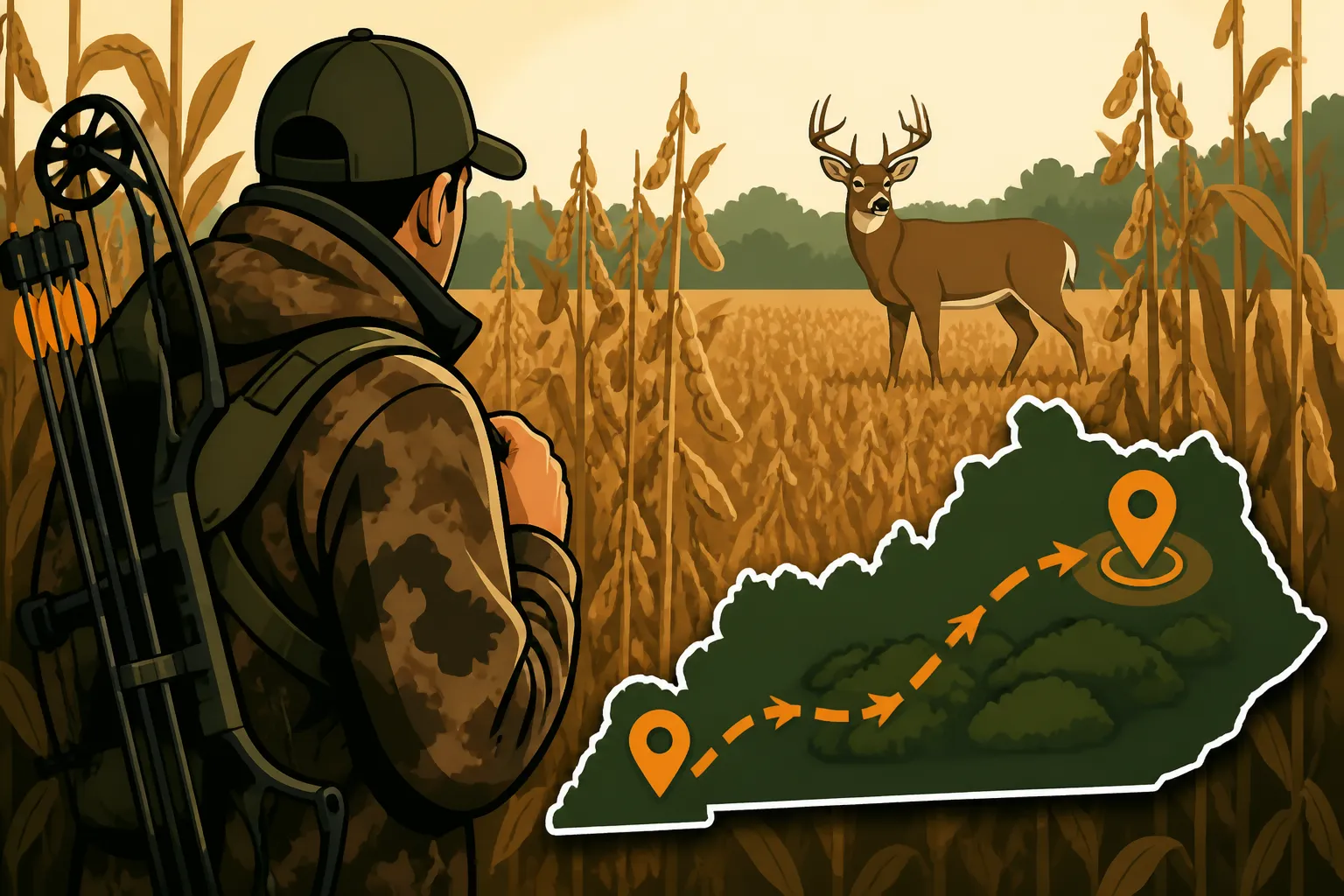
There's nothing quite like the sight of a lush, green, or even golden-brown bean field stretching out before you, knowing it's a deer magnet. But for many Kentucky hunters, that excitement often quickly turns into a cold sweat when you start to ponder the million-dollar question: how on earth do you slip into a setup near those standing beans without blowing every deer out of the county? It's a real struggle trying to get past those wide-open areas or the noisy, rustling stalks, and this guide is here to walk you through exactly how to plan and execute stealthy entry routes through standing beans to maximize your success.
Understanding Deer Behavior Around Standing Bean Fields
Deer, especially mature whitetails, are incredibly tuned into their environment, and a standing bean field presents a unique set of circumstances that influences their daily patterns. Knowing what makes them tick in these agricultural settings is the first step to figuring out how to beat them at their own game.
Why Deer Love Standing Beans
First off, let's acknowledge the irresistible allure of standing beans. During much of Kentucky's archery season and even into the early modern gun season, soybeans are a high-protein, highly palatable food source that deer just can't get enough of. They're like a gourmet buffet, offering sustained energy and essential nutrients, which is crucial for antler growth in bucks and lactation for does.
Think about it: from the moment the beans sprout to when they're fully mature and even after the first frost, deer are consistently drawn to them. Early in the season, they might browse the tender green leaves. As the pods develop, they'll target the beans themselves. This consistent usage makes bean fields prime locations for setting up, but it also means deer are accustomed to feeling safe and secure in and around them. They often bed surprisingly close to or even within these fields, especially in areas with taller bean varieties or adjacent thick cover. Understanding this consistent draw is key; it means you're dealing with a reliable food source, but also with deer that are likely very aware of their surroundings.
The Challenge of Accessing Bean Field Edges
Here's where the frustration really sets in for many hunters. You've found the perfect field, you know the deer are there, but how do you get close enough to capitalize? Standing bean fields, by their nature, often lack natural concealment at their edges. You're typically dealing with a wide-open expanse, and deer have incredible eyesight, especially when looking for movement against a static background. Every step on dried leaves or rustling beanstalks can sound like a freight train in the quiet woods, immediately alerting any deer within earshot.
The lack of elevation changes, thick timber, or deep creek beds along many bean field perimeters means your approach is often exposed. This isn't like slipping into a timber stand where you can use dense undergrowth or the contour of a ridge to hide your approach. In bean country, particularly in the flatter, more agricultural parts of Western Kentucky, you're fighting against wide-open sightlines. This challenge is amplified when hunting during midday, but it's even present in low light if you're not meticulous. It forces you to rethink traditional entry strategies and get creative with your approach.
Strategic Entry and Exit Planning
Successfully hunting over standing beans hinges almost entirely on your ability to get in and out undetected. This requires meticulous planning, often long before you ever set foot in the field on opening day.
Using Topography and Natural Cover for Concealment
When you're trying to sneak up on a bean field, think like a ninja, not a bulldozer. Every dip, rise, and patch of natural growth becomes your ally. Instead of walking straight across an open area, scout for features that offer a hidden pathway. Look for drainage ditches, creek beds (even dry ones), fence rows with overgrown brush, or lines of timber that extend into the field or run parallel to it. These aren't just pretty features; they are your stealth corridors.
For example, if a small creek or ditch cuts through the field or runs along its edge, it can often be deep enough to walk in, keeping you below the deer's line of sight. Even a slight rise in the terrain between you and the field can offer a critical visual break. I've often used an elevated ditch bank to shield my approach, then just popped up at my stand location. This might mean adding a few extra hundred yards to your walk, but a longer, silent, and concealed approach is always better than a shorter, noisy, and exposed one. Remember, deer are often using these same features as travel corridors, so be extra cautious. You can find many of these hidden gems by using mapping tools like GoHunt and studying Reading Aerial Photos for Eastern Kentucky Deer or other regions.
Timing Your Approach and Exit
The time of day you decide to walk into or out of a bean field setup is just as critical as your chosen path. Most hunters know to get in early and leave late, but with standing beans, you need to be even more precise.
- Pre-Dawn Entry: For a morning hunt, you need to be at your stand well before daylight. This means planning your route to allow for slow, deliberate movement in the dark. The natural darkness provides the best cover, obscuring your silhouette and any minor movements. Deer are typically already in the fields or moving back to bedding areas at this time, so absolute silence is paramount. If you bump deer on your way in, they're likely to blow out, and your hunt is over before it begins. Give yourself ample time – don't rush.
- Post-Dusk Exit: Exiting is often trickier than entering. After an evening hunt, deer are usually back in the fields, actively feeding. Leaving too early or too loudly will spook them, educating them to your presence and potentially changing their patterns for future hunts. My general rule is to wait until it's completely dark, sometimes 30-45 minutes after legal shooting light, before climbing down and making my exit. If you have to walk directly through a field to get out, consider bringing a small, dim headlamp that casts just enough light for your feet, but avoid shining it around. Sometimes, it's better to accept that you'll spook some deer on the way out, as long as your entry was clean and you got a shot opportunity. This is particularly true if you’re hunting on public land where you might have to consider Hunting Pressure on Kentucky Public Land.
Wind Direction and Thermals: Your Ultimate Guides
Ignoring wind direction around a bean field is a surefire way to send deer packing. This isn't just about the prevailing wind; it's about understanding how thermals work, especially near field edges or in subtle topographical changes.
In the mornings, as the sun rises, thermals will typically start to lift, carrying your scent upwards. This means if you're approaching from a lower elevation, your scent might actually rise over deer bedded in a field. In the evenings, as the air cools, thermals tend to fall, pushing your scent downhill and into lower areas. A classic scenario might be hunting a field edge that borders a creek bottom. In the evening, the thermals will draw your scent down into that bottomland, making it a terrible entry or exit route if deer are using it.
Always check the forecast meticulously, and consider using tools like the GoHunt app to get real-time wind and thermal predictions. Plan multiple entry and exit routes for different wind directions. Sometimes, the "perfect" stand location for deer activity is unusable because the wind or thermals make a stealthy approach impossible. It's better to hunt a slightly less ideal spot with a perfect wind than a hot spot with a bad wind. This deep understanding of Wind and Thermals on a Kentucky Ridge applies equally to field edges.
Tools and Tactics for Stealthy Access
Beyond strategic planning, the gear you choose and the tactics you employ on the ground can make a world of difference in your success rate. Every little bit of silence and concealment helps.
Footwear, Clothing, and Scent Control
Your personal gear choices are paramount when trying to be invisible.
- Footwear: Ditch the heavy, clunky boots that crunch every leaf. Opt for lightweight, flexible boots or even rubber boots that offer good traction but minimize noise. Pay attention to how the soles articulate; some aggressively lugged soles can pick up more debris and make more noise. Rubber boots are also excellent for scent control if you're walking through damp grass or shallow water.
- Clothing: Choose quiet fabrics. Fleece, wool, or soft micro-suede are far better than stiff nylons or noisy rain gear. Layer appropriately so you're not sweating on your walk in, which is a major scent disperser. If you're walking a long way, consider carrying your outer layer and putting it on once you're near your stand.
- Scent Control: This cannot be stressed enough, especially when hunting close to a food source deer frequent. Shower with scent-free soap, use scent-free deodorant, and wash your hunting clothes in scent-free detergent. Store them in airtight containers or bags until you're ready to put them on. Consider wearing a carbon-lined suit or using a scent-eliminating spray on your clothes and boots. Even if you've done everything right, a mature buck can still bust you if the wind swirls or your scent cone touches him, but minimizing your human odor gives you the best fighting chance. Remember, deer in these agricultural zones are often incredibly wary.
Using Ground Blinds and Treestands for Advantage
Both ground blinds and treestands have their place around standing bean fields, and each can aid in your stealthy approach in different ways.
- Ground Blinds: A well-brushed-in ground blind can offer incredible concealment, allowing you to move around inside without being seen. This is particularly useful in situations where standing timber is sparse or where you need to set up quickly without a lot of fuss. You can place a blind just inside a timber line bordering a bean field, or even tuck it into a thick fencerow or a patch of taller weeds at the field's edge. The key is to set it up well in advance, if possible, allowing deer to get used to its presence, and to brush it in thoroughly so it looks like a natural part of the landscape. An internal link like Using a Ground Blind on Kentucky Public Land could give you more specifics on setup.
- Treestands: Treestands offer the advantage of height, getting your scent and silhouette further off the ground. When hunting over beans, try to find a stand tree that offers good cover from behind, such as a thick-limbed oak or a cluster of smaller trees. Ideally, position your stand in a location that gives you a view of the bean field but also allows you to enter and exit using a hidden route, perhaps a wooded finger or a deep drainage. The height helps mitigate your scent distribution, especially with rising thermals in the morning or falling thermals in the evening, as long as you're above the main thermal current. When considering Treestand Setups in Daniel Boone National Forest, many of those same principles apply to timbered edges of bean fields.
Practical Entry Routes: Ditch, Creek, and Timber Lines
Let’s get really specific about these routes. It’s not enough to know they exist; you need to visualize and use them.
- Ditches and Depressions: Many agricultural fields in Kentucky, especially in areas like the Ohio River Valley or Western Kentucky bottomlands, have drainage ditches or slight depressions running through them or along their borders. These can be goldmines for silent, concealed entry. Walk in the ditch, keeping your profile below the field line. It might be muddy, uneven, and slower going, but the trade-off in stealth is immense. Before you try this, scout these ditches in the off-season to ensure they are passable and don’t lead to dead ends or overly exposed areas.
- Creek and River Banks: If a creek or small river borders or cuts through a bean field, its banks often provide excellent cover. These tend to have more mature timber, thicker undergrowth, and a deeper channel, creating a natural trench to walk through. You can often travel for long distances undetected along these features. Just be mindful of water levels and slippery banks. This strategy is particularly effective when Hunting Western Kentucky Bottomland Deer.
- Timber Lines and Woody Strips: Often, farmers leave a strip of timber or a fencerow along the edge of a field or between two fields. These strips, even if narrow, can provide enough cover to shield your approach. Walk just inside the timber line, using the trees and brush to break up your silhouette. Your goal is to get as close to your stand location as possible within this cover before needing to make any exposed moves. This is where a detailed mapping application like GoHunt can really shine, allowing you to identify these narrow strips of cover from an aerial view before you ever step foot on the property.
| Entry/Exit Strategy | Pros | Cons | Ideal Conditions |
|---|---|---|---|
| Ditch/Creek Bed Walk | Excellent concealment, good for scent control (wet) | Can be muddy, uneven, slower, potential for dead ends | Flat terrain, presence of established drainage/creek |
| Timber Line Creep | Good visual break, natural sound dampening | May still expose you if timber is sparse, can be noisy | Fields bordered by mature woods or thick fencerows |
| Low-Light Approach | Maximum visual concealment | Difficult footing, increased noise risk, slow movement | Any field, especially those lacking natural cover |
| Over-the-Hill Approach | Excellent visual concealment | Limited to fields with specific topography, exposes exit | Fields with significant elevation changes on one side |
Adapting to Weather and Wind Conditions
Kentucky weather is famously unpredictable, and those changing conditions directly impact how deer use bean fields and how you should plan your entry and exit. Being adaptable is key to long-term success.
How Rain and Moisture Affect Stealth
A little rain or even just morning dew can be your best friend when trying to sneak through noisy cover. The moisture dampens leaf litter, matted grass, and even the dry beanstalks, significantly reducing the noise you make with each step. This is a prime opportunity for a super stealthy entry.
If the forecast calls for a light, steady rain, or if you know there’s going to be heavy dew, plan to take advantage of it. Your rubber boots will be even more effective for noise reduction, and the rain itself can help wash away some of your scent. However, be cautious: heavy downpours can make walking hazardous, create new obstacles (like flooded ditches), and also reduce deer movement, though they’ll often still be feeding in a light drizzle. Always ensure your rain gear is quiet; noisy raingear can negate any advantage gained from the damp ground.
Using Wind Direction to Your Advantage for Entry
We talked about wind direction for scent, but let's consider it specifically for entry. When you're approaching a bean field, the wind should always be in your face or quartering to you, allowing your scent to be carried away from where you expect deer to be. This is non-negotiable. However, also think about how the wind might mask your sounds. A steady breeze can rustle the leaves and beanstalks, creating natural white noise that can cover up your own movements. This isn’t an excuse to be sloppy, but it can be an extra layer of protection.
On days with shifting or swirling winds, it might be best to avoid certain setups altogether or wait for a more stable wind. Deer, especially mature ones, are masters at detecting even slight changes in air current. If you notice the wind is constantly shifting, especially in hilly terrain or around complex field edges, you might be better off targeting a different stand or waiting for a more favorable day. GoHunt provides a great wind mapping feature that shows predicted wind direction at specific locations, which can be invaluable when planning your approach. Learning When Kentucky's Archery Season Opens is also important to remember that early season often has more unpredictable weather.
Adjusting to Different Bean Growth Stages
"Standing beans" isn't a static condition; beans go through several stages, and each one might require a slightly different approach.
- Green Beans (Early to Mid-Season): When the beans are lush and green, they offer maximum concealment. Deer will often bed directly within these fields during the day. Your entry will need to be incredibly cautious. The stalks are less brittle, so they might make less noise, but you also have less visibility into the field. This is a great time to focus on edges, especially where the beans meet dense timber or a water source.
- Yellowing/Browning Beans (Late Season): As the season progresses, beans turn yellow and then brown, and the leaves may start to fall off. This stage means less visual concealment within the field, but the beans are often at their most palatable. The stalks become much drier and noisier, so quiet footing is even more critical. During this phase, consider hunting the very last hour of daylight, as deer might not enter the field until it's nearly dark, reducing your exposure. This is also a good time to focus on natural funnels or pinch points that lead into the bean field, rather than trying to penetrate the field itself. These fields are a crucial part of Late-Season Food Sources for Kentucky Whitetails.
- Post-Harvest Stubble (Late Season): Once the beans are harvested, the field transforms entirely. Now, it's mostly open stubble, and deer will move through it looking for dropped beans. Entry and exit become incredibly difficult without cover. At this point, your best bet is usually to focus on adjacent timber lines, pinch points, or bedding areas, and let the deer come to you on the field edges under the cover of darkness or extremely low light. This is where knowing How Many Antlerless Deer Your Zone Allows can help you decide if it's worth sitting on a field edge to fill a tag.
Hunting standing beans in Kentucky is a rewarding challenge, demanding patience, detailed scouting, and an adaptable approach. By understanding deer behavior, meticulously planning your routes with topography and wind in mind, and optimizing your gear and tactics, you'll significantly increase your chances of success. Don't let the openness of the fields intimidate you; use this knowledge to become a true ghost in the bean patch.
Disclaimer
Please note that hunting regulations and laws can change. Always consult the latest Kentucky Department of Fish and Wildlife Resources (KDFWR) regulations before planning any hunt. This guide is for informational purposes only and does not supersede official regulations. Stay safe and ethical in all your hunting endeavors.