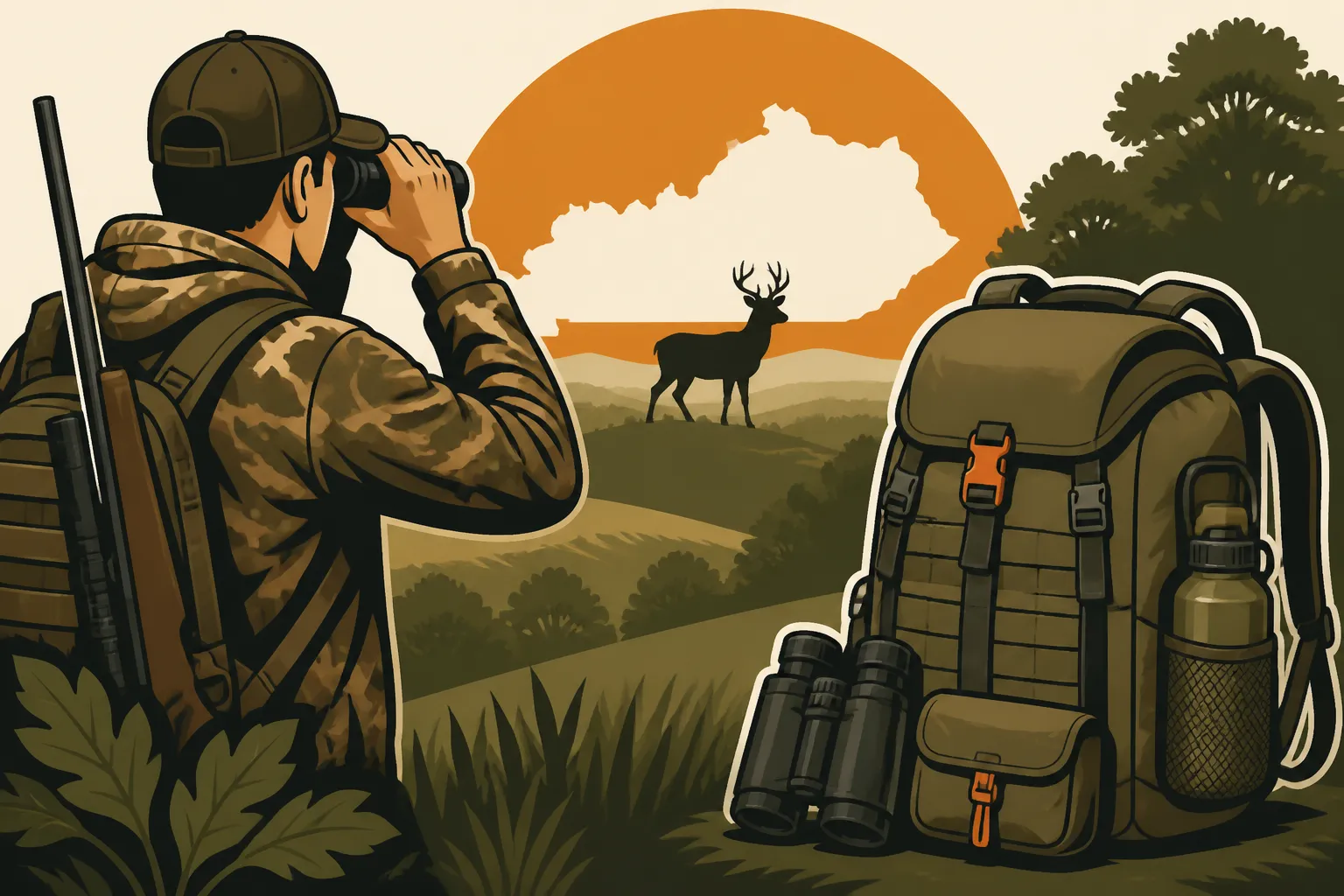
Packs for a Day on Public Land
There's nothing quite like that feeling of excitement and anticipation as you head out for a day of hunting on Kentucky's public lands. But that excitement can quickly turn into frustration if your gear isn't sorted. Too often, hunters find themselves either lugging around a pack that's far too big and heavy for a single day afield, or, worse yet, realizing they've forgotten a crucial piece of equipment miles deep in the woods. This guide is all about helping you pick and pack the perfect day pack for your Kentucky hunting adventures, ensuring you have everything you need without being bogged down.
Understanding the "Day Pack" Mentality for Kentucky Public Land
Hunting Kentucky's public lands, especially places like the Daniel Boone National Forest or one of our expansive Wildlife Management Areas, isn't usually a quick stroll from the truck. It often involves significant walking, navigating tricky terrain, and being prepared for anything. This means your "day pack" isn't just a glorified fanny pack; it's a carefully chosen piece of gear that needs to support your entire day's endeavors.
The Reality of Kentucky Terrain and Distance
Think about it: whether you're climbing steep, shale-covered ridges in Eastern Kentucky or slogging through muddy creek bottoms in the western part of the state, your body is working hard. Every extra pound in your pack feels like five by the end of the day. A well-chosen day pack isn't just about what it holds, but how it carries that weight. You might be pushing a couple of miles in the dark before dawn to reach your ideal Treestand Setups in Daniel Boone National Forest, or traversing multiple hollows to get away from Hunting Pressure on Kentucky Public Land. These are not short excursions, and a poorly designed pack will make every step a misery, especially when you consider the humidity and heat of early season or the slick, leaf-covered ground of late fall.
Comfort is paramount. A pack that rubs your shoulders raw, shifts awkwardly, or distributes weight unevenly will lead to fatigue, distraction, and ultimately, a less enjoyable and less effective hunt. We've all been there, trying to adjust a flimsy strap with frozen fingers or feeling every item inside dig into our back. It pulls your focus away from the hunt itself, making you think about how uncomfortable you are rather than scanning for movement or listening for that tell-tale crunch of leaves.
What "Essential" Truly Means for a Day Hunt
This is where many hunters go astray. We tend to overpack or, conversely, leave out something vital. For a Kentucky day hunt, "essential" means anything that ensures your safety, allows you to effectively hunt, and enables you to ethically recover and care for your game. Anything beyond that starts to fall into the "nice-to-have" category, and while those can be great, they add weight.
Let's break down some core categories of essentials:
- Hydration: Always, always, always. Whether it's water bottles or a hydration bladder, you need more than you think, especially during the warmer early archery season or if you're doing a lot of hiking.
- Navigation: A reliable GPS unit or a smartphone app like GoHunt, along with a portable charger, is non-negotiable. Getting turned around in thick timber, especially after dark, is a real concern. Knowing where you are relative to property lines or your truck is critical for both safety and legal hunting. For deeper dives, check out Scouting With the Kentucky Hunt Fish App.
- First-Aid/Safety: A compact first-aid kit, a headlamp (even for daytime hunts, things can change), a fire starter, and an emergency whistle. These are the things you hope you never need, but are incredibly grateful for if you do.
- Field Dressing/Game Care: If you plan on harvesting, you need to be ready. This includes quality Field Dressing Knives Worth Carrying, perhaps a small game bag for heart/liver, and maybe even a small tarp or gloves.
- Hunting-Specific Items: Calls (grunt tube, rattling antlers, turkey calls for spring), scent control spray, a rangefinder (especially important when you might be ranging a deer through thick cover and need precise distances, as discussed in Rangefinders in Thick Eastern Kentucky Cover), and maybe a small pair of binoculars.
- Food: Enough snacks to sustain you for the day, plus a little extra for emergencies.
What changes by season? Early archery might require more water and scent control. Late season gun hunting means more layers of clothing, potentially hand warmers, and maybe even a thermos of coffee. Thinking through these variables helps you tailor your pack's contents without overdoing it.
Key Features to Look For in a Kentucky Day Pack
Choosing the right pack isn't just about throwing a few things into a bag. It's about selecting a tool that enhances your hunting experience. The features of a pack can make or break your day, especially when you're navigating Kentucky's diverse and often challenging landscapes.
Capacity and Organization: Finding the Sweet Spot
The capacity of a day pack is typically measured in liters. For most Kentucky day hunts, something in the 18-to-30-liter range is ideal.
- Under 18 Liters: These are great for very minimalist hunts, like a quick Run-and-Gun Turkey Tactics on Public Land where you're carrying little more than a call, water, and perhaps a small decoy. You'll sacrifice the ability to carry extra layers or substantial game care items.
- 18-30 Liters: This is the sweet spot for many deer and turkey hunters. It's enough space for all your essentials, a couple of extra layers, a decent lunch, and perhaps a small game bag if you're lucky enough to tag out. You can still keep it relatively light and maneuverable.
- Over 30 Liters: While some larger day packs exist, going much bigger than 30 liters often means you're venturing into multi-day or overnight pack territory. These tend to be heavier, bulkier, and tempt you to overpack for a single day, which defeats the purpose.
Beyond overall volume, how that space is organized is crucial. Look for:
- Multiple Compartments: A main compartment for bulky items, a smaller front pocket for quick-access items (calls, headlamp), and side pockets for water bottles or spotting scopes.
- Internal Pockets/Dividers: Helps keep items from jumbling together. A small mesh pocket for a first-aid kit or license.
- Easy Access: Can you get to frequently used items without emptying your whole pack? This is vital when a deer steps out unexpectedly, and you need that rangefinder now.
A well-organized pack means less fumbling, less noise, and more efficiency in the field. Imagine trying to find a grunt tube in a cavernous main compartment when a buck is cruising by – frustrating, right?
Comfort and Durability: Built for the Backwoods
Kentucky's woods aren't kind to flimsy gear. You'll brush against thorns, scrape rocks, and expose your pack to moisture. Investing in a durable, comfortable pack pays dividends.
- Padded Shoulder Straps: Look for ample padding that's wide enough to distribute weight without digging in. Adjustable straps are a must to fit different body types.
- Hip Belt (Load-Bearing): This is non-negotiable for packs in the 20L+ range. A good hip belt transfers a significant portion of the pack's weight from your shoulders to your hips, where your body is better equipped to carry it. This is especially important when traversing uneven terrain or hauling heavier loads.
- Back Panel Ventilation: Mesh or channeled back panels allow air to circulate, reducing sweat build-up. In Kentucky's often humid environment, this is a huge comfort factor.
- Quiet Materials: Nylon, polyester, or brushed tricot fabrics are common. Crucially, they need to be quiet when you move. Nothing spooks game faster than a crinkly, noisy pack as you reach for something.
- Water Resistance: While few packs are truly waterproof without a rain cover, a water-resistant material is important. Look for durable water repellent (DWR) coatings and robust zippers that resist moisture ingress. Having your gear soaked mid-hunt is a miserable experience, which is why bringing Rain Gear for a Kentucky Downpour is so smart.
- Sturdy Zippers and Buckles: YKK zippers are a standard for quality. Look for large, easy-to-grab pulls, especially if you'll be wearing gloves. Buckles should be robust and securely stitched.
Specialized Features for Hunters
Hunting packs often have features that distinguish them from generic hiking packs.
- Hydration Bladder Compatibility: A dedicated sleeve and port for a hydration bladder makes staying hydrated much easier than fumbling with water bottles.
- Weapon Carrying Options: Some packs feature external straps or pockets designed to secure a rifle or bow. This can be a lifesaver when you're navigating dense thickets or climbing up to your stand. Even if you carry your weapon by hand, these straps can be useful for securing an extra jacket.
- Compression Straps: These are external straps that allow you to cinch down the contents of your pack, preventing items from shifting and making noise. They also help minimize the pack's profile when it's not full.
- External Lashing Points: Daisy chains, bungee cords, or extra webbing straps allow you to attach items externally, such as a rolled-up jacket, a pair of rattling antlers, or even a small game bag for a quick trip back to the truck after a successful hunt.
Different Day Pack Styles for Specific Kentucky Hunts
Just as there isn't one "best" hunting technique for every scenario, there isn't one perfect day pack for all Kentucky hunts. Matching your pack style to your hunting strategy can significantly improve your effectiveness and comfort.
Minimalist Packs for Mobile Hunters
If your hunting style involves a lot of moving and covering ground – think still-hunting ridges for deer or Run-and-Gun Turkey Tactics on Public Land – a minimalist pack is your friend. These packs are typically on the smaller end of the day pack spectrum, perhaps 10-20 liters, and are designed to be lightweight and unobtrusive.
- Characteristics: Often feature a single main compartment, maybe one or two smaller pockets, and minimal external straps. They prioritize a streamlined profile to avoid snagging on brush or making noise. The focus is on carrying absolute essentials: water, navigation, a call, a knife, and maybe a very light snack.
- Ideal Use Cases:
- Bowhunting Kentucky's Long Archery Season: When you're often moving through thick undergrowth and want to keep your profile low and quiet.
- Spot-and-stalk hunting: While less common for deer in Kentucky's dense woods, a minimalist pack works well if you're trying to quickly cover ground.
- Quick scouting trips: Perfect for heading out to check trail cameras or scout new areas without committing to a full day's load.
- Considerations: You'll have very little room for extra layers, making them less suitable for colder weather unless you wear all your layers. Game care is limited to field dressing essentials; a full pack-out might require multiple trips or a different strategy.
Standard Day Packs for Treestand and Ground Blind Setups
This is arguably the most common and versatile category for Kentucky hunters. These packs are generally in the 20-30 liter range and are designed to comfortably carry everything needed for a sustained sit in a treestand or ground blind, while still being manageable during the walk-in and walk-out.
- Characteristics: Good balance of capacity, organization, and comfort features. They'll have proper padded shoulder straps, a load-bearing hip belt, and multiple compartments. Many will have compression straps and external attachment points.
- Ideal Use Cases:
- Sitting a Treestand Setups in Daniel Boone National Forest: Room for extra clothing layers (like a puffy jacket that goes on once you're settled), snacks, calls, optics, and anything else you need for several hours on stand.
- Using a Ground Blind on Kentucky Public Land: You might carry a small folding stool, a thermos, and more creature comforts, and these packs handle that well.
- All-day sits during the rut: When you plan to be out from dawn till dusk, you need a pack that can carry ample food, water, and emergency supplies.
- General firearms seasons: A good choice for carrying extra ammo, a rangefinder, and layers for fluctuating temperatures.
- Considerations: While versatile, they can still feel bulky if you choose too large a size and don't fill it efficiently. Ensure it can hang quietly from a tree hook or sit unobtrusively in a blind. Some packs are designed to be quieter in these situations.
Frame Packs for Potential Pack-Outs (Even on Day Hunts)
This category is a bit less common for "day hunting" in the strictest sense, but it’s worth considering for specific scenarios, especially if you hunt larger game like elk (if you're one of the lucky few drawn for a tag) or if you anticipate a very long, difficult retrieve of a deer in rugged terrain. These aren't necessarily full expedition packs, but rather day packs with some kind of internal or external frame that provides rigidity and superior load-carrying capabilities.
- Characteristics: These packs incorporate a sturdy frame, often aluminum, to help transfer weight directly to your hips. They might have a larger main compartment or a specialized "meat shelf" or compression system designed to lash out heavy, awkward loads outside the main bag.
- Ideal Use Cases:
- Hunting the Elk Restoration Zone: If you're fortunate enough to draw an Applying for a Kentucky Elk Quota Hunt and hunt the difficult terrain of Eastern Kentucky's elk country, a pack with some load-hauling capability is critical, even for a day hunt. You might still be boning out an animal and packing it a significant distance.
- Hunting very rugged, remote deer country: If you anticipate harvesting a deer deep in a steep hollow, a pack designed to handle more weight could save you multiple grueling trips. You can field dress the animal and then, using heavy-duty Meat Care Gear for Kentucky Hunters like game bags, load portions onto your pack frame.
- Hunters who prefer to bone out deer in the field: This allows you to carry heavier loads of meat more comfortably than a soft day pack.
- Considerations: Frame packs are inherently heavier and often bulkier than soft-sided day packs. They might be overkill for most straightforward deer or turkey hunts. The cost also tends to be higher. However, for those specific situations, the added comfort and capability during a heavy pack-out are invaluable. Always remember to check your pack's capacity and rated load limits.
| Pack Type | Ideal Capacity (Liters) | Key Advantages | Best For |
|---|---|---|---|
| Minimalist | 10-20 | Lightweight, streamlined, fast, quiet. | Mobile hunting (still-hunting, run-and-gun turkey), quick scouting, archery in thick cover. |
| Standard Day | 20-30 | Versatile, good balance of capacity/comfort, organized. | Treestand hunting, ground blind hunting, all-day sits, general firearms season, carrying extra layers/gear. |
| Frame Pack | 30+ (with load shelf) | Superior load carrying, transfers weight efficiently. | Elk hunting, remote deer retrieves, boning out game in the field, hauling heavy/awkward loads. |
Packing Your Kentucky Day Pack Smart: Tips and Tricks
Once you've chosen the perfect pack for your style of hunting, the next step is learning how to pack it efficiently. A well-packed bag isn't just lighter; it's quieter, more comfortable, and allows you quick access to what you need when it matters most.
The "Layered" Approach to Packing
Think of your pack as having different zones for different needs. The goal is to put items you need first or most often in easily accessible spots, and heavier, less frequently accessed items in the most ergonomic location.
- Bottom Layer (Heavy & Least Used): This is where you put bulkier, heavier items that you won't need until you're at your destination or in an emergency. Examples include extra heavy layers, a small cooking system if you're taking a long break, or a full water bladder. Placing heavier items low and close to your back helps maintain balance and comfort.
- Middle Layer (Bulk & Secondary Essentials): This section holds the bulk of your gear – extra clothing not worn on the walk-in, larger food items, and perhaps your main first-aid kit. These are things you'll likely access once you've settled into your stand or blind.
- Top Layer (Quick Access & Frequent Use): This is arguably the most critical zone. Here, you stash items you might need at a moment's notice: your Rangefinders in Thick Eastern Kentucky Cover, calls, headlamp, binoculars, a snack, and perhaps a small game bag. You want to be able to reach these without rummaging or making excessive noise.
- External Pockets (Very Quick Access): Side pockets are perfect for water bottles. Hip belt pockets are invaluable for a grunt tube, release aid, phone, or a small snack. Anything you might need while actively hunting or walking without taking off your pack.
Consider using small dry bags or stuff sacks to organize similar items within your pack. For example, all your calls in one small pouch, emergency gear in another. This prevents a chaotic mess and keeps things protected.
Weather-Proofing and Emergency Readiness
Kentucky weather can be notoriously fickle. A beautiful, sunny morning can quickly turn into a cold, driving rain by afternoon. Being prepared is key to comfort and safety.
- Rain Cover: Many packs come with an integrated rain cover, or you can buy one separately. It's a small item that offers huge protection against a sudden downpour.
- Dry Bags: Even with a rain cover, it's smart to put critical items like your phone, wallet, maps, and extra clothing into small, waterproof dry bags inside your pack. This ensures they stay absolutely dry.
- Emergency Kit: This isn't just your first-aid kit, but a small collection of items for unforeseen circumstances: a whistle, fire starter, small knife, emergency blanket, and perhaps a small signaling mirror. Even if you're only planning a half-day hunt, these can be lifesavers if you get lost, injured, or have an unexpected overnight stay.
- Layering: Pack clothing layers that you can add or shed as conditions change. A good base layer, a mid-layer for insulation, and an outer layer that's windproof and water-resistant. For more on this, consider Clothing for a Kentucky Late Season.
- Headlamp: Always carry a headlamp, even if you plan to be out before dark. Things happen, and you might find yourself tracking a deer or just walking out longer than expected.
Using Technology: Phone Apps and GPS
Modern technology has revolutionized how we navigate and hunt public lands. Your pack needs to accommodate these tools and keep them protected.
- Dedicated GPS Unit: While many hunters rely on their phones, a dedicated GPS unit offers superior battery life and often better reception in dense canopy. Ensure you have fresh batteries or a backup.
- Smartphone & Mapping Apps: Apps like GoHunt, onX Hunt, or the official Kentucky Fish and Wildlife map tool (Scouting With the Kentucky Hunt Fish App) are powerful resources for navigating property lines, marking stand locations, and finding your way back to the truck.
- Portable Power Bank: Crucial for recharging your phone or GPS unit, especially if you're using them heavily for mapping or communication. Make sure it's fully charged before you leave home.
- Protective Cases: A waterproof, rugged case for your smartphone is a wise investment, protecting it from drops and moisture.
By carefully considering your pack choice and how you load it, you can eliminate a major source of discomfort and distraction, allowing you to focus on what you're really out there for: enjoying the Kentucky woods and, with a bit of luck, having a successful hunt. Whether you're hiking into a new area on Hunting Western Kentucky Bottomland Deer or finding a remote ridge in the Daniel Boone, the right pack will make all the difference.
Disclaimer
This article is for general informational purposes only and does not constitute professional advice. Laws, prices and regulations vary by location and change over time. Consult a qualified professional for guidance on your specific situation.