Habitat Work on Kentucky WMAs
It’s a familiar scenario for many Kentucky hunters: you show up at your favorite Wildlife Management Area (WMA), ready to hit that tried-and-true spot, only to find it looks completely different. Maybe a section of timber has been thinned, a field has been mowed, or a new food plot has appeared. It can be frustrating, even disheartening, when your carefully scouted plans seem to go out the window. But these changes aren't random; they're the result of intentional habitat work, and understanding these practices can actually be your secret weapon for better hunting success on Kentucky WMAs. This guide will walk you through the common types of habitat work you'll encounter and show you how to adapt your strategy to benefit from them.
Understanding the Purpose of Habitat Management on WMAs
When you see a crew working on a WMA, whether it’s with chainsaws, tractors, or even a drip torch for controlled burns, it’s all part of a larger plan. These aren't just folks out there messing up your hunting ground; they're actively managing the land to create healthier ecosystems for a variety of wildlife species, which ultimately benefits us as hunters. It can feel disruptive in the short term, especially if it alters a honey hole you've relied on for years, but the long-term gains for the habitat and the game animals are undeniable.
The "Why" Behind the Chainsaws and Plows
The primary goal of habitat management on WMAs is to enhance the overall health and diversity of wildlife populations. Think about it: our game animals need food, water, cover for bedding and nesting, and safe travel corridors. Left completely untouched, many habitats would eventually mature into a single-story forest with a dense canopy but little undergrowth, or they might become overgrown with invasive species. This kind of "climax" forest, while beautiful, isn't always ideal for species like deer, turkey, rabbit, or quail, which thrive in a mosaic of different habitat types.
When a WMA forester decides to thin a section of timber, for instance, they're not just creating an open space. They're allowing more sunlight to reach the forest floor, which in turn encourages the growth of beneficial native grasses, forbs, and young woody browse. This new growth provides vital nutrition for deer and creates excellent bugging and loafing areas for turkeys. It also provides dense cover for fawns to hide in and for deer to bed down, often in spots that were previously too sparse. It might look a bit rough for a season or two, but it’s an investment in the future of the WMA's wildlife.
Balancing Wildlife Needs with Hunter Access
One of the unique challenges of WMA management, as opposed to private land, is balancing the biological needs of wildlife with the recreational needs of hunters. Managers are always striving to provide optimal conditions for game animals, but they also have to consider accessibility, safety, and the overall hunting experience. This means that while some habitat work might create super-dense cover that's fantastic for deer but tough to hunt, other efforts might focus on creating food sources near accessible areas or maintaining trails for hunter access.
It’s a constant dance. Sometimes, a field might be left fallow to provide nesting cover for turkeys and quail, even if it means one less food plot for deer. Other times, specific areas might be intensely managed to attract waterfowl. The Kentucky Department of Fish and Wildlife Resources (KDFWR) biologists are looking at the bigger picture, trying to support robust populations across the WMA, which means different areas might be managed for different purposes over time. This approach ensures that the WMA offers diverse opportunities for hunters targeting a variety of species throughout the seasons.
Common Habitat Management Techniques You'll Encounter
Knowing what kinds of habitat work are common can help you understand what you’re seeing in the field and predict how animals might react. These aren't just random acts; they're tried-and-true techniques used by wildlife managers across the state to improve conditions.
Timber Stand Improvement (TSI) and Prescribed Burns
These two techniques often go hand-in-hand and are incredibly effective at rejuvenating forest habitats. Timber Stand Improvement (TSI) can involve several practices:
- Thinning: Removing some trees to reduce competition and allow remaining trees to grow larger and healthier. This opens up the canopy, letting sunlight hit the ground and stimulating new undergrowth. For a hunter, this new browse can be a deer magnet, and the increased visibility might help you spot a gobbler strutting through.
- Selective Harvesting: Taking out specific trees for timber, often less desirable species, to promote the growth of more beneficial mast-producing trees like oaks and hickories. More acorns mean more food for deer, turkey, and squirrels in the fall.
- Small-Scale Clear-Cuts: While "clear-cut" sounds drastic, on WMAs, it's often done in smaller patches. These areas explode with thick, young growth—perfect bedding and fawning cover for deer, and excellent escape cover for small game. Turkeys will often utilize the edges for bugging and strutting.
Prescribed Burns are another powerful tool. You might occasionally see warnings about Prescribed Burns and Kentucky Hunting Closures if a WMA is conducting one. These controlled fires are set under specific conditions to achieve certain habitat goals. They reduce leaf litter and woody debris, which minimizes the risk of uncontrolled wildfires. More importantly, they stimulate new, nutrient-rich growth of native grasses and forbs, which are far more beneficial to wildlife than dense, decaying duff. Burns can also control invasive species, promote hard mast production, and create open areas that are favored by species like quail and rabbits. Deer often flock to freshly burned areas to browse on the succulent new growth that emerges shortly after.
Food Plots and Agricultural Leases
Many WMAs utilize food plots to supplement natural forage and concentrate wildlife. These can vary wildly, from small, strategically placed plots of clover, chicory, or brassicas, to larger fields of corn, soybeans, or winter wheat. The type of plot depends on the WMA's goals and target species. Clover plots, for example, provide high-protein forage for deer throughout the spring and summer, while standing corn or soybeans can be late-season magnets, especially when natural mast crops are scarce.
In some larger WMAs, you might find agricultural leases where local farmers plant crops like corn, soybeans, or winter wheat. The WMA often has an agreement for a certain percentage of the crop to be left standing, or for deer to have access after harvest. These areas become incredible food sources, and understanding how deer use Hunting Standing Cover Left After Harvest or feed along those edges can be a huge advantage. It's not uncommon to see deer filtering into these fields at dusk or dawn, offering predictable movement patterns.
Native Warm Season Grasses (NWSG) and Early Successional Habitat
Native Warm Season Grasses (NWSG) like switchgrass, big bluestem, and indiangrass are becoming increasingly popular on WMAs. These grasses grow tall and stout, providing exceptional nesting cover for ground-nesting birds like turkeys and quail, as well as fawning cover for deer. They also create a thick, protective screen that helps wildlife feel secure. Hunting birds in these thick grass stands can be challenging, but they are crucial for rebuilding populations.
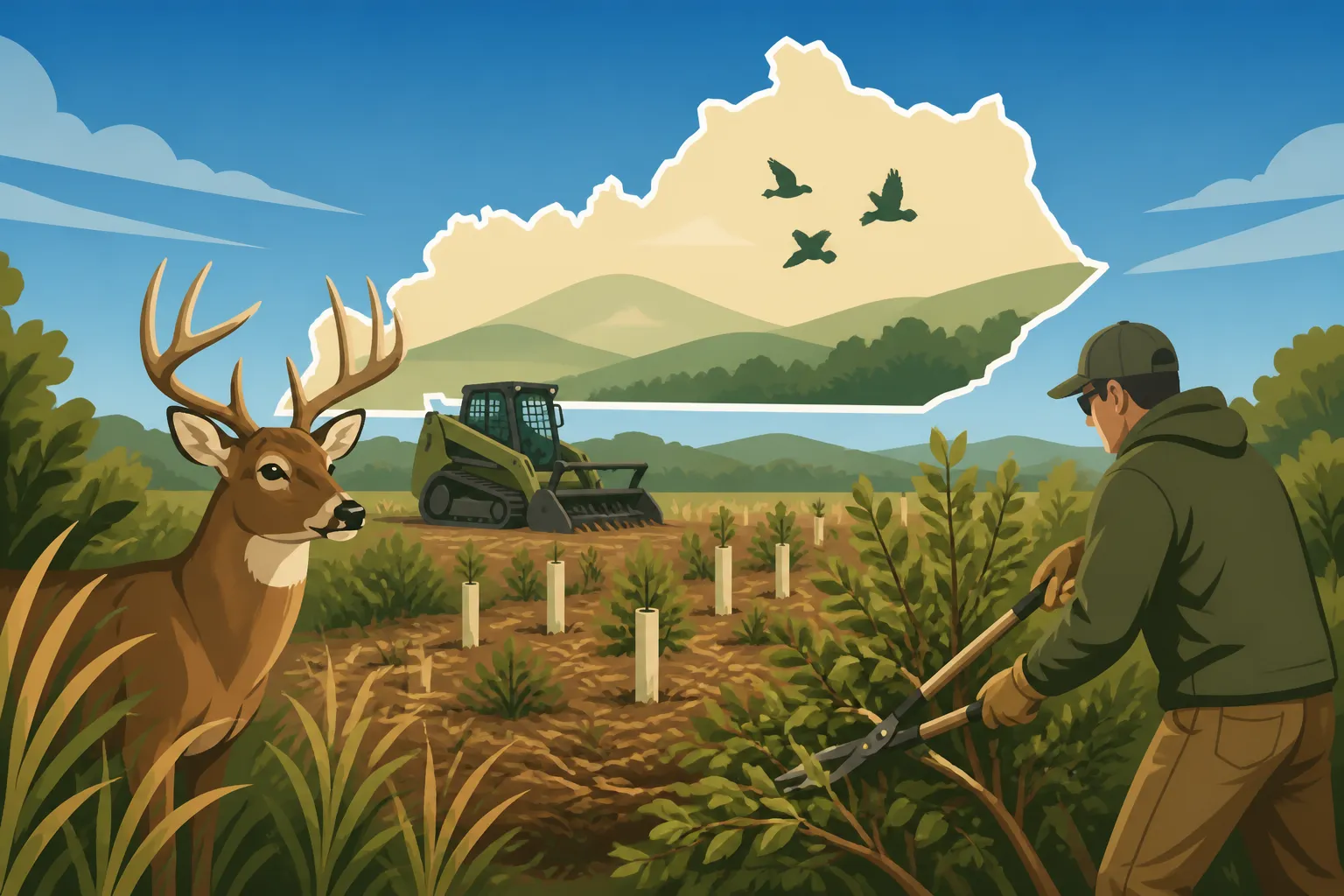
Creating early successional habitat is another vital practice. This involves managing areas to keep them in a young, brushy state, rather than letting them mature into dense timber. This can be done through mowing, disking, or even targeted herbicide application. These brushy thickets, old fields, and young clear-cuts are incredibly valuable for a variety of species. They provide cover, browse, and insect habitat. If you’re looking for Kentucky Ruffed Grouse Decline reversal or hoping to see the return of Kentucky Bobwhite Quail Decline, this type of habitat is paramount. For deer, these areas are often bedding sanctuaries, especially during daylight hours, making their edges prime spots for an ambush.
How WMA Habitat Work Can Inform Your Hunting Strategy
The key to successful hunting on WMAs, especially those with active habitat management, is adaptation. Don’t get stuck in the mindset that your favorite spot has been "ruined." Instead, view these changes as new opportunities.
Adapting to Changes: The Hunter's Mindset
It's easy to feel frustrated when you arrive at a WMA and see a familiar woodlot clear-cut or a lush field mowed down. Your mind immediately thinks, "There goes my spot!" But this is where the seasoned hunter learns to pivot. Instead of viewing it as a loss, see it as a fresh canvas. Wildlife will react to these changes, and often, their reaction creates new patterns that you can exploit.
That clear-cut, while initially barren, will soon become a haven of new growth—tender shoots and saplings that deer will devour, offering exceptional browse within a few months. That mowed field, after a period of rejuvenation, might be replanted with something irresistible. The crucial part is not to be discouraged. Instead, embrace the challenge. Think like the animals: where would you go if your home changed like this? What new food sources would you seek, and what new cover would you use? This proactive mindset, combined with boots-on-the-ground Scouting Kentucky Public Land Before Season, will be your greatest asset.
Identifying Key Areas After Management
Habitat work fundamentally changes the landscape, creating new "edges" and transition zones that wildlife love. A clear-cut next to mature timber, for instance, forms a strong edge where deer will browse in the young growth and then retreat into the security of the older woods. A new food plot in the middle of a forest will create a focal point for feeding activity.
This is where your mapping apps become indispensable. Tools like onX Hunt and GoHunt often update their satellite imagery, allowing you to see recent changes from afar. You can digitally "walk" the WMA and identify areas where recent timber work, burns, or new food plots have been established. Look for these strong transition lines and mark them. These are the places where deer and other game will concentrate their movements. Don’t just rely on the aerial view, though. When you're in the field, look for fresh tracks, droppings, and rubbed trees along these new edges. Reading Aerial Photos for Eastern Kentucky Deer can give you a starting point, but confirmation comes from scouting.
Leveraging Food and Cover Resources
Once you’ve identified where habitat work has occurred, you can strategically place yourself to take advantage of the new resources.
- New Browse: If timber has been thinned or clear-cut, expect deer to be browsing heavily on the new growth. Set up on the downwind side, watching trails leading into or out of these areas.
- Food Plots: If new food plots have been planted, especially in the fall or winter, these will be major draws. Approach quietly and set up for evening or morning hunts, watching the field edges. Remember that deer often stage in cover before entering a field, so a stand 50-100 yards inside the timber, overlooking a field edge, can be incredibly effective. Understanding Late-Season Food Sources for Kentucky Whitetails is crucial here, as food plots can be especially vital when other natural options dwindle.
- Thick Cover: Areas of NWSG or young clear-cuts provide excellent bedding and security cover. Animals will feel safe here, especially during hunting season. Consider hunting the trails and funnels around these thickets, catching deer as they move to and from feeding areas. You might not want to push directly into the densest cover unless you're doing a deer drive, but their fringes are prime ambush points.
Finding Information and Utilizing Tools for WMA Habitat Work
Staying informed is half the battle. Fortunately, the KDFWR and modern mapping tools offer several ways to keep up with WMA habitat work.
KDFWR Resources and Public Engagement
The first place to look for information about WMA habitat work is directly through the Kentucky Department of Fish and Wildlife Resources. Many WMAs have dedicated pages on the KDFWR website where they might post management plans, updates on current projects, or even maps showing recent work. Sometimes, you can find contact information for the WMA manager or a local biologist who can answer specific questions. While they can't always give you a detailed hunting forecast, they can certainly tell you about recent burns, timber operations, or food plot plantings. Keep an eye out for public meetings or presentations too, as these are often opportunities to learn about future plans. Understanding How Kentucky WMAs Are Managed can give you a lot of insight into their approach.
Using Mapping Apps to Track Changes
As mentioned earlier, modern hunting apps are a game-changer for navigating and adapting to habitat work. If you're a serious WMA hunter, you're likely already using tools like onX Hunt or GoHunt. These apps often feature up-to-date satellite imagery layers that can reveal recent clearings, new roads, or changes in vegetation. You can scroll through different years of satellite photos to see how an area has changed over time.
Imagine you're scrolling through onX Hunt and see an area that was dense timber last year is now clearly a recent cut block. You can mark that area, noting its new potential for browse and bedding. You might also use GoHunt to mark potential travel corridors around that new cut. These tools allow you to do a lot of "virtual scouting" from home, saving you legwork and helping you arrive at the WMA with a more informed plan. Always be sure to check for any WMA-specific overlay maps or information layers available through KDFWR's own Scouting With the Kentucky Hunt Fish App, as these often show WMA boundaries, parking areas, and sometimes even recent habitat work zones.
Scouting the "New" Landscape
Even with all the digital tools in the world, there's no substitute for boots-on-the-ground scouting. Once you've identified potential areas of interest from KDFWR resources or mapping apps, it's time to hit the woods. Walk the edges of new clearings, skirt the perimeter of fresh food plots, and explore the new growth areas. Look for fresh deer sign, turkey scratching, or rabbit runs. Pay close attention to how new habitat work might have created new funnels or bottlenecks where animals are forced to travel.
For example, a new clear-cut might push deer into a narrower strip of unharvested timber, creating a perfect ambush point. Or a prescribed burn might expose an old logging road that suddenly becomes a high-traffic travel corridor. Don't be afraid to walk a few extra miles. The deer will be looking for areas with less pressure and good food/cover, and those often exist where the landscape has seen recent work. Learning how to identify Finding Sign in Big Daniel Boone Timber or similar public lands will directly translate to success on WMAs, as animals behave similarly regardless of the specific public land.
| Habitat Management Technique | Primary Goal | Target Species | Hunter Benefit |
|---|---|---|---|
| Prescribed Burns | Reduce fuel, promote native growth | Deer, Turkey, Quail, Rabbits | New, nutritious forage; easier tracking; funneling to edges |
| Timber Stand Improvement | Improve forest health, create openings | Deer, Turkey, Small Game | New browse; dense bedding cover; increased sightlines for visibility |
| Food Plots | Supplemental nutrition, attract wildlife | Deer, Turkey, Waterfowl | Concentrated feeding areas; predictable patterns; late-season draws |
| Native Grass Establishment | Nesting/fawning cover, insect habitat | Quail, Rabbits, Turkeys, Deer | Excellent bedding/escape cover; insect-rich forage for poults/fawns |
| Early Successional Habitat | Create brushy cover and young growth | Deer, Turkey, Small Game | Dense security and bedding cover; browse; edge habitat for ambush |
| Agricultural Leases | Provide large-scale food sources | Deer, Turkey, Waterfowl | High-calorie food source; draws animals to specific fields |
Disclaimer
This article is for general informational purposes only and does not constitute professional advice. Laws, prices and regulations vary by location and change over time. Consult a qualified professional for guidance on your specific situation.