The Kentucky Deer Reporting Deadline
Alright, let's be honest, after you've finally connected with that Kentucky whitetail you've been chasing, the last thing on your mind is probably paperwork. The adrenaline is pumping, you're high-fiving your buddies, and then it hits you: "Oh, right, I still have to report this deer." It's a crucial step that many hunters dread, or sometimes, sadly, even forget, often leading to unnecessary stress or even legal trouble. This guide is here to clear up all the confusion surrounding the Kentucky deer reporting deadline, walk you through the Telecheck process, and ensure your successful hunt is fully compliant.
Understanding Kentucky's Telecheck System for Deer
The Kentucky Department of Fish and Wildlife Resources (KDFWR) has a pretty efficient system in place for hunters to report their harvests, known as Telecheck. It's designed to be straightforward, but like anything, knowing the 'why' and 'how' beforehand makes a huge difference.
Why Reporting Your Harvest Matters
It might feel like just another bureaucratic hurdle when all you want to do is get your deer processed, but reporting your harvest is actually one of the most vital contributions you make as a hunter to wildlife conservation. Every single deer reported provides invaluable data to the KDFWR. This information helps wildlife biologists understand deer population dynamics across the state, track harvest trends, and evaluate the effectiveness of current deer management zones and season structures. Without accurate reporting, they wouldn't have the clear picture needed to set appropriate bag limits, adjust season dates, or even identify potential herd health issues.
Beyond the scientific aspect, it's also a legal obligation. Failing to report your deer isn't just a minor oversight; it's a violation that can result in fines, penalties, and even the loss of your hunting privileges. When you purchase your Kentucky Hunting Licenses and What They Cost and Kentucky Deer Permit Cost you're agreeing to abide by these rules, and reporting is a fundamental part of that agreement. It’s how we, as a community, show respect for the resource and ensure sustainable hunting opportunities for generations to come.
The Basics of the Telecheck Process
So, what exactly is Telecheck? In essence, it's the KDFWR's system for collecting harvest data from hunters. You can complete the process in a few different ways: by calling a toll-free number, using the KDFWR website, or through the convenient Kentucky Hunt Fish App. Regardless of the method you choose, the core idea is to provide specific details about your harvested deer and the circumstances of the hunt.
Before you even start, it's super important to have certain information at your fingertips. You'll need your customer identification number (found on your hunting license), the date and time of the harvest, the county where the deer was taken, and information about the deer itself – specifically, whether it was an antlered or antlerless deer, and if antlered, the number of antler points (usually measured as points 1 inch or longer). For many of us, especially after a long, cold day of Hunting the Rut in Early November or a successful hunt during Kentucky's Statewide Modern Gun Season, the thought of remembering all these details can feel daunting. That's why I always recommend jotting down the essentials right after the shot, or even better, using the integrated features of the Kentucky Hunt Fish App to log the information immediately. It makes the actual Telecheck process a breeze when you’re not scrambling for details.
The Critical Kentucky Deer Reporting Deadline
This is where many hunters get tripped up, and it's absolutely crucial to understand the specifics. Miss this window, and you're officially non-compliant, no matter how pure your intentions were.
The Standard 24-Hour Rule
Kentucky's primary deer reporting rule is straightforward: you must report your harvested deer within 24 hours of the time of harvest. Let's break that down with an example. Say you're out Hunting Western Kentucky Bottomland Deer and you successfully harvest an antlered buck at 9:00 AM on a Saturday morning. That means you have until 9:00 AM on Sunday morning to complete your Telecheck. Not 24 hours from when you get home, not 24 hours from when you get cell service, but 24 hours from the actual time the deer was harvested. This is a critical detail that many hunters, especially those new to the state or those coming from areas with different regulations, often misunderstand.
This rule presents unique challenges, particularly for hunters who venture into remote parts of the state like the rugged terrain of Daniel Boone National Forest Hunting. Cell service can be spotty, or completely nonexistent, leaving you in a pickle if you're not prepared. Or perhaps you made a late-evening kill during Hunting the Late-Season January Lull, and by the time you've dragged the deer out and gotten back to camp, you're exhausted and just want to sleep. It's easy to push off the reporting, thinking "I'll do it first thing in the morning." But if "first thing in the morning" is past that 24-hour mark, you're in violation. It’s always best practice to report as soon as practically possible, even if that means pulling out your phone or making a call from the tailgate before you leave the hunting area, provided you have service.
Exceptions and Special Scenarios
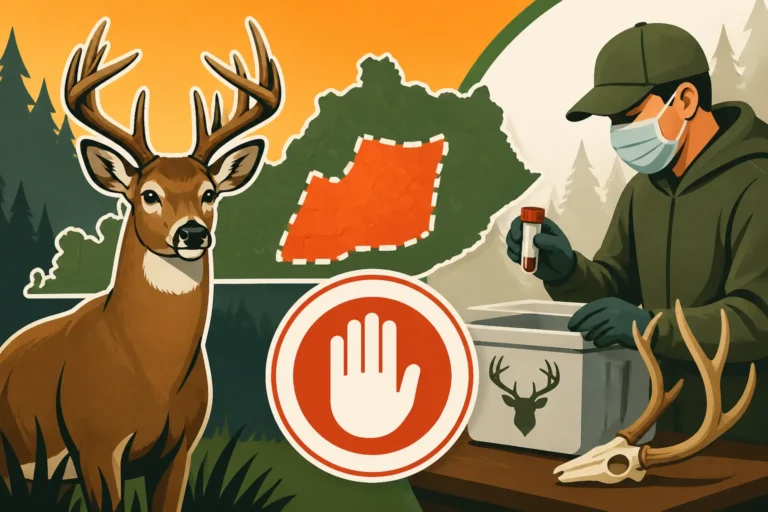
While the 24-hour rule is the golden standard, there are a couple of nuanced situations you need to be aware of, especially concerning the growing concern of Chronic Wasting Disease (CWD) in Kentucky. If you've harvested a deer in one of the state's Kentucky's Chronic Wasting Disease Surveillance Zone, which is a specific list of counties where CWD has been detected or is being closely monitored, your reporting requirements are even more stringent.
In these CWD surveillance counties, you are mandated to report your deer before you move the carcass out of the county of harvest. This means you can't just Telecheck it later that day once you're home. You need to report it, obtain your confirmation number, and ideally even get it tested if it falls under the Mandatory Testing Inside Kentucky's CWD Zone rules, all before you transport the animal across county lines. This regulation is crucial for preventing the spread of CWD and underscores the KDFWR's proactive approach to managing this serious wildlife disease. Hunters should always check the most current regulations for their specific hunting county, as these zones can change, and the requirements are not something you want to guess about. Also, be aware that certain managed hunts on specific WMAs or other public lands might have slightly altered rules or additional steps, so always double-check the hunt details if you're participating in one of those.
| Reporting Method | Accessibility | Required Info | Deadline | CWD Zone Specifics | Notes |
|---|---|---|---|---|---|
| KDFWR Website | Internet access required | Customer ID, Harvest Date/Time, County, Deer Type, Antler Points | 24 Hours from Harvest | Must Report before moving carcass out of CWD county | Best for stable internet, easy to review input |
| Kentucky Hunt Fish App | Smartphone with app (can pre-fill offline, submit with signal) | Customer ID, Harvest Date/Time, County, Deer Type, Antler Points | 24 Hours from Harvest | Must Report before moving carcass out of CWD county | Great for field use, provides harvest location data |
| Telecheck Phone Line | Phone service required | Customer ID, Harvest Date/Time, County, Deer Type, Antler Points | 24 Hours from Harvest | Must Report before moving carcass out of CWD county | Good for areas with weak data signal but decent call service |
Step-by-Step: How to Successfully Telecheck Your Kentucky Deer
Navigating the Telecheck system doesn't have to be a headache. Whether you're a tech-savvy hunter or prefer the old-school phone call, KDFWR offers options to make compliance as easy as possible.
Using the Kentucky Fish and Wildlife Website or App
For many modern hunters, the KDFWR website or the Scouting With the Kentucky Hunt Fish App are the most convenient ways to report a deer. After logging into your account on the KDFWR website (fw.ky.gov), you'll navigate to the "Telecheck Harvest" section. Here, you'll be prompted to enter all the necessary details. The website guides you through fields such as your customer ID, the date and exact time of harvest, and a dropdown menu to select the county where you killed the deer. You'll then specify the type of deer (e.g., antlered or antlerless), and if it's an antlered buck, the number of points. It's crucial to be precise with the county, especially if you're hunting near county lines; mapping apps like GoHunt can be incredibly helpful for confirming your exact location and ensuring you select the correct county for reporting purposes.
The Kentucky Hunt Fish App offers an even more integrated experience. You can often pre-fill much of your harvest data even if you're out of cell service range, then simply submit it once you regain a connection. This is a game-changer for those deep woods hunts where signal is scarce. The app often uses your phone's GPS to suggest the county of harvest, which is fantastic for accuracy. It also provides a visual confirmation and allows you to easily store your confirmation number digitally. I've found it to be the most reliable and user-friendly method, especially when I'm still feeling that post-harvest glow and my brain isn't quite ready for intricate forms. Just make sure your app is updated before season starts to avoid any glitches.
Calling the Telecheck Phone System
If you're someone who prefers talking through things, or if you're in an area with poor data signal but decent voice coverage, the Telecheck phone system is your go-to. The KDFWR provides a toll-free number specifically for harvest reporting. You'll dial in, and an automated system will guide you through a series of prompts. Just like with the online system, you'll need your customer ID, the precise date and time of the harvest, the county, and the deer's characteristics (antlered/antlerless, number of points).
It's helpful to have a pen and paper ready for this method. Listen carefully to the prompts and speak clearly when asked for information. The system is pretty good at understanding, but any garbled responses could lead to errors. Take your time, confirm each piece of information as it's repeated back to you, and don't rush through it. This method has been around for years and is incredibly reliable, ensuring that even if you're miles from a computer or strong internet, you can still fulfill your reporting duties.
Receiving and Understanding Your Confirmation Number
No matter which method you use, the absolute most important piece of information you will receive is your Telecheck confirmation number. This unique number is your proof that you have legally reported your harvest. Think of it like a receipt; it validates your hunt and shows that you've followed the rules. Without this number, your harvest is technically not reported, and you could still face penalties.
Once you receive it – whether it's displayed on the website/app or recited to you over the phone – write it down immediately. I like to keep a dedicated space in my hunting journal for these numbers, and if I'm using the app, I'll often take a screenshot as a backup. This confirmation number must remain with the carcass until it reaches its final processing destination (home, butcher, taxidermist). If a conservation officer stops you, this number is what you'll show them as proof of compliance. Don't underestimate its importance; it's the final, crucial step in securing your legal harvest and avoiding any questions.
Avoiding Common Reporting Pitfalls and Penalties
Even with all the tools and clear guidelines, it's surprisingly easy to make a mistake when reporting a deer. Trust me, I've heard every story in the book. A little foresight and diligence can save you a lot of grief.
The Perils of Procrastination
"I'll do it later." Those four words are responsible for more missed deadlines than almost anything else. We've all been there: after a successful hunt, the excitement takes over. You want to show off your trophy, get it caped for the taxidermist, or rush it to the processor. The thought of sitting down to log details often gets pushed to the back burner. However, as we've established, that 24-hour clock starts ticking the moment the deer hits the ground. "I forgot" is simply not an acceptable excuse to a Kentucky conservation officer.
The consequences of failing to report your deer within the specified timeframe can range from hefty fines to the suspension of your hunting privileges. It's a serious matter because it undermines the KDFWR's ability to manage the deer herd effectively. Imagine the impact if thousands of hunters "forgot" to report; the data would be useless, and season limits would be set without proper information. Don't let that celebratory high cloud your judgment. Make it a hard-and-fast rule: after securing the animal and taking photos, the very next step is to initiate the Telecheck process, even if it means stepping away from the processing for a few minutes. It's a small inconvenience that prevents much larger problems down the road.
Accuracy in Reporting Details
Beyond just reporting on time, the accuracy of the information you provide is equally important. It's not enough to simply say you harvested "a deer." The KDFWR needs to know if it was antlered or antlerless, the number of antler points, and the precise county of harvest. Incorrectly reporting any of these details can skew the data and, in some cases, might even be considered a misrepresentation, leading to further issues. For example, if you accidentally report an antlered deer as antlerless, it could impact your overall bag limit or violate specific Kentucky Deer Management Zone Rules that dictate antlerless harvest.
If you realize you've made a mistake after you've completed the Telecheck, don't panic, but act quickly. Your first step should be to contact the KDFWR directly. Explain the error, and they will guide you through the process of correcting the information. They understand that honest mistakes happen, but attempting to conceal an error or intentionally misreporting details is where you cross into serious trouble. Using reliable mapping tools like GoHunt on your phone or GPS unit can help you pinpoint your exact location and confirm the correct county, especially in areas where county lines might be less obvious. Remember, every hunter contributes to the larger picture of wildlife management, and accurate data is the foundation of a healthy, sustainable deer population in Kentucky. For more detailed information, always refer to the official Kentucky Deer Harvest Reporting Rules.
Disclaimer
The information provided in this guide is for general informational purposes only and is not intended as legal advice. Hunting regulations in Kentucky can change, and it is the hunter's responsibility to consult the most current Kentucky Department of Fish and Wildlife Resources (KDFWR) regulations and laws before participating in any hunting activity. Always confirm season dates, bag limits, and reporting requirements directly with the KDFWR.