Rangefinding Binoculars Worth the Cost
If you've spent any time at all chasing whitetails in Kentucky, or maybe even drawn that coveted elk tag, you know the struggle: you're glassing with your binoculars, spot a deer, and then the frantic fumble begins. You drop your binos, reach for your separate rangefinder, try to locate the deer again through a different optic, and suddenly that perfect shot opportunity has either evaporated into the timber or the deer has melted into the shadows. It’s frustrating, inefficient, and can cost you a harvest. This guide is all about diving deep into rangefinding binoculars, exploring whether their considerable benefits truly make them worth the investment for the serious Kentucky hunter.
The Perennial Problem: Binoculars, Rangefinder, and the Hunt
Let's be honest, hunting is often a game of seconds, and anything that slows you down or adds unnecessary movement can spell the difference between success and a tale of "the one that got away." For years, we've juggled two essential pieces of gear: a good pair of binoculars for spotting and a reliable rangefinder for dialing in the distance. On paper, it works. In the field, it's often a clumsy dance.
The Double-Optic Dance on a Kentucky Ridge
Imagine you're perched on an eastern Kentucky ridge, maybe in the Daniel Boone National Forest, glassing a steep hollow below. You've got your binos glued to your eyes, methodically picking apart the cover. Suddenly, a mature buck steps out, feeding along a bench at what looks like 250 yards. Your heart starts pounding. What's the first thing you do? You instinctively drop your binoculars, grab your rangefinder from your bino harness or pocket, and try to reacquire the deer in its smaller field of view.
This "double-optic dance" isn't just an inconvenience; it's a series of potential errors. The sound of your binoculars clanking against your chest, the slight movement as you shift gear, the precious seconds lost trying to relocate the animal – any one of these can alert a wary buck. On steep, uneven ground, it’s even worse. A dropped rangefinder down a rocky incline isn't just a nuisance; it can put you out of commission for the rest of the hunt. This frustration is a common thread among hunters, whether you’re glassing open fields in western Kentucky or picking apart dense cover in the mountains.
When Every Second Counts: Missed Opportunities
The emotional sting of a missed opportunity due to gear fumbling is something every hunter can relate to. Think about Hunting the Rut in Early November when a buck might be cruising quickly through a thicket, giving you only a narrow window for a shot. Or perhaps you're on a precious Kentucky's Record Elk Herd hunt, and a bull steps out briefly in a clearing before vanishing into the dark timber. Each of these scenarios demands speed and efficiency.
With separate optics, you're essentially adding an extra step – and extra time – to your shot process. By the time you’ve ranged and then settled back into your rifle scope or drawn your bow, that animal could be gone. This isn't just about deer, either. Imagine a long-range turkey shot during Kentucky's Statewide Modern Gun Season where a gobbler hangs up just out of comfortable range. You need an exact distance to adjust your aiming point, but the act of ranging might be enough to spook the bird. The goal is to minimize movement and maximize readiness, and that’s where the appeal of integrated rangefinding binoculars truly shines.
What Are Rangefinding Binoculars, Anyway?
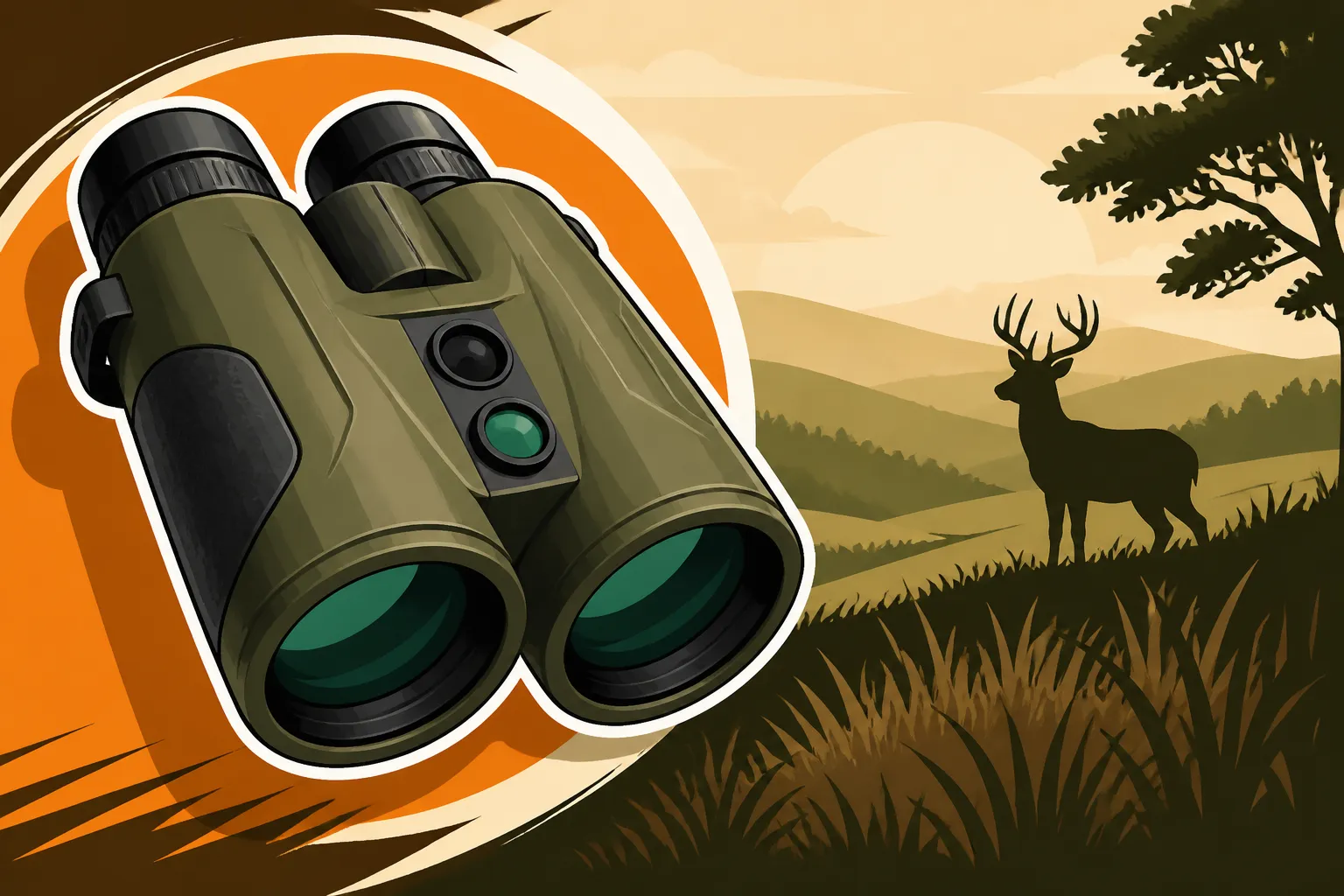
So, we've talked about the problem. Now, what's the solution these high-tech marvels offer? Simply put, rangefinding binoculars combine the powerful magnification and light-gathering capabilities of a quality binocular with the precision laser measurement of a rangefinder, all in one streamlined unit. It's a "two-in-one" tool designed to make your time in the field more efficient and effective.
The Technology Behind the Convenience
At their core, rangefinding binoculars integrate a tiny laser emitter and receiver into one of the binocular barrels. When you press a button, the laser emits a pulse of light that travels to your target, bounces back, and is detected by the receiver. The device then calculates the distance based on the time it took for the laser to make the round trip. All of this happens in fractions of a second.
Modern rangefinding binoculars often feature sophisticated ballistic calculators and angle compensation technology. Angle compensation is absolutely vital for hunting in Kentucky's diverse terrain. If you're shooting from an elevated treestand down into a hollow or across a steep slope, the actual "hold" or ballistic drop isn't the line-of-sight distance; it's the horizontal equivalent distance. A good rangefinding binocular will give you both, ensuring you get an accurate reading for your shot. This is especially useful when you are Hunting Eastern Kentucky Coalfield Country where steep up-hill and down-hill shots are the norm. Some even boast atmospheric sensors to adjust for temperature and barometric pressure, which can subtly affect bullet trajectory at longer distances.
Advantages for the Kentucky Hunter
For the Kentucky hunter, the advantages of rangefinding binoculars are pretty compelling.
- Unrivaled Speed: You spot an animal, you press a button, and you instantly have the range. No shifting, no fumbling, no extra movements. This speed can be a game-changer when a deer is slipping through the timber or a gobbler is slowly working its way out of range.
- Streamlined Ergonomics: Instead of carrying two devices, you only have one. This reduces bulk in your pack or bino harness and makes for a quieter, more efficient hunting experience. Less gear to manage means more focus on the hunt itself.
- Reduced Movement: This is paramount for success, particularly with highly perceptive game like White-Tailed Deer Across Kentucky or Kentucky's Black Bear Population. The less you move, the less likely you are to be detected. With rangefinding binoculars, you can range a target while still looking through the primary optic, minimizing any abrupt motions that might give you away.
- Enhanced Situational Awareness: You're not just ranging; you're observing and ranging simultaneously. This means you can keep your eyes on the animal, watch its body language, and understand its movement patterns while getting that critical distance.
- Quality Optics: Generally, manufacturers of rangefinding binoculars prioritize high-quality glass and coatings. This means you’re often getting exceptional light transmission and clarity, which is crucial during those low-light periods at dawn and dusk when game is most active. For glassing distant animals, whether it's a big buck moving through Hunting Western Kentucky Bottomland Deer or an elk in Elk Viewing in the Restoration Zone, clear optics are non-negotiable.
Many modern hunters also rely on digital mapping and scouting tools like GoHunt to prepare for their trips. Imagine having your digital maps showing property lines, topo, and satellite imagery at your fingertips, and then being able to instantly range a target with a high-quality optic that integrates seamlessly into your field routine. This combination allows for superior decision-making, whether you're navigating Daniel Boone National Forest Hunting or trying to pick out a Where Daniel Boone Forest Bucks Bed.
Breaking Down the "Worth It" Factor: Pros, Cons, and Considerations
The question isn't just "do they work?" but "are they worth the investment?" Like any piece of high-end hunting gear, rangefinding binoculars come with their own set of upsides and downsides that you need to weigh against your personal hunting style, budget, and priorities.
The Upsides: Precision, Speed, and Simplicity
The primary draw of rangefinding binoculars is the combination of precision, speed, and simplicity they bring to the field. For hunters who demand maximum efficiency and accuracy, these devices can genuinely transform the hunting experience.
Consider the difference in the field:
| Feature | Traditional Setup (Bino + Rangefinder) | Rangefinding Binoculars |
|---|---|---|
| Targeting Speed | Slower; requires switching optics, reacquiring target | Instantaneous; range while glassing |
| Movement | More movement; fumbling between devices | Minimal movement; one seamless action |
| Bulk | Two separate devices to carry | One consolidated unit; potentially less overall clutter |
| Complexity | Two separate sets of controls and batteries | One set of controls; shared battery |
| Situational Awareness | Interrupted when switching to rangefinder | Continuous; maintain visual on target while ranging |
| Low Light | Can be challenging to quickly switch in poor light | Maintain focus through high-quality optics in low light |
This table highlights just how much a single, integrated unit streamlines your process. When you're Still-Hunting Eastern Kentucky Ridges, you can scan, find an opening, and instantly range it without taking your eyes off the landscape or making a jarring movement. This can be the difference when a timid buck skirts the edge of a clearing. The quality of optics in these units also means superior light transmission, which extends your effective hunting time during those critical first and last minutes of legal light. Less gear to worry about also means more mental bandwidth to focus on the hunt itself, from reading the wind to identifying fresh sign like Reading Kentucky Mud for Fresh Deer Movement.
The Downsides: Cost, Weight, and Repair
Now, let's talk about the elephants in the room – the practical realities that give many hunters pause.
- The Cost: This is arguably the biggest hurdle for most hunters. Rangefinding binoculars represent a significant investment, often coming at a notable premium compared to buying separate, high-quality binoculars and a rangefinder. You are paying for the integration of cutting-edge technology into a single, durable package. It's a piece of gear that requires careful budgeting, and it's certainly not an impulse buy for most. While prices vary wildly between manufacturers and models, expect to pay a substantial sum for a reputable unit. Always check current pricing directly with the manufacturers or retailers.
- Weight and Bulk: While having one device is simpler, a single rangefinding binocular unit can still be heavier and bulkier than a very lightweight set of binoculars paired with a compact rangefinder. This is especially true for the higher-end models that boast robust construction and larger objective lenses. If you're covering vast distances on foot, like during a Bowhunting Kentucky's Long Archery Season trip deep into public land, every ounce matters. You'll need to physically handle different models to see how they feel in your hands and how they'd ride in your bino harness.
- Repair and Durability: If your rangefinding binocular goes down, you've lost both your primary glassing tool and your rangefinder. If you had separate units, you might at least have a backup. While these units are built to be incredibly durable, any electronic device has a potential point of failure. Consider the manufacturer's warranty and repair services carefully before investing. Dropping an expensive, integrated unit on a rocky descent in the Cumberland Mountains could be a very bad day indeed.
Making the Decision: Is it Right for Your Kentucky Hunt?
Ultimately, deciding whether rangefinding binoculars are "worth the cost" is a highly personal choice. It depends on your specific hunting situations, your priorities, and your budget. There's no one-size-fits-all answer, but by asking yourself a few key questions, you can arrive at the right conclusion for you.
Evaluating Your Hunting Style and Budget
Think about how and where you hunt most often in Kentucky:
- Long-Range Shooting: If you frequently hunt open country, such as large agricultural fields in western Kentucky, or if you engage in long-range rifle shooting for deer or elk, the speed and precision of rangefinding binoculars become incredibly valuable. The ability to quickly and accurately range targets out to several hundred yards without breaking your glassing rhythm is a huge advantage.
- Mountain and Steep Terrain Hunting: For those who pursue game in the rugged mountains of eastern Kentucky, where angle compensation is critical, these devices simplify a complex calculation. Ranging an animal at 300 yards downhill needs a different hold than 300 yards across flat ground. The integrated ballistic solution handles this for you, freeing your mind to focus on the shot. This is especially pertinent if you're Hunting Pine Mountain Ridgelines.
- Bowhunting: While many bowhunters operate in closer ranges, the efficiency gain is still notable. If you're still-hunting timber, stalking, or hunting from a saddle, minimizing movement to range is always a plus. For a western Kentucky archer hunting field edges, having instant, accurate range on an approaching deer means less drawing and re-ranging, reducing the chances of being busted.
- Budget Considerations: Be realistic about your budget. If investing in a high-end unit means sacrificing other essential gear or financial stability, then it might not be the right move. There are fantastic conventional binoculars and rangefinders available at more accessible price points that will serve you very well. However, if you're already in the market for premium optics and a top-tier rangefinder, the cost difference for the integrated solution might not be as dramatic as you'd first imagine.
- Frequency of Use: How often do you hunt? If you're out every weekend of Kentucky's Archery Season Dates and Kentucky's Modern Gun Season Dates, the investment might be easier to justify. If you only hunt a few days a year, separate units might be more sensible.
What to Look For in a Quality Unit
If you decide that rangefinding binoculars are indeed worth the cost for your hunting needs, here’s what you should prioritize when shopping:
- Optics Quality: This should always be paramount. Look for exceptional light transmission, edge-to-edge sharpness, and true-to-life color rendition. The best rangefinding binoculars will rival or surpass dedicated high-end binoculars in image quality. After all, you can't range what you can't clearly see.
- Ranging Performance: Check the maximum advertised range, but also pay attention to how quickly and consistently it ranges at practical hunting distances (e.g., 50-600 yards). Look for models that boast accuracy to within a yard at these distances.
- Angle Compensation: As mentioned, this is crucial for Kentucky's varied topography. Ensure the unit provides an equivalent horizontal range for uphill and downhill shots.
- Durability and Weatherproofing: Hunting in Kentucky means encountering all sorts of weather. Your optics need to be fully waterproof and fogproof, capable of standing up to rain, snow, and extreme temperature swings. A rugged, armored housing is also a must for protection against drops and bumps.
- Ergonomics and Feel: Can you comfortably hold the unit with one hand and press the ranging button without strain? Does it fit well in your bino harness? Test them out if possible to ensure they feel good in your hands.
- Battery Life and Type: Long battery life is important, and easily replaceable standard batteries (like CR2s) are often preferred over proprietary rechargeable ones if you're in remote areas without charging options.
While the upfront cost might seem daunting, the investment in a quality pair of rangefinding binoculars can truly elevate your hunting game by providing unparalleled speed, precision, and simplicity in the field. For many dedicated Kentucky hunters, that seamless advantage is indeed worth every penny.
Disclaimer
This article is for general informational purposes only and does not constitute professional advice. Laws, prices and regulations vary by location and change over time. Consult a qualified professional for guidance on your specific situation.