Gray Versus Fox Squirrels in Kentucky
For any Kentucky hunter, especially those new to chasing bushytails, it’s easy to look at a squirrel scampering up an oak tree and just call it "a squirrel." But a seasoned woodsman knows that Kentucky is home to two distinct and incredibly fun quarry: the gray squirrel and the fox squirrel. Understanding the differences between these two, from their physical traits to where they prefer to make their homes, isn't just about bagging the right animal; it's about becoming a more observant and effective hunter. This guide will walk you through everything you need to know to tell them apart and refine your approach in the squirrel woods.
Identifying Kentucky's Squirrels: More Than Just Size
When you're out in the woods, especially when leaves are thick, quick identification can be a real challenge. Many hunters struggle to tell the difference between a gray squirrel and a fox squirrel on the fly. It's not just about a slight color variation; these two species have distinct features that, once you know what to look for, make them stand out. Paying attention to these details can make you a much more successful hunter.
Physical Characteristics: What to Look For
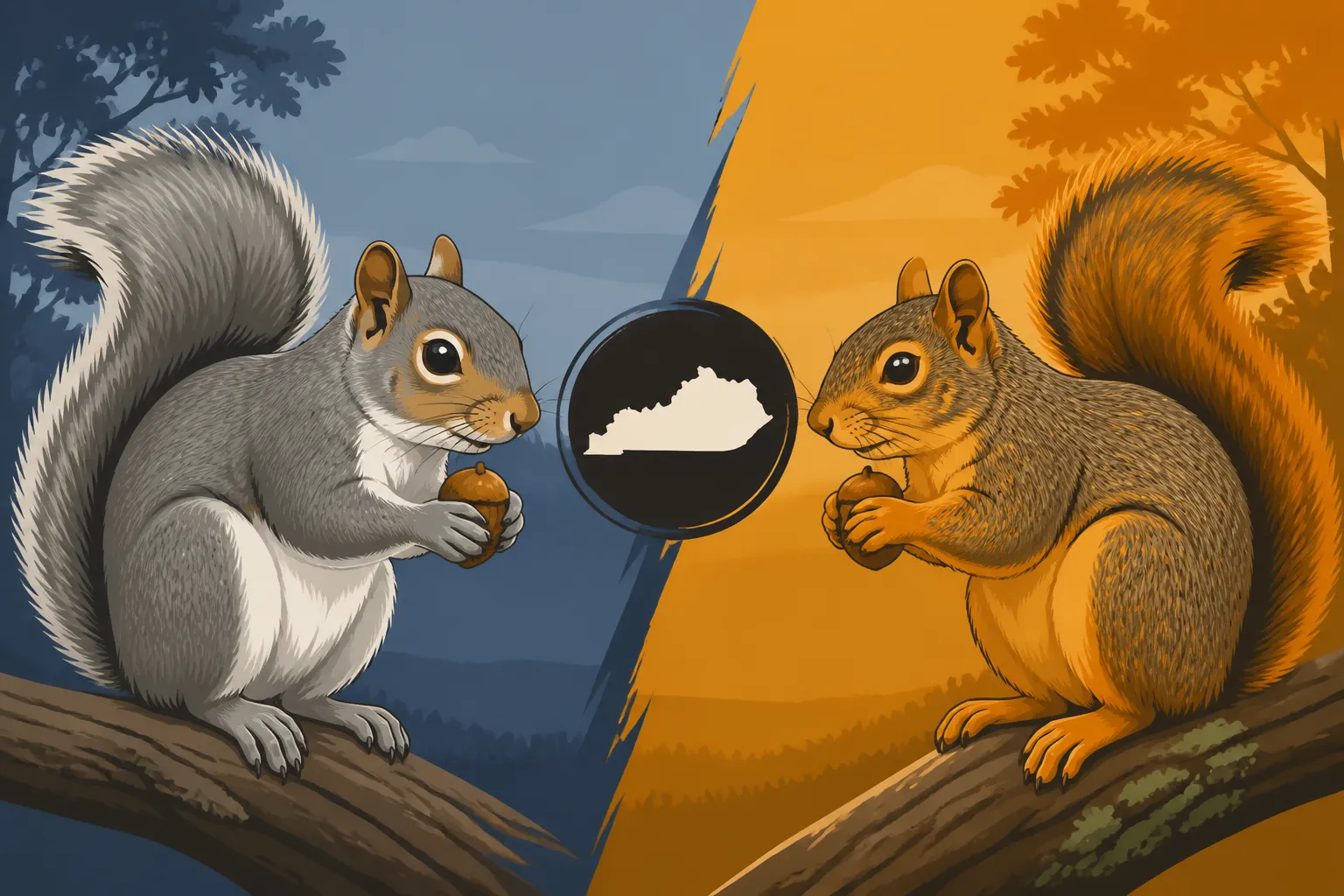
The most obvious difference, for many, is size. Fox squirrels are generally larger, often giving the impression of a small house cat scrambling through the branches. They tend to be chunkier, with a more robust build than their sleeker gray cousins. Think of the gray as a more agile, almost dainty acrobat of the canopy, while the fox squirrel is more of a ground-pounding, powerful mover.
Coloration is another key indicator, though it can vary quite a bit. Gray squirrels usually have a salt-and-pepper gray coat on their back, often with a white or pale gray belly. Their tails are typically a frosted gray, sometimes with white tips on the individual hairs, giving them that classic bushy look. Fox squirrels, on the other hand, boast a more varied palette. Their backs can range from rusty orange to a grizzled brown, and their bellies often feature a striking reddish-orange or tawny color. Their tails usually mirror this rusty or reddish hue, often with black edges. Sometimes, you'll even encounter melanistic (all black) gray squirrels, especially in certain parts of Kentucky, which can really throw a wrench into visual identification if you're not expecting it! The GoHunt app can sometimes show regional variations if you're researching specific areas.
Beyond size and color, look at their faces. Fox squirrels often have a reddish-orange ring around their eyes, and their ears might have a similar reddish tint. Gray squirrels typically have more uniformly gray faces. These subtle facial markings, combined with their overall body and tail color, are your best clues when you can get a good look.
Behavioral Cues: How They Act
Beyond what they look like, how they act can tell you a lot. Gray squirrels are generally more arboreal, meaning they spend a significant amount of their time in the trees. They're incredibly quick and agile, often seen darting through the upper canopy, leaping from branch to branch with impressive speed. When disturbed, a gray squirrel might freeze on the side of a tree, or quickly circle around to the opposite side of the trunk, using the tree itself as cover. They are often more vocal, especially when alarmed, letting out a rapid series of barks and chirps.
Fox squirrels, while certainly capable of climbing, spend a considerable amount more time on the ground. You’ll often spot them foraging for nuts and seeds on the forest floor, or crossing open areas between woodlots. They tend to move a bit slower, with a more deliberate gait, and are often described as being less frantic than grays. When spooked, a fox squirrel might run up a tree, but they're just as likely to make a dash across the ground to another tree or patch of cover. They can be surprisingly bold, sometimes allowing a closer approach before retreating. Their calls are often a bit deeper and more drawn out, less chattery than the gray.
Understanding these behaviors is really helpful, particularly when you're still-hunting or trying to pinpoint a rustle in the leaves. A quick, high-pitched bark from deep in the canopy often signals a gray, while a slower, more deliberate rustling underfoot could very well be a fox squirrel. Reading Cuttings Under an Oak can also help determine what species is feeding where, as their feeding habits often leave different types of evidence.
Habitat Preferences: Where to Find Them
Knowing the physical and behavioral differences is a great start, but understanding their preferred habitats is arguably the most crucial piece of the puzzle for a hunter. Kentucky offers a mosaic of different forest types, and each squirrel species has its niche. If you’re hunting in a specific type of timber, you can often predict which species you’re more likely to encounter. This knowledge directly impacts your scouting efforts and where you choose to set up.
Gray Squirrel Strongholds: Dense Hardwoods
Gray squirrels thrive in dense, mature hardwood forests. Think deep timber with a closed canopy, often found in larger tracts of public land like parts of the Daniel Boone National Forest or even extensive private holdings in Eastern Kentucky. They love oak and hickory stands, where there’s an abundance of mast (nuts and seeds) to sustain them. These forests provide not only food but also the continuous canopy cover they prefer for travel and escape. You'll find them using old snags for den sites and hollow trees for shelter, making areas with older growth particularly attractive.
In these environments, gray squirrels are masters of their arboreal domain. They rarely venture far from the safety of the trees, preferring to navigate the forest by leaping and climbing rather than hitting the ground. When you're Squirrel Hunting a Kentucky Oak Ridge, especially a mature one, you're almost certainly targeting grays. They also do well in bottomland hardwoods, particularly those with a mix of species that provide a diverse food source throughout the year.
Fox Squirrel Territories: Open Woods and Edges
Fox squirrels, conversely, prefer more open woodlands, forest edges, and smaller woodlots, often bordering agricultural fields. They are frequently found in farm country, where patches of timber meet cornfields or pastures. They like a more diverse mix of tree species, and you might find them in areas with more pine or mixed pine-hardwood stands, though they still gravitate towards mast-producing trees like oaks. Imagine a smaller woodlot in Western Kentucky, surrounded by fields, or a scattered timber block with a more open understory; that’s prime fox squirrel country.
Their preference for these more open habitats, and their tendency to spend more time on the ground, makes them a bit more adaptable to human-altered landscapes. You might even see fox squirrels in suburban areas with large trees, whereas grays tend to stick to more wild, unbroken forest. This is why when you're Setting Up on a Western Kentucky Field Edge for deer, you might be seeing more fox squirrels than grays, foraging along the field or in the sparse treeline. They're more comfortable crossing open ground to move between food sources or different wood patches. When planning your hunt, consider using a mapping tool like the GoHunt app to identify these different habitat types – it can really help narrow down where to focus your efforts for each species.
Hunting Strategies for Each Species
Given their distinct behaviors and habitat preferences, it makes sense that your hunting strategies should adapt, too. What works perfectly for a gray squirrel in a dense forest might not be as effective for a fox squirrel in an open woodlot, and vice versa. Being versatile and understanding these nuances will significantly increase your odds of success.
Tactics for Gray Squirrels: Silent Movement and Patience
Hunting gray squirrels often means embracing stealth and patience. Since they prefer dense, mature hardwoods, still-hunting slowly through these areas can be incredibly productive. Move at a snail's pace, pausing frequently to scan the trees, especially higher up in the canopy. Look for subtle movements, a flick of a tail, or the tell-tale shake of a branch. Their propensity to circle trees when spooked means you need to be ready to quickly move around a trunk to get a shot, or even work with a partner who can provide a "blocker" on the other side.
When leaves are on the ground, listen carefully for the scratching sounds of claws on bark or the subtle rustle of falling mast. Early morning and late afternoon are usually peak activity times. A good pair of binoculars can be invaluable for picking out a camouflaged gray squirrel high in the timber. Remember, these squirrels are agile and quick, so snap shooting can be necessary. If you're going to try stand hunting, pick a spot in an old growth stand with multiple den trees and good mast production.
Many hunters also enjoy hunting gray squirrels with small caliber rifles, like a .22, or a shotgun with light game loads. The choice often depends on the cover density and how quickly you need to get a shot off. For a more traditional experience, some will employ dogs, which can be particularly effective in getting grays to "tree" and bark, allowing you to locate them.
Approaches for Fox Squirrels: Ground Game and Observation
Hunting fox squirrels, with their more terrestrial tendencies and preference for open woods and edges, calls for a slightly different playbook. While still-hunting still works, you might find yourself focusing more on the ground and lower branches. Look for them foraging along fencerows, at the edges of fields, or in scattered timber blocks. Their larger size and bolder nature can sometimes make them an easier target, but don't let that fool you – they can still vanish in a flash.
When walking, keep an eye on open areas, not just the canopy. They might be crossing a field or running along a fallen log. Ambush hunting from a blind or a stationary position near a reliable food source, like a productive oak on a field edge, can be very effective. If you’re Hunting a Standing Cornfield in Farm Country, keep an eye on the adjacent woodline; fox squirrels love to raid corn.
Shotguns are often favored for fox squirrels, especially if they are moving quickly on the ground or in denser brush along edges. However, a patient hunter with a .22 can certainly find success in more open timber. Because they tend to be less frenetic than grays, you might have a bit more time to set up your shot once you've spotted one. Utilizing a tool like GoHunt to scout for areas with scattered timber and agricultural interfaces can significantly improve your chances of finding fox squirrels, as these are classic locations they inhabit. Remember to always check Kentucky Small Game Season Rules for specific dates and bag limits before heading out.
Conservation Status and Management in Kentucky
Understanding the species you hunt isn't just about bagging dinner; it's about being a responsible steward of the wildlife. Both gray and fox squirrels are important parts of Kentucky's ecosystem and are actively managed to ensure healthy populations for future generations of hunters.
Population Trends and Health
Historically, both gray and fox squirrels have been abundant across Kentucky. Gray squirrels, being highly adaptable to mature hardwood forests, generally maintain robust populations, especially in the larger, unbroken tracts of timber found in Eastern Kentucky. Their numbers can fluctuate based on mast production – a poor acorn year can lead to lower survival rates, but overall, they are considered a resilient species.
Fox squirrels, on the other hand, have faced some localized challenges due to habitat changes. Their preference for more open, fragmented woodlands and forest edges means they can be more susceptible to habitat loss and changes associated with development and intensive agriculture. While still widely distributed, their populations might be less dense in some areas compared to grays. However, the diverse landscape of Kentucky, with its mix of farmland and scattered woodlots, still provides ample habitat in many regions. Kentucky Squirrel Harvest Numbers are monitored by the state wildlife agency to keep track of population health and hunting pressure.
Kentucky's Management Approach
The Kentucky Department of Fish and Wildlife Resources (KDFWR) manages squirrel populations through regulated hunting seasons and habitat conservation efforts. Hunting seasons are set to allow for sustainable harvest while ensuring enough individuals remain to reproduce and maintain healthy populations. Bag limits are typically generous for squirrels, reflecting their overall abundance and reproductive capacity.
Habitat conservation, though not always directly aimed solely at squirrels, benefits them greatly. Programs that promote healthy forest management, especially those encouraging diverse mast-producing trees and maintaining a mix of forest ages, are crucial. Protecting and enhancing riparian corridors (wooded areas along streams and rivers) is also beneficial, as these often provide important travel lanes and habitat for both species, particularly in agricultural landscapes. As hunters, supporting these conservation efforts, whether through license purchases or advocating for sound land management, helps ensure that future generations can enjoy the thrilling challenge of chasing squirrels in the Kentucky woods.
| Feature | Gray Squirrel | Fox Squirrel |
|---|---|---|
| Size | Smaller, more slender | Larger, chunkier, more robust |
| Primary Color | Salt-and-pepper gray, white belly | Rusty orange to grizzled brown, reddish-orange belly |
| Tail Color | Frosted gray, often with white tips | Rusty or reddish, often with black edges |
| Habitat Preference | Dense, mature hardwood forests, closed canopy | Open woodlands, forest edges, small woodlots, agricultural interfaces |
| Behavior | Highly arboreal, quick, agile in trees, often circles tree when spooked, chattery vocalizations | More terrestrial, deliberate movements, often crosses ground, bolder, deeper vocalizations |
| Common Hunting Spot | Deep timber, large oak/hickory stands | Farm woodlots, fencerows, field edges, mixed pine/hardwood |
Disclaimer
This article is for general informational purposes only and does not constitute professional advice. Laws, prices and regulations vary by location and change over time. Consult a qualified professional for guidance on your specific situation.